Best Largemouth Bass Spots on Kerr Lake, Virginia
Finding those prime largemouth bass spots on a massive body of water like Kerr Lake can feel like searching for a needle in a haystack, especially if you're not a local. It’s easy to get overwhelmed by the sheer size and diverse structure, leading to frustrating days with an empty livewell. This guide is here to cut through that confusion, giving you the insider knowledge on where to find the best largemouth bass action on Kerr Lake, along with the tactics that actually work.
Understanding Kerr Lake's Largemouth Bass Fishery
Kerr Lake, also widely known as Buggs Island Lake, is a sprawling reservoir straddling the Virginia and North Carolina border. This incredible fishery is known for its robust largemouth bass population, offering everything from abundant numbers of keeper-sized fish to legitimate trophy potential. But understanding why this lake consistently produces means looking at its unique characteristics. It’s not just a big lake; it’s a complex ecosystem with varying depths, vast timber, and numerous creek arms that dictate where bass live and feed throughout the year.
The Habitat That Holds the Giants
What makes Kerr Lake so special for largemouth bass? It’s primarily the incredible amount of diverse cover and structure. Imagine thousands of acres of submerged timber, ranging from standing trees in deeper creek channels to stumps and laydowns along the shore. This woody debris provides perfect ambush points and sanctuary for bass, protecting them from predators and offering shade during hot summer days. Beyond the wood, you'll find plenty of rock piles, gravel beds, and ledges, particularly in the lower lake regions. The lake also features numerous points that extend into the main channel, acting like highways for bass moving between shallow and deep water. These diverse habitats are crucial for supporting a healthy and thriving bass population year-round.
The lake's varied bottom composition is another key factor. You'll encounter everything from soft, silty bottoms in the backs of creeks to hard clay and rock on main lake points. Largemouth bass will relate to these different bottom types depending on the season, forage availability, and water temperature. Areas with a mix of hard and soft bottoms, especially where a creek channel swings close to a prominent point or a large flat, often become prime feeding grounds. Recognizing these nuances in habitat is the first step to unlocking Kerr Lake's potential.
Seasonal Movements of Largemouth
Just like us, largemouth bass have preferences, and those preferences change with the seasons. It’s a constant game of hide-and-seek, and knowing where they’re likely to be at any given time of year is paramount to success. In early spring, as water temperatures start to climb into the 50s, bass begin to migrate from their deeper winter haunts towards shallower creek arms and protected coves. This is the pre-spawn period, and they're focused on feeding heavily to build energy for the upcoming spawn.
As the water warms further into the 60s, the bass move onto their beds in shallow, protected areas – this is the spawn. You'll find them in less than five feet of water, often around isolated stumps, brush piles, or docks. After the spawn, during the post-spawn phase, bass typically move to slightly deeper water near the spawning flats, recovering from the arduous process. By summer, they've often retreated to deeper, cooler waters, relating to offshore humps, ledges, and submerged timber, especially during the heat of the day. Fall sees them moving back shallower as water temperatures cool, aggressively feeding in creek arms and on main lake points, preparing for winter. Understanding these patterns, which are also detailed in guides like Bass Spawn Timing on Virginia Lakes, is critical.
Top Largemouth Bass Hotspots on Kerr Lake
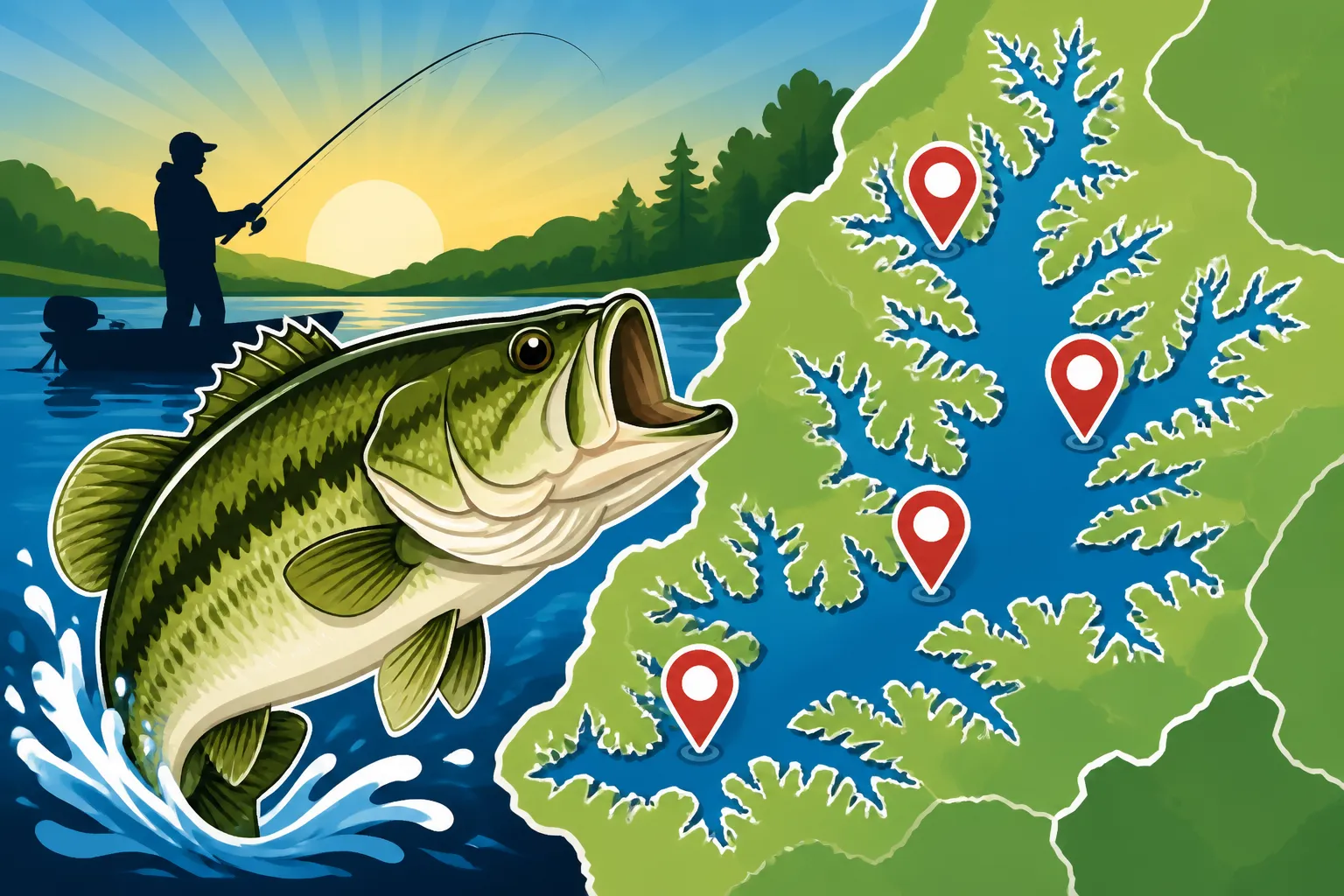
Kerr Lake is massive, with over 800 miles of shoreline, making it challenging to know where to start. However, certain areas consistently produce fantastic largemouth bass action due to their prime habitat and forage availability. These spots are tried and true, but remember that bass can be finicky, so always pay attention to current conditions.
Northern Coves and Feeder Creeks
The northern sections of Kerr Lake, especially the numerous coves and feeder creeks, are absolutely legendary for largemouth bass, particularly during the cooler months and the spring spawn. Areas like Nutbush Creek, Island Creek, and Grassy Creek offer extensive shallow water habitat, abundant submerged timber, and a labyrinth of smaller pockets. In spring, these creeks become bass nurseries, with fish moving in to spawn. You’ll find them around docks, fallen trees, and shallow brush.
During the fall, these creeks also light up as baitfish move back into the shallower, warmer waters, bringing the bass with them for a feeding frenzy. Anglers targeting these areas often find success flipping jigs or pitching Texas-rigged worms into heavy cover. Look for the junctions where smaller ditches meet the main creek channel – these are often overlooked highways for bass.
Mid-Lake Structures and Points
As you move towards the mid-lake section, the main lake points and deeper structures become increasingly important, especially during the summer and winter months. The main river channel of the Roanoke River winds its way through the lake, creating distinct ledges, humps, and drop-offs that largemouth bass absolutely love. Key areas include the points around the Route 15 bridge crossing, the main lake humps in the vicinity of Rudd's Creek, and any long, tapering points that extend into the main channel.
These offshore structures hold schools of baitfish, which in turn attract large concentrations of bass. Carolina rigs, deep-diving crankbaits, and football jigs are excellent choices for targeting these deeper fish. Electronics are your best friend here, as finding those subtle depth changes or isolated brush piles on these deeper structures can be the difference between a good day and a great one. Don't be afraid to slow down and meticulously work these areas.
Southern Lake Brush Piles and Docks
The southern end of Kerr Lake, particularly closer to the dam and the Nutbush area, offers a different flavor of largemouth bass fishing. While still featuring plenty of timber, this area tends to have more defined docks and man-made brush piles, especially around the numerous residential areas. These structures provide excellent cover, shade, and ambush points for bass, making them productive targets year-round.
Private docks, especially those with brush piles sunk nearby by homeowners, can be absolute goldmines. Always approach these quietly and pitch jigs, shaky heads, or wacky worms into the shade and around the pilings. The brush piles in this section, some of which are documented and marked, can hold impressive numbers of fish, particularly during the hot summer when bass seek cooler, deeper cover. Understanding Virginia's Fishing License and Catch Limit Basics is important here, as limits like Virginia's daily bass limit is 5 fish combined apply to ensure sustainable fishing.
Essential Techniques and Baits for Kerr Lake Bass
Catching largemouth bass on Kerr Lake isn't just about finding them; it's about presenting the right bait with the right technique at the right time. The lake’s diverse conditions mean that versatility is key, and having a range of tactics in your arsenal will greatly improve your chances.
Spring and Spawning Season Tactics
Spring on Kerr Lake is an exciting time for bass anglers. As the water temperatures rise, largemouth bass become very active, moving into shallow areas to feed and eventually spawn. During the pre-spawn, crankbaits, spinnerbaits, and lipless crankbaits excel as bass aggressively chase moving baits. Focus on creek channel bends, secondary points, and areas with submerged grass. You'll want to cover water quickly to locate active fish.
Once the spawn hits, typically when water temperatures are consistently in the mid-60s, a more subtle approach is often needed. Flipping jigs, pitching Texas-rigged soft plastics (like lizards or creature baits), and weightless Senkos into visible cover or around potential bedding areas are highly effective. Patience is crucial, as you might need to leave your bait in the strike zone for a longer period. Remember to respect spawning fish and practice catch-and-release, especially for larger females.
Summer and Fall Strategies
Summer fishing on Kerr Lake often means battling the heat and targeting deeper, cooler water. Topwater action can be phenomenal early in the morning or late in the evening, especially around main lake points or in the backs of shaded coves. Poppers, walking baits, and buzzbaits can provoke explosive strikes. During the day, bass typically retreat to deeper cover. This is when deep-diving crankbaits, Carolina rigs, and football jigs shine. Focus on main lake ledges, humps, and especially dense submerged timber, as detailed in guides on Summer Bass Fishing Patterns.
Fall brings a renewed burst of activity as bass begin to fatten up for winter. They'll often follow baitfish into the creek arms and shallower flats, making spinnerbaits, Chatterbaits, and squarebill crankbaits incredibly effective. Topwater lures can also have a second season during the fall, especially on cloudy days. Don't overlook jigging spoons or dropshots when you find schools of bass concentrated on bait around deeper structures.
Year-Round Tackle Box Must-Haves
Regardless of the season, there are a few baits and techniques that every Kerr Lake bass angler should have at the ready. A good selection of plastic worms (Texas-rigged, Carolina-rigged, or wacky-rigged) is non-negotiable, as they are versatile and effective year-round. Green pumpkin, black and blue, and watermelon red are reliable colors. Jigs, in various weights and colors (black and blue, brown, green pumpkin), are also essential for pitching into heavy cover or working along the bottom on deeper structures.
Crankbaits, both shallow and deep-diving, will cover a lot of water and help you locate active fish. Spinnerbaits and Chatterbaits are great for covering flats and creek channels, especially when there’s a bit of wind or stained water. Finally, a trusty topwater bait, like a Zara Spook or a Pop-R, should always be tied on for those magical low-light hours. If you're new to the lake, consider checking out a Kerr Lake Fishing Guide for Beginners for more fundamental tips.
Here’s a quick overview of bait strategies:
| Season | Primary Locations | Effective Baits & Lures | Key Techniques |
|---|---|---|---|
| Spring | Shallow creek arms, coves, spawning flats | Spinnerbaits, Lipless Crankbaits, Jigs, Wacky Worms | Power Fishing, Flipping & Pitching |
| Summer | Deep ledges, humps, submerged timber, main lake points | Deep Crankbaits, Carolina Rigs, Football Jigs, Topwater (dawn/dusk) | Offshore Structure Fishing, Vertical Jigging |
| Fall | Creek channels, secondary points, shallow flats | Spinnerbaits, Chatterbaits, Squarebill Crankbaits, Jerkbaits | Covering Water, Reaction Baits |
| Winter | Deep creek channels, main lake points, steep drops | Jigging Spoons, Blade Baits, Dropshots, Finesse Jigs | Slow Presentation, Vertical Fishing |
Navigating Kerr Lake: Access and Resources
Kerr Lake's immense size means that access is plentiful, but knowing the best points to launch or find local information can make your trip much smoother. Don't just show up hoping for the best; a little planning goes a long way.
Public Access Points and Boat Ramps
Kerr Lake boasts numerous public boat ramps and access points on both the Virginia and North Carolina sides, many managed by the Army Corps of Engineers and state parks. In Virginia, popular ramps include Occoneechee State Park, Rudd's Creek, and Henderson Point. These ramps often have ample parking, restrooms, and sometimes even courtesy docks, making launching your boat relatively easy. It's always a good idea to check the specific amenities and any potential fees before you head out.
For those without a boat, there are also various shore fishing access points on Kerr Reservoir, particularly around state parks and campgrounds. While shore fishing limits your mobility, you can still have success targeting bass that move into shallower areas, especially during the spring and fall. Always ensure you have a valid Virginia Fishing License Guide before casting a line, as rangers actively check for compliance.
Local Expertise and Guide Services
Sometimes, the best way to unlock the secrets of a vast and complex fishery like Kerr Lake is to tap into local expertise. A knowledgeable fishing guide can put you on fish quickly, teach you effective techniques for the current conditions, and help you understand the lake’s nuances. This is especially true if you’re new to the lake or are trying to dial in specific patterns. Booking a guide is an investment that can save you countless hours of trial and error.
Platforms like FishingBooker make it incredibly easy to find and book experienced local guides for Kerr Lake. You can browse different guides, read reviews, compare prices, and see what types of trips they offer, whether you're after a full-day bass excursion or a half-day instructional trip. They can provide all the necessary gear, teach you effective techniques, and ensure you're fishing legally. Many guides operate year-round, tailoring trips to the specific Virginia Fishing Seasons Explained and current bass behavior. Utilizing a service like FishingBooker can connect you with guides who know exactly where to find the Best Remote Coves on Kerr Lake for Fishing or the bustling main lake points, significantly increasing your chances of a successful day out on the water. Many guides will even cover your Virginia Fishing License Requirements for Residents and Nonresidents as part of the charter, making it completely hassle-free.
Disclaimer
Please remember that fishing conditions, regulations, and fish behavior can change rapidly. Always consult the latest Virginia Department of Wildlife Resources (DWR) regulations before fishing. This guide provides general information and recommendations based on typical patterns and widely accepted angling practices.