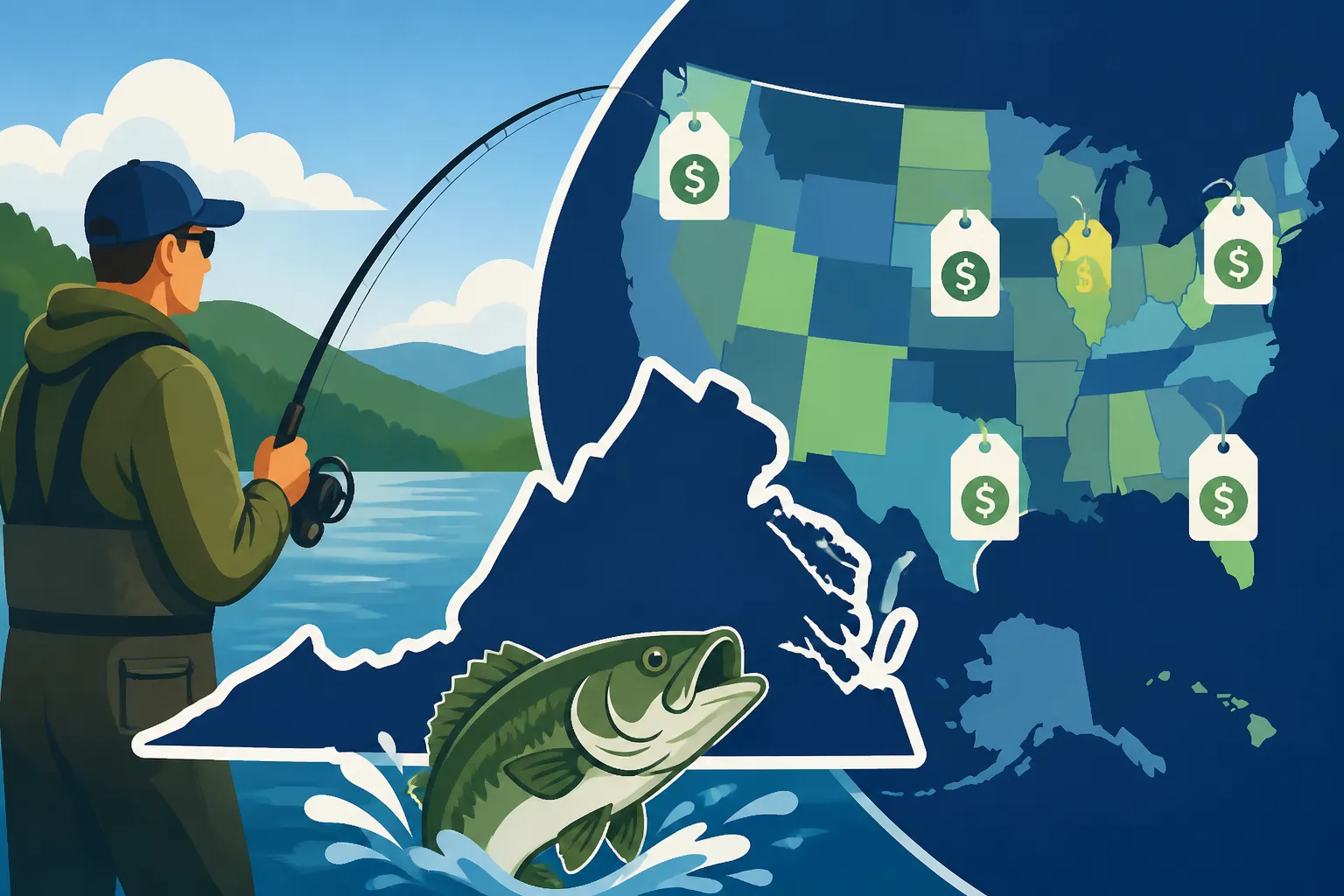
Nonresident fishing license fees compared by state
It can be incredibly frustrating trying to plan a fishing trip to a new state, only to get bogged down in the confusing world of nonresident fishing licenses. You want to focus on reeling in that trophy catch, not deciphering complex fee structures and comparing options between states. This comprehensive guide is here to clear the waters, breaking down nonresident fishing license fees, with a special focus on Virginia and how its costs stack up against popular neighboring destinations, so you can spend less time calculating and more time casting.
Understanding Virginia's Nonresident Fishing License Structure
Let's face it, when you're visiting a new state like Virginia, the last thing you want is a surprise expense or, worse, a run-in with a game warden because you misunderstood the license requirements. Virginia's Department of Wildlife Resources (DWR) has a pretty straightforward system, but it's important for out-of-state anglers to understand the different options available to them. Unlike residents who might have a lifetime option, nonresidents typically look at annual or short-term permits. It's crucial to get this right, not just for legal reasons, but also to ensure you're getting the best value for your fishing adventure.
Annual Freshwater vs. Saltwater Options
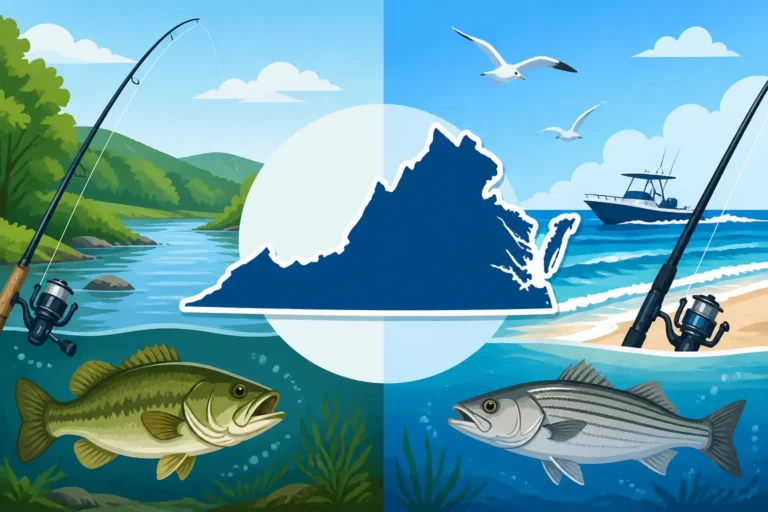
Virginia offers distinct licenses for freshwater and saltwater fishing, and the costs for nonresidents reflect this. If you're coming to Virginia with dreams of pulling a big largemouth bass out of a lake or battling a feisty smallmouth in a mountain river, you'll need a freshwater license. The cost for a Nonresident Freshwater Fishing License in Virginia is currently $47 for an annual pass. This covers you for a full year from the date of purchase, which can be a great deal if you plan multiple trips within that 12-month period.
On the other hand, if your sights are set on the bounty of the Chesapeake Bay or the Atlantic Ocean, chasing striped bass (often called rockfish here), flounder, or croaker, you'll need a saltwater license. Virginia's Nonresident Annual Saltwater Fishing License in Virginia comes in at a more modest $25. It’s a good deal if your focus is solely on the salty side of things, allowing you to explore the vast estuaries and coastal waters without worrying about your permit expiring too soon. Remember, these are separate licenses, and you can't use a freshwater license in saltwater or vice-versa, so choose wisely based on your intended fishing grounds.
Short-Term Passes for Visitors
For many out-of-state anglers, an annual license might feel like overkill, especially if you're just planning a quick weekend getaway or a week-long vacation. This is where Virginia's short-term passes really shine, offering flexibility and potentially saving you money. If you're only dipping your toes into Virginia's freshwater offerings for a few days, a Virginia's 5-Day Freshwater Fishing Pass costs $14. This is perfect for that spontaneous camping trip by a lake or a focused mission to a specific river system.
Similarly, if your family vacation brings you to the coast for a short stint, and you want to try your luck pier fishing or dropping a line from a rented boat, Virginia also offers short-term saltwater options. A popular choice is Virginia's 10-Day Saltwater Fishing License, which costs just $10. This makes it incredibly affordable for tourists to enjoy a taste of the abundant marine life without committing to a full annual fee. These short-term licenses are ideal for testing the waters, literally, and are designed with the casual or visiting angler in mind, offering a convenient way to fish legally without a hefty commitment.
Combination Licenses for Diverse Anglers
What if you're like me, and you love the thrill of catching a big largemouth bass one day, and the next you're dreaming of a striped bass fight in the Chesapeake Bay? Buying separate freshwater and saltwater licenses can add up, especially for nonresidents. Thankfully, Virginia understands this diverse appeal and offers a combination license. The Nonresident Combination Fishing License in Virginia is priced at $71. While this might seem like a jump compared to individual licenses, it actually represents a savings of $1 if you were to buy the annual freshwater ($47) and annual saltwater ($25) licenses separately. Every dollar saved is another dollar for bait or maybe even a new lure from Amazon before your trip!
This combination license is a fantastic option for those who truly want to experience the full spectrum of Virginia's incredible fishing opportunities. Imagine spending a morning on the James River chasing catfish, then heading to the coast for an afternoon of targeting flounder. With a single combination license, you're covered. It eliminates the hassle of carrying multiple paper or digital licenses and ensures you're compliant no matter where your angling adventures take you across the Old Dominion. It’s the ultimate choice for the versatile angler seeking to maximize their time on Virginia's varied waters.
Comparing Virginia to Neighboring States
Understanding Virginia's nonresident license costs is a great start, but how does it stack up against its neighbors? Many anglers travel regionally, and knowing the comparative costs can heavily influence where you decide to cast your line next. Each state has its own fee structure, and these can vary wildly based on population, conservation funding needs, and the overall fishing pressure. Let's take a closer look at some of the states surrounding Virginia to give you a clearer picture.
North Carolina's Nonresident License Costs
Directly to Virginia's south, North Carolina boasts a fantastic array of fishing, from its inland reservoirs to the Outer Banks. For nonresidents, North Carolina's annual fishing license costs are quite competitive. An annual statewide inland (freshwater) fishing license for nonresidents is $45, just a hair less than Virginia's $47. However, North Carolina's annual coastal (saltwater) fishing license for nonresidents is $30, which is slightly more than Virginia's $25.
Where North Carolina really offers options for visitors is in its short-term licenses. A 10-day statewide inland license is $23, and a 10-day coastal fishing license is $18. They also offer a combined 10-day inland and coastal license for $35, which is quite flexible. So, depending on your trip length and target species, North Carolina can be a very attractive option, especially for shorter, multi-species trips. When planning a multi-state road trip, understanding these nuances can help you budget for a Budgeting for fishing licenses on a multi-state road trip.
Maryland's Offerings for Out-of-State Anglers
To Virginia's north, Maryland offers incredible fishing in the upper Chesapeake Bay and its tributaries. For nonresidents, Maryland's annual fishing license for freshwater is $30.50, significantly lower than Virginia's. However, Maryland's annual Chesapeake Bay & Coastal Sport Fishing License is $22.50. This is pretty comparable to Virginia's saltwater license, but remember, the Chesapeake Bay is a shared resource, and understanding Virginia and Maryland fishing license reciprocity rules is crucial if you plan to fish across state lines. Generally, you need a license for the state whose waters you are in, and there isn't widespread reciprocity for basic fishing licenses, making separate purchases necessary for serious cross-bay adventures.
Maryland also offers 7-day nonresident options: a 7-day freshwater license for $7.50 and a 7-day Chesapeake Bay & Coastal Sport Fishing License for $12.50. This makes short trips to Maryland very affordable, especially for freshwater pursuits. The overall cost structure in Maryland often seems designed to encourage visiting anglers, particularly for freshwater fishing, making it an attractive destination for those looking for a quick getaway without a high license fee barrier.
West Virginia and Kentucky Perspectives
Venturing inland, West Virginia offers some incredible trout and smallmouth bass fishing in its pristine mountain streams. A nonresident annual fishing license in West Virginia costs $45. This is very close to Virginia's freshwater rate. They also offer a 15-day nonresident license for $23. For trout anglers, many states, including West Virginia and Virginia, require an additional trout stamp on top of the base fishing license if you plan to fish in designated trout waters. So, while the base license might seem similar, always double-check for any required endorsements.
Kentucky, bordering Virginia to the west, is another popular fishing destination, particularly known for its diverse reservoirs. A nonresident annual fishing license in Kentucky is $55. This is a bit higher than Virginia's freshwater option, but Kentucky also offers a 7-day nonresident fishing license for $35. When considering a trip to these states, it's not just about the license cost but also about the types of fish available and the unique angling experiences they offer. For example, some might prefer the specific challenge of Wild Trout Stream Rules in Virginia compared to Kentucky's large lake fishing.
A Comparative Look at Nonresident Annual Fishing License Costs
To help visualize these differences, here's a quick comparison of the annual nonresident fishing license fees for Virginia and some of its neighbors:
| State | Annual Nonresident Freshwater | Annual Nonresident Saltwater | Annual Nonresident Combo (FW+SW) |
|---|---|---|---|
| Virginia | $47 | $25 | $71 |
| North Carolina | $45 | $30 | Not offered as annual combo |
| Maryland | $30.50 | $22.50 (Bay & Coastal) | Not offered as annual combo |
| West Virginia | $45 | N/A | N/A |
| Kentucky | $55 | N/A | N/A |
| Tennessee | $51 | N/A | N/A |
Note: Combo licenses vary by state; some may not offer a true annual combined freshwater and saltwater, instead requiring separate purchases or having specific short-term combo options.
As you can see, Virginia's nonresident freshwater license falls in the middle of the pack compared to its direct neighbors, while its saltwater license is quite competitive. The availability of combination licenses and various short-term passes truly makes a difference in affordability and convenience for visiting anglers.
What Influences Nonresident License Costs
Have you ever wondered why fishing licenses cost what they do, especially for folks coming from out of state? It’s not just an arbitrary number plucked from thin air. There's a whole lot of thought and strategy behind these fees, driven by conservation needs, economic factors, and sometimes even political considerations. Understanding these underlying influences can shed some light on why one state might charge more or less than another, and why your Virginia Fishing License Costs and Types Explained can differ so much from a friend's in another state.
Residency Definitions and Proof
One of the biggest factors differentiating license costs is, naturally, residency. Every state has specific, often strict, criteria for what constitutes a "resident." Typically, this involves living in the state for a certain period (e.g., six months or a year), having a driver's license from that state, registering vehicles there, and sometimes even voter registration. If you don't meet these requirements, you're considered a nonresident, and that’s where the higher fees come in.
States charge nonresidents more because, generally speaking, nonresidents don't contribute to the state's tax base in the same way residents do. These taxes often indirectly support the infrastructure and environmental programs that benefit fisheries. So, the higher nonresident fee helps offset that, ensuring that everyone who enjoys the state's natural resources contributes equitably to their upkeep. It’s not about penalizing visitors; it’s about ensuring fair contribution to the significant costs of managing fish populations and habitats. This is also why you'll often need to show proof of residency, like a valid Virginia driver's license, when purchasing a resident license.
Funding Conservation Efforts
This is perhaps the most critical reason behind fishing license fees, for both residents and nonresidents. The money collected from fishing licenses is largely, if not entirely, dedicated to wildlife and fisheries management. This includes everything from fish stocking programs (think of the beautiful trout streams in Virginia that rely on regular stocking) to habitat restoration projects, scientific research on fish populations, law enforcement by game wardens, and maintaining public access points like boat ramps and fishing piers.
When you buy a fishing license, you're directly contributing to the health and sustainability of the very resources you're enjoying. Without these funds, many of the vibrant fisheries we cherish simply wouldn't exist in their current state. So, while the cost might sting a little, especially for a nonresident, it's an investment in the future of fishing. Organizations like the Virginia DWR rely heavily on these funds to continue their vital work. You can even find resources that explain How Fishing License Fees Support Wildlife Conservation in Virginia. Every dollar helps keep those waters teeming with fish!
Availability of Multi-State Reciprocity
Wouldn't it be great if one fishing license covered you for a whole region? While a fantastic idea in theory, widespread multi-state reciprocity for basic fishing licenses is unfortunately quite rare. The reason often ties back to the funding model: each state's wildlife agency relies on its own license sales to fund its specific conservation efforts within its borders. If a Virginia license allowed you to fish in Maryland without a Maryland license, then Maryland's conservation budget would take a hit from Virginia anglers, and vice versa.
However, there are exceptions, usually in very specific border waters. For example, some states might have agreements for certain sections of a shared river or lake. But these are typically very limited and come with their own set of rules. For the most part, if you're fishing in Virginia waters, you need a Virginia license. If you then cross into North Carolina waters, you'll need a North Carolina license. It's why anglers often ask, "Does a North Carolina license let you fish in Virginia?" The answer, generally, is no. Always assume you need a separate license for each state you plan to fish in unless you have explicit, official confirmation of a specific reciprocity agreement for the exact water you'll be on.
Practical Tips for Nonresident Anglers
Now that you have a better grasp of nonresident fishing license fees and the reasons behind them, let's talk about some practical advice to make your fishing trip to Virginia as smooth as possible. There's nothing worse than arriving at your favorite fishing spot, only to realize you forgot a crucial step or made a common mistake.
How to Purchase Your Virginia Nonresident License
Buying your Virginia fishing license as a nonresident is pretty straightforward, thankfully. The easiest and most convenient way for most people is online. The Virginia Department of Wildlife Resources (DWR) website has a user-friendly portal where you can select your license type (freshwater, saltwater, combo, or short-term), enter your personal details, and pay with a credit card. You can then print a physical copy or save a digital version on your phone, which is perfectly acceptable for proof of license. The DWR website also provides a clear step-by-step guide on How to Buy a Fishing License Online in Virginia.
Alternatively, if you prefer the old-school approach or need some last-minute supplies, you can purchase a license in person from a variety of authorized license agents across the state. These often include sporting goods stores like Bass Pro Shops or locally-owned bait and tackle shops. You can usually find a list of Virginia DWR license agents near popular fishing spots on the DWR website. Buying in person allows you to ask questions and sometimes even pick up some local knowledge or tackle advice, which is invaluable for a visiting angler. Just remember to bring your identification!
Avoiding Common License Pitfalls
Even with all the information, it's easy to stumble into common mistakes. One of the biggest pitfalls for nonresidents is forgetting that certain types of fishing, especially for specific species, might require additional endorsements or stamps beyond the basic license. For example, if you're planning to target trout in designated stocked trout waters, you'll need a Stocked Trout License Requirements in Virginia in addition to your freshwater fishing license. Always check the specific regulations for the area and species you plan to fish. The Virginia DWR website is your best friend here, offering a comprehensive overview of Virginia Fishing Regulations Explained.
Another common oversight is assuming your license covers you everywhere. As we discussed, a freshwater license doesn't cover saltwater, and vice-versa. Also, be mindful of specific boundaries. If you're fishing in a tidal river that eventually flows into the Chesapeake Bay, ensure you know where the freshwater/saltwater line is if you only have one type of license. Furthermore, never assume reciprocity with neighboring states; always purchase the correct license for the state's waters you are actively fishing in. It's better to be over-prepared than to face Penalties for Fishing Without a License in Virginia.
Planning Your Trip with License Costs in Mind
When you're mapping out your Virginia fishing adventure, think about the full scope of your trip. Are you visiting for a quick day trip, a weekend, or a longer vacation? This will determine whether a short-term pass or an annual license provides the best value. If you're bringing the whole family, remember to check Fishing License Rules for Kids in Virginia, as children under a certain age are often exempt from needing a license. This can significantly reduce the overall cost for a family outing.
Consider the species you're targeting and where you'll be fishing. If you're focused on the abundant bass populations in Best Bass Fishing Lakes in Virginia, a freshwater license is sufficient. But if you also want to try your hand at striped bass in the Chesapeake Bay Striped Bass Fishing Guide, then a combination or separate saltwater license will be necessary. Factor these costs into your overall travel budget, alongside gas, bait, tackle, and accommodation. A little planning upfront can save you headaches and ensure you have a fantastic, regulation-compliant fishing experience in the beautiful waters of Virginia.
Disclaimer
Please note that fishing license fees and regulations are subject to change. While every effort has been made to provide accurate and up-to-date information, it is always recommended to verify current requirements directly with the Virginia Department of Wildlife Resources (DWR) or the equivalent agency in any other state you plan to fish before purchasing a license or heading out on the water.