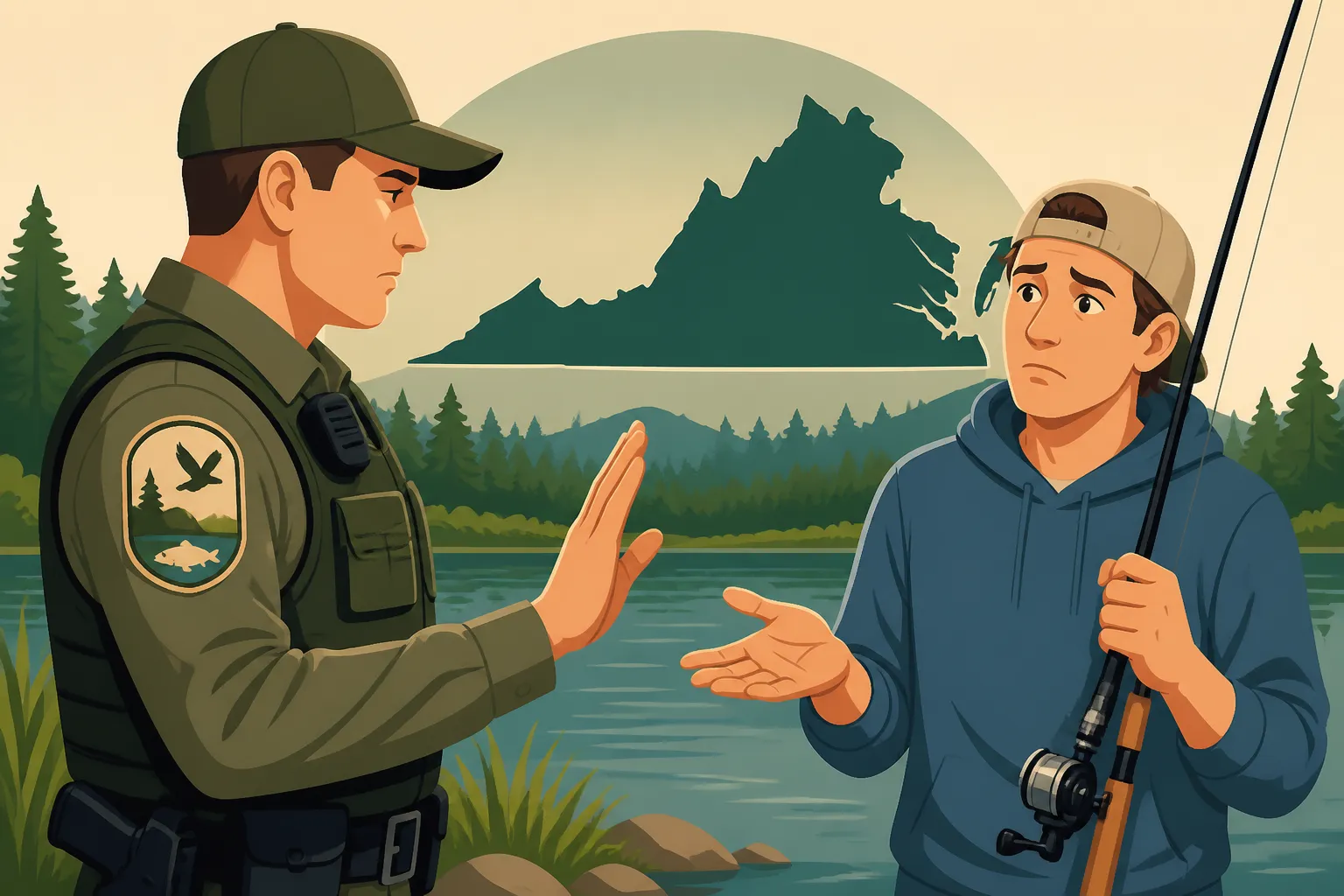
How Virginia wildlife officers handle anglers caught without a license
It's a beautiful day, you're out on the water, rod in hand, feeling that peaceful connection to nature. Then, you see the unmistakable boat or uniform of a Virginia Department of Wildlife Resources (DWR) officer approaching. A knot forms in your stomach if you suddenly realize you might not have your fishing license on you, or worse, never got one. It's a common fear, and the consequences can range from a minor inconvenience to a hefty fine. This guide will walk you through exactly how Virginia wildlife officers handle situations where anglers are caught without a valid fishing license, what to expect, and how to avoid this stressful scenario altogether.
The Initial Encounter: When a Virginia Game Warden Approaches
There's a certain feeling of anticipation when you're fishing, but it's usually for a bite on your line, not a DWR officer pulling up alongside you. However, these interactions are a routine part of ensuring everyone is fishing responsibly and legally. Most of the time, these encounters are professional and straightforward, as long as you cooperate.
The Standard Procedure During a Stop
When a Virginia game warden, also known as a DWR Conservation Police Officer, approaches you on the water or at a fishing access point, their primary goal is to check for compliance with state fishing regulations. This includes ensuring you have a valid fishing license. They are highly trained law enforcement officers, and their approach is typically calm and direct.
They will usually identify themselves as DWR officers and explain that they are conducting a routine check. They might ask to see your fishing license, your identification, and possibly inspect your catch to ensure it complies with size and creel limits. It’s important to remember that these officers are tasked with protecting Virginia's natural resources and ensuring fair chase, so their presence is for the benefit of all anglers and wildlife. They often patrol popular fishing spots like Smith Mountain Lake, Lake Anna, or even the tidal rivers like the James and the Rappahannock. They might be in a patrol boat, a marked vehicle at a boat ramp, or on foot at a pier or shoreline access point.
Your Rights and Responsibilities During an Inspection
During any law enforcement interaction, it's crucial to understand your rights and responsibilities. As an angler in Virginia, you are required to possess a valid fishing license while engaged in fishing activities, unless specific exemptions apply. When asked by a DWR officer, you are obligated to present your license and identification. Refusing to do so can lead to further complications, including immediate citations or even arrest.
You have the right to be treated respectfully and to ask questions about the reason for the stop, though in most cases, it will simply be a routine license and compliance check. It's your responsibility to remain courteous and cooperative. Providing false information or attempting to flee can significantly worsen the situation. Think of it like a traffic stop: you're expected to provide your driver's license and registration. Here, it's your fishing license and identification. If you've ever wondered if rangers can cite you for fishing without a license in Virginia, the answer is a resounding yes. They have full law enforcement authority to do so.
Understanding the Repercussions: Penalties for Unlicensed Fishing
Getting caught without a fishing license is more than just an embarrassment; it carries real legal and financial consequences. The DWR takes these infractions seriously because fishing license fees are vital for funding conservation efforts, stocking programs, and habitat protection across the state. This is clearly explained in resources like How Fishing License Fees Support Wildlife Conservation in Virginia.
Fines and Legal Consequences
In Virginia, fishing without a valid license is a Class 4 misdemeanor. This might sound minor, but a misdemeanor conviction goes on your record and can result in significant penalties. The specific fine amount can vary depending on the officer's discretion, the circumstances of the violation, and whether it's a first offense or repeat offense. Generally, you can expect a fine that is considerably higher than the cost of the license itself. While there isn't one fixed "average fishing license fine amount" that applies universally, it's safe to say it will be a deterrent.
For instance, a resident freshwater fishing license costs around $23, and a saltwater license is about $17.50. You can imagine the sting of a fine that could be several times that amount. In addition to a fine, a judge could impose court costs, and in some severe cases, repeat offenders might face more serious penalties, including suspension of future fishing privileges. It's a scenario that no angler wants to experience, and it underscores the importance of understanding the Virginia Fishing License Guide.
Beyond the Fine: Other Potential Impacts
While the monetary fine is the most immediate concern, getting caught without a license can have other, less obvious impacts.
- Loss of Credibility: An interaction that starts with you not having a license might lead an officer to scrutinize other aspects of your fishing trip more closely, such as catch limits or tackle regulations, even if you are compliant in those areas.
- Legal Record: A misdemeanor conviction, even a minor one, is still a mark on your legal record. While unlikely to impact serious employment prospects, it's something to consider.
- Future Enforcement: If you are cited, that information is recorded. Future encounters with DWR officers might be handled with less leniency if you have a history of non-compliance. Officers often have access to databases that track previous violations.
- Embarrassment and Stress: No one wants to be caught doing something wrong. The stress and embarrassment of receiving a citation can quickly ruin a peaceful day of fishing. Imagine being at a busy boat ramp like those near Lake Gaston or the Chesapeake Bay, and having to deal with this in front of other anglers.
Distinguishing Between Intentional and Accidental Lapses
Virginia DWR officers are experienced in dealing with various situations. They can often distinguish between someone who genuinely forgot their license at home and someone who knowingly chose to fish without one. While the law often doesn't differentiate between intent for a basic infraction, your attitude and cooperation can certainly influence how the officer approaches the situation.
- Genuine Forgetfulness: Perhaps you purchased your license online, forgot to print it, and didn't have it on your phone, or you simply left your wallet at home. If you're cooperative and can quickly verify your license information through the DWR system (which officers can often do on the spot), the officer might exercise discretion, though a citation is still a distinct possibility. They may verify your license is active, but still issue a warning or a reduced fine, or even just require you to show proof of purchase later. This is why knowing How to Check if your fishing license is still active is so important.
- Willful Disregard: If an angler admits they never bought a license, actively tries to evade the officer, or becomes confrontational, the officer will almost certainly issue a citation with the full force of the law. This can include charges for resisting arrest or obstruction, in addition to the unlicensed fishing charge.
The best approach, regardless of the situation, is always to be honest, polite, and cooperative.
Preventing the Problem: Always Be Prepared
The easiest way to avoid the stress and penalties of being caught without a license is, of course, to ensure you always have one and it's valid. Virginia makes it relatively easy to acquire and carry your license. For a complete overview, check out A Complete Guide to Fishing Licenses in Virginia.
Easy Ways to Obtain and Carry Your License
Gone are the days when you absolutely needed a physical paper license. While many still prefer it, digital options are readily available:
- Online Purchase: The Virginia DWR website is the most convenient place to purchase your fishing license. You can do it from the comfort of your home, and within minutes, you'll have a digital copy. Following the Virginia DWR website fishing license purchase steps can make this process even smoother. Many anglers save a screenshot or PDF of their license on their phone.
- In-Person Vendors: If you prefer a physical license or need one immediately while you're out and about, you can visit hundreds of license agents across Virginia. These include sporting goods stores, bait and tackle shops, and even some Wal-Mart locations. Knowing Where to Buy a Virginia Fishing License ensures you're never far from an option.
- Mobile App: The Go Outdoors Virginia app also allows you to purchase and display your license right on your smartphone. This is often the most convenient method for many modern anglers.
- Combination Licenses: If you fish both freshwater and saltwater, consider a combination license. Combining freshwater and saltwater into one Virginia license runs $39.50 for residents, often saving you money and simplifying your documentation.
Always ensure that you have your license on you, whether it's a physical copy, a printout, or a digital version on your phone. It's a simple step that saves a lot of hassle.
Knowing When a License Isn't Required
While a license is generally a must-have, there are a few specific situations where it's not required in Virginia:
- Private Property: If you're fishing in a private pond or lake on your own land, or on land owned by a family member or friend, and that water is entirely enclosed within that property (meaning no fish can enter or exit naturally from public waters), a license is typically not required. However, if the water is connected to public waterways, a license is needed.
- Public Piers: Some publicly owned piers operate under a blanket license, meaning you might not need your own individual saltwater fishing license to fish from them. However, this is not universal and can vary. Always check with the specific pier operator beforehand.
- Free Fishing Days: Virginia offers annual Free Fishing Days, usually in June, where residents and non-residents can fish without a license. This is a fantastic opportunity for new anglers or families to try fishing. For example, Virginia Free Fishing Days in June 2026 will be a license-free weekend. However, all other regulations (size, creel limits, etc.) still apply.
- Age Exemptions: In Virginia, children under the age of 16 do not need a fishing license. This is a wonderful policy that encourages young people to get into the sport. So, if you're wondering Minimum age for needing a fishing license in Virginia, it's 16 years old.
- Senior Exemptions: Virginia also offers special provisions for senior anglers. For instance, Anglers 65 and older fish Virginia's freshwater waters without paying a license fee. There are also specific options for saltwater fishing for seniors.
Always double-check the specific rules for your situation, as regulations can change. Ignorance of the law is not considered a valid excuse.
Checking Your License Status
It's a simple oversight that can happen to anyone: you bought a license last year, but did it expire? Licenses in Virginia are typically valid for one year from the date of purchase, not necessarily the calendar year. So, if you bought it in July, it expires next July.
- DWR Online System: The Virginia DWR has an online portal where you can log in with your customer number and check the status of your existing licenses. This is a quick and easy way to verify if your license is still active before heading out. Regularly checking ensures you avoid any unexpected surprises.
- Email Reminders: Many anglers opt-in for email reminders from the DWR when their license is nearing expiration. This is a great way to stay on top of your renewals. You can also handle Renewing a Fishing License in Virginia through the DWR website.
Making a quick check before each season, or even before a major fishing trip, can save you a world of trouble.
What to Do If You're Caught Without a License
Despite all your best efforts, sometimes things happen. Maybe your phone died and you couldn't display your digital license, or you genuinely misplaced your wallet. If a DWR officer determines you are fishing without a valid license, here's how to navigate the situation.
How to React and Cooperate
Your demeanor during the encounter can significantly impact how the situation unfolds.
- Stay Calm and Courteous: This is paramount. An officer is more likely to be understanding if you are polite and respectful, even if you are stressed or upset.
- Be Honest: If you genuinely forgot your license or it expired, explain the situation honestly. Do not lie or make up excuses. Officers are trained to detect dishonesty.
- Provide Identification: Present your driver's license or other valid government-issued identification when requested.
- Attempt to Verify (if possible): If you know you purchased a license and just don't have the physical or digital copy, offer to try and pull it up on your phone (if it has power) or explain how the officer might be able to verify it in their system. The DWR system is robust, and officers often have access to angler databases.
- Understand the Outcome: The officer will likely explain the violation and the potential penalties. In most cases, they will issue you a summons or citation (ticket) to appear in court or pay a fine. Listen carefully to their instructions.
While an officer might issue a warning for a minor, verifiable lapse, especially for a first offense with full cooperation, it's not guaranteed. Be prepared for a citation, which is the most common outcome. This directly addresses What happens if you get caught fishing without a license.
Contesting a Citation
If you receive a citation for fishing without a license, you have the right to contest it in court. This typically involves appearing before a judge in the General District Court in the locality where the offense occurred.
- Review the Citation: Carefully read the citation for accuracy regarding your personal information, the date, time, and specific charge.
- Gather Evidence: If you believe you had a valid license at the time of the incident, gather proof. This could be a printout of your license purchase, a screenshot of your digital license with the date of validity, or a bank statement showing the purchase.
- Consult Legal Advice: For more complex situations, or if you believe the citation was issued in error, consider consulting with an attorney. They can advise you on the best course of action and represent you in court.
- Present Your Case: In court, you will have the opportunity to present your defense to the judge. If you can provide clear proof that you possessed a valid license at the time of the citation, the charge may be dismissed. However, simply having a license but not presenting it to the officer can still be a violation in some instances, though the penalty might be less severe.
Remember, the goal is to avoid this entire stressful process by simply ensuring you are always compliant with Virginia's fishing license requirements. It's a small step that pays off in peace of mind and ensures you're contributing to the conservation of Virginia's incredible aquatic resources.
Disclaimer
The information provided in this guide is for general informational purposes only and does not constitute legal advice. Fishing regulations and laws can change, and individual circumstances vary. Always consult the official Virginia Department of Wildlife Resources (DWR) regulations or a legal professional for the most accurate and up-to-date information regarding fishing licenses and penalties in Virginia.