How to Catch a Trophy Largemouth Bass at Smith Mountain Lake
Chasing a true trophy largemouth bass at a vast, complex fishery like Smith Mountain Lake can feel like searching for a needle in a haystack, leaving many anglers frustrated and empty-handed. But don't despair! This comprehensive guide will peel back the layers of this incredible Virginia lake, helping you understand the habits, habitats, and winning techniques needed to significantly increase your chances of landing that lunker you've been dreaming about.
Understanding Smith Mountain Lake's Unique Largemouth Bass Habitat
Smith Mountain Lake, often affectionately called "SML" by locals, isn't just another pretty body of water. It's a massive, deep impoundment with a diverse topography that creates a truly unique environment for largemouth bass, especially the trophy-sized ones. Many anglers, especially those new to the lake, underestimate just how crucial understanding this habitat is. You can't just throw a worm anywhere and expect to catch a monster; these fish are creatures of habit and prefer specific conditions.
Think about it: SML has everything from shallow, brush-laden coves to sheer rock walls dropping hundreds of feet, and massive open water stretches. It's not a small, uniform pond. This variety means that bass, particularly the larger, older fish, have their pick of prime real estate. They're looking for comfort, cover, and a consistent food source, and their preferences shift throughout the year. Knowing where they prefer to be and why they're there is your first step to unlocking SML's trophy potential.
Deep Water and Structure: Where Big Bass Live
Unlike smaller, shallower lakes where bass might cruise the shoreline endlessly, Smith Mountain Lake's deep, clear waters often push larger bass to relate to significant underwater structure. We're talking about old roadbeds, submerged timber, bridge pilings, deep docks, humps, ledges, and pronounced channel swings. These aren't just random spots; they offer the bass protection from predators, ambush points for unsuspecting prey, and stable water temperatures.
Imagine a giant bass waiting patiently in the shade of a massive boat dock or tucked along the edge of a deep submerged creek channel. These are prime locations. Fishing these areas effectively requires a good understanding of your electronics, like a reliable fish finder, to pinpoint those subtle changes in depth or structure that might be holding a school of baitfish and, consequently, a lurking lunker. Don't be afraid to fish deeper than you might on other lakes; SML's big bass often suspend or hold tight to structure in depths that would surprise many anglers. Finding the right Where to Catch Largemouth Bass on Smith Mountain Lake is often about identifying these deep-water structural elements.
Forage Base: What Trophy Bass Eat
The diet of a trophy largemouth bass at Smith Mountain Lake is crucial to understanding their movements and feeding patterns. SML boasts a robust forage base, with bluegill, crappie, various species of shiners, and particularly threadfin and gizzard shad being primary food sources. These baitfish schools often dictate where the bigger bass will be holding and feeding. A trophy bass isn't expending energy chasing tiny minnows; it's looking for a substantial meal.
Larger bass are opportunistic predators, and they'll key in on whatever is most abundant and easiest to catch. In some seasons, that might mean ambushing schools of shad in open water, while at other times, they might be picking off bluegill around docks and submerged brush. Mimicking the local forage, both in size and color, with your chosen baits is a highly effective strategy. Consider what the local baitfish look like and where they are concentrated; that's often where the biggest bass will be lurking. Sometimes, the largest bass will even feed on smaller striped bass or other gamefish, showcasing their predatory nature in this rich ecosystem. You'll find that these big bass become incredibly efficient hunters.
Mastering Seasonal Patterns for Smith Mountain Lake Largemouth
Just like any great fishery, Smith Mountain Lake's largemouth bass follow distinct seasonal patterns. What works in spring won't necessarily work in the dead of summer or the chill of winter. Understanding these shifts is absolutely paramount for anyone serious about catching a trophy. It’s not just about what lure to throw, but when and where to throw it based on the water temperature and the bass’s biological clock. Many anglers get frustrated because they stick to one technique year-round, but SML demands versatility. This lake is large enough that localized weather patterns, like a sudden cold snap or a week of warm sunshine, can dramatically impact fish behavior, sometimes even causing different parts of the lake to be in different seasonal phases.
Spring: The Pre-Spawn and Spawn Goldmine
Spring at Smith Mountain Lake is arguably the most exciting time to target trophy largemouth. As water temperatures climb into the 50s and 60s Fahrenheit, bass begin their annual migration from deeper wintering grounds to shallower spawning areas. The pre-spawn period, when fish are actively feeding to build energy for the spawn, is a true goldmine for big bass. They'll be found gorging themselves on baitfish and crawfish around secondary points, creek channels, and gradual sloping banks leading into coves. Pre-Spawn Bass Fishing Tips are essential here.
Once the water hits the mid-60s, the spawn begins. Look for bass on beds in protected coves, along sandy or gravelly banks, and around submerged brush in shallower water. While sight-fishing for bedding bass can be effective, remember that these fish are often less interested in eating and more focused on reproduction. A subtle presentation, like a weightless Senko or a small jig, placed directly on the bed can provoke a strike. Even after the immediate spawn, the post-spawn period still holds promise, as females recuperate and feed aggressively before heading back to deeper water.
Summer: Deep Water and Night Fishing Tactics
When the scorching Virginia summer hits and water temperatures soar, SML largemouth often seek refuge in deeper, cooler water. You'll find them relating to offshore structure: humps, ledges, deep points, and submerged timber. Fishing these areas effectively often means using heavy jigging spoons, deep-diving crankbaits, or dragging Carolina rigs across the bottom. Best Lures for Summer Bass Fishing often include these options.
Another highly effective, and often overlooked, summer strategy for trophy bass is night fishing. Under the cover of darkness, big bass will often move shallower to feed, especially around lighted docks, bridge pilings, and rocky banks. Large dark-colored spinnerbaits, Jitterbugs, or big plastic worms worked slowly can be incredibly productive. The key to How to Catch Bass at Night in Summer is often stealth and patience, as the fish can be skittish under artificial lights.
Fall: Following the Baitfish
Fall at Smith Mountain Lake is a glorious time to be on the water, and it often brings with it some of the most consistent trophy largemouth fishing. As water temperatures begin to cool, the baitfish – particularly the huge schools of shad – move into shallower creeks and coves. The bass, including the big ones, follow right on their heels, creating incredible feeding frenzies. This is when aggressive power fishing techniques truly shine.
Look for areas where baitfish are schooling near the surface, often indicated by diving birds or active busting fish. Throwing spinnerbaits, buzzbaits, topwater plugs, and lipless crankbaits can be incredibly effective during this period. The bass are actively chasing, so don't be afraid to make long casts and cover a lot of water. As fall progresses and temperatures drop further, the bass will start to position themselves on deeper secondary points and creek channel bends, staging for their winter homes.
Winter: Slow Presentations in Cold Water
Winter fishing for trophy largemouth at Smith Mountain Lake can be challenging, but it can also produce some of the biggest fish of the year for dedicated anglers. Bass become sluggish in cold water and won't chase a lure very far. They conserve energy, often hunkering down on deep main lake points, channel swings, and around massive submerged timber. The name of the game here is slow, meticulous presentations.
Jigs, especially football jigs or skirted jigs with a creature bait trailer, fished painfully slow along the bottom are deadly. Vertical jigging spoons dropped directly onto schools of bait or individual fish marked on your electronics can also elicit strikes. Alabama rigs, fished slowly, can also tempt reluctant giants. Remember, one or two bites in a winter day can mean the difference between an average fish and a true trophy. Patience is not just a virtue in winter; it's a necessity. Don't be surprised if the bite feels like a subtle weight on your line rather than an aggressive thump. If you master How to Catch Bass in Cold Water, you'll be ahead of many anglers.
Top Techniques and Baits for Trophy Largemouth
When you're specifically targeting those elusive trophy largemouth at Smith Mountain Lake, you need to think beyond just "fishing for bass." You're hunting for a particular class of fish, and that often means using specific techniques and baits that appeal to their size and predatory instincts. The biggest bass in SML didn't get big by being careless; they're smart, often wary, and require a different approach. Having a diverse tackle box, readily available from retailers like Amazon, allows you to adapt to the changing conditions and moods of these giants.
Jigs and Carolina Rigs for Bottom Dwellers
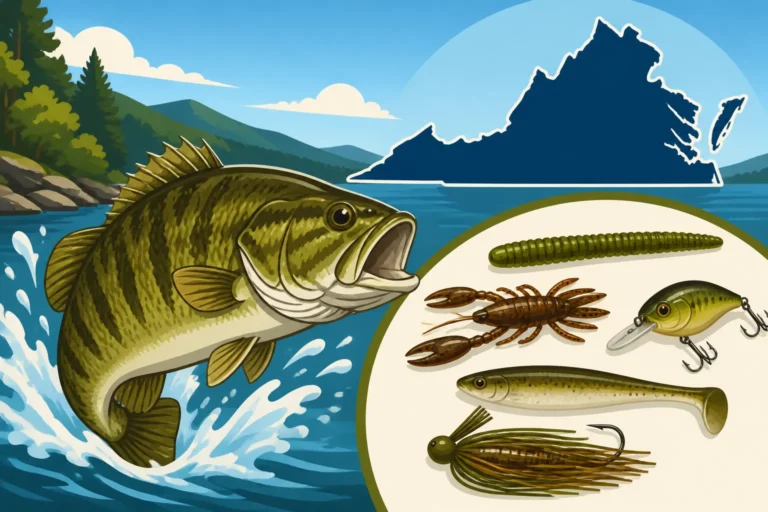
For targeting trophy largemouth that are holding tight to deep structure or are focused on crawfish and bottom-dwelling prey, jigs and Carolina rigs are absolute necessities. A heavy jig, like a 1/2 oz or 3/4 oz football jig, tipped with a bulky plastic trailer, can be slowly dragged or hopped along ledges, rock piles, and submerged timber. The key is to feel every rock, every branch, and every subtle change in bottom composition. How to Fish a Jig for Largemouth Bass involves patience and a good feel for your line.
Carolina rigs, with their separated weight and lure, allow a plastic lizard, creature bait, or worm to float tantalizingly above the bottom, making it an irresistible target for big bass. This rig excels when fish are scattered on deeper flats or when you need to present a bait subtly without spooking them. Vary your retrieve, but generally, a slow, dragging motion with occasional pauses is most effective. These presentations mimic the natural movements of prey that big bass are used to ambushing.
Crankbaits and Swimbaits for Covering Water
When bass are actively feeding and spread out, or when you need to quickly locate schools of baitfish and the bass that are feeding on them, crankbaits and swimbaits are invaluable. Deep-diving crankbaits can reach those offshore ledges and humps, deflecting off structure to trigger reaction strikes. Match the size and color to the prevalent baitfish in the lake. Remember that Best Crankbait Retrieve for Largemouth Bass often involves varying your speed and incorporating pauses.
Large swimbaits, whether soft plastic or hard-bodied, are excellent choices for imitating the bigger shad and other forage fish that trophy bass prefer. These baits are designed to mimic a natural swimming action and can draw strikes from reluctant giants, especially when fished around schools of bait or over submerged cover. Some anglers find success on Amazon searching for specific swimbait brands that mimic SML's baitfish. Don't be afraid to throw a larger swimbait; a true trophy bass isn't intimidated by a big meal.
Topwater Action and Frogs in the Shallow Cover
There's nothing quite as exhilarating as a trophy largemouth exploding on a topwater lure. While not an all-day, every-day technique, topwater fishing for big bass at SML can be incredibly effective during low-light conditions (dawn and dusk), on cloudy days, or when fish are feeding aggressively in shallow water. Large poppers, walking baits, and buzzbaits can draw heart-stopping strikes.
In areas with dense shallow cover, such as lily pads, matted grass, or thick brush, weedless frogs or hollow-bodied topwater baits are the undisputed champions. These baits allow you to cast directly into heavy cover where other lures would snag, enticing bass that are hidden beneath. Work them slowly and deliberately across the mats, pausing at open pockets or edges. The explosion of a big bass on a frog in thick cover is an unforgettable experience, and many anglers stock up on their favorite frog patterns from Amazon for this very reason.
Gear and Mindset for Targeting Giants
Catching a trophy largemouth bass at Smith Mountain Lake isn't just about knowing where they live and what they eat; it's also about being properly equipped and having the right mental approach. These fish are powerful, and hooking into a lunker requires gear that can handle the fight, as well as a mindset focused on patience, persistence, and problem-solving. It's a journey, not a sprint, and every detail, from the strength of your line to your readiness for a strike, counts.
Rods, Reels, and Line: The Right Tools for the Job
When targeting trophy bass, your gear needs to be up to the task. Skimping on tackle is a common mistake that leads to heartbreak. For jigs and Carolina rigs, a sensitive yet powerful baitcasting rod (7' to 7'6" medium-heavy to heavy action) paired with a high-quality baitcasting reel with a strong drag is ideal. This allows you to feel subtle bites and pull big fish out of heavy cover. For lines, fluorocarbon (15-20lb test) is excellent for its low stretch, sensitivity, and invisibility underwater, particularly in SML's clear waters.
For crankbaits and swimbaits, a slightly more moderate action rod (7' to 7'10" medium-heavy) can help with casting distance and absorb the shock of a strike, preventing hooks from tearing out. Monofilament or a softer fluorocarbon line (12-17lb test) works well here. Topwater fishing might call for a shorter, lighter rod for accuracy, but always ensure your line is robust enough (mono or braided line, 30-50lb test, for heavy cover) to handle violent strikes and potential snags. Always check your knots and inspect your line for abrasions regularly. Having extra spools of line on hand, easily ordered from Amazon, is a smart move.
Here's a quick reference for common trophy bass setups:
| Technique | Rod Action | Reel Type | Line Type & Test (lbs) | Notes |
|---|---|---|---|---|
| Jigs / Carolina Rigs | Medium-Heavy to Heavy | Baitcaster | Fluorocarbon 15-20 | Sensitivity is key for bottom contact, power for hooksets. |
| Deep Crankbaits | Medium-Heavy | Baitcaster | Fluorocarbon/Mono 12-17 | Moderate action helps prevent hook pulls; casting distance. |
| Large Swimbaits | Heavy | Baitcaster | Fluorocarbon 17-25 | Handles heavier lures; strong backbone for big fish. |
| Topwater (open water) | Medium | Baitcaster/Spinning | Mono 12-17 / Braid 30-40 | Good for casting accuracy; mono floats, braid cuts through wind. |
| Topwater (heavy cover) | Heavy | Baitcaster | Braid 50-65 | Essential for pulling fish from mats and thick brush. |
Patience and Persistence: The Trophy Hunter's Mantra
More than any specific lure or technique, developing the right mindset is perhaps the most critical component of catching a trophy largemouth bass at Smith Mountain Lake. These fish aren't caught every day, and they certainly aren't caught by anglers who give up easily. There will be long stretches of nothing, frustrating casts, and perhaps even lost fish that haunt your thoughts. This is where Virginia Fishing License Guide knowledge and general Virginia Fishing Regulations Explained come in handy for peace of mind.
A trophy hunter needs patience to meticulously work a promising spot for extended periods, even when it feels unproductive. They need persistence to keep trying new areas, adjusting techniques, and adapting to the conditions, rather than sticking to what "worked last time." The biggest bass are often in the hardest-to-reach places or require the most subtle presentations. Learn from every cast, every bump, and every follow. Embrace the challenge, enjoy the process, and trust that your dedication will eventually pay off. The reward of landing a true Smith Mountain Lake giant is worth every ounce of effort and every moment of anticipation.
Disclaimer
This article is for general informational purposes only and does not constitute professional advice. Laws, prices and regulations vary by location and change over time. Consult a qualified professional for guidance on your specific situation.