Fly Fishing for Smallmouth Bass
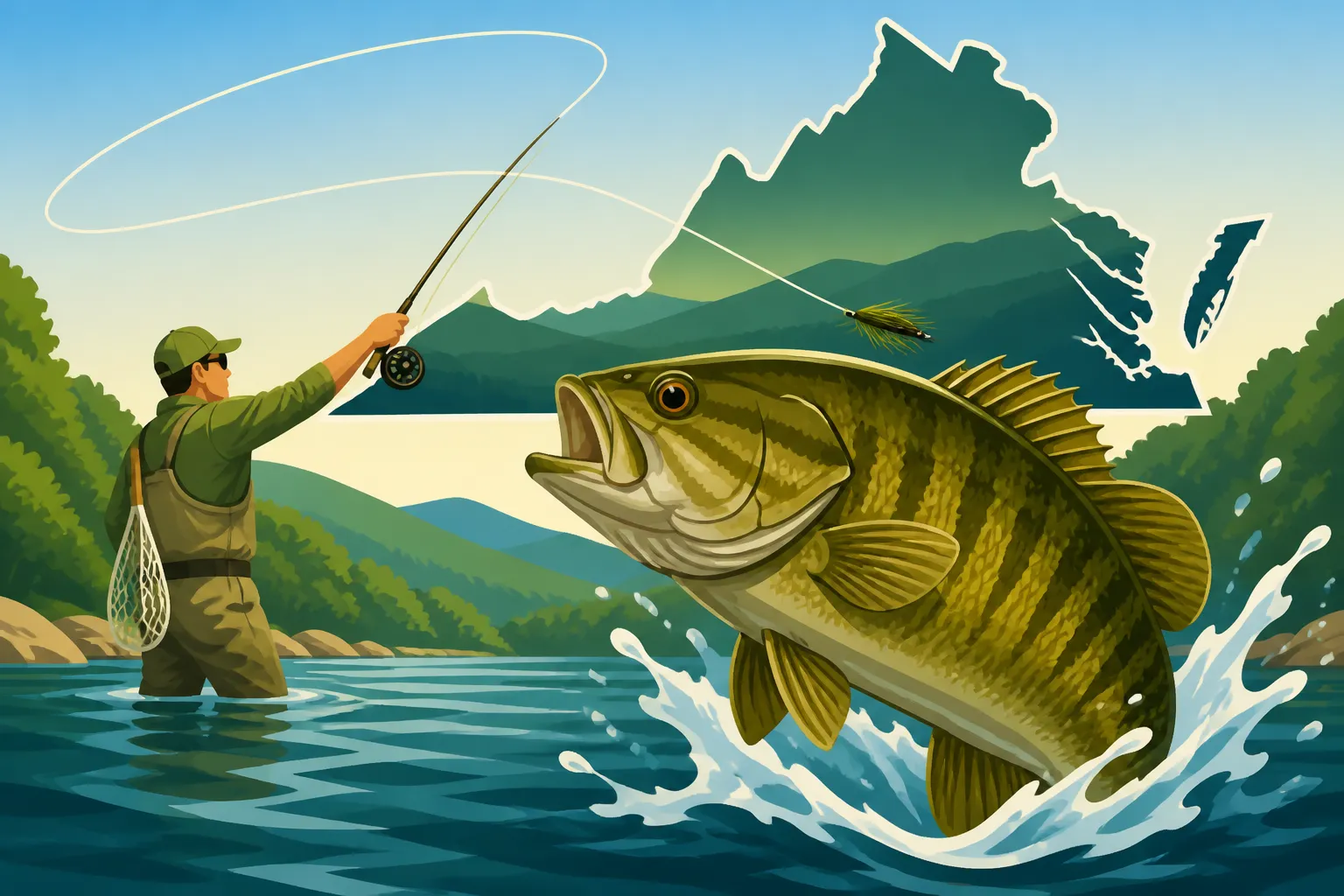
There’s something uniquely challenging and utterly rewarding about chasing smallmouth bass with a fly rod. If you've ever found yourself frustrated by their elusive nature in strong currents or puzzled by which fly to tie on, you're not alone. This guide is dedicated to unlocking the secrets of fly fishing for smallmouth bass in Virginia's incredible rivers, helping you connect with these hard-fighting bronzebacks.
Why Smallmouth Bass on the Fly is So Addictive in Virginia
There’s a reason why so many anglers, once they pick up a fly rod for smallmouth, rarely look back. It’s not just the picturesque settings of Virginia's rivers, but the sheer, unadulterated joy of the pursuit itself. These fish are aggressive, smart, and inhabit some of the most beautiful waters our state has to offer.
The Thrill of the Fight and Virginia's Rivers
Smallmouth bass are often called "bronze bombers" for a very good reason. They are incredibly powerful for their size, capable of explosive runs, acrobatic jumps, and relentless head shakes that will test your tackle and your resolve. Hooking one on a fly rod, especially in the fast-moving currents of a river, amplifies that thrill tenfold. You’ll feel every surge and every headbutt right through the rod, making for an unforgettable experience.
Virginia is blessed with some truly world-class smallmouth fisheries. Rivers like the Shenandoah River Fly Fishing for Trout and Smallmouth Bass in Virginia, with its North and South Forks, are legendary among fly anglers. The Fishing the James River in Virginia also offers fantastic opportunities, especially in its upper and middle sections, where rocky bottom and good current provide ideal smallmouth habitat. And don't overlook the Fishing the Rappahannock River in Virginia, which can also produce some fantastic catches. These rivers aren't just great for the fish; they offer stunning scenery and a real sense of wilderness, even when you're not far from civilization.
Understanding Their Habitat and Feeding Habits
To consistently catch smallmouth on the fly, you need to think like a smallmouth. These fish are masters of ambush, preferring areas where current brings food to them while also offering protection. Look for distinct structures: large boulders, submerged logs, rock ledges, and current seams where faster water meets slower water. These are their prime feeding stations and resting spots.
Their diet is varied, which is fantastic news for the fly angler. Smallmouth feast on crayfish, minnows, hellgrammites, various aquatic insects, and even terrestrial insects that fall into the water. This wide menu means you have a broad array of fly patterns to choose from, allowing you to imitate whatever forage is most abundant in a given season or stretch of river. Understanding what they’re likely eating and where they're holding will dramatically increase your success rate.
Essential Gear for Virginia Smallmouth Fly Fishing
Stepping into fly fishing for smallmouth might seem like a whole new world of gear, and while some specialized equipment helps, it’s not as complicated as it might first appear. The right setup will make your day on the water more enjoyable and productive, allowing you to present flies effectively and handle those feisty fighters.
Rods, Reels, and Lines for River Action
For smallmouth bass, you’ll want a fly rod that can handle larger, wind-resistant flies and has enough backbone to turn a powerful fish in current. A 6-weight or 7-weight rod is generally considered ideal. A 6-weight offers a good balance of finesse for smaller flies and enough power for most river smallmouth, while a 7-weight provides a bit more muscle for bigger fish, heavier flies, or windier conditions. Rods in the 9-foot length are versatile for both wading and boat fishing.
Pair your rod with a reliable reel that has a smooth, adjustable disc drag. While smallmouth often don't take a ton of line, a good drag is essential for those unexpected, powerful runs. Don't skimp on your fly line; it's the most crucial connection between you and the fish. A weight-forward floating line (WF) is a great all-around choice for presenting poppers, streamers, and nymphs. Consider adding a sink-tip line for getting larger streamers down to deeper holding lies, especially in faster current or cooler water. Brands like Scientific Anglers or Rio offer excellent performance and durability, and you can often find a great selection of these on Amazon.
Leaders and Tippets for Stealth and Strength
Smallmouth bass aren't usually as leader-shy as trout, but a well-constructed leader is still vital for good presentation and turning over larger flies. A 7.5 to 9-foot tapered leader, with a strong butt section to transfer energy from your fly line, is a good starting point. For tippet material, fluorocarbon is often preferred over monofilament for its greater abrasion resistance, which is critical when fishing around rocky river bottoms, and its lower visibility underwater.
Typically, you'll want tippet in the 0X to 2X range, depending on the size of your flies and the water conditions. For bigger streamers and poppers, a heavier tippet (like 0X or 1X) will help ensure knot strength and prevent break-offs during a powerful strike. Remember to check your leader and tippet frequently for nicks and abrasions; a weak spot can cost you a trophy fish. Many anglers carry a small spool of high-quality fluorocarbon tippet, like those from Seaguar or Frog Hair, readily available on Amazon, to replace sections as needed.
Waders, Boots, and Safety Gear
Wading is often the most effective way to fish for smallmouth in rivers, allowing you to cover water efficiently and approach fish from the best angles. A good pair of breathable chest waders will keep you comfortable in various temperatures, and a sturdy pair of wading boots is an absolute must. Look for boots with good ankle support and sticky rubber soles, possibly with felt or carbide studs for extra grip on slippery river rocks. Trying to save a few bucks on footwear can quickly lead to a nasty fall.
Beyond keeping you dry, safety is paramount. Always carry a wading staff, especially when exploring new water or crossing swift currents. It provides crucial stability and helps you gauge water depth. If you plan to float sections of river in a kayak, canoe, or raft, a personal flotation device (PFD) is non-negotiable. Additionally, polarized sunglasses are essential not only for eye protection but also for cutting glare and helping you spot submerged structure and even fish. A hat with a brim is also a good idea for sun protection and further reducing glare.
Top Fly Patterns for Virginia Smallmouth Bass
One of the most exciting aspects of fly fishing for smallmouth is the huge variety of flies that can be effective. Smallmouth are opportunistic feeders, and having a good selection of patterns that imitate their natural prey will set you up for success.
Crayfish and Baitfish Imitations
Crayfish are a primary food source for smallmouth bass, especially the larger ones, and a well-presented crayfish imitation can be absolutely deadly. Patterns like the NearNuff Craw, Critter Craw, or even a simple brown or olive Woolly Bugger with some rabbit strip or silicone legs, can entice aggressive strikes. Fish these along the bottom, mimicking a crayfish scuttling or trying to escape. A short, erratic strip-and-pause retrieve often triggers a bite.
Baitfish imitations, or streamers, are another essential category. The Clouser Minnow, in colors like chartreuse and white, olive and white, or grey and white, is perhaps the most famous and effective streamer ever tied. Other great options include the Glimmer Minnow, Lefty's Deceiver, and various articulated streamers that provide lifelike swimming action. These flies are designed to imitate common forage fish like shiners, chubs, and darters. When fishing streamers, experiment with different retrieve speeds and depths until you find what the fish are reacting to. You'll want a variety of sizes, from small 2-inch patterns up to larger 4-inch versions, which can often be found in multi-packs on Amazon.
Poppers and Terrestrials for Surface Action
For sheer excitement, nothing beats a topwater strike from a smallmouth bass. Poppers, gurglers, and various terrestrial patterns fished on the surface provide some of the most heart-stopping action in fly fishing. These flies are typically effective during warmer months, especially in low-light conditions like dawn, dusk, or even under cloud cover. A properly chosen popper, resembling a frog, mouse, or even a struggling insect, can bring smallmouth rocketing from surprising depths.
When fishing poppers, make short, sharp strips that cause the fly to "pop" or "chug" across the surface, mimicking a struggling creature. Allow for plenty of pause between strips – sometimes a smallmouth will strike during the pause, mistaking the motionless fly for an easy meal. Terrestrial patterns like large foam hoppers, beetles, or even Chernobyl Ants can also be incredibly effective, especially during late summer and early fall when these insects are active. The sound of a large hopper landing near a bank can be irresistible to a hungry smallmouth.
Nymphs and Streamers for Subsurface Success
While topwater action is thrilling, most of a smallmouth's feeding occurs below the surface. Having a good selection of nymphs and streamers is crucial for consistent success. Nymphs that imitate hellgrammites, stoneflies, and Dobsonfly larvae are particular favorites of smallmouth. Patterns like the Hellgrammite imitation, Kaufman Stone, and Pat's Rubber Legs are excellent choices. These flies should be fished close to the bottom, often with an indicator, mimicking their natural drift in the current.
Larger streamers, as mentioned earlier, can also be deadly when fished deeper. Think about articulated patterns like the Drunk & Disorderly or the Sex Dungeon that offer more movement and a larger profile. When smallmouth are sluggish due to cold fronts or simply holding deep, a large, heavy streamer stripped slowly near the bottom can often provoke a strike when nothing else will. Don't be afraid to add split shot or use a sink-tip line to get your fly down to where the fish are holding, especially when targeting those bigger bronzebacks.
Here’s a quick overview of some essential fly types:
| Fly Category | Common Patterns | Best Use Case | Preferred Season |
|---|---|---|---|
| Crayfish Imitations | NearNuff Craw, Critter Craw, Rubber Legged Bugger | Fished on bottom, imitating scuttling crayfish | Spring, Summer, Fall |
| Baitfish Streamers | Clouser Minnow, Lefty's Deceiver, Glimmer Minnow | Stripped through current, imitating minnows/chubs | All Year |
| Surface Poppers | Boogle Bug, Gurgler, Frog Poppers | Popped/chugged on surface, imitating frogs/struggling prey | Summer, Warm Fall Days |
| Terrestrial Flies | Foam Hopper, Chernobyl Ant, Deer Hair Beetle | Drifting on surface, imitating fallen insects | Late Summer, Early Fall |
| Large Nymphs | Hellgrammite, Pat's Rubber Legs, Stonefly Nymph | Fished on bottom, imitating aquatic larvae | All Year (especially cooler water) |
Mastering Techniques for Virginia's Smallmouth Rivers
Having the right gear and flies is only half the battle; knowing how to use them effectively is where true mastery comes in. Virginia's rivers present unique challenges and opportunities, and adapting your techniques to the conditions is key.
Reading the Water and Identifying Holding Lies
One of the most important skills in river fly fishing is learning to "read the water." This means understanding how currents flow, where fish are likely to hold, and what structures offer them cover and feeding advantages. Smallmouth bass love current seams—where fast water meets slow water—because it brings food to them while requiring less energy to hold position. Look for these seams along the edges of rapids, behind large boulders, or where tributaries merge.
Eddies, which are pockets of calm water behind obstructions, are also prime holding lies. Fish can rest here out of the main current but dart out to snatch food as it drifts by. Don't overlook riffles, which are shallow, rocky, fast-moving sections; smallmouth often feed actively in these oxygen-rich areas, especially during low light. Deeper pools, especially those with submerged structure like logs or rock ledges, can hold larger fish, particularly during bright sunlight or colder water temperatures. Learning to identify these spots will drastically improve your chances.
Casting and Presentation Strategies
Accuracy often trumps distance when fly fishing for smallmouth. You're usually targeting specific structures or seams, so being able to place your fly precisely is crucial. Practice your roll casts and single-haul casts to present flies quickly and efficiently, especially when wading in tight quarters. When fishing streamers or nymphs, a good cast should allow your fly to swing naturally through the suspected holding lie.
For subsurface flies, understanding how to mend your line is vital for achieving a natural drift. Mending involves repositioning your fly line on the water to prevent drag, allowing your fly to move at the same speed as the current. This makes your imitation look more natural to a feeding smallmouth. When fishing poppers or streamers, the retrieve is just as important as the cast. Experiment with short, sharp strips, longer pulls, and pauses to mimic injured baitfish or struggling terrestrials. Sometimes, a subtle twitch is all it takes; other times, an aggressive strip will trigger a reaction strike.
The Art of the Hook Set and Fight
Smallmouth strikes can be incredibly violent and unexpected. When fishing streamers or poppers, learn to use a "strip set" rather than lifting your rod. This involves pulling your line horizontally with your stripping hand, setting the hook firmly into the fish's hard mouth. Lifting the rod, as you might for trout, often results in a missed fish because you pull the fly away from its mouth before the hook can penetrate.
Once hooked, be prepared for a spirited fight. Smallmouth will often make powerful runs, try to jump, and shake their heads violently. Keep constant tension on the line, but avoid horsing the fish in. Let your rod and reel's drag do the work. If a fish is running downstream into heavy current, try to move with it or apply side pressure to turn its head. Many larger smallmouth are lost in the first few seconds of the fight, so staying calm and focused is critical.
Best Times and Locations for Smallmouth Fly Fishing in Virginia
Knowing when and where to go can make all the difference between a frustrating day and a fantastic one. Virginia offers year-round opportunities for smallmouth, but understanding seasonal patterns and prime locations will greatly enhance your success.
Seasonal Strategies for Virginia's Waters
Spring is often considered prime time for smallmouth, especially the pre-spawn period when fish are moving into shallower, rockier areas and feeding aggressively to build energy for spawning. Post-spawn can also be excellent, as hungry fish recover and resume feeding. During this time, larger streamers and crayfish patterns are particularly effective.
Summer can be fantastic, especially during early mornings and late evenings when water temperatures are cooler and fish are more active in the shallows. Midday in summer often means targeting deeper runs, shady spots, or cooler tributary mouths with nymphs and streamers. Fall brings another feeding frenzy as smallmouth fatten up for winter. This is a great time for streamers and even some large terrestrial patterns. Even winter can offer opportunities on the fly, though it's tougher. Focus on deep, slow pools with slow-moving nymphs or small streamers, fishing during the warmest part of the day.
Key Rivers and Public Access Points
Virginia boasts an impressive network of rivers perfect for smallmouth fly fishing. The Shenandoah River (both North and South Forks) is probably the most famous, offering abundant fish and diverse habitats. The James River provides excellent smallmouth fishing in its upper and middle sections, particularly around Buchanan, Scottsville, and farther downstream. The Rappahannock River near Fredericksburg also holds strong populations.
Accessing these rivers often involves a mix of public boat ramps (many managed by the Virginia Department of Wildlife Resources or DWR), state parks, and even private canoe/kayak liveries that offer shuttle services. When planning your trip, always consult the DWR website for specific access points and up-to-date information on river conditions. Remember, some of the best smallmouth spots might require a bit of a hike or a float trip, so be prepared for some adventure. You can find more detailed information on specific river sections in our guide on Best Smallmouth Bass Rivers in Virginia.
Conservation and Etiquette on the Water
As fly anglers, we have a responsibility to be good stewards of our natural resources. Practicing proper etiquette and conservation techniques ensures that Virginia's amazing smallmouth fisheries remain healthy and enjoyable for generations to come.
Catch and Release Best Practices
While keeping a few smallmouth for the dinner table is certainly an option, many fly anglers practice catch and release, especially for larger fish, to preserve the fishery. When releasing fish, minimize handling as much as possible. Keep the fish in the water while unhooking it. If you must remove it for a quick photo, wet your hands thoroughly first, support the fish horizontally, and return it to the water quickly.
Consider using barbless hooks or crimping down the barbs on your flies. This makes unhooking much easier and causes less damage to the fish. If a fish is deeply hooked, cut the line as close to the hook as possible rather than trying to rip the hook out. The hook will usually dissolve or work itself free over time. Healthy release practices are key to sustainable fishing.
Respecting the Environment and Other Anglers
Always adhere to the "Leave No Trace" principles. Pack out everything you pack in, and if you see trash left by others, consider taking it with you. Respect private property signs and do not trespass. Accessing rivers through public easements or designated access points is crucial for maintaining good relationships with landowners. Understanding Virginia Fishing Regulations Explained and Virginia Fishing Rules Every Angler Should Know is paramount, as laws protect both fish and habitat.
When you encounter other anglers, give them plenty of space. Rivers often have a limited number of prime spots, and everyone deserves their turn. A friendly nod or wave is fine, but avoid loud noises or casting directly into another angler's water. We're all out there to enjoy the peace and beauty of Virginia's outdoors, and a little courtesy goes a long way.
Disclaimer
The information provided in this guide is for general informational purposes only and does not constitute legal or professional advice. Fishing regulations, seasons, and access points in Virginia can change frequently. Always consult the official Virginia Department of Wildlife Resources (DWR) website or publications for the most current and accurate information before planning any fishing trip. Adhere to all local, state, and federal laws and regulations. Fishing carries inherent risks; always prioritize safety on the water.