Wild trout streams versus stocked trout waters explained
It’s a common conundrum for anglers here in Virginia: you hear people talking about fishing for trout, but sometimes they’re chasing after elusive wild beauties, and other times they’re hauling in fish from freshly stocked streams. If you’ve ever felt a bit lost trying to figure out the difference, you’re definitely not alone. It can feel like two entirely different worlds, each with its own set of rules and a completely distinct fishing experience. This guide is here to untangle that confusion, explaining everything you need to know about Virginia's wild trout streams versus our stocked trout waters.
Virginia's Diverse Trout Fisheries: A Tale of Two Worlds
Virginia is truly a gem for trout anglers, offering a stunning variety of fishing experiences from its highest mountain hollows to its more accessible valley rivers. But the journey into trout fishing quickly presents a fork in the road: are you heading into the wild, untamed backcountry, or are you planning a trip to a well-known stocked stream? Understanding this fundamental difference is crucial, not just for following regulations but for truly appreciating the unique challenge and charm of each type of fishery.
Unpacking the Allure of Trout Fishing in the Old Dominion
There's something inherently captivating about trout fishing, isn't there? Perhaps it's the beautiful, cool, clear waters they inhabit, or maybe it's the striking patterns and vibrant colors of the fish themselves. Virginia's western mountains, with their countless cold-water streams and pristine environments, provide ideal habitat for these beloved fish. Here, you'll find healthy populations of native brook trout, the state fish, alongside introduced but well-established rainbow trout and brown trout, each offering a distinct angling challenge. If you're looking to learn more about the different species you might encounter, our guide on Trout Fishing in Virginia: Rainbow, Brown, and Brook Trout is an excellent resource.
Many anglers are drawn to trout fishing because it often means getting out into nature, away from the hustle and bustle. The sounds of rushing water, the scent of pine, and the chance to observe wildlife in its natural habitat are all part of the package. It’s not just about catching fish; it’s about the entire experience of being immersed in some of Virginia’s most scenic landscapes. This deep connection to nature is often amplified when you venture into the more remote wild trout areas, but even a trip to a stocked stream can be a wonderfully relaxing escape.
The Core Distinction: What Sets Wild Apart from Stocked
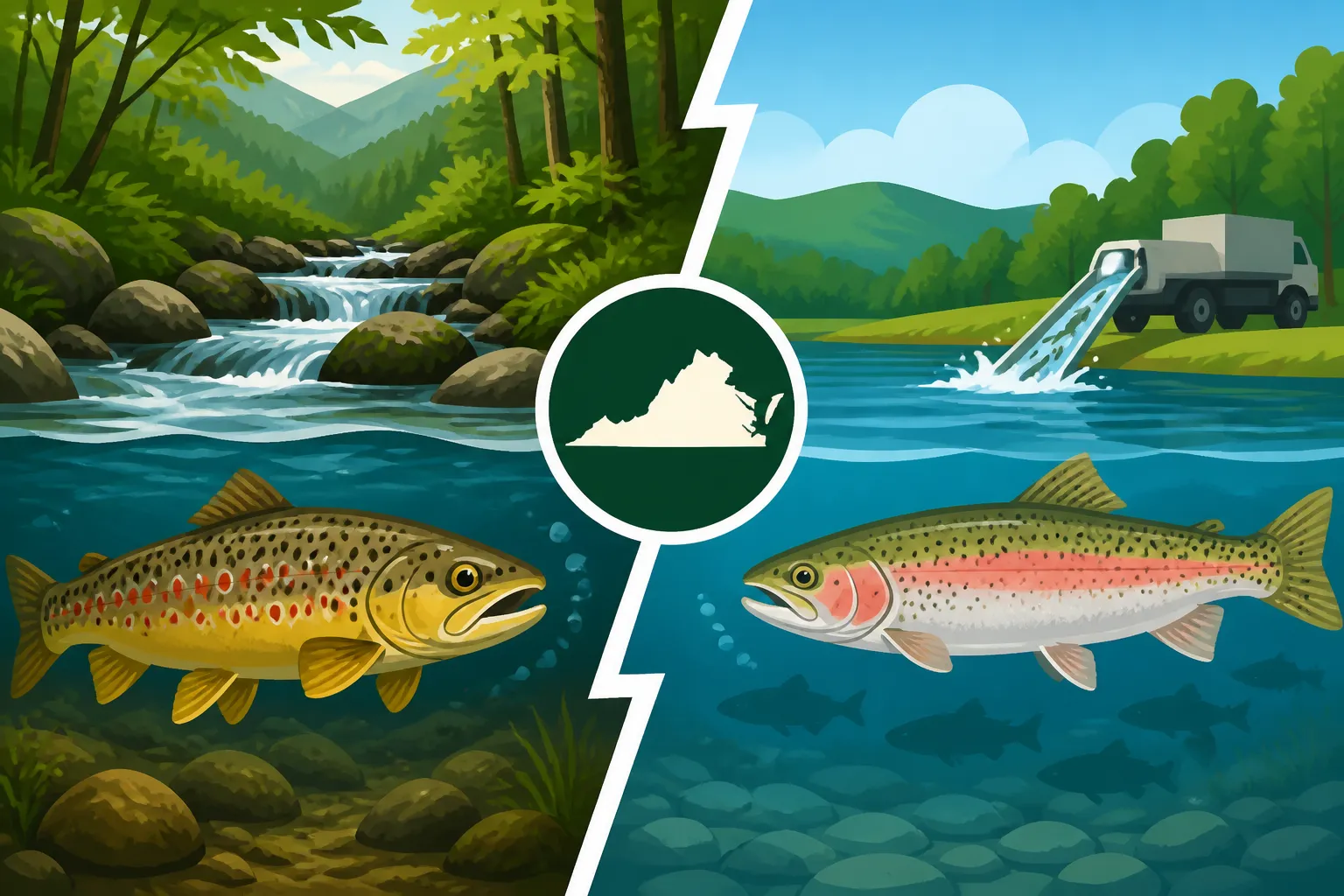
At its heart, the difference between a wild trout stream and a stocked trout water comes down to one simple thing: how the fish got there and how they sustain themselves. Wild trout are, quite simply, born and raised in the stream, reproducing naturally from generation to generation. They are products of their environment, adapted to the specific conditions of their home waters, and their populations are self-sustaining, relying entirely on natural spawning success and habitat quality. These fish tend to be more wary, often smaller, and exquisitely camouflaged to blend into their surroundings.
Stocked trout, on the other hand, are raised in state fish hatcheries by the Virginia Department of Wildlife Resources (DWR) before being released into designated streams, rivers, and lakes. These fish are intentionally introduced to provide angling opportunities where natural reproduction is limited or nonexistent, or to supplement existing populations to handle higher fishing pressure. Because they are raised in a controlled environment and then suddenly released into a new world, they often behave differently than their wild cousins—they might be less cautious and more willing to strike at a wider variety of baits and lures, making them a popular target for many anglers. This difference profoundly shapes the fishing experience, the regulations you'll encounter, and even the type of gear you might choose.
The Untamed Beauty of Wild Trout Streams
For many purists, the ultimate trout fishing experience lies in the pursuit of wild trout. These are the fish that thrive in Virginia's most pristine and often remote waterways, embodying the true spirit of nature. Fishing for them isn't just a sport; it's an adventure, a quest for a connection with the wild.
Characteristics of Pristine Wild Trout Habitats
Imagine crystal-clear mountain streams, tumbling over ancient rocks, shaded by dense canopies of rhododendron and hemlock. These are the typical characteristics of wild trout habitats in Virginia. These waters are often found in higher elevations, within national forests like the George Washington and Jefferson National Forests, or protected areas like Shenandoah National Park. The water itself is exceptionally cold, well-oxygenated, and flows through relatively undisturbed watersheds. The surrounding forest acts as a natural filter, keeping the water pure and providing a constant supply of insects and other food sources. These streams are a testament to healthy ecosystems, and their continued existence relies heavily on minimal human impact. If you're curious about where to find these hidden gems, exploring a guide to the Best Trout Streams in Virginia can offer some fantastic starting points.
What makes these habitats so special is their self-sustaining nature. There are no hatchery trucks here. The trout you find are the offspring of generations of wild fish, perfectly adapted to their environment. This means the health of the trout population is a direct indicator of the health of the stream itself. Factors like water temperature, natural cover, and insect populations are critical. If something disrupts this delicate balance, the wild trout population suffers, highlighting the importance of conservation efforts to protect these precious natural resources.
The Unique Challenge and Reward of Fishing for Wild Trout
Fishing for wild trout is a vastly different ballgame than fishing for stocked fish. These trout are survivors; they're incredibly wary, keenly aware of their surroundings, and will spook at the slightest disturbance. Anglers often describe it as a more intellectual pursuit, requiring stealth, observation, and precise casting. You'll likely spend a lot of time wading, often in rugged terrain, carefully approaching each pool and riffle to avoid detection. The fish themselves, particularly the native brook trout, are typically smaller than their stocked counterparts, but what they lack in size, they more than make up for in fight and vibrant beauty.
The reward isn't necessarily a full creel, but rather the immense satisfaction of outsmarting a truly wild creature in its natural environment. There's a profound sense of accomplishment in coaxing a small brook trout to rise to a dry fly or take a well-presented nymph. The serene solitude, the physical challenge of navigating rugged terrain, and the sheer beauty of the fish you encounter all contribute to an unforgettable experience. It's a sport that teaches patience, respect for nature, and a keen eye for detail. Many who embrace wild trout fishing find it becomes less about the catch count and more about the quality of the experience and the beauty of the fish released.
Navigating Regulations for Wild Trout Waters
Because wild trout populations are delicate and self-sustaining, the Virginia Department of Wildlife Resources (DWR) implements very specific and often stricter regulations for these streams to ensure their long-term health. These rules are designed to protect the breeding stock and minimize impact. For instance, many wild trout streams are designated as "Special Regulation" waters, often requiring the use of artificial lures with single, barbless hooks. This isn't just a suggestion; it’s a strict rule enforced to promote catch-and-release and reduce harm to the fish.
Length limits are also common, with some streams having a minimum size, while others are entirely catch-and-release, meaning every fish you hook must be carefully returned to the water. Creel limits, if they exist at all, are typically very low. It's not uncommon to find areas where the daily limit is just one or two fish, or even zero. Anglers absolutely must consult the current Virginia fishing regulations before heading out, as these rules can vary significantly from stream to stream and are updated regularly. Ignorance of the law is no excuse, and wardens regularly patrol these areas. Our detailed guide on Wild Trout Stream Rules in Virginia provides a deep dive into these specific regulations, which every responsible angler should familiarize themselves with before casting a line.
Exploring Virginia's Stocked Trout Waters
While wild trout fishing offers a rugged, purist's adventure, Virginia's stocked trout waters provide a different, equally enjoyable, and often more accessible angling experience. These waters are a fantastic resource, especially for those new to trout fishing or looking for a more relaxed outing.
Virginia's Stocking Program: Bringing Trout to the Masses
The Virginia Department of Wildlife Resources (DWR) runs an impressive trout stocking program, which is a massive undertaking designed to provide abundant fishing opportunities across the Commonwealth. Every year, millions of hatchery-raised trout—primarily rainbow trout, with a good number of brook and brown trout mixed in—are released into hundreds of miles of designated streams, rivers, and public lakes. These fish are meticulously raised in DWR hatcheries, such as Montebello and Paint Bank, ensuring they are healthy and robust before their release. The stocking schedule is usually announced in advance, often providing specific dates or windows, which is a huge help for anglers planning their trips.
This program is vital because many of Virginia's lower-elevation rivers and ponds simply don't have the consistently cold, clear water necessary to support wild trout populations year-round. By stocking these waters, the DWR effectively creates seasonal trout fisheries, allowing more people to enjoy the sport closer to home. These stocked waters range from scenic mountain rivers accessible by paved roads to urban ponds within city parks, making trout fishing available to a much wider audience. For a comprehensive look at where and when trout are stocked, our Virginia Stocked Trout Season Guide is an invaluable resource that many anglers consult religiously.
The Angler's Experience: Accessibility and Opportunity
The primary draw of stocked trout waters is accessibility and the significantly higher chance of catching fish. Unlike the arduous treks often required for wild trout, many stocked streams have easy access points, paved parking, and even designated fishing piers or bank access. This makes them ideal for families with young children, anglers with limited mobility, or anyone looking for a less strenuous day on the water. The sheer numbers of recently stocked fish also mean that success rates are generally much higher, which is incredibly encouraging for beginners.
You'll often see a vibrant, social atmosphere at stocked trout waters, with families picnicking, friends casting side-by-side, and a general sense of shared enjoyment. Because these fish are raised in hatcheries, they are accustomed to a pellet diet and tend to be less wary of humans and a wider variety of baits. This opens up options beyond specialized fly fishing, making techniques like spin fishing with powerbait, corn, worms, or small spinners incredibly effective. It's a fantastic way to introduce someone to the joys of fishing, providing immediate gratification and building confidence. Our detailed guide to Virginia's Stocked Trout Waters and Seasons offers a more in-depth look at these opportunities.
Understanding Licenses and Rules for Stocked Waters
Fishing in Virginia's stocked trout waters comes with its own set of regulations, which are generally designed to manage harvest and ensure fair access for everyone. The most critical requirement, beyond your basic Virginia freshwater fishing license, is typically a Virginia trout stamp. This stamp is an additional permit that funds the stocking program and is mandatory for anyone 16 years or older who intends to fish in designated stocked trout waters. You might be wondering, Do you need a special license to fish stocked trout waters in Virginia? and the short answer is almost always yes, you'll need that trout stamp!
Creel limits for stocked waters are usually more generous than for wild trout streams, often allowing anglers to keep multiple fish per day, which is a big draw for those who enjoy taking their catch home for dinner. However, these limits are still strictly enforced to prevent overharvest. Stocked waters often have specific seasons (like the general trout season that runs from October to mid-June) outside of which trout fishing might be prohibited or subject to different rules. It's always best to check the DWR regulations annually, as they can change. Failing to have the correct licenses or adhere to the creel limits can result in penalties, so being informed is key to a stress-free fishing trip.
A Side-by-Side Look: Wild vs. Stocked Trout Fishing
Now that we've explored each type of fishery individually, let's put them head-to-head to really highlight the distinct differences. This comparison isn't about which is "better," but rather which experience aligns more with what you're looking for on any given day.
Comparative Fishing Experience and Angler Skill
The table below provides a quick summary of the key distinctions between wild and stocked trout fishing in Virginia. As you can see, almost every aspect of the experience shifts depending on whether you're targeting naturally reproducing fish or hatchery-raised ones.
| Feature | Wild Trout Streams | Stocked Trout Waters |
|---|---|---|
| Fish Origin | Natural reproduction, self-sustaining populations | Hatchery-raised, introduced by DWR |
| Typical Size | Generally smaller (6-12 inches common) | Can be larger (8-16+ inches common) |
| Fish Behavior | Very wary, stealthy, strong fighting | Less wary, more predictable, still good fight |
| Location | Remote, high-elevation, pristine wilderness | Accessible, often lower-elevation, near roads/towns |
| Accessibility | Challenging, often requires hiking/wading | Easy, often paved access, family-friendly |
| Catch Rate | Lower, requires skill and patience | Higher, good for beginners |
| Preferred Gear | Light fly rods, ultra-light spinning gear | Spin rods, baitcasters, fly rods |
| Regulations | Stricter (catch & release, artificial lures) | More liberal (harvest-oriented, bait allowed) |
| License Needed | Freshwater fishing license | Freshwater fishing license + Trout Stamp |
Beyond these points, the overall ambiance is strikingly different. Wild trout streams offer solitude and a deep immersion in wilderness. The challenge is integral to the reward. Stocked waters, conversely, provide a social atmosphere and a more immediate reward of a tug on the line. For fly anglers, fishing wild trout streams often means delicate presentations with tiny flies, while on stocked waters, you might find success with larger, more aggressive patterns or even nymphing techniques that imitate the hatchery food. Our guide on Fly Fishing for Trout on Rivers details some of the methods used on both types of waters.
When it comes to tackle, a super-light setup for wild trout is often key to delicate casts and feeling subtle bites, whereas for stocked trout, you can often get away with slightly heavier gear, especially if you're using bait. For instance, if you're gearing up for a stocked water adventure, you might find a great selection of basic spinning rods, reels, and a variety of power baits or worms on a site like Amazon, perfect for those eager hatchery trout. For the wild streams, you might be looking for more specialized, sensitive fly rods or ultra-light spinning outfits, also readily available from various retailers, including larger online platforms.
Conservation and Management Perspectives
The management of wild versus stocked trout populations highlights different conservation priorities. For wild trout streams, the focus is almost entirely on habitat preservation and protection. This means ensuring water quality, maintaining natural riparian zones, preventing erosion, and managing surrounding land use. The DWR works tirelessly to monitor these populations and their habitats, often implementing regulations that prioritize the health of the ecosystem over angler harvest. Every fish released in a wild trout stream is a bonus, but the primary goal is to let nature run its course. This approach is fundamental to long-term ecological health and supports the biodiversity of Virginia’s natural heritage.
The stocked trout program, while providing recreational opportunities, also plays a crucial role in conservation by relieving pressure on wild populations. By offering easily accessible and abundant fishing in stocked waters, the DWR can encourage anglers to fish there, thereby reducing the impact on fragile wild trout streams. The revenue generated from trout stamp sales directly supports the hatcheries and stocking efforts, contributing to a self-sustaining cycle that benefits both anglers and the broader ecosystem. This is a powerful example of How Fishing License Fees Support Wildlife Conservation in Virginia. It's a pragmatic approach to providing enjoyment for anglers while safeguarding the more sensitive wild resources, ensuring that Virginia’s fishing legacy continues for generations to come.
Making Your Choice: Which Trout Adventure is Right for You?
Deciding between wild and stocked trout waters isn't about one being inherently superior; it's about what you hope to gain from your fishing trip. Both offer unique rewards, and often, the most experienced anglers enjoy a mix of both throughout the year, depending on their mood and objectives.
Deciding Based on Your Fishing Goals and Experience
If you're a seasoned angler who craves a challenge, enjoys solitude, and finds immense satisfaction in outsmarting a truly wild creature, then Virginia's wild trout streams are calling your name. These trips are less about filling a cooler and more about the art of the pursuit, the beauty of the surroundings, and the connection with untouched nature. They require patience, skill, and a willingness to explore off the beaten path. If you value pristine environments and the subtle dance of a well-placed fly, then the wild waters will undoubtedly offer an unforgettable experience.
Conversely, if you're new to fishing, introducing children to the sport, or simply looking for a relaxing day with a higher likelihood of catching fish, then stocked trout waters are an excellent choice. These locations are designed for accessibility and success, providing a fun and often social environment where the joy of a bending rod is almost guaranteed. They’re perfect for building confidence, practicing basic techniques, and simply enjoying the outdoors without the intense pressure or physical demands of a wild trout excursion. Many families find stocked ponds and rivers to be ideal for creating cherished fishing memories.
Equipping Yourself for Success in Any Trout Water
No matter which type of trout water you choose, having the right gear can significantly enhance your experience. For wild trout streams, precision and stealth are paramount. You'll want a lightweight rod and reel, often a 2-5 weight fly rod for fly fishing, or an ultra-light spinning rod if you prefer conventional tackle. A good pair of waders (often available on Amazon for convenience) will be essential for navigating uneven streambeds, and a small backpack with water, snacks, and a first-aid kit is always a good idea. Lure choices are usually limited to artificial flies or small spinners, and it's always smart to have a variety. Many experienced wild trout anglers rely on specific insect imitations, and you can find a vast array of these specialty flies online.
For stocked waters, your gear can be a bit more versatile. A medium-light spinning rod and reel combo will work perfectly. You can use a wider range of baits, from powerbait and corn to worms or small inline spinners. While waders can still be useful, many stocked waters have good bank access, making them less critical. A tackle box stocked with hooks, sinkers, bobbers, and a few different lure options will serve you well. Again, platforms like Amazon offer a huge selection of affordable and effective gear for stocked trout fishing, making it easy for beginners to get started without breaking the bank. Don't forget a net, especially for those bigger stocked trout, and a cooler if you plan on keeping your catch. For bait choices, especially for those hungry rainbow trout, Best Bait for Rainbow Trout in Mountain Streams can give you some excellent pointers, even for stocked waters.
Ultimately, the best advice is to try both! Virginia offers incredible opportunities in both wild and stocked trout fisheries, and experiencing both will give you a full appreciation for the diversity and richness of our state’s angling landscape. Happy fishing!
Disclaimer
The information provided in this guide is for general informational purposes only and is not intended as legal advice regarding fishing regulations. Virginia's fishing laws and regulations, especially concerning specific waters and trout seasons, can change frequently. It is the angler's responsibility to consult the most current regulations published by the Virginia Department of Wildlife Resources (DWR) before engaging in any fishing activity. Always verify license requirements, creel limits, length limits, and gear restrictions for the specific body of water you intend to fish. Fishing without a valid license or in violation of regulations can result in significant penalties.