Yellow Perch Fishing Tips for Virginia Anglers
It’s easy to get caught up chasing the flashier, bigger game fish like largemouth bass or striped bass here in Virginia. We all dream of that trophy catch, right? But in doing so, many anglers completely overlook one of the most abundant, willing-biting, and frankly, delicious fish swimming in our waters: the humble yellow perch. If you’ve been skipping over these striped beauties, you’re missing out on some fantastic fishing action, especially for a relaxed day on the water or introducing new anglers to the sport. This guide is all about giving you the inside scoop on how to target and successfully catch yellow perch across Virginia.
Understanding Yellow Perch in Virginia Waters
Before we even think about casting a line, it's really helpful to get to know our target species. Yellow perch are often overshadowed, but they are a fantastic sport fish in their own right, offering consistent action and a tasty reward. Understanding their looks, where they hang out, and what makes them tick is the first step to a successful day.
Identifying Yellow Perch
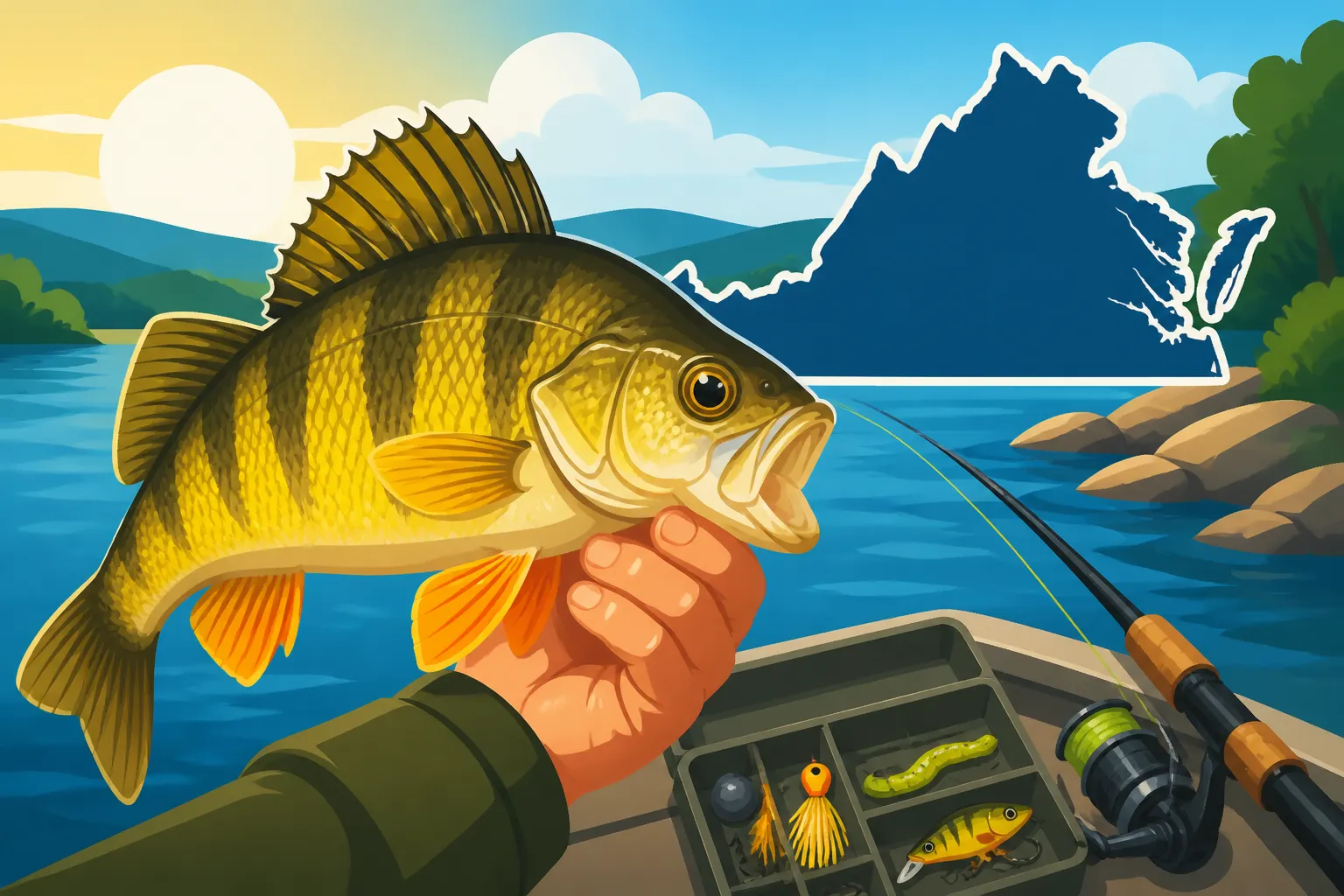
When you pull a yellow perch from the water, you'll immediately notice its distinct appearance. They typically have a brassy yellow to golden-yellow body, marked by six to eight dark, vertical bars that run down their sides. These bars often fade towards their belly, which is usually white or pale. Their fins, especially the pectoral and pelvic fins, often have a vibrant orange or reddish hue, adding to their appeal. They have two dorsal fins, the first being spiny and the second soft-rayed, and a slightly hump-backed shape.
Size-wise, most yellow perch you’ll catch in Virginia will range from 6 to 10 inches, making them perfect panfish. However, don't be surprised if you occasionally hook into a larger one, sometimes stretching to 12 or 14 inches, especially in productive waters. These bigger "jumbos" are a real treat! They’re not just pretty; their firm, white flesh makes them a top choice for the dinner table, which is a big part of their appeal. Don't confuse them with their similar-looking cousins like the White Perch vs Yellow Perch: How to Tell Them Apart.
Where to Find Yellow Perch in Virginia
Yellow perch are incredibly adaptable and can be found in a wide variety of freshwater and brackish environments across Virginia. You'll encounter them in many of our larger lakes, calmer rivers, and especially in the tidal rivers and estuaries that feed into the Chesapeake Bay. Think about places where the water flow isn't too strong, and there's plenty of underwater structure or vegetation to provide cover and ambush points.
They absolutely love living around submerged logs, rock piles, weed beds, docks, and bridge pilings. In deeper lakes, you might find them schooling near humps, drop-offs, or along contours. In tidal rivers, they’ll often congregate in the deeper bends, around oyster reefs, or near creek mouths where current brings food. Essentially, if there's cover, a food source, and water that isn't too fast, yellow perch are likely to be there. This makes them a great target for anglers who prefer Shore Fishing Access Points in Virginia as well as those with boats.
Yellow Perch Behavior and Feeding Habits
One of the most appealing traits of yellow perch is their schooling behavior. Where you find one, you’re often likely to find many! This means once you locate a school, you can enjoy some fast-paced action. They are typically most active during the cooler parts of the day – early morning and late evening – but they’ll bite throughout the day, especially if the weather is overcast or during specific seasons. They're also notorious for being a fantastic winter ice fishing target in northern climates, and even in milder Virginia winters, they can be caught in good numbers when other fish are sluggish.
Their diet is quite varied, making them receptive to a range of baits and lures. Yellow perch are opportunistic feeders, munching on anything from insect larvae, nymphs, and small crustaceans to tiny minnows and other juvenile fish. This broad diet means you have a good chance of success with both live baits that mimic their natural food sources and small artificial lures that imitate these same meals. Understanding these feeding patterns is key to choosing the right presentation, whether you're targeting Panfish Species Every Virginia Angler Should Know or specific larger game.
Essential Gear and Bait for Yellow Perch
You don't need a boatload of fancy, expensive gear to have a blast catching yellow perch. In fact, keeping it simple and light is often the most effective approach. This section will walk you through the basic setup that will put you in the best position for success.
Rods, Reels, and Line
For yellow perch, the name of the game is light tackle. An ultralight or light action spinning rod, typically 5 to 6 feet in length, is absolutely perfect. This type of rod will allow you to cast small, lightweight lures and baits effectively, and more importantly, it will make even a modest 8-inch perch feel like a champion fighter. The sensitivity of a light rod also helps you detect those subtle "taps" that perch often deliver, especially when they're biting cautiously. You don't want a heavy rod that makes every bite feel like a snag.
Pair that rod with a small spinning reel (something in the 500 to 1000 size range) spooled with 4 to 6-pound test monofilament or fluorocarbon line. Monofilament offers a bit more stretch, which can be forgiving when a perch makes a sudden move, while fluorocarbon is nearly invisible underwater and has less stretch, offering more sensitivity. Braided line (4-8 lb test) can also work, especially if you add a fluorocarbon leader, giving you incredible sensitivity and casting distance. Remember, these are not huge fish, so finesse is usually more effective than brute force. You can find excellent ultralight combos and various fishing lines on sites like Amazon, ready to ship right to your door.
Best Baits and Lures
This is where the fun really begins, as yellow perch aren't terribly picky!
For live bait, you really can’t go wrong with small minnows (often called "shiners" or "fatheads"). They are a natural food source for perch and are incredibly effective, especially when fished under a bobber or on a small jig head. Worms, particularly pieces of nightcrawlers or small redworms, are another universal favorite. Grubs, wax worms, or even mealworms are also excellent choices, especially when threaded onto tiny jigs. These natural scents and movements are often irresistible to a hungry perch.
When it comes to artificials, small jigs are your best friend. Think 1/32 to 1/16 ounce jig heads tipped with small soft plastics like grubs, twister tails, or tiny straight-tail worms (1 to 2 inches long). Colors like chartreuse, white, yellow, and black are often very productive. Small spinnerbaits (like Beetle Spins), tiny inline spinners (sizes 0-2), and even diminutive spoons can also entice aggressive perch. Experiment with different colors and sizes until you find what they're hitting on that particular day. Again, a quick search on Amazon will show you the incredible variety of effective lures available for these panfish.
Here’s a quick comparison of popular baits and lures:
| Bait/Lure Type | Pros | Cons | Ideal Conditions |
|---|---|---|---|
| Small Minnows | Highly effective, natural attraction, good scent | Can be delicate, need live bait care | All conditions, especially cold |
| Worms (pieces) | Universal appeal, easy to find, good scent | Can be easily stolen, less active movement | All conditions, slow bite |
| Small Jigs | Versatile, good for different depths, visual | Requires active presentation | Active fish, vertical fishing |
| Inline Spinners | Covers water quickly, flash and vibration | Less effective in heavy cover, can twist line | Searching for fish, open water |
| Small Spoons | Flashy, can be cast far, good for deeper water | Can snag easily in heavy cover, less subtle | Deeper water, aggressive fish |
Terminal Tackle Essentials
Keeping your terminal tackle simple and appropriate for the size of the fish is crucial. You’ll want very small, sharp hooks – Aberdeen hooks in sizes 6 to 10 are ideal for live bait as they are thin and don't harm the bait as much. Jigs will have their own hooks, but make sure they are similarly small. When fishing with live bait, a small split shot weight or two, crimped a foot or so above your hook, will help your bait sink to the desired depth.
Bobbers are also essential for visual strike detection and for suspending your bait at a specific depth. Small clip-on or slip bobbers work well. A slip bobber is particularly useful for fishing deeper water, as it allows you to easily cast and then lets the line slide through the bobber stopper to the desired depth. Always carry extra hooks, weights, and bobbers, because sometimes the fish (or snags!) just keep taking them. For a more direct way to compare different setup styles, you might look into how to set up for Crappie Tightlining Basics, as similar principles apply.
Top Techniques for Virginia Yellow Perch Anglers
Yellow perch are cooperative, but understanding a few key techniques can significantly increase your catch rate and make your time on the water even more rewarding. It's all about presentation and getting your bait where the fish are.
Jigging and Vertical Presentation
Jigging is arguably one of the most effective ways to catch yellow perch, especially when they are schooled up or holding in deeper water or around structure. The idea is to present a small jig or a jig-and-bait combination directly to them. This can be done from a boat, kayak, or even a pier or dock. Drop your jig to the bottom, then lift your rod tip a few inches to a foot, letting the jig fall back on a semi-slack line. The bite often comes on the fall, so pay close attention!
The key here is a subtle motion. You're not trying to yank the fish out of the water; you're trying to mimic a struggling baitfish or insect. Sometimes a series of short, sharp snaps of the wrist works, while other times a slow, gentle lift and fall is all it takes. Don't be afraid to let your jig sit still for a few seconds on the bottom or suspended in the water column—perch are curious, and that pause can be just enough to trigger a strike. If you’re fishing from a boat and have electronics, use them to pinpoint schools of fish and drop your jigs right on their heads!
Fishing with Live Bait Under a Bobber
For a more relaxed approach, or when fishing from the bank with kids, a simple bobber rig with live bait is incredibly effective. This is an excellent technique for Easy Fishing Techniques for Kids as it's visual and requires less active manipulation. Tie on a small hook, crimp a split shot a foot or so above it, and attach a bobber at a depth where you expect the fish to be. Bait your hook with a small minnow, piece of worm, or grub, and cast it out near any promising structure like docks, submerged trees, or weed lines.
The bobber acts as your strike indicator. When it twitches, dips, or disappears, set the hook with a gentle sweep of the rod. Adjusting your depth is crucial; perch will often suspend at certain depths, and getting your bait right in their strike zone is paramount. This technique is especially good on calm days when fish are less active, as the natural movement of the live bait is often enough to draw a strike. It’s also incredibly satisfying to watch that bobber vanish!
Covering Water with Spinners and Small Crankbaits
When yellow perch are more active and scattered, or when you’re trying to locate a school, casting and retrieving small spinners or crankbaits can be very productive. Inline spinners, like a classic Rooster Tail or Mepps Aglia, offer flash and vibration that can call in fish from a distance. Cast them out, let them sink to the desired depth, and retrieve them at a steady pace. Experiment with retrieve speeds until you find what the fish prefer.
Tiny crankbaits, mimicking small minnows, can also be deadly. Look for models that dive to depths where you expect the perch to be holding. These lures often have a more erratic action than spinners and can be particularly effective when fish are chasing bait. Cast them near structure or along drop-offs, reeling them in to make them "swim." The vibrations and flash can provoke an aggressive reaction strike. Just remember to use very small lures appropriate for the perch's mouth size; a 1 to 2-inch crankbait is usually plenty.
Ice Fishing for Yellow Perch Seasonal Consideration
While Virginia isn't primarily known for ice fishing, in certain colder regions and during exceptionally harsh winters, some smaller lakes and ponds can develop safe ice. If you find yourself in such conditions, yellow perch are an excellent target through the ice. The principles are similar to open-water jigging, but you'll be dropping tiny jigs or spoons directly into holes drilled in the ice.
Ice fishing for perch typically involves using very short, sensitive rods (often 24-36 inches long) and tiny lures, sometimes tipped with a small minnow head or wax worm. The key is to keep your bait constantly moving with subtle jigs and lifts. Perch often school tightly under the ice, so once you find them, the action can be non-stop. Always prioritize safety if considering ice fishing; never venture onto ice you’re unsure about.
Maximizing Your Yellow Perch Experience
Catching yellow perch is already a blast, but with a few extra insights, you can truly make the most of your time on the water, turning good days into great ones.
Best Times and Conditions
Yellow perch are generally active throughout the year in Virginia, but certain seasons offer peak opportunities. Spring, particularly just after ice-out (if applicable) and leading up to their spawn, is prime time. They'll move into shallower waters to spawn, making them more accessible and aggressive. Fall is another fantastic period, as perch feed heavily to build up reserves for winter, making them very eager to bite. Early morning and late evening are consistently good times, but overcast days can extend the bite into midday.
Water temperature plays a significant role. Perch tend to be most active when water temperatures are between 50-70 degrees Fahrenheit. If it’s too hot, they’ll seek deeper, cooler water. If it's too cold, their metabolism slows, and they'll be less aggressive. After a cold front, they might become sluggish for a day or two, but they'll often resume feeding fairly quickly. Keep an eye on the weather patterns and Water Temperature and Fish Feeding Patterns to inform your angling strategy.
Locating Schools and Reading the Water
Finding yellow perch often means finding their schools. If you're fishing from a boat, using a fish finder can be invaluable for locating submerged humps, drop-offs, and most importantly, dense schools of fish. Look for "bait balls" or clusters of fish suspended at certain depths. If you don't have electronics, rely on visible structure. Docks, fallen trees, brush piles, and weed edges are all excellent starting points.
When fishing from shore, pay attention to points, creek mouths, breaks in the current, and any visible structure. Sometimes, observing other anglers can give you clues. If someone is consistently pulling in fish, it's a good bet you've found a school. If you catch one perch, stay in that area and keep casting; there are almost certainly more around. Don't be afraid to move if you're not getting bites; sometimes a short move of 50-100 feet can put you right on top of a hot bite. For more general advice on where to cast your line, consider our guide on Virginia's Rules for Fishing on Public and Private Waters.
Regulations and Conservation
As with any fishing adventure in Virginia, it’s absolutely vital to be aware of and follow the current regulations set by the Virginia Department of Wildlife Resources (DWR). While yellow perch don't typically have incredibly stringent limits compared to some game fish, there can still be creel limits (how many you can keep) and sometimes size restrictions, depending on the body of water. These rules are in place to ensure healthy fish populations for everyone to enjoy for years to come.
Before heading out, always check the latest Virginia DWR fishing regulations for the specific body of water you plan to fish. You can usually find these online or pick up a physical copy wherever fishing licenses are sold. Responsible angling also means practicing catch and release for fish you don't plan to eat, handling fish gently, and always disposing of your trash properly. Many anglers find great resources, including rule books or fishing guides, available on Amazon to help stay informed. Remember, the goal is to enjoy the sport while also being a good steward of our natural resources. A detailed resource like the Virginia Fishing Regulations Explained can provide comprehensive insight into all rules.
Disclaimer
This article is for general informational purposes only and does not constitute professional advice. Laws, prices and regulations vary by location and change over time. Consult a qualified professional for guidance on your specific situation.