How to Identify a Wild Brook Trout
It's incredibly frustrating when you're out on a beautiful Virginia stream, you hook into a gorgeous trout, and then you're left scratching your head, wondering if it's a true wild native or one of its stocked cousins. Distinguishing a wild brook trout from a hatchery-raised one or even from other trout species can feel like a daunting task, especially when you're caught up in the excitement of the moment. This comprehensive guide is here to unravel that mystery, providing you with the tell-tale signs and subtle nuances that will help you confidently identify a wild brook trout in Virginia waters.
The Basics: What Makes a Brook Trout a Brook Trout?
Before we dive into the finer points of distinguishing wild from stocked, let's nail down the core characteristics that define a brook trout, or Salvelinus fontinalis, in the first place. These native char are absolute jewels, and knowing their general appearance is the first step in appreciating their unique beauty.
Distinctive Coloration and Markings
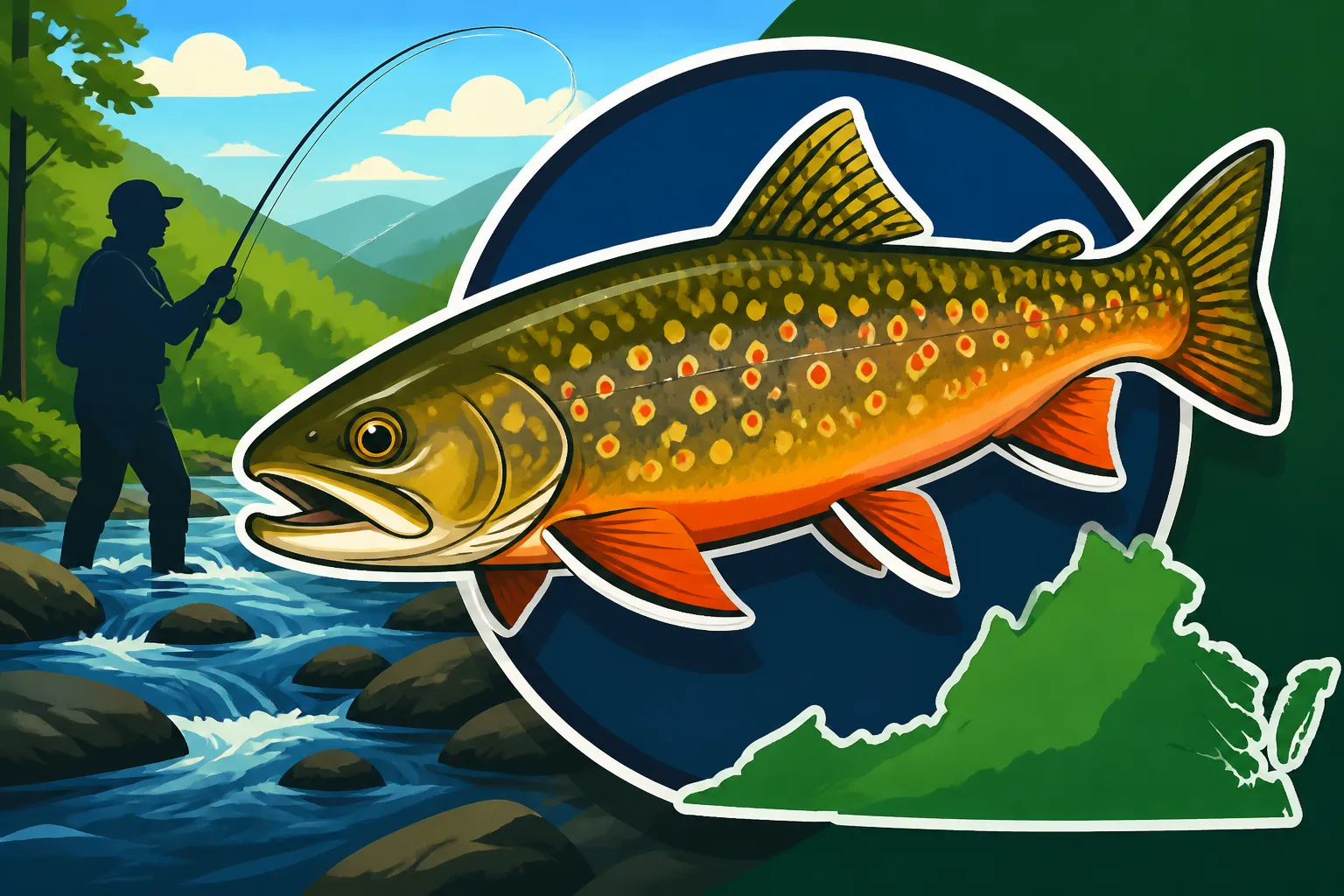
When you first lay eyes on a brook trout, especially a vibrant wild one, its colors are truly captivating. The most unmistakable feature you'll notice is the intricate, almost labyrinthine pattern of dark, wavy lines and spots across its back and dorsal fin. We often call these "vermiform" markings because they resemble worms, wriggling and interconnected. These patterns are typically a deep olive green or even a blackish hue, providing excellent camouflage against the streambed and overhead foliage. This isn't just a pretty design; it's a critical adaptation that allows these fish to blend seamlessly into their complex, rocky, and woody environments, making them incredibly difficult for predators—and sometimes even anglers—to spot.
Moving down to the sides of a wild brook trout, you'll find another signature characteristic: small, vibrant red spots, each uniquely encircled by a halo of brilliant blue. These "areolae" or blue halos around the red spots are truly distinctive and not something you'll typically see on other trout species found in Virginia. The intensity of these colors can vary a bit depending on the specific stream, the fish's diet, and even its mood or spawning phase, but the presence of both the red spot and its blue border is a reliable identifier. You might notice some brown or rainbow trout have red spots, but they almost never possess that electric blue halo, making this a crucial detail to remember.
Finally, pay close attention to the leading edges of the lower fins—specifically the pectoral, pelvic, and anal fins, and often the lower lobe of the tail fin. These fins will display a striking pattern: a crisp, bright white leading edge, immediately followed by a narrow, distinct black line, and then often an orange or reddish hue. This tri-color fin pattern is like a neon sign for brook trout identification. It's a truly beautiful contrast that stands out, especially when the fish flares its fins. This combination of the vermiform patterns, the blue-haloed red spots, and the white-black fin edges creates a visual signature that, once you learn it, makes identifying a wild brook trout an exciting and much easier task on the stream.
Fin Details and Why They Matter
Beyond the dazzling colors, the actual structure and condition of a brook trout's fins provide crucial clues. Wild brook trout, living a life of constant navigation against currents and foraging among rocks, generally possess beautifully formed, intact fins. Their dorsal and caudal (tail) fins, in particular, tend to be robust and fully developed, often appearing quite large and paddle-like relative to the fish's body size. These strong fins are essential for their agile movements, allowing them to hold their position in swift currents and make quick dashes for food or cover.
The adipose fin, a small, fleshy fin located between the dorsal and tail fins, is also present on brook trout, as it is on all members of the trout and salmon family. While its presence doesn't distinguish them from other trout, its condition can sometimes tell a story. More importantly, consider the overall integrity of all fins. A wild brook trout's fins will show no signs of abnormal wear or erosion, appearing perfectly shaped, almost as if sculpted. This natural perfection is a direct result of their unrestricted life in natural environments, contrasting sharply with the often-abraded fins of fish raised in artificial settings. If you're serious about your trout identification, investing in a good field guide can be a game-changer. You can find excellent waterproof versions on Amazon that are perfect for stuffing into your pack.
Wild vs. Stocked: The Subtle Yet Significant Differences
This is where the real detective work begins! While both wild and stocked brook trout share the same species characteristics, the conditions of their upbringing leave distinct, often undeniable, marks. Learning these differences can transform your angling experience, allowing you to truly appreciate the unique triumph of catching a wild native.
Head and Jaw Shape: A Key Indicator
A wild brook trout's head often tells a story of survival and adaptation. You'll typically notice a more streamlined, almost torpedo-like head shape, tapering gracefully to a slightly pointed snout. Their jaws, too, might appear more robust and well-defined, built for seizing insects, small minnows, and other aquatic life in swift currents. This sleek, powerful head is an evolutionary advantage, allowing them to cut through water with minimal resistance and ambush prey effectively.
In contrast, stocked brook trout, particularly those from high-density hatchery environments, can sometimes exhibit subtle differences. Their snouts might appear a bit blunter, or in some cases, even show slight deformities from rubbing against the walls of their raceways or from the sheer competition for food in crowded conditions. While not always a dead giveaway, a wild fish's head shape reflects a life forged in the wild, optimized for natural survival, whereas a hatchery fish might carry the minor physical scars of its early captive life.
The Fin Factor: Erosion and Damage
This is, perhaps, the single most reliable indicator when trying to distinguish a wild brook trout from a stocked one. Hatchery-raised fish, particularly those held in concrete raceways with many other fish, frequently develop what's known as "fin erosion." Imagine hundreds of fish constantly rubbing against hard surfaces and each other; their fins simply get worn down. This results in fins that are often short, stubby, rounded, frayed, or even have noticeable chunks missing, especially on the pectoral, pelvic, and dorsal fins.
A wild brook trout, on the other hand, lives a life of freedom, navigating pristine streams and rarely encountering abrasive surfaces or overcrowding. Consequently, their fins are almost always perfectly formed, full, and sharp-edged. They are proportional to the fish's body, and you won't see any signs of wear, tearing, or unnatural rounding. The difference can be quite dramatic once you know what to look for. If you catch a brook trout with beautiful, unblemished fins, chances are you've landed a wild native. This is a critical observation to make when exploring Virginia's Wild Trout Stream Rules in Virginia.
Body Condition and Overall Vigor
Beyond fins and head shape, the overall body condition and vibrancy of a brook trout can offer strong clues. Wild brook trout, having survived by their wits and foraging naturally, tend to be more streamlined and athletic in appearance. Their bodies are typically lean, firm, and powerfully muscled, reflecting a life of constant movement and evasive maneuvers. Their scales might also appear more iridescent, shimmering with a richer, deeper color palette that often reflects the pristine quality of their native waters and a diverse diet.
Stocked brook trout, while sometimes appearing plump from consistent hatchery feeding, can sometimes lack the same muscular definition and vibrant sheen. Their colors might seem a bit duller, and their bodies might appear slightly softer or less agile. Furthermore, the fight a wild brook trout puts up on the line is often noticeably more spirited and determined. They've spent their lives evading predators and battling currents, and that tenacity translates into an exhilarating experience for the angler. You'll often find these vigorous fish in the waters discussed in Wild Trout Streams in Virginia: What to Know Before You Go.
Where to Find Wild Brook Trout in Virginia
Locating wild brook trout in Virginia is an adventure in itself, often taking you to some of the most beautiful and secluded corners of the state. These fish are true indicators of ecological health, thriving only in very specific, demanding environments.
Preferred Habitats and Water Conditions
Wild brook trout are ultimate cold-water specialists. They absolutely demand clear, exceptionally well-oxygenated water with consistently cool temperatures, typically remaining below 68°F (20°C) even in the height of summer. This is why you'll primarily find them in the higher elevations of Virginia's mountain ranges, where spring-fed streams maintain frigid conditions year-round. They also rely heavily on abundant overhead cover—dense forests, rhododendron thickets, and undercut banks—which provide critical shade to keep water temperatures low and offer vital protection from aerial and terrestrial predators.
Ideal wild brook trout habitats feature a diverse mix of stream structures: swift riffles that oxygenate the water, deeper runs where fish can hold, and secluded pools created by fallen logs, boulders, or bedrock formations. These natural structures provide essential holding lies, ambush points, and refuge from strong currents. Any sign of significant human disturbance, agricultural runoff, or sedimentation will often mean an absence of wild brook trout, as they are incredibly sensitive to changes in water quality. Exploring Best Streams for Fly Fishing for Trout can guide you to some of these prime locations.
The Importance of Pristine Headwater Streams
The presence of wild brook trout is often a strong indicator of an exceptionally healthy, undisturbed ecosystem. They are highly intolerant of pollution and habitat degradation, making their survival a testament to the purity of their surroundings. This is why you'll find their strongest populations in remote, undeveloped headwater streams—the very beginnings of larger river systems—where the water flows clean and cold directly from mountain springs and forested watersheds.
These streams are often small, sometimes narrow enough to jump across, and may only be knee-deep, even in their deepest sections. Reaching them often requires a bit of hiking and bushwhacking, but the reward of finding these native gems is well worth the effort. Many of these delicate ecosystems are protected and managed as part of Virginia's wild trout program. Understanding the regulations for these areas, such as those covered in Wild Trout Stream Season in Virginia, is crucial for responsible angling. You'll need to know if a Does the Stocked Trout License Cover Wild Trout Streams Too? is applicable, or if special regulations are in place.
Common Look-Alikes: Not All Speckles Are Brook Trout
Virginia is home to several trout species, and it's easy for an inexperienced eye to confuse a brook trout with a rainbow or brown trout. While all are beautiful, knowing the key differences ensures you're correctly identifying your catch and adhering to any species-specific regulations.
Distinguishing from Rainbow Trout
Rainbow trout (Oncorhynchus mykiss), whether wild or stocked, are often the source of confusion for brook trout anglers. While they share a similar torpedo-shaped body, there are clear distinguishing features. The most prominent difference is that rainbow trout are covered in small, distinct black spots across their entire body, including a heavily spotted tail fin. Crucially, they lack the red spots with blue halos that are a hallmark of the brook trout. Instead, many rainbow trout, especially larger ones, will display a prominent pink or reddish stripe running horizontally along their lateral line, a feature completely absent in brook trout.
Furthermore, rainbow trout do not possess the distinctive white leading edges on their lower fins followed by a black stripe, which is a key identifying marker for brook trout. Their overall body coloration tends to be more silvery-grey to olive, rather than the deeper olive-green of a brook trout. If you're seeing countless small black spots and a potential pink stripe, you're almost certainly looking at a rainbow. For more in-depth comparison, check out Rainbow Trout vs Brown Trout in Virginia: How to Tell Them Apart.
Distinguishing from Brown Trout
Brown trout (Salmo trutta) are another widespread species in Virginia and can also be mistaken for brook trout, particularly due to their often-present red or orange spots. However, the critical difference lies in the absence of the blue halos around these spots. Brown trout will have a mix of dark spots (often with light halos) and red or orange spots, but those vibrant blue rings characteristic of brook trout will not be present.
Their overall body color also differs, typically presenting as a golden-brown or yellowish-brown hue, often with a darker back fading to a creamy belly. This contrasts with the deeper olive-green and vermiform patterns of a brook trout. The tail fin of a brown trout is usually either unmarked or shows only a few scattered spots, unlike the worm-like markings often seen on the upper lobe of a brook trout's tail. If you're looking for additional clarity, the article Brook Trout vs Brown Trout: Key Differences offers a great breakdown. It's always good to consult multiple resources to sharpen your identification skills, perhaps an Amazon search for a comprehensive fish identification guide could help too.
Here's a quick comparison table to help you keep these beautiful species straight:
| Feature | Wild Brook Trout | Stocked Brook Trout | Rainbow Trout | Brown Trout |
|---|---|---|---|---|
| Back Markings | Dark, wavy "worm-like" (vermiform) patterns | Dark, wavy "worm-like" (vermiform) patterns | Numerous small black spots | Scattered dark spots, some with light halos |
| Side Spots | Red spots with distinct blue halos (areolae) | Red spots, blue halos may be less vibrant | Small black spots, often a pink/red stripe | Dark spots, some red/orange spots without blue halos |
| Fin Edges | White leading edge, followed by black, on lower fins and tail | White leading edge, often less pronounced/damaged | No white leading edges | No white leading edges |
| Fin Condition | Pristine, full, well-formed | Often frayed, rounded, or eroded | Generally well-formed (if wild), can be worn (if stocked) | Generally well-formed (if wild), can be worn (if stocked) |
| Body Shape | Streamlined, athletic, lean | Can be a bit stockier, sometimes less vibrant | More torpedo-shaped, typically silvery-grey to olive | Robust, more golden/yellowish-brown |
| Tail Fin | Often squared or slightly forked, vermiform patterns on upper lobe | Can be rounded or damaged, fewer clear patterns | Slightly forked, covered in small black spots | Slightly forked, usually few to no spots |
| Habitat | Cold, pristine headwater streams | Can be found in various stocked waters | Rivers, lakes, can tolerate wider temps | Rivers, lakes, more tolerant of warmer water |
The next time you're out on the water, take a moment to really look at the fish you've caught. The satisfaction of correctly identifying a wild brook trout, knowing its journey from a pristine headwater to your net, is an unparalleled feeling for any angler. It connects you not just to the fish, but to the health and beauty of Virginia's natural heritage. Whether you're targeting Trout Fishing in Virginia: Rainbow, Brown, and Brook Trout or trying your hand at Fly Fishing for Trout on the Shenandoah River, understanding the subtle distinctions will make your fishing trips even more rewarding. Remember to always be mindful of local regulations, including Virginia Stocked Trout Waters and License Requirements, and consider what Best Time of Day to Catch Trout in Virginia? might maximize your chances.
Disclaimer
This article is for general informational purposes only and does not constitute professional advice. Laws, prices and regulations vary by location and change over time. Consult a qualified professional for guidance on your specific situation.