Brook Trout vs Brown Trout: Key Differences
It’s a common scenario for any angler in Virginia: you pull a beautiful trout from a shimmering stream, and then the head-scratching begins. Is it a Brook Trout or a Brown Trout? Both are gorgeous, both are a joy to catch, but knowing the key differences between them isn't just about showing off your fish identification skills; it can actually impact how you fish and what regulations apply. This guide will walk you through the distinct characteristics, preferred habitats, and even the angling experiences you can expect from these two beloved species in Virginia's waters.
Visual Distinctions Between Brook and Brown Trout
When you're trying to tell a Brook Trout from a Brown Trout, the most obvious place to start is their appearance. While both are members of the salmonid family and share a generally sleek, torpedo-shaped body, their color patterns, fin markings, and overall 'vibe' are quite different once you know what to look for. It’s like telling apart two different species of songbirds – they might both sing, but their plumage is a dead giveaway.
Brook Trout's Signature Markings
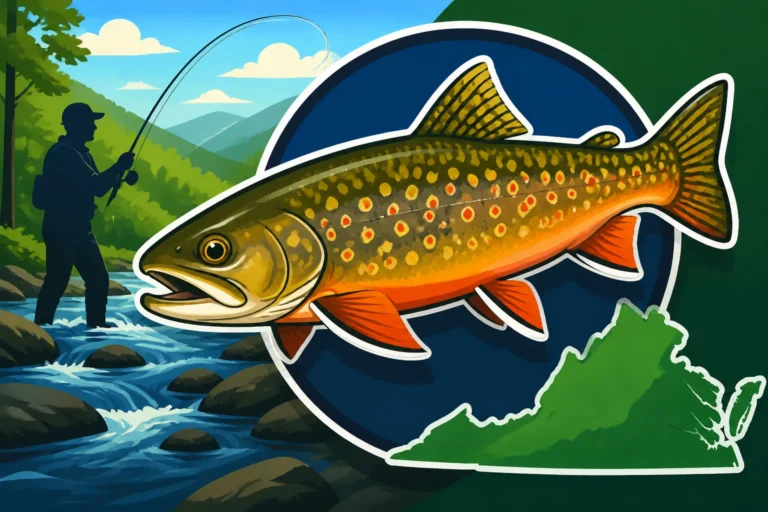
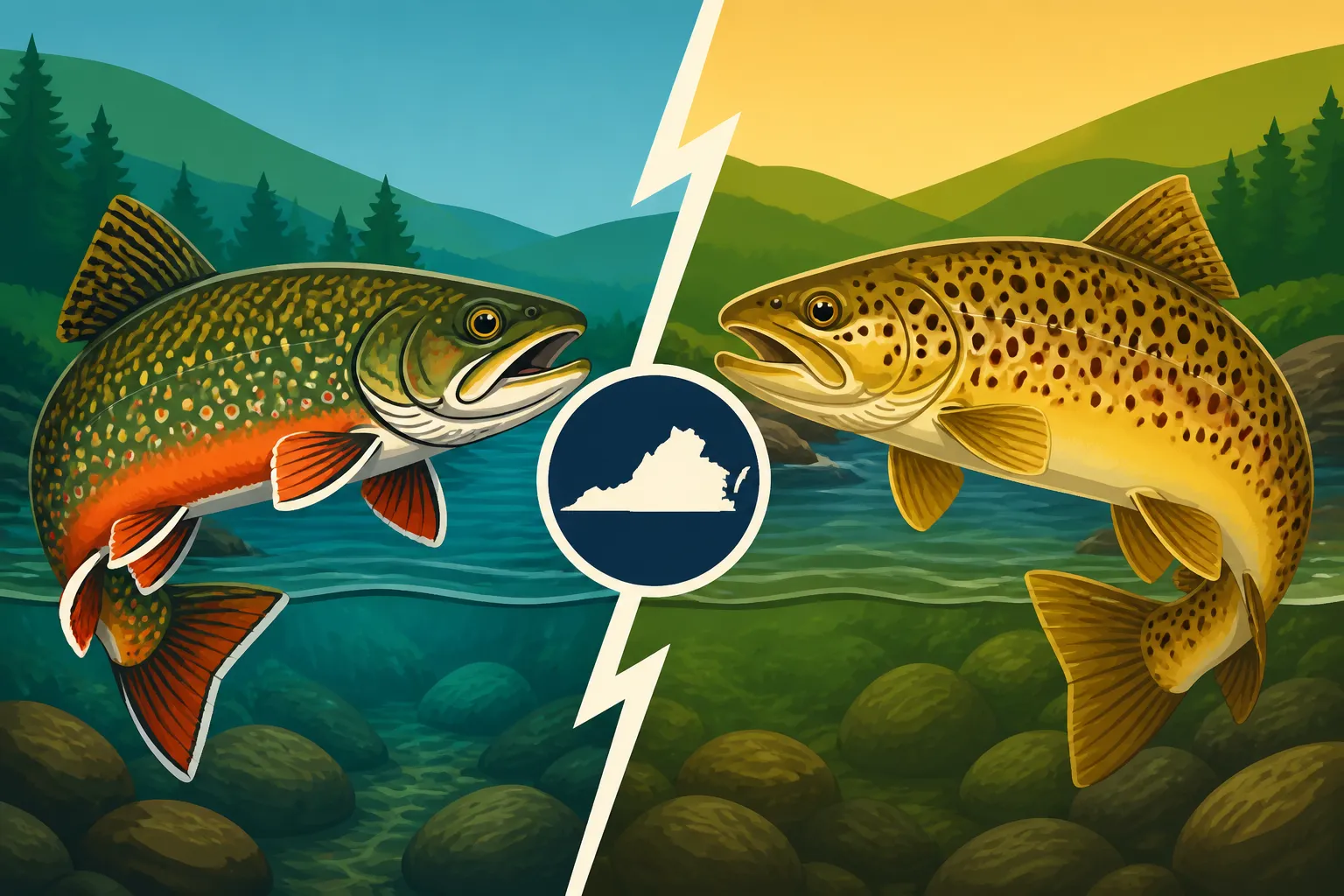
The Brook Trout, Salvelinus fontinalis, is actually a char, not a true trout, and it's Virginia's only native cold-water salmonid. This distinction alone makes them special, and their appearance reflects their pristine heritage. When you hold a Brook Trout, the first thing you'll likely notice is its vibrant coloration. They tend to have a dark, olive-green to black back, often adorned with wavy, worm-like markings called "vermiculation." These patterns are usually lighter, almost cream-colored, and extend down their sides.
But the real showstoppers are the spots. Brook Trout feature small, reddish spots, sometimes encircled by faint blue halos, scattered along their flanks. What truly sets them apart, however, are their lower fins. Their pectoral, pelvic, and anal fins, as well as the lower lobe of their caudal (tail) fin, have distinct white leading edges, often followed by a strip of black and then reddish-orange. This "white-tipped fin" is arguably the most reliable identifier for a Brook Trout. It’s a striking detail that helps them stand out in the clear, rocky streams they call home. If you're studying up before hitting the stream, you can often find excellent illustrated guides on Amazon that highlight these features.
Brown Trout's Unique Patterns
On the other hand, the Brown Trout, Salmo trutta, is not native to North America but was introduced from Europe. They are true trout, and their appearance tends to be a bit more subtle, yet equally beautiful. Brown Trout typically exhibit a golden-brown to olive-brown coloration on their back and sides, fading to a creamy or yellowish belly. Their distinguishing marks are usually dark spots, often with a light "halo" around them, which can be black, brown, or even reddish-orange. Unlike the Brook Trout's vermiculation, these spots are generally more irregular and less worm-like, often extending onto their dorsal and adipose fins.
One critical difference is the absence of those white leading fin edges that are so characteristic of the Brook Trout. Brown Trout fins are typically plain brown or yellowish, sometimes with dark spots, but without that bright white and black trim. Their tail fin is also often squarer than the slightly forked tail of a Brook Trout. While a particularly vibrant Brown Trout might display some orange or red spots, they generally lack the intense, almost iridescent blue and red spots of a Brookie. Learning these nuances is key to appreciating each catch, and for those who love to read up, Amazon has a treasure trove of books on trout identification and fishing techniques.
Where They Thrive in Virginia's Waters
The differences between Brook and Brown Trout extend far beyond their looks. Their preferred habitats, how they behave, and how resilient they are to environmental changes really set them apart. Understanding where each species likes to live is crucial for any angler planning a trip to Virginia's diverse waterways, whether you're targeting specific fish or just want to know what you might encounter.
Brook Trout's Preferred Coldwater Havens
As Virginia's only native trout, Brook Trout are exceptionally sensitive to water quality and temperature. They are the quintessential inhabitants of high-elevation, pristine headwater streams, particularly in the Appalachian Mountains and Blue Ridge foothills. These streams are characterized by their crystal-clear, highly oxygenated, and consistently cold water, rarely exceeding 68 degrees Fahrenheit, even in the summer months. They thrive in areas with abundant shade, complex stream structures like logjams and undercut banks, and gravelly bottoms suitable for spawning.
You'll often find these beautiful fish in smaller, wilder creeks that might seem insignificant at first glance. These are often designated as Wild Trout Stream Rules in Virginia, where conservation efforts are paramount to protect their natural populations. Because they are so particular about their environment, healthy Brook Trout populations are often indicators of excellent water quality. Anglers pursuing Brook Trout typically need to practice stealth and finesse, as these fish are incredibly wary. Their diet primarily consists of aquatic insects, terrestrial insects that fall into the water, and small baitfish, reflecting the natural bounty of their undisturbed homes. Many of these remote spots are perfect for Fly Fishing for Trout on Rivers.
Brown Trout's Adaptability Across Waters
Brown Trout, by contrast, are far more adaptable and tolerant of a wider range of environmental conditions. While they certainly appreciate cold, clean water, they can withstand slightly warmer temperatures and more varied water quality than Brook Trout. This resilience means you'll find Brown Trout in a broader array of Virginia waters, including larger rivers, streams at lower elevations, and even some cool-water lakes and reservoirs. They can thrive in waters that might be too warm or lack the extreme purity that Brook Trout demand.
This adaptability also translates to their diet and behavior. Brown Trout are often more aggressive feeders and will readily consume larger prey, including minnows, crayfish, and even small rodents, in addition to insects. They are known for their strong fighting ability and can grow significantly larger than Brook Trout in many environments. In Virginia, you’ll encounter Brown Trout in many of the same streams where Brook Trout might be present, but also in many stocked waters. The Virginia Department of Wildlife Resources (DWR) frequently stocks Brown Trout, along with Rainbow Trout, into various rivers and lakes, making them accessible to a wider range of anglers. For more information on where to find these fish, consider checking out resources like Best Trout Streams in Virginia.
Angling Strategies and Virginia's Rules
Fishing for Brook Trout and Brown Trout requires different approaches, not only because of their behavioral differences but also due to the specific regulations Virginia has in place to manage these valuable fisheries. Understanding these nuances can significantly improve your chances of success and ensure you're fishing legally and responsibly.
Targeting Elusive Brook Trout
Catching wild Brook Trout in Virginia is often considered a true angling challenge and a deeply rewarding experience. Because they inhabit smaller, clearer streams, stealth is your absolute best friend. These fish spook easily, so a quiet approach, staying low to the bank, and wearing natural colors can make a huge difference. Fly fishing is a particularly effective and popular method for Brook Trout, often using small, delicate patterns like dry flies, nymphs, or small streamers that imitate the natural insects in their diet. For those looking to learn more about this art, specific guides like Best Fly Patterns for Trout in Spring can be incredibly helpful.
Spin fishing can also be successful, but it requires lightweight gear, small spinners, or tiny spoons that won't overpower the fish or their delicate habitat. The key is precise casting into tight pockets, undercut banks, and behind boulders where Brook Trout often hide. Remember that many wild Brook Trout streams have special regulations, including catch-and-release only, single-hook artificial lure restrictions, or reduced creel limits, to protect these precious native populations. Always check the current Virginia Fishing Regulations Explained before heading out. Sometimes, specific apparel or gear can make a difference, and checking out what's available for stealthy stream fishing on Amazon might give you an edge.
Fishing for Resilient Brown Trout
Brown Trout, while still wary, often present a slightly less challenging target than their native cousins, especially in stocked waters. Their broader diet and greater tolerance for varied conditions mean you can employ a wider range of techniques. Fly fishing for Brown Trout can be incredibly exciting, as they readily take various patterns, from dry flies and nymphs to larger streamers that mimic baitfish. Knowing How to Read Water When Fly Fishing a River is a universal skill, but particularly valuable when targeting Brown Trout in larger flows.
Spin anglers will find success with a variety of lures, including crankbaits, inline spinners, spoons, and soft plastics. They also respond well to natural baits like worms, corn, or powerbait, especially in stocked areas. Because Brown Trout can grow quite large, especially in lakes and bigger rivers, using slightly heavier tackle might be appropriate compared to the ultralight gear for Brook Trout. While general trout regulations apply, always be mindful of specific slot limits or creel limits that might be in place for Brown Trout in certain areas. Information on Brown Trout Fishing Tips for Virginia Anglers can provide more detailed advice.
Virginia's Specific Trout Regulations
Virginia's Department of Wildlife Resources (DWR) has distinct regulations for trout, and these often differentiate between wild trout streams (which largely feature Brook Trout), stocked trout streams, and general fishing areas. It's imperative for every angler to understand these rules. For instance, Wild Trout Stream Season in Virginia usually has specific dates, minimum length limits (often 7 inches for wild trout), and often requires artificial lures with single barbless hooks, or even mandate catch-and-release to protect the delicate ecosystem and fish populations.
Stocked trout waters, on the other hand, including many where Brown and Rainbow Trout are prevalent, often have different creel limits and may permit bait fishing. There might be a general Stocked Trout License Requirements in Virginia in addition to your basic fishing license. The DWR works hard to manage these fisheries sustainably, so adhering to the rules helps ensure that future generations of anglers can also enjoy the thrill of catching these beautiful fish. Remember, ignorance of the law is no excuse, and checking the DWR's official guide or online resources like Virginia Fishing License Guide is always a good idea before you cast your line.
Comparing Brook Trout and Brown Trout
To help consolidate the key differences, here's a quick comparison of these two magnificent trout species found in Virginia's waters.
| Feature | Brook Trout (Salvelinus fontinalis) | Brown Trout (Salmo trutta) |
|---|---|---|
| Native Status | Native to Virginia/North America (it's a char) | Introduced from Europe (true trout) |
| Back Coloration | Dark green to black, worm-like (vermiculation) markings | Golden-brown to olive-brown, less distinct patterns |
| Side Spots | Small red spots, often with blue halos | Dark spots (black/brown/reddish), often with light halos |
| Fin Markings | Distinct white leading edges on lower fins (pectoral, pelvic, anal, lower caudal) | Generally plain, sometimes spotted, no white leading edges |
| Tail Fin | Slightly forked | Squarer, less forked |
| Habitat | Pristine, highly oxygenated, consistently cold headwater streams | More tolerant of varied conditions, larger rivers, lakes |
| Temperature | Very sensitive, prefers under 68°F | More tolerant, can handle slightly warmer waters |
| Growth Size | Generally smaller, rarely exceeding 15 inches in wild streams | Can grow significantly larger, trophy potential in some waters |
| Diet | Aquatic and terrestrial insects, small baitfish | Insects, minnows, crayfish, small rodents, more aggressive |
| Wary Factor | Extremely wary, spook easily | Wary, but often more aggressive than wild Brook Trout |
| Virginia Mgmt. | Focus on wild populations, often catch-and-release or strict limits | Managed for both wild and stocked populations, varied regulations |
This table should give you a good visual and factual reference point when you're out on the water. Each species brings its own unique set of challenges and rewards to the Virginia angler, and knowing what you're looking for, and what to expect, can truly enhance your fishing experience.
Disclaimer
This article is for general informational purposes only and does not constitute professional advice. Laws, prices and regulations vary by location and change over time. Consult a qualified professional for guidance on your specific situation.