Claytor Lake’s Mixed Bass Fishery: Largemouth, Smallmouth, Spotted, and Alabama
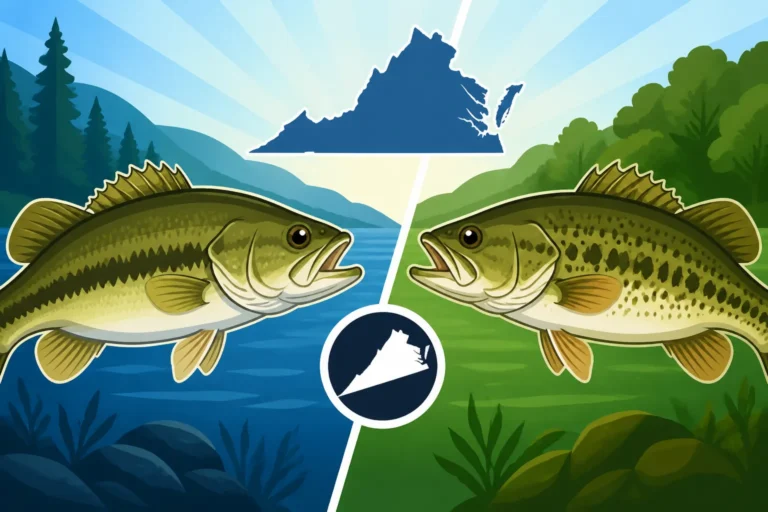
For anglers heading to Claytor Lake, one of the most exciting — and sometimes perplexing — challenges is grappling with its incredibly diverse bass population. You might cast for a largemouth and end up with a smallmouth, or even something entirely different, leaving you scratching your head about what you've just reeled in. This comprehensive guide is here to untangle the nuances of Claytor Lake's unique bass fishery, helping you confidently identify, understand the habits of, and ultimately, successfully target largemouth, smallmouth, spotted, and even the increasingly present Alabama bass that call these waters home.
Understanding Claytor Lake's Unique Bass Population
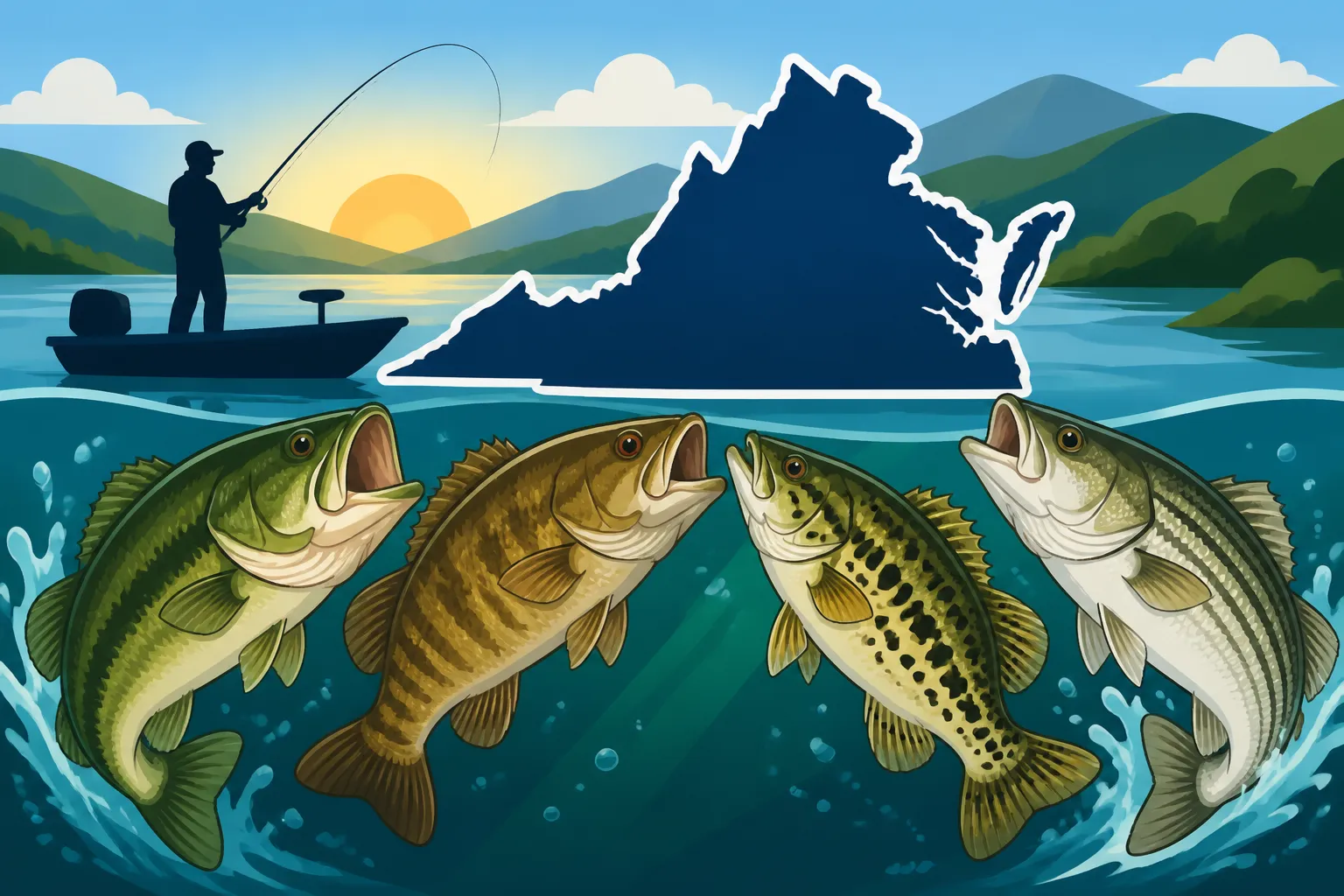
Claytor Lake isn't just another pretty body of water in Virginia; it's a true melting pot for different bass species, offering a thrilling challenge for any angler. Unlike many lakes that are dominated by one or two types of bass, Claytor Lake boasts a thriving mixed fishery where largemouth, smallmouth, spotted, and Alabama bass coexist. This means every cast could be a surprise, which is both incredibly exciting and, let's be honest, a little confusing if you're not sure what you're looking at when it comes to species identification. The lake’s varied structure, from shallow coves to deep, rocky points and submerged timber, provides ideal habitat for all these different bass, each with its own preferences and hunting styles.
This remarkable diversity is what makes Claytor Lake a standout destination for bass anglers. It forces you to adapt, to understand subtle differences in fish behavior, and to expand your tackle box beyond just one type of bait. You might start your day flipping jigs into lily pads for largemouth, then switch to a dropshot rig for smallmouth on a deep rock pile, only to find yourself reeling in a feisty spotted bass or an Alabama bass from seemingly nowhere. The key to success here isn't just knowing that these fish exist, but knowing how to tell them apart, where they like to hang out, and what makes them bite. It’s a learning experience every time you hit the water, and that’s part of the beauty of it.
Why So Many Bass Species?
The sheer number of bass species in Claytor Lake is a testament to its varied underwater landscape and productive ecosystem. You've got everything from shallow, nutrient-rich creeks feeding into the lake, offering perfect nurseries for largemouth, to deep, clear main lake areas with abundant rock structure that scream "smallmouth heaven." Then there are the subtle, often overlooked characteristics that appeal to the spotted and Alabama bass, such as moderate depths and points with mixed rock and timber. The habitat diversity provides distinct niches, allowing multiple species to thrive without excessive competition, or at least, without one species completely dominating the others. This ecological balance creates a dynamic environment where each bass type can find its preferred food sources and spawning grounds.
Furthermore, the introduction and management efforts over the years have played a significant role. While largemouth and smallmouth are native or long-established, species like the spotted and Alabama bass have found their way into these waters, either through intentional stocking programs in the region or through accidental introductions. Once established, if the conditions are right – and they certainly are in Claytor Lake – these species can flourish, adding to the rich tapestry of the fishery. Understanding this history and the current ecological setup helps paint a clearer picture of why Claytor Lake offers such a unique bass fishing experience, unlike many other impoundments in the region.
The Challenge of Identification
Let's be real, telling bass apart isn't always as easy as flipping through a field guide, especially when you're out on the water, the fish is flopping, and you're trying to get it back quickly. The subtle differences between species can be tricky, particularly for newcomers or those used to lakes with just one or two dominant bass types. The challenge often lies in distinguishing between a chunky largemouth and a broad-shouldered spotted bass, or a smallmouth and a spotted bass that share similar body shapes and dark markings. You might even find yourself wondering if that aggressive fish with the dark lateral line is a smallmouth, a spotted, or maybe even an Alabama bass.
This identification challenge is more than just academic; it has practical implications for your fishing strategy and adherence to regulations. Knowing exactly what you've caught can inform your next cast, helping you refine your technique and target the prevalent species in that particular spot. Plus, different species can have different size or creel limits, making accurate identification crucial for staying within the law. Don't worry, we're going to break down the key characteristics for each species, so you can confidently say, "Ah, that's definitely a smallmouth!" or "Well, hello there, Alabama bass!" next time you feel a tug on your line. Virginia Fishing Regulations Explained can offer further insights into overall rules.
The Mighty Largemouth Bass: King of the Weeds
When most people think of bass fishing, the largemouth bass is probably the first fish that comes to mind, and for good reason. These aggressive, hard-fighting fish are iconic, and they thrive in the right conditions. In Claytor Lake, largemouth bass are certainly present and account for a significant portion of the catch, especially for anglers who enjoy fishing shallower, more vegetated areas. They're often referred to as the "king of the weeds" because of their strong preference for dense cover, be it lily pads, submerged hydrilla, cattails, or fallen timber.
These fish are ambush predators, perfectly designed to hide in cover and explode on unsuspecting prey. Their large mouths (hence the name!) allow them to engulf surprisingly big meals, from baitfish like shad and sunfish to crawfish and even small birds or frogs. If you're looking for that classic bass fight, with powerful runs and acrobatic jumps, the largemouth bass of Claytor Lake will certainly deliver. They are a staple of the fishery and offer exciting opportunities for anglers of all skill levels. Best Bass Fishing Lakes in Virginia mentions other prime locations for these feisty fish.
Identifying the Largemouth Bass
The largemouth bass is generally the easiest of the four species in Claytor Lake to identify, primarily due to one very distinct feature: its mouth. If you gently hold a largemouth horizontally, you’ll notice that its jaw extends well beyond the back of its eye. This is the most reliable tell-tale sign. Their bodies are typically deep and robust, with a pronounced lateral line that often appears as a series of dark, sometimes broken, blotches or a continuous stripe down their sides. The color can vary significantly depending on their habitat, ranging from a dark green or olive back in weedy areas to a lighter green or even silvery hue in more open water, with a creamy white belly.
Another useful identification tip is to look at their dorsal fins. Largemouth bass have a deeply notched dorsal fin, appearing almost like two separate fins. The first dorsal fin has spines, and the second has soft rays, with a noticeable dip or separation between them. While their overall appearance can fluctuate, focusing on the jaw extension past the eye and the deeply separated dorsal fins will almost always help you correctly identify a largemouth. They generally have a more elongated, less compact body shape compared to smallmouth or spotted bass, further aiding in their distinction. For a more detailed look, check out How to Identify a Largemouth Bass in Virginia.
Preferred Habitat and Behavior
In Claytor Lake, largemouth bass gravitate towards areas with abundant cover and slightly warmer, often murkier water. Think shallow coves, creek arms, and flats that have submerged aquatic vegetation, lily pads, reeds, or dense stands of cattails. They also love to hide around laydowns (fallen trees), boat docks, and brush piles, using these structures as ambush points. These areas provide both concealment from predators and a ready supply of forage. During the hotter months, they might retreat to the deeper edges of this cover or seek out shade under docks and overhanging trees.
Their behavior is typically tied to their ambush predator nature. They'll often sit patiently, waiting for prey to swim by before exploding with a burst of speed. You'll find them most active during dawn and dusk, when light conditions are lower, but they'll feed throughout the day, especially if there's good cloud cover or if they're in dense shade. During the spawn, they move into very shallow, protected pockets to build nests and guard their eggs and fry. Understanding these preferences is key; if you’re fishing a shallow, weedy cove, you’re almost certainly targeting largemouth bass.
Top Techniques and Baits for Largemouth
Targeting largemouth bass on Claytor Lake means thinking about cover and presentation. Given their preference for structure, flipping and pitching jigs or soft plastics into dense cover is incredibly effective. Think about a creature bait or a Texas-rigged worm, slowly worked through a brush pile or along a submerged log. Topwater lures like hollow-body frogs, poppers, or buzzbaits are absolute dynamite during low-light conditions or over matted vegetation, providing thrilling blow-ups. You can find a fantastic selection of these on Amazon.
Crankbaits and spinnerbaits are also excellent choices for covering water, especially around points, drop-offs, and the edges of weed lines. For suspended fish or those holding slightly deeper, a Carolina rig with a lizard or a dropshot with a finesse worm can coax bites. Always consider the water clarity and available forage. If the water is stained, brighter colors might work better, while natural colors are often preferred in clearer water. Vary your retrieve and pay attention to where the bites are coming from to dial in your presentation. Best Bait for Largemouth Bass in Virginia offers more specific recommendations.
Smallmouth Bass: River Fighters in a Lake Setting
The smallmouth bass, often affectionately called "bronze-backs," are legendary for their incredible fighting spirit. Pound for pound, many anglers argue they are the strongest of the bass species, putting up aggressive, drag-peeling runs and spectacular aerial displays. While commonly associated with rivers and clear, rocky streams, Claytor Lake offers a fantastic smallmouth fishery, particularly in its deeper, rockier, and cooler sections. These fish are true predators, often schooling and actively chasing down their prey rather than ambushing from dense cover like their largemouth cousins.
Catching a Claytor Lake smallmouth is an experience every angler should have. Their power and tenacity on the line are unmatched, making every hook-up an adrenaline rush. They thrive in environments that mimic their riverine preferences: clear water, rocky bottoms, and access to deep water. If you're someone who loves exploring ledges, main lake points, and humps, then the smallmouth bass will be your primary target on Claytor Lake. They truly bring a different kind of thrill to the bass fishing experience here. Smallmouth Bass Fishing on Virginia's Shenandoah River highlights another excellent smallmouth fishery in the state.
Identifying the Smallmouth Bass
Distinguishing a smallmouth bass from its cousins primarily involves looking at its jawline and coloration. Unlike the largemouth, the jaw of a smallmouth bass does not extend past the back of its eye. This is a crucial difference. Their bodies are typically more streamlined and elongated than a largemouth, but often more stout and less deep-bodied than a spotted bass, giving them a powerful, football-like appearance. Their coloration is usually a beautiful bronze, golden-brown, or olive-green on the back and sides, fading to a creamy white on the belly. They often have vertical bars or splotches along their sides, which can sometimes be quite pronounced.
Their dorsal fin is less deeply notched than that of a largemouth, appearing more continuous. Another key feature is the absence of a distinct lateral line or dark blotches like a largemouth. Instead, their sides might have faint stripes or mottled patterns. Looking at the eye is also helpful; smallmouth often have red or orange eyes, which can be a subtle but useful clue. Remember, if the mouth doesn't extend past the eye and the fish has a bronze hue with vertical bars, you've likely landed a Claytor Lake smallmouth. For further help, consider How to Identify a Smallmouth Bass in Virginia.
Preferred Habitat and Behavior
On Claytor Lake, smallmouth bass are creatures of structure and clear water. They prefer rocky bottoms, gravel flats, ledges, main lake points, humps, and submerged rock piles. You'll often find them in deeper sections of the lake, particularly where there’s current or access to cooler, well-oxygenated water. They are less fond of dense vegetation and more inclined to patrol open water or cruise along rocky shorelines. During the cooler months, they will often move to deeper offshore structures, while in the warmer months, they might be found shallower during low light or early mornings.
Smallmouth bass are highly social and often school together, especially when actively feeding. They are aggressive feeders, often chasing baitfish in open water or ambushing crawfish around rocky crevices. They are particularly responsive to changes in water temperature and current, often congregating in areas where these conditions are optimal. Their spawning typically occurs in rocky areas with clean gravel bottoms in moderate depths, often a bit deeper than where largemouth spawn. If you're marking fish on your sonar over a deep rock pile on Claytor Lake, there's a good chance they're smallmouth.
Top Techniques and Baits for Smallmouth
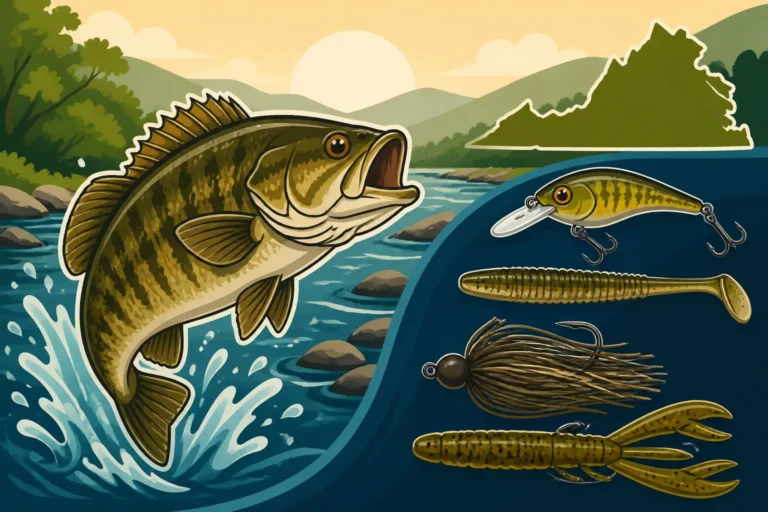
Fishing for smallmouth bass on Claytor Lake often involves techniques that allow you to effectively work deeper, rocky structures. Dropshotting is an incredibly productive method, allowing you to present a finesse worm or minnow imitation right in their strike zone. Jigs, especially football jigs or tube jigs, are excellent for crawling along rocky bottoms, mimicking crawfish, a favorite smallmouth meal. You can find a variety of jigs and soft plastics perfect for this on Amazon.
Spinnerbaits and crankbaits that dive to appropriate depths can also be very effective for covering water and triggering reactionary strikes from schooling fish. For those active schools chasing bait on the surface, topwater lures like poppers or walking baits can create explosive action during the right conditions. Swimbaits, especially those that imitate shad or other baitfish, are also a great choice. Pay close attention to your electronics to locate submerged humps, points, and rock piles, as these are prime smallmouth real estate. Best Bait for Smallmouth Bass in Virginia delves deeper into specific bait choices.
Spotted Bass: The Aggressive Challenger
The spotted bass, sometimes referred to as a "spot," is an increasingly important part of Claytor Lake's mixed bass fishery. While they might not grow to the trophy sizes of some largemouth, they make up for it with sheer aggression and a hard-hitting fight. They often occupy a niche between largemouth and smallmouth, comfortable in both clearer, rockier areas and around moderate cover. This adaptability makes them a common catch, and once you learn to identify them, you'll find they often surprise you with their willingness to strike.
Anglers often enjoy catching spotted bass because they are aggressive and don't hesitate to hit a variety of lures. They can be a real game-changer on days when other bass species are finicky, often providing consistent action. Their presence adds another layer of excitement and opportunity to Claytor Lake fishing, challenging anglers to truly understand the nuances of the lake's diverse inhabitants. If you're looking for consistent bites and a strong fight, the spotted bass will quickly become a favorite target.
Identifying the Spotted Bass
The spotted bass can be the trickiest of the group to identify because it shares characteristics with both largemouth and smallmouth. The key feature for a spotted bass is its mouth: the upper jaw will extend to or slightly beyond the back of the eye, but generally not as far as a largemouth. This is a subtle but important distinction. Their bodies are typically more streamlined than a largemouth but can be deeper-bodied than a smallmouth, often with a robust, powerful build.
The most defining characteristic, and where they get their name, is the presence of distinct rows of small, dark spots below the lateral line on their lower sides. These spots can feel rough if you run your finger across them, a trait sometimes referred to as a "tooth patch" on their tongue (though not all spotted bass have a prominent one). Their lateral line is usually continuous and distinct, similar to a largemouth. Their dorsal fin is also less deeply notched than a largemouth, resembling that of a smallmouth more closely. Their color can range from green to olive with darker splotches on their sides. For a visual comparison, check out Spotted Bass vs Largemouth Bass: How Virginia Anglers Tell Them Apart.
Preferred Habitat and Behavior
Spotted bass on Claytor Lake tend to occupy a "middle ground" in terms of habitat. You'll find them in areas with a mix of characteristics preferred by largemouth and smallmouth. They like rocky points, humps, and bluffs, but they're also quite comfortable around submerged timber, docks, and moderate weed lines, particularly where the water is clearer than typical largemouth haunts but not as open as prime smallmouth territory. They often prefer slightly deeper water than largemouth, but not necessarily the deepest sections like smallmouth.
They are known for being aggressive and highly competitive feeders, often schooling in groups and actively chasing baitfish. Spotted bass can be found suspended over deeper water or tight to cover, depending on the conditions and available forage. They tend to be less shy than largemouth and more willing to hit a variety of presentations. Their adaptability to different environments makes them a widespread and consistent catch throughout much of Claytor Lake.
Top Techniques and Baits for Spotted Bass
Because of their aggressive nature and diverse habitat preferences, spotted bass will hit a wide array of lures on Claytor Lake. Finesse techniques like dropshotting or shaky heads rigged with small worms are incredibly effective, especially when fished around rocky points and timber. Small crankbaits, jerkbaits, and spinnerbaits are also excellent choices for covering water and drawing strikes from actively feeding spots. Don't be afraid to experiment with brighter colors, as their aggressive tendencies can sometimes make them less discerning.
Jigs, particularly those with a crawfish or finesse profile, worked along the bottom, can also be very productive. They often respond well to presentations that imitate baitfish, so small swimbaits or Flukes can be deadly. When you're fishing areas that could hold a mix of bass species, starting with a versatile lure like a spinnerbait or a small crankbait is often a good strategy, as spotted bass are usually quick to hit them. Before your next trip, consider browsing Amazon for a new selection of these versatile lures.
The Enigmatic Alabama Bass: A Recent Arrival
The Alabama bass, while perhaps less common or widely recognized by every angler on Claytor Lake, represents an exciting and somewhat enigmatic component of the fishery. These bass are known for their incredibly aggressive fighting style, often surprising anglers with their power and tenacity, even when compared to smallmouth. Their presence in Claytor Lake is a testament to the lake's ever-evolving ecosystem and the potential for new challenges and discoveries for local anglers. They are an introduced species, and understanding their traits can give you a distinct advantage.
For many years, some of these fish might have been misidentified as spotted bass, given their similar appearance. However, as anglers and biologists become more adept at distinguishing them, the Alabama bass is gaining recognition as a distinct and formidable opponent on the line. Catching an Alabama bass can feel like winning a small lottery, offering a unique thrill and bragging rights. They add a layer of complexity and excitement to Claytor Lake's bass fishing scene, pushing anglers to sharpen their identification skills and adjust their strategies. For more information on their characteristics, see Alabama Bass in Virginia: What Anglers Need to Know.
Identifying the Alabama Bass
Identifying an Alabama bass can be quite challenging, as they bear a strong resemblance to spotted bass, often leading to misidentification. However, there are a few key distinguishing features. The most definitive characteristic, though difficult to verify in the field, is the presence of a tooth patch on the tongue. While some spotted bass might have a small one, the Alabama bass often has a more pronounced, cartilaginous tooth patch on the middle of its tongue. Its jaw typically extends to or slightly past the back of the eye, similar to a spotted bass, but usually not as far as a largemouth.
Body shape-wise, Alabama bass are often described as being more football-shaped or stockier than a spotted bass, with a very robust, deep body for their length, giving them incredible power. They have distinct, dark spots below the lateral line, much like a spotted bass, and a continuous lateral line. Their dorsal fin notch is also shallow, similar to a spotted or smallmouth. Coloration is typically olive green to dark green on the back, with a lighter belly, and sometimes vague vertical bars. The overall impression is one of solid, compact power. Careful inspection of the jawline, body shape, and checking for that tooth patch will help you make a confident identification. Alabama Bass vs Spotted Bass: How to Tell Them Apart provides further details.
Preferred Habitat and Behavior
Alabama bass on Claytor Lake, much like spotted bass, tend to prefer deeper, clearer waters with abundant rock and structure. They are often found in areas that transition from shallow to deep, such as main lake points, bluffs, humps, and submerged roadbeds or timber. They are less likely to be found in dense, shallow vegetation compared to largemouth. Their preference for these deeper, more open water environments often puts them in direct competition with smallmouth and spotted bass, and they are known for their aggressive nature when feeding.
These bass are highly active predators, often schooling in open water and aggressively chasing baitfish like shad. They are adapted to thrive in impoundments and can grow quite large, making them a prized catch. Their behavior is characterized by powerful, bulldog-like fights, often staying deep and pulling hard rather than jumping like a largemouth. If you're fishing deeper, clear water structure, you have a good chance of encountering this formidable species.
Top Techniques and Baits for Alabama Bass
Given their preference for deeper, open water and aggressive feeding habits, targeting Alabama bass on Claytor Lake often involves techniques similar to those used for smallmouth and spotted bass. Deep-diving crankbaits that mimic baitfish are excellent for covering larger areas and locating active schools. Jerkbaits are also incredibly effective, particularly when fish are suspended. Jigging spoons or dropshot rigs are perfect for presenting baits directly to fish located on sonar over deep humps or points.
For those situations where Alabama bass are actively chasing bait on the surface, topwater lures can produce explosive strikes. Swimbaits, especially those with a realistic profile of shad, are also a go-to choice. Look for schooling activity or baitfish on your fishfinder, as Alabama bass are often not far behind. Don't be afraid to experiment with retrieve speeds; sometimes a faster, more erratic presentation will trigger a strike from these competitive feeders. A well-stocked tackle box from Amazon could certainly include a good variety of these effective lures.
Strategies for Targeting Mixed Bass Species on Claytor Lake
Fishing a lake with such a diverse bass population like Claytor Lake requires a flexible and adaptable approach. You can't just stick to one technique or target one type of habitat and expect consistent success across all species. The beauty and challenge lie in understanding that different bass prefer different things, and by varying your tactics, you significantly increase your chances of having a banner day, no matter what species decides to bite. It's about being a versatile angler, ready to switch gears at a moment's notice.
The most successful anglers on Claytor Lake are those who can read the water, understand the seasonal patterns, and adapt their presentations accordingly. This might mean starting your day shallow for largemouth, then moving to deeper points for smallmouth and spotted bass as the sun gets higher. It's an ongoing learning process, but a rewarding one. Having a keen eye for identification once you hook a fish also helps you refine your approach for the next cast. Water Temperature and Fish Feeding Patterns can also provide valuable context to your approach.
Adapting to Seasonal Patterns
Just like any fishery, the bass on Claytor Lake are heavily influenced by the seasons. Their behavior, preferred locations, and feeding patterns shift dramatically throughout the year.
- Spring: This is prime time for all bass species as they move shallower for the spawn. Largemouth will be in very shallow, protected coves, while smallmouth and spotted bass will gravitate towards rocky flats and points in slightly deeper water. Focus on pre-spawn patterns with crankbaits and jigs, then switch to soft plastics and topwater during the spawn.
- Summer: As waters warm, bass will often move to deeper, cooler water, though some largemouth will remain in dense shallow cover. Look for smallmouth, spotted, and Alabama bass on offshore humps, ledges, and deep points. Dropshotting, deep crankbaits, and even night fishing can be highly effective during summer.
- Fall: The fall transition sees bass moving back to shallower waters, often chasing baitfish that are fattening up for winter. This is a fantastic time for aggressive techniques like spinnerbaits, crankbaits, and jerkbaits, as fish feed heavily. All species can be found mixed in various depths, often following schools of bait.
- Winter: Claytor Lake's bass become lethargic in cold water. They'll often school tightly in deep main lake areas, suspending over structure or hugging the bottom. Finesse techniques like dropshotting, jigging spoons, or slow-rolling jigs are crucial. Patience is key during the colder months. How to Catch Bass in Cold Water will be a helpful resource.
Gear for Multi-Species Success
Having the right gear is paramount when you're dealing with a mixed bass fishery. You don't necessarily need dozens of rods, but a few versatile setups can make a huge difference. Consider having at least one spinning rod for lighter finesse presentations (dropshots, shaky heads, light jigs) and one or two baitcasting setups for heavier cover, bigger lures, and more power fishing (flipping jigs, cranking, spinnerbaits). A medium-heavy fast-action baitcaster is a good all-around choice.
Line choice is also important. Fluorocarbon is excellent for finesse techniques due to its low visibility and sensitivity. Monofilament can be good for topwater and crankbaits due to its stretch and buoyancy. Braid is fantastic for fishing heavy cover, offering incredible strength and sensitivity, especially when paired with a fluorocarbon leader. A good fish finder is almost essential for locating deeper structures and schools of baitfish, which are critical for finding smallmouth, spotted, and Alabama bass. You can find robust, reliable models and all sorts of fishing line on Amazon.
A Typical Day's Approach
Imagine starting your day on Claytor Lake in a shallow, brushy cove. You might begin by pitching a Texas-rigged creature bait into the thickest cover, explicitly targeting largemouth. After an hour or so, as the sun gets higher, you might move out to a main lake point with rock and submerged timber. Here, you'd switch to a dropshot rig or a football jig, probing the depths for smallmouth or spotted bass. Later, you could move to an offshore hump or a deep ledge in the main channel, deploying deep-diving crankbaits or jigging spoons for potential Alabama bass or larger smallmouth.
This dynamic approach means constantly re-evaluating your location, the conditions, and the species you're catching. If you're consistently catching one type of bass, that's great! You've found a pattern. But if the bites slow down or you want to challenge yourself with a different fight, knowing where and how to pivot to another species is what makes Claytor Lake so much fun. Remember that different species might have slightly different regulations, so always be mindful of Virginia's Fishing License and Catch Limit Basics as you move from one target to another.
Essential Gear for Claytor Lake Bass Fishing
Going fishing on Claytor Lake, especially when you're aiming for a variety of bass species, isn't just about showing up with a rod and reel. It's about being prepared for anything these diverse waters can throw at you. Having the right gear can truly make or break your trip, allowing you to adapt to changing conditions and target the specific bass species you're after. From the basics to some more advanced tools, equipping yourself properly ensures a more enjoyable and successful day on the water.
Remember, you don't need to break the bank to get started, but investing in quality gear that suits the challenges of Claytor Lake will pay dividends. Think about durability, versatility, and efficiency. A well-organized tackle box, for instance, can save you precious fishing time when you need to switch lures quickly. And always make sure your essentials are in good working order before you head out.
Rods and Reels for Every Species
For a lake with such diverse bass, having a couple of different rod and reel setups is ideal.
- Spinning Combo: A medium-light to medium power spinning rod (6'6" to 7'2" in length) with a 2500 or 3000 series spinning reel is perfect for finesse techniques. This setup excels at dropshotting, shaky heads, weightless worms, and throwing small crankbaits or soft plastics. It's particularly useful for smallmouth, spotted, and Alabama bass that might be finicky or holding in deeper, clearer water. The sensitivity allows you to feel subtle bites.
- Baitcasting Combos:
- Medium-Heavy, Fast-Action Baitcaster (7' to 7'4"): This is your workhorse for most bass fishing on Claytor Lake. Pair it with a 7.1:1 or 7.3:1 gear ratio reel. It's ideal for throwing spinnerbaits, medium-diving crankbaits, jerkbaits, Texas rigs, and even smaller jigs. This setup is versatile enough for all four bass species, offering good casting distance and power.
- Heavy, Fast-Action Baitcaster (7'6" to 7'10"): If you plan on tackling heavy cover for largemouth – think flipping jigs or creature baits into dense weeds or brush piles – this is the rod you need. It provides the backbone to pull big fish out of thick stuff. A lower gear ratio reel (around 6.4:1) can be good for power, or a high-speed one for quick retrieves.
Having at least these two types of setups allows you to quickly change presentations without retying, maximizing your time with a line in the water.
Lures and Tackle Box Essentials
Your tackle box needs to be as diverse as the bass in Claytor Lake. Here's a quick rundown of must-haves:
- Soft Plastics: Essential for all species. Stock up on Texas-rigged worms (7-10 inch), creature baits, tubes, finesse worms (for dropshotting), and senko-style baits. Colors like green pumpkin, junebug, and black/blue are good starting points.
- Jigs: Football jigs for deeper, rocky bottoms (smallmouth, spotted, Alabama bass) and flipping jigs for heavy cover (largemouth). Crawfish-imitating colors are always a winner.
- Crankbaits: Medium-diving (5-10 feet) for covering points and ledges, and deep-diving (10-20+ feet) for offshore structure (smallmouth, Alabama bass). Shad and crawfish patterns are effective.
- Spinnerbaits & Chatterbaits: Excellent for covering water, especially around weed lines and points. White, chartreuse, and natural baitfish colors are great choices.
- Topwater Lures: Frogs (for matted grass), poppers, and walking baits (spotted, smallmouth, largemouth) are thrilling for early morning or late evening bites.
- Hooks and Weights: A variety of sizes (EWG hooks, straight shank, dropshot hooks) and weights (bullet weights, dropshot weights, shaky head jigs) to match your soft plastics and presentations.
- Line: Keep spools of fluorocarbon (10-15 lb for casting, 6-10 lb for finesse), monofilament (10-17 lb for topwater/crankbaits), and braided line (20-50 lb for heavy cover/leader material) on hand. You can pick up a selection of quality lines and lures on Amazon.
Crucial Tools and Accessories
Don't overlook the importance of these smaller items:
- Pliers/Forceps: Essential for removing hooks safely and quickly, especially for deeply hooked fish.
- Line Cutters: Sharp clippers or scissors are invaluable for clean knot tying.
- Sun Protection: Sunscreen, a wide-brimmed hat, and polarized sunglasses are non-negotiable for a long day on the water. Polarized glasses help you spot submerged structure and cruising fish.
- Landing Net: A good, rubberized net can help land fish safely and minimize damage to their protective slime coat, especially important if you plan on releasing them.
- Fish Gripper/Scale: If you're serious about weighing your catch or handling bigger bass without injuring them, a fish gripper and a digital scale are great additions.
- First-Aid Kit: Minor cuts and scrapes happen. Be prepared.
- Electronics: A reliable fish finder with GPS and mapping capabilities is an enormous asset, especially for locating those deeper smallmouth, spotted, and Alabama bass on offshore structure. It allows you to quickly identify contours, humps, and schools of baitfish. Before your trip, make sure you have the latest maps for Claytor Lake.
By preparing with this array of gear, you'll be well-equipped to tackle Claytor Lake's fantastic and varied bass fishery, ready for whatever species decides to bite!
Comparing Claytor Lake's Bass Species
To help consolidate the information and make quick identification easier, here's a comparative table highlighting the key differences between the four bass species you'll find in Claytor Lake. This is particularly useful when you've just landed a fish and need to quickly confirm what you've caught.
| Feature | Largemouth Bass | Smallmouth Bass | Spotted Bass | Alabama Bass |
|---|---|---|---|---|
| Upper Jaw | Extends well past back of eye | Does not extend past back of eye | Extends to or slightly past back of eye | Extends to or slightly past back of eye |
| Body Shape | Deep, robust, more elongated | Streamlined, powerful, football-shaped | Robust, moderately deep | Very robust, stockier, football-shaped |
| Lateral Line | Dark, often broken blotches/stripe | Indistinct or absent, sometimes faint bars | Distinct, continuous, dark spots below line | Distinct, continuous, prominent spots below line |
| Dorsal Fin | Deeply notched, appears almost two separate | Shallow notch, more continuous | Shallow notch, more continuous | Shallow notch, more continuous |
| Coloration | Green to olive back, white belly, dark stripe | Bronze to golden-brown, vertical bars/mottling | Green to olive, often yellowish tint | Olive to dark green, very distinct spots |
| Tongue Patch | Absent | Absent | Often absent or small | Often prominent, cartilaginous |
| Preferred Habitat | Shallow, dense vegetation, docks, laydowns | Deep, clear, rocky areas, humps, ledges | Moderate depth, mixed rock/timber, points | Deep, clear, offshore structure, humps |
| Fighting Style | Explosive jumps, strong runs | Powerful, drag-peeling runs, aerial displays | Aggressive, strong pull, less jumping | Extremely powerful, bulldogging runs, deep |
This table should serve as a handy reference on your next Claytor Lake adventure. Remember that while these are general guidelines, individual fish can sometimes vary in appearance based on age, diet, and specific environmental factors. The most reliable identifiers are usually the mouth extension and the presence or absence of the distinct spotting below the lateral line, combined with the tongue patch for Alabama bass. Keep this in mind, and you'll be identifying Claytor Lake's diverse bass like a seasoned pro in no time!
Disclaimer
This article is for general informational purposes only and does not constitute professional advice. Laws, prices and regulations vary by location and change over time. Consult a qualified professional for guidance on your specific situation.