What to Expect on Your First Fishing Charter
Heading out on your very first fishing charter in Virginia can feel like a mix of exhilarating anticipation and a whole lot of 'what ifs.' You're probably picturing reeling in a monster striper or a bushel of flounder, but also wondering about the practicalities: what do I bring? What's the etiquette? How does it all actually work? This comprehensive guide is here to demystify the experience, setting you up for a smooth, enjoyable, and successful day on the water, whether you're targeting the Chesapeake Bay or a freshwater lake.
Getting Ready: Pre-Trip Planning and Essential Questions
Before you even step foot on the dock, a little preparation goes a long way in ensuring your first fishing charter is nothing short of fantastic. It's easy to get caught up in the excitement, but taking the time to understand the logistics will help you relax and truly enjoy the experience. Thinking through these details beforehand helps manage expectations and guarantees you're ready for whatever the day brings.
Choosing the Right Charter for Your Adventure
Virginia offers an incredible diversity of fishing, from the expansive saltwater opportunities of the Chesapeake Bay Fishing Charters in Virginia to the trophy freshwater lakes like Smith Mountain Lake. The first step is figuring out what kind of adventure you're after. Are you dreaming of battling a powerful striped bass in the Bay, or perhaps a relaxing day targeting crappie on a calm lake? Knowing your target species and preferred environment will help narrow down your choices significantly.
Consider the type of trip: do you want a private charter just for your family or a small group, or are you comfortable joining a shared trip with other anglers? Private charters offer more flexibility and personalized attention, while shared trips can be a more budget-friendly way to get on the water. Researching charters means looking at their specialties – some captains are renowned for their expertise in Striped Bass Charter Fishing in Virginia, while others might focus on bottom fishing for flounder or tautog. Many anglers find platforms like FishingBooker incredibly useful for browsing different boats, reading reviews, and comparing options in one place. These platforms often list the types of fish targeted, the duration of the trip, and what's included, which helps immensely when trying to determine What to Look for When Booking a Virginia Fishing Charter.
Don't hesitate to contact the charter captain directly with any questions you might have. A good captain will be happy to explain their approach, what conditions they typically fish in, and what kind of experience you can expect. This conversation can clarify any uncertainties and build confidence in your choice. It's not just about finding a boat; it's about finding the right guide who matches your fishing aspirations and ensures a safe, fun, and memorable day.
Understanding Licenses and Regulations
This is one of the most common points of confusion for first-time charter guests, and it's totally understandable. The good news is, most reputable fishing charters in Virginia will have a boat license that covers all passengers for recreational fishing. This means you likely won't need to purchase an individual Virginia Fishing License Guide yourself for the trip. However, it is absolutely crucial to confirm this detail when you book your trip. Never assume!
While the boat's license usually covers you for the act of fishing, understanding catch limits and seasons is still important. Your captain will be well-versed in Virginia's Fishing License and Catch Limit Basics and will guide you on what fish are in season, what size they need to be, and how many you can keep. This information is vital for sustainable fishing and avoiding any legal issues. For example, striped bass in Virginia often have specific slot limits, like 28 to 31 inches, and strict possession limits. Your captain will ensure you stay compliant. If you decide to go fishing on your own during your trip, separate from the charter, you will need your own license. So, if you plan to hit a pier in Virginia Beach or wet a line in a local pond before or after your charter, make sure you've sorted out your personal Virginia Fishing License Costs and Types Explained.
Even if the charter covers your license, it's a good idea to familiarize yourself with general Virginia fishing regulations. Knowing some basics about seasons and size limits shows respect for the resource and makes you a more informed angler. Don't forget, rules can sometimes differ between freshwater and saltwater, and even specific bodies of water might have unique regulations. A quick check of the Virginia Department of Wildlife Resources (DWR) website is always a smart move if you have any doubts about personal fishing outside the charter.
What to Pack and What to Leave Behind
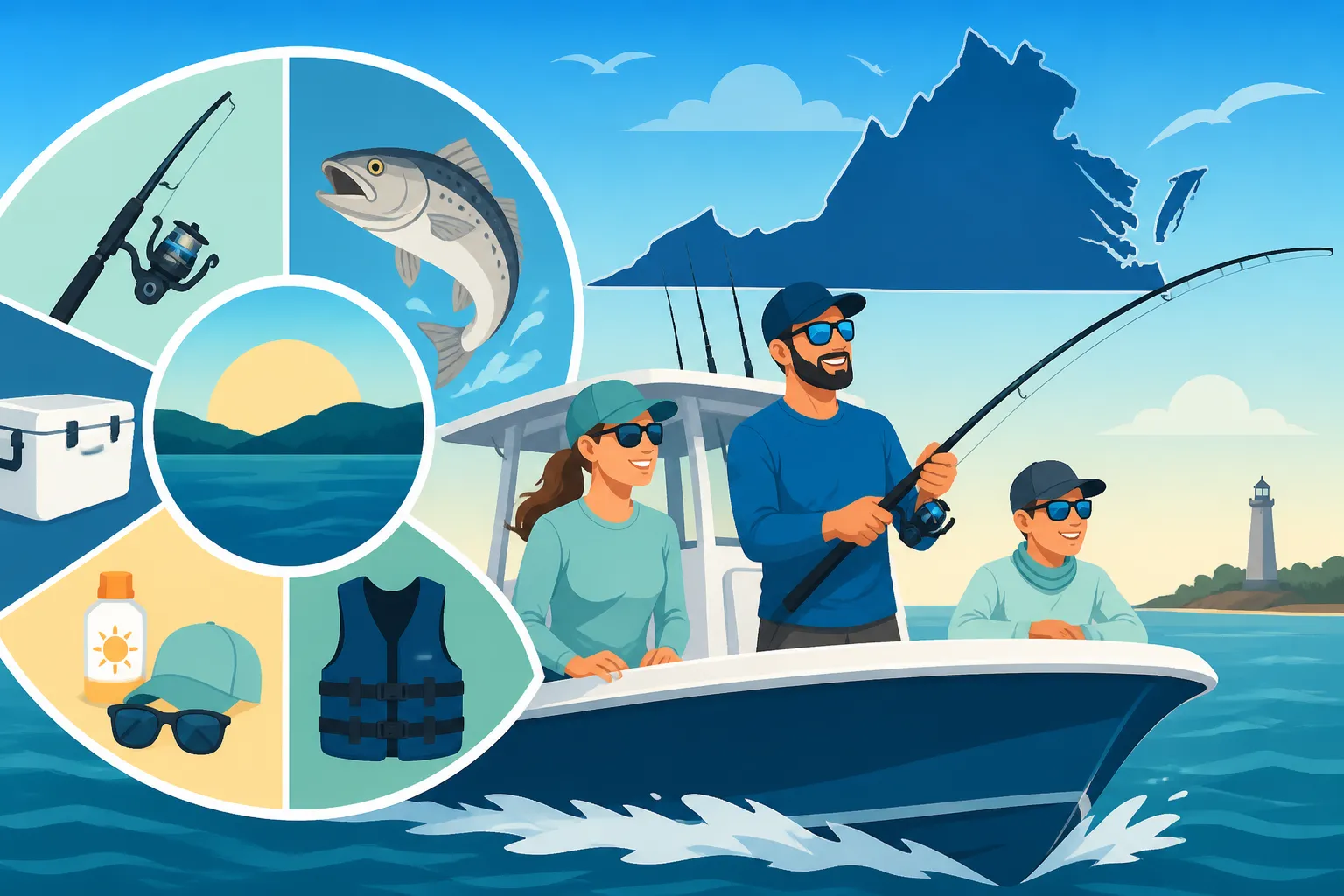
Deciding what to bring on your first fishing charter can feel like a guessing game. You don't want to overpack and be cumbersome on the boat, but you also don't want to forget essentials. The key is comfort, protection from the elements, and a few personal items.
Here's a handy table to help you prepare:
| Item Type | What to Bring (Typically Your Responsibility) | What's Usually Provided (Confirm with Charter) | What to Avoid Bringing |
|---|---|---|---|
| Clothing | Layers (non-cotton), Hat, Sunglasses, Rain Gear | Life Jackets (required), Specialty Weather Gear | Excessive baggage, expensive non-waterproof items |
| Footwear | Non-slip, closed-toe shoes (sneakers, boat shoes) | Open-toed sandals (for safety), dress shoes | |
| Sun/Weather | Sunscreen (non-spray), Lip balm, Bug spray | Spray sunscreen (damages boat surfaces) | |
| Food/Drink | Water, Snacks, Lunch (non-messy) | Cooler with ice for drinks/catch, Water | Glass bottles, excessive alcohol, messy foods |
| Personal | Small bag, Camera (waterproof), Medications | First-aid kit | Valuables, unnecessary electronics |
| Fishing Gear | (Optional) Your favorite lucky rod/reel (confirm first) | Rods, Reels, Bait, Tackle, Lures | Your entire tackle box (unless specified) |
When thinking about What to Bring on a Virginia Fishing Charter, remember that boat space is often limited. A small, soft-sided cooler for your personal drinks and snacks is usually fine, but avoid bulky luggage. Non-spray sunscreen is a big one – aerosol sprays can leave greasy residue on the boat's deck and even damage certain surfaces, which captains really dislike. Your captain will almost certainly provide all the necessary fishing gear, including rods, reels, bait, and tackle, so you typically don't need to bring your own. If you have a specific lucky rod you'd like to use, ask the captain beforehand if it's okay to bring it. Most importantly, dress in layers. Even on a warm day, the breeze on the water can be chilly, and weather in Virginia can change quickly. A waterproof jacket is always a good idea.
Onboard Expectations: Your Day on the Water
The moment you step onto the boat, a new adventure begins! Knowing what to expect once you're on board can help you feel more at ease and allow you to fully immerse yourself in the fishing experience. From introductions to safety, to the actual fishing, every part of the day is designed to be enjoyable and productive.
Meeting Your Captain and Crew
When you arrive at the designated meeting point, often a marina or boat ramp, you'll be greeted by your captain and any crew members (often a first mate). These folks are your hosts for the day, and they're usually incredibly passionate about fishing and sharing their knowledge. A friendly introduction is a great way to start the trip. They'll likely give you a quick rundown of the day's plan, where you might be heading, and what conditions to expect. Don't be shy about asking questions if anything is unclear.
The captain is the expert on board, responsible for your safety and for putting you on the fish. The crew, especially the first mate, will be your hands-on guide, helping you with everything from baiting hooks and casting lines to untangling knots and gaffing fish. They work hard to ensure you have a successful and enjoyable trip. Listening to their instructions and advice is paramount. They know the local waters, the fish behavior, and the best techniques for the day. Remember, they're not just driving the boat; they're actively managing the entire fishing experience, ensuring everyone has a fair shot and stays safe. Building a good rapport with your crew can make the day even more pleasant, creating a relaxed and productive atmosphere on deck.
Safety Briefings and Boat Etiquette
Safety is always the top priority on any fishing charter. Before you leave the dock, your captain will conduct a safety briefing. This isn't just a formality; it's essential information that everyone needs to hear. They'll point out where the life jackets are (which are usually provided and often required to be worn in certain situations or by children), how to use emergency equipment, and general safety protocols. Pay close attention to these instructions, as knowing what to do in an unexpected situation is crucial.
Beyond emergencies, there's also an unspoken etiquette on a fishing boat that helps everyone have a good time. This includes things like being mindful of where you cast to avoid tangles with other lines, keeping your personal belongings stowed neatly to prevent tripping hazards, and disposing of trash properly. Most boats will have a designated spot for trash. It’s also wise to wear non-slip shoes, as decks can get wet and slippery. If you need to move around the boat, let the captain or mate know, especially if the boat is moving or there are lines in the water. Respecting the captain's authority and the boat itself goes a long way. They're working hard to give you a great experience, and a tidy, safe boat makes their job easier and safer for everyone.
Fishing Techniques and Gear Provided
One of the best parts about a charter is that the captain and crew provide all the necessary What Gear Is Provided on a Virginia Fishing Charter, including rods, reels, bait, and tackle. This means you don't have to worry about owning expensive equipment or knowing how to rig it properly. They'll have the right gear for the target species and conditions, whether you're trolling for rockfish, bottom fishing for flounder, or jigging for stripers.
The crew will also instruct you on the specific fishing techniques that are working best on that particular day. If you're new to fishing, don't be afraid to ask for help or clarification. They're there to teach and assist you! They'll show you how to properly hold the rod, cast, set the hook, and retrieve your line. For example, if you're fishing for speckled trout, they might show you how to work a popping cork, or if you're deep dropping for sea bass, they'll demonstrate the proper jigging motion. This hands-on guidance is invaluable, especially for beginners. The goal is to make sure you have the best chance possible to catch fish and enjoy the thrill of the fight. Be open to trying new things and trusting their expertise – they're the ones who do this every day!
After the Lines Are In: Post-Trip Details and Beyond
The excitement doesn't necessarily end when the lines come out of the water. The post-trip experience is just as important, covering everything from what happens to your catch to showing appreciation for your crew. Understanding these aspects will help you conclude your first charter confidently and plan for future adventures.
Handling Your Catch: Cleaning and Filleting
So, you've successfully reeled in some keepers! Congratulations! One of the great benefits of a fishing charter is that the crew will almost always handle Cleaning Your Catch After a Virginia Charter Trip for you. Once back at the dock, they'll typically clean and fillet your fish, getting them ready for you to take home and cook. This is a huge convenience, especially after a long day on the water, and it saves you from needing to know how to properly clean a fish yourself.
You'll usually want to bring a cooler filled with ice in your vehicle to transport your freshly filleted catch home. The crew will package your fish, often in plastic bags, and place them on ice in your cooler. It's always a good idea to confirm this expectation with your captain when booking, but it's a very standard service. This way, you can focus on enjoying the experience of the catch, knowing that the hard work of preparation will be taken care of. Just imagine sitting down to a delicious meal of fresh Virginia rockfish or flounder that you caught yourself! That's the real reward.
Tipping Your Hardworking Crew
This is a question many first-timers grapple with, and it's an important one. Tipping the captain and crew is customary in the charter fishing industry, much like in the restaurant or service industry. These individuals work incredibly hard, often starting their days long before sunrise to prepare the boat and bait, and staying late to clean up after you've left. They use their expertise to ensure your safety, provide instruction, and put you on the fish, regardless of the conditions.
The standard recommendation for Tipping Norms for Virginia Fishing Charter Crews is typically 15-20% of the total charter cost. If they went above and beyond, showed exceptional patience, or helped you land a trophy fish, consider leaning towards the higher end of that range. Conversely, if you feel the service wasn't up to par, you can adjust accordingly, but remember that some factors, like tough fishing conditions, are beyond the crew's control. It's best to give the tip directly to the first mate, who will usually share it with the captain. Having cash on hand for this purpose is always a good idea, as it's the easiest and most direct way to show your appreciation. A thoughtful tip not only acknowledges their effort but also supports their livelihood.
Documenting and Sharing Your Experience
You've had an incredible day on the water, caught some amazing fish, and perhaps even made some new memories. Now it's time to capture and share those moments! Most anglers love taking photos of their catches, especially those "personal best" fish. Your crew will often be happy to snap a few photos of you with your fish before they're cleaned. Just make sure your phone or camera is waterproof or protected, as splashes and wet hands are inevitable on a fishing boat.
Sharing your experience can be as simple as posting photos on social media, telling your friends and family about your adventure, or even leaving a positive review for the charter company. Platforms like FishingBooker thrive on authentic reviews, and a glowing account of your trip can help other aspiring anglers find a great captain. Don't forget to tag the charter company if they have a social media presence! It's a fantastic way to relive the excitement, inspire others to try charter fishing, and give a well-deserved shout-out to the captain and crew who made your first trip so memorable. These stories and photos are more than just bragging rights; they're a testament to the thrill of Virginia Fishing and the joy of connecting with nature.
Disclaimer
This article is for general informational purposes only and does not constitute professional advice. Laws, prices and regulations vary by location and change over time. Consult a qualified professional for guidance on your specific situation.