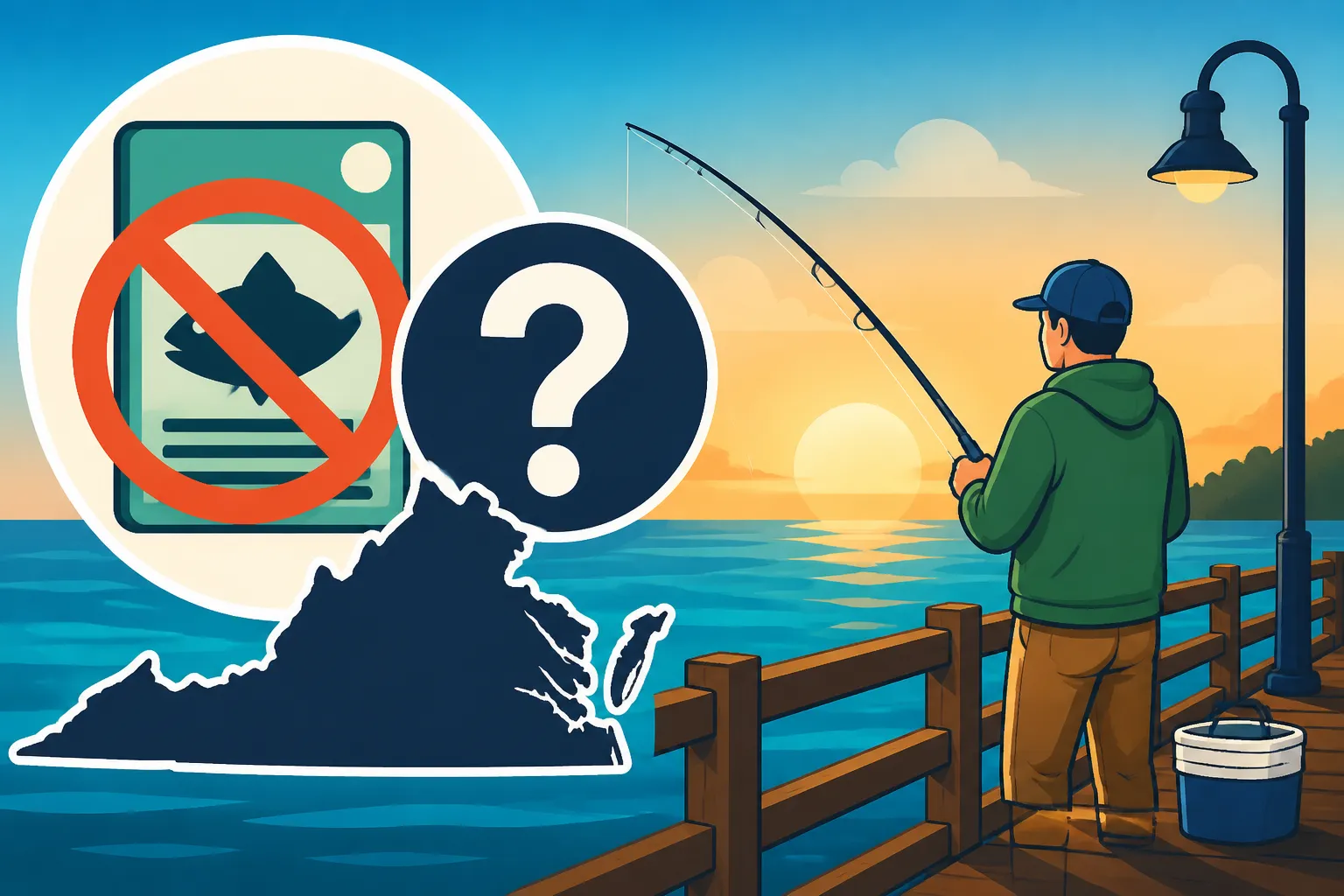
Do You Need a License to Fish From a Pier in Virginia?
It's a common question, and honestly, it can be a little confusing when you're just looking to enjoy a relaxing day with a line in the water along Virginia's beautiful coast or bays. Many folks assume if they're not on a boat or wading in the surf, the rules might be different. This guide is here to untangle the specifics of whether you need a fishing license to cast a line from a pier in Virginia, making sure you're compliant and ready for your next outing.
The Core Question: Is a License Always Needed for Pier Fishing in Virginia?
The short answer, like many things in the wonderful world of fishing regulations, is "it depends!" It's not as straightforward as a simple yes or no, and misunderstanding these nuances can lead to frustration or, worse, an unexpected citation. The good news is that Virginia does offer some provisions that can make pier fishing more accessible for many anglers, but it's vital to know the details.
Understanding Virginia's General Fishing License Requirements
Before we dive into the specifics of piers, let's touch on the general rule of thumb for fishing in the Commonwealth. If you're 16 years of age or older and plan to fish in public waters, whether it's freshwater lakes, rivers, or the expansive saltwater of the Chesapeake Bay and its tributaries, you typically need a valid Virginia fishing license. These licenses come in various forms – freshwater, saltwater, or a combination of both – and vary for residents and non-residents. It's the state's way of managing fisheries and ensuring the sustainability of our aquatic resources, and a good chunk of that license fee goes right back into conservation efforts. If you're a first-time angler, understanding the basics of a Virginia Fishing License Guide is a great starting point, as it clarifies who needs what and why. Many experienced anglers still keep a general license for ultimate flexibility, even if they primarily fish piers.
Imagine you're standing on the banks of the James River or wading into the shallows of the Chesapeake Bay. In either scenario, if you're holding a rod and reel and are over 16, a license is your passport to legally fish. This foundational rule is important because the pier exception we're about to discuss is a departure from this general requirement, not an elimination of all rules. It's easy to get caught up in the excitement of a fishing trip, but remembering this baseline helps frame the pier-specific rules.
The Pier Exemption: A Glimmer of Hope for Anglers
Here's where it gets interesting and offers a real benefit for many casual anglers or those just dipping their toes into the sport. In Virginia, you generally do not need an individual state fishing license if you are fishing from a public pier that holds a valid master fishing license. That's right! Many commercially operated public fishing piers, especially along the coast and bay, purchase a special blanket license from the Virginia Department of Wildlife Resources (DWR) that covers anyone legally fishing from their structure.
This is a fantastic provision, especially for families or visitors who might only fish once or twice a year and don't want the hassle or expense of purchasing a full annual license. It encourages recreational fishing and provides accessible spots for everyone. However, there's a crucial caveat that often gets overlooked: while you might not need an individual state fishing license, if you are 16 or older, you still need to register with the Virginia Saltwater Angler Registry Program (FIP). This is a free, annual registration, and it's mandatory for anyone fishing in saltwater unless they are under 16, fishing on one of Virginia's free fishing days, or already hold a valid Virginia saltwater fishing license or certain other specific exemptions. Many people incorrectly assume "no license" means "no paperwork," but that FIP registration is a separate, vital step. You can often complete it online in just a few minutes. Without it, even on a licensed pier, you could still be found in violation.
Navigating Public Piers Versus Private Piers
The distinction between public and private access points is absolutely critical when it comes to understanding fishing license requirements in Virginia. It's not just about who owns the property, but how that ownership translates into regulatory responsibilities and angler convenience.
Public Piers: Often Covered by a Blanket License
Most of Virginia's well-known, large fishing piers—think the ones that stretch far out into the ocean or bay, often with bait shops and amenities—operate under that master fishing license we just discussed. These are the places where you can often pay a daily pier fee, and that fee indirectly contributes to the pier's overall license, allowing you to fish without needing your own state fishing license. It's a sweet deal! The Virginia Beach Fishing Pier and the Buckroe Beach Fishing Pier are prime examples of this model. They want to make it easy for folks to come out, rent a rod, buy some bait, and enjoy the experience without the upfront commitment of a full license.
When you arrive at one of these piers, you'll typically pay a small access fee. This fee covers your entry, and as long as the pier holds its master license, you're good on the state fishing license front. However, as emphasized earlier, don't forget that separate, free Virginia's Saltwater Angler Registry Program (FIP) registration if you're 16 or older and fishing in saltwater. It's super easy to do online before you head out, and it keeps you in good standing. These public piers are often fantastic resources for beginners, offering rentals and advice, and they're usually listed among the Best Fishing Piers in Virginia Beach or other coastal areas.
Private Piers and Rental Docks: Always Check First
Now, this is where you really need to pay attention. If you're fishing from a private pier, a friend's dock, or a rental property's dock, the rules are entirely different. These structures do not typically hold a master fishing license. This means that if you're 16 or older, you will need your own valid state fishing license to fish from them. This could be a Freshwater and Saltwater Fishing Licenses in Virginia combination, or just a saltwater license if you're on a private dock connected to saltwater.
A common scenario: you're visiting a rental home on the Chesapeake Bay with a lovely private dock. You assume, "Hey, it's a dock, maybe it's like a pier?" Nope! You would absolutely need your own individual saltwater fishing license (and the FIP registration, of course). The same goes for fishing from the property of a private marina that doesn't explicitly state it has a master license for its patrons. Never assume. If in doubt, the safest bet is always to purchase your own license or ask the property owner or marina management directly. A quick call to the Virginia DWR (Department of Wildlife Resources) can also clarify any specific location if you're really unsure. Don't let a casual assumption turn into a penalty for fishing without a license in Virginia.
Specific Pier Examples and What to Expect
Let's get down to some concrete examples, because nothing beats knowing exactly what to expect when you're planning your fishing adventure. Virginia has some fantastic piers, each with its own charm and set of operational guidelines.
Popular Virginia Public Piers and Their License Status
Virginia boasts several iconic public fishing piers, particularly in the coastal regions, which are well-known for their master fishing licenses. These piers are community hubs, offering more than just a place to fish. They often feature tackle shops, bait sales, and even snack bars, making for a fun outing even if the fish aren't biting.
- Virginia Beach Fishing Pier: This pier, stretching out into the Atlantic Ocean right in the heart of Virginia Beach, is a prime example. As a paying patron, your individual state fishing license is typically covered by the pier's master license. You'll pay an entry fee, which can be around $10-$12 for an adult day pass. Remember, though, the separate, free Virginia Saltwater Angler Registry Program (FIP) registration is still required if you are age 16 or older. It's an easy online registration that keeps you compliant.
- Buckroe Beach Fishing Pier (Hampton): Located on the Chesapeake Bay, this pier operates similarly to the Virginia Beach Pier. It's a popular spot for catching croaker, spot, flounder, and even red drum during certain seasons. Pay your pier fee, register for FIP, and you're good to go.
- Grandview Nature Preserve Pier (Hampton): This is another popular Chesapeake Bay pier, offering access to similar species. Again, the pier likely holds a master license, but confirming with pier staff upon arrival is always a good practice, especially regarding the FIP registration requirement.
These piers are designed to be accessible and user-friendly, catering to everyone from seasoned anglers to families with young children just trying to catch their first fish. Many anglers even consult resources like FishingBooker to explore various fishing opportunities, including pier fishing, to understand what to expect at different locations.
Marinas and Charter Dock Fishing
The rules for marinas and private charter docks can be a bit trickier.
If you're fishing from a dock at a marina that is generally open to the public for access (e.g., you're not on a boat, just fishing from the edge of the dock), you're back to needing your own individual fishing license. Marinas typically don't hold master licenses for random dock fishing by non-boaters. This includes fishing from bulkheads or seawalls that are part of a private marina facility. Always assume you need your own Virginia Fishing License Guide when in these areas.
However, if you're on a fishing charter boat departing from a marina, the story changes. Reputable charter captains hold the necessary commercial licenses, and their vessels are typically covered, meaning you as a client generally don't need your own individual license while fishing aboard their boat. The charter covers it. This is one of the big advantages of booking a trip through services like FishingBooker – they connect you with licensed professionals who handle these details. For example, if you book a Chesapeake Bay Fishing Charters in Virginia or a Virginia Beach Fishing Charters and Trip Costs, your license requirements are typically taken care of by the charter operator, making for a truly hassle-free experience. Always confirm this with your captain when booking, but it's a standard practice in the charter industry.
Important Considerations Beyond the License
Okay, so we've tackled the license question for piers, and you might be thinking, "Great, I'm all set!" But hold your horses, because fishing, especially in a state as rich in aquatic life as Virginia, comes with a few more layers of rules and best practices. A license (or exemption) is just the first step in being a responsible angler.
Fish Species and Catch Limits from Piers
Even if you're fishing from a pier that covers your individual license, you are still absolutely bound by all of Virginia's fishing regulations concerning what you can catch, how many you can keep, and what size they need to be. These rules are in place for a reason – to protect fish populations and ensure healthy fisheries for generations to come.
For instance, if you're targeting spot, croaker, or flounder from a coastal pier, you need to know the daily creel limits (how many fish you can keep) and any minimum size requirements. Catching a beautiful striped bass (often called "rockfish" in Virginia) from a pier means you must adhere to the Striped Bass Season and Slot Limit in Virginia, which specifies legal sizes and seasons. It's not uncommon for pier staff to have laminated charts or signs displaying current regulations, but it's your responsibility to know before you go. A quick check of the Virginia DWR website or a handy fishing app before your trip can save you a lot of trouble. Ignoring these rules can lead to fines, even if your license status is perfectly clear.
Facility Use Permits and Other Fees
Don't confuse a pier's master fishing license with a facility use permit or a simple entry fee. While the pier's license might cover your right to fish without your own state license, it doesn't mean access is always free. Most major public fishing piers charge a daily fee to access the pier itself. This fee helps cover the pier's operational costs, maintenance, and yes, the cost of their master fishing license.
These fees typically range from a few dollars for spectators to $10-$15 for anglers for a full day. Some piers might offer season passes if you're a frequent visitor. It's just like paying an entry fee to a park or a museum. So, while you might not need to buy a Virginia Fishing License Costs and Types Explained, be prepared to pay a separate fee to get onto the pier and start fishing.
The Virginia Saltwater Angler Registry Program (FIP)
We've mentioned this before, but it bears repeating because it's such a common point of confusion. If you're 16 years of age or older and fishing in saltwater, you must register with the Virginia Saltwater Angler Registry Program (FIP). This is true even if you are fishing from a pier that holds a master fishing license.
The FIP program is free and helps the National Oceanic and Atmospheric Administration (NOAA) gather crucial data on recreational saltwater fishing activity. This data is used to estimate catches and manage fish stocks, which ultimately benefits all anglers. You can register online through the DWR website. It's a quick process, usually just a few minutes, and you'll receive a registration number. Carry proof of this registration with you, either on your phone or a printout, just as you would your fishing license. For more details, check out Free FIP saltwater registration for Virginia seniors explained – even though it mentions seniors, the general requirements apply to all.
Why You Might Still Want Your Own License (Even with an Exemption)
After all this talk about exemptions, you might wonder why anyone would bother getting their own fishing license if they mostly fish from piers. Well, there are some very compelling reasons why a personal license offers incredible value and flexibility, even for the occasional pier angler. It's like having a universal key instead of just a pass to one specific building.
Flexibility and Peace of Mind
Think about the freedom a personal fishing license grants you. When you have your own valid How to Get a Fishing License in Virginia, you don't have to worry about whether a particular pier holds a master license, or if you're accidentally stepping onto a private dock. You can spontaneously decide to fish from a public beach, a riverbank, or even try your hand at kayak fishing without a second thought. This flexibility is invaluable for true fishing enthusiasts or anyone who enjoys exploring different angling opportunities.
There's also the peace of mind. While pier staff and DWR officers are generally helpful, navigating complex regulations can be stressful. Having your own license simplifies things considerably. You know you're covered, regardless of the specific pier's status or if you decide to try a different spot halfway through your day. It eliminates the need for constant double-checking and allows you to just focus on the joy of fishing. This convenience is one reason many anglers who regularly use services like FishingBooker to plan trips still ensure they have their own Virginia Fishing License Guide in hand.
Expanding Your Fishing Horizons Beyond the Pier
The biggest reason to get your own license, even if you love pier fishing, is to unlock the vast array of other fishing experiences Virginia has to offer. A personal license is your ticket to exploring:
- Bank Fishing: Pull over at a quiet spot on the James River in Virginia or a tranquil lake and cast a line. No pier fee, just you and the water.
- Wading: For fly anglers or those targeting smaller species, wading into shallow rivers or bay inlets can be incredibly rewarding.
- Boating/Kayaking: If you own a boat or kayak, a personal license is mandatory for fishing from your vessel in most public waters.
- Fishing from Bridges or Causeways: Many bridges allow pedestrian fishing, but these typically require your own license.
- Targeting Specific Species: While piers offer a good variety, certain species (like trout in designated streams or bass in specific lake coves) are best accessed from non-pier locations, all of which require a personal license. If you're eyeing a specific fish, say, Trout Fishing in Virginia: Rainbow, Brown, and Brook Trout, a personal license is a must to access those pristine streams.
Considering the relatively low cost of an annual license – for example, a Virginia charges $23 for a resident freshwater fishing license and $17.50 buys a resident saltwater license in Virginia – the value it provides in terms of access and freedom is immense. And don't forget options like Virginia's 10-Day Saltwater Fishing License for shorter trips, which can still offer that flexibility. It's a small investment for a whole lot of fishing fun across the Commonwealth.
Virginia Fishing Piers: License & Fee Overview
To help you visualize the different requirements, here's a quick overview of what you might expect at various fishing locations in Virginia, particularly concerning piers and similar structures. This table is a general guide, and it's always best to confirm specific details with the pier operator or DWR before your trip.
| Location Type | Individual VA Fishing License Required? | FIP Registration Required? (Age 16+) | Typical Fee Structure | Notes |
|---|---|---|---|---|
| Public Fishing Pier | NO (if pier holds master license) | YES | Daily access fee | Always confirm with pier staff. The pier's master license covers patrons. |
| Private Dock/Pier | YES | YES (if saltwater) | N/A (private property) | You are responsible for your own license. |
| Marina Dock/Seawall | YES | YES (if saltwater) | Varies (often none for fishing) | Unless specifically stated otherwise by marina management, assume you need your own license. |
| Charter Boat (Client) | NO | NO (covered by charter) | Charter trip fee | Licensed charter captains cover fishing licenses for their clients. |
| Public Beach (Shore) | YES | YES (if saltwater) | Typically free access | Your personal license is required. |
| State Park Pier (e.g. York River State Park Pier) | YES | YES (if saltwater) | Park entrance fee | State park fishing piers often require your individual license, unlike some commercial ocean/bay piers. Always double-check with the specific park or DWR, as rules can vary. For example, Fishing Spots Near Yorktown, Virginia might have different rules for river vs. bay fishing. |
Important Reminder: This table focuses on the fishing license and FIP. Catch limits, size restrictions, and season dates apply to all anglers, regardless of where they are fishing or their license status. You can find detailed regulations on the Virginia DWR website or by checking their annual fishing guide. And remember that special times, like Virginia Free Fishing Days in June 2026, might waive all license requirements temporarily, even for individual anglers.
Disclaimer
The information provided in this guide is for general informational purposes only and is subject to change. While we strive to provide accurate and up-to-date information, fishing regulations in Virginia can be complex and are regularly updated by the Virginia Department of Wildlife Resources (DWR) and other governing bodies. It is the responsibility of each angler to confirm the current regulations, license requirements, and fees before engaging in any fishing activity. Failure to comply with all applicable laws and regulations can result in penalties.