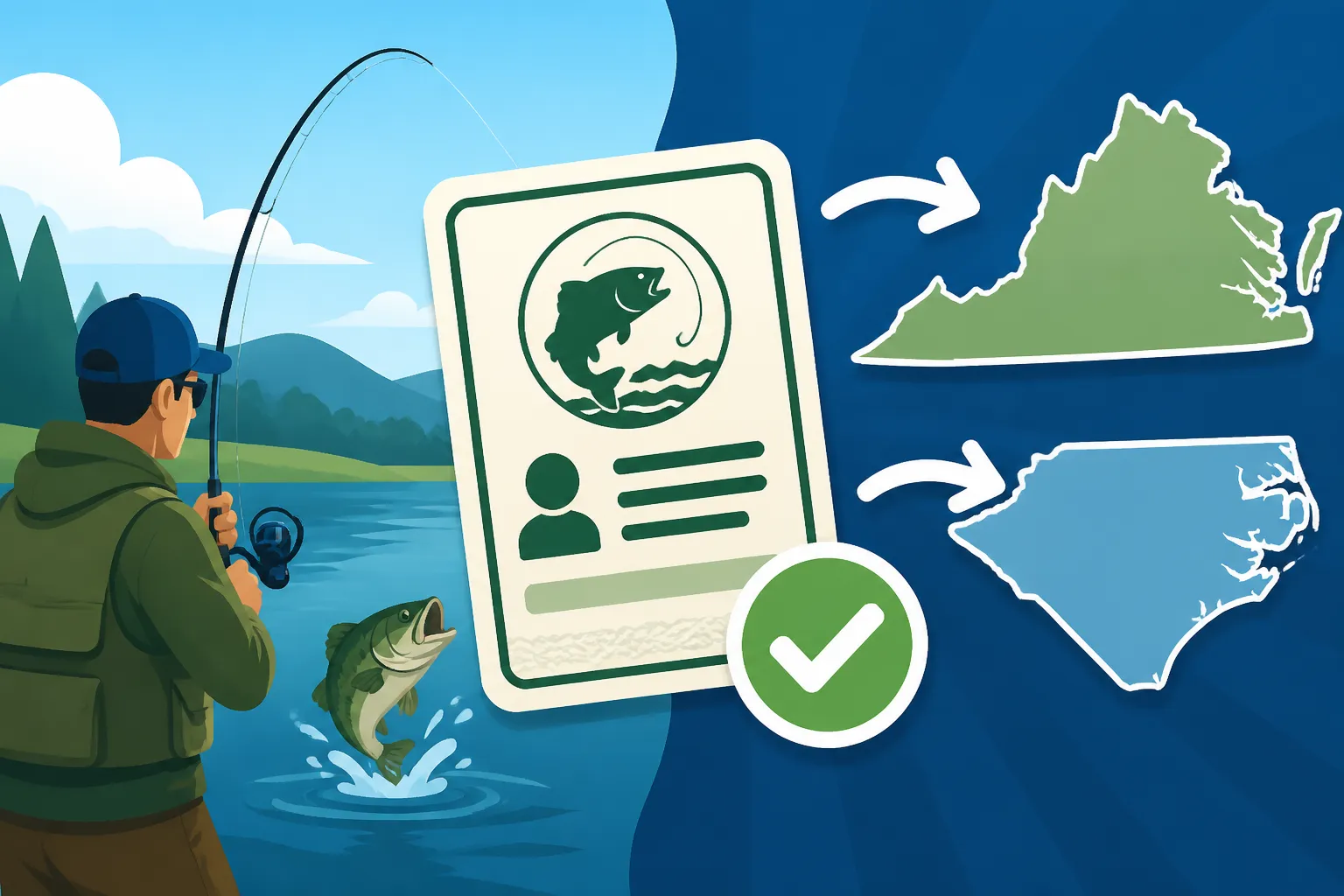
Can one fishing license work in more than one state?
It's a common dilemma for anglers, isn't it? You've got your rod and reel, a trusty tackle box, and you're planning a trip to a beautiful lake or river that just happens to straddle a state line. Or maybe you're thinking of a fishing vacation that takes you through a couple of different states. The burning question always pops up: "Does my fishing license from Virginia work in North Carolina, or Maryland, or anywhere else?" This guide is here to clear up that confusion, explore the nuances of interstate fishing licenses, and make sure you're always on the right side of the law.
The General Rule: State-Specific Licenses Are Almost Always Required
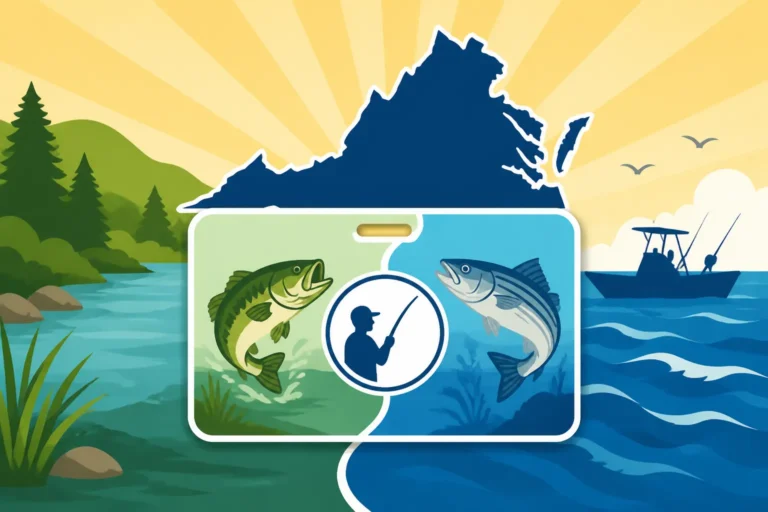
Let's get straight to it: for the vast majority of fishing situations, no, one fishing license does not work in more than one state. Your Virginia fishing license is specifically for fishing within the waters of the Commonwealth of Virginia. This might feel frustrating, especially when you're just looking for a relaxing day on the water, but there's a good reason behind it.
Think of it like a driver's license. While your Virginia driver's license is recognized in other states, it doesn't mean you're exempt from local traffic laws or registration in another state if you move there. Fishing licenses operate similarly, but with stricter geographical boundaries for where they are directly valid. Each state manages its own fisheries, conservation efforts, and regulations, and your license fees directly support those programs.
Why State-Specific Licenses Are the Norm
It all boils down to jurisdiction and funding. Every state has its own Department of Wildlife Resources (or similar agency) responsible for managing fish populations, habitats, and ensuring sustainable angling opportunities. The money generated from fishing license sales directly funds these critical initiatives within that specific state. This includes everything from fish stocking programs in local ponds and rivers to enforcing catch limits, conducting scientific research, and maintaining public access points.
Imagine if a Virginia license was universally valid. Who would fund the management of a small stream exclusively in West Virginia? The system is designed to ensure that the people who benefit from a state's resources are also contributing to their upkeep. If you're fishing in Virginia, your fees help Virginia. If you're fishing in North Carolina, your fees should help North Carolina. This separation also allows each state to set its own rules for different species, fishing seasons, and size limits, which can vary wildly depending on local ecological conditions and conservation goals. For example, Virginia's Fishing License and Catch Limit Basics might be very different from neighboring states.
Consider a scenario where you're fishing on Lake Gaston, a massive reservoir that straddles the Virginia and North Carolina border. You've launched your boat from the Virginia side and have a valid Virginia fishing license. If you drift into the North Carolina section of the lake and cast a line without a North Carolina license, you're technically fishing illegally in North Carolina waters. It might feel like the same lake, but the legal boundary is very real and strictly enforced by wildlife officers from both states. This can be a rude awakening for unsuspecting anglers, leading to fines and even confiscation of gear.
The Rarity of True "One License for All"
The idea of a single, all-encompassing fishing license that works across every state in the U.S. is a complete myth. Such a system would be a logistical and financial nightmare for state conservation agencies. While there might be federal permits or registrations required for certain types of commercial fishing or highly regulated species in federal waters, these are very distinct from the general recreational fishing licenses issued by state wildlife departments.
Recreational anglers will almost always need a license issued by the specific state (or states) where they intend to fish. There's no magical pass that lets you float down the Atlantic coast from Virginia Beach to Florida with just your Virginia permit. Even if you're fishing from a pier or boat in coastal waters, the license requirement usually ties back to the state whose jurisdiction those waters fall under. This is why it’s crucial to understand Virginia Fishing License Requirements for Residents and Nonresidents and how they might differ if you venture beyond state lines.
Navigating Reciprocity Agreements: Virginia and its Neighbors
While a universal license is a pipe dream, there's a crucial exception to the state-specific rule: reciprocity agreements. These are special arrangements made between neighboring states that share a border, often along a river, lake, or bay. Under a reciprocity agreement, a fishing license from one state might be valid in specific, clearly defined shared waters of the other state. However, these agreements are never universal for all waters and almost always come with specific conditions and limitations.
It's vital to understand that "reciprocity" doesn't mean your Virginia license is suddenly valid throughout all of North Carolina or Maryland. It only applies to very particular stretches of shared water, and usually, it's only for fishing on that shared water, not for landing fish on the opposite bank or fishing in tributaries of the neighboring state.
Virginia and Maryland: A Complex Relationship on the Potomac River
The most prominent and often-discussed reciprocity agreement involving Virginia is with Maryland, specifically concerning the Potomac River. This river forms a significant portion of the border between the two states, and its management is unique. The Potomac River Fisheries Commission (PRFC) oversees the fisheries in the mainstem of the Potomac River, from the fall line near Washington D.C. down to the Chesapeake Bay.
For anglers, this means that if you possess a valid fishing license from either Virginia or Maryland, you are generally allowed to fish in the mainstem of the tidal Potomac River. This can be a huge relief for those living in Northern Virginia or Southern Maryland who frequently fish these waters. However, there's a critical caveat: this typically applies only to the mainstem of the river. If you venture into a tributary that lies entirely within Maryland (like the Patuxent River) or entirely within Virginia (like the Occoquan River), you absolutely need the license from that respective state. The PRFC website or the Virginia DWR and Maryland DNR sites are the best places to confirm the exact boundaries and rules. Understanding this nuance is key to avoid Penalties for Fishing Without a License in Virginia or Maryland.
A common scenario might involve an angler from Stafford, Virginia, who wants to fish for striped bass in the lower Potomac. With their Virginia saltwater fishing license, they are usually good to go in the mainstem. But if they decide to pull into a small creek on the Maryland side to chase some largemouth bass, they would need a valid Maryland freshwater license to fish those specific waters legally. The rules can be intricate, so never assume; always verify.
Virginia's Agreements with Other Bordering States
Beyond the Potomac River, Virginia's reciprocity agreements with other states like North Carolina, West Virginia, Kentucky, and Tennessee are generally much more limited or non-existent for recreational fishing.
- North Carolina: For large, shared impoundments like Lake Gaston and John H. Kerr Reservoir (often called Buggs Island Lake), there is no general statewide reciprocity. If you have a Virginia license and fish on the North Carolina side of these lakes, you need a North Carolina license. Many anglers who frequent these lakes simply purchase both state licenses to ensure they can fish anywhere on the body of water without worrying about state lines. This often means buying a Virginia Resident Freshwater Fishing License Cost and then an equivalent North Carolina license.
- West Virginia: While there are shared river sections, such as parts of the Shenandoah River's headwaters, comprehensive statewide reciprocity for recreational fishing licenses between Virginia and West Virginia is not common. Anglers typically need a license for the specific state whose waters they are fishing in. If you're heading to the mountains to chase trout, you'll likely need a West Virginia license if you cross the border.
- Kentucky and Tennessee: For states like Kentucky and Tennessee, which border Virginia further west, reciprocity agreements are rare or apply only to very specific small sections of border waters. For instance, anglers on South Holston Lake, which straddles the Virginia-Tennessee line, will generally need a license for the state they are actively fishing in. You can't rely on your Does Tennessee honor a Virginia fishing license? for full access.
The general rule of thumb for any shared water not explicitly covered by the PRFC on the Potomac is this: if you cast your line into water managed by another state, you need that state's license. It's always safer and wiser to obtain the necessary license for each state you plan to fish in rather than risk a fine or legal trouble.
Practical Considerations and Avoiding Penalties
It's clear by now that navigating fishing licenses across state lines requires a bit of homework. The last thing any angler wants is to have a wonderful day on the water ruined by a run-in with a wildlife officer because of a licensing oversight. The penalties for fishing without a valid license, even unknowingly, can be significant.
Always Verify Current Regulations
Reciprocity agreements, just like other fishing regulations, are not set in stone. They can change over time due to legislative actions, environmental concerns, or revised management strategies. What was true a few years ago might not be true today. This is why your first and most important step should always be to verify the most current regulations.
Before you plan a trip that might involve crossing state lines, take these steps:
- Check Virginia DWR: Visit the official Virginia Department of Wildlife Resources website. They often have clear information regarding any existing reciprocity agreements with neighboring states. You can usually find a dedicated section on their site for this.
- Check Neighboring State's Agency: Don't stop there. Also, check the website for the wildlife or natural resources agency of the neighboring state. For Maryland, it's the Department of Natural Resources (DNR); for North Carolina, it's the Wildlife Resources Commission (WRC), and so on. Cross-referencing this information ensures you have the most complete and accurate picture.
- Look for Specific Map References: Some agreements will specify exact geographical boundaries. For example, on a shared river, the agreement might only apply to the main channel, not any backwaters or tributaries. Look for maps or detailed descriptions that pinpoint exactly where each license is valid. This attention to detail will help you understand, for example, the Fishing License Reciprocity Between Virginia and Neighboring States better.
- Ask Local Experts: If you're still unsure, contact the local DWR office or a reputable bait and tackle shop near the border area. These local experts are often very knowledgeable about the specific rules for their waters.
The Cost vs. Risk Assessment
Let's be realistic: buying an extra fishing license might feel like an unnecessary expense, especially if you're only planning a quick trip across the border. However, when you weigh the cost of an additional license against the potential penalties for fishing without one, the choice becomes clear.
Fines for fishing without a license can range from a couple of hundred dollars to much higher, depending on the state and the specific circumstances. On top of the fine, you might also face court costs, and in some cases, your fishing gear could be confiscated. Imagine losing a brand-new rod and reel setup just because you didn't want to spend an extra $20-$50 on a second license. It's simply not worth the risk.
For example, a Virginia's 5-Day Freshwater Fishing Pass might only cost $14 for a resident, or a Virginia's 10-Day Saltwater Fishing License might be $10 for a visitor. These short-term options are usually very affordable and provide complete peace of mind. For those who frequently fish border waters, investing in an annual nonresident license for the adjacent state is often the smartest move. While an Out-of-state anglers pay $47 for a Virginia freshwater license might seem like a lot, it gives you a full year of legal fishing access.
Consider the example of the Chesapeake Bay. While much of it is Virginia territory, parts near the mouth of the Potomac and the upper bay are Maryland waters. If you're planning a Chesapeake Bay Striped Bass Fishing Guide trip that takes you into Maryland waters, even briefly, it's far better to have a Maryland license if your Virginia one doesn't specifically cover that shared area. Always err on the side of caution. Getting your license is easy these days; you can often purchase them online directly from the state's wildlife agency website or through authorized vendors like sporting goods stores.
| Bordering State | Primary Shared Waters | General Reciprocity Status | Recommendation |
|---|---|---|---|
| Maryland | Potomac River (mainstem tidal) | Yes (via PRFC) | VA or MD license generally valid on mainstem tidal Potomac. Check PRFC for specifics. |
| North Carolina | Lake Gaston, Kerr Reservoir (Buggs Island) | No (statewide) | Separate VA and NC licenses required for respective state waters. |
| West Virginia | New River, Shenandoah River (upper sections) | Limited/Rare | Assume separate VA and WV licenses are needed unless a very specific agreement is confirmed. |
| Kentucky | Small border streams | No (statewide) | Separate VA and KY licenses required. |
| Tennessee | South Holston Lake, Holston River | Limited/Rare | Assume separate VA and TN licenses are needed unless a very specific agreement is confirmed for that specific body of water. |
This table provides a quick overview, but remember, details can be highly specific. Always consult the official state wildlife resources agencies for the most current information before you go.
In conclusion, while the idea of one fishing license working in multiple states is mostly a dream, understanding reciprocity agreements and doing your due diligence will ensure your fishing adventures are always legal and enjoyable.
Disclaimer
The information provided in this guide is for general informational purposes only and is subject to change. While we strive to offer accurate and up-to-date content, fishing regulations, license requirements, and reciprocity agreements can be complex and are often revised by state wildlife agencies. It is the sole responsibility of each angler to confirm and comply with all current fishing laws and regulations set forth by the Virginia Department of Wildlife Resources and any other state or federal agencies governing the waters they intend to fish. Failure to do so may result in penalties.