Best Bait for Smith Mountain Lake Striped Bass in Virginia
Anyone who's spent time chasing striped bass on Smith Mountain Lake knows the frustration: one day they're hitting everything, the next they're nowhere to be found. It can feel like a guessing game trying to figure out what they want to eat. This comprehensive guide is here to take the guesswork out of it, breaking down the absolute best baits and techniques to help you consistently land those powerful Smith Mountain Lake stripers.
Understanding Smith Mountain Lake Striped Bass Behavior
Before you even think about what bait to tie on, it's crucial to understand the fish you're targeting. Striped bass are powerful, migratory predators, and their behavior in a landlocked reservoir like Smith Mountain Lake is heavily influenced by a few key factors. Knowing these patterns will dramatically increase your success rate, no matter what you're throwing.
Seasonal Movements and Feeding Habits
Striped bass are constantly on the move, driven by water temperature and the availability of their primary food source: baitfish. In the cooler months, from late fall through early spring, you'll often find stripers in the main lake basins and creek channels, typically deeper in the water column. This is when they tend to school up tightly, and if you find one, you've likely found a whole bunch. They're conserving energy in the cold, so a slow, tempting presentation can be key. As the water warms in spring, they start to spread out and move into shallower coves and feeder creeks, following the baitfish that are also becoming more active. This is often an aggressive feeding period, sometimes referred to as the "pre-spawn" for their biological urge to migrate up rivers, even if landlocked.
During the scorching summer months, Smith Mountain Lake stripers retreat to deeper, cooler water where oxygen levels are suitable. This often means suspending over deep channels or congregating around the thermocline, a layer of water where the temperature changes rapidly. They'll venture shallower during low light hours – dawn, dusk, and even overnight – to feed, but during the bright midday sun, they're usually down deep. Many anglers targeting Smith Mountain Lake Striped Bass Fishing in Virginia find the early morning bite to be the most productive in summer. Fall brings a renewed burst of energy as water temperatures drop. Stripers become incredibly active, chasing baitfish in massive schools often visible on the surface. This is a prime time for explosive topwater action and aggressive strikes as they try to fatten up for winter.
Impact of Water Temperature and Depth
Water temperature is arguably the single most important factor dictating where stripers will be and how actively they'll feed. Striped bass are cold-blooded, so their metabolism slows down in cold water and speeds up in warm water. They prefer temperatures ranging from about 55 to 70 degrees Fahrenheit, and they'll always seek out water within their comfort zone. In winter, this means deep water where temperatures are more stable and slightly warmer than the surface. In summer, it means deep water where cooler temperatures and adequate oxygen persist.
Understanding the thermocline is vital, especially in summer. This layer forms when the surface water gets warm and creates a distinct boundary with the colder, deeper water. Stripers will often be found just above, within, or just below this layer, as it tends to concentrate baitfish and offers optimal conditions. A good fish finder is indispensable for identifying the thermocline and pinpointing where the fish are holding in the water column. Learning about Water Temperature and Fish Feeding Patterns will give you a significant advantage, allowing you to predict not just where the fish are, but how active they're likely to be.
The Importance of Forage Fish
Smith Mountain Lake is a vibrant ecosystem, and its striped bass fishery thrives thanks to an abundant supply of forage fish. The primary food sources for stripers here are gizzard shad, threadfin shad, and alewives. These baitfish form the cornerstone of the striper diet, and knowing their behavior is key to choosing the right bait. Gizzard shad are typically larger and prefer shallower, warmer waters, while threadfin shad are smaller and tend to school in open water. Alewives are also open-water dwellers, often found suspended.
Matching the hatch, as fly fishermen say, is crucial. If stripers are keying in on small threadfin shad, a large gizzard shad imitation might not get a second look. Conversely, if they're busting schools of mature gizzard shad, a tiny lure will be ignored. Pay attention to what you see on your electronics and even what the birds are doing; diving birds can indicate baitfish being pushed to the surface by feeding stripers. This knowledge will directly inform your bait selection, ensuring you're presenting something that looks, moves, and even smells like what they’re already eating.
The Reigning Champions: Live Baits for Striped Bass
When it comes to consistently catching Smith Mountain Lake striped bass, especially the larger, more cautious ones, live bait often reigns supreme. There's just something about a struggling, natural baitfish that a striper can't resist. However, using live bait effectively requires a bit more effort than simply tying on a lure.
Gizzard Shad and Alewives: The Top Choices
Gizzard shad are arguably the most popular and effective live bait for stripers on Smith Mountain Lake. These robust baitfish are plentiful in the lake and represent a significant portion of the striper's natural diet. They can be caught with a cast net in shallower coves, around submerged brush, or in the backs of creeks. Keep in mind, catching gizzard shad can be a challenge in itself, and keeping them alive requires a well-aerated livewell with cool water. Their larger size makes them excellent for targeting trophy stripers.
Alewives, while sometimes harder to catch, are another phenomenal live bait choice. They tend to school in open water and are highly prized for their shininess and erratic swimming motion, which perfectly mimics a distressed baitfish. Alewives often work wonders when stripers are suspended in deeper water. Both gizzard shad and alewives are best fished on a free-line, weighted down with an egg sinker, or on a downrigger to present them at the precise depth where the stripers are feeding. Many experienced anglers agree that Best Live Bait for Striped Bass Fishing usually involves these two species.
Blueback Herring and Threadfin Shad
While not as common or easily caught as gizzard shad, blueback herring can also be an excellent live bait for Smith Mountain Lake stripers, especially during certain times of the year when they are prevalent. Like alewives, they have a shimmery appearance and a natural movement that stripers find irresistible. They tend to be a bit smaller than gizzard shad, making them versatile for a wider range of striper sizes.
Threadfin shad are smaller than gizzard shad, usually topping out at a few inches. They are an abundant forage species and can be very effective, especially when stripers are focused on smaller bait schools. The challenge with threadfin shad is their fragility; they are difficult to keep alive in a livewell for extended periods. However, if you can get them fresh and present them quickly, they can lead to some fast action, particularly when jigging or free-lining in areas where smaller baitfish are congregating. These smaller bait options are often ideal for when you're seeing lots of activity but bigger baits aren't getting bit.
How to Rig and Present Live Bait Effectively
Proper rigging is critical for live bait success. For gizzard shad and alewives, a common setup is a circle hook (sizes 5/0 to 7/0) through the nose or just behind the dorsal fin. Hooking through the nose allows the bait to swim more naturally, while hooking behind the dorsal fin can make it look more distressed. Many anglers prefer circle hooks because they significantly reduce gut-hooking, which is important for catch-and-release and conservation. Your line should be robust, often 15-25 lb monofilament or fluorocarbon, especially if you're targeting big fish.
The presentation method depends on where the fish are. If stripers are on the surface or in the upper water column, free-lining a live bait with minimal weight is often all you need. If they're deep, a controlled sinker rig (Carolina rig) or a downrigger becomes essential. Downriggers allow you to precisely position your bait at a specific depth, which is invaluable when stripers are holding tight to a thermocline or suspended over deep water. Trolling live bait, a technique often explored in Live Bait Versus Trolling for Smith Mountain Lake Stripers in Virginia, can also be incredibly effective, covering more water and enticing active fish.
Effective Artificial Lures for Smith Mountain Lake Stripers
While live bait often steals the show, artificial lures are incredibly effective, less messy, and allow for a more active style of fishing. They come in handy when baitfish are scarce, or when you just want the thrill of feeling a striper smash a lure you've worked. The key is choosing lures that mimic the movement and appearance of the natural forage.
Sassy Shads and Soft Plastics for Trolling
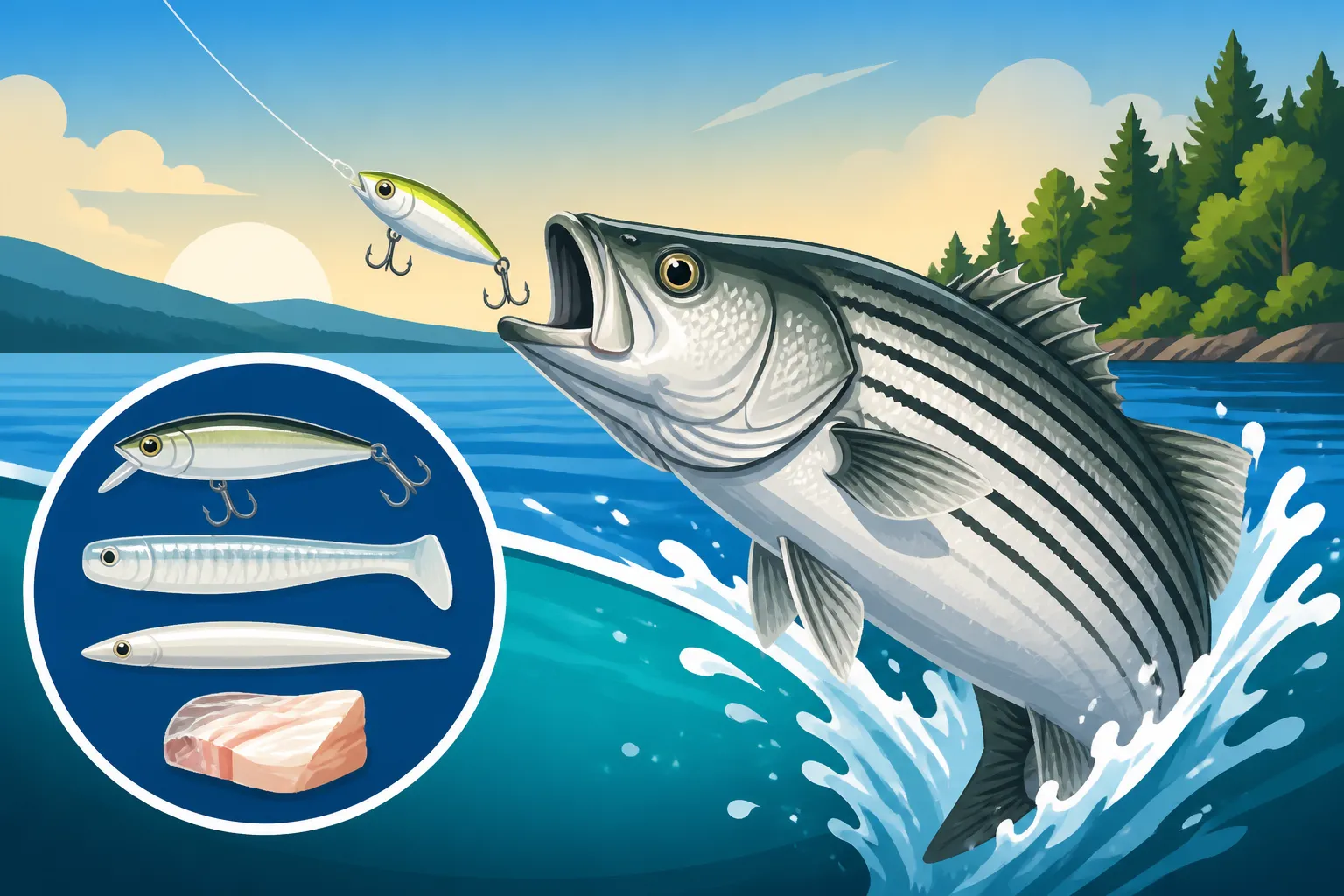
Sassy Shads, also known as swimbaits or paddletail grubs, are a go-to artificial for Smith Mountain Lake stripers, especially when trolling. Their paddle tails create a subtle, enticing vibration and swimming action that perfectly imitates a shad. They come in various sizes and colors, but pearl, white, chartreuse, and natural shad patterns are consistently productive. You'll typically rig them on a lead head jig. The weight of the jig head will dictate your running depth, and you can add inline sinkers or use planer boards to get them even deeper or spread them out.
For maximum depth, many anglers use a downrigger with these lures, sending them down to where the Smith Mountain Lake Striper Trolling Techniques in Virginia suggest the fish are holding. Pairing them with umbrellas rigs or Alabama rigs (also known as A-rigs) can be deadly. These rigs allow you to present multiple swimbaits at once, mimicking a small school of baitfish. Brands like Zoom and Big Hammer offer a fantastic selection of soft plastics that are readily available online through retailers like Amazon, making it easy to stock up for your next trip.
Crankbaits and Jerkbaits for Reaction Strikes
Crankbaits and jerkbaits are excellent for triggering reaction strikes, particularly when stripers are active and feeding aggressively. Crankbaits dive to various depths depending on their lip design and retrieve speed, making them versatile for different water columns. Shad-colored crankbaits are a must-have, but bright colors like chartreuse can also work well in stained water or during low light conditions. You can cast them to visible schools of fish or troll them to cover vast stretches of water.
Jerkbaits, on the other hand, are designed to be retrieved with a "jerking" or "twitching" motion, followed by pauses. This erratic action perfectly imitates a wounded baitfish, and stripers often hit them hard during the pause. Both suspending and floating jerkbaits have their place, allowing you to work different parts of the water column. The sudden, unpredictable movement of these lures can often provoke a strike from even wary stripers. When fish are finicky, a well-placed jerkbait can turn a slow day around.
Topwater Lures for Explosive Surface Action
There’s nothing quite like the thrill of a big striper blowing up on a topwater lure. This type of fishing is often most effective during low light conditions – early mornings, late evenings, or even overcast days – when stripers are pushing baitfish to the surface. Poppers, walk-the-dog lures (like Heddon Super Spooks or Zara Spooks), and pencil poppers are all excellent choices. Their erratic, splashing, and darting actions perfectly mimic a panicked baitfish.
The key to topwater success is often patient retrieval and being ready for a sudden, explosive strike. Don't be too quick to set the hook; wait until you feel the weight of the fish. This is an incredibly visual and exciting way to fish, and it can be particularly productive during the fall run when stripers are actively schooling and feeding near the surface. If you see birds diving or baitfish scattering, it’s prime time to tie on a topwater lure and prepare for some heart-stopping action. This is often the most exciting way to fish when chasing Smith Mountain Lake's Elite Virginia Striped Bass Fishery.
Essential Gear and Techniques for Bait Presentation
Having the best bait is only half the battle. Presenting it correctly requires the right gear and a solid understanding of fundamental fishing techniques. From your rod and reel setup to how you navigate the lake, every detail contributes to your success.
Rod, Reel, and Line Considerations
For Smith Mountain Lake striped bass, you'll want a medium-heavy to heavy action rod, typically 7 to 7.5 feet long. This length provides good casting distance and enough backbone to handle a powerful striper. A fast action tip is beneficial for feeling subtle bites while still offering the power to drive the hook home. When browsing for the right gear, check out Amazon for a wide selection of rods and reels suitable for striper fishing.
Pair your rod with a baitcasting reel for serious striper fishing, as they offer better power and line capacity than most spinning reels. Look for reels with a good drag system, capable of handling runs from strong fish. Line choice is also crucial. Many striper anglers prefer braided line (30-50 lb test) for its sensitivity and strength, often with a fluorocarbon leader (20-30 lb test) for abrasion resistance and stealth. Monofilament (15-25 lb test) can also work well, especially for trolling live bait, where its stretch can be a benefit.
The Art of Trolling and Downriggers
Trolling is one of the most effective ways to cover large areas of Smith Mountain Lake and locate active schools of stripers. This involves slowly motoring your boat while dragging multiple lines with lures or live baits at varying depths and distances. Using a fish finder is indispensable here; it helps you locate baitfish schools, identify the thermocline, and mark suspended stripers. You'll want to pay close attention to the depth where you're marking fish and adjust your baits accordingly.
Downriggers are specialized pieces of equipment that allow you to precisely present baits at specific depths, regardless of boat speed or lure design. This is especially useful when stripers are holding deep and tight to a particular depth contour or the thermocline. Many anglers use a combination of methods, running some lines on downriggers, some on planer boards to spread them out, and perhaps a free-line off the back of the boat. Mastering How to Troll for Striped Bass in Deep Water will significantly boost your catch rates, especially in summer.
Casting and Jigging Strategies
When stripers are schooling on the surface, casting is the name of the game. You'll want to quickly cast topwater lures, spoons, or soft plastics into the boiling schools of fish. Accuracy and speed are important, as these surface blitzes can be short-lived. A medium-heavy spinning rod and reel combo can also be a good option for casting, as it allows for quicker, more accurate casts with lighter lures.
Jigging is another highly effective technique, particularly when stripers are suspended beneath schools of baitfish or holding tight to structure in deeper water. Heavy spoons, bucktail jigs, or jigging spoons are dropped to the desired depth and then retrieved with a sharp, upward jerk followed by a controlled fall. Stripers often strike as the lure flutters down. Using your fish finder to pinpoint the fish is crucial for successful jigging. When learning Smith Mountain Lake's Striped Bass: Tips for First-Time Anglers, both casting and jigging are fundamental skills to develop.
Smith Mountain Lake Striped Bass Bait Comparison
To give you a quick overview, here's a comparison of some of the most effective baits for striped bass on Smith Mountain Lake:
| Bait Type | Pros | Cons | Best Use | Typical Presentation |
|---|---|---|---|---|
| Gizzard Shad | Natural, large profile, durable | Hard to catch, requires livewell care | Targeting trophy stripers, deeper water | Free-line, weighted, downrigger, light troll |
| Alewives | Excellent action, shimmery | Can be hard to catch, fragile | Suspended fish, open water, finesse live bait | Free-line, weighted, downrigger |
| Threadfin Shad | Abundant, natural, smaller profile | Very fragile, short lifespan in livewell | Finicky fish, targeting smaller stripers | Free-line, jigging, light weight |
| Sassy Shads / Swimbaits | Versatile, durable, wide color range | Less natural action than live bait | Trolling, casting to schools, umbrella rigs | Trolling (downrigger/planar), casting, jigging |
| Crankbaits | Cover water quickly, various dive depths | Can snag easily, less natural feel | Active fish, covering structure, reaction strikes | Trolling, casting and retrieving |
| Jerkbaits | Erratic action, triggers reaction strikes | Specific retrieve required, can be finicky | Wary fish, clear water, imitating wounded bait | Twitch/pause retrieve |
| Topwater Lures | Exciting strikes, highly visible | Only effective when fish are shallow/active | Surface activity, low light, fall run | Walk-the-dog, popping, erratic retrieve |
Conclusion and Final Thoughts
Chasing striped bass on Smith Mountain Lake is an exhilarating experience, and arming yourself with the knowledge of the best baits and how to present them will dramatically improve your chances of success. Whether you prefer the natural allure of live bait like gizzard shad and alewives, or the active thrill of artificial lures such as sassy shads and crankbaits, understanding the stripers' seasonal movements and feeding patterns is paramount.
Always keep an eye on your electronics to locate bait and fish, and don't be afraid to experiment with different presentations and depths. The Best Time of Year for Bass Fishing in Virginia often correlates with aggressive feeding patterns for stripers too, so aligning your trips with these periods can lead to incredible days on the water. With a little preparation, the right gear (much of which you can find easily on Amazon), and a willingness to adapt, you'll be well on your way to catching those powerful Smith Mountain Lake stripers. Tight lines!
Disclaimer
Please note that fishing regulations, including size and creel limits, can change. Always consult the latest Virginia Department of Wildlife Resources (DWR) regulations before heading out on the water. This guide is for informational purposes only and does not constitute official legal advice regarding fishing laws.