How to Troll for Striped Bass in Deep Water
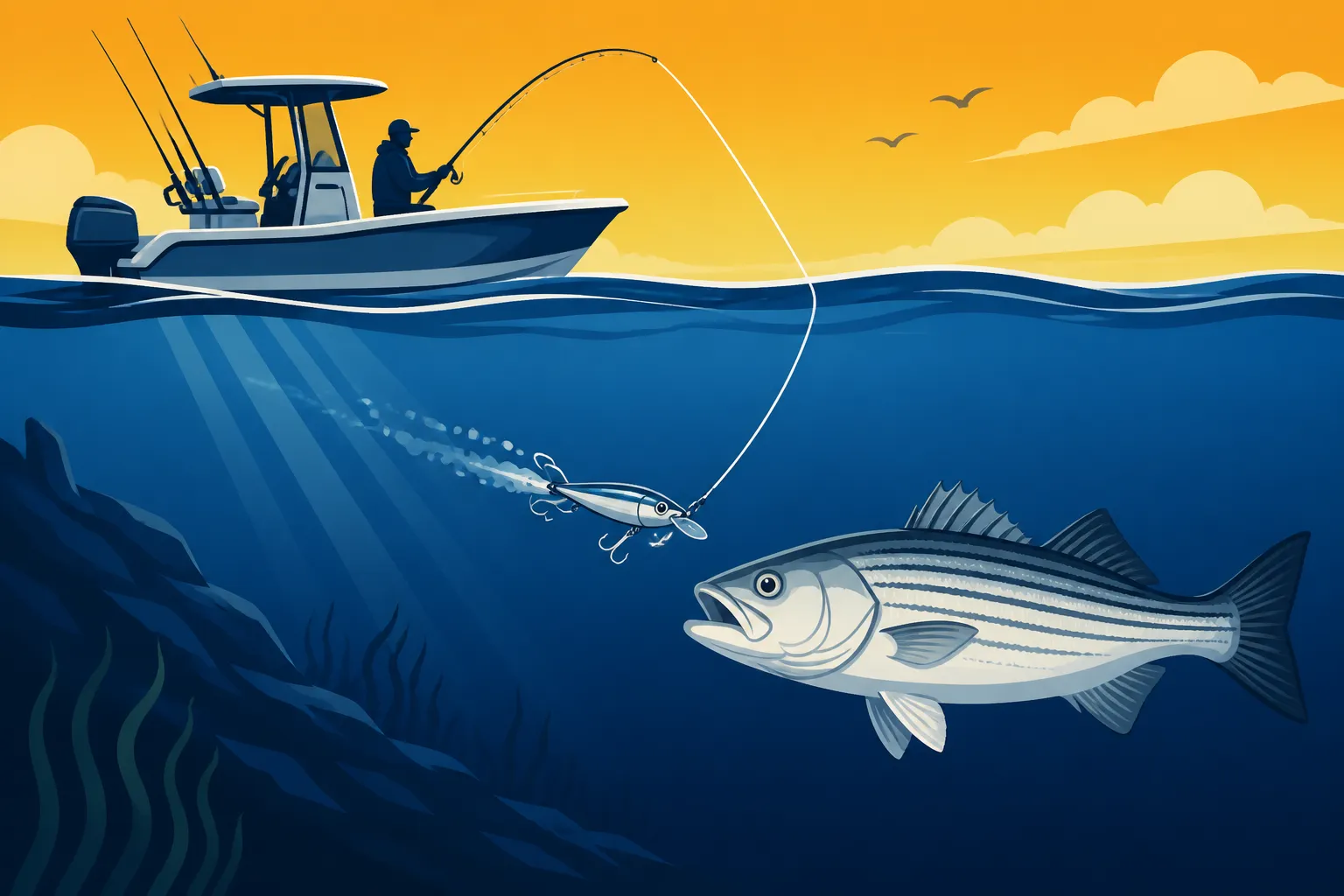
It’s a truly frustrating experience when those surface-feeding striped bass vanish, seemingly into thin air, leaving you staring at an empty water column. You know they’re in there somewhere, but how do you reach them when they've decided to hug the deeper, cooler layers? Trolling for striped bass in deep water is a game-changer for these situations, moving beyond simple casting to unlock catches when other methods fail. This comprehensive guide will equip you with the knowledge and techniques to effectively target these elusive deep-water stripers in Virginia, turning your deep-water challenges into rewarding fishing expeditions.
Understanding Deep Water Striped Bass Behavior
Before you can effectively troll for deep-water striped bass, it's crucial to understand why they head to the depths in the first place and how to use your electronics to find them. It's not just random; there's a method to their madness.
Why Stripers Go Deep
Striped bass, often affectionately called rockfish in Virginia's coastal areas, are very sensitive to water temperature and oxygen levels. While you might associate them with crashing bait on the surface, that's often a temporary feeding frenzy. For much of the year, especially during warmer months, they seek out comfort zones.
In many of Virginia's fantastic lakes, like the expansive Smith Mountain Lake or the equally popular Lake Anna, thermal stratification creates distinct layers in the water column. The warmer, lighter water stays on top, while cooler, denser water sinks. Between these layers is a "thermocline," a horizontal zone where the temperature changes rapidly. Stripers often hold just above, within, or just below this thermocline, depending on oxygen levels and baitfish presence. They're seeking that optimal temperature range where they can be active and comfortable. They might also gravitate to the deeper sections of tidal rivers when conditions are less favorable at the surface.
Beyond temperature, stripers are predators, and they follow their food. Baitfish like gizzard shad, threadfin shad, or alewives will also migrate to specific depths where they find comfort and protection. If the bait is deep, the stripers will be right there with them, creating dense schools that can be a real feast for your sonar. Understanding these baitfish patterns is paramount to locating the stripers themselves. It's a natural food chain at play, and your job is to intercept it.
It's not just a warm-weather phenomenon either. While frequently associated with summer, stripers can also hold deep during the winter months, congregating in deep channels or around prominent submerged structures. During these colder periods, their metabolism slows, and they often become less active, preferring to conserve energy in predictable, deep sanctuaries. This means deep trolling isn't just a seasonal tactic but a year-round strategy depending on the conditions and the body of water.
Reading Your Electronics for Deep Stripers
Your boat's fishfinder or sonar unit isn't just a fancy gadget; it's your eyes into the underwater world. Mastering its use is non-negotiable for deep-water striped bass trolling. You need to be able to quickly interpret what you're seeing on the screen.
Solid arches or distinct lines often indicate individual fish. The size and thickness of the arch can give you a clue about the size of the fish. When you see dense, cloud-like blobs, you're usually looking at schools of baitfish. When these bait balls are present, especially with larger arches hanging around the edges or underneath, you've found a prime target area. Different sonar frequencies can help too; lower frequencies penetrate deeper and show a wider cone, while higher frequencies provide more detail in shallower water. Getting proficient at interpreting these images is key to success. Knowing How to Find Fish From a Boat With a Fish Finder will dramatically improve your strike rate.
Furthermore, your fishfinder can often help you identify the thermocline itself. It usually appears as a distinct fuzzy or broken layer on the screen, indicating the rapid temperature change. Pinpointing this layer is incredibly useful because it tells you exactly where the stripers are likely to be holding. If you can present your lures right in that thermal sweet spot, you're dramatically increasing your chances. Many modern units also allow you to overlay water temperature graphs, which can further confirm the depth of these critical layers.
Finally, mapping and GPS are invaluable tools. As you locate promising areas—whether it's a concentration of bait, a school of stripers, or significant bottom structure like a hump, channel edge, or submerged timber—mark it immediately on your GPS. These waypoints become your personal treasure map, guiding you back to productive spots and helping you understand patterns of fish movement. Don't be afraid to experiment with your unit's settings; adjust sensitivity, color palettes, and scroll speed to get the clearest picture of what lies beneath your boat.
Essential Gear for Deep Water Striped Bass Trolling
Effective deep-water trolling for striped bass demands specific gear designed to handle the depths, the weight of the tackle, and the powerful fight of a striper. Skimping here will only lead to frustration and lost fish.
Rods, Reels, and Line Choices
When you're pulling heavy lures or umbrella rigs deep beneath the surface, your conventional casting rods and reels simply won't cut it. You need a setup built for the task.
For rods, think heavy-duty conventional trolling rods. Look for something in the medium-heavy to heavy power range, typically 6 to 8 feet long, with a moderate to fast action. The rod needs a strong backbone to handle the constant drag of heavy tackle and to effectively fight a strong, deep-running striped bass. A robust gimbal butt is also a plus for fighting big fish while seated or using a fighting belt. These rods are designed to absorb the shock of a strike and provide the leverage needed to bring fish up from significant depths.
Reels are arguably even more critical. You'll want heavy-duty conventional reels with a robust, smooth drag system and ample line capacity. A 30 to 50-pound class reel is a good starting point for most deep-water striper applications. Line counter reels are a massive advantage here, allowing you to precisely replicate productive depths by knowing exactly how much line you have out. This consistency is vital for getting your lure into the strike zone time and time again. Ensure the reel has high-quality gears and construction that can withstand the strain of pulling heavy weights and battling powerful fish. You can find many excellent options for these types of reels on Amazon.
For line, a good starting point is a braided main line, typically 50 to 80-pound test. Braid offers superior sensitivity, allowing you to feel subtle bites even when fishing deep, and has virtually no stretch, which aids in solid hook sets. It also has a smaller diameter for its strength compared to monofilament, meaning less water resistance. You’ll want to connect a heavy-duty monofilament or fluorocarbon leader to your braid, usually 3 to 6 feet long and 40 to 60-pound test. This leader provides abrasion resistance against structure and the fish's mouth, and fluorocarbon is nearly invisible underwater, which can be an advantage in clear conditions. Always check your knots carefully, as they are the weakest link in your system.
Downriggers, Planer Boards, and Lead Core Line
To consistently reach specific depths while trolling, you need tools that go beyond just heavy lures. These specialized systems are designed for precision depth control.
Downriggers are the pinnacle of precise deep-water trolling. They consist of a heavy cannonball weight (often 8-12 lbs) attached to a cable, which is lowered to a desired depth. Your fishing line, with its lure, is clipped into a release mechanism on the downrigger cable. This allows your lure to swim freely at the exact depth of the downrigger ball, with only the lure's drag on your rod. When a fish strikes, the line pops free from the clip, allowing you to fight the fish directly without the weight of the cannonball. Downriggers are ideal for targeting fish holding at very specific depths, such as along a thermocline or just above deep structure.
While more commonly used to spread lines horizontally away from the boat, inline planer boards can also be employed in deep trolling scenarios. They can carry lighter lures or those fished with lead core line away from your boat's prop wash and engine noise, presenting them to less wary fish. When paired with lead core or deep-diving crankbaits, they can still achieve significant depth, offering a wider trolling spread and covering more water. This method requires careful management to prevent tangles but can be highly effective in certain situations, especially for covering vast open water areas.
Lead core line offers a simpler, yet effective, method for getting lures deep without external weights. This line has a lead core wrapped in a braided nylon sheath, causing it to sink. Each "color" (segment) of lead core line typically sinks to approximately 5 feet of depth at a common trolling speed (e.g., 2 mph). By letting out a certain number of colors, you can estimate your lure's depth. For example, five colors out would put your lure around 25 feet deep. It’s less precise than a downrigger but allows for multiple lines to be fished at varying depths without specialized boat mounts. This is a great system for anglers who don't want the expense or complexity of downriggers but still need to present lures in the 20-40 foot range.
Lure Selection for Deep Trolling
Choosing the right lure for deep-water striped bass trolling involves understanding how different lures perform at depth and what patterns mimic the natural forage.
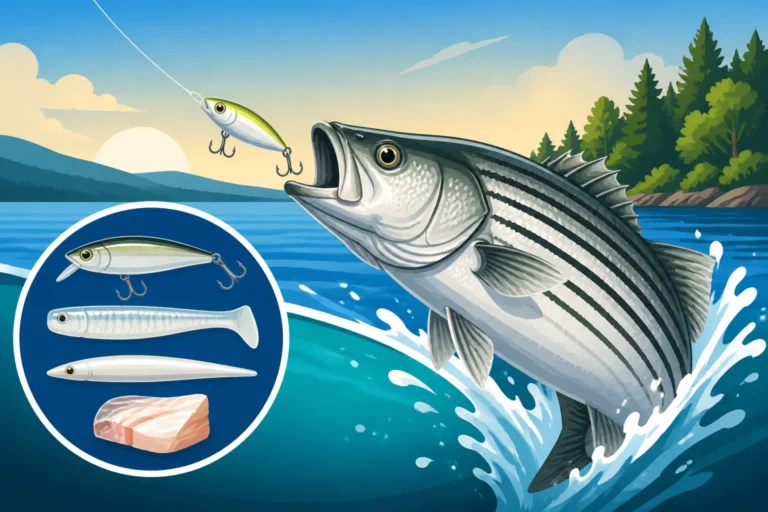
Deep-diving crankbaits are a staple for reaching fish in the 15-30 foot range. These lures typically have a long, aggressive bill that helps them dive rapidly when trolled. Look for models designed to reach maximum depths, often with stated dive curves. Colors that mimic prevalent baitfish, such as silver, shad patterns, or perch, are often effective. However, don't shy away from brighter, more contrasting colors like chartreuse or fire tiger, especially in stained or deeper, darker water where visibility is reduced. Experiment with different sizes and dive depths to match the specific baitfish profile and the depth where you're marking fish.
For simulating a large school of baitfish, especially when stripers are actively feeding on dense schools, an umbrella rig is hard to beat. This heavy, multi-arm rig typically features a large, central "teaser" lure (often a swimbait or bucktail) surrounded by smaller teaser lures or bare hooks, all trailing behind a lead head. When trolled, it resembles a small bait ball, triggering aggressive strikes from hungry stripers. Umbrella rigs are heavy and require stout trolling gear to deploy and retrieve. Many effective umbrella rigs, along with replacement components, can be found on Amazon.
Finally, bucktail jigs and soft plastics can be highly effective when presented correctly in deep water. While not traditionally "trolled" in the same way as crankbaits, they can be part of a deep-water spread when rigged with a three-way swivel and a heavy dropper weight. The dropper weight (often 2-6 ounces or more) takes the bucktail or soft plastic down to the desired depth, allowing it to swim and dart tantalizingly just above the bottom or through a striper school. Varying the weight allows you to adjust your depth easily. These are particularly good for targeting fish holding tight to bottom structure, as you can control their depth more precisely than a deep-diving crankbait. You can find a vast array of bucktail jigs and soft plastic bodies in various colors and sizes on Amazon.
Deep Water Trolling Techniques That Get Bites
Having the right gear is only half the battle. Knowing how to deploy it effectively and understanding the nuances of boat control are what really trigger those deep-water bites.
Setting Up Your Trolling Spread
A well-organized trolling spread is crucial for efficiency and maximizing your chances of a strike while minimizing tangles. It's all about presenting a diverse array of offerings at different depths and distances.
The golden rule for trolling multiple lines is to stagger your depths. If you’re running three or four lines, don't put them all at the same depth. Use downriggers, lead core, or deep-diving crankbaits to position lures at different levels, for instance, one at 25 feet, another at 35, and a third at 45. This helps you "find the fish" by covering more of the water column. Once you get a strike, you can then adjust your other lines to that productive depth, confident that you're in the right zone. This methodical approach ensures you're actively searching for the fish's preferred holding depth.
Equally important is staggering the distances of your lures behind the boat. This prevents lines from tangling, especially when making turns, and allows your lures to run in different parts of the water column relative to the boat. You might have one line running close, another at a medium distance, and a third much further back. Lures running closer to the boat can sometimes draw strikes from curious fish, while those further back might entice more wary stripers who are spooked by engine noise. The spread needs to be a dynamic system, not a static one.
Finally, while matching the hatch is always a good principle, don't be afraid to vary your lure types and colors within your spread. On one line, you might have a silver deep-diving crankbait mimicking a shad, while on another, a chartreuse umbrella rig might represent a larger school of bait. Different days call for different preferences, and an active fish might just be looking for something unique. Sometimes, what works for Best Bait for Striped Bass in Chesapeake Bay might be different from an inland lake. A diverse spread acts as an ongoing experiment, quickly telling you what the stripers are keying in on that particular day.
The Art of Boat Speed and Direction
Trolling is much more than simply driving your boat in a straight line. The nuances of speed and boat control are critical to getting your lures to perform correctly and trigger strikes.
Maintaining a consistent trolling speed is paramount. Different lures are designed to work optimally at specific speeds, and a fluctuating speed can make your presentation appear unnatural. For deep-trolled striped bass, a speed between 2.0 and 3.5 mph is often a good starting point, but always be prepared to adjust. Watch your rod tips to ensure your lures are swimming correctly; a steady vibration indicates proper action. If you're marking fish but not getting bites, subtly increasing or decreasing your speed by a tenth of a mile per hour can often be the trigger they need. Pay close attention to what happens when you get a strike and try to replicate that exact speed.
One of the most effective tactics in deep-water trolling is making gentle S-turns or broad curves. When your boat turns, the lures on the inside of the turn slow down and drop slightly, while the lures on the outside speed up and rise. This change in speed and depth can often be the exact erratic movement that triggers a reaction strike from a hesitant striper. Think of it as mimicking a panicked baitfish. Regularly incorporate these turns into your trolling pattern, observing which side of the boat gets the most bites. This tactic is especially potent when you're trolling over or near known structure.
Always remember that your boat's speedometer shows your speed through the water, not necessarily your speed over ground. Wind and current can significantly impact your actual speed relative to the bottom. Rely on your GPS to show your true speed over ground, as this is what determines how your lures are presented to the fish and how they interact with structure. In areas with strong currents, you might need to troll against or with the current differently to maintain the optimal lure action. Understanding these subtle forces and adapting your boat control is a mark of an experienced deep-water troller.
Locating and Targeting Deep Structure
Deep-water striped bass are not usually just suspended randomly in open water. They relate to structure, just like their shallow-water counterparts. Your ability to locate and precisely target these deep structures is crucial.
Identify the key deep-water structures in the body of water you're fishing. Humps that rise from the bottom, points that extend into deep water, the edges of old creek channels, and areas with submerged timber or rock piles are all prime ambush points for stripers. These features provide cover, act as current breaks, or serve as highways for baitfish movement. Stripers will often sit on these features, waiting for an easy meal to swim by. Knowing the topography of the bottom is just as important as knowing where the fish are.
Your electronics, particularly your GPS mapping system, become invaluable here. As you troll, carefully watch your fishfinder for changes in bottom contour. When you find a promising hump or channel edge, drop a waypoint on your GPS. This allows you to precisely retrace your path and to identify how fish are relating to that structure. Over time, you'll build up a library of productive waypoints, giving you a distinct advantage on future trips. Don't underestimate the power of knowing exactly where you are and what’s beneath you.
Once you've identified productive deep structure, the next step is to position your boat to troll effectively over or alongside it. You want your lures to be presented right in the strike zone, where the stripers are holding. This might mean making parallel passes along a channel edge, or zig-zagging across the top of a submerged hump. Think about how Virginia Striped Bass Split Season Dates Explained might influence where stripers are holding, forcing them to specific structures at different times of the year. The goal is to maximize the time your lures spend in front of potential fish, which requires precise boat handling and an understanding of the underwater landscape.
Troubleshooting Common Deep Trolling Challenges
Deep-water trolling, while highly effective, comes with its own set of challenges. Knowing how to anticipate and address these issues can save you frustration and turn a tough day into a successful one.
Dealing with Snags and Hang-ups
The deeper you fish, the more likely you are to encounter submerged obstacles, and nothing sours a trolling trip faster than constantly snagging your expensive lures.
Prevention is always the best medicine. Before you start trolling, spend time studying your bottom contour maps and using your fishfinder to scan for potential snags. Try to keep your lures running just above the bottom, rather than dragging directly on it. This can be achieved by carefully adjusting your downrigger depth, the amount of lead core line you let out, or by using lighter weights on your three-way swivel rigs. Avoiding known snag-filled areas altogether is also a wise move.
When a hang-up does occur, don't panic or immediately try to power through it. The first thing you should do is immediately turn the boat. Often, reversing direction or pulling from a different angle can dislodge your lure. Sometimes, giving slack to the line for a moment, allowing the lure to float up slightly, can help it clear an obstruction. If you're running multiple lines, immediately reel in any lines that might get tangled during the maneuver. A calm and methodical approach will save more lures than brute force.
Always ensure your lines are in good condition and your knots are tied correctly and strong. A frayed main line or a poorly tied leader knot is a recipe for disaster when you're battling a snag. Many anglers use a slightly lighter "sacrificial" leader for their downrigger weights or for dropper weights on three-way swivels. This way, if the weight snags, you might only lose the weight and not your entire expensive lure or rig. Good tackle maintenance and strong connections are your best defense against tackle loss.
Adjusting to Changing Conditions
Fish behavior is rarely static, and what worked an hour ago might not work now. Being able to adapt to changing conditions is a hallmark of a skilled angler.
Weather plays a huge role in fish behavior. A passing cold front, heavy cloud cover, or even a sudden rain shower can dramatically impact where stripers hold and how actively they feed. Post-front conditions, for instance, often push fish deeper and make them less active, meaning you might need to slow your trolling speed or switch to more subtle lure presentations. Conversely, an approaching low-pressure system might make them more aggressive. Always keep an eye on the forecast and consider how changes might affect the fish below.
In tidal rivers, or even in large lakes with subtle currents, subsurface currents can impact your lure presentation. Trolling against the current will make your lures run deeper and faster relative to the bottom, while trolling with it will make them run shallower and slower. You might need to adjust your weights, line out, or even your trolling angle to ensure your lures are behaving naturally. Your GPS's speed over ground is your best friend here, giving you true feedback on your lure's pace.
Striped bass are constantly on the move, following baitfish or seeking new comfort zones. If the bite slows down or completely stops, don't be afraid to change your strategy. This could mean adjusting your depth by a few feet, subtly altering your trolling speed, or even moving to an entirely different area of the lake or river. Sometimes, a change in lure color, size, or type is all it takes. Remember that Best Lures for Summer Bass Fishing might include some deep-diving options, but the preferences can shift quickly. Experimentation and a willingness to adapt are key to consistent success when those patterns shift.
Interpreting Bites and Setting the Hook
Deep-water bites can sometimes be subtle, especially with heavy trolling gear or if fish are lethargic. Knowing how to interpret what your rod is telling you is crucial.
While sometimes a deep-water striper strike can be an aggressive, rod-bending smash, it's often more subtle. You might feel a gentle thud, a slight acceleration of the rod tip, or just a little extra pull on your line. With downriggers, the line popping out of the release clip is your immediate signal. With lead core or deep-diving crankbaits, pay close attention to the rhythm of your rod tip. Any deviation from the normal pulsing or vibration could mean a fish is on. Even a slight change in drag pressure can indicate a strike. Being vigilant is key.
When you feel a bite, or your line releases from a downrigger, the hook set is paramount. With heavy trolling rods and often braided line, a massive, violent yank isn't always necessary or even effective. Instead, opt for a long, sweeping hook set, leaning into the fish to apply steady pressure and ensure the hooks are firmly embedded. Make sure you have good tension on the line before initiating the set. This sweeping motion helps to drive the hook home without tearing it out of the fish's mouth or snapping your line.
Finally, once the hook is set, maintain a steady retrieve and a consistent fighting rhythm. Deep-water stripers are strong fighters, and they've got the entire water column to work with. Avoid trying to winch them in too quickly, as this can lead to pulled hooks or broken lines, especially near the boat. Let your rod and reel do the work, pumping the rod up and reeling down, slowly gaining line. Always be mindful of the Virginia Striped Bass Season and Slot Limit Guide and adhere to possession limits, as well as the Why Virginia's Striped Bass Season Splits Into Two Parts to ensure you're fishing legally. Patience and a calm demeanor will put more fish in the net. Knowing the Best Time of Year for Bass Fishing in Virginia can also help you anticipate how aggressive or subtle the bites might be.
Comparison of Deep Water Trolling Methods
| Method | Depth Control | Precision | Gear Complexity | Ideal Use Case | Pros | Cons |
|---|---|---|---|---|---|---|
| Downriggers | Excellent | High | High | Targeting specific depths, very deep water (50+ feet) | Pinpoint accuracy, can use lighter tackle on main line, visible strikes | Expensive, requires specialized boat setup, can be complex to use |
| Lead Core Line | Good | Medium | Medium | Covering wider depth ranges, moderate depths (20-40 ft) | No extra boat equipment, relatively simple, good for covering water | Less precise depth control, heavy line, harder to fight fish |
| Deep Diving Cranks | Fair | Low-Medium | Low | Reaching moderate depths (15-30 feet), scouting | Simple, versatile, covers various depths with one lure | Depth varies with speed/line, less control, limited max depth |
| 3-Way Swivel/Weight | Good | Medium | Low | Targeting specific bottom structure, varying depths | Inexpensive, customizable weight, good for bottom fishing | Can snag easily, requires constant depth adjustment, tangles |
Disclaimer
This article is for general informational purposes only and does not constitute professional advice. Laws, prices and regulations vary by location and change over time. Consult a qualified professional for guidance on your specific situation.