Best Jig Colors for Crappie Fishing
It's incredibly frustrating when you're out on the water, you know the crappie are there, but they just won't commit to your lure. You cast, retrieve, change spots, but nothing seems to entice a bite, leaving you wondering if you've got the wrong color tied on. Choosing the perfect jig color for crappie fishing can feel like solving a mystery, especially with so many options available. This guide will help demystify crappie jig colors, providing practical advice on selecting the best hues for various conditions you'll encounter in Virginia's lakes and rivers, so you can spend less time guessing and more time reeling in those tasty panfish.
Understanding How Crappie See Color
Before we dive into specific colors, it's really helpful to understand a bit about how crappie perceive their world, particularly their vision. These panfish aren't just reacting to motion; they're actively seeing colors, albeit differently than we do. Knowing this can give you a significant edge.
The Science Behind Crappie Eyesight
Crappie, like many fish, have eyes that are highly adapted to their aquatic environment. They have a good range of vision, especially in low light conditions, which is why they're often active during dawn, dusk, or even at night. Their eyes contain both rods and cones, much like human eyes, but with a different distribution. Rods are responsible for low-light vision and detecting movement, while cones are for color perception. Crappie have a higher density of rods, making them excellent at seeing subtle movements in dim light.
However, they absolutely do see color! Research suggests crappie are particularly sensitive to greens and reds, and they can distinguish between different shades. The way light penetrates water also drastically changes how colors appear at various depths. Red, for example, is the first color to disappear as you go deeper because its long wavelength is absorbed quickly by water. Blue and green, with shorter wavelengths, penetrate much deeper and remain visible. This is a crucial piece of the puzzle when you're selecting a jig, as that vibrant red jig might look completely different, or even black, once it's down in deeper water or murky conditions.
How Light and Water Depth Affect Color Perception
Think about holding a red apple underwater. The deeper you push it, the less red it appears, eventually looking dull or even gray. The same principle applies to your crappie jigs. In clear, shallow water with bright sunlight, crappie will see the true, vibrant color of your jig. This is when natural-looking colors or bright, eye-catching hues can really shine.
But as you move into deeper water, or if the water is stained and murky, the available light changes dramatically. In these scenarios, highly contrasting colors or colors that are more visible in low-light spectrums become more effective. For instance, a bright chartreuse or a fluorescent orange might "glow" more effectively in dim, deeper conditions where a natural brown or red jig would simply fade into the background. It's not just about the color itself, but how that color reflects or absorbs the limited light available, making it stand out to a crappie's specialized vision. This is why having a diverse tackle box, easily replenished from a place like Amazon, is so vital for adapting to changing conditions.
Key Factors Influencing Jig Color Choice
Selecting the "best" crappie jig color isn't a one-size-fits-all answer. It's about adapting to the conditions you face on any given day. A combination of factors will dictate whether the crappie are drawn to a subtle, natural presentation or an obnoxious, attention-grabbing lure.
Water Clarity and Stained Conditions
This is perhaps the biggest factor in your color choice. Virginia's waters can range from crystal clear mountain streams to tannin-stained blackwater rivers and murky, muddy impoundments after a heavy rain.
- Clear Water: When you're fishing in pristine, clear water, crappie can be very discerning. They can see your line, your knot, and every detail of your jig. In these conditions, natural colors tend to excel. Think subtle greens, muted browns, translucent smoke, or even pearl white. These colors mimic the baitfish and insect larvae that crappie naturally feed on. A bright, unnatural color might spook them. Imagine fishing a clear lake like Lake Anna on a calm, sunny day; a small, natural-colored tube jig or a subtle minnow imitation would likely be far more effective than a neon pink jig.
- Stained or Murky Water: This is where the game changes entirely. When the water is cloudy, tea-colored, or muddy, visibility is severely limited. Crappie rely more on lateral line vibrations and high-contrast visuals to locate their prey. This is the time to reach for your brightest, most obnoxious jig colors. Chartreuse, neon green, electric chicken (a mix of chartreuse and pink), and bright oranges really shine here. These colors stand out against the murk, creating a distinct silhouette and reflecting any available light. A black or dark blue jig can also be surprisingly effective in very murky water, as it creates a strong, distinct silhouette that crappie can easily detect, especially when paired with a contrasting tail or dots. Don't be afraid to experiment with these bold choices; the crappie aren't going to be analyzing the shade! You'll often find multi-packs on Amazon that include a variety of these high-visibility colors, perfect for trying different scenarios.
Light Conditions and Cloud Cover
The amount of light penetrating the water surface also plays a massive role in how colors appear and how crappie react.
- Bright Sunlight: On a clear, sunny day, especially if the water is also clear, the light penetration is high. Again, natural colors like pearl, white, light blue, or silver can be highly effective, mimicking the flash of baitfish. Sometimes, a jig with a little bit of metallic flake can create an enticing shimmer in the bright light. However, in moderately stained water under bright sun, bright colors like chartreuse or orange can still work, as the abundance of light helps them "pop."
- Overcast Skies or Low Light (Dawn/Dusk): When the sky is cloudy, or during the prime crappie feeding times of dawn and dusk, light levels are much lower. This is when colors that maintain their visibility in dim conditions become critical. Chartreuse, bright greens, and glow-in-the-dark options (if you're into that!) can be excellent. White and silver can also be good choices, as they reflect ambient light well. Many anglers swear by black and blue jigs during these times because they create a strong silhouette against the low light, making them easy for crappie to detect.
- Night Fishing: If you're out fishing the James River or another Virginia waterway after dark, light is obviously minimal. This is where those strong silhouettes are paramount. Black and dark blue jigs are often top performers, especially when tipped with a bit of scent. Some anglers also experiment with UV-reactive jigs, which can appear brighter to crappie under moonlight or artificial light sources. Don't overlook jigs with reflective properties or subtle glow elements, which can be particularly effective when crappie are feeding by feel rather than sight.
Water Temperature and Depth
The depth at which you're fishing and the water temperature can also subtly influence crappie behavior and, consequently, your color choice.
- Cold Water (Winter/Early Spring): In colder water, crappie metabolism slows down, and they tend to be less aggressive. They often congregate in deeper holes or near cover, where light penetration is already reduced. Subtle, natural colors like gray, brown, or even a very light blue can work if the water is clear. However, sometimes a flash of chartreuse or a dark jig can trigger a reactionary strike from a lethargic crappie. When crappie are deeper, remember that red colors will fade quickly, so green or blue hues will maintain their visibility better. This is especially true if you're targeting crappie that are suspended over brush piles, which you can learn more about in "How Deep Do Crappie Go in Winter".
- Warm Water (Summer/Late Spring): As water temperatures rise, crappie become more active and aggressive. They may move shallower or hold in deeper structure. In warmer, often clearer, water, a wider range of colors can be effective. This is when you can confidently use bright, vibrant colors to attract attention, as well as natural shades to mimic abundant baitfish. A good rule of thumb is to start with a natural color and, if no bites, switch to something brighter. If you're struggling to locate them, a highly visible jig color might just be the ticket to get their attention from a distance.
Top Crappie Jig Colors for Virginia Waters
Now that we understand the "why," let's get into the "what." While personal preference and local conditions always play a role, certain jig colors have proven themselves time and again as crappie magnets in Virginia.
Chartreuse and Bright Greens
If there's one color that consistently gets mentioned in crappie circles, it's chartreuse. This vibrant, almost neon green-yellow color is a crappie killer for a reason.
- When to Use It: Chartreuse excels in stained or murky water, low light conditions (overcast days, dawn, dusk), and anytime you need to attract attention. Its high visibility makes it easy for crappie to spot from a distance, even when the water clarity is poor. It's also fantastic when fishing deeper water, as its bright pigment helps it retain some color even as other colors fade.
- Why It Works: It creates a strong contrast against almost any background. In low light, it practically glows, making it an irresistible target. Many anglers believe crappie see chartreuse exceptionally well, almost like a beacon in the water.
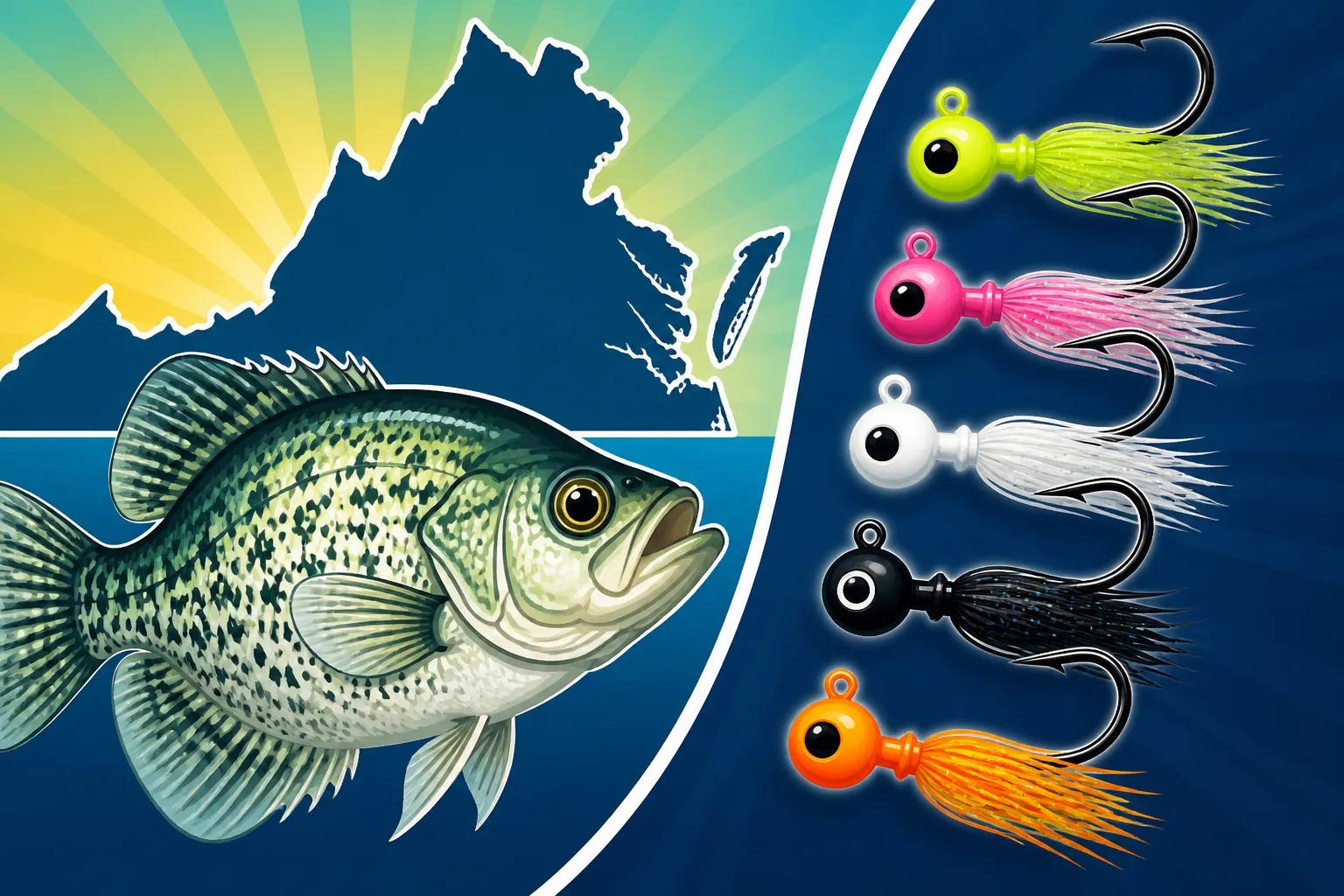
- Virginia Scenarios: Imagine you're fishing the muddy banks of the Chickahominy River after a spring rain, or the tea-colored waters of a specific cove on Kerr Lake. Tying on a chartreuse jig, perhaps a small hair jig or a grub-style plastic, is often the first move for many successful crappie anglers. For deeper presentations, combining chartreuse with white or pink (often called "electric chicken") can be a deadly combination.
White and Pearl
Simple, classic, and incredibly effective, white and pearl jigs are a staple in any crappie angler's tackle box.
- When to Use It: These colors shine in clear water, sunny conditions, and when crappie are keying in on shad or other silvery baitfish. Pearl, with its subtle shimmer, is particularly effective at mimicking the natural flash of baitfish. White can also be a good choice in slightly stained water under bright sun, as it provides a clean, stark contrast.
- Why It Works: White reflects a lot of light, making it visible even in deeper water or overcast conditions if the water isn't too murky. Its natural appearance doesn't spook wary crappie in clear water. When fished with a twitching retrieve, the flash of a white or pearl jig can be irresistible.
- Virginia Scenarios: Picture yourself on a calm, clear day on Smith Mountain Lake, where baitfish are abundant. A small white or pearl curly tail grub on a light jig head can be incredibly productive, especially when the crappie are suspended over timber. It’s a versatile option you can always rely on, and you'll find plenty of these options for sale on Amazon.
Black and Blue
Don't underestimate the power of dark colors, especially black and blue. They might not seem intuitive, but they are consistently effective.
- When to Use It: These colors are phenomenal in very murky or stained water, low light conditions (dawn, dusk, heavily overcast days), and especially for night fishing. They can also work wonders in clear, deep water when crappie are spooky.
- Why It Works: Black and blue create a powerful silhouette against any available light, even minimal light. This strong contrast makes the jig much easier for crappie to detect using their keen vision and lateral lines, even when they can't discern specific colors. It appears as a clear, distinct shape in the water.
- Virginia Scenarios: If you're targeting crappie in the murky backwaters of the Potomac River or fishing under the lights at a pier at night in a spot like the Chesapeake Bay, a black and blue jig is often the secret weapon. It’s also surprisingly good for catching crappie around brush piles where sunlight struggles to penetrate.
Pink and Orange
These vibrant, attention-grabbing colors can be real game-changers when conditions call for something bold.
- When to Use It: Pink and orange are excellent for stained or muddy water, especially on bright days where some light can still make them "pop." They are also effective for triggering reaction strikes from aggressive crappie.
- Why It Works: These colors are highly visible and stand out dramatically in low-visibility water. They offer a strong contrast and can often elicit a strike when more subtle colors fail. While red fades quickly, brighter pinks and oranges can retain some visibility longer, especially if they have fluorescent properties.
- Virginia Scenarios: When you're dealing with choppy, muddy water on Lake Gaston after a storm, or if crappie are actively feeding but not committing to natural presentations, a bright pink or orange jig could be exactly what they're looking for. Consider these when fishing around structures that may hold active, hungry fish, like those you find when learning "Where to Catch Crappie in Virginia Lakes".
Natural Tones (Brown, Gray, Olive)
Sometimes, the most subtle approach is the most effective. Natural tones mimic the local forage perfectly.
- When to Use It: Best for clear water, bright sunlight, and when crappie are finicky or heavily pressured. These colors are all about finesse and presentation, blending in rather than standing out.
- Why It Works: They imitate natural prey like small minnows, insect larvae, or zooplankton that crappie regularly feed on. In clear conditions, a natural presentation can fool wary fish that would shy away from something too bright or artificial.
- Virginia Scenarios: If you're fly fishing for crappie in a clear section of the Shenandoah River or targeting them in a pristine pond in the Blue Ridge Mountains, a small olive, brown, or gray jig, perhaps a marabou jig that breathes in the water, can be incredibly realistic. Sometimes, a subtle approach is the most rewarding.
Here's a quick summary table to help you choose:
| Water Condition | Light Condition | Recommended Jig Colors | Notes |
|---|---|---|---|
| Clear Water | Bright Sun | White, Pearl, Silver, Light Blue, Natural (Brown, Olive, Gray) | Mimic baitfish flash; subtle, less likely to spook |
| Overcast / Low Light | White, Pearl, Light Chartreuse, Black, Blue | Good visibility; black/blue create strong silhouette | |
| Stained / Murky Water | Bright Sun | Chartreuse, Neon Green, Orange, Electric Chicken | High visibility colors "pop" through murk |
| Overcast / Low Light | Chartreuse, Neon Green, Black, Blue | Maximize contrast and visibility in low light | |
| Night Fishing | Black, Dark Blue, Glow-in-the-dark, UV-reactive | Strong silhouette; visible with minimal light | |
| Deeper Water | Any (but less light) | Chartreuse, Green, Blue, White, Black | Reds fade first; greens/blues maintain color; black for silhouette |
| Cold Water | Any (usually deeper) | Natural, Chartreuse, Black, Blue | Subtle for lethargic fish; bright/dark for reaction strikes |
| Warm Water | Any (more active fish) | Wide range, including brights and naturals | Aggressive fish allow for more experimentation |
Beyond Color: Other Jig Considerations
While color is a huge part of the equation, it's not the only factor that influences whether a crappie will bite your jig. The size, shape, and action of your jig, as well as scent, are equally important.
Jig Size and Profile
Crappie have relatively small mouths, especially the smaller "keeper" sized fish, so presenting them with an appropriately sized meal is crucial.
- Smaller is Often Better: For crappie, jigs typically range from 1/32 ounce up to 1/8 ounce, though sometimes 1/16 ounce is the sweet spot. The smaller the jig, the more naturally it falls through the water column, and the easier it is for a crappie to inhale. On days when crappie are finicky, downsizing your jig can make all the difference. This is also important for beginners, as you can learn more about in "Crappie Fishing Techniques for Beginners".
- Matching the Hatch: Consider the size of the baitfish or insects crappie are feeding on. If they're feeding on tiny minnows, a small tube jig or a micro-grub might be perfect. If larger baitfish are present, you might get away with a slightly bigger jig.
- Profile Matters: The overall shape of your jig can mimic different types of forage. A slim, minnow-shaped jig imitates baitfish, while a rounder grub or tube can resemble insect larvae or smaller crustaceans. Sometimes the difference between a round head and a flat head jig can create a subtle change in fall rate or action that triggers a bite.
Jig Action and Material
The way your jig moves in the water can be as important as its color. This is where the material of your jig comes into play.
- Soft Plastics: These are the most common crappie jigs and come in an endless array of shapes: curly tails, paddle tails, straight tails, tubes, and more.
- Curly Tail Grubs: These are incredibly versatile. The tail has a built-in action, wiggling enticingly even with a slow retrieve or on the fall. This continuous motion can be irresistible to crappie.
- Tube Jigs: These hollow, cylindrical jigs with tentacles offer a subtle, undulating action. They're great for vertical jigging or slowly swimming through cover.
- Paddle Tail Grubs: These create a thumping vibration as they move through the water, which can attract crappie using their lateral line, especially in murky conditions.
- Hair Jigs (Marabou and Bucktail): These traditional jigs are made from natural fibers like marabou feathers or bucktail hair. They offer a unique, lifelike breathing action in the water, even when barely moving. Marabou, in particular, has an incredible ability to pulse and undulate with the slightest current or rod tip twitch, making it appear alive. These can be particularly effective in cold water or when crappie are lethargic, as their subtle movement is less aggressive than some plastics. You can also find some great, handmade hair jigs on Amazon from smaller sellers.
- Determining the Right Action: Sometimes, crappie want a fast, aggressive retrieve with a lot of tail kick. Other times, they prefer a slow, subtle quiver. Experiment with different retrieve speeds and jig types to see what the fish are responding to on a given day. Knowing "How to Jig for Crappie in Spring" can help you decide which action to impart.
Adding Scent to Your Jigs
While crappie certainly rely on sight and vibrations, their sense of smell and taste is also highly developed. Don't overlook the power of scent, especially when fish are less active or in very dark water.
- Scented Baits: Many soft plastic crappie jigs now come pre-infused with fish-attracting scents. These can be a great starting point, as the scent is built right into the material and slowly disperses in the water.
- Liquid or Gel Scents: You can also purchase liquid or gel scents and apply them directly to your unscented jigs. Popular choices often mimic baitfish, garlic, or a general "fish attractant" smell. Reapply regularly, especially after a few casts or if you've caught a fish.
- Tipping with Live Bait: For those really tough days, or when you just want to guarantee a bite, tipping your jig with a small piece of live bait can be a game-changer. A tiny minnow, a wax worm, or a piece of Berkley Gulp! Alive will add natural scent, taste, and irresistible action to your jig, often prompting a strike from even the most hesitant crappie. This combination of visual appeal, movement, and natural scent often proves to be the ultimate crappie magnet.
Remember, crappie fishing is an art as much as a science. While these guidelines provide a solid foundation for choosing the best jig colors, don't be afraid to experiment. What works one day might not work the next, and the conditions on a specific Virginia lake or river can change quickly. Carry a variety of colors, sizes, and styles, pay attention to the conditions, and let the fish tell you what they want. Happy crappie fishing!
Disclaimer
This article is for general informational purposes only and does not constitute professional advice. Laws, prices and regulations vary by location and change over time. Consult a qualified professional for guidance on your specific situation.