Virginia Rockfish Slot Limit and Possession Rules
It can feel incredibly frustrating to hit the water, reel in a beautiful striped bass, only to wonder if it's the right size to keep. Virginia's fishing regulations, especially for rockfish (that's what we call striped bass around here!), can sometimes seem like a moving target, leaving even experienced anglers scratching their heads. This guide is here to untangle the complexities, clearly laying out the current slot limits and possession rules so you can fish with confidence and stay on the right side of the law.
Understanding Virginia's Striped Bass Regulations
Let's face it, keeping up with fishing rules is a big part of being a responsible angler, but it’s not always easy. Virginia's regulations for striped bass, affectionately known as "rockfish" by most locals, are designed to protect this iconic species while still allowing us to enjoy the thrill of catching them. These rules aren't just arbitrary; they're based on scientific data and conservation efforts to ensure healthy fish populations for generations to come.
Why the Rules Exist: Conservation Efforts
Imagine a world where our favorite fishing spots are empty, or the fish we do catch are scrawny and unhealthy. That's a grim picture, right? The reason we have these seemingly complex rules for rockfish – the slot limits, the possession rules, the specific seasons – all boils down to critical conservation efforts. Striped bass populations, particularly along the Atlantic coast, have faced challenges over the years due to various factors including overfishing and environmental changes. The regulations are put in place to manage the harvest, ensuring that enough fish survive to spawn and reproduce, thus maintaining a healthy and sustainable population. It's about finding that delicate balance between allowing recreational fishing and safeguarding the future of the species. When you adhere to these rules, you're directly contributing to the long-term health of our fisheries, which means more epic fishing days for everyone down the line.
The Virginia Department of Wildlife Resources (DWR) and the Virginia Marine Resources Commission (VMRC) work tirelessly with scientists and other state agencies to monitor the health of the striped bass stock. They track everything from spawning success to migration patterns, and this data directly informs how the regulations are set and adjusted. For example, a slot limit often aims to protect both the smaller, juvenile fish that haven't had a chance to reproduce yet, and the largest, most prolific breeding females. By allowing anglers to only keep fish within a certain "slot," we’re helping to ensure that the vital parts of the breeding population are protected, giving them a better chance to contribute to future generations of rockfish. It’s a shared responsibility, and every angler plays a role in this bigger conservation picture.
The Terminology: Rockfish vs. Striped Bass
If you’re new to fishing in Virginia, or even if you’ve been here a while but mostly stuck to freshwater, you might hear "rockfish" and "striped bass" used interchangeably. And you'd be absolutely right to be a little confused, because they are indeed the same fish! In Virginia, and in many parts of the Mid-Atlantic region, the term "rockfish" is simply the local, traditional name for the striped bass (Morone saxatilis). It's a common regional colloquialism that has stuck around for centuries, and it's deeply ingrained in our fishing culture here.
So, when you see signs at bait shops, hear fellow anglers chatting at the docks, or even read official notices from the VMRC, understand that "rockfish" always refers to striped bass. The DWR, which primarily manages freshwater, tends to stick to "striped bass" more often, while the VMRC, handling saltwater and tidal waters, will frequently use "rockfish." Knowing this distinction isn't just a fun piece of local trivia; it's genuinely helpful for understanding all the regulations. When someone asks about the "rockfish slot limit," you immediately know they're talking about striped bass rules. This common understanding bridges the gap between official language and local lingo, making it easier for everyone to stay informed about Virginia Fishing Regulations Explained.
Where to Find Official Regulations
In the ever-changing world of fishing regulations, relying on hearsay or outdated information is a sure-fire way to end up with a fine, or worse, unknowingly harm the fishery. It’s absolutely crucial to always consult the most current, official sources for Virginia’s fishing rules. The primary authority for saltwater and tidal freshwaters, where most of our beloved rockfish are found, is the Virginia Marine Resources Commission (VMRC). Their website is an invaluable resource, often updated in real-time with any changes to seasons, slot limits, or possession rules. They even have an alert system you can sign up for to get direct notifications when things shift.
For freshwater fishing, including landlocked striped bass populations in some reservoirs, the Virginia Department of Wildlife Resources (DWR) is your go-to. While the focus of this article is largely on the more common saltwater/tidal rockfish, it's good to know the DWR exists if you're venturing inland. Both agencies publish annual regulation summaries, but always check their websites for the most recent amendments, as rules can change even mid-season to respond to scientific assessments or emergency closures. Taking a few minutes to check their official sites before each trip is the best practice. You can also swing by a local tackle shop; often, they'll have printed summaries or be able to direct you to the exact online pages you need. Don't take chances; empower yourself with the most accurate information.
Demystifying the Virginia Rockfish Slot Limit
The slot limit is arguably the most talked-about and often debated regulation among rockfish anglers. It can feel counterintuitive at first – you catch a monster fish, and you can't keep it? Or a tiny one, and you have to throw it back? But once you understand the "why" behind it, it makes a lot more sense. Let's break down what the slot limit means for you when you're out on the water.
What is a Slot Limit and How Does It Work?
A slot limit is a conservation tool that allows anglers to harvest fish only within a specific size range – a "slot." Any fish caught that are smaller than the minimum size or larger than the maximum size must be immediately released. This is different from a simple minimum size limit (where you can keep anything above a certain length) or a maximum size limit (where you can keep anything below a certain length). The idea behind the slot limit, particularly for species like striped bass, is twofold: to protect the juvenile fish that haven't yet reached reproductive maturity, and to safeguard the large, mature broodstock – especially the big females – that are crucial for producing the next generation of fish.
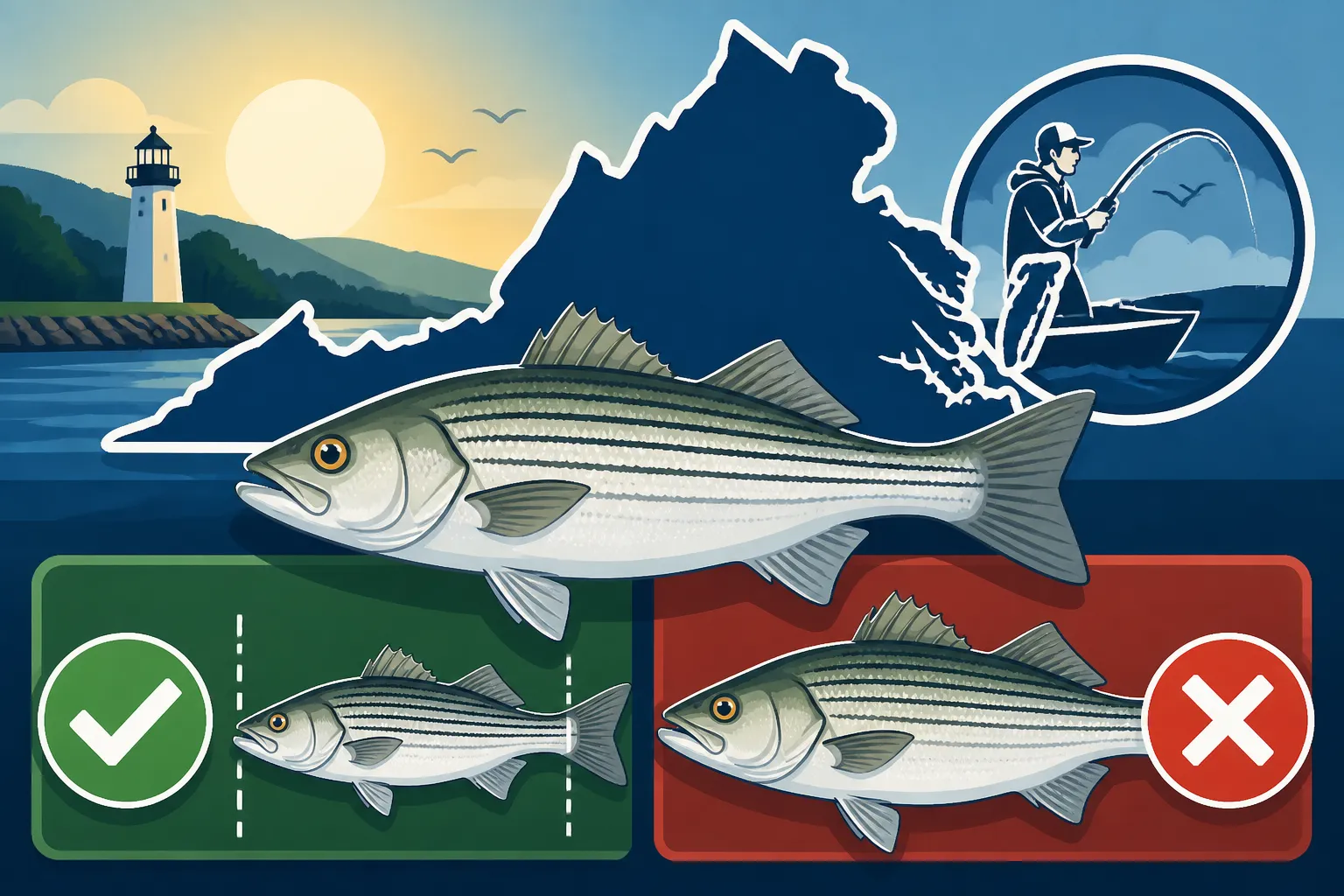
For example, if Virginia's slot limit for rockfish is 28 to 31 inches, it means you can only keep fish that measure exactly 28 inches up to, but not including, 31 inches. A 27.5-inch fish must be released. A 31.5-inch fish must also be released. The goal is to funnel the harvest pressure onto fish that are old enough to have spawned at least once or twice, but not so old and large that they become irreplaceable breeders. This ensures that the bulk of the reproductive capacity of the population remains intact, providing stability and growth for the species. It’s a nuanced approach, acknowledging that different age and size classes play different roles in the ecosystem, and it’s a strategy often employed in fisheries management worldwide for species that are under conservation scrutiny.
Current Statewide Slot Limit for Striped Bass
Navigating the exact numbers is key, and it's where many anglers trip up. As of recent regulations, the statewide slot limit for striped bass (rockfish) in Virginia's Chesapeake Bay and its tributaries, as well as the Atlantic Ocean, is 28 inches to 31 inches. This means that for a striped bass to be legally kept, its total length, measured from the tip of the nose to the tip of the tail, must be at least 28 inches long and less than 31 inches long. A fish that measures exactly 31 inches is considered oversized and must be released.
This 28-to-31-inch slot is a very specific window, and it's designed with the biological needs of the striped bass in mind. The fish within this size range are generally considered to be reproductively mature, having had at least one or two spawning cycles, but they aren't the largest, most valuable breeders in the population. The larger, older females are incredibly important for the overall health of the stock because they produce more eggs, and those eggs are often of higher quality, leading to better survival rates for the larvae. By focusing harvest pressure on this middle "slot," the regulations protect both the future spawners (the smaller fish) and the current powerhouse breeders (the larger fish), ensuring a more robust fishery long-term. Remember, these numbers are subject to change, so always double-check the VMRC website before heading out. This precise slot limit is also critical to understand for Virginia Striped Bass Season and Slot Limit Guide.
Measuring Your Catch Accurately
When you’ve got a spirited rockfish on the line, and you’re trying to quickly determine if it’s a keeper, accurate measurement is absolutely paramount. There’s no room for guessing games when the slot limit is so precise. The official method for measuring striped bass in Virginia is total length, which means from the tip of its nose to the absolute tip of its tail. The tail should be pinched together to get the maximum length, not splayed out. This might sound obvious, but in the excitement of a catch, it’s easy to get it wrong. Many experienced anglers use a sturdy, flat measuring board or a reliable tape measure that adheres to the boat deck for quick and accurate readings. You can find excellent, waterproof measuring tapes on sites like Amazon that are designed specifically for fishing.
It’s also crucial to have your measuring device clearly marked and easily accessible. Fumbling around while a fish is out of water isn't good for the fish, and it increases the chance of inaccurate measurement. If a fish is borderline – say, exactly 31 inches – it's always safer to err on the side of caution and release it. Remember, an undersized or oversized fish (outside the 28-to-31-inch slot) must be immediately released, regardless of its condition. Proper measurement, quick decision-making, and careful handling are all part of responsible angling, ensuring both legal compliance and the well-being of the fish you encounter. Don't risk a citation because your tape measure wasn't straight!
Virginia's Striped Bass Possession Rules and Seasons
Beyond the slot limit, understanding how many fish you can keep and when you can keep them is equally important. Virginia's striped bass fishery is managed with strict daily limits and distinct seasons, which have been put in place to ensure sustainability. These rules apply to everyone, whether you're fishing from your own boat, from the shore, or on a guided charter.
Daily Possession Limit Explained
So, you've successfully measured your rockfish, and it falls perfectly within the legal 28-to-31-inch slot. Great! Now, how many of those can you take home? Virginia's regulations are pretty clear on this: the daily possession limit for striped bass (rockfish) in the Chesapeake Bay and its tributaries, as well as the Atlantic Ocean, is one fish per person per day. This means that once you’ve kept one legal-sized striped bass, you cannot keep any more striped bass for the rest of that calendar day, even if you continue fishing and catch other slot-sized fish. You must immediately cease targeting striped bass or switch to catch-and-release only for the remainder of your trip.
This "one fish per person per day" rule is simple to understand but can be easy to forget in the heat of the moment, especially if the bite is hot. It applies whether you're alone, with family, or with a group of friends. Each licensed angler can keep only one. It’s important not to try and skirt this rule by, say, putting your legal fish in a cooler and then continuing to fish for "someone else's" limit. Game wardens are very vigilant about possession limits, and violations can lead to significant penalties. This rule is a cornerstone of Virginia's Fishing License and Catch Limit Basics and is fundamental to the conservation strategy for this highly popular species.
Understanding the Split Season in Virginia
If you've been fishing Virginia for a while, you know our striped bass season isn't a continuous, year-long affair. It's often broken into distinct windows, known as a "split season." This can sometimes be confusing, as the specific dates and even the slot limits can vary slightly between these periods. Generally, Virginia has traditionally implemented multiple seasons to allow for both spring and fall migrations, while also protecting critical spawning periods in between. For example, in many recent years, we've seen a spring season (often from mid-May through mid-June) and a fall/winter season (sometimes from October through March of the following year). These dates are always subject to change by the VMRC, so always check the most current regulations.
The rationale behind a split season is primarily conservation. The spring season often coincides with the post-spawn migration, allowing anglers to target fish that have already completed their reproductive duties for the year. The fall/winter season typically targets the large migratory schools of striped bass that move down the coast. The periods between these seasons are usually closed to allow the fish to spawn undisturbed and to minimize pressure on the population when they are most vulnerable. It also helps manage overall harvest to meet conservation targets set by interstate agreements. This management strategy means that anglers need to be acutely aware of the calendar before heading out. Knowing Virginia Striped Bass Split Season Dates Explained is essential for planning your trips.
Special Regulations for Specific Waters or Methods
While the general slot limit and possession rules apply broadly across Virginia's tidal waters, it's worth noting that there can occasionally be special regulations for specific waters, fishing methods, or even types of fishing trips (like charter boats). These variations are less common for the main recreational striped bass fishery but are important to be aware of. For instance, in some years, certain areas might have different rules if they are deemed critical spawning grounds or recovery zones. Always check the VMRC website for any area-specific closures or modifications.
Another example involves gear. For saltwater striped bass fishing, especially during certain seasons or in specific areas, the use of non-offset circle hooks might be mandatory when fishing with natural bait. This regulation is designed to reduce gut-hooking and improve the survival rate of released fish, which is crucial given the high number of undersized or oversized fish that must be thrown back under a slot limit. Charter boats, while generally adhering to the same slot and possession limits, might have slightly different reporting requirements or be subject to specific rules if participating in a commercial fishery. Even if you're on a charter, understanding Virginia's 28 to 31 Inch Striped Bass Slot Limit for Charter Anglers is good practice. Always check the current VMRC rules for any such caveats before your trip, particularly if you're venturing into less-frequented areas or trying a new fishing technique.
Common Angler Challenges and Solutions
Fishing is supposed to be relaxing, but dealing with complex regulations can sometimes feel like a challenge. Many anglers face similar dilemmas when trying to navigate Virginia's rockfish rules. Let's look at some common frustrations and practical solutions to help you fish smarter, not harder.
Dealing with Undersized or Oversized Fish
It's almost a given that when you're targeting rockfish, you're going to catch fish that don't fit into that legal 28-to-31-inch slot. Whether they're too small or too large, these fish must be released immediately and unharmed. This is where responsible angling practices truly shine. Having the right tools on hand can make all the difference for the fish's survival. A good pair of de-hooking pliers or a dedicated fish gripper can help you remove hooks quickly and efficiently, minimizing the time the fish is out of the water. Avoid touching the fish with dry hands as this can remove their protective slime coat, making them more susceptible to disease. Instead, cradle them gently, support their belly, and get them back into the water as swiftly as possible.
For larger fish that are out of the slot, especially big, heavy breeders, it's even more crucial to handle them with care. If possible, try to unhook them while they're still in the water, or use a net with rubberized mesh (which is much gentler on fish scales and slime) to bring them aboard briefly for de-hooking. Avoid dragging them onto dry surfaces or gaffing them if you intend to release them. Proper catch-and-release techniques ensure that those valuable fish, whether they're juveniles or trophy-sized spawners, swim away healthy and continue to contribute to the fishery. Remember, your actions directly impact the health of the striped bass population, so make every release count.
Staying Informed About Regulation Changes
One of the biggest headaches for Virginia anglers is the dynamic nature of fishing regulations. It feels like just when you've memorized the rules, they change! This isn't just to make our lives difficult; it's often a response to scientific assessments that indicate shifts in fish populations or to comply with regional management plans. However, it still leaves us responsible for knowing the latest rules. The best defense against outdated information is proactive awareness. The absolute best place to stay informed is directly through the official channels: the Virginia Marine Resources Commission (VMRC) website for saltwater/tidal rules and the Virginia Department of Wildlife Resources (DWR) website for freshwater rules.
Many anglers find it helpful to sign up for email alerts or newsletters from these agencies. This way, any new announcements or emergency closures land right in their inbox. Additionally, follow reputable local fishing forums, social media groups, and local tackle shops. While these aren't official sources, they often provide timely discussions and summaries of changes, which can prompt you to check the official VMRC or DWR sites. Making it a habit to check the VMRC's "Recreational Fishing News" page or DWR's "Regulations" section right before each fishing trip can save you a lot of grief. It’s a small effort that pays off by ensuring you're always fishing legally and responsibly, and understanding Virginia Fishing Rules Every Angler Should Know means staying on top of these updates.
Avoiding Penalties: The Consequences of Non-Compliance
Let’s be honest, no one wants a run-in with a game warden, especially when you’re out enjoying a peaceful day on the water. However, ignorance of the law is not an excuse. Getting caught fishing without a license, or violating slot limits and possession rules, can lead to some pretty hefty consequences in Virginia. Penalties can range from significant fines to the confiscation of your catch, fishing gear, or even your boat in severe cases. These fines aren't just a slap on the wrist; they are designed to be a deterrent and reflect the seriousness of violating conservation efforts.
Virginia game wardens are highly trained and have the authority to check your license, your catch, and your fishing gear. They are often out on the water, patrolling popular fishing spots and conducting checks at boat ramps and docks. It's their job to enforce these regulations to protect our valuable natural resources. Beyond the financial impact, there’s also the potential for legal costs, court appearances, and even a mark on your record. It’s simply not worth the risk. Make sure you have your Virginia Fishing License Guide in order, understand the slot and possession limits, and measure your fish accurately. Being a responsible angler means adhering to all regulations, ensuring that you and everyone else can continue to enjoy Virginia's fantastic fishing opportunities without worry. Don't find yourself asking about Penalties for Fishing Without a License in Virginia the hard way!
Essential Gear and Best Practices for Rockfish Anglers
Beyond the regulations themselves, having the right mindset and the right tools makes all the difference when targeting striped bass. It’s about being prepared, being responsible, and ultimately, having a more enjoyable and successful day on the water.
Must-Have Gear for Responsible Fishing
When you're out chasing rockfish, a few key pieces of gear go beyond just catching fish – they help you fish responsibly and comply with regulations. First and foremost, you need a reliable measuring device. A sturdy, flat measuring board is ideal, especially one that can be attached to your boat or cooler. Alternatively, a good quality, waterproof tape measure (the kind that won't stretch or fade) is essential. You can easily find highly-rated options on Amazon specifically designed for fishing, often with clear markings that make quick measurements a breeze. Don't skimp here; accuracy is paramount for slot limits.
Next, invest in a pair of de-hooking pliers or a long-handled de-hooker. These tools allow you to quickly and safely remove hooks from fish, minimizing handling time and reducing injury, especially important for fish that must be released. A good pair of fish grippers (rather than lip-grippers for striped bass, which can cause jaw damage) can also help you control a lively fish while you measure and de-hook it, without having to touch its body and potentially remove its protective slime coat. Finally, a cooler with ice is crucial for immediately chilling any legal keepers, preserving the quality of your catch. Having these items on hand isn't just convenient; it's a testament to your commitment to ethical and responsible angling, protecting the fish and ensuring you stay within the law.
Ethical Angling and Conservation Mindset
Fishing for striped bass in Virginia is more than just reeling in a fish; it's an opportunity to connect with nature and contribute to its preservation. Embracing an ethical angling and conservation mindset means making conscious choices that support the health of the fishery. This starts with understanding and respecting the slot limits and possession rules, but it goes beyond that. It means practicing proper catch-and-release techniques for all fish that are not within the legal slot, or any fish you choose to release. Use appropriate tackle to minimize harm, such as circle hooks when bait fishing to prevent gut-hooking.
A conservation mindset also extends to being mindful of your impact on the environment. Avoid littering, dispose of old fishing line properly, and be respectful of other anglers and wildlife. Consider how your actions contribute to the bigger picture of resource management. If you see distressed fish or witness blatant violations, reporting them to the VMRC or DWR can make a real difference. Participating in citizen science efforts, like reporting your catches (even released ones) to specific research programs, can also provide valuable data. Ultimately, being a responsible angler means being an advocate for the striped bass and its habitat, ensuring that future generations can enjoy the same incredible fishing experiences we do today.
Virginia Striped Bass Regulations Summary
Here's a quick overview of the key striped bass regulations in Virginia's tidal waters:
| Regulation Type | Detail (Subject to Change) | Notes |
|---|---|---|
| Slot Limit | 28 inches to 31 inches total length | Fish must measure at least 28" and be less than 31" |
| Possession Limit | 1 fish per person per day | Once one legal fish is kept, no more striped bass can be harvested that day |
| Seasons | Typically a split season (e.g., Spring: May/June; Fall: Oct/Dec) | Exact dates vary annually; always check VMRC for current seasons |
| Measurement | Tip of nose to tip of tail (pinched) | Must be accurate; carry a reliable measuring device |
| Release Rules | Undersized/Oversized fish must be immediately released unharmed | Use de-hookers, minimize handling, keep fish wet |
| Circle Hooks | Often required with natural bait | Check VMRC for specific requirements by season/area |
Disclaimer
Please remember that fishing regulations, including slot limits, possession limits, and seasons, can change frequently. While this guide provides the most current information available at the time of publication, it is the angler's sole responsibility to check the official websites of the Virginia Marine Resources Commission (VMRC) for saltwater/tidal regulations and the Virginia Department of Wildlife Resources (DWR) for freshwater regulations immediately before each fishing trip. These agencies are the definitive sources for all legal fishing requirements in Virginia.