Best Striped Bass Fishing on Claytor Lake
Alright, let's talk about one of Virginia's true hidden gems for anglers: Claytor Lake. If you've ever dreamt of battling a hard-fighting striped bass in a stunning freshwater setting, but felt overwhelmed trying to figure out where to even start on such a vast body of water, you're not alone. Many anglers find themselves scratching their heads, wondering how to unlock the secrets of Claytor Lake's robust striper population. This comprehensive guide is here to cut through the confusion, offering proven strategies, top spots, and essential tips to help you land those magnificent Claytor Lake striped bass.
Understanding Claytor Lake's Unique Striped Bass Fishery
Claytor Lake isn't just any lake; it's a deep, sprawling reservoir on the New River in Southwest Virginia, famous for its incredible beauty and, for those in the know, its fantastic striped bass fishing. It's truly a special place, and understanding what makes it tick is the first step to a successful day on the water.
Why Claytor Lake is a Striper Hotspot
So, what makes Claytor Lake such a magnet for these powerful fish? Well, it all comes down to a perfect storm of environmental factors and dedicated fisheries management. Unlike the saltwater "rockfish" you might chase in the Chesapeake Bay, these are landlocked stripers, and they thrive here because the lake offers ideal conditions. Claytor Lake is deep, maintaining cooler water temperatures even in the heat of summer, which is absolutely crucial for stripers. They need that deep, oxygenated cool water to survive and grow large, especially when surface temperatures climb.
Beyond just the right temperature, Claytor Lake boasts an incredibly abundant forage base. We're talking about huge populations of alewives and gizzard shad – these are the protein shakes of the striper world! These baitfish provide exactly what a growing striped bass needs to pack on size and really put up a fight. The Virginia Department of Wildlife Resources (DWR) also plays a vital role, regularly stocking striped bass fingerlings to ensure a healthy and sustainable population for us anglers to enjoy. This careful management means there's always a new generation of stripers coming up, making it a consistently productive fishery year after year.
Key Characteristics of Claytor Lake Stripers
The striped bass in Claytor Lake are nothing short of impressive. While you might not see the gargantuan sizes occasionally reported in the ocean, these freshwater stripers still offer incredible sport. On average, you can expect to encounter fish ranging from 5 to 15 pounds, providing plenty of exciting action. However, don't be surprised if you tie into a true trophy – Claytor Lake is known for producing stripers upwards of 20, even 30 pounds! These larger fish are often older, wiser, and offer a test of any angler's skill and tackle.
Their behavior is typically gregarious; stripers are schooling fish. They move in packs, often herding baitfish to the surface in spectacular "topwater boils" or chasing them through the deeper parts of the water column. Understanding these movements is key to finding them. They also tend to be incredibly strong, making long, powerful runs when hooked, which is why many anglers consider them one of the hardest-fighting freshwater species around. The fight these fish put up in the open waters of Claytor Lake is something you truly have to experience to believe.
Top Strategies for Targeting Claytor Lake Stripers
Chasing striped bass on Claytor Lake requires a blend of technique, patience, and the right gear. These aren't just fish you cast a worm to; they demand a bit more finesse and understanding. Let's break down the most effective ways to get them to bite.
Trolling Techniques and Best Baits
Trolling is arguably the most consistent method for catching Claytor Lake stripers, especially when they're scattered or holding deep. The goal is to cover a lot of water and present your lure or bait at the correct depth. A good starting point for trolling speed is usually between 2.5 and 3.5 miles per hour, but sometimes slowing down or speeding up slightly can trigger a strike.
When it comes to lures, umbrella rigs are absolute workhorses on Claytor Lake. These rigs, with multiple teaser baits and a larger "stinger" lure, imitate a school of baitfish, which is irresistible to schooling stripers. Swimbaits, particularly those resembling alewives or gizzard shad, are also highly effective. Brands like Bass Pro Shops' Sassy Shad or similar styles in pearl, chartreuse, or silver patterns are often productive. Deep-diving crankbaits are another excellent choice, especially when targeting specific depth ranges. You'll want cranks that can reach 15-30 feet on their own, or be prepared to add weight or use planer boards to get them deeper.
For live bait, the most productive options are typically gizzard shad or alewives, the very fish stripers naturally prey upon. These can be cast netted in shallower areas or purchased from local bait shops. Presenting them naturally, either free-lined or with a small amount of weight, can be deadly. Remember to constantly monitor your sonar to adjust your trolling depth and lure selection to match where the fish are holding in the water column.
Live Bait Fishing and Downrigger Use
While trolling with artificials is effective, sometimes nothing beats a frisky live bait. Live bait fishing for Claytor Lake stripers can be incredibly rewarding, often resulting in larger, more aggressive bites. The key here is presenting that live bait at the exact depth where the stripers are feeding, and that's where downriggers become indispensable. A downrigger allows you to send your bait down to a precise depth, say 40, 60, or even 80 feet, and keep it there while you slowly idle along or anchor over a productive spot.
When rigging live bait, use a simple Carolina rig with a circle hook through the nose or back of your shad or alewife. This ensures a natural presentation and better hook-ups. Key areas for live bait fishing include prominent points that drop off into deep water, submerged humps and ledges, and the deep channels of major creek arms like Peak Creek or Little River. These are ambush points where stripers will wait for baitfish to pass by. Many anglers find that booking a specialized trip through services like FishingBooker with a local guide who has intimate knowledge of these areas and techniques can drastically improve their chances, especially for those new to downrigger fishing.
Locating Stripers with Electronics
In a lake as vast and deep as Claytor, electronics aren't just a luxury – they're a necessity. Your fish finder, or sonar unit, is your window into the underwater world, and learning to interpret its readings is paramount to consistent striper success. Look for large, dense schools of baitfish, often appearing as vast clouds or arches on your screen. Stripers will usually be lurking nearby, often just below or to the sides of these bait balls, showing up as larger, more distinct arches.
Modern units with side imaging or down imaging capabilities can be even more helpful. Side imaging, for instance, allows you to scan a much wider area, revealing bait schools and potentially stripers holding off to the sides of your boat, not just directly beneath it. Pay close attention to changes in bottom contour – points, humps, ledges, and creek channels are all prime holding areas for both bait and predators. Understanding How to Find Fish From a Boat With a Fish Finder can significantly cut down your search time and put you directly on the fish.
Best Times and Spots for Striped Bass on Claytor Lake
Knowing how to fish is one thing, but knowing when and where to concentrate your efforts is equally, if not more, important. Claytor Lake's stripers exhibit distinct seasonal and daily patterns that dictate their whereabouts and feeding habits.
Seasonal Patterns and Prime Months
Claytor Lake stripers follow predictable seasonal movements, and tailoring your approach to the time of year is crucial.
- Spring (March-May): As water temperatures begin to rise into the 50s and 60s, stripers become more active and will often move shallower, especially in the mornings and evenings. This is a great time for trolling closer to the surface with swimbaits or even casting topwater lures if you catch them schooling bait. Pre-spawn activity can also make them incredibly aggressive.
- Summer (June-August): This is when Claytor Lake's depth truly shines for stripers. They'll retreat to the cooler, oxygenated waters of the thermocline, often found at depths of 40-70 feet or more. This is prime time for downrigger fishing with live bait or deep-diving crankbaits. Early morning and late evening topwater action can still occur, but it's usually brief.
- Fall (September-November): As the lake cools, stripers become incredibly active, often chasing baitfish to the surface in explosive feeding frenzies known as "boils." This is arguably the most exciting time for striper fishing, with both trolling and casting to schooling fish being highly effective. They'll start to spread out more across the lake, moving into shallower areas again to feed.
- Winter (December-February): Don't count winter out! Stripers will hold deep, often in large schools, usually in the main lake channel or deep pockets. How to Catch Bass in Cold Water techniques apply here, often requiring slower presentations with heavy jigs or spoons, or slow-trolling deep with live bait. While the bite can be slower, the fish caught are often larger and in excellent condition.
A quick reference for seasonal strategies:
| Season | Typical Water Temp Range | Key Depths (approx.) | Primary Techniques | Preferred Baits/Lures |
|---|---|---|---|---|
| Spring | 50s – 60s °F | 10-30 ft | Trolling, Casting | Swimbaits, Crankbaits, Live Shad |
| Summer | 70s – 80s °F (surface) | 40-80 ft (thermocline) | Downrigging, Live Bait | Live Shad/Alewives, Deep Crankbaits |
| Fall | 50s – 60s °F | 15-40 ft | Trolling, Casting | Swimbaits, Topwater, Live Shad |
| Winter | 30s – 40s °F | 60-100+ ft | Vertical Jigging, Slow Trolling | Spoons, Heavy Jigs, Live Shad |
Key Claytor Lake Locations
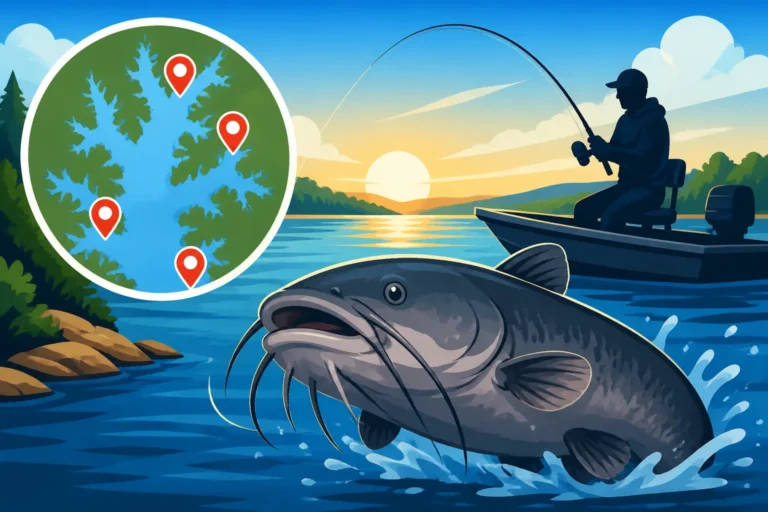
Claytor Lake, being a larger body of water, has several key areas that consistently hold striped bass. The main lake channel is always a prime starting point, as stripers use it as a highway for travel and a deep-water sanctuary. Look for its edges, especially where it intersects with points or creek mouths. The area around the Route 100 bridge is also a known hotspot, with the bridge pilings providing current breaks and ambush points.
Major creek arms like Peak Creek and Little River offer excellent opportunities, particularly their deeper sections and mouths where they enter the main lake. These areas often have good baitfish concentrations. Submerged humps and ledges throughout the lake, visible on your electronics, are natural congregation points for both bait and stripers. Exploring Claytor Lake Fishing Spots and Tips can provide even more localized insights. Many anglers find success by using a local guide found on platforms like FishingBooker, as these guides spend countless hours on the water and know the subtle nuances of these locations year-round. They can pinpoint the exact humps, ledges, and creek bends that are holding fish on any given day.
Understanding Daily Movements and Feeding Times
Just as seasons dictate striper behavior, so does the time of day. Striped bass are often most active during low-light conditions – dawn and dusk. These are typically their prime feeding windows, especially for surface activity. During these times, they are more likely to push baitfish to the surface, creating those exciting topwater boils that every angler dreams of. If you plan your trips to coincide with these windows, your chances of success will skyrocket.
During the brighter, warmer parts of the day, stripers tend to move deeper, seeking thermal refuge and often holding tight to structure like channel edges, humps, or even standing timber. While they might still bite during mid-day, the presentation often needs to be slower and deeper. Understanding factors like current flow (from the dam operation) and wind direction can also give you an edge, as these can concentrate baitfish and, in turn, stripers, in specific areas. Paying attention to these subtle environmental cues can transform a slow day into a memorable one.
Essential Gear and Regulations for Claytor Lake Stripers
Having the right equipment and understanding the local rules are fundamental to a successful and legal fishing experience on Claytor Lake. Don't skimp on either!
Recommended Rods, Reels, and Line
Striped bass are powerful fish, so your tackle needs to be up to the task. For trolling, a medium-heavy to heavy action casting rod, typically 6'6" to 7'6" in length, paired with a reliable baitcasting reel (like a Penn Fathom or similar) spooled with 20-30 pound monofilament or braided line, is ideal. The stout rod provides the backbone needed to handle heavy rigs and big fish, while the baitcasting reel offers the cranking power and line capacity.
For casting to schooling fish or pitching live bait, a medium-heavy spinning rod (7' to 7'6") with a strong, smooth spinning reel (like a Daiwa BG or Shimano Saragosa) spooled with 20-30 pound braided line is a great choice. Braid offers superior sensitivity and casting distance. Always tie on a fluorocarbon leader (30-50 lb test) to your main line, as it's less visible to the fish and provides abrasion resistance against their rough mouths. Having a variety of setups allows you to switch techniques quickly when the fish decide to change their behavior.
Virginia Striper Regulations on Claytor Lake
Fishing responsibly means knowing and adhering to all local regulations. While many of us are familiar with general Virginia Fishing Regulations Explained, it's important to note that freshwater striper regulations, especially for specific lakes like Claytor, can differ from saltwater rules. For example, while saltwater rockfish have specific Striped Bass Season and Slot Limit in Virginia restrictions, Claytor Lake might have different daily creel limits and minimum length requirements to protect its unique population.
Always check the current Virginia Department of Wildlife Resources (DWR) fishing regulations before you head out. These are updated annually and are available online or at any DWR license agent. Typically, for Claytor Lake, you'll find a daily creel limit (how many fish you can keep) and a minimum length limit. It's not uncommon for there to be a one-fish limit on larger trophy stripers. Not adhering to these rules can result in penalties, so always stay informed. Remember, you'll also need a valid Virginia Fishing License Guide to fish legally on Claytor Lake, just like any other public water in the Commonwealth.
Safety and Boating Considerations
Claytor Lake is a large, deep body of water, and safety should always be your top priority. Always wear a properly fitting personal flotation device (PFD), especially when underway or if you're not a strong swimmer. Ensure your boat is equipped with all required safety gear, including navigation lights, a sound-producing device, a fire extinguisher, and a throw cushion.
Before heading out, familiarize yourself with the lake's topography. While generally deep, there are shallower areas, submerged islands, and standing timber that can pose hazards if you're not careful. Always be aware of changing weather conditions; pop-up thunderstorms are common in the mountains, and high winds can make the lake extremely choppy and dangerous. If you're heading out in low light conditions, be extra vigilant with your navigation and speed. For those less familiar with the lake or boating in general, hiring a professional guide through FishingBooker is an excellent way to ensure a safe and productive trip, as they not only know the fishing but also the hazards.
Disclaimer
Please note that fishing regulations, conditions, and fish behavior can change. Always consult the latest Virginia Department of Wildlife Resources (DWR) regulations before any fishing trip. The information provided in this guide is for general informational purposes only and should not be considered legal advice.