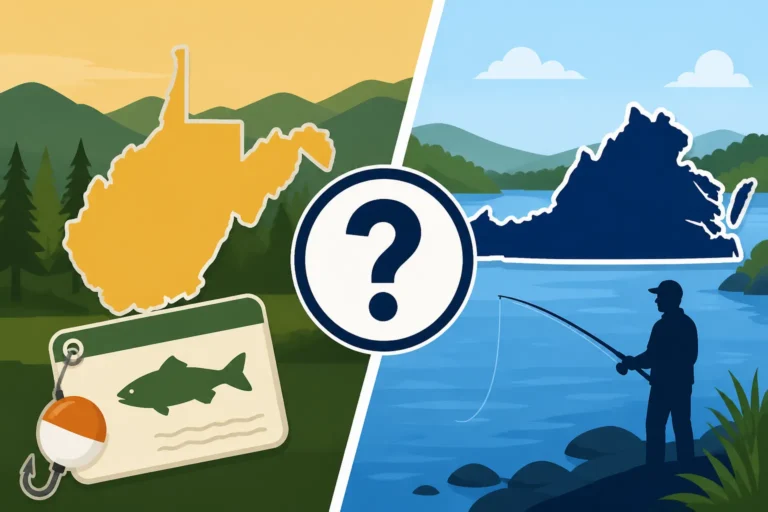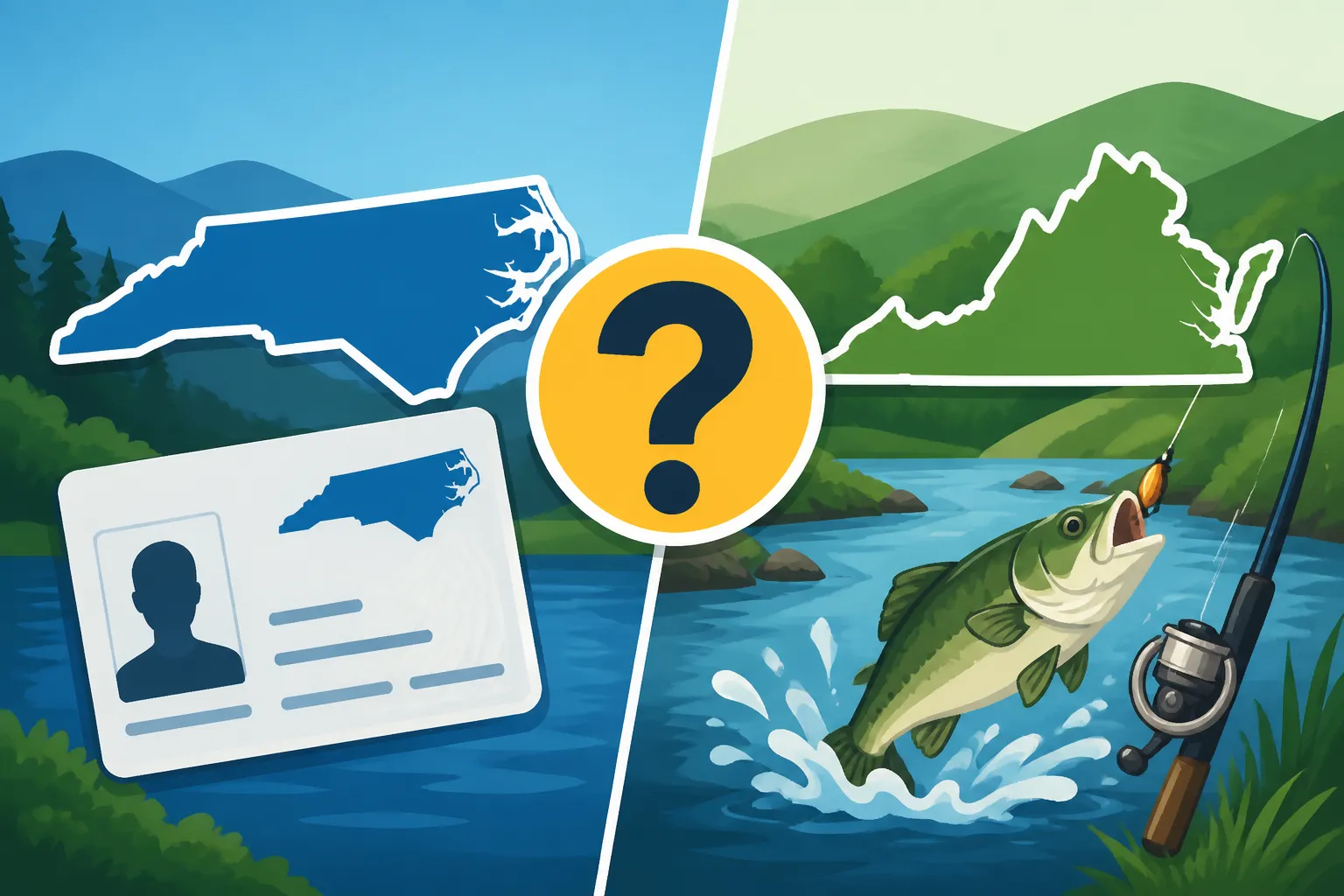
Does a North Carolina license let you fish in Virginia?
It’s a really common quandary, especially if you live near state borders: you’re geared up for a fantastic day of fishing, maybe you’re visiting family, and you wonder if that perfectly valid fishing license you bought back home will cover you in a neighboring state. For many anglers, the thought of needing a separate license for every single state can feel like a hassle and an added expense. This guide is here to untangle the specifics of fishing license reciprocity between North Carolina and Virginia, ensuring you’re well-informed before you cast your line.
Does a North Carolina Fishing License Let You Fish in Virginia?
Alright, let's get straight to the point because this is the question on many anglers' minds. The short answer, in most cases, is a definitive no. Your North Carolina fishing license, no matter how comprehensive or expensive, generally does not grant you the legal right to fish in the waters of Virginia. This can be a bit of a bummer, especially if you're used to fishing spots that are just a stone's throw across the state line, or if you're traveling frequently between the two states.
It boils down to state sovereignty and how wildlife and fisheries management operates. Each state, in this instance, Virginia and North Carolina, has its own Department of Wildlife Resources (or similar agency) that manages its specific natural resources. They set their own rules, their own seasons, their own catch limits, and, crucially, they issue their own licenses. The revenue generated from these licenses directly funds conservation efforts, stocking programs, enforcement, and habitat protection within that specific state. So, if you're fishing in Virginia waters, the expectation is that your license fees contribute to Virginia's conservation programs, not North Carolina's. This is a fundamental aspect of how states protect their unique ecosystems and angling opportunities. It's not about being difficult; it's about ensuring funds are allocated where the fish are being managed.
Why States Don't Always Share License Authority
You might think that for states that share a long border and common waterways, like the Albemarle Sound or the Dismal Swamp Canal, there would be some blanket agreement. And while some states do have reciprocity agreements for specific shared waters, these are usually very narrowly defined and often require anglers to hold a license from one of the two states, not necessarily making a license from one state valid for all waters of the other. For instance, the Potomac River has a unique multi-state compact that allows a single license to be valid on certain stretches, but that's an exception, not the rule. When it comes to Virginia and North Carolina, such a broad agreement for all waters simply doesn't exist for general fishing licenses. This means if you're planning a trip to fish in the Commonwealth, you'll need to make sure you've got a valid Virginia-issued license in hand, separate from your North Carolina one.
The Nuances of Border Waters
While the general rule is "no," it's worth understanding why people often ask about border waters. The Blackwater River, for example, flows through both states. Lake Gaston, a hugely popular fishing destination, straddles the Virginia-North Carolina line. For these specific bodies of water, anglers often hope there's an exception. Unfortunately, even on these shared lakes and rivers, the standard rule applies: you need the license for the state whose waters you are actively fishing in. If you launch your boat in North Carolina and strictly fish on the North Carolina side of Lake Gaston, your NC license is fine. But if you drift across the invisible state line into Virginia waters, you are legally obligated to possess a valid Virginia fishing license. It's a tricky situation that requires anglers to be very aware of their location, often relying on GPS or detailed maps to stay compliant. The Virgina Department of Wildlife Resources (DWR) and the North Carolina Wildlife Resources Commission both emphasize that knowing where you are and what license you need is the angler's responsibility.
Understanding Interstate Fishing License Reciprocity
The concept of fishing license reciprocity, or the lack thereof, can be a real headache for anglers who enjoy exploring different waters. Most states operate under the principle that their fishing license covers fishing within their state boundaries, and typically, only within those boundaries. This isn't just a bureaucratic hurdle; it's deeply tied to how wildlife management is funded and executed.
Each state's Department of Wildlife Resources (or similar agency) uses the revenue from fishing license sales to manage fish populations, maintain public access points, conduct research, and enforce regulations specific to their state's unique ecosystems. When you buy a Virginia Fishing License Guide, your money directly supports Virginia's efforts to keep its lakes, rivers, and coastal waters healthy and vibrant. If a North Carolina license were universally valid in Virginia, then Virginia's conservation programs would effectively be subsidized by North Carolina anglers who never bought a VA license, which simply wouldn't be sustainable.
What Limited Reciprocity Looks Like
While a full, universal reciprocity agreement between Virginia and North Carolina for general fishing licenses is not in place, some states do have very specific agreements, often for shared border waters or tidal zones. For instance, Virginia and Maryland have specific agreements regarding fishing in certain parts of the Chesapeake Bay and its tributaries, often allowing a resident license from one state to be valid in designated reciprocal waters. This usually means that if you have a Virginia resident tidal license, you might be able to fish in some Maryland tidal waters without a separate Maryland license, and vice-versa. This is very different from saying a Does a North Carolina license let you fish in Virginia? – as the rules for NC are not the same as those for MD.
These agreements are typically hammered out between the state agencies and are very explicit about which waters are covered, what species are included, and any special conditions that might apply. They are usually designed to prevent anglers from needing two licenses for what is essentially the same body of water, making it easier for local residents. However, without such a specific, published agreement between Virginia and North Carolina for the vast majority of their waters, you must assume separate licenses are required. It's always best to check directly with the Virginia DWR or North Carolina Wildlife Resources Commission if you have any doubts about a specific body of water near the border. You can often find this information easily on their websites.
Why It's Crucial to Check Before You Go
It’s easy to assume that because states are geographically close, their rules might align. But fishing regulations are as diverse as the fish themselves. What might be legal in North Carolina could be strictly forbidden in Virginia, from specific lure types to possession limits or even season dates. Relying on your North Carolina license in Virginia waters is not just a technicality; it’s a violation that can lead to fines and other penalties. Imagine planning a dream fishing trip to a Virginia lake, perhaps to try for trophy largemouth bass or some of the excellent crappie fishing, only to find out halfway through your day that you're technically breaking the law. It’s an easy mistake to make if you’re not thinking about state lines, but it's one that can quickly ruin your day. This is why understanding Virginia Fishing Regulations Explained is paramount before you wet a line.
To avoid any unwelcome surprises, always consult the official regulations and licensing requirements for the state you intend to fish in. A quick search on the Virginia DWR website will give you all the most current information regarding what you need and what you can expect. You wouldn't want to get caught without a valid license, especially when game wardens are out there doing their job to protect those resources.
Securing Your Virginia Fishing License
Since your North Carolina license won't cut it in Virginia, the next logical step is to understand how to get a Virginia fishing license. Thankfully, Virginia has made the process pretty straightforward, with several convenient options for anglers, whether you’re a resident or just visiting for a short trip.
Where and How to Purchase Your License
The easiest and often quickest way to get a Virginia fishing license is online, directly through the Virginia Department of Wildlife Resources (DWR) website. Their online portal is user-friendly and allows you to select the appropriate license type, fill out your information, and pay with a credit card. You can usually print a temporary license right away, which is super handy if you’re planning a last-minute trip. Many anglers find this the most convenient method, especially if they’re planning their trip from out of state or simply want to avoid an extra stop before hitting the water. For more details on this, you can check out How to Buy a Fishing License Online in Virginia.
If you prefer a more traditional route or need to pick up some bait and tackle anyway, you can purchase a license in person at various authorized vendors across the Commonwealth. These typically include sporting goods stores like Dick's Sporting Goods or Bass Pro Shops, but also many local bait and tackle shops, marinas, and even some Wal-Mart locations. These local agents are often really helpful and can answer quick questions about local regulations or hot spots. To find a location near your chosen fishing destination, a quick search on the DWR website for Where to Buy a Virginia Fishing License will bring up a list of vendors.
Virginia Fishing License Types and Costs
Virginia offers a variety of licenses to fit different angling needs, from annual passes to shorter-term options. It's essential to pick the right one, as mistakenly buying a freshwater license for a saltwater trip, or vice versa, means you're still not legally covered.
Here's a quick rundown of the main categories:
- Freshwater Fishing License: This covers all inland waters, including lakes, rivers, and streams. If you're targeting bass, crappie, or catfish in Virginia's many beautiful impoundments and rivers, this is what you'll need. A Typical cost of a resident freshwater fishing license is quite reasonable.
- Saltwater Fishing License: This is required for fishing in tidal waters, including the Chesapeake Bay, its tributaries, and the Atlantic Ocean coastline. If you're after striped bass (rockfish), flounder, or red drum, this is your ticket.
- Combination License: For the versatile angler who enjoys both freshwater and saltwater fishing, a combination license offers a cost-effective solution, covering both types of waters.
- Short-Term Licenses: For visitors or those planning a brief fishing excursion, Virginia offers Five-day fishing passes for short trips for both freshwater and saltwater, as well as a 10-day saltwater option. These are excellent choices for tourists or non-residents who might only be in the state for a weekend. A Nonresident freshwater fishing license in Virginia can be pricier for an annual pass, so short-term options are often ideal.
It’s always a good idea to thoroughly review the Virginia Fishing License Costs and Types Explained before making your purchase to ensure you get the most suitable and cost-effective option for your planned fishing adventure.
Virginia Fishing License Options Comparison (Resident Annual)
| License Type | Cost (Approx.) | Covers | Key Considerations |
|---|---|---|---|
| Freshwater Fishing | $23 | Inland lakes, rivers, streams (e.g., James River, Lake Anna) | Required for all freshwater species, except trout (special stamp needed) |
| Saltwater Fishing | $17.50 | Tidal rivers, Chesapeake Bay, Atlantic Ocean | Required for all saltwater species (e.g., Striped Bass, Flounder) |
| Freshwater/Saltwater Combo | $39.50 | All public freshwater and saltwater bodies in Virginia | Best value for anglers enjoying both types of fishing |
Note: Costs are approximate for resident annual licenses and can change. Non-resident and short-term licenses will have different price points. Always check the official DWR website for the most current information.
Remember to also consider additional stamps or permits you might need, such as a trout license for fishing designated stocked trout waters or a Virginia State Forest permit if you plan to access fishing spots through state forests. These are usually add-ons to your base fishing license. For a comprehensive overview of all requirements, refer to Virginia Fishing License Requirements for Residents and Nonresidents.
The Risks of Fishing Without Proper Documentation
Anglers sometimes underestimate the importance of having the correct fishing license, especially when crossing state lines. It might seem like a minor oversight, but fishing without a valid license in Virginia, even if you hold one from North Carolina, is a legal infraction that can carry real consequences. Game wardens and conservation police officers are regularly patrolling Virginia's waters, from the quietest mountain streams to the bustling Chesapeake Bay, and they are trained to enforce these regulations.
What Happens if You're Caught Without a License?
The most immediate consequence of being caught fishing without a valid Virginia license is a citation, which typically comes with a fine. These fines can vary depending on the specific circumstances, the location, and whether it's a first offense, but they are generally not trivial. In Virginia, penalties for fishing without a license can range from around $100 to several hundred dollars, plus court costs. This instantly turns what was supposed to be a relaxing day on the water into a costly and frustrating experience. You can read more about Penalties for Fishing Without a License in Virginia for a deeper understanding.
Beyond the monetary fine, there can be other repercussions. In some cases, your fishing equipment might be confiscated, particularly if there are other violations involved. Repeated offenses could lead to more severe penalties, including potential loss of fishing privileges in the state for a period of time. This isn't about arbitrary punishment; it's about discouraging illegal activity that undermines the conservation efforts funded by legitimate license sales. Imagine planning a trip to a beautiful spot like Lake Anna, packing all your gear, perhaps some new lures you ordered off Amazon, only to have your day cut short and your wallet hit hard because you didn't spend a few minutes getting the right paperwork.
Why Enforcement Matters for Conservation
Game wardens aren't just there to issue tickets; they play a critical role in protecting Virginia's natural resources. They ensure that regulations like catch limits, size restrictions, and season dates are followed, all of which are designed to maintain healthy fish populations and prevent overfishing. The requirement for a state-specific license is fundamental to this system. It ensures that those who benefit from the state's fishing opportunities also contribute to their upkeep.
Think about it: Virginia invests a lot of resources into stocking programs for popular species like trout and striped bass. They conduct scientific surveys to monitor fish health and habitat. They provide public access through boat ramps and fishing piers. All of this comes at a cost, and license fees are a primary source of funding. If anglers consistently fished without licenses, these vital programs would suffer, eventually leading to depleted fish stocks and fewer opportunities for everyone. So, while it might feel like an inconvenience to buy a separate license, it’s a direct contribution to the future of fishing in Virginia. It’s a small investment in a much larger, vital conservation effort. So, next time you're packing your fishing vest and checking your tackle box (maybe even adding some new fishing lines you found on Amazon), double-check your license too. Make sure it's valid for Virginia waters, not just your home state.
Disclaimer
The information provided in this guide is intended for general informational purposes only and does not constitute legal advice. Fishing regulations and license requirements are subject to change, and it is the sole responsibility of the angler to verify all current rules and secure the appropriate licenses before engaging in fishing activities. Always consult the official Virginia Department of Wildlife Resources (DWR) website or contact them directly for the most up-to-date and accurate information.