How to Identify a Walleye
You've just hooked into something exciting, and in that moment of adrenaline, the last thing you want is to be scratching your head, wondering "Is this a walleye, or did I just catch something else?" It's a common frustration, especially here in Virginia where our waters host such a diverse array of fish. This guide is all about giving you the confidence to distinguish a true walleye from its lookalikes, ensuring you know exactly what's on the end of your line and that you're fishing within the rules.
The Distinctive Features of a Walleye
Walleye are truly unique fish, and once you know what to look for, they become much easier to identify. It's not just about size or color; it's about a combination of specific anatomical clues that set them apart. Think of it like learning the unique quirks of a friend – once you know them, you can spot them in a crowd.
Eye-Catching Optics: The Walleye's Ocular Characteristics
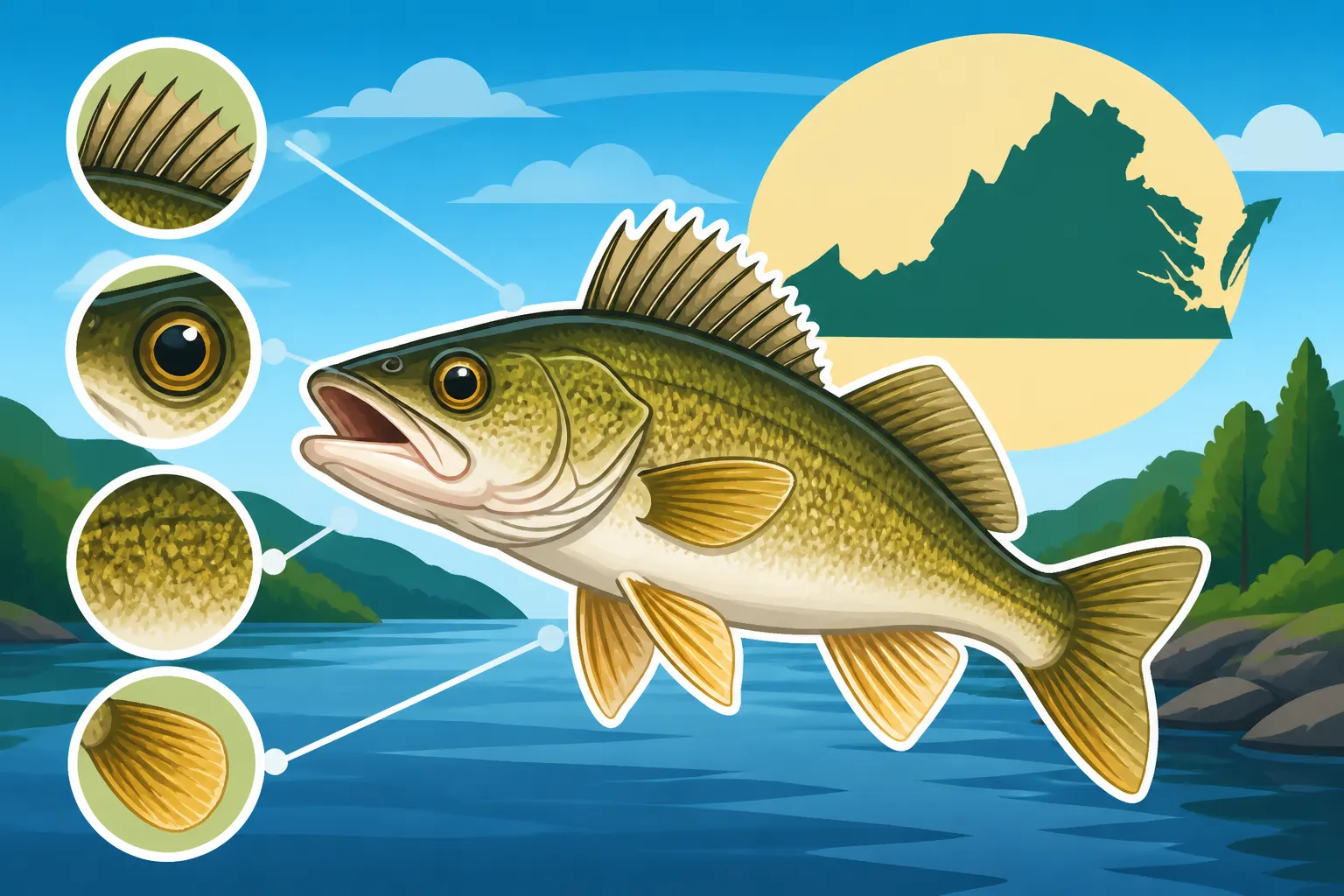
The very name "walleye" gives you the biggest clue! Their eyes are probably the most defining feature. They are large, dark, and often have a somewhat cloudy, reflective appearance, almost like a marble. This unique "walleyed" look isn't just for show; it's a specialized adaptation that helps them see incredibly well in low-light conditions, whether that's murky water, deep water, or during twilight hours. They actually have a reflective layer in their eyes called a tapetum lucidum, which is similar to what you see in cats, making them highly efficient nocturnal predators. This is why you often hear about fantastic walleye fishing early in the morning, late in the evening, or even at night. If you’re trying to identify a fish and its eyes seem to glow or reflect light intensely, you're definitely on the right track for a walleye.
It's this ocular characteristic that really helps separate them from other fish you might encounter. While other species have large eyes, none quite match the distinct reflective quality of the walleye's. How to Identify a Walleye is a key skill for any Virginia angler.
Fin-tastic Details: Dorsal Fins and Spines
Moving beyond the eyes, let's look at the fins, specifically the dorsal fins on their back. Walleye have two distinct dorsal fins. The first, located closer to the head, is spiny and generally triangular. The second dorsal fin, positioned directly behind the first, is soft-rayed and usually a bit taller and more rounded. This two-part dorsal fin is quite common among many species, so it's not a unique identifier on its own.
However, here's a crucial walleye identifier: look closely at the spiny dorsal fin. A true walleye will almost always have a distinct, dark spot near the bottom rear of this spiny dorsal fin. It’s often quite prominent, like a thumbprint. This spot is a dead giveaway and is one of the quickest ways to confirm you've got a walleye in your hands, especially when comparing it to a very similar species like a sauger.
Beyond the dorsal fins, also pay attention to the caudal (tail) fin. Walleye typically have a white tip on the lower lobe of their caudal fin. It's usually a pretty clean, distinct white edge. This white tip is another strong identifier, though it might be less pronounced on some individuals or in certain water conditions. These fin characteristics, combined with the eyes, start to build a clear picture of what you're looking for.
Body Shape, Coloration, and Size
While the eyes and fins are great starting points, the overall body shape, coloration, and the general size of the fish provide additional layers of identification that confirm your initial observations.
Slender Silhouette and Camouflage Colors
Walleye have an elongated, torpedo-shaped body. They're built for speed and efficiency in the water, allowing them to chase down prey. They aren't as deep-bodied as a crappie or as stout as some bass species; they're more streamlined. Their coloration is also a fantastic example of natural camouflage, perfectly adapted to their preferred habitats.
Typically, their backs are an olive-green to brown, fading into a golden or brassy yellow on their sides, and eventually a stark white or cream belly. What's more, their sides often display subtle, irregular dark blotches or bars that run vertically. These patterns aren't always super distinct, but they help them blend in perfectly with rocky bottoms, submerged timber, or the low-light conditions they frequent. The exact shade of green or gold can vary quite a bit depending on the specific water body, diet, and even the time of year. For instance, a walleye from a clear, rocky lake might have more pronounced coloring than one from a more turbid river system. These subtle variations just mean you need to look at the whole picture when identifying your catch.
Mouth, Teeth, and Lateral Line Details
Open up a walleye's mouth, and you'll immediately see why they are such effective predators. They possess a mouthful of sharp, needle-like canine teeth, perfectly designed for grasping slippery prey like baitfish. These teeth are quite prominent, especially on the roof of their mouth and along their jaws. Handle with care if you're reaching into their mouth for hook removal! This tooth structure is quite different from many other fish, particularly panfish or catfish, and is another strong identifier. Walleye Fishing in Virginia often means encountering these toothy critters!
The lateral line, which is a sensory organ running along the side of the fish, is also quite visible on a walleye. It typically extends from behind the gill plate all the way to the base of the tail. While most fish have a lateral line, its prominence and the slight arch it often takes can be another subtle clue. All these small details add up to a conclusive identification.
Average Size and Potential for Trophy Catches in Virginia
When it comes to size, walleye in Virginia can vary quite a bit depending on the fishery. Most of the walleye you'll catch will probably fall into the 15-20 inch range, weighing a couple of pounds. However, Virginia waters definitely have the potential to produce some impressive trophy-sized fish. We're talking fish that can push past the 25-inch mark and weigh several pounds. Lakes like Claytor Lake are particularly well-known for their Claytor Lake's Walleye Population: What Anglers Should Know and the opportunity to hook into a truly memorable walleye.
It's always a thrill to land a larger fish, and knowing you've accurately identified a big walleye makes the experience even better. While specific record sizes are dynamic and fluctuate, the consistent presence of good-sized walleye in certain Virginia fisheries is a testament to healthy populations. Many anglers dream of catching that true trophy, and understanding the typical size ranges helps manage expectations and appreciate the ones you do catch.
Differentiating Walleye from Lookalikes in Virginia Waters
This is where things can get a little tricky, and it's often the source of angler confusion. Several fish species in Virginia share some similarities with the walleye, leading to misidentification. Knowing the subtle but critical differences is key to confidently identifying your catch and ensuring you're following regulations.
Walleye vs. Sauger: Spot the Differences
The sauger is probably the most common culprit for mistaken identity when it comes to walleye in Virginia. They are often found in similar habitats and have very similar body shapes and overall coloration. However, there are a few surefire ways to tell them apart.
Let's break down the key differences:
- Dorsal Fin: This is your number one clue! As mentioned earlier, a walleye has a distinct, dark spot on the bottom rear of its spiny dorsal fin. A sauger, on the other hand, does not have this single large spot. Instead, its spiny dorsal fin will typically have several distinct rows of small, dark spots, giving it a more mottled or barred appearance across the entire fin.
- Body Pattern: While both have mottled patterns, a sauger's body tends to have more distinct, saddle-like blotches or bars along its sides, almost like tiger stripes. A walleye's body mottling is usually more irregular and less defined.
- Caudal Fin (Tail): The walleye has that characteristic white tip on its lower caudal fin lobe. A sauger's caudal fin will typically be spotted or plain, without that crisp white tip.
- Pyloric Caeca (Internal): For the truly dedicated (or those cleaning their catch), walleye have 3-5 long, thin pyloric caeca (finger-like projections from the stomach) that are about the length of their stomach. Sauger have 6-9 shorter, stubbier caeca. This is obviously not a field identification method, but it's a definitive internal difference!
Having a good, waterproof fish identification guide, perhaps one you picked up from Amazon, can be a real lifesaver when you're out on the water and need a quick reference. These side-by-side comparisons often make all the difference. Knowing these distinctions is vital, especially since Virginia Fishing Regulations Explained can differ for walleye and sauger in some areas.
Walleye vs. Yellow Perch: Size and Shape Cues
Yellow perch are another common catch in Virginia that can sometimes be confused with juvenile walleye, especially by less experienced anglers. While they belong to the same family (Percidae), there are clear differences:
- Body Shape: Yellow perch are much deeper-bodied and more compressed laterally (side-to-side) compared to the walleye's elongated, streamlined form. Think of a perch as a flatter, more pancake-shaped fish.
- Size: Yellow perch are generally much smaller than walleye. While a trophy perch can be a fantastic catch, even large perch rarely approach the size of an average adult walleye.
- Coloration: Yellow perch have very distinctive dark vertical bars (typically 6-8) that are much more defined and regular than the irregular blotches on a walleye. And, as their name suggests, they have a prominent yellowish or golden body color, especially on their lower flanks and fins, which is often brighter than a walleye's more muted golden-green.
- Mouth: While perch also have small teeth, they lack the prominent canine teeth of the walleye.
Many anglers swear by portable fish scales, easily found on Amazon, to quickly measure and identify their catch against regulations. It's a handy tool to have. When you put a perch and a walleye side-by-side, the differences in body depth and bar patterns are quite striking.
Walleye vs. Pickerel and Pike: Mouth and Body Distinctions
Occasionally, anglers might confuse a walleye with members of the pike family, such as chain pickerel or northern pike, which are also found in some Virginia waters. While they are all predatory fish, their features are quite distinct:
- Snout/Mouth: This is the easiest way to tell them apart. Pickerel and pike have a very distinct, elongated, duck-bill-shaped snout with teeth running all the way down. A walleye has a more conventional, pointed head and mouth, without that extended, flattened snout.
- Body Pattern: Pickerel and pike typically have very characteristic patterns on their bodies. Chain pickerel, for example, have a distinctive chain-like pattern. Pike often have light spots on a dark background. These patterns are very different from the mottled or blotchy appearance of a walleye.
- Dorsal Fin: Pickerel and pike only have one dorsal fin, located very far back on their bodies, close to the tail. Remember, a walleye has two distinct dorsal fins.
- Cheeks: Another good visual cue is that pickerel and pike have fully scaled cheeks and gill covers, whereas a walleye's cheeks are usually only partially scaled, with a more rough, unscaled area.
These differences are pretty dramatic, and once you've seen a pickerel or pike, you'll instantly recognize the contrast with a walleye. Always refer to a reliable Virginia Fishing License Guide if you have any doubts, as regulations for different species can vary widely.
Why Accurate Identification Matters
Beyond the simple satisfaction of knowing what you've caught, accurate fish identification carries significant importance for every angler. It impacts everything from your compliance with the law to the long-term health of our beloved fisheries. It's not just a trivial detail; it's a cornerstone of responsible and ethical fishing.
Understanding Regulations and Catch Limits
This is perhaps the most critical reason for proper identification. Virginia, like all states, has very specific fishing regulations that differ by species. These regulations often include:
- Size Limits (Minimum or Slot Limits): A walleye might have a minimum length you need to abide by, while a sauger or perch might not, or they could have different limits entirely. Catching an undersized fish of a regulated species and keeping it, even by accident, can lead to fines.
- Creel Limits (Daily Bag Limits): The number of fish you're allowed to keep in a single day also varies by species. You might be allowed to keep several perch, but only one or two walleye. Mistaking one for the other could result in over-harvesting, which is a violation.
- Season Dates: Some species might have open and closed seasons, while others are open year-round. Fishing for a species during its closed season, even if you thought it was a different fish, is a serious offense.
The Virginia Department of Wildlife Resources (DWR) sets these rules to manage fish populations sustainably. Ignorance of the law is generally not an excuse if you're caught by a game warden. A good pair of polarized sunglasses, available from Amazon, can help you spot the subtle differences in fin patterns even in bright sunlight, giving you a clearer view for identification before you commit to keeping a fish. Checking the Virginia Fishing Rules Every Angler Should Know before each trip is always a smart move.
Conservation and Sustainable Fishing Practices
Beyond the legal ramifications, accurate identification plays a vital role in conservation. Each species has a unique ecological niche and population dynamics. Misidentifying a fish can lead to unintended over-harvesting of a sensitive species or under-harvesting of a more abundant one. By correctly identifying your catch, you contribute to:
- Accurate Data Collection: When anglers report their catches (if required or via voluntary surveys), correct species identification helps fisheries biologists understand population health and make informed management decisions.
- Protecting Vulnerable Species: If a species has stricter regulations due to lower numbers, proper identification ensures you don't inadvertently keep one that should be returned to the water.
- Promoting Healthy Ecosystems: Sustainable fishing practices, driven by knowledge and respect for each species, ensure that fish populations remain robust for future generations of anglers.
If you're ever in doubt about what you've caught, especially if you think it might be a rare or protected species, the safest bet is to release it carefully. Even getting a handy fishing multi-tool that helps with hook removal from Amazon can make releasing a fish easier and safer for both you and the fish, minimizing stress on your catch. This careful approach embodies the spirit of conservation that many Virginia anglers cherish.
Enhancing Your Angling Knowledge and Success
Finally, and perhaps more personally for you as an angler, accurate identification deeply enriches your fishing experience. When you know exactly what you're targeting and what you've caught, it opens up a whole new world of understanding:
- Improved Techniques: Knowing the specific habits, preferred baits, and habitats of a walleye versus a sauger, for example, allows you to fine-tune your fishing techniques, making you a more effective and successful angler. You'll learn what specific lure patterns or presentations work best for Best Bait for Walleye in Virginia.
- Greater Satisfaction: There's a profound sense of accomplishment that comes from successfully targeting a specific species and then confidently identifying it once it's in your net. It's a validation of your skills and knowledge.
- Deeper Appreciation: Learning about the unique characteristics of each fish, their life cycles, and their role in the ecosystem fosters a deeper respect and appreciation for the natural world around us. This connection is what makes fishing more than just a hobby – it’s a passion.
So, the next time you feel that exciting tug on your line, take a moment. Use the clues we've discussed, observe the eyes, the fins, the body shape, and the mouth. With a little practice, you'll be able to confidently say, "Yep, that's a Virginia walleye!" every time.
| Feature | Walleye | Sauger | Yellow Perch | Pickerel/Pike |
|---|---|---|---|---|
| Eyes | Large, dark, cloudy/reflective ("walleyed") | Large, dark, less reflective | Normal, not reflective | Normal, not reflective |
| Spiny Dorsal Fin | One distinct dark spot on lower rear | Rows of distinct dark spots across entire fin | Clear or slightly dusky, no prominent spots | One dorsal fin, far back on body |
| Caudal (Tail) Fin | Distinct white tip on lower lobe | Spotted or plain, no white tip | Clear or dusky, no white tip | Clear or dusky, no white tip |
| Body Shape | Elongated, streamlined | Elongated, streamlined | Deep-bodied, laterally compressed | Very elongated, torpedo-shaped |
| Body Pattern | Irregular, subtle dark mottling/blotches | More distinct, saddle-like dark blotches/bars | 6-8 prominent dark vertical bars on yellow body | Distinctive chain-like (pickerel) or light spots |
| Mouth/Teeth | Large mouth, prominent canine teeth | Large mouth, prominent canine teeth | Smaller mouth, small teeth, no canines | Elongated "duck-bill" snout, very sharp teeth |
| Cheeks/Gill Cover | Partially scaled, rough unscaled area | Fully scaled, smooth | Fully scaled | Fully scaled |
Disclaimer
This article is for general informational purposes only and does not constitute professional advice. Laws, prices and regulations vary by location and change over time. Consult a qualified professional for guidance on your specific situation.