Best Bait for Walleye in Virginia
There’s nothing quite like the thrill of feeling that distinct "thump" of a walleye taking your bait, especially in Virginia's diverse waters. But let's be honest, standing by the water, staring at a tackle box full of options, and wondering which bait is actually going to entice one of these elusive predators can be genuinely frustrating. This guide is here to cut through the confusion and equip you with the knowledge of the best baits and techniques to consistently hook walleye across the Old Dominion.
Understanding Walleye Behavior in Virginia
To truly master walleye fishing, you first have to get inside their heads, so to speak. Walleye are predators, but they're also masters of efficiency. They don't expend energy needlessly, and they're highly attuned to their environment. Understanding their natural rhythms and preferences in Virginia's lakes and rivers is the first step to choosing the right bait at the right time.
Seasonal Movements and Feeding Patterns
Walleye are constantly on the move, and their migration patterns are heavily influenced by water temperature, available forage, and spawning instincts. In early spring, as ice thaws and water temperatures climb into the 40s and low 50s, walleye migrate to shallower areas, often around rocky shoals or current breaks, to spawn. During this period, they can be aggressive, but also easily spooked. After the spawn, they'll often scatter and move to slightly deeper water to recover, but still feed actively. Think of it like a post-marathon hunger.
As summer progresses and water temperatures rise into the 60s and 70s, walleye typically retreat to deeper, cooler waters, often congregating around structural elements like humps, ledges, and submerged timber. Their feeding becomes more sporadic, often concentrated during low-light conditions like dawn, dusk, or even throughout the night. Virginia Fishing Seasons Explained covers some of these broader trends. Come fall, as temperatures drop again, walleye enter a pre-winter feeding frenzy, bulking up for the cold months. They'll move back into shallower areas, actively chasing baitfish, and can be quite aggressive. And even in winter, under the ice, they're still catchable, though their metabolism slows down, requiring a more subtle presentation.
Preferred Habitats and Water Conditions
Walleye are often called "low-light feeders" for a good reason. Their large, light-sensitive eyes are perfectly adapted for seeing in dim conditions, giving them an advantage over baitfish during twilight hours, cloudy days, or in stained or murky water. This doesn't mean you can't catch them in bright sunlight, but it often means you need to present your bait deeper or in areas with more shade and cover.
In Virginia, you'll find walleye thriving in larger reservoirs like Claytor Lake, Lake Anna, and Smith Mountain Lake, as well as some of the state's bigger river systems. They're particularly fond of areas with distinct structure – drop-offs, submerged roadbeds, rock piles, humps, and points. Look for transitions, where deep water meets shallow, or where soft bottom meets hard bottom. They'll often stage on the deeper side of these structures, moving up to feed. Understanding these habitat preferences, especially in spots like Claytor Lake's Walleye Population: What Anglers Should Know, will dramatically improve your bait presentation success.
Top Live Baits for Virginia Walleye
When it comes to consistently catching walleye, especially when they're being finicky, live bait often reigns supreme. There’s just something about the natural movement, scent, and texture of a real baitfish or worm that a walleye can’t resist. They are programmed to strike at natural forage, and live bait mimics that perfectly.
Minnows and Shiners
If there's a king of walleye live bait, it's undoubtedly the minnow or shiner. These are the natural forage for walleye in most bodies of water, and their erratic swimming action is a powerful trigger. Various species work well, including golden shiners, fathead minnows, and emerald shiners. The key is to keep them lively and present them naturally.
You can rig minnows in several ways. A common and highly effective method is to use a plain hook (size 4 to 8, depending on minnow size) through both lips or lightly through the back, behind the dorsal fin, paired with a small split shot or bottom bouncer to get it to the desired depth. Drifting these rigs over structural elements or slowly trolling them can be deadly. When walleye are sluggish, a minnow presented subtly can often draw a strike when artificials won't. Virginia Walleye Fishing Tips for Beginners often highlight the effectiveness of live bait.
Nightcrawlers and Leeches
While minnows are often the first choice, don't underestimate the power of a juicy nightcrawler or a lively leech. Nightcrawlers, in particular, are universally loved by many freshwater species, and walleye are no exception. Their wiggly action and strong scent trail can draw in curious walleye, especially in stained water where visual cues are less effective.
For nightcrawlers, a popular presentation is a "crawler harness" or a simple plain hook (again, size 4-6) with a piece of the worm threaded on, leaving a tail to wiggle. You can fish these under a bobber, drift them along the bottom, or slowly troll them. Leeches, though perhaps less common in Virginia's bait shops compared to minnows, are absolute walleye magnets when available. They are incredibly tough, stay alive a long time on the hook, and their undulating movement is irresistible. Hook them once through the sucker end or just below the head and fish them similarly to nightcrawlers. If you're looking for specific rigging gear, you'll find a wide selection of hooks and weights suitable for live bait on Amazon.
Why Live Bait Excels for Walleye
The primary reason live bait often outperforms artificials, particularly for hesitant walleye, lies in its authenticity. Live bait provides a full sensory experience: visual appeal with natural movement, a strong scent trail that fish can detect from a distance, and a soft, natural texture that encourages a walleye to hold on longer, giving you more time to set the hook. This is especially crucial in clear water or when fish are pressured.
Furthermore, live bait often allows for a slower, more deliberate presentation. You can suspend a minnow or a nightcrawler just off the bottom, letting its natural movements do the work, which can be exactly what a finicky walleye wants. This "subtlety factor" is a game-changer when conditions are tough, or when you're targeting larger, more experienced walleye that have seen every lure in the book. It appeals to their instinct rather than triggering a reaction strike.
Effective Artificial Lures for Walleye Anglers
While live bait has its undeniable advantages, artificial lures offer versatility, durability, and the ability to cover water more efficiently. For aggressive walleye or when you're actively searching for schools, artificials can be incredibly productive, often triggering reaction strikes that live bait might not. They're also easier to transport and maintain for a long day on the water.
Jigs and Soft Plastics
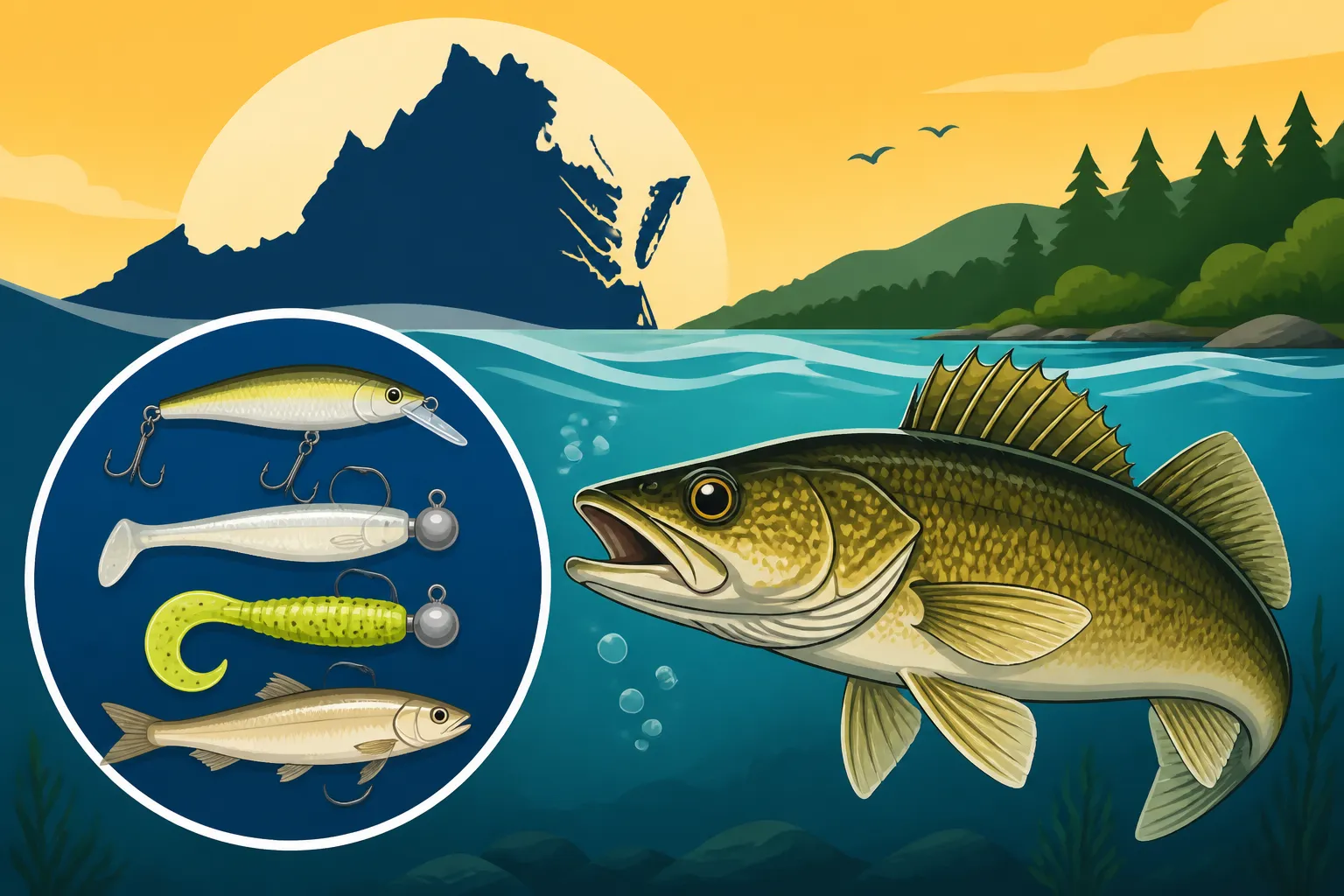
Jigs are arguably the most versatile artificial lure for walleye and a staple in many Virginia anglers' tackle boxes. They come in a myriad of weights, colors, and head designs, allowing you to adapt to almost any depth or current condition. Pairing a jig head with a soft plastic body is where the magic truly happens. Curly-tail grubs, paddle-tail swimbaits, and fluke-style soft plastics are all proven walleye producers.
The retrieve for jigs is key: a lift-and-drop motion, a slow drag, or a controlled bounce off the bottom can all be effective. The weight of the jig should be just enough to maintain bottom contact without snagging excessively. Popular colors for walleye include chartreuse, pearl, white, natural shad, and purple. If you're building out your jig collection, Amazon offers an incredible variety of jig heads and soft plastic combinations to experiment with, from small finesse jigs to heavy current-cutters. These lures are particularly effective when targeting walleye holding tight to structure or when you're trying to replicate a small baitfish.
Crankbaits and Trolling Plugs
When walleye are actively chasing baitfish in open water or along defined structural breaks, crankbaits and trolling plugs become indispensable. These lures excel at covering large areas quickly, and their built-in wobbling and diving actions are irresistible to hungry walleye. Different crankbait styles, such as shallow-diving, deep-diving, lipless, and suspending models, allow you to target various depths and retrieve speeds.
Trolling is a popular and highly effective method for presenting crankbaits, especially in larger bodies of water like those where Walleye Fishing on Claytor Lake is popular. By varying your boat speed and lure depth (often aided by lead core line, planer boards, or downriggers), you can cover vast stretches of water and intercept actively feeding walleye. Casting and retrieving crankbaits is also effective, particularly when targeting specific points, humps, or weed lines. Choose colors that mimic local baitfish or bright, contrasting patterns in stained water.
Spinner Rigs and Blade Baits
Spinner rigs, often called "walleye spinners" or "worm harnesses," combine the flash and vibration of a spinning blade with the natural appeal of live bait, typically a nightcrawler. This hybrid approach is incredibly effective, especially when trolled slowly or drifted. The blade creates a visual attraction and vibration that draws walleye in, while the trailing nightcrawler provides the scent and natural profile they expect.
Blade baits, on the other hand, are compact, metal lures that vibrate intensely on the retrieve. They are excellent for vertical jigging over schools of fish or for casting and retrieving with a series of lifts and drops. Their heavy weight allows them to sink quickly, making them ideal for reaching deep-holding walleye. The intense vibration can trigger aggressive strikes, particularly in cooler water when walleye are less likely to chase. Both spinner rigs and blade baits are excellent search tools, allowing you to cover water and pinpoint active fish.
Choosing the Right Bait for Different Scenarios
Selecting the "best" bait isn't a one-size-fits-all answer. The most successful walleye anglers are those who can quickly adapt their bait choice and presentation to the conditions they face on any given day. It's about being flexible and understanding the nuances of how different factors influence walleye behavior and, consequently, their preference for bait.
Bait Selection by Water Clarity and Depth
Water clarity plays a huge role in walleye bait choices. In clear water, where walleye rely heavily on their sight, natural colors and more subtle presentations tend to be more effective. Think clear or natural-colored soft plastics, natural minnow patterns on crankbaits, or live bait that perfectly mimics the local forage. The walleye can see your line and your bait, so everything needs to look as natural as possible. Here, a well-rigged How to Identify a Walleye minnow can be unbeatable.
Conversely, in stained or murky water, scent and vibration become paramount. Bright, contrasting colors like chartreuse, orange, and firetiger in jigs and crankbaits can stand out more effectively. Lures that create a lot of vibration, like spinnerbaits or rattling crankbaits, help walleye locate them using their lateral line. Live bait, especially a juicy nightcrawler, also shines in murky conditions due to its strong scent trail. When it comes to fishing at various depths, you need baits that can get there efficiently. Heavy jigs or deep-diving crankbaits are essential for reaching walleye in 20, 30, or even 40 feet of water, while lighter jigs or shallow-running crankbaits are perfect for shallower flats or rocky shorelines.
Adapting Your Approach for Day vs. Night Fishing
Walleye are notorious for their low-light feeding habits, which means your bait strategy might need to shift significantly between day and night. During the day, especially under bright sun, walleye often retreat to deeper, darker waters or tight cover. This calls for baits that can effectively target these locations – think vertical jigging with jigs or blade baits, or trolling deep-diving crankbaits along main lake contours. Subtle live bait presentations can also be very effective when fish are tucked away.
As dusk settles and into the night, walleye often move into much shallower waters, even just a few feet deep, to feed on baitfish that are also moving up. This is prime time for casting shallow-running crankbaits, twitching suspending jerkbaits, or even slowly retrieving spinnerbaits. The darkness gives them confidence, and they become far more aggressive. Glow-in-the-dark or UV-enhanced lures can also be productive during night fishing, as they provide a subtle visual cue that can be seen even in minimal light. Don't forget, walleye can be found in various Virginia's Best Walleye Fishing Spots and many of these locations offer excellent night fishing opportunities.
Essential Gear for Walleye Bait Presentation
Having the right bait is only half the battle; proper presentation requires the right gear. For jigging and casting, a medium-light to medium power spinning rod, 6'6" to 7' in length, paired with a sensitive spinning reel spooled with 6-10 lb braided line (with a fluorocarbon leader for stealth) is a fantastic all-around setup. The braid provides excellent sensitivity for feeling subtle walleye bites, and the fluorocarbon leader is virtually invisible underwater.
For trolling, especially with heavier crankbaits or bottom bouncers, a medium-heavy power casting rod, 7' to 8' in length, with a line counter baitcasting reel spooled with 10-15 lb monofilament or braided line is ideal. Monofilament offers some stretch, which can be forgiving when trolling, while braid offers incredible strength and sensitivity. Don't overlook essential terminal tackle like quality hooks, swivels, and sinkers. Having a variety of these on hand, which you can easily find on Amazon, ensures you're prepared for any rigging scenario. Ultimately, matching your gear to your chosen bait and technique will maximize your chances of success.
| Bait Type | Best Use Case | Preferred Conditions | Pros | Cons |
|---|---|---|---|---|
| Minnows/Shiners | Finicky fish, slow bite, clear to stained water | Cool to moderate water temps, all depths | Natural action, scent, texture; high success rate | Requires care, less durable, can be expensive |
| Nightcrawlers | General fishing, stained water, bottom presentations | Any water temp, slow current, deep | Strong scent, universally appealing, durable | Attracts non-target species, can be messy |
| Leeches | Finicky fish, tough conditions | Cool water, all depths | Extremely durable, very lively, strong scent | Can be hard to find, more expensive |
| Jigs (Soft Plastic) | Vertical jigging, casting, target structure | All water temps, varied clarity | Versatile, efficient, great feel, varied colors | Requires angler skill, scent lacking |
| Crankbaits | Trolling, covering water, active fish | All water temps, open water/structure | Excellent search bait, covers large areas, durable | Less subtle, can be depth-specific |
| Spinner Rigs | Trolling, drifting, combining live bait appeal | All water temps, active to neutral | Flash & vibration + natural bait, highly effective | Can twist line, requires live bait |
| Blade Baits | Vertical jigging, reaction strikes | Cooler water, deep or shallow | Strong vibration, fast sink rate, triggers strikes | Requires aggressive fish, no scent |
This article is for general informational purposes only and does not constitute professional advice. Laws, prices and regulations vary by location and change over time. Consult a qualified professional for guidance on your specific situation.