How Virginia Anglers Tell a Brook Trout From a Rainbow Trout
You're out on a beautiful Virginia trout stream, the water is cool and clear, and you've just landed a stunning fish. As you admire its vibrant colors, a question might pop into your head: Is this a native brook trout or a well-fed rainbow trout? It’s a common moment of confusion for many anglers, myself included, and understanding the subtle (and sometimes not-so-subtle) differences is key to appreciating our local fisheries and adhering to regulations. This guide will walk you through the distinct features that separate Virginia's brook trout from its rainbow trout, helping you confidently identify your catch.
The Resplendent Brook Trout: Virginia's Native Jewel
The brook trout, Salvelinus fontinalis, holds a special place in the hearts of Virginia anglers. It's our only native freshwater trout species, a true symbol of the pristine mountain streams and cool, oxygen-rich waters found in the western parts of the Commonwealth. When you encounter a brook trout, you're looking at a piece of living Virginia heritage.
Signature Markings and Coloration
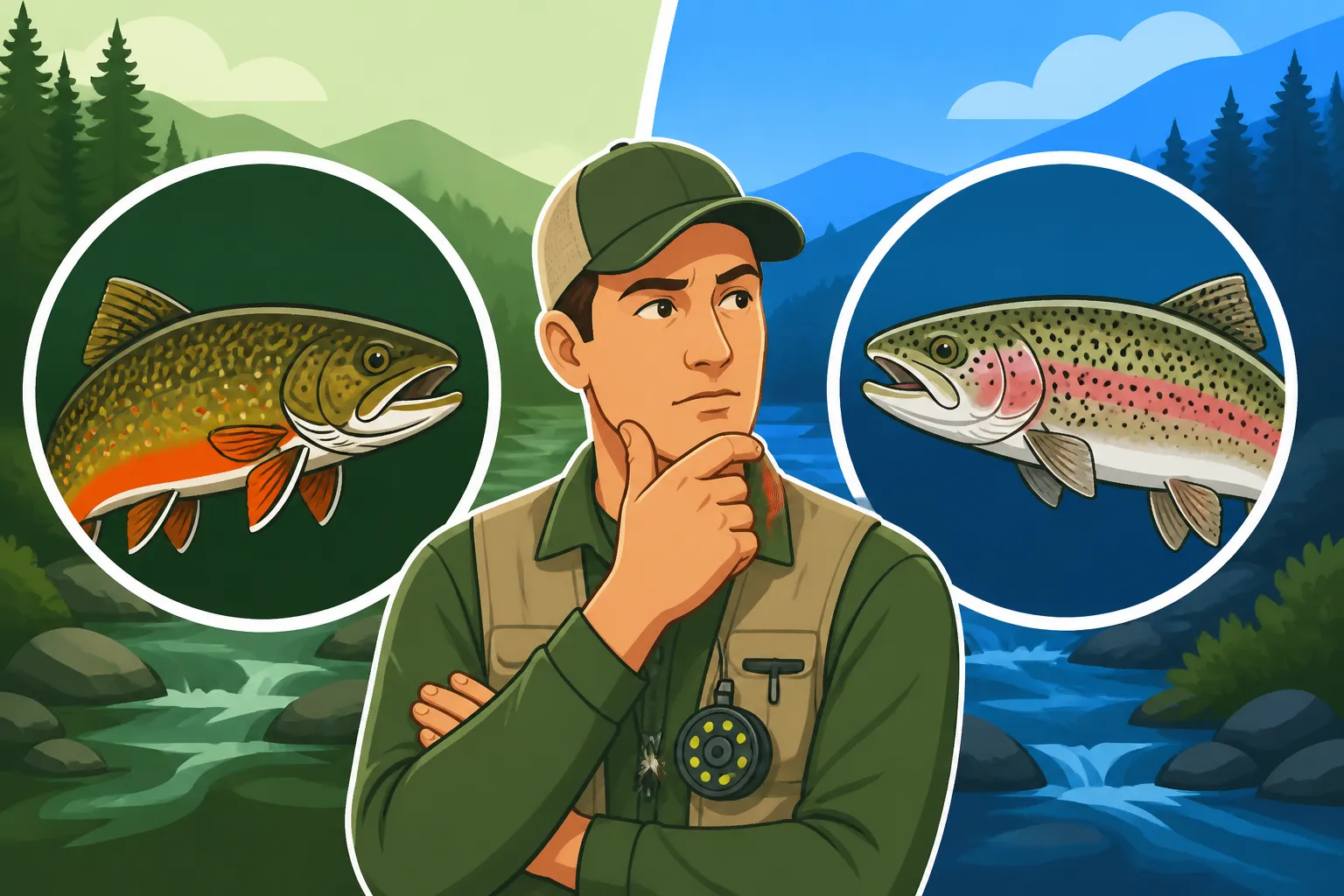
The most striking feature of a brook trout is its incredibly intricate and beautiful coloration, often described as jewel-like. Their backs are usually a dark, mottled green, almost black, with distinctive worm-like patterns (known as vermiculations) that extend onto their dorsal fin. These aren't distinct spots; rather, they look like labyrinthine squiggles. Down their flanks, you'll see lighter, often cream-colored spots, and among these, you'll find vibrant red spots, each encircled by a halo of blue. These red spots with blue halos are a dead giveaway for a brook trout. No other trout in Virginia exhibits this specific combination.
Their sides can range from olive green to a brilliant gold, sometimes even displaying purplish hues, especially on breeding males. The belly, particularly towards the tail, often turns a vivid orange or even reddish during spawning season, a truly breathtaking sight. This mosaic of colors is why they are so beloved and easily distinguishable once you know what to look for.
Fin and Tail Clues
Pay close attention to the fins of a brook trout, especially the lower fins. Their pectoral, pelvic, and anal fins are usually dusky or reddish-orange, and critically, they are edged with a prominent white or cream-colored band, followed by a thin black line, then the colored fin itself. This trio of white-black-color on the leading edge of the lower fins is another unmistakable characteristic of the brook trout. It’s like they're wearing little white socks!
The tail fin of a brook trout is typically square or only very slightly forked. It lacks the distinct spots that you might find on a rainbow trout's tail. The overall body shape is often described as more streamlined, built for navigating the swift currents of mountain streams. Brook Trout Identification for Virginia Anglers provides even more detail on these features.
Size and Body Shape
Brook trout in Virginia's native wild streams are generally smaller than their rainbow counterparts. It’s not uncommon to catch brookies in the 6-10 inch range, with anything over 12 inches considered a trophy in many wild systems. They are typically more slender and delicate in appearance, reflecting their ancestral life in high-gradient, nutrient-poor mountain headwaters. This smaller stature is part of their charm; it means you're often fishing in incredibly scenic, wild places where every fish is a hard-earned reward. They don’t pack on the bulk quite like some stocked fish can.
Spotting the Vivid Rainbow Trout: Common Distinctions
Rainbow trout, Oncorhynchus mykiss, are widely distributed across Virginia, primarily through stocking programs, though some wild populations exist in specific waters. They are hardy fish, known for their aggressive strikes and spirited fights, making them a favorite target for many anglers.
Iridescent Hues and Lateral Line
The rainbow trout earns its name from the prominent, iridescent pink or red stripe that runs horizontally along its lateral line, from the gill plate all the way to the tail. This "rainbow" band can vary in intensity, from a subtle blush to a brilliant, almost glowing stripe, especially on larger, healthier fish. Their overall body color tends to be a lighter olive green or bluish-green on the back, fading to silvery sides and a white belly.
Unlike brook trout, rainbow trout have distinct, small black spots scattered across their back, sides, and even on their head. These spots are usually round or oval, sharp-edged, and numerous. If you see a fish with a clear pink stripe and a smattering of black spots, you’re almost certainly looking at a rainbow. Rainbow Trout vs Brown Trout in Virginia: How to Tell Them Apart can help distinguish them from another common stocked species.
Dorsal Fin and Tail Spots
One of the most reliable ways to differentiate a rainbow from a brook trout, beyond the lateral stripe, is to examine its dorsal fin and tail. The dorsal fin of a rainbow trout will typically be covered in distinct, evenly spaced black spots. This is a key contrast to the brook trout's vermiculated dorsal fin.
Furthermore, the tail fin of a rainbow trout is noticeably forked and, like the dorsal fin, is usually covered with distinct black spots arranged in rows. This spotted tail is a strong indicator that you've caught a rainbow. Compare this to the brook trout's generally unspotted, square tail, and you have another clear identifier.
General Appearance and Build
Rainbow trout generally have a more robust, "torpedo-like" body shape compared to brook trout. Because they are often stocked and thrive in a wider range of habitats, they can grow considerably larger, with many anglers regularly catching rainbows in the 12-20 inch range in popular stocked waters. Their overall silvery appearance, combined with the pink stripe and black spots, gives them a very different aesthetic than the darker, more intricately patterned brook trout. If you're fishing a put-and-take stocked stream, the odds are heavily in favor of catching a rainbow. For gear to help with your catch, including nets and specialized lures, you can always check out what's available on Amazon.
Beyond the Spots: Habitat and Behavioral Clues
While physical markings are your primary tools for identification, understanding where these fish prefer to live and how they behave can offer valuable secondary clues, especially when you're wading through ambiguous visual cues.
Preferred Waters and Stream Types
Brook trout are quintessential cold-water specialists. They thrive in small, pristine mountain streams, headwaters, and spring-fed creeks with abundant shade, high oxygen levels, and water temperatures that rarely exceed 68°F (20°C). These are often the higher-elevation streams with dense forest canopies, tumbling waterfalls, and plenty of rocky cover. If you're deep in the Blue Ridge Mountains, casting tiny dry flies into a narrow, clear creek, the fish you catch are most likely native brookies. Wild Trout Stream Rules in Virginia are often specific to these sensitive environments.
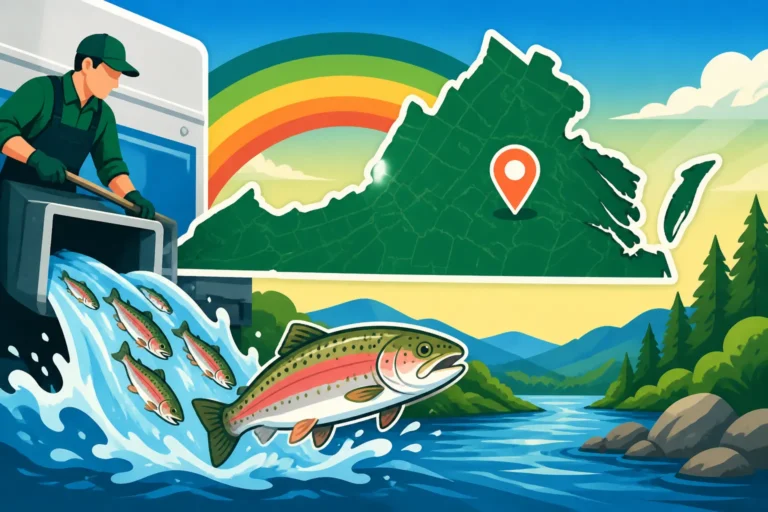
Rainbow trout, on the other hand, are more adaptable. While they still prefer cool, clean water, they can tolerate slightly warmer temperatures and are often found in larger streams, rivers, and even lakes and reservoirs. They are the primary species stocked by the Virginia Department of Wildlife Resources (DWR) in many of the state’s put-and-take trout waters, making them common in easily accessible creeks and rivers throughout the state. If you’re fishing a wider, more accessible river that sees regular stocking, chances are you’ll encounter more rainbows. Knowing Virginia Stocked Trout Season Guide can give you an idea of when and where these fish are most prevalent.
Diet and Feeding Habits
Both species are opportunistic feeders, but their preferred habitats influence their diets. Brook trout in their native streams often feed heavily on aquatic insects (nymphs, larvae), small terrestrial insects that fall into the water (ants, beetles, grasshoppers), and occasionally small crustaceans or minnows. Their feeding can be quite aggressive despite their small size, eagerly rising to a well-presented dry fly or darting out from cover for a nymph.
Rainbow trout have a broader diet due to their more varied habitats. They will also gorge on aquatic and terrestrial insects, but in larger waters, they might key in on small baitfish, crayfish, and even larger invertebrate species. Stocked rainbows, especially, can be less selective initially, eagerly taking powerbait, corn, or conventional lures as they adjust to their new environment. This can make them a great target for beginners, and for those looking to expand their tackle box, a quick search on Amazon for "trout fishing lures Virginia" will yield plenty of options.
Where You're More Likely to Find Each
Think of it this way: if you're hiking for miles up a steep, narrow trail to reach a remote, high-altitude stream, you're almost certainly targeting brook trout. These are often designated as "wild trout waters" or "native brook trout streams." Best Trout Streams in Virginia will often distinguish between these types of fisheries.
If you're pulling into a paved parking lot at a popular riverside access point, and you see signs indicating it's a "stocked trout stream," you're highly likely to encounter rainbow trout, especially during the stocking season. Of course, there are exceptions; some larger rivers like parts of the Jackson River or the upper James River can hold healthy populations of both, but generally, the smaller, wilder the stream, the higher the chance of it being a brook trout domain.
Why Knowing the Difference Matters for Virginia Anglers
Beyond simple curiosity, correctly identifying your catch is crucial for responsible angling in Virginia. Regulations, conservation efforts, and even your personal fishing ethos can depend on it.
Conservation and Native Species Protection
Virginia's native brook trout populations face various threats, including habitat degradation, warming water temperatures, and competition from non-native species like rainbow and brown trout. As a result, many wild brook trout streams have special regulations designed to protect them, often involving catch-and-release only, artificial lures only, or specific harvest limits. By knowing you've caught a brook trout, you can ensure you're following these guidelines and contributing to the conservation of this precious native species. Handling these delicate fish with wet hands and releasing them quickly and carefully is paramount.
Understanding Fishing Regulations
Fishing regulations for trout in Virginia can vary significantly depending on the species and the specific body of water. For instance, stocked trout waters might have generous creel limits and allow bait fishing, while a nearby wild trout stream, teeming with brookies, might be strictly catch-and-release with artificial lures only. Catching a brook trout in a catch-and-release only section means you must return it to the water unharmed, whereas a rainbow trout might be fair game for your cooler. Virginia Fishing Regulations Explained is an essential resource for any angler, and knowing the fish you've caught is the first step to understanding which rules apply. Even for kids fishing, knowing the species can be a fun learning experience while teaching them responsible angling. Fishing License Rules for Kids in Virginia apply here too.
Catch and Release Considerations
For many anglers, especially those who appreciate the wildness of brook trout, catch-and-release is the preferred method, regardless of regulations. These fish are often smaller, more fragile, and vital to their delicate ecosystems. Knowing you've caught a brook trout encourages extra care in handling, minimizing stress, and ensuring its survival. Rainbow trout, while beautiful and sporting, are often part of a put-and-take fishery, meaning they are stocked specifically to be harvested. Understanding this distinction can help you decide whether to keep a fish for dinner or gently release it.
Ultimately, being able to tell a brook trout from a rainbow trout enhances your entire fishing experience. It deepens your connection to the water, encourages responsible stewardship, and allows you to truly appreciate the unique beauty of each species. Now, go forth with your newfound knowledge and enjoy the incredible trout fishing Virginia has to offer!
Quick Reference Guide: Brook Trout vs. Rainbow Trout
Here's a handy table summarizing the key identification features:
| Feature | Brook Trout (Salvelinus fontinalis) | Rainbow Trout (Oncorhynchus mykiss) |
|---|---|---|
| Back/Sides | Dark, mottled green/black with worm-like patterns | Olive green/bluish-green, silvery sides |
| Spots | Light spots, red spots with blue halos (unique) | Numerous small, distinct black spots all over |
| Lateral Stripe | Absent | Prominent pink/red iridescent stripe (rainbow) |
| Lower Fins | White leading edge, then thin black line, then color | Usually dusky or clear, no distinct white edge |
| Dorsal Fin | Vermiculated (worm-like patterns) | Distinct black spots |
| Tail Fin | Square or slightly forked, generally unspotted | Noticeably forked, distinct black spots |
| Typical Size | Smaller (6-12 inches in wild streams) | Generally larger (10-20 inches in stocked waters) |
| Habitat | Cold, clear, high-gradient mountain streams | Adaptable, larger streams, rivers, lakes |
| Native to VA | Yes | No (mostly stocked, some wild populations) |
Disclaimer
This article is for general informational purposes only and does not constitute professional advice. Laws, prices and regulations vary by location and change over time. Consult a qualified professional for guidance on your specific situation.