Virginia Bass Fishing: Largemouth, Smallmouth, Spotted, and Alabama Bass
Many an angler has pulled a feisty bass from Virginia's abundant waters, only to scratch their head and wonder, "What kind of bass is this, anyway?" It's a common dilemma, given our state's rich diversity of black bass species, each with its own quirks, preferred haunts, and even subtly different fishing regulations. This comprehensive guide is here to untangle that confusion, providing you with everything you need to know about largemouth, smallmouth, spotted, and even the often-misunderstood Alabama bass, so you can confidently identify your catch and improve your fishing strategy across the Commonwealth.
The Diverse World of Virginia Bass Species
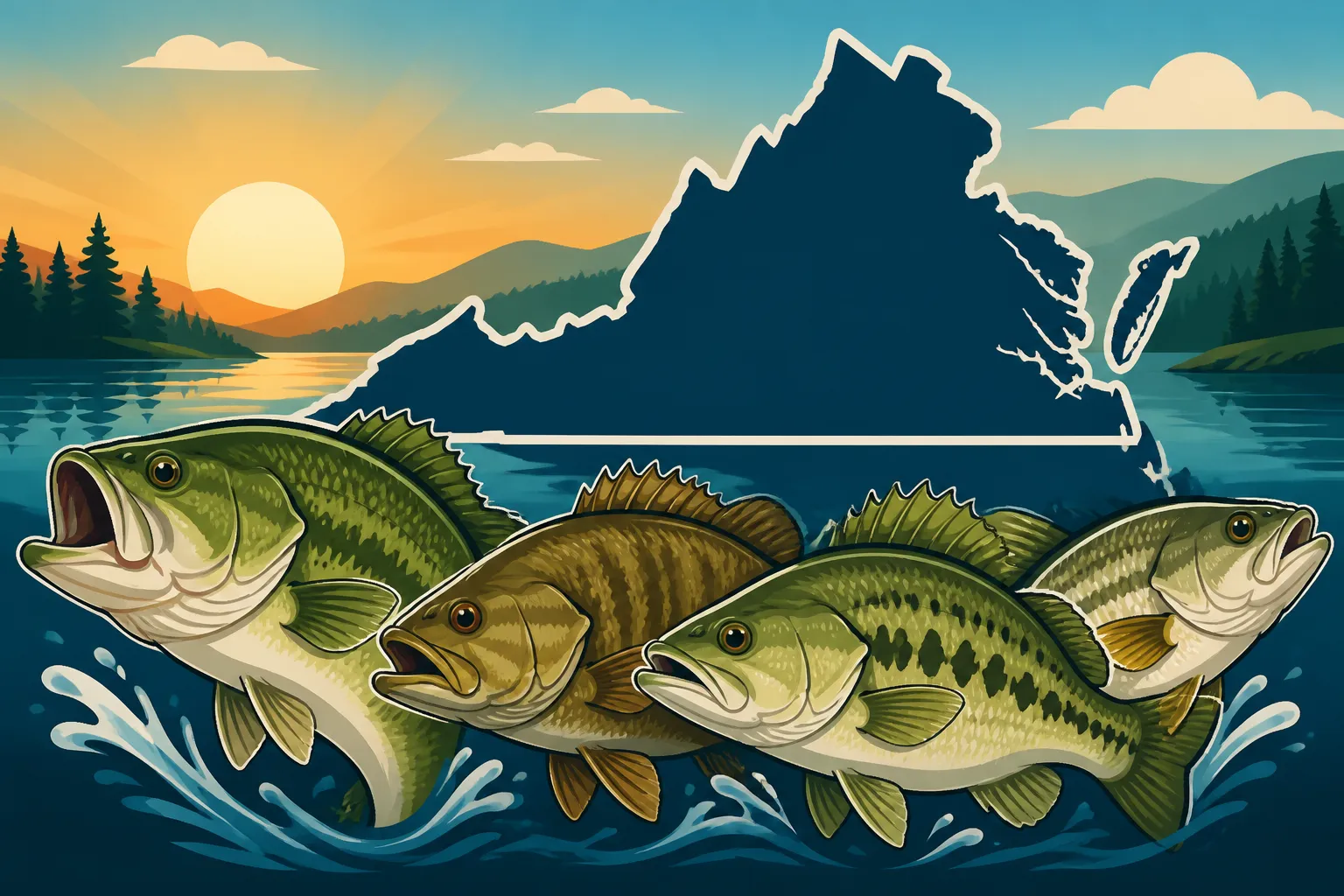
Virginia truly is a bass angler's paradise, offering a remarkable array of black bass species that thrive in our freshwater lakes, rivers, and even some tidal waters. While most folks are familiar with the classic largemouth and smallmouth, the presence of spotted and Alabama bass adds an exciting layer of complexity and challenge. Understanding the unique characteristics of each species is the first step toward becoming a more effective and responsible angler. You'll quickly learn that a technique that works wonders for a largemouth hiding in thick cover might not even get a glance from a smallmouth battling currents in a rocky river.
Beyond the Basics: Understanding Black Bass Distinctions
It's easy to lump all bass into one category, especially when they're putting a bend in your rod. However, the term "black bass" actually refers to a group of closely related species within the sunfish family, Centrarchidae, specifically the genus Micropterus. In Virginia, this means we're primarily talking about largemouth, smallmouth, and two members of the "spotted bass" complex: the native spotted bass and the introduced Alabama bass. Each one has evolved to thrive in slightly different environments, dictating their behavior and making them exciting targets for anglers who know how to adapt their approach.
Knowing the subtle differences in their body shape, mouth structure, and coloration isn't just for bragging rights; it's crucial for understanding where to find them and what baits they might prefer. For instance, the robust, ambush predator nature of the largemouth contrasts sharply with the sleek, current-loving physique of the smallmouth. The spotted and Alabama bass often present a greater identification challenge, sometimes causing anglers to confuse them with their more famous cousins, but a keen eye for detail can make all the difference. These distinctions are especially important when considering slot limits and daily creel limits that can vary by species in certain waters.
Why Accurate Identification Matters for Anglers
Beyond the sheer satisfaction of knowing your fish, accurate identification plays a vital role in responsible angling. First and foremost, fishing regulations, including size and creel limits, can sometimes vary depending on the bass species and the specific body of water. Mistaking a spotted bass for a largemouth, for example, could inadvertently lead to a violation if you're not paying attention to local rules. Virginia's Department of Wildlife Resources (DWR) puts a lot of effort into managing these fisheries, and adhering to their guidelines helps ensure healthy populations for future generations.
Furthermore, knowing which species you're targeting allows you to refine your techniques and gear. You wouldn't use a heavy jig in dense lily pads for a smallmouth that prefers clear, rocky bottom, would you? Understanding each bass's preferred habitat, diet, and behavior helps you select the right lures, presentation, and fishing spots. This knowledge not only increases your chances of success but also enhances your appreciation for the complex ecosystems where these incredible fish live. It turns fishing from a guessing game into a more strategic and rewarding pursuit.
Largemouth Bass: The Virginia Favorite
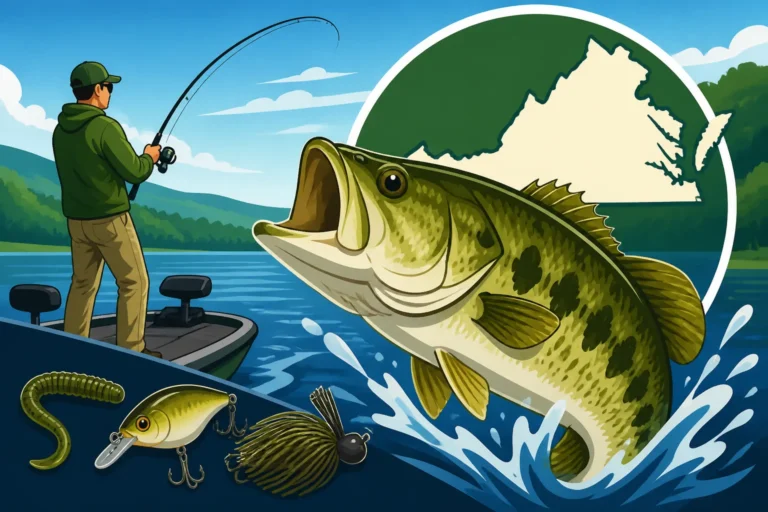
Ah, the largemouth bass! This iconic sport fish is undoubtedly the most popular target for freshwater anglers across Virginia, and for good reason. They are aggressive, put up a fantastic fight, and are widely distributed throughout our lakes, ponds, and slower-moving rivers. Their chunky build and cavernous mouth are instantly recognizable, and catching a true Virginia hog is a rite of passage for many anglers. If you've spent any time fishing in the Commonwealth, chances are you've tangled with one of these green-sided bruisers.
Identifying Virginia's Largemouth Bass
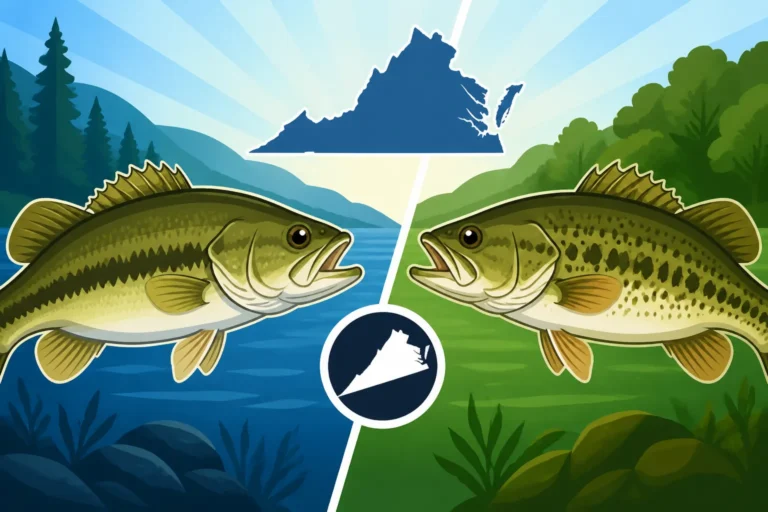
The largemouth bass (Micropterus salmoides) is generally the easiest of the black bass species to identify. Its most defining characteristic, as its name suggests, is its large mouth, where the hinge of the jaw extends noticeably past the rear edge of the eye when the mouth is closed. Their body is typically a dark green on the back, fading to lighter green or white on the belly, often with a prominent, jagged horizontal stripe or a series of dark blotches running along its sides. This lateral line can sometimes be broken or faded, especially in older fish or those from very clear water.
Another key identifier is the deep notch in their dorsal fin, almost appearing as two separate fins. Their scales feel relatively large and smooth to the touch compared to some other fish. For a detailed breakdown, you might want to check out How to Identify a Largemouth Bass in Virginia. They tend to have a more elongated, football-like body shape when compared to the smallmouth, which is often more bronze and compact. Understanding these visual cues is crucial, especially in waters where multiple bass species coexist, preventing confusion and ensuring you comply with specific regulations.
Preferred Habitats and Behavior
Largemouth bass are the kings of cover. They absolutely thrive in warm, often murky waters with abundant aquatic vegetation, submerged timber, rock piles, docks, and other structures that provide ambush points. Think about any classic Southern reservoir or pond, and you'll picture perfect largemouth habitat. In Virginia, lakes like Smith Mountain Lake, Lake Anna, and Kerr Lake are prime examples of excellent largemouth fisheries, boasting expansive shallow flats, deep ledges, and countless submerged brush piles.
Their behavior is classic ambush predator. Largemouth will often lie in wait, hidden in thick cover, ready to dart out and engulf unsuspecting prey. They are highly territorial and will aggressively strike at anything that invades their space or looks like an easy meal. This makes them incredibly fun to fish for, as they often hit lures with explosive force. Their diet is incredibly varied, including baitfish, crawfish, frogs, and even small birds or mammals if the opportunity arises. Understanding this predatory instinct helps anglers choose the most effective lures and presentations to trigger a strike.
Top Baits and Techniques for Largemouth
When it comes to tempting largemouth bass, versatility is key, but some baits and techniques are consistently productive. Soft plastics, such as Texas-rigged worms, Senkos, and creature baits, are absolute staples, allowing you to probe thick cover where these fish love to hide. For those times when bass are actively feeding or schooling, crankbaits, spinnerbaits, and chatterbaits can be incredibly effective for covering water and eliciting reaction strikes. Topwater lures like poppers and frog imitations provide some of the most exciting bites, especially during low light conditions or when bass are feeding on the surface around dense vegetation.
Don't forget jigs, which are fantastic for mimicking crawfish and working deeper structure. Heavy braided line and a medium-heavy to heavy action rod are often preferred, especially when fishing in dense cover where you need to muscle a fish out. You can find a huge variety of these essential baits and tackle on Amazon, making it easy to stock up. For more detailed insights into what gets largemouth biting, be sure to read Best Bait for Largemouth Bass in Virginia. Techniques often involve casting close to cover, letting your bait sit, twitching it, and then slowly retrieving, trying to entice that explosive strike.
Smallmouth Bass: River Fighters and Clear Water Dwellers
While the largemouth enjoys widespread fame, the smallmouth bass (Micropterus dolomieu) holds a special place in the hearts of many Virginia anglers, particularly those who prefer the challenge of river fishing or clearer, rockier lakes. Known for their incredible fighting power and acrobatic leaps, smallmouth bass often out-fight fish twice their size. They are true bronze-backed warriors, and hooking into one in a swift current is an experience unlike any other.
Identifying Virginia's Smallmouth Bass
Smallmouth bass are often called "bronze-backs" for their distinctive coloration, which typically ranges from golden-brown to olive-green, often with vertical bars or blotches along their sides instead of a distinct horizontal stripe. Unlike the largemouth, the jaw of a smallmouth typically does not extend past the middle of its eye when its mouth is closed, giving it a smaller, more proportionate appearance. Their body shape is generally more streamlined and compact, built for navigating currents and rock structures.
Their dorsal fin notch is less pronounced than a largemouth's, appearing as a more gradual dip rather than a sharp separation. The eyes of a smallmouth often appear larger relative to its head size, and they typically have reddish eyes, especially in clear water. While these visual cues are usually sufficient, careful observation is key, especially if you're fishing waters known for both species. Learning How to Identify a Smallmouth Bass in Virginia is vital for differentiating them, particularly if local regulations vary.
Preferred Habitats and Behavior
Smallmouth bass are quintessential cool-water fish, preferring clear, rocky lakes and rivers with gravelly bottoms and good current. Think about the pristine mountain rivers of Western Virginia, like the Shenandoah River or the New River, and you're picturing prime smallmouth territory. They love areas with rocky shoals, ledges, submerged boulders, and fallen trees that break the current. Unlike largemouth that hug dense vegetation, smallmouth often roam open water around structure, ambushing prey in the flow.
Their diet consists primarily of crawfish, baitfish (like minnows and shad), and insects. They are highly active predators, often schooling up and chasing down prey rather than waiting in ambush. This energetic nature is precisely why they're such a thrill to catch – they hit hard and fight dirty, making long runs and powerful head shakes. Understanding their preference for current and rocky structure is paramount for locating them. If you're not finding them near submerged rocks or current breaks, you're probably not in smallmouth country.
Top Baits and Techniques for Smallmouth
Fishing for smallmouth bass often involves methods that cater to their aggressive, current-loving nature. Spinners, inline spinnerbaits, and small crankbaits that imitate baitfish or crawfish are highly effective for covering water in rivers and rocky lakes. Jigs, especially those dressed with soft plastic crawfish imitations, are deadly when bounced along the bottom near structure or dropped into deep holes. Ned rigs, tubes, and grub tails are also incredibly popular for finesse presentations.
Fly fishing for smallmouth in rivers can also be an incredibly rewarding experience, using streamers and poppers. Light to medium-light spinning gear or casting gear with a sensitive rod is often preferred to feel those subtle bites in current. Monofilament or fluorocarbon lines are common choices for their stretch and abrasion resistance around rocks. When selecting lures, consider checking a wide range of options, and you'll find plenty of high-quality choices for smallmouth on Amazon. For specific recommendations, check out Best Bait for Smallmouth Bass in Virginia, which offers great tips on what they're biting.
Spotted Bass: The Often-Confused Cousin
Here's where things can get a little tricky for the uninitiated! The spotted bass (Micropterus punctulatus) is a native species to Virginia, though not as widespread or well-known as the largemouth or smallmouth. They share characteristics with both, leading to frequent misidentification. However, once you learn what to look for, you'll be able to tell them apart and appreciate them for the distinct fighting fish they are. Often smaller than largemouth, they still pack a punch and can be found in a variety of habitats.
Identifying Virginia's Spotted Bass
The spotted bass has a mouth that is intermediate in size between a largemouth and a smallmouth; its jaw extends to about the middle of the eye, similar to a smallmouth, but often not past it. The most definitive characteristic is the presence of small black spots arranged in rows below the lateral line on its lower sides, giving it its "spotted" name. These spots are usually distinct and noticeable, unlike the more blotchy or faded markings on a largemouth.
Another key identifier is a patch of small teeth on its tongue, which you can feel by gently running your finger over the tongue – a feature absent in largemouth and smallmouth bass. The spotted bass also has a less pronounced notch in its dorsal fin than a largemouth, more akin to a smallmouth. Their body shape is generally more slender than a largemouth, but thicker than a smallmouth. Differentiating them can be challenging, especially for novice anglers, but resources like Spotted Bass vs Largemouth Bass: How Virginia Anglers Tell Them Apart can provide excellent visual guides to help you master the skill.
Preferred Habitats and Behavior
Spotted bass often occupy a niche between largemouth and smallmouth habitats. They can tolerate warmer, more turbid waters than smallmouth, but prefer clearer water with rock and gravel compared to largemouth that seek out heavy vegetation. You'll often find them in reservoirs, medium-sized rivers, and creek systems. They are particularly fond of bluff walls, steep banks, points, and transition areas where rock meets softer bottom. They don't typically hide deep within dense cover like largemouth, nor do they exclusively live in swift currents like smallmouth.
Spotted bass are known for their schooling behavior and aggressive feeding habits. They are incredibly strong fighters for their size, often making deep dives and strong runs, sometimes surprising anglers who expect a more typical largemouth fight. Their diet is diverse, including crawfish, insects, and small baitfish. Because they often school, once you find one spotted bass, you're likely to find more, making them a fun species to target. Pay attention to changes in bottom composition and depth, as these are often hot spots for schooling spotted bass.
Top Baits and Techniques for Spotted Bass
Fishing for spotted bass often involves a mix of tactics used for both largemouth and smallmouth, but with a slight leaning towards finesse presentations and open-water tactics. Small crankbaits, jerkbaits, and topwater lures can be highly effective, especially when they are actively schooling and chasing bait. Soft plastics like finesse worms, shaky head jigs, and small swimbaits are excellent for tempting spotted bass holding on structure. They respond well to baits that mimic crawfish or small shad.
Look for them around rocky points, ledges, and creek channels, often deeper than where you'd find largemouth in similar conditions. Light to medium spinning gear is a popular choice, allowing for precise casts and sensitivity to detect their often subtle bites. The key is to cover water effectively and pay close attention to your fish finder if you have one, as their schooling nature means you can sometimes find entire schools holding in specific depths or near certain structures. A quality tackle box stocked with a range of finesse plastics and small hard baits, easily found on Amazon, will serve you well.
Alabama Bass: The New Kid on the Block
The Alabama bass (Micropterus henshalli) is a relatively new arrival to Virginia waters, and its presence has introduced both excitement and, frankly, a bit of controversy. Originally stocked in Claytor Lake as a sport fish, this aggressive species has thrived and continues to draw attention from anglers looking for a challenging fight. However, their similarity to spotted bass means accurate identification is more important than ever.
Identifying Virginia's Alabama Bass
Distinguishing Alabama bass from spotted bass can be quite a challenge, even for experienced anglers, as they look very similar. Alabama bass generally have a more robust, football-like body shape compared to the more slender spotted bass, with a slightly larger head. Like the spotted bass, they also possess a patch of teeth on their tongue, which is a key differentiator from largemouth and smallmouth. Their coloration is typically olive-green to greenish-brown on the back, fading to white on the belly, with a lateral band of dark blotches.
The most reliable, though still subtle, physical difference often lies in the scaling on their cheeks and the ratio of their head length to their body depth. However, for practical angling purposes, the primary distinction from native spotted bass often comes down to their locality – Alabama bass are currently most prominent in Claytor Lake and its immediate drainages. Understanding Alabama Bass in Virginia: What Anglers Need to Know is essential for responsible fishing, as management strategies for this introduced species are crucial.
Preferred Habitats and Behavior
In Virginia, Alabama bass are primarily established in Claytor Lake, where they have adapted incredibly well to the deep, clear, rocky reservoir environment. They prefer similar habitats to spotted bass, gravitating towards clear water, rocky points, deep ledges, and submerged humps. They are less prone to using heavy cover than largemouth and generally prefer more open water with access to deep water.
Alabama bass are known for their incredibly aggressive nature and powerful fighting ability. They grow larger than native spotted bass and rival smallmouth in their fighting prowess. They are highly predatory, feeding on a wide variety of baitfish, crawfish, and insects. Their schooling behavior is also a key characteristic; once you find a school, you can often enjoy fast-paced action. Their propensity to grow large and fight hard makes them a highly sought-after game fish, but their introduction raises ecological questions about their impact on native species.
Top Baits and Techniques for Alabama Bass
Targeting Alabama bass in Virginia's Claytor Lake is an exciting prospect, and many techniques that work for spotted bass and smallmouth will be effective. Deep-diving crankbaits, jerkbaits, and swimbaits are excellent for covering water and triggering strikes from aggressive, schooling fish. Various soft plastics, such as drop shot worms, shaky heads, and tube baits, are very popular for targeting fish holding on deep structure or ledges. Jigging spoons and blade baits can also be incredibly effective when Alabama bass are schooling in open water or feeding on the bottom.
Given their preference for deeper, clear water, sensitive electronics and proper boat positioning can significantly improve your success. Using fluorocarbon line for its low visibility and sensitivity is often a good choice. Anglers often experiment with different retrieval speeds and depths until they find the fish. Keep an eye on local fishing reports for Claytor Lake, as patterns can shift with seasons and water conditions. Always make sure your gear is up to the task; a quality fishing reel, easily found among the vast selection on Amazon, will handle the powerful runs of an Alabama bass.
Essential Gear and Techniques for Bass Fishing in Virginia
No matter which bass species you're chasing in Virginia, having the right gear and a solid understanding of fundamental techniques will dramatically improve your success. Bass fishing can be as simple or as complex as you make it, but a few core principles and pieces of equipment are universal. From rods and reels to lures and lines, being prepared means being ready for that next big bite.
Rods, Reels, and Line Choices
The world of bass fishing gear is vast, but you don't need to break the bank to get started. For general bass fishing in Virginia, a medium-heavy action rod, around 6'6" to 7'6" in length, is a versatile choice. This type of rod offers enough backbone to cast heavier lures and muscle fish out of cover, while still having enough tip sensitivity for lighter baits. You'll want to pair it with either a spinning reel for lighter lures and finesse techniques, or a baitcasting reel for heavier lures, greater casting accuracy, and more power.
Line choice is equally important. Monofilament line is a classic, offering good knot strength and stretch, which can be forgiving. Fluorocarbon line is nearly invisible underwater, extremely abrasion resistant, and very sensitive, making it ideal for clear water and finesse presentations. Braided line offers incredible strength-to-diameter ratio, zero stretch for maximum sensitivity, and excellent casting distance, often preferred for heavy cover and topwater baits. Many anglers choose to use braided mainline with a fluorocarbon leader for a combination of strength and stealth. Consider what type of fishing you'll be doing most often before committing to a setup, and remember that Amazon offers a wide selection of rods, reels, and lines to suit every budget and style.
Mastering Basic Bass Fishing Techniques
While specific baits change, the core techniques for bass fishing remain fairly consistent.
- Casting Accuracy: Being able to place your lure precisely where you want it – next to a submerged log, under a dock, or into a patch of lily pads – is fundamental. Practice makes perfect here.
- Retrieval Speed and Action: Different lures demand different retrieval speeds and actions. A crankbait needs to be cranked, a jig needs to be hopped, and a worm needs to be slowly dragged and twitched. Experiment to see what the fish respond to on any given day.
- Reading the Water: Learn to identify potential bass holding spots. Look for changes in depth, cover (like weeds, rocks, timber), current breaks, and baitfish activity. Bass are often found where food, cover, and comfortable water temperatures converge.
- Setting the Hook: When a bass bites, a firm, sweeping hookset is usually required to drive the hook home, especially with larger fish or those in heavy cover.
- Fighting the Fish: Keep constant tension on the line, let the rod absorb the shock of their runs, and be ready for those last-minute surges and jumps near the boat. Always be prepared for a strong fight, especially from a powerful smallmouth in current or a trophy largemouth from deep cover.
Understanding Seasonal Patterns
Bass behavior changes dramatically with the seasons, driven by water temperature, spawning cycles, and available food sources.
- Spring (Pre-Spawn/Spawn): As water temperatures rise (typically 50-70°F), bass move from deeper wintering grounds to shallower areas to spawn. They are often aggressive during the pre-spawn, feeding heavily, and become highly territorial during the spawn. This is a prime time for targeting them near beds or staging areas.
- Summer: In the heat of summer, bass often retreat to deeper, cooler water or seek out dense shade and oxygen-rich areas. Early morning, late evening, and night fishing can be highly productive, as bass become more active when temperatures drop. Topwater baits and deep-diving lures work well.
- Fall: As water temperatures begin to cool (60-70°F), bass enter a "fall feeding frenzy" to pack on weight for winter. They often move shallower and aggressively chase baitfish, making this a fantastic time for active retrieves with crankbaits, spinnerbaits, and jerkbaits.
- Winter: Bass become lethargic in cold water (below 50°F) and typically move to deep, stable areas like main lake points, channel swings, and deep timber. Finesse techniques with slow presentations, such as jigs, drop shots, and blade baits, are often most effective. Understanding these patterns is key to consistent success throughout the year.
Top Bass Fishing Lakes and Rivers in Virginia
Virginia boasts an incredible array of freshwater fisheries that consistently produce fantastic bass fishing opportunities. From sprawling reservoirs to clear, flowing rivers, there's a perfect spot for every bass angler, no matter your preference for species or scenery.
Premier Largemouth Bass Lakes
Virginia is renowned for its largemouth bass fisheries, with several lakes consistently ranking among the best in the Southeast.
- Smith Mountain Lake: This massive reservoir, located in central Virginia, is a true largemouth mecca. Known for its clear waters, abundant forage, and diverse structure (docks, rocky points, submerged timber), it produces countless quality largemouth year after year, including true trophy-sized fish. It's also famous for its striped bass, but the largemouth fishery is world-class. If you're looking for a personal best, Smith Mountain Lake's Trophy Largemouth Bass Fishery is definitely one to explore.
- Lake Anna: Another central Virginia gem, Lake Anna offers excellent largemouth fishing, particularly in its warmer, shallower upper sections. It's characterized by extensive hydrilla beds, docks, and submerged timber, providing ideal ambush cover. The warm water discharge area from the power plant can offer great winter fishing opportunities.
- Kerr Lake (Buggs Island Lake): Straddling the Virginia-North Carolina border, this enormous reservoir is a fantastic largemouth fishery, especially in its numerous creeks and coves. It has a more stained water clarity than Smith Mountain or Anna, with plenty of flooded timber and vast flats, making it perfect for power fishing techniques.
- Claytor Lake: While also known for its smallmouth and Alabama bass, Claytor Lake still holds a healthy population of largemouth, particularly in its warmer coves and shallower arms. The mixed fishery here offers diverse opportunities.
These lakes are just a few examples; countless smaller ponds and reservoirs also offer incredible largemouth action. For a broader overview, check out Best Bass Fishing Lakes in Virginia.
Fantastic Smallmouth Bass Rivers and Lakes
If you prefer the challenge and scenery of river fishing, Virginia's got you covered with some truly legendary smallmouth waters.
- Shenandoah River: This iconic river system, with its North and South Forks, is arguably Virginia's premier smallmouth destination. Characterized by clear water, rocky bottoms, ledges, and swift currents, it's perfect smallmouth habitat. Anglers can wade, float in kayaks or canoes, or use small jon boats to access its prime sections. The fight of a Shenandoah smallmouth is legendary.
- James River: From its headwaters in the mountains to its tidal sections, the James River offers diverse fishing. The upper and middle sections, particularly around Richmond, provide excellent smallmouth action, especially in rocky riffles and pools. This river is known for its incredible scenic beauty.
- New River: One of the oldest rivers in North America, the New River flows northward through Southwest Virginia and is a world-class smallmouth fishery. Its powerful currents, deep holes, and vast rocky sections are home to countless hard-fighting bronze-backs. It's a challenging but incredibly rewarding river to fish.
- Claytor Lake: While a lake, Claytor Lake is unique in Virginia for offering fantastic smallmouth bass fishing, particularly in its main lake basin with its deep, clear, rocky environment. It’s one of the few places where you can consistently target quality smallmouth from a boat on a large body of impounded water in Virginia.
These rivers and lakes offer varied experiences, from serene wading to exhilarating float trips. For more information on where to find these tenacious fighters, take a look at Best Rivers for Fishing in Virginia.
Conservation and Regulations for Bass in Virginia
As responsible anglers, it's our duty to understand and adhere to the regulations set forth by the Virginia Department of Wildlife Resources (DWR). These rules are not arbitrary; they are carefully crafted based on scientific research to ensure the health and sustainability of our precious bass fisheries for generations to come. Ignoring them not only risks penalties but also undermines conservation efforts.
Understanding Virginia's Fishing Regulations
Virginia's fishing regulations are designed to manage fish populations effectively, taking into account species-specific biology, habitat, and angler pressure. For bass, this often means specific daily creel limits (the maximum number of fish you can keep) and length limits (minimum or maximum size, sometimes a slot limit where fish between certain sizes must be released). These limits can vary not only by species but also by specific bodies of water. For example, a lake known for producing trophy largemouth might have a stricter slot limit to protect larger breeding fish, while a river with abundant smallmouth might have a different set of rules.
It's absolutely crucial to consult the most current Virginia DWR fishing regulations before each fishing trip. You can find these online, at DWR offices, or where you purchase your fishing license. Always double-check the rules for the specific lake or river you plan to fish, as "general" regulations might not apply everywhere. Familiarizing yourself with Virginia Fishing Regulations Explained is an excellent first step in becoming a more responsible angler. Remember, ignorance of the law is no excuse.
Statewide and Special Bass Limits
While there are general statewide regulations, many popular bass fisheries in Virginia have special regulations designed to enhance those particular fisheries. These "special regulations" might include:
- Slot Limits: Where fish between a certain size range must be immediately released. For example, a "12-15 inch slot limit" means any bass caught between 12 and 15 inches must be released, but you can keep fish smaller than 12 inches or larger than 15 inches (up to the daily creel limit). This is often used to protect a specific size class of fish.
- Reduced Creel Limits: Some waters might have a daily limit of 2 or 3 bass, even if the statewide limit is 5, to reduce harvest pressure.
- Seasonal Closures: Although rare for bass, some waters might have temporary closures during spawning periods, especially for sensitive populations.
These special regulations are often implemented on high-profile waters or those that biologists have identified as needing extra protection or management. For instance, specific lakes might have different bass length limits compared to a river. Always be on the lookout for signage at boat ramps or access points that indicate special regulations for that particular body of water. A comprehensive overview of these limits can be found in Statewide Bass Fishing Limits in Virginia.
Catch-and-Release Practices
For many bass anglers, particularly those targeting larger fish or fishing frequently, catch-and-release is a common and highly recommended practice. Proper catch-and-release techniques minimize stress and injury to the fish, significantly increasing their survival rates.
Here are some best practices:
- Land the Fish Quickly: Don't play the fish to exhaustion, especially in warm water.
- Handle Gently: Support the fish horizontally, avoiding squeezing its belly or gills. Wet your hands before touching the fish to protect its slime coat.
- Minimize Air Exposure: Keep the fish in the water as much as possible. If taking a photo, do so quickly.
- Remove Hook Carefully: Use needle-nose pliers or a hook remover to extract the hook. If the fish is deeply hooked, cut the line as close to the hook as possible.
- Revive if Necessary: If the fish seems sluggish, hold it upright in the water, facing into a gentle current, and move it slowly back and forth until it regains its strength and can swim away on its own.
By practicing these methods, you contribute directly to the health of Virginia's bass populations, ensuring that those magnificent fish can be caught and enjoyed by others, or live to spawn another day and create more great fishing opportunities.
Conclusion
Virginia truly offers a remarkable playground for bass anglers, with diverse opportunities to pursue largemouth, smallmouth, spotted, and Alabama bass across our beautiful lakes and rivers. Each species presents its own unique challenge and reward, demanding a keen eye for identification, a strategic approach to technique, and a deep respect for the regulations designed to protect these incredible fish.
By understanding the distinct characteristics, preferred habitats, and effective fishing methods for each type of bass, you're not just casting a line; you're engaging with a complex ecosystem and becoming a more knowledgeable and successful angler. So grab your rod, stock up on some versatile lures from Amazon, and head out to explore the rich bass fishing landscape of the Commonwealth. Whether you're chasing a trophy largemouth in Smith Mountain Lake or battling a feisty smallmouth in the Shenandoah, the waters of Virginia are calling, ready to provide an unforgettable angling adventure.
| Bass Species | Primary Identification | Preferred Habitat | Typical Adult Size (Virginia) | Key Behavior |
|---|---|---|---|---|
| Largemouth Bass | Jaw extends past eye, distinct lateral band, deep fin notch | Warm, murky water, heavy cover (weeds, timber, docks) | 12-20 inches, 1-5 lbs (trophies larger) | Ambush predator, territorial |
| Smallmouth Bass | Jaw to middle of eye, vertical bars, shallow fin notch | Cool, clear water, rocky rivers & lakes, current | 10-18 inches, 0.5-3 lbs | Energetic, schooling, current-loving |
| Spotted Bass | Jaw to middle of eye, small spots below lateral line, tooth patch on tongue | Clearer reservoirs, medium rivers, rock/gravel bottom | 8-16 inches, 0.5-2 lbs | Schooling, aggressive fighter |
| Alabama Bass | Very similar to Spotted Bass, but more robust; tooth patch on tongue | Deep, clear, rocky reservoirs (e.g., Claytor Lake) | 10-20 inches, 1-5 lbs (larger than Spotted) | Highly aggressive, strong fighter |
Disclaimer
This article is for general informational purposes only and does not constitute professional advice. Laws, prices and regulations vary by location and change over time. Consult a qualified professional for guidance on your specific situation.