How to Find Crappie in Summer
Summer crappie fishing can feel like a perplexing puzzle. The fish that were so eager to bite in the shallows during spring seem to vanish into thin air once the heat sets in, leaving many anglers scratching their heads and wondering if they've moved to another dimension. But don't despair! Those slab crappie are still out there in Virginia's lakes and rivers; you just need to understand their summer hideouts and adapt your approach. This guide will walk you through exactly how to locate and catch crappie when the dog days of summer are in full swing, turning your frustration into triumph.
Why Summer Crappie Are Hard to Find: Understanding Their Deep Dive
The biggest hurdle for summer crappie anglers is figuring out why these popular panfish seemingly disappear from their easy-to-find spring locations. It's not magic; it's pure biology, driven by temperature, oxygen, and their natural need for security. Once you grasp these fundamental shifts, you'll be much better equipped to track them down.
The Role of the Thermocline and Oxygen Levels
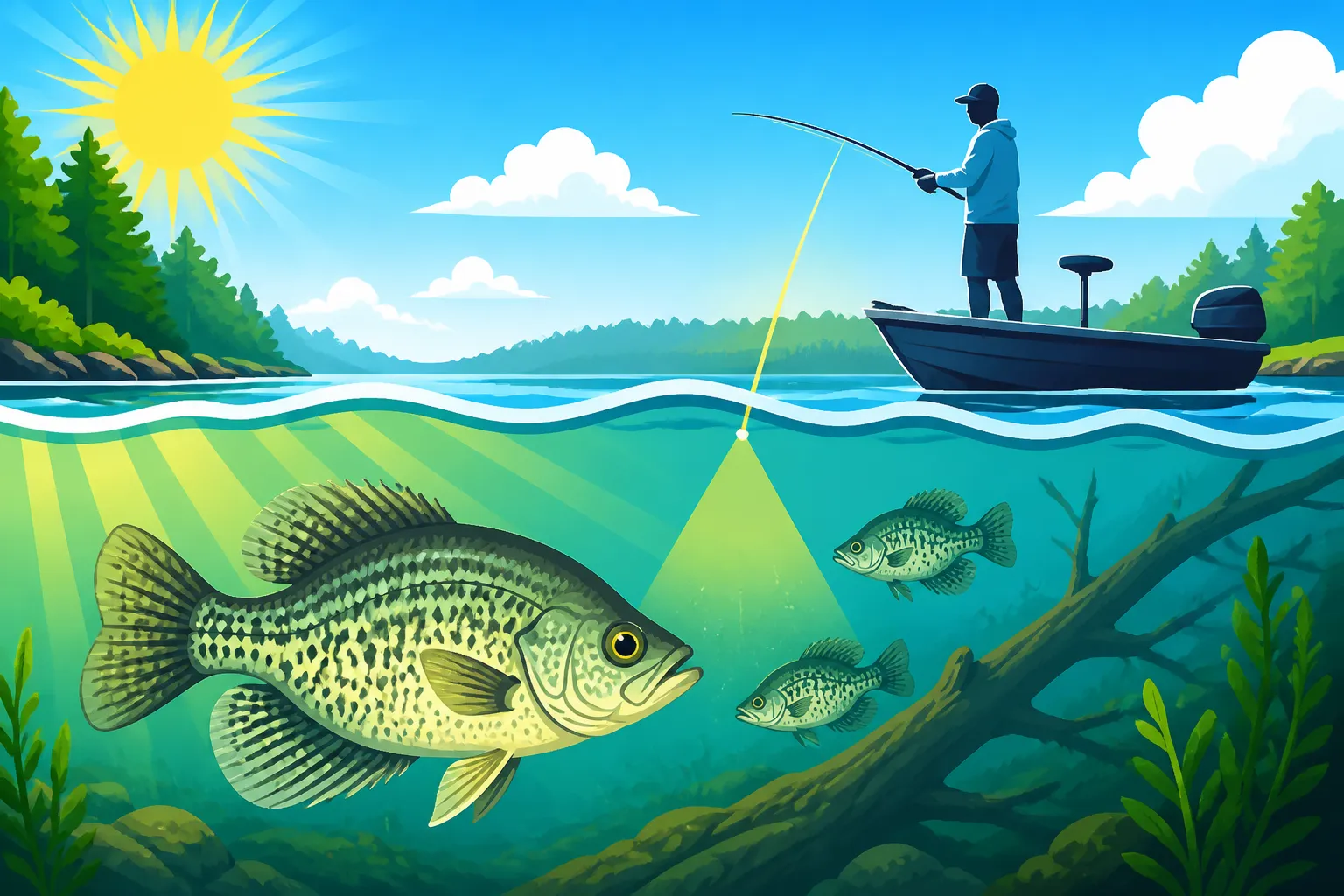
As the surface waters of our Virginia lakes and reservoirs heat up during the summer, they become less dense and float on top of the cooler, denser water below. This creates distinct layers, and the most critical one for crappie anglers is the "thermocline." The thermocline is a transitional layer where the water temperature changes rapidly. Below this layer, the water is much colder, but here's the catch: it often has very low oxygen levels, especially in deeper, nutrient-rich lakes. Crappie, like all fish, need oxygen to survive.
So, while the crappie might want to be in the coolest water possible, they can't go so deep that the oxygen runs out. This means they'll typically be found right above, within, or just below the thermocline, in that sweet spot where temperatures are comfortable, and there's enough dissolved oxygen. This band of habitable water might only be a few feet thick, making them concentrated but also requiring precise depth fishing. Knowing the depth of the thermocline in your favorite lake is paramount, and many modern fish finders can actually help you identify it.
Comfort, Food, and Predator Avoidance
Beyond just temperature and oxygen, crappie's summer behavior is also influenced by their quest for food and safety. In spring, they are shallow, spawning, and easy targets. Come summer, they've recovered from the spawn, and their metabolism is high, meaning they need to eat. However, the open, shallow waters that were once safe are now warmer and offer less cover, making them vulnerable to larger predators like bass and stripers.
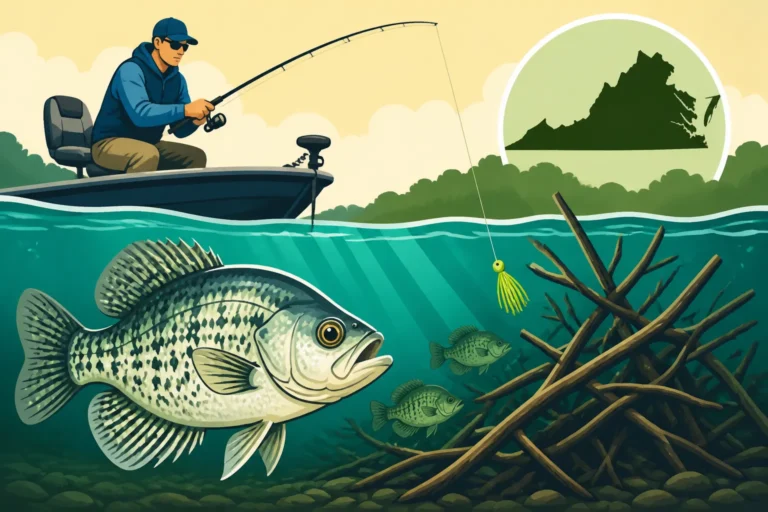
This drives crappie to seek refuge in deeper, more complex structures. They'll gravitate towards anything that offers shade and ambush points for baitfish, such as sunken brush piles, standing timber, deep docks, and bridge pilings. These structures offer a sense of security from overhead predators and provide ample opportunities to dart out and ambush shad or minnows that venture too close. They become masters of concealment, making them a challenge to locate without the right tools and patience.
Where to Pinpoint Summer Crappie: Prime Virginia Hotspots
Once you understand why crappie move, the next step is knowing where to start looking for them. In Virginia's diverse waterways, from vast reservoirs to tidal rivers, crappie seek specific types of structure that offer the conditions they need to thrive through the summer heat.
Deep Brush Piles and Submerged Timber
This is arguably the holy grail for summer crappie fishing. Crappie absolutely love cover, and the denser, the better. When the water warms up, they move out of the shallow shoreline brush and into deeper, submerged piles. These can be natural fallen trees, old stumps, or artificial brush piles sunk by anglers or wildlife agencies. The key is that these structures need to be at the depth where the crappie are comfortable, usually within that thermocline sweet spot we just talked about.
Think about areas where creeks or rivers once flowed before a lake was formed. Those old creek channels often have submerged timber and stumps along their banks. Also, look for brush piles dropped by savvy anglers. Many anglers use tools like sonar to locate these "invisible" structures. Once you find one, it's often holding a school of crappie. You might see a dense clump of fish on your fish finder, often suspended right inside or just above the branches. The more complex the cover, the more crappie it's likely to hold, offering both shade and a place to ambush baitfish.
Bridge Pilings and Marina Docks
Man-made structures offer fantastic crappie real estate in the summer, especially those that provide vertical cover and extend into deeper water. Bridge pilings are prime examples. These massive concrete or wooden supports create vertical habitat that crappie adore. They provide shade throughout the day as the sun moves, offer a hard structure for baitfish to congregate, and extend down into cooler, more oxygenated water. Crappie will often suspend right next to these pilings, sometimes stacked up like pancakes on your fish finder.
Similarly, large marina docks, especially those with many slips or deep foundations, can be productive. Look for docks that are on the main lake body or a deep creek arm, where the water under them quickly drops off. The shade cast by the docks, combined with any submerged structure like old tires or sunken debris, creates a perfect crappie haven. Night fishing around well-lit docks can also be incredibly effective, as the lights attract baitfish, which in turn attracts crappie. Remember to check local regulations for fishing within marina boundaries.
Main Lake Humps, Points, and Deep Channel Edges
Crappie are also open-water roamers, especially the larger ones, and they'll use contour changes on the main lake to their advantage. Look for deep humps or underwater islands that top out in that ideal temperature/oxygen range. These structures often attract baitfish schools, and crappie won't be far behind. Long points that extend far into the lake and drop off sharply can also be very productive, especially on their deeper edges.
The edges of old river or creek channels are another key area. These channels provide a natural highway for fish, and crappie will often position themselves along the drops, especially where the channel makes a bend or intersects with a hump. These areas provide easy access to deeper water when needed and allow them to intercept baitfish moving through the channel. Learning to read your electronics to identify these subtle changes in depth and contour is essential for finding these main lake fish. For more on navigating Virginia's waterways, you might find a guide like Boat Ramps for Fishing in Virginia helpful.
Proven Tactics and Tackle for Summer Crappie Success
Finding summer crappie is only half the battle; getting them to bite requires adjusting your presentation to their deep-water habits. The techniques that worked so well in the spring shallows will likely fall flat when the fish are suspended 15-30 feet down.
Vertical Jigging and Dropping Baits
When crappie are schooled tightly around brush piles, bridge pilings, or other vertical cover, vertical jigging is king. This involves positioning your boat directly over the fish (which you've located with your fish finder) and dropping a jig or live minnow straight down to their depth. The goal is to present your bait right at or slightly above the crappie's eye level.
Use a sensitive rod with light line (4-6 lb test fluorocarbon or monofilament) so you can feel the subtle bites. Small jigs, typically 1/16 to 1/8 ounce, are ideal. Many anglers opt for brightly colored jigs or those with a lot of flash. Live minnows, hooked lightly through the lip or back, are almost always effective. You can find a fantastic selection of these smaller jigs and other crappie tackle on sites like Amazon. Pay close attention to your fish finder to see how the fish are reacting. If they move up to meet your bait, you're doing something right! For specific lure colors, check out our article on Best Jig Colors for Crappie Fishing.
Spider Rigging and Trolling Deep
When crappie are more scattered or spread out along channel edges or over submerged humps, spider rigging (also known as tightlining) or slow trolling can be incredibly effective. Spider rigging involves deploying multiple rods (often 4-8 or more) from the front of the boat, fanning them out to cover a wide area. Each rod has a jig or a minnow-rigged setup, fished at varying depths. This allows you to quickly determine the preferred depth of the crappie.
Slow trolling, either with electric motors or by drifting with the wind, covers even more water. You can troll small crankbaits designed for crappie, or jigs under bobbers (if shallow enough), or simply slow-troll live minnows. The key is to move at a snail's pace, often less than 1 mph, allowing your baits to stay in the strike zone for longer. Many anglers use GPS to track their most productive routes and return to them. This method is particularly useful in larger bodies of water like Smith Mountain Lake or Kerr Lake, where crappie can spread out considerably. Consider exploring our guide on Crappie Tightlining Basics for more in-depth strategies.
Essential Gear for Summer Crappie Anglers
Summer crappie fishing success is significantly boosted by having the right tools. Foremost among these is a quality fish finder with good down-imaging and side-imaging capabilities. Being able to mark fish and submerged structure in deep water is non-negotiable. Look for models with high-resolution screens that can clearly differentiate fish from cover. Many anglers find great deals on these essential electronics on platforms like Amazon.
You'll also want an assortment of small jigs (tubes, grubs, curly tails) in various colors and weights. Keep a good supply of live minnows, stored in a well-aerated bait bucket. Lightweight rods (ultralight or light action) and reels spooled with light line are crucial for feeling subtle bites. Don't forget your personal comfort items: a wide-brimmed hat (you can find plenty of options on Amazon), sunglasses, sunscreen, and plenty of water are vital for enduring those long, hot summer days on the water. For beginners, a simple setup often works, as outlined in Crappie Fishing Techniques for Beginners.
Reading the Conditions: Water, Weather, and When to Go
Crappie, like all fish, are highly sensitive to environmental factors. Understanding how water temperature, oxygen levels, and even time of day influence their feeding behavior will give you a significant edge in your summer crappie pursuit.
Optimal Water Temperatures and Depths
As mentioned, the thermocline is your best friend in summer. Crappie typically prefer water temperatures in the low to mid-70s. During summer, these temperatures are usually found in the lower half of the water column, often between 10 to 30 feet, depending on the lake's depth, size, and recent weather patterns. Your fish finder is essential for determining this preferred depth. It's not just about finding fish, but finding fish at the right depth within that optimal temperature and oxygen range.
When you're out on the water, pay attention to surface water temperatures. If they're exceptionally high (e.g., in the upper 80s or 90s), expect crappie to be even deeper and more reluctant to move into shallower water, even temporarily. Conversely, a cooler spell of weather, especially a series of cool nights, might allow them to move slightly shallower, particularly during dawn and dusk feeding windows. This knowledge is key to knowing Best Time of Day to Catch Crappie.
The Best Times of Day for Summer Crappie
While crappie can be caught throughout the day in summer, certain periods offer significantly better chances. Dawn and dusk are often the most productive. During these times, the sun's intensity is lower, and the surface water might have cooled slightly, allowing crappie to move up shallower (but still often associated with deep cover) to feed on baitfish that also become more active.
Many experienced crappie anglers swear by night fishing in the summer. When the sun goes down, crappie often become much more aggressive. Using submersible lights to attract baitfish around deep docks or brush piles can create a fantastic crappie bite. The darkness provides cover from predators, and the cooler night air helps to activate both the crappie and their forage. On bright, sunny afternoons, crappie will usually be hunkered down deep in the densest cover available, making them harder to tempt.
| Time of Day | Crappie Behavior (General) | Preferred Locations | Recommended Techniques |
|---|---|---|---|
| Dawn | More active, may rise slightly | Deep brush, channel edges, shaded docks | Vertical jigging, slow trolling |
| Mid-Morning | Retreating to deepest cover | Dense brush piles, bridge pilings | Vertical jigging precisely |
| Mid-Day | Least active, tight to cover | Bottom of deep cover, dense shade | Very slow vertical jigging, live bait |
| Afternoon | Similar to mid-day | Dense cover, deepest points | Patient live bait presentations |
| Dusk | Increasing activity, moving up | Deep brush, channel edges, shaded docks | Vertical jigging, slow trolling |
| Night | Very active, attracted by lights | Lit docks, brush with submersible lights | Vertical jigging, minnows under floats |
How Weather Changes the Game
Summer weather fronts can dramatically impact crappie behavior. A strong cold front that brings cooler air and stable, high pressure typically makes fishing tougher. Crappie might become less active, hugging cover even tighter, and requiring slower, more subtle presentations. It often takes a few days for the fish to adjust and become more active again after a significant front.
Conversely, stable, warm weather, especially with overcast skies, can improve fishing. The consistent conditions make crappie more predictable. A light breeze can also be your friend, as it creates a chop on the water that breaks up the light penetration, making crappie feel more secure, and helps to oxygenate the surface layers, albeit subtly. Heavy rain can temporarily stir up shallower waters, pushing crappie deeper or into more sheltered coves. Paying attention to the weather forecast and adapting your plan accordingly is a hallmark of successful summer crappie anglers.
Disclaimer
This article is for general informational purposes only and does not constitute professional advice. Laws, prices and regulations vary by location and change over time. Consult a qualified professional for guidance on your specific situation.