Live Bait Versus Trolling for Smith Mountain Lake Stripers in Virginia
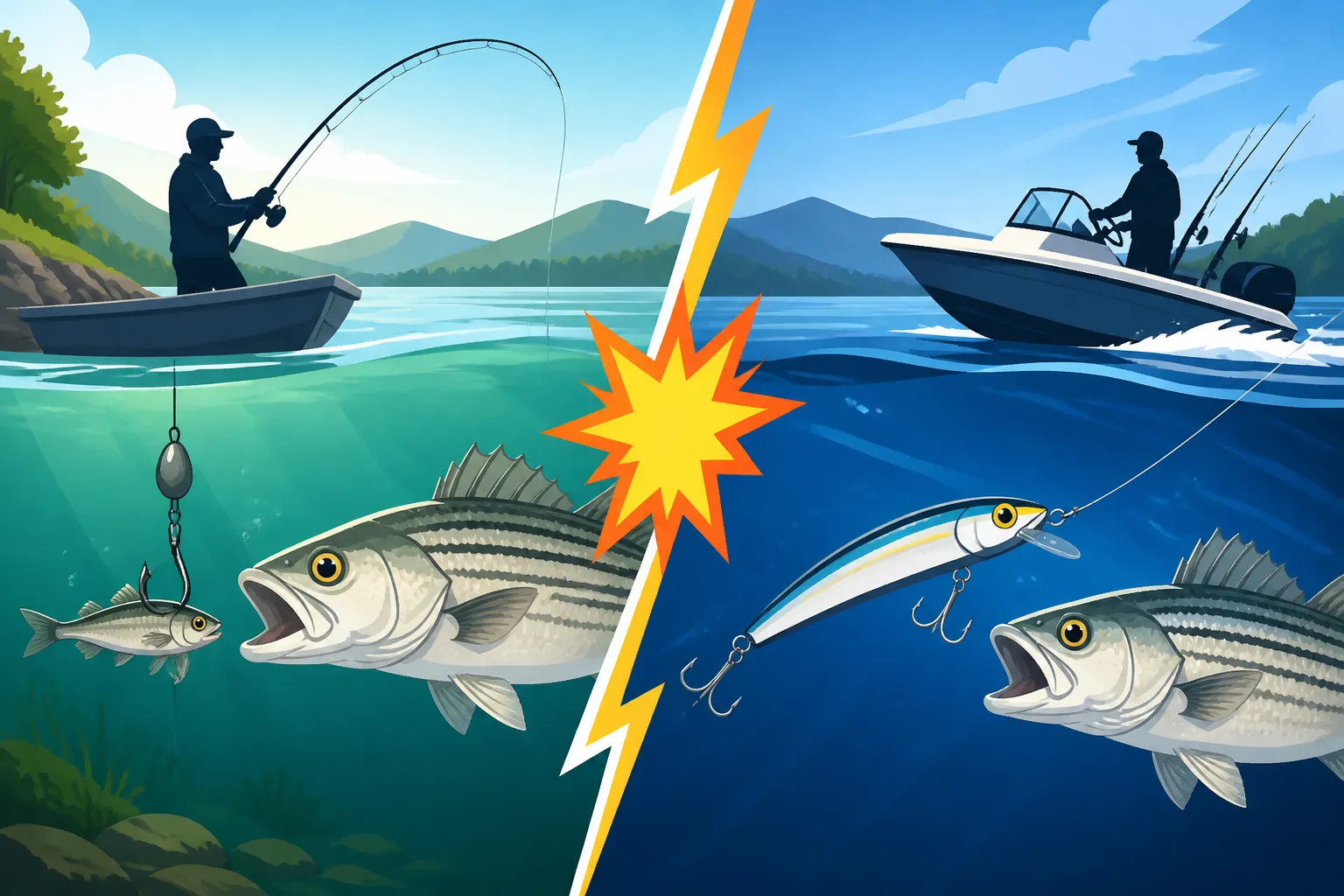
For anglers venturing onto Smith Mountain Lake with the dream of landing a magnificent striped bass, there’s often a big question that surfaces almost immediately: should you be trolling vast stretches of water with artificial lures, or should you be meticulously presenting live bait, hoping for that natural allure to entice a bite? It's a classic dilemma, and the truth is, both methods can be incredibly effective, but they each come with their own set of strategies, challenges, and ideal conditions. This guide is here to break down the nuances of live bait versus trolling for Smith Mountain Lake stripers, helping you decide which approach best suits your day on the water, or even how to combine them for maximum success.
Understanding Smith Mountain Lake Stripers
Before we dive into the nitty-gritty of techniques, it's crucial to understand the fish we're after. Smith Mountain Lake's striped bass population is legendary, drawing anglers from all over for a chance at these powerful, hard-fighting fish. But like any species, they have preferences and patterns that dictate where they are, what they’re eating, and how they react to your offerings.
Behavioral Patterns of Striped Bass
Striped bass, often called "stripers" or "rockfish" in saltwater contexts, are predatory fish that thrive in Smith Mountain Lake's deep, clear waters. They are constantly on the move, chasing schools of baitfish. Their behavior is heavily influenced by water temperature, light conditions, and the availability of their preferred forage. In colder months, you'll often find them schooled up in deeper channels and around submerged structures, conserving energy. As the water warms in spring and fall, they become more active, moving into shallower coves and creek arms during low-light periods to ambush prey.
Understanding these seasonal and daily movements is key. For example, during the hot Virginia summers, stripers will often retreat to deeper, cooler thermal refuges during the day, only venturing up to feed at dawn, dusk, or even throughout the night. Their willingness to chase a fast-moving lure versus preferring a subtle, natural presentation can change hourly. Knowing that they are always looking for an easy meal, whether it's a frantic baitfish struggling near the surface or a slow-moving one hugging the bottom, will inform your choice between trolling and live bait.
Key Forage Species on Smith Mountain Lake
What stripers eat directly impacts what lures and baits you should be using. On Smith Mountain Lake, the primary forage for striped bass consists of various shad species, most notably Threadfin Shad and Gizzard Shad, along with Alewife. These baitfish form the cornerstone of the striper's diet and are the reason why lures and live bait that mimic their appearance and swimming action are so effective.
Threadfin Shad are smaller, typically 3-5 inches, and have a very delicate texture. Stripers will often key in on these smaller baits, especially when they are abundant. Gizzard Shad are larger, often growing up to 10-12 inches, providing a more substantial meal. Alewife, while less common than shad, are also a favored prey. When stripers are actively feeding on large schools of these baitfish, you'll see them "balling up" on your sonar, creating a perfect scenario for either technique. If you can match the size, color, and action of the predominant baitfish, you're already halfway to success. For more in-depth knowledge, check out our guide on the Smith Mountain Lake Fish Species Guide.
The Art of Trolling for Striped Bass on SML
Trolling is a fantastic way to cover a lot of water and locate scattered schools of fish, or to present lures at specific depths where stripers are known to be holding. It's often the preferred method for many experienced anglers seeking Smith Mountain Lake Striped Bass Fishing in Virginia.
Trolling Techniques and Gear
Trolling on Smith Mountain Lake for stripers can be as simple or as complex as you make it, but effective trolling usually involves a combination of specialized gear and knowing how to deploy it.
- Umbrella Rigs: These are staples for striper trolling. An umbrella rig mimics a small school of baitfish, often with a larger "chaser" lure in the center. They're typically fished with downriggers or heavy inline weights to get them down to the desired depth. You can find a wide variety of these rigs, often featuring bucktails or soft plastic swimbaits, on platforms like Amazon.
- Deep-Diving Crankbaits: Lures like large Rapala Deep Divers or Bomber Long A's can reach impressive depths on their own, especially when trolled on braided line. They're excellent for targeting fish holding near humps, points, or channel edges.
- Downriggers: These devices allow you to precisely control the depth of your lures, regardless of line type or lure weight. A heavy cannonball weight takes your line down, and a release clip detaches when a fish strikes. This is invaluable for presenting lures in the thermocline or just above deep structure where stripers are congregating.
- Planer Boards: If you want to spread out your presentation and cover a wider swath of water, planer boards are your friend. They carry your lines out to the sides of the boat, allowing you to run multiple lines without tangles and present lures to fish that might be spooked by the boat's motor.
- Spoons and Bucktails: Classic lures like Tony Accetta Pet Spoons or heavy bucktail jigs can be trolled effectively, especially with added weight or on downriggers. Their flash and erratic action often provoke strikes.
- Electronics: A good fish finder is paramount. It allows you to identify bait balls, locate stripers, and determine the optimal depth for your lures. Understanding your sonar readings means less guesswork and more productive trolling.
Pros and Cons of Trolling
Every fishing method has its trade-offs.
Pros of Trolling:
- Efficiency: Trolling allows you to cover vast areas of the lake quickly, increasing your chances of finding actively feeding fish, especially when they are scattered.
- Locating Fish: It's an excellent method for prospecting new areas or pinpointing exactly where schools of stripers are holding when you don't have a precise starting point.
- Multiple Lines: You can typically run several lines simultaneously, increasing your odds of a hookup.
- Targeting Depth: With downriggers and deep-diving lures, you can consistently present your offering at specific depths, which is crucial when stripers are holding deep in the water column.
- Less Mess: Generally, trolling with artificials is cleaner than handling live bait, which can be a plus for some anglers.
Cons of Trolling:
- Fuel Consumption: Keeping your boat moving for hours can burn a significant amount of fuel, especially on a larger vessel.
- Gear Complexity: Setting up a multi-line trolling spread with downriggers, planer boards, and various lures can be complicated and expensive.
- Less "Natural": While modern lures are incredibly lifelike, nothing truly mimics the subtle movements and scent of live bait.
- Boat Spook Factor: In clear water, the boat's motor and shadow can sometimes spook fish, especially if they are shallow.
- Specific Conditions: Trolling is less effective when fish are highly concentrated in very small, tight areas, or when they are particularly finicky and unresponsive to artificials.
Mastering Live Bait Fishing for SML Stripers
For many, there's nothing quite like the thrill of a striper hammering a struggling live bait. It's often considered the most natural and effective way to tempt reluctant or pressured fish.
Preferred Live Baits and Presentation Methods
The effectiveness of live bait fishing hinges on the quality and presentation of your bait.
- Bait Selection: On Smith Mountain Lake, the gold standard for live bait for stripers is undoubtedly fresh gizzard shad or threadfin shad. Alewife also work wonders if you can get them. You'll need a cast net to catch your own, often around docks, bridges, or shallow coves early in the morning. Alternatively, some local bait shops might sell them, but fresh is always best. Maintaining live bait requires a good baitwell with aeration and circulation; you can find excellent portable baitwells on Amazon if your boat isn't equipped with one.
- Free-Lining: This is perhaps the simplest and most exciting method. You hook a lively shad through the nose or back, and simply cast it out with no weight, allowing it to swim freely near the surface or just below. This method is deadly when stripers are actively chasing bait on the surface or in the upper water column, often during low light conditions or when you see schools of stripers crashing bait.
- Down-Lining: When stripers are holding deep, often around structure or in thermoclines during summer, down-lining is the way to go. You attach a bell sinker or egg sinker above your swivel (with a leader to your hook) to quickly get your live bait down to the desired depth. Use your fish finder to pinpoint the fish and lower your bait right into the strike zone. This is especially effective around deep points, humps, and channel bends.
- Suspend-Lining (or Ballooning): This method involves using a bobber or balloon to suspend your live bait at a specific depth, often over submerged timber or brush piles, or along ledges. It's a fantastic way to keep your bait in the strike zone without it swimming too deep or too shallow. This is a very common approach in early spring or late fall when fish are still somewhat scattered.
- Circle Hooks: When fishing with live bait, especially for stripers, circle hooks are your best friend. They significantly reduce gut-hooking, leading to healthier catch-and-release rates and ensuring the fish are hooked in the corner of the mouth, making them easier to unhook.
Advantages and Challenges of Live Bait Fishing
Just like trolling, live bait fishing has its unique benefits and drawbacks.
Advantages of Live Bait Fishing:
- Natural Presentation: Nothing beats live bait for its natural swimming action, scent, and appearance. It's often irresistible to stripers, especially those that are finicky or heavily pressured.
- Higher Hookup Rates: Because it's so natural, stripers tend to hold onto live bait longer, leading to better hook sets.
- Target Specificity: You can often drop a live bait precisely onto a marked fish or into a small pocket of activity that would be hard to target with a trolled lure.
- Effective for Finicky Fish: When stripers are not actively chasing, a subtle live bait can often coax a bite where artificials fail.
- Versatility: You can fish live bait from a stationary boat, anchored over a known spot, or by slowly drifting, allowing for flexibility in varying conditions.
Challenges of Live Bait Fishing:
- Bait Acquisition: Catching or buying sufficient quantities of healthy live bait can be time-consuming and challenging. It requires specialized gear like a good cast net and a well-maintained livewell.
- Bait Maintenance: Keeping bait alive and lively throughout the day requires attention to water quality, temperature, and oxygen levels in your livewell.
- Less Water Coverage: You can't cover as much water as effectively as you can with trolling. If fish are widely scattered, it can take longer to find them.
- Messy: Handling live bait can be messy, especially if you're cast-netting fresh shad, which tend to lose scales.
- Bait Cost: If you're buying live bait, it can add up, especially if you go through a lot.
Making the Choice: Trolling or Live Bait?
So, how do you decide which method to employ? Often, it comes down to a few key factors and what the fish are telling you.
Factors Influencing Your Decision
The ultimate choice between live bait and trolling often depends on a combination of environmental factors, personal preference, and the specific behavior of the fish on any given day.
- Time of Year and Water Temperature: In the colder months, when stripers are more sluggish and concentrated in deep channels, a slow-trolled umbrella rig or a meticulously down-lined live bait can be effective. As temperatures rise and fish become more active, free-lining live bait in the mornings and evenings can be explosive. The Best Month to Fish for Striped Bass in Virginia often varies with these factors.
- Fish Activity Level: Are you marking large, active schools on your sonar, or are they scattered and moving slowly? If fish are aggressive and chasing, trolling can trigger a reaction strike. If they’re more lethargic or holding tight to cover, the natural appeal of live bait is often superior.
- Lake Conditions: Clarity of water matters. In very clear water, fish can be more cautious, and subtle live bait presentations might be better. Wind and current also play a role; trolling can be easier to manage in windy conditions, while drifting live bait might require more boat control.
- Angler Skill and Equipment: Trolling requires a good understanding of boat speed, lure depth, and rod placement. Live bait fishing demands skill in catching and keeping bait, as well as finesse in presentation. Make sure your gear is up to snuff; whether it's the right trolling rods or a reliable livewell, investing in quality pays off. For tips, you might consult Smith Mountain Lake's Striped Bass: Tips for First-Time Anglers.
- Personal Preference: Some anglers simply prefer the active nature of trolling, constantly feeling for vibrations and adjusting lines. Others love the anticipation and connection of feeling a striper inhale a live bait. There's no wrong answer here; choose what you enjoy most!
Hybrid Approaches and When to Use Them
Experienced anglers often don't exclusively stick to one method. Instead, they blend techniques, adapting to what the fish are doing. This is where the magic happens and you can truly maximize your success on the water.
- Trolling with a "Stinger" Live Bait: One popular hybrid approach is to troll with artificial lures, but also run one or two rods with live bait, either free-lined or on a downrigger, at a slightly different depth or off to the side. This allows you to cover water efficiently while still offering a natural presentation. If one method consistently out-produces the other, you'll know what to switch to.
- Scout with Trolling, Fish with Live Bait: Use trolling as a scouting tool. Cover large areas until you locate a school of active stripers on your sonar. Once you find them, immediately switch to live bait and drop it directly onto the fish. This combines the efficiency of trolling with the effectiveness of live bait. This is particularly useful when you're looking for Best Fishing Spots in Virginia.
- Varying Depths and Speeds: Don't be afraid to experiment. If you're trolling, try varying your speed. If you're live baiting, try different depths and even adding a slow, intermittent retrieve to your down-lined baits to give them extra action. Sometimes a subtle jigging motion can make all the difference. Remember, How to Catch Striped Bass in Cold Water often means slowing everything down.
Here's a quick comparison to help visualize the differences:
| Feature | Trolling for Stripers | Live Bait for Stripers |
|---|---|---|
| Water Coverage | High; ideal for locating scattered fish | Low to Medium; best for targeted fish or known locations |
| Presentation | Artificial lures, mimics baitfish movement | Natural baitfish, offers scent and lifelike action |
| Cost | Higher initial gear investment, significant fuel cost | Lower gear cost, but bait acquisition can be costly/time-consuming |
| Complexity | Can be complex with multiple lines, downriggers | Simpler setup, but bait maintenance requires effort |
| Effectiveness | Excellent for active, chasing fish; covering water | Superior for finicky, pressured, or lethargic fish |
| Seasonal Best | Versatile, but strong in colder months or when fish are deep | Often shines in warmer months, or when fish are shallow |
| Maintenance | Low (lures are durable) | High (keeping bait alive and lively) |
Ultimately, the best approach for Smith Mountain Lake Stripers in Virginia often involves being prepared for both. Having the gear and the knowledge for trolling allows you to find the fish, and having a ready supply of lively bait lets you seal the deal when the conditions call for it. Being flexible and observing what the stripers are reacting to will be your greatest asset. Whether you’re investing in a new set of trolling rods or a powerful aerator for your baitwell on Amazon, preparation is key.
Disclaimer
Please remember that fishing regulations, including size limits, bag limits, and seasons, can change. Always consult the latest Virginia Department of Wildlife Resources (DWR) regulations before heading out on the water. This information is for general guidance only.