Boat Fishing Techniques
It's incredibly frustrating when you've been casting from the bank for ages, feeling like you're missing out on all the action just a little further out, or perhaps you've got a boat but feel overwhelmed by the sheer number of techniques available. You're not alone! Many anglers struggle with transitioning from shore fishing or making the most of their vessel. This comprehensive guide is here to demystify boat fishing techniques, helping you confidently navigate Virginia's diverse waters and reel in more fish.
Getting Started: The Essentials of Boat Fishing
Stepping into a boat opens up a whole new world of fishing possibilities, but it also comes with its own set of considerations. It's not just about having a motor and a deck; it's about understanding how your vessel complements your fishing style and ensuring you're prepared for whatever the water throws at you.
Choosing the Right Vessel for Your Adventure
Before you even think about baits and lures, you need to think about your ride. Virginia's waters are incredibly varied, from tranquil mountain lakes to vast tidal rivers and the expansive Chesapeake Bay. The "right" boat isn't a one-size-fits-all answer; it depends on where you plan to fish, what species you're targeting, and your budget.
For instance, if you're primarily exploring smaller, calmer freshwater lakes and rivers, a modest Jon boat or even a kayak can be incredibly effective. These lighter vessels allow you to access shallow coves and backwaters that larger boats can't, perfect for stealthily pursuing largemouth bass in submerged timber or crappie around brush piles. They're also often more budget-friendly and easier to transport. However, they offer less stability and protection from the elements, which can be a real concern if the weather turns.
On the other hand, if your sights are set on the sprawling open waters of the Chesapeake Bay or deeper sections of large reservoirs like Smith Mountain Lake, you'll want something with more heft. Center console boats are incredibly popular for saltwater fishing due to their open deck space, stability, and ability to handle choppier conditions. For serious bass anglers looking to cover water quickly and fish tournaments, a purpose-built bass boat with a powerful outboard and extensive electronics is often the vessel of choice. Understanding these trade-offs is crucial; don't buy a deep-V offshore boat if you only plan to fish local ponds, and likewise, don't take a tiny Jon boat far out into a breezy bay.
Essential Gear Beyond the Rod and Reel
While your rod and reel are undoubtedly crucial, boat fishing requires a whole host of additional gear that shore anglers might not consider. Having the right tools on board can make the difference between a frustrating outing and a successful one. Think beyond just tackle boxes; consider anchors, safety equipment, and creature comforts.
A reliable anchor system is paramount, especially when you've found a promising spot over a submerged hump or structure. Different anchors are suited for different bottom types – a mushroom anchor for muddy bottoms, a fluke anchor for sand, and a grappling hook style for rocky areas. You'll also need plenty of rope or chain. Don't forget a net! A sturdy landing net is invaluable for scooping up a prize catch, especially when you're dealing with big striped bass or a feisty catfish, saving both the fish and your tackle from unnecessary stress at the boat side. A good pair of pliers or cutters for hooks and line, a first-aid kit, and a throwable flotation device are also absolute must-haves. Many anglers also invest in fish coolers for their catch, keeping those fillets fresh on the ride home.
Beyond these essentials, consider creature comforts that can extend your time on the water. A good GPS/fish finder combo unit (which we'll dive into later) is almost a necessity for navigating and locating fish-holding structure. You might also want a small cooler for drinks and snacks, sun protection like hats and sunglasses, and appropriate foul-weather gear. Items like a waterproof bag for your phone or car keys can be found easily on retailers like Amazon and are game-changers for peace of mind.
Safety First: Regulations and Preparedness
Safety on the water is non-negotiable, and it starts with knowing the rules and preparing for the unexpected. Virginia has specific regulations for boat operation and required safety equipment, and ignorance is no excuse when a Virginia Department of Wildlife Resources (DWR) officer pulls you over.
First and foremost, everyone on board needs access to a U.S. Coast Guard-approved life jacket. Children under 13 must wear one while underway in any vessel 16 feet or less, or on any paddlecraft. You'll also need proper navigation lights if operating between sunset and sunrise, a sound-producing device (like a horn or whistle), and a fire extinguisher for most motorized boats. It’s always a good idea to check the Virginia Department of Wildlife Resources website for the most current and detailed regulations. Beyond the gear, filing a float plan with a trusted friend or family member, letting them know where you're going and when you expect to return, is a smart practice.
Equally important is having the proper Virginia Fishing License Guide for the waters you intend to fish. Whether you're in freshwater, saltwater, or need a combination license, make sure it's current and readily accessible. Penalties for fishing without a license can be steep. Understanding Virginia's Fishing Regulations Explained will save you a lot of headaches and ensure you're fishing legally and responsibly. Prepare for weather changes, too. A sunny morning can quickly turn into a stormy afternoon, especially on larger bodies of water like the Chesapeake Bay or vast inland lakes. Keep an eye on the forecast, and don't hesitate to cut your trip short if conditions become unsafe.
Mastering Freshwater Boat Fishing Techniques
Virginia's freshwater fishing scene is incredibly diverse, offering everything from trophy bass to schooling crappie and monster catfish. Boat fishing unlocks access to prime habitat that shore anglers can only dream of reaching.
Trolling for Bass and Stripers in Virginia's Lakes
Trolling is a fantastic way to cover a lot of water and locate active fish, especially for species like largemouth bass, smallmouth bass, and especially striped bass in Virginia's larger impoundments. The basic idea is simple: drag lures behind a slow-moving boat, letting your boat's movement impart action to the bait.
For striped bass, trolling is often the most productive method, particularly on lakes like Smith Mountain Lake, Lake Anna, and Claytor Lake. Anglers will often use a spread of artificial lures, such as deep-diving crankbaits, bucktail jigs, or even umbrella rigs, set at various depths to cover the water column. You'll want to pay close attention to your fish finder to identify bait schools and temperature breaks, as stripers will often be lurking nearby. Varying your speed, making gentle turns, and even adding planer boards to spread your lines out wider can significantly increase your success. It's a method that takes patience and experimentation, but when you hit that sweet spot, the results can be explosive. Many experienced anglers share their Smith Mountain Lake Striped Bass Fishing in Virginia secrets which often involve trolling specific areas.
Bass anglers also troll, though often with a slightly different approach. While bass boats excel at casting, slower trolling with crankbaits or even live bait can be very effective, particularly during periods when fish are scattered or holding to subtle depth changes. This can be a great search pattern to find concentrations of fish before stopping to cast more precisely. Remember, the key is to match your lure depth and speed to the conditions and the fish's activity level.
Casting and Pitching Around Structure
This is perhaps the most iconic boat fishing technique for bass anglers, especially for species like largemouth and smallmouth bass. The ability to precisely cast or "pitch" a lure into tight cover, under docks, around submerged timber, or along rocky shorelines is a major advantage of boat fishing.
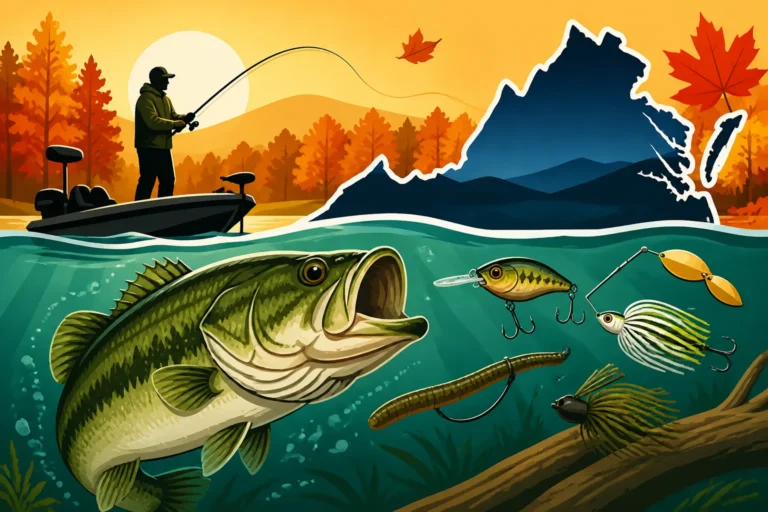
Imagine you're on Lake Gaston, known for its excellent largemouth bass fishing. From the bank, you can only hit the very edge of that promising looking dock. From a boat, you can position yourself to accurately pitch a jig or a Texas-rigged plastic worm underneath the dock, where those big bass are likely hiding in the shade. The precision allows you to present your lure in the fish's living room, so to speak, triggering strikes from otherwise unpressured fish. This method requires practice and a good understanding of how fish relate to cover and structure – whether it's lily pads, blowdowns, bridge pilings, or rock ledges. Learning How to Catch Largemouth Bass Year-Round often involves mastering these boat-based casting techniques, especially during different seasonal patterns.
Smallmouth bass in rivers like the Shenandoah River or deeper sections of Claytor Lake also respond incredibly well to precise casting. Targeting current breaks, rocky outcrops, and eddies with tubes, swimbaits, or even topwater lures can be incredibly effective. The boat allows you to approach these spots from multiple angles and stay on the fish as they move. It’s a highly interactive and exciting way to fish, often leading to aggressive strikes you simply won't get from a static position.
Drifting and Bottom Fishing for Catfish and Panfish
While trolling and casting get a lot of glory, sometimes the simplest methods are the most effective, especially for species like catfish, crappie, and various panfish. Drifting and bottom fishing are classic boat techniques that allow you to present bait directly to fish that are less actively chasing lures.
For catfish, particularly flatheads and channel cats, bottom fishing from a boat is king. On rivers like the James River or large lakes such as Kerr Lake (Buggs Island), you can anchor your boat upstream of a deep hole or channel, then cast heavy weights with cut bait or live bait down to the bottom. Let the scent spread, and wait for that tell-tale tug. Drifting slowly downstream with a controlled presentation can also be highly effective for covering more ground, especially when you’re not sure exactly where the catfish are holding. Our Catfish Fishing Techniques and Bait Guide goes into more detail about how to rig your lines for these bottom dwellers.
Crappie, those delicious panfish, also respond well to boat-based drifting and vertical jigging. You can position your boat over submerged brush piles, timber, or artificial fish attractors (often visible on your fish finder) and drop small jigs or minnows directly into the school. This is particularly effective during the cooler months when crappie tend to congregate in deeper water. On warmer days, you might find them in shallower cover, and your boat allows you to easily move from one brush pile to the next, checking each one until you find active fish. Many anglers find Crappie Jigging Techniques to be the most productive from a boat, as it allows precise bait presentation directly into dense cover.
Deep Dive into Saltwater Boat Fishing Strategies
Virginia's saltwater fishing opportunities are world-class, primarily centered around the vast Chesapeake Bay and its tributaries, and stretching out into the Atlantic Ocean. Boat fishing is practically a necessity to tap into these rich fisheries.
Bottom Fishing Wrecks and Reefs
The Chesapeake Bay and the nearshore Atlantic waters off Virginia Beach are littered with natural and artificial reefs, as well as historic shipwrecks. These underwater structures are magnets for baitfish and, consequently, for a wide array of desirable game fish. Bottom fishing these locations from a boat is a highly productive and popular technique.
You'll use your GPS and fish finder to locate these underwater havens, then precisely position your boat directly over the structure using your anchor or a spot-lock trolling motor. Once in position, you'll drop weighted baits – often squid, cut bait, or peeler crab – down to the bottom. Species like tautog, flounder, croaker, spot, and even large black sea bass congregate around these structures, feeding on the invertebrates and smaller fish that seek shelter there. The key is to keep your bait close to the bottom, often with a simple two-hook dropper rig. Current can be a significant factor in the Bay, so adjusting your weight to ensure your bait stays down is crucial.
Finding the exact hot spot on a wreck or reef often takes some experimentation. You might need to make small moves, drift around the edges, or try different depths until you locate the most active fish. This isn't just about dropping a line; it's about interpreting your electronics and understanding how fish relate to specific features on the structure. A good resource for understanding these targets is exploring Virginia's Best Saltwater Fishing Spots, many of which are underwater structures.
Trolling for Pelagics in the Chesapeake Bay
When it comes to covering vast stretches of water in the Chesapeake Bay or open ocean and targeting migratory species, trolling is arguably the most effective boat fishing strategy. This method is particularly deadly for striped bass (often called rockfish here), bluefish, Spanish mackerel, and even king mackerel further offshore.
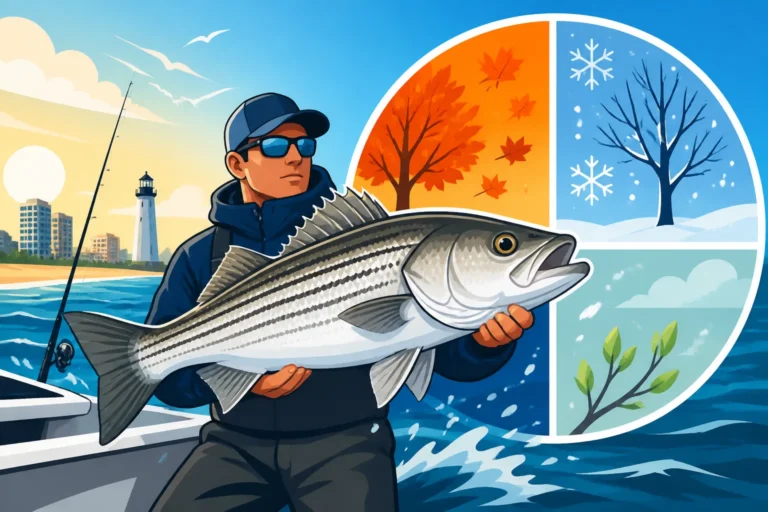
For striped bass, especially during their spring and fall migrations through the Bay, a spread of trolled lures can be incredibly productive. Anglers often deploy multiple rods, each rigged with different lures – bucktail jigs, sassy shads, lipless crankbaits, or even large umbrella rigs – at varying depths and distances behind the boat. This creates a "school" of baitfish that predatory stripers can't resist. The boat's speed and direction are critical; often, a slow, steady troll is best, but sometimes a burst of speed or a sharp turn can trigger a strike. Learning about the Chesapeake Bay Striped Bass Fishing Guide will show you just how integral trolling is to success in this region.
As the water warms in summer, smaller, faster-trolled lures become effective for Spanish mackerel and bluefish, which are often found busting bait on the surface or just below. These fish are aggressive, and high-speed trolling with small spoons or plano-style plugs can lead to fast action. Outriggers are often used on larger boats to spread lines wider, reducing tangles and covering an even broader swath of water. This is a dynamic style of fishing that requires constant attention to your rods and the surrounding water for signs of feeding activity.
Sight Fishing and Casting for Red Drum and Cobia
Imagine spotting a massive, dark silhouette cruising just beneath the surface, or a school of fish herding bait on a flat. That's the thrill of sight fishing, a highly visual and exciting boat fishing technique primarily used for red drum and cobia in Virginia's shallower Bay waters and nearshore ocean.
Red drum, especially the large "bull reds," can be found feeding on shallow flats, around oyster beds, or along channel edges in the lower Chesapeake Bay. From a boat, particularly a shallow-drafting one or a center console with a tower, anglers can stand high above the water, using polarized sunglasses to spot these fish. Once a red drum is sighted, a precise cast with a scented soft plastic, a jig, or even a fly is made ahead of the fish, allowing it to swim into the lure. The strike is often explosive, and the fight of a big red drum is legendary. The boat's maneuverability allows you to stalk these fish, making repeated casts until you get the bite.
Cobia fishing in Virginia is another prime example of effective boat-based sight fishing, particularly from late spring through early fall. These powerful, curious fish are often found cruising near the surface, around buoys, channel markers, or over shallow wrecks. Anglers will slowly idle or drift, constantly scanning the water. Once a cobia is spotted, a long cast with a live eel, a large bucktail jig, or a big soft plastic is presented to the fish. Cobia often follow the bait before striking, making for a heart-stopping interaction. The ability to quickly move and position the boat is paramount for these opportunities, which often happen in fleeting moments.
Navigating Different Boat Types and Their Advantages
The boat you choose significantly impacts your fishing experience. Each type has distinct advantages and disadvantages, making some better suited for certain environments and techniques than others.
Jon Boats and Kayaks: Versatility on a Budget
For many anglers starting out, or those who prefer a simpler, more intimate connection with the water, Jon boats and fishing kayaks are incredibly popular choices. Their main draw is versatility, affordability, and ease of transport.
Jon boats, with their flat bottoms, are fantastic for shallow water fishing in small lakes, ponds, and calm rivers. They’re stable for their size, easy to trailer, and can be rigged with a small outboard motor and even a basic trolling motor. This makes them ideal for reaching those secluded coves where bass and crappie hide. While they may not be comfortable in choppy open water, for the angler targeting the quiet backwaters of the Chickahominy River or the many small reservoirs around Virginia, a Jon boat is a highly efficient platform. They're also often quite customizable, allowing you to add rod holders, tackle storage, and even simple electronics.
Fishing kayaks, on the other hand, offer unparalleled stealth and access. You can paddle or pedal into incredibly tight spaces, through dense vegetation, or right up to shorelines without spooking fish. They are perfect for sight fishing in clear water or exploring smaller trout streams where other boats can't go. Modern fishing kayaks are surprisingly stable, often allowing anglers to stand and cast. While they limit the amount of gear you can bring, the direct connection to the water and the ability to maneuver silently is a huge advantage for many light-tackle freshwater scenarios. Many anglers looking for budget-friendly ways to fish the Best Rivers for Fishing in Virginia will gravitate towards these smaller, more nimble options.
Bass Boats and Center Consoles: Speed and Space
When serious performance and specialized fishing capabilities are desired, bass boats and center consoles step up to the plate. These vessels are designed with specific fishing styles in mind, offering advantages that smaller boats simply can't match.
Bass boats are speed demons, built to get anglers to their favorite spots on large lakes like Lake Anna or Kerr Lake quickly. They feature powerful outboard motors, shallow drafts, and vast casting decks. Critically, they come equipped with advanced electronics, multiple livewells for keeping fish alive during tournaments, and powerful bow-mounted trolling motors with GPS spot-lock capabilities. This combination allows anglers to precisely position themselves, cover vast amounts of water, and effectively work structure for largemouth and smallmouth bass. While they can be pricey and less comfortable in rough conditions, for dedicated bass anglers, they are the ultimate tool.
Center console boats are the workhorses of Virginia's saltwater fleet. Their open deck design provides 360-degree fishability, and their deep-V hulls are built to handle the often-choppy waters of the Chesapeake Bay and the open Atlantic. These boats offer ample storage for tackle, ice chests, and safety gear, and often feature powerful twin outboards for speed and reliability offshore. With a center console, you can comfortably run long distances to offshore wrecks, troll for striped bass, or sight fish for cobia with confidence. They are incredibly versatile and are the go-to choice for anglers who fish a wide variety of saltwater species.
Pontoon Boats and Cruisers: Family Fun and Comfort
While specialized fishing boats are fantastic for dedicated anglers, sometimes the goal is a comfortable day on the water with family and friends, with fishing being a pleasant activity rather than the sole focus. Pontoon boats and larger cruisers fit this niche perfectly.
Pontoon boats have exploded in popularity due to their incredible stability, spacious decks, and comfortable seating. They are essentially floating living rooms, making them perfect for family outings on calm lakes and wide rivers. While not designed for high-speed runs or hardcore tournament fishing, many modern pontoons can be rigged for fishing with rod holders, livewells, and even basic fish finders. Their stable platform is excellent for kids or less experienced anglers, providing a safe and comfortable environment to drop a line for panfish or catfish. Imagine a relaxing afternoon on Lake Anna, enjoying the sun and catching a few bluegill from the comfort of a pontoon boat – it's a fantastic way to introduce new people to the joy of fishing.
Larger cruisers offer even more amenities, often including cabins, heads (marine toilets), and galleys. While their primary purpose isn't fishing, many are well-equipped for offshore trips, offering a comfortable base for multi-day excursions or long runs to distant fishing grounds. They provide shelter from the elements, making extended trips more enjoyable, and allow for a combination of fishing, cruising, and simply relaxing on the water. These boats are more about the overall experience, with fishing being one of many activities you can enjoy.
| Boat Type | Ideal Fishing Scenario | Key Advantages | Key Disadvantages | Primary Species |
|---|---|---|---|---|
| Jon Boat | Shallow freshwater lakes, calm rivers, ponds | Affordable, easy to launch/retrieve, access shallow water | Uncomfortable in chop, limited space, basic features | Bass, Crappie, Catfish, Panfish |
| Fishing Kayak | Stealthy exploration, tight cover, small streams | Stealthy, excellent access, inexpensive to operate | Limited gear, slow, less stable, exposed to elements | Bass, Trout, Panfish, Red Drum (shallow) |
| Bass Boat | Large freshwater lakes, speed-critical tournament | Fast, specialized electronics, vast casting decks, livewells | Expensive, rough ride in chop, less versatile | Largemouth Bass, Smallmouth Bass, Striped Bass |
| Center Console | Saltwater bays, nearshore ocean, offshore | Versatile, handles rough water, 360-degree fishability, space | Can be expensive, open to elements, high fuel usage | Striped Bass, Cobia, Flounder, Tautog, Offshore |
| Pontoon Boat | Calm lakes/rivers, family fishing, casual outings | Extremely stable, spacious, comfortable, easy for beginners | Slow, poor in chop, limited rough-water capability | Panfish, Catfish, Bass (casual) |
Reading the Water: Using Electronics and Local Knowledge
Modern boat fishing isn't just about putting bait in the water; it's a blend of technology, intuition, and accumulated wisdom. Understanding how to interpret what your electronics are telling you and how to leverage local knowledge are critical skills.
Understanding Your Fish Finder and GPS
For many boat anglers, the fish finder and GPS are their most valuable tools, arguably more important than any lure in the tackle box. These aren't just gadgets; they're your eyes and navigation system on the water, helping you find both fish and the structure they relate to.
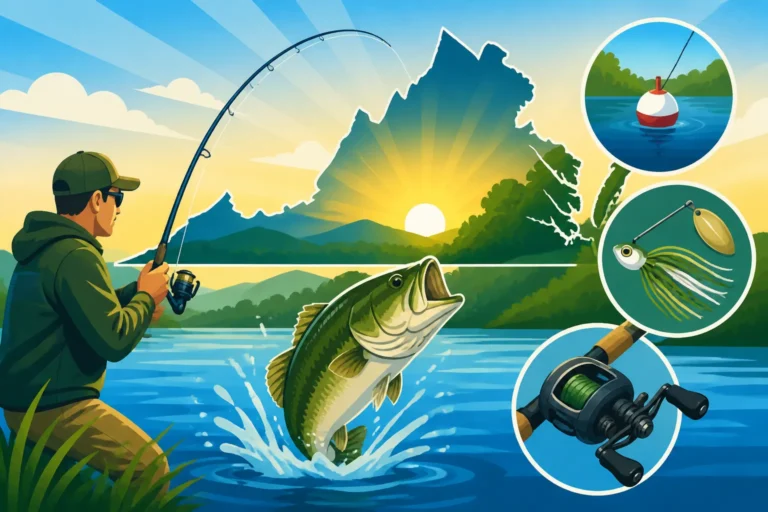
A fish finder uses sonar to paint a picture of the underwater world. It can show you depth, bottom composition (hard or soft), submerged structures like trees, rocks, or humps, and, most importantly, fish themselves. Learning to interpret those arcs and lines is a skill that develops with time on the water. Are those small, tight arches baitfish? Are those larger, distinct arches predatory fish holding tight to the bottom? Are they suspended in the water column? Side imaging and down imaging technologies take this even further, providing photo-like views of the bottom to the sides and directly beneath your boat, revealing hidden ledges, brush piles, and individual fish you might otherwise miss. Many anglers consider a quality fish finder, like those from Humminbird or Lowrance, an essential piece of equipment. You can research and compare models and features on platforms like Amazon.
GPS, often integrated into the same unit, is your roadmap. It allows you to navigate safely, mark "waypoints" of productive fishing spots, and return to them with precision. No more guessing where that hot spot was from last week! You can mark submerged humps, artificial reefs, or even areas where you found a significant concentration of bait. Understanding your How to Find Fish From a Boat With a Fish Finder guide will delve into specific settings and interpretations that can make a huge difference in your success. Combining these tools allows you to efficiently search for fish, then return to and effectively work productive areas.
Interpreting Weather and Water Conditions
Fish are incredibly sensitive to their environment, and understanding how factors like weather, water temperature, and clarity affect their behavior is key to consistent success from a boat.
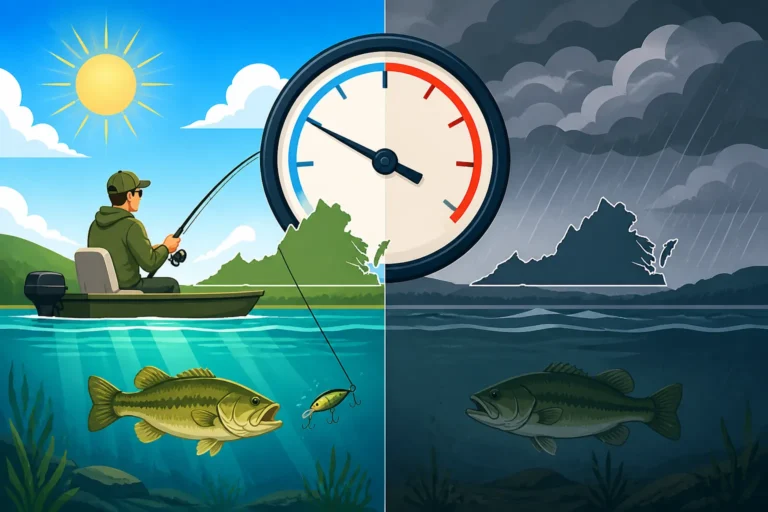
Water temperature is perhaps the most crucial factor. Different species have preferred temperature ranges for feeding, spawning, and general activity. For example, knowing the Bass Spawn Timing on Virginia Lakes by monitoring water temperature will tell you when bass are moving to shallower beds. A rising temperature can mean fish become more active, moving shallower to feed, while a sudden cold front might push them deeper and make them lethargic. You can monitor surface temps with your fish finder's transducer, and some advanced units even offer water temperature mapping.
Weather patterns also play a huge role. Cloudy days often encourage fish to be more active, as they don't have to deal with harsh sunlight. Approaching storms can trigger a feeding frenzy, while the days after a cold front can be tough, with fish often having "lockjaw." Wind can create current, concentrate baitfish, or make certain areas unfishable. Water clarity is another big one; clear water might call for lighter lines and more natural presentations, while stained or muddy water might require brighter colors, noisy lures, or baits with a strong scent. Learning to adapt your techniques based on these ever-changing conditions is what separates consistently successful anglers from those who only catch fish when conditions are "perfect."
Leveraging Local Knowledge and Fishing Reports
While technology is powerful, nothing quite replaces good old-fashioned local knowledge and current fishing reports. These resources provide invaluable insights into real-time conditions and patterns that electronics alone can't tell you.
Local bait and tackle shops are goldmines of information. The folks working there often spend their lives on the water or talking to anglers who do. They can tell you what's biting, where it's biting, what baits or lures are working best, and even specific areas that have been productive recently. Don't be shy – strike up a conversation! They often have a pulse on patterns that might have just started or are about to end, which can save you hours of searching. When considering a visit, it can be helpful to check out locations that also act as DWR license agents near popular fishing spots, as these places are typically well-connected to the local angling community.
Online fishing forums, social media groups dedicated to Virginia fishing, and local fishing reports (often found on charter captain websites or outdoor news sites) are also excellent resources. These reports can inform you about recent catch trends, water conditions in specific areas, and even what techniques are currently hot. However, always take online information with a grain of salt and cross-reference. What worked yesterday might not work today, and some anglers might be a bit cagey with their truly best spots! The best approach is to combine the generalized knowledge from reports with your own observations and electronics to pinpoint fish. This blend of resources helps you understand Best Times to Fish in Virginia Throughout the Year and adapt your boat fishing techniques accordingly.
Seasonal Adjustments for Boat Anglers in Virginia
Virginia's diverse climate and varied waters mean that fish behavior changes dramatically throughout the year. As a boat angler, your ability to adapt your techniques to these seasonal shifts is crucial for consistent success.
Spring Patterns: Following the Spawn
Spring in Virginia is a season of rebirth and high activity for many fish species, driven largely by the urge to spawn. This is a prime time for boat anglers, as fish often move into predictable shallow areas.
For largemouth bass, the pre-spawn and spawn periods are arguably the most exciting. As water temperatures rise into the 50s and 60s, bass move from deeper wintering grounds to shallower staging areas, gorging themselves before the rigors of spawning. This is when spinnerbaits, crankbaits, and jerkbaits fished around points, creek channels, and the edges of flats can be incredibly productive. When the water hits the mid-60s, bass will move onto beds in protected coves, making them visible targets for sight fishing with jigs and soft plastics. Your boat provides the perfect platform to sneak into these coves and effectively work these spawning areas.
Crappie also move shallow to spawn in spring, often congregating around submerged brush piles, docks, and fallen trees in water as shallow as 2-5 feet. Vertical jigging with small jigs or live minnows from your boat, positioned directly over the structure, can lead to quick limits. Striped bass in the Chesapeake Bay begin their spawning run up the major rivers (James, York, Rappahannock, Potomac), making them accessible to boat anglers targeting them with bait or trolled lures in specific areas, though strict regulations are in place to protect these spawning fish. Understanding Virginia Striped Bass Split Season Dates Explained is critical for spring striper fishing.
Summer Strategies: Early Morning and Late Evening Bites
As Virginia's summers heat up, fish behavior shifts dramatically. High water temperatures and intense sunlight often push many species into deeper, cooler water or make them more active during low-light conditions.
For bass anglers on lakes, the dog days of summer often mean focusing on early mornings and late evenings. Topwater lures can be explosive at dawn and dusk as bass patrol the shallows for an easy meal. During the bright, hot midday, bass will retreat to deeper structure – ledges, humps, offshore brush piles, and thermoclines. This is when your boat's electronics become invaluable, allowing you to locate these deeper fish and present jigs, deep-diving crankbaits, or Carolina rigs. Fishing under docks or along shady banks where fish seek refuge from the sun can also be effective.
Saltwater fishing in summer often means targeting migratory species. Spanish mackerel and bluefish are prevalent in the Bay, and fast trolling with small spoons is the go-to technique. Cobia are cruising near the surface, making sight fishing from a boat incredibly exciting. Red drum can be found on shallow flats in lower light, but also in deeper holes and channels. Catfish, both freshwater and brackish, remain active throughout the summer, often feeding heavily at night in deeper channels, which your boat can easily access. Techniques like Catfish Bottom Fishing Techniques are productive during these warmer months.
Fall Runs: The Feeding Frenzy
Autumn is a beloved season for Virginia boat anglers, often referred to as the "fall run" in saltwater and a "feeding frenzy" in freshwater. As water temperatures begin to cool, many fish species enter a period of aggressive feeding in preparation for winter.
In the Chesapeake Bay, the fall striped bass run is legendary. Massive schools of stripers migrate down the Bay, chasing baitfish. Trolling with large lures, jigging vertically over bait schools, and casting to breaking fish are all highly effective boat-based strategies. The fish are actively feeding, and the action can be non-stop. This is a prime time to be on the water with your boat, capitalizing on this predictable migration. Flounder, bluefish, and red drum also remain active, often found around deeper structure or channels.
In freshwater, bass, crappie, and stripers on lakes like Smith Mountain Lake will also be aggressively feeding. Bass will often move shallow again, chasing baitfish into coves and onto points, making spinnerbaits, crankbaits, and even topwater lures effective throughout the day. Stripers in lakes will school up and bust bait on the surface, creating chaotic feeding events that boat anglers can quickly run to and cast into. Crappie fishing also heats up, as they school tightly around submerged cover, making them easy targets for vertical jigging.
Winter Slow-Down: Deep Water and Finesse
Winter presents the toughest challenge for boat anglers in Virginia, but it's far from impossible to catch fish. The key is to slow down, fish deep, and employ finesse techniques.
Many freshwater species, including bass and crappie, will retreat to the deepest, most stable water they can find, often near river channels, main lake points, or deep brush piles. Your boat's electronics are absolutely essential for locating these wintering grounds. Slow, subtle presentations are key. Vertical jigging with small spoons or blade baits, slow-rolling football jigs, or fishing Ned rigs on light line can coax bites from lethargic bass. For crappie, tiny jigs fished slowly on light tackle, often tipped with a minnow, are the ticket when you find them schooled up in deep water.
In saltwater, winter can still offer opportunities, particularly for tautog and black sea bass on offshore wrecks and reefs, if the weather allows. These bottom-dwelling species are less affected by surface temperature drops and can provide good action. Striped bass fishing can also be productive in the lower Bay and nearshore ocean, particularly during the early winter months, often requiring deep trolling or jigging. Regardless of the species, winter boat fishing demands patience, the right cold-weather gear (which you can find on Amazon), and a willingness to fish slowly and deliberately.
Disclaimer
The information provided in this guide is for general informational purposes only. Fishing regulations and conditions in Virginia can change rapidly. Always consult the official Virginia Department of Wildlife Resources (DWR) website and any local regulations before heading out. Safety on the water is paramount; always wear appropriate safety gear and be aware of weather conditions.