Where to Catch Flounder in the Chesapeake Bay
Oh, the elusive flounder! There are few things more satisfying than feeling that tell-tale thud on your line, setting the hook, and reeling in one of those flat, delicious beauties. But let's be real, finding flounder in a vast expanse like the Chesapeake Bay can feel like a daunting task, especially if you're not familiar with their favorite hideouts. This comprehensive guide is here to cut through the guesswork, helping you pinpoint exactly where these bottom-dwelling champions love to lurk, what gear you'll need, and the best techniques to coax them onto your hook in Virginia's magnificent Chesapeake Bay.
Understanding Flounder Habits in the Bay
Before you even think about casting a line, it's incredibly helpful to get into the mind of a flounder. These aren't your open-water speedsters; they're masters of camouflage and ambush, perfectly adapted to blend into the seabed and dart out for an unsuspecting meal. Knowing why they choose certain spots helps you narrow down your search dramatically, saving you time and frustration on the water.
Where They Like to Hang Out
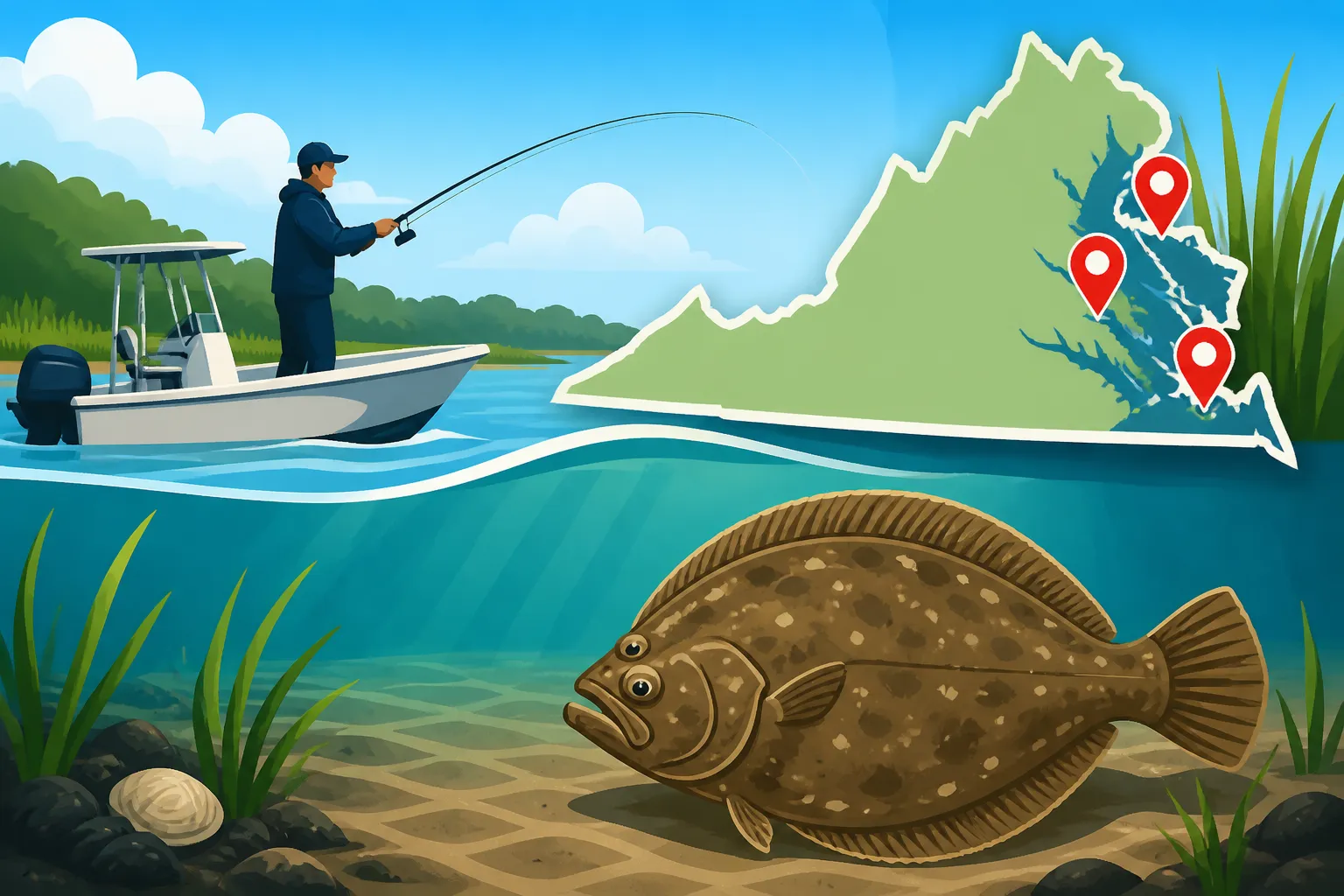
Flounder are structure-oriented fish, plain and simple. They thrive in areas where the bottom topography offers them both cover and a steady supply of prey. Think of it from their perspective: they want a place where they can hide, stay safe from predators (like larger fish or even ospreys), and have currents bring food right to their doorstep. This means you're looking for natural and man-made structures that create ambush points.
Natural structures include oyster beds, submerged grass flats, and distinct drop-offs or ledges. Oyster beds, for instance, are absolute magnets because they not only provide excellent camouflage with their jagged, irregular surfaces but also host a smorgasbord of small crustaceans and baitfish that flounder love to eat. Grass flats, particularly beds of submerged aquatic vegetation, offer similar benefits, acting as nurseries and feeding grounds. Man-made structures are just as important, if not more so, in the Bay. Look for bridge pilings, jetties, old wrecks, channel markers, and artificial reefs. These create current breaks, eddies, and vertical relief that attract baitfish, which in turn attract flounder. The deeper cuts and channels around these structures are often prime real estate.
Seasonal Movements and Depths
Flounder aren't static residents; they're constantly on the move, primarily dictated by water temperature and their spawning cycles. Generally speaking, as the Chesapeake Bay waters begin to warm in late spring and early summer, flounder move from deeper offshore wintering grounds into the shallower, more productive areas of the Bay. They'll frequent channels, flats, and around structures in depths ranging from 10 to 30 feet, sometimes even shallower if the bait is abundant. This is often the prime time for inshore anglers to target them.
As summer progresses and water temperatures peak, flounder might seek slightly deeper, cooler water, but they'll still be very active, particularly during tidal changes when bait is flushed through their ambush points. By late summer and into the fall, usually September and October, you'll see a significant migration. This is when flounder begin their journey back out of the Bay and into the deeper waters of the Atlantic Ocean for winter. During this "fall run," they congregate in larger numbers around deeper channels, inlets, and the mouth of the Bay, providing some of the most exciting fishing opportunities of the year. Targeting them during this period often means fishing depths between 20 to 60 feet, sometimes even deeper around the main shipping channels or near the Chesapeake Bay Bridge-Tunnel.
Prime Flounder Fishing Spots in the Chesapeake Bay
Now that we understand a bit more about how flounder think, let's dive into where you can actually find them. The Chesapeake Bay is huge, but it has distinct areas that consistently produce flounder, year after year. Focus on these zones, and you'll dramatically increase your chances of a successful outing.
Specific Bay Features and Structures
When you're out on the water, whether in your own boat or with a guide, you'll want to hone in on specific types of bottom features. Think of yourself as a detective looking for clues.
One of the most iconic and productive flounder fishing grounds in Virginia is undeniably the Chesapeake Bay Bridge-Tunnel (CBBT) complex. This marvel of engineering creates an incredible array of habitats for flounder. The thousands of bridge pilings, artificial islands, rock jetties, and deep channels around the CBBT are all prime flounder real estate. They provide current breaks, ambush points, and host an enormous amount of baitfish. Anglers often drift baits along the pilings or fan-cast around the islands, paying close attention to changes in depth and current. This area is particularly productive during the spring and fall migrations.
Beyond the CBBT, focus on the major shipping channels and their edges. The Thimble Shoal Channel, for instance, runs right through the lower Bay and has numerous hard bottom areas, wrecks, and drop-offs along its edges that flounder frequent. Another excellent area is the Baltimore Channel (even though it's further north, its influences extend into Virginia waters) and other deep-water routes, where currents scour the bottom, creating prime feeding lanes. Look for distinct depth changes on your fish finder – a sudden drop-off from 20 to 40 feet is often where flounder will sit, waiting for bait to be carried over the edge. Don't overlook smaller, less obvious channels within the Bay's tributaries, like the James, York, or Rappahannock rivers, especially near their mouths where they meet the main Bay. These areas can hold significant numbers of flounder, particularly in early spring and late fall.
Hotspots Near Popular Areas
Even if you don't have a boat, or prefer to stay closer to shore, the Chesapeake Bay offers plenty of accessible flounder spots. Near Virginia Beach, for example, you have several excellent options. The Lynnhaven Inlet is a renowned flounder hotspot. Its intricate network of channels, oyster reefs, and bridge pilings (like those under the Lesner Bridge) provides ideal ambush points. Drifting live bait or bucktails through the inlet on an outgoing tide can be incredibly effective. The Rudee Inlet further south is another excellent option, offering similar structure and tidal flow. These inlets act as funnel points for migrating flounder entering and exiting the ocean.
For pier anglers, the Virginia Beach Fishing Pier offers a chance to catch flounder, especially during peak seasons. While you might not target the deepest channels, flounder will move into shallower waters around the pier pilings, feeding on smaller baitfish and crabs that congregate there. Likewise, the Ocean View Fishing Pier in Norfolk, overlooking the Chesapeake Bay, is another fantastic option. Fishing from piers requires a slightly different approach, often involving weighted rigs dropped straight down or cast out a short distance. You'll find that these pier locations are often excellent for beginners and families looking to enjoy a day of fishing without the need for a boat. Remember to check local regulations for pier fishing, as some piers might have their own rules regarding tackle and catch limits. When considering a fishing trip, especially if you're traveling, checking out options on platforms like FishingBooker can help you find local guides who know these exact spots like the back of their hand. A local guide's expertise can be invaluable for unlocking the Bay's best flounder fishing.
Best Techniques and Baits for Chesapeake Bay Flounder
Catching flounder isn't just about showing up; it's about presenting your bait in a way that triggers their predatory instincts. These fish are masters of ambush, so your technique needs to mimic their natural prey or annoy them enough to strike.
Rigging for Success
When it comes to flounder fishing, presentation is absolutely key. The goal is to keep your bait near the bottom where flounder lie in wait, but also allow it enough movement to look natural. The most popular and effective rig for flounder in the Chesapeake Bay is the classic flounder rig, often called a "fish-finder" rig or a "Carolina" rig adaptation.
This rig typically consists of a main line, a barrel swivel, a leader (usually 18-36 inches of fluorocarbon, which is less visible underwater), and a hook. The key component is the weight, which is often a sinker that can slide freely on the main line above the swivel. This sliding sinker allows the flounder to pick up the bait and move off with it without immediately feeling the resistance of the weight, giving you a better chance to set the hook. Some anglers also incorporate a small float or bead on the leader just above the hook to lift the bait slightly off the bottom, making it more visible and preventing it from burying in mud or debris. For those fishing around heavy structure like the CBBT, a three-way swivel rig can also be effective, allowing one line to go to a sinker and another to a bait, reducing snags in rocky areas. When considering Virginia Fishing Regulations Explained, it's always wise to understand the specific rules for your chosen rig and location.
Top Baits and Lures
Flounder are opportunistic feeders, but they have their favorites. Live bait is almost always king, especially when targeting larger "doormat" flounder. Small minnows, often referred to as "killifish" or "mud minnows," are fantastic choices. Live spot, peanut bunker (menhaden), or small mullet are also incredibly effective. The key is to hook them lightly through the lips or dorsal fin to keep them lively and swimming naturally. A lively baitfish struggling near the bottom is practically irresistible to a hungry flounder.
If live bait isn't available or you prefer artificials, scented soft plastics are excellent. Gulp! Alive! baits by Berkley are incredibly popular, particularly the "Swimming Mullet" or "Shrimp" profiles in chartreuse, pink, or white. Tipping a bucktail jig with a piece of Gulp! or a strip of natural bait (like squid or cut bait) adds scent and bulk, making it even more enticing. Bucktails, typically weighing between 1/2 to 2 ounces depending on current and depth, are classic flounder lures. When jigged slowly along the bottom, they mimic a fleeing baitfish or a shrimp darting away. The combination of scent, action, and color is often enough to trigger a strike. Don't be afraid to experiment with different colors and sizes until you find what the flounder are keying in on that day. When planning your trip, consider checking out a reputable charter service on a platform like FishingBooker, as they often supply top-tier bait and tackle.
Essential Gear and Tips for a Successful Flounder Trip
Having the right equipment and knowing a few key tips can significantly improve your flounder fishing experience. It's not just about getting a bite, but also about successfully landing that fish.
Rod, Reel, and Line Recommendations
For flounder fishing in the Chesapeake Bay, you'll want a setup that offers a good balance of sensitivity, power, and casting ability. A medium-light to medium-action spinning rod, typically 6'6" to 7'6" in length, is ideal. This length provides enough leverage for casting and fighting fish, while the action offers the sensitivity needed to detect those subtle flounder bites, which can sometimes feel like just a slight tap or added weight.
Pair this with a spinning reel in the 2500 to 4000 size range. Look for a reel with a smooth drag system, as even a flounder can put up a decent fight, especially a larger one. For line, braided line is a fantastic choice for flounder fishing. A 10-20 lb test braided line offers superior sensitivity due to its lack of stretch, allowing you to feel even the lightest bites. Its thin diameter also helps with casting distance and cuts through the water better in strong currents. Always use a fluorocarbon leader (15-20 lb test) tied to your braid with a strong knot like an FG knot or a double uni knot. The fluorocarbon is virtually invisible underwater and offers good abrasion resistance, which is important around structure. If you're looking into Chesapeake Bay Half-Day Charter Trips, most will provide all the necessary gear, but it's good to know for your own setup.
Making the Most of Your Outing
Beyond your gear, a few insider tips can really make a difference. Firstly, pay close attention to the tides. Flounder are ambush predators, and moving water is crucial because it brings food to them. The last two hours of an incoming tide and the first two hours of an outgoing tide are often the most productive. The changing current dislodges baitfish and crustaceans, making them easy targets for waiting flounder. Focus your efforts during these periods, especially around choke points like inlets, bridge pilings, and channel edges.
Secondly, don't be afraid to drift. Drifting allows you to cover a lot of ground and present your bait to numerous potential flounder hideouts. Use your boat's trolling motor or the natural current to slowly move over likely areas. Let your bait bounce naturally along the bottom. If you're not getting bites in one area, move a little. Flounder can be very localized, and sometimes moving just a few yards can put you right on top of a school. If you're new to the area or unfamiliar with the Bay's currents, consider booking a trip with a local guide through a service like FishingBooker. They can show you the ropes and put you on fish faster. Understanding What to Look for When Booking a Virginia Fishing Charter can help you select the perfect guide. Always remember that having the proper Virginia Fishing License Guide is crucial before you cast your first line. For a short visit, a Virginia's 10-Day Saltwater Fishing License might be just what you need. And speaking of being prepared, always check out What to Bring on a Virginia Fishing Charter to ensure you have everything for a comfortable and successful day on the water.
Here’s a quick overview of prime flounder spots and their best attributes in the Virginia portion of the Chesapeake Bay:
| Location / Feature | Best For | Key Characteristics | Recommended Technique |
|---|---|---|---|
| Chesapeake Bay Bridge-Tunnel (CBBT) | Large flounder, consistent action | Bridge pilings, artificial islands, rock jetties, deep channels (Thimble Shoal Channel) | Drifting, jigging |
| Lynnhaven Inlet (Virginia Beach) | Accessible, strong tidal flow | Channels, oyster reefs, Lesner Bridge pilings, grass flats | Drifting, casting |
| Rudee Inlet (Virginia Beach) | Inshore action, convenient access | Deep channels, jetties, tidal creeks, nearshore wrecks | Drifting, casting |
| Thimble Shoal Channel Edges | Deeper water flounder, migratory patterns | Hard bottom, sharp drop-offs, wrecks along channel edges | Drifting, bottom bouncing |
| Ocean View Fishing Pier (Norfolk) | Pier fishing, family-friendly, accessible | Pier pilings, artificial reef structure, tidal currents | Bottom rigs, jigging |
| Back River / Poquoson Flats | Shallow water, grass beds, sight fishing | Submerged aquatic vegetation, oyster reefs, mud/sand flats (seasonal) | Drifting, light tackle |
| Offshore Wrecks / Artificial Reefs | Trophy flounder, requires boat access | Sunken ships, man-made reef structures, vertical relief, current breaks | Vertical jigging, live bait |
Remember, while these spots are consistently productive, flounder fishing requires patience and adaptability. Enjoy the process, and soon you'll be enjoying fresh flounder on the dinner table! And for those who prefer to stay on solid ground, there are many Best Fishing Spots You Can Reach Without a Boat or specific Best Fishing Piers in Virginia Beach that can offer great opportunities.
Disclaimer
Fishing conditions and regulations in Virginia can change. Always check the latest Virginia Department of Wildlife Resources (DWR) regulations before heading out. This guide is for informational purposes only and does not constitute official legal advice. Adhere to all local, state, and federal fishing laws and ethical angling practices.