Virginia’s Best Flathead Catfish Waters
Finding those truly massive flathead catfish in Virginia can feel like an endless quest sometimes, right? You hear whispers of giant fish, spend hours on the water, only to come up empty-handed or just catch a few smaller ones. It's frustrating when you're dreaming of that trophy fight. This guide is here to cut through the noise, revealing the best waters across Virginia where you stand the best chance of hooking into some truly impressive flathead catfish.
Understanding Flathead Catfish in Virginia
Flathead catfish are a truly fascinating species, and for many anglers, they represent the pinnacle of freshwater fishing in Virginia. They're not just big; they're powerful, intelligent, and have a unique set of behaviors that make them a challenging and incredibly rewarding catch. Unlike their channel catfish cousins, which are often scavengers, flatheads are ambush predators that prefer live bait, making the hunt for them a more active and strategic endeavor. Many anglers often mistake one catfish species for another, but once you learn the nuances, you'll be able to spot a flathead from a mile away.
Identifying Flathead Catfish
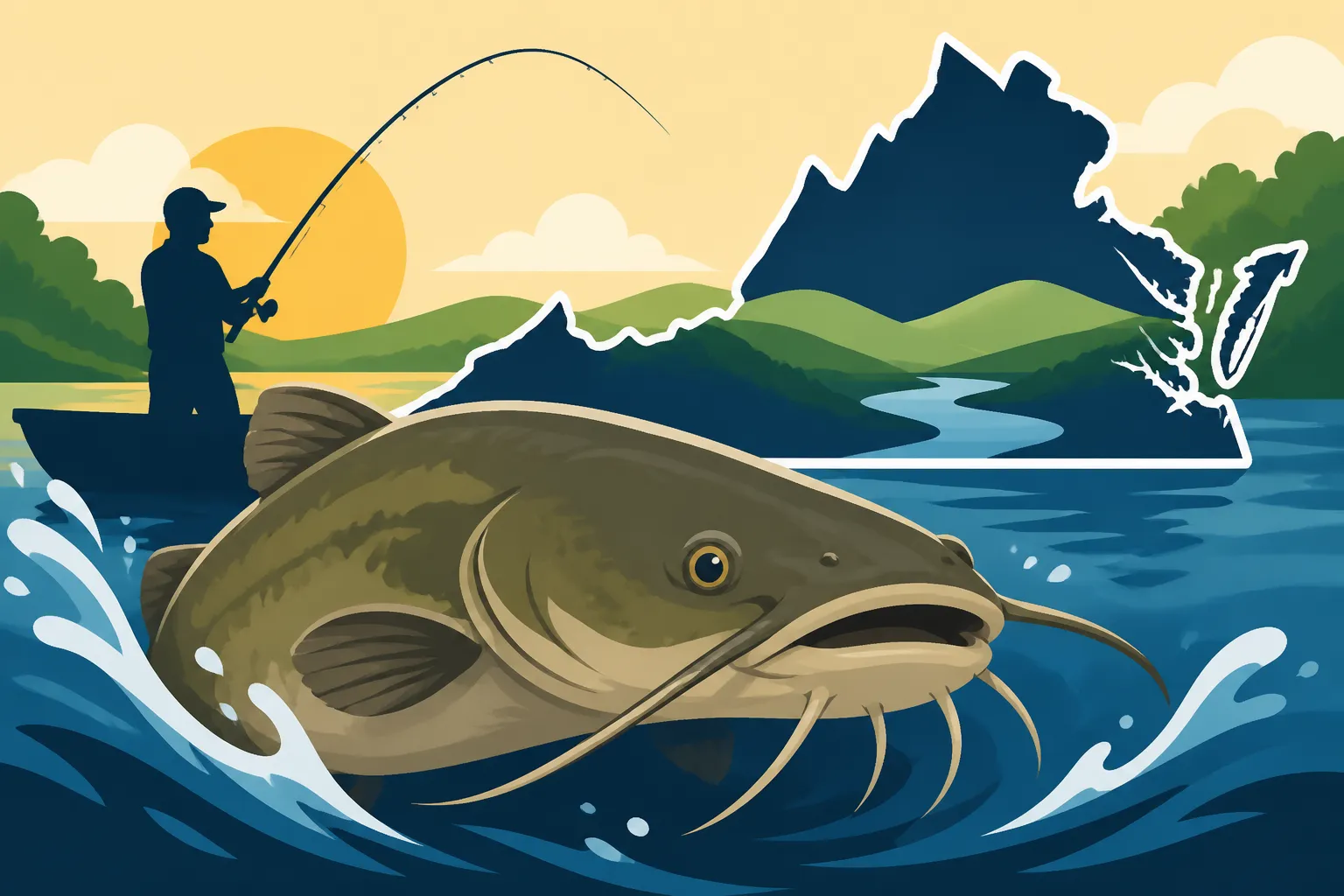
When you pull a flathead out of the water, there are a few key characteristics that immediately set it apart. First and foremost, as their name suggests, they have a distinctly broad, flattened head, especially when viewed from above. Their lower jaw protrudes noticeably beyond the upper jaw, giving them a perpetually "frowning" or determined look. The eyes are relatively small and sit high on their head. Their bodies are typically yellowish-brown to dark brown, often mottled with darker spots or blotches, providing excellent camouflage against river bottoms and submerged timber.
Perhaps the most definitive identifier is their tail fin. Unlike the deeply forked tail of a channel catfish or the slightly notched tail of a blue catfish, a flathead's tail is usually square or only very slightly notched, almost like a paddle. Their adipose fin (the small, fleshy fin on their back near the tail) is also quite prominent. Knowing these features is crucial, not just for identification, but for understanding their unique predatory nature.
Preferred Habitats and Behavior
Flathead catfish are creatures of structure and current. They absolutely love to hide out in submerged logs, brush piles, rock formations, and undercut banks in rivers, or around deep timber and humps in lakes. These spots provide them with perfect ambush points to surprise unsuspecting prey. They are primarily nocturnal hunters, meaning they become most active from dusk through dawn, though they can certainly be caught during the day, especially in deeper, darker holes or during periods of overcast weather.
They have a strong preference for live bait, shying away from prepared stink baits that are so effective for other catfish species. Their diet consists mainly of live fish like bluegill, sunfish, shad, and even other smaller catfish. This predatory behavior influences where they live and how you should target them. They're often found in slow-moving, deep pools or the slower edges of currents, always near something they can use for cover. When it comes to their natural environment, they are tough, hardy fish that thrive in diverse aquatic systems across the state, from tidal rivers to large impoundments.
Top Rivers for Flathead Catfish
Virginia is blessed with an incredible network of rivers, many of which hold truly exceptional flathead catfish populations. These aren't just small fish; these rivers are known for producing trophy-sized flatheads that can test any angler's strength and tackle. The dynamic nature of river systems, with their varying currents, depths, and abundant cover, creates ideal conditions for these ambush predators to thrive and grow to immense sizes.
The James River: A Flathead Paradise
When you talk about flathead catfish in Virginia, the James River almost always comes up first. This iconic river, stretching across the state and flowing through bustling cities like Richmond, holds a secret underworld teeming with giant flatheads. The tidal sections of the James, in particular, are legendary. Here, the mix of brackish and freshwater creates a rich ecosystem that supports a massive forage base for these predators.
Anglers often target the deep holes, submerged pilings, and vast fields of snags and fallen trees that line the riverbanks. Areas around Dutch Gap and the confluence with the Appomattox River are particularly productive. Access can be found at various public boat ramps, and many local guides specialize in targeting the big cats here. The key to success on the James is patience and persistence, often anchoring up-river from a promising snag and letting live baits drift into the cover. It’s not uncommon to pull out flatheads weighing 30, 40, or even 50 pounds or more from these waters, making it a true destination for trophy hunters. You might also find yourself battling some impressive Channel Catfish as you explore Fishing the James River in Virginia.
The Rappahannock River: Tidal Challenges, Big Rewards
Further north, the Rappahannock River offers another fantastic opportunity for flathead enthusiasts. While perhaps not as widely known for its flatheads as the James, the Rappahannock holds its own, especially in its tidal stretches. The river's deep channels, intricate creek mouths, and ample submerged wood provide perfect hideouts for flatheads.
Fishing the Rappahannock requires understanding the tides. Flatheads here often position themselves to intercept baitfish moving with the current. Focusing on slack tides or the beginning and end of strong tidal flows can be highly productive. Areas near Fredericksburg and downstream towards Port Royal are prime locations. Access points are available, though some of the best spots might require navigating smaller tributaries or using a knowledgeable guide. The challenge of the tidal Rappahannock often translates into the reward of a truly massive flathead, making it a compelling option for those willing to put in the effort.
The Potomac River: Northern Virginia's Catfish Hotspot
For anglers in Northern Virginia, the Potomac River offers a convenient and productive option for flathead catfish. While often recognized for its excellent bass fishing, the Potomac's lower tidal sections also harbor a healthy population of large flatheads. The river's vastness and the myriad of channels, humps, and submerged structures provide abundant cover.
The key areas for flathead fishing on the Potomac often include the deep holes below dams or rapids, around bridges, and within the many creek mouths and backwater areas that feed into the main river. Live bait, presented close to structure, is the most effective approach. Anglers frequently launch from various public ramps near Alexandria, Fort Washington, or downriver. While you'll share the water with many other types of anglers, a dedicated flathead hunt on the Potomac can lead to some truly memorable catches, proving that this river is much more than just a bass fishery. It's a fantastic spot for Best Catfish Fishing on the Potomac River.
Premier Lakes and Reservoirs for Flathead Catfish
While rivers often steal the spotlight for trophy flatheads, Virginia's vast lakes and reservoirs are equally potent, offering different fishing experiences and just as much potential for a truly enormous catch. These impoundments, with their deep waters, extensive timber, and stable environments, allow flatheads to grow undisturbed, often reaching gargantuan sizes.
Claytor Lake: Deep Waters, Monster Flatheads
Claytor Lake, nestled in Southwest Virginia, is an absolute gem for flathead catfish. This deep, clear reservoir, formed by the New River, has a reputation for producing some of the largest flatheads in the state. The lake's unique topography, with its dramatic drop-offs, underwater humps, and abundant standing timber, creates a diverse habitat where flatheads thrive.
Anglers targeting flatheads on Claytor Lake often focus on the deeper sections, particularly near the dam and in the lower lake. The key here is to locate the extensive submerged timber and rock piles, which serve as prime ambush points. Using a good fish finder to pinpoint these structures and then presenting live bait directly into or around them is essential. Night fishing is particularly effective on Claytor, as the flatheads move out of their daytime hiding spots to actively feed. The sheer size of the flatheads caught here is legendary, making it a must-visit for serious trophy hunters. Claytor Lake is also known for its Claytor Lake's Big Flathead Catfish and offers a unique Claytor Lake's Unusual Mix of Bass, Catfish, and Walleye in Virginia.
Smith Mountain Lake: Diverse Fishery, Hidden Giants
Smith Mountain Lake, another of Virginia's premier reservoirs, is widely celebrated for its striped bass and largemouth bass, but don't let that fool you—it also holds a fantastic population of flathead catfish, often overshadowed by its more famous residents. The sheer size and depth of Smith Mountain Lake, along with its intricate coves, standing timber, and rock bluffs, provide ample opportunity for flatheads to grow very large.
To find flatheads on Smith Mountain Lake, you'll need to look beyond the typical striper and bass spots. Focus on deep channels, submerged creek beds, and dense timber where flatheads can lurk. Many anglers find success using Carolina rigs with live bait fished off points or along sharp drop-offs at night. The upper reaches of the lake, particularly where the Blackwater and Roanoke Rivers feed in, can be especially productive due to increased current and structure. While you might not hear as much about the flatheads here, they are definitely present and can provide an incredible fight, often surprising anglers targeting other species. You might even find yourself on a Smith Mountain Lake Striped Bass Guide Trips and still hook a monster flathead by accident.
Kerr Lake (Buggs Island): Vast Waters, Abundant Catfish
Spanning the Virginia-North Carolina border, John H. Kerr Reservoir, affectionately known as Buggs Island Lake, is one of the largest lakes in the Southeast and a true powerhouse for catfish, including an impressive population of flatheads. Its immense size, thousands of acres of standing timber, and countless submerged humps and channels make it an ideal environment for these bottom-dwelling predators.
Fishing Kerr Lake for flatheads means embracing its vastness. Anglers often employ drift fishing tactics, covering large areas with multiple lines baited with live sunfish or shad. Targeting deep river channels, the base of old timber stands, and humps during the low-light hours are excellent strategies. With its abundant forage and expansive habitat, Kerr Lake consistently produces large numbers of flatheads, along with giant blue catfish, making it a top destination for any serious catfisherman. Navigating such a large body of water can be intimidating, but with persistence, the rewards are often immense. It's truly one of the Best Catfish Fishing Spots on Buggs Island Lake.
Essential Flathead Catfish Fishing Techniques & Bait
Catching flathead catfish, especially those trophy-sized monsters, isn't about luck as much as it is about understanding their behavior and using the right techniques and bait. These fish are powerful and particular, requiring a strategic approach that differs significantly from fishing for other common species. Don't be fooled into thinking any old rod and reel will do; flatheads demand serious gear and a dedicated mindset.
Live Bait is King
If there's one golden rule for flathead fishing, it's this: live bait is king. Flatheads are true predators, and they prefer to ambush living, struggling prey. Forget the stink baits and cut baits that work so well for channel and blue catfish; while they might occasionally pick up a piece of cut bait, live bait is overwhelmingly more effective for consistently hooking flatheads.
The best live baits are species native to the waters you're fishing. For instance, bluegill, sunfish, gizzard shad, threadfin shad, small carp, or even small creek chubs are excellent choices. The size of your bait should match the size of the flathead you're hoping to catch – for trophy fish, don't be afraid to use a 6-8 inch live bluegill. Hook your live bait through the back, just behind the dorsal fin, or through the lips, ensuring it can swim freely and attractively to any lurking flathead. Always check local regulations regarding the use of live bait, especially when transporting bait from one body of water to another.
Gear Up for the Fight
Flathead catfish are built like tanks and can put up an incredible fight, often testing your tackle to its limits. Skimping on gear here is a recipe for heartbreak. You'll need a heavy-duty setup designed to handle powerful runs and the brute strength of a large fish.
- Rods: Look for a medium-heavy to heavy action rod, typically 7 to 9 feet long. These rods need to have enough backbone to muscle a big fish out of heavy cover, but also enough tip sensitivity to detect subtle bites. Brands like Ugly Stik or Berkley offer durable, affordable options that can stand up to the abuse.
- Reels: A heavy-duty baitcasting reel is preferred for flathead fishing. It needs to have a strong drag system, a large line capacity, and a robust gearing system. Reels from Penn, Abu Garcia, or Shimano in sizes capable of holding 200+ yards of heavy line are excellent choices.
- Line: Braided line is highly recommended due to its strength, low stretch, and abrasion resistance. Opt for 50-80 pound test braided line as your main line. For your leader, use 60-100 pound test monofilament or fluorocarbon, which offers excellent abrasion resistance against sharp rocks and rough timber where flatheads live.
- Hooks: Circle hooks are the way to go for flatheads, not just for their effectiveness but also for promoting ethical catch-and-release. Sizes 5/0 to 10/0 are common, depending on your bait size. The inward-pointing tip of a circle hook ensures it typically sets in the corner of the fish's mouth, minimizing harm.
- Weights: Heavy sinkers are often necessary to hold your bait on the bottom in current or to get it down quickly to deep structure. Pyramid, no-roll, or flat river sinkers ranging from 2 to 8 ounces are commonly used.
Remember, a flathead fight isn't for the faint of heart, especially around snags. Having robust gear is paramount to turning a hook-up into a landed fish.
Strategic Spot Selection
Flathead catfish are not roamers; they are ambush predators that prefer to hold tight to structure. This means your success hinges heavily on your ability to locate and present your bait to these specific holding areas. Think like a flathead: where would you hide to surprise a meal?
In rivers, target deep holes, undercut banks, current seams, and especially dense areas of submerged timber, log jams, and rock piles. Flatheads will often sit just out of the main current, waiting for food to drift by. In lakes and reservoirs, focus on deep creek channels, standing timber, humps, ledges, and rocky points. Any significant change in depth or structure is a potential flathead hotspot.
Using your electronics to scan for depth changes, isolated pieces of cover, and even fish arches (which could be baitfish or the flatheads themselves) is invaluable. Once you've identified a promising spot, position your boat or cast from shore so that your live bait can be presented as naturally as possible, right on the edge of or even within the cover. This often means sacrificing a few rigs to snags, but that's part of the game when hunting these elusive giants. For those looking to maximize their chances, especially on large, unfamiliar waters, considering a guided trip can be a game-changer. You can often find experienced guides specializing in flathead fishing through platforms like FishingBooker, who know these waters like the back of their hand and can put you right on the fish. You can also explore options like Best Fishing Charters and Guides Near Virginia Beach for broader fishing opportunities.
Navigating Regulations and Conservation
Fishing for flathead catfish in Virginia is not just about the thrill of the catch; it's also about being a responsible angler and understanding the rules that are in place to protect these magnificent fish and ensure healthy populations for future generations. Ignoring these regulations can lead to penalties and, more importantly, can harm the very resource we all enjoy.
Virginia's Catfish Regulations
Before you even wet a line, it's crucial to familiarize yourself with Virginia's specific fishing regulations. The Virginia Department of Wildlife Resources (DWR) sets these rules, and they can vary depending on the body of water and the species. While flathead catfish generally have quite liberal regulations compared to other game fish, there are still important points to remember.
Currently, for flathead catfish, there is no minimum size limit and no creel (daily possession) limit in most Virginia waters. This means you can keep as many as you'd like, of any size. However, it's always smart to double-check the latest DWR regulations or consult the current Virginia Fishing Regulations Explained guide, as rules can change. Additionally, there might be specific rules regarding the use of certain types of bait, especially live bait, and how it's sourced. For instance, using baitfish from one river in another separate watershed might be prohibited to prevent the spread of diseases or invasive species. Always ensure you have a valid Virginia fishing license for the waters you intend to fish. If you're wondering about the cost, you can find details in Virginia Fishing License Costs and Types Explained. Don't forget, if you're taking a charter, many times the license is covered, but it's always good to confirm!
Practicing Responsible Catfishing
Even with liberal creel limits, practicing responsible catfishing, especially when targeting flatheads, is incredibly important. These fish can live for many years and grow to impressive sizes, making them valuable components of the ecosystem.
- Catch and Release: While you can keep flatheads, consider releasing the largest fish. Trophy-sized flatheads are often older, slower-growing, and have successfully reproduced many times, contributing significantly to the population. Releasing them ensures they continue to pass on their strong genes. If you do plan to keep a fish, only keep what you will eat.
- Handling Large Fish: When handling large flatheads, try to keep them in the water as much as possible. If you must bring them into a boat for a quick photo, support their entire body weight horizontally, avoiding hanging them vertically by the jaw, which can cause internal damage. A large net or cradle can be very helpful.
- Protecting Habitat: Be mindful of the flathead's preferred habitat. Avoid leaving trash, tangled lines, or discarded bait in or near the water. These magnificent fish rely on clean, healthy environments.
- Utilizing Guides: If you're new to flathead fishing or a specific water body, consider booking a trip with a reputable fishing guide. They not only have the local knowledge to help you catch fish but are often passionate about conservation and can teach you best practices. Services like FishingBooker can help you find experienced guides who are committed to sustainable fishing, ensuring you have a great trip while respecting the resource. Remember that What a Virginia Fishing Charter Includes often extends to conservation practices as well.
By adhering to regulations and adopting responsible practices, we can all help ensure that Virginia's waters remain a fantastic place to pursue flathead catfish for years to come.
Comparing Virginia's Best Flathead Catfish Waters
To give you a quick overview and help you plan your next flathead adventure, here’s a comparison of the top waters we've discussed. Each offers unique challenges and rewards, but all share the potential for truly memorable catches.
| Water Body | Type | Key Characteristics | Best Fishing Methods | Typical Flathead Size Range | Notable Features for Anglers |
|---|---|---|---|---|---|
| James River | River | Tidal, deep holes, abundant snags, strong current. | Anchoring, live bait | 15-50+ lbs | Legendary trophy potential, easily accessible from Richmond. |
| Rappahannock River | River | Tidal, deep channels, creek mouths, submerged wood. | Tidal drift, live bait | 10-40 lbs | Less crowded than James, requires tide knowledge, good challenge. |
| Potomac River | River | Tidal lower sections, diverse structure, heavy boat traffic. | Live bait near structure | 10-35 lbs | Northern Virginia access, often overlooked for flatheads, good numbers. |
| Claytor Lake | Lake | Deep, clear, standing timber, dramatic drop-offs. | Night fishing, electronics, live bait | 20-60+ lbs | Monster flathead potential, unique lake structure. |
| Smith Mountain Lake | Lake | Deep, vast, complex coves, rock bluffs, diverse fishery. | Night fishing, deep channels, live bait | 15-45 lbs | Excellent multi-species lake, flatheads are a hidden gem. |
| Kerr Lake (Buggs Island) | Lake | Immense size, vast standing timber, river channels. | Drift fishing, live bait | 20-55+ lbs | High numbers of catfish, great for targeting multiple species, vast waters. |
When considering which water to tackle, think about the type of experience you're looking for. Are you after a pure trophy hunt on Claytor or the James, or do you prefer the challenge of tidal rivers like the Rappahannock? All these locations offer world-class flathead fishing, and perhaps you could even book a local guide through FishingBooker to explore the best of what Virginia has to offer.
Final Thoughts on Virginia Flathead Catfish
Embarking on a flathead catfish fishing trip in Virginia is an adventure, plain and simple. It's a journey into the deeper, often hidden parts of our waterways, where these impressive predators lurk. There's a certain thrill in knowing that every bite could be that fish of a lifetime, a true river or lake monster that will test your patience, skill, and tackle to its absolute limits. These fish don't give up easily, and that's precisely why we chase them with such dedication.
From the strong currents and submerged timber of the James and Rappahannock rivers to the deep, structure-rich impoundments of Claytor, Smith Mountain, and Kerr lakes, Virginia offers a diverse playground for flathead enthusiasts. Each body of water presents its own set of challenges—navigating strong tides, pinpointing deep structure with sonar, or simply enduring the quiet hours of night fishing—but the reward of a powerful, hard-fighting flathead on the end of your line is an experience that keeps anglers coming back year after year.
Remember, the key to consistent success lies in understanding the flathead's predatory nature, equipping yourself with robust gear, and meticulously choosing your fishing spots. And perhaps most importantly, always respect the resource by adhering to regulations and practicing responsible angling techniques. Whether you’re a seasoned catfisherman or a newcomer eager to tackle a true freshwater giant, Virginia’s best flathead catfish waters are waiting to deliver an unforgettable fishing experience. Don’t hesitate to use resources like FishingBooker to connect with local experts who can guide you to these elusive giants and share invaluable local insights.
Disclaimer
Please remember that fishing regulations and conditions can change. Always consult the latest Virginia Department of Wildlife Resources (DWR) regulations before your trip. Fishing inherently carries risks; exercise caution and prioritize safety on the water.