Why some Virginia waters have special bass length rules
It can be incredibly frustrating to head out for a peaceful day of fishing, only to discover that the bass rules you know by heart don't apply to the specific stretch of water you're on. One lake might let you keep five bass of any size, while a nearby reservoir demands you release anything between 12 and 15 inches. This guide is here to clear up that confusion, explaining why some Virginia waters have special bass length rules and how these regulations help maintain the incredible fishing opportunities we cherish.
Understanding Virginia's Baseline Bass Regulations
Before we dive into the exceptions, it's helpful to understand the general framework for bass fishing in the Commonwealth. Knowing the standard rules makes it easier to spot, and more importantly, understand, why certain areas have unique stipulations.
The Statewide Daily Limit and General Length Rules
For the vast majority of Virginia's waters, anglers targeting black bass – that includes largemouth, smallmouth, and spotted bass – are allowed a daily creel limit of five fish in total. This means you can keep a combination of these species, but the total number can't exceed five per person per day. It’s important to remember that Largemouth and smallmouth bass count toward the same daily limit in Virginia.
When it comes to length, the statewide rule is often surprisingly simple: there isn't one for most waters. For many lakes and rivers, if you catch a bass and it counts towards your daily limit, you can keep it regardless of its size, as long as it's not a protected species or from a water body with special rules. This can be a relief for new anglers, as it removes one layer of complexity. However, this flexibility is precisely why those "special rules" become so critical in other specific locations. You can confirm the Virginia's daily bass limit is 5 fish combined through the DWR regulations.
Imagine a new angler, eager to try their hand at fishing on a local community pond. They might reel in a few smaller largemouth bass, perfectly within the bounds of the statewide daily limit, and happily take them home. This scenario highlights the ease of the general rules, but also underscores the potential for misunderstanding when they venture to a more intensely managed fishery. It's easy to assume "a bass is a bass," but that mindset can quickly lead to trouble if you haven't checked the local guidelines.
Why Even Have Basic Regulations?
You might wonder why we have any rules at all if the fish are plentiful. The truth is, all fishing regulations, even the most basic ones like a five-fish daily limit, are rooted in sound conservation principles. They exist to ensure that our fish populations remain healthy and robust for current and future generations of anglers.
The primary reason for any regulation is population management and sustainability. Without limits, it wouldn't take long for even the most productive fishing spots to become overfished. Imagine if everyone could keep every fish they caught; it would deplete the breeding stock and leave very few fish to grow to a desirable size. The Virginia Department of Wildlife Resources (DWR) plays a crucial role here, constantly monitoring fish populations, conducting surveys, and adjusting regulations to reflect the health of our fisheries. These efforts are often supported by the revenue generated from licenses. Learn more about How Fishing License Fees Support Wildlife Conservation in Virginia.
Consider a popular fishing spot that sees heavy angler pressure every weekend. Without a daily limit, that spot could quickly become barren. The DWR sets these limits as a first line of defense, a generalized approach to prevent rapid depletion across most of the state's diverse waterways. It’s a proactive step to ensure that the fish you catch today aren't the last ones left. These regulations allow for a sustainable harvest, meaning anglers can enjoy their sport without undermining the long-term health of the ecosystem.
The Science Behind Special Bass Length Rules
While statewide regulations provide a good baseline, Virginia's diverse waterways mean that a "one size fits all" approach simply doesn't cut it. This is where special bass length rules come into play, tailored to the unique characteristics and management goals of specific lakes and rivers.
Protecting Spawning Stock and Promoting Growth
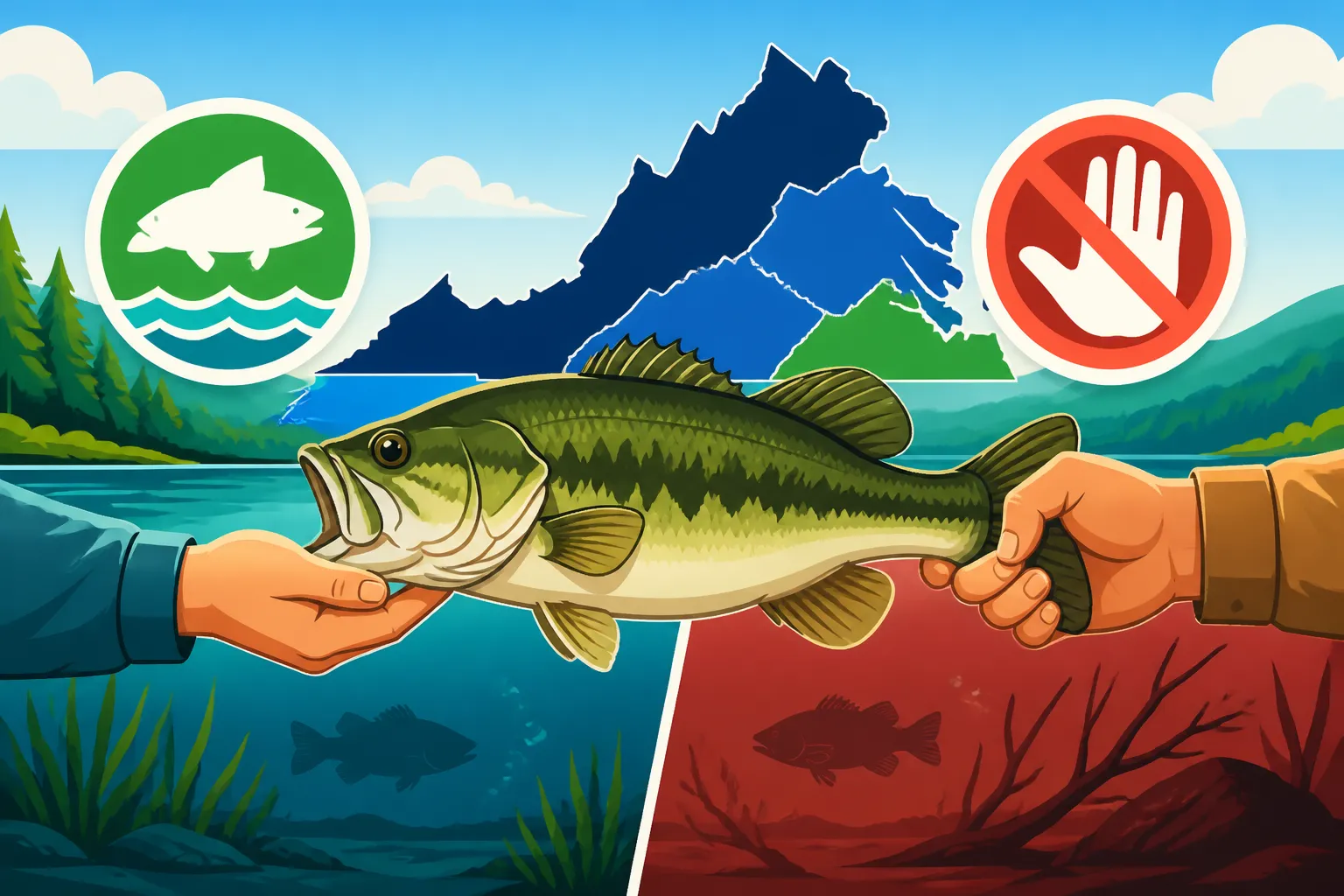
One of the most common and effective types of special bass length rules is the "slot limit." A slot limit dictates that bass within a certain size range must be immediately released, while fish outside that range (either smaller or larger) can be kept. For example, a common slot limit might require anglers to release all bass between 12 and 15 inches.
The science behind slot limits is quite elegant. By protecting medium-sized fish (those in the "slot"), the DWR aims to achieve two critical goals. First, these are often the most reproductively active fish, so releasing them allows them to continue spawning, bolstering the population's future. Second, it encourages anglers to harvest smaller fish (below the slot), which helps to thin out an overabundance of slow-growing individuals, allowing the remaining fish to grow larger. It also allows the bigger "trophy" fish (above the slot) to be harvested, though sometimes these are also protected. This can be complex, which is why Some Virginia lakes enforce their own bass slot limits.
Think of a lake where studies have shown a high number of small, stunted bass. This might be due to a lack of sufficient forage for all of them to grow large, or perhaps too many predators are eating the larger fish. Implementing a slot limit in such a lake — say, releasing all bass between 12 and 15 inches while encouraging harvest of smaller ones — can help correct this imbalance. By reducing competition among the smaller fish, they have a better chance to reach the protected slot size, reproduce, and eventually grow even larger. This strategic removal of smaller fish and protection of medium-sized breeders is a powerful tool for fisheries managers.
Managing Trophy Fisheries
On the other end of the spectrum, some special bass length rules are designed with a very specific goal: to cultivate trophy fisheries. These regulations often involve a minimum length limit that is significantly higher than what you might find on other waters, perhaps an 18-inch or even 20-inch minimum size for keeping bass.
The purpose of these higher minimum length limits is straightforward: to allow more bass to survive to old age and grow to exceptionally large sizes. By protecting all fish below a certain threshold, the DWR increases the chances that a substantial number of bass will reach that coveted "trophy" status. This not only provides an exciting challenge for dedicated anglers but also enhances the reputation of specific lakes, drawing in anglers from all over.
Consider a lake like Smith Mountain Lake, which is renowned for its big bass. If all bass could be harvested at any size, it would be difficult for the population to produce those truly massive fish that anglers dream of. By enforcing a higher minimum length, such as what you might find for How to Catch a Trophy Largemouth Bass at Smith Mountain Lake, the DWR ensures that there's a strong contingent of older, larger bass in the system. This creates a challenging but rewarding experience for anglers looking for that personal best. These trophy fisheries also have a significant economic impact, boosting local businesses from tackle shops to guide services, as anglers invest in specialized gear often found on platforms like Amazon and book trips to target these giants.
Addressing Environmental Factors and Habitat Conditions
It's not just about how many fish are caught; the health of a fish population is deeply intertwined with its environment. Water quality, the abundance of forage (baitfish, crawfish, insects), and the quality of physical habitat (cover, spawning areas) all play critical roles in how quickly and how large bass can grow. Special length rules can be a direct response to these environmental factors.
If a lake has a particularly rich and diverse forage base, providing an abundance of food for bass, the DWR might implement rules that encourage anglers to harvest more fish or allow fish to reach larger sizes before being kept, knowing that the lake can support rapid growth. Conversely, if a lake has poor water quality, limited habitat, or a struggling forage base, special regulations might be put in place to reduce harvest pressure, giving the bass population a chance to recover or stabilize under less-than-ideal conditions. DWR biologists continually survey these waters, collecting data on fish health, growth rates, and environmental parameters, all of which inform these specific management decisions.
For example, imagine a reservoir that has recently experienced a significant drought or a period of unusual nutrient runoff. The DWR might temporarily adjust length limits to protect the bass population during this stressful time, perhaps by making a formerly productive slot limit more restrictive, or by increasing a minimum size. These responsive measures are crucial for maintaining the long-term viability of Virginia's fisheries, ensuring that fish populations can bounce back from natural or human-induced environmental challenges.
Navigating Specific Virginia Waters with Special Bass Rules
With so much variation, it’s understandable if you feel a little overwhelmed. The key to successful and legal fishing in Virginia is knowing that "statewide rules" are just the starting point. Always investigate the specific regulations for the water you plan to fish.
Key Examples of Lakes with Unique Regulations
Virginia is home to many fantastic fishing lakes, and several are well-known for their unique bass regulations. These lakes serve as prime examples of how localized rules are applied to achieve specific fishery management goals.
Take Claytor Lake, for instance, a popular spot in Southwest Virginia. It's often cited for its specific bass regulations, which might include various minimum sizes or slot limits tailored to its diverse bass fishery, featuring largemouth, smallmouth, spotted, and even Alabama bass. Understanding Claytor Lake's Mixed Bass Fishery: Largemouth, Smallmouth, Spotted, and Alabama helps illustrate why a blanket rule wouldn't be effective. Another notable example is Smith Mountain Lake, particularly for its largemouth and smallmouth bass. While the exact regulations can change year to year, it's frequently managed to promote healthy populations of larger fish. For anglers planning a trip to the Best Bass Fishing Lakes in Virginia, researching these specific rules is paramount.
Here's a simplified table illustrating how various common bass regulations might look across different Virginia waterways. Remember, these are hypothetical examples and not current, definitive rules for these lakes. Always check the official DWR regulations before fishing.
| Water Body (Example) | Species | Daily Creel Limit | Length Regulation Example | Rationale |
|---|---|---|---|---|
| Small Farm Pond | Largemouth Bass | 5 | None (Statewide Default) | General harvest, low pressure |
| Claytor Lake | Largemouth/Smallmouth/Spotted Bass | 5 | 12-15 inch Slot Limit (release) | Promote growth, protect spawners |
| Smith Mountain Lake | Largemouth/Smallmouth Bass | 5 | 14-inch Minimum Length Limit | Develop trophy potential |
| James River (Upper) | Smallmouth Bass | 5 | None (Statewide Default) | Healthy population, riverine system |
The table really highlights that what you can keep depends entirely on where you cast your line. If you're heading to a lake like Claytor, knowing about a potential 12-15 inch slot limit is critical. Accidentally keeping a fish within that range isn't just a minor mistake; it can lead to penalties. This is why a simple check of the DWR regulations is as important as checking your tackle box before you leave the house.
How to Stay Informed and Compliant
Given the variability, staying informed is your best defense against accidental violations. The Virginia Department of Wildlife Resources (DWR) is your ultimate and most reliable source for all fishing regulations. Their website is comprehensive, regularly updated, and typically includes specific regulations for individual water bodies.
Before you head to an unfamiliar lake or river, make it a habit to visit the DWR website or grab a copy of their annual fishing regulations guide. You can find detailed information on Virginia Fishing Regulations Explained there. Local bait and tackle shops are also excellent resources. The folks working there often have first-hand knowledge of the local waters and can quickly point out any special regulations or recent changes. Many anglers find it helpful to download the DWR app or save a digital copy of the regulations on their phone, so they can access it on the go, even without internet service in some remote areas. This ensures you're never caught off guard.
Imagine pulling up to a popular boat ramp on a Saturday morning, excited for a day of fishing. You've got all your gear, your fishing license is in order, but you haven't checked the specific regulations for this particular lake. You catch what you believe to be a legal limit of bass, only to have a DWR conservation police officer check your cooler and inform you that half your catch is illegal due to a slot limit you weren't aware of. Not only is this embarrassing, but it can also result in fines and the forfeiture of your catch. A quick five-minute check beforehand could save you a lot of hassle and ensure your fishing trip remains a positive experience. It’s a small effort that pays off immensely in peace of mind and compliance.
The Broader Impact: Why These Rules Matter to You
It's easy to view fishing regulations as burdensome, another set of hoops to jump through. But understanding the 'why' behind special bass length rules reveals that they are, in fact, incredibly beneficial, both for the environment and for your own fishing enjoyment.
Ensuring Sustainable Fishing for Future Generations
The most significant impact of these specialized rules is their contribution to the long-term health and sustainability of Virginia's fisheries. The DWR isn't just imposing rules for the sake of it; they are actively managing complex ecosystems to ensure that bass populations thrive, reproduce, and grow for years to come.
By carefully tailoring length limits to specific water bodies, the DWR ensures that there are always enough healthy breeding fish, and that young fish have the opportunity to mature. This proactive management means that your children, grandchildren, and future generations of anglers will have the same, if not better, opportunities to enjoy the sport you love. It’s a collective responsibility, and by understanding and adhering to these rules, anglers become crucial partners in conservation. Every fishing license purchased directly supports these management efforts, from habitat restoration to fish stocking and law enforcement.
Picture yourself introducing a child to fishing. Their excitement as they reel in their first bass is unforgettable. That experience is made possible because generations of anglers and wildlife managers have worked together to protect these resources. If we simply allowed unrestricted harvest, those moments might become rare or disappear entirely. These rules are a testament to our commitment to environmental stewardship, guaranteeing that the joy of a good catch remains a vibrant part of Virginia's outdoor heritage.
Enhancing Your Fishing Experience
While the long-term conservation benefits are paramount, these special bass length rules also have a very direct and positive impact on your immediate fishing experience. When regulations are well-designed and properly implemented, they can lead to better fishing.
Think about it: if a lake has a slot limit designed to protect productive spawners, it's likely that the lake will continue to produce plenty of young bass, ensuring a lively fishery. If another lake has a high minimum length limit to create a trophy fishery, you know that when you do get a bite, there’s a much higher chance it could be the fish of a lifetime. These targeted rules aim to create diverse fishing opportunities across the state, from numbers-oriented fisheries where you can catch a lot of smaller fish, to trophy waters where patience might be rewarded with a true giant.
There's a unique satisfaction that comes from knowing you're participating in a well-managed sport, that your actions contribute to the health of the resource, and that the fish you catch are part of a thriving ecosystem. Whether you're targeting a large smallmouth bass on the Shenandoah River or seeking a trophy largemouth in a managed lake, understanding and respecting the rules makes the entire experience more meaningful. It transforms fishing from a simple recreational activity into an active partnership with nature, where every legal catch is a testament to effective conservation.
Disclaimer
Please remember that fishing regulations, including daily limits and length requirements, can change. Always consult the official Virginia Department of Wildlife Resources (DWR) website or the current Virginia Freshwater and Saltwater Fishing Regulations guide before you head out to ensure you have the most up-to-date information. This guide provides general information and examples, not legal advice or definitive current regulations.