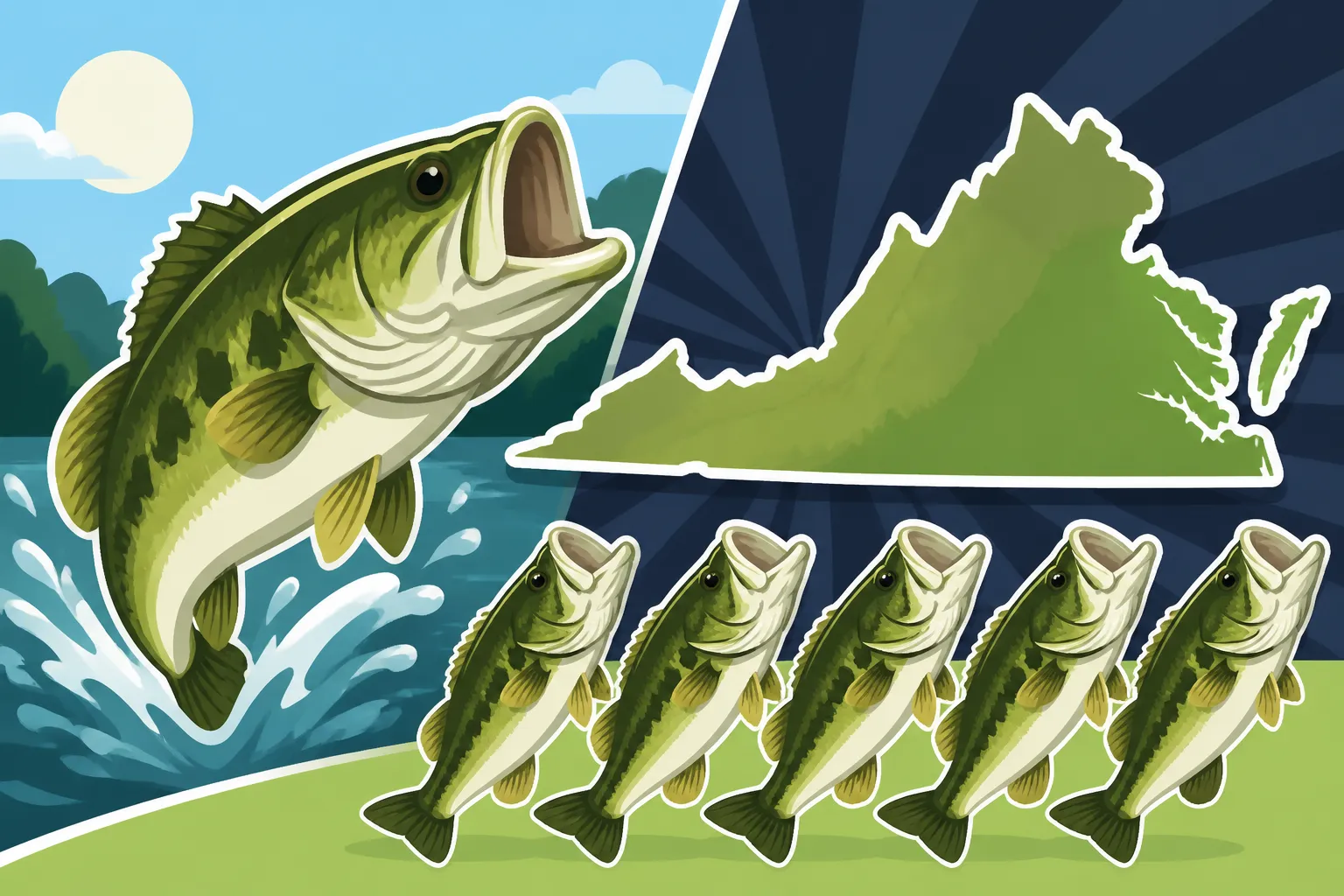
Virginia’s daily bass limit is 5 fish combined
One of the most common questions I hear from fellow anglers in Virginia, especially those new to the scene or just visiting, is about how many bass they can actually keep. It can feel a bit like navigating a maze sometimes, with all the different rules and regulations. This comprehensive guide is here to clear up that confusion, focusing specifically on Virginia's statewide daily bass limit and helping you understand not just the what, but also the why behind these important fishing guidelines.
Understanding the Statewide Bass Limit in Virginia
Let's get right to the heart of the matter: in Virginia, the statewide daily creel limit for bass is five fish combined. This isn't five largemouth and five smallmouth; it means your total catch of any bass species—largemouth, smallmouth, spotted, or Alabama bass—cannot exceed five fish in a single day. This rule is a cornerstone of the Department of Wildlife Resources (DWR) efforts to manage our beloved bass populations, ensuring healthy fisheries for generations of anglers to come.
Imagine you're out on a beautiful Saturday morning, maybe hitting the tranquil waters of Lake Anna or the more rugged terrain of the James River. You catch three plump largemouth bass and two feisty smallmouth bass. At that point, you've reached your daily limit of five combined bass. Even if you're on a hot streak and the fish are biting aggressively, you must stop retaining bass. You can certainly continue to fish, but any additional bass caught must be immediately released back into the water, unharmed. It’s all about responsible angling and respecting the resource.
This "five fish combined" rule applies universally across most public freshwater bodies in Virginia, from the largest reservoirs to smaller ponds and rivers. However, as we'll delve into later, there are specific exceptions, often for particular lakes or rivers, that might have even stricter limits or length restrictions. Always, and I mean always, check the specific regulations for the water body you plan to fish, because getting caught unaware is a situation no one wants to be in. The Virginia Fishing Regulations Explained document is your best friend here.
Defining "Combined" Bass Species
When the DWR says "five fish combined," they're not just throwing around words; it's a very specific directive that covers all common bass species you're likely to encounter in Virginia's freshwater systems. This primarily includes largemouth, smallmouth, spotted, and occasionally Alabama bass, especially in certain western Virginia lakes.
Think of it like this: your fishing trip could involve targeting a mix of species. You might start your day flipping jigs for largemouth bass in shallow cover, then switch to cranking deep ledges for smallmouth, and perhaps even stumble upon a school of spotted bass. No matter the species, each bass you decide to keep contributes to that overarching five-fish daily total. This regulation is designed to simplify enforcement and ensure a consistent level of harvest management across the board. It acknowledges that anglers often don't exclusively target one species, and it helps prevent overharvesting of any single bass type. For a deeper dive into these different fish, check out our guide on Virginia Bass Fishing: Largemouth, Smallmouth, Spotted, and Alabama Bass.
The "Daily Creel Limit" Explained
The term "daily creel limit" is essentially the maximum number of fish of a particular species or group of species that an individual angler can legally keep in one 24-hour period, typically from midnight to midnight. It's not about how many you catch, but how many you retain. If you catch 20 bass in a day but release 15 of them, you're perfectly fine as long as the five you kept adhere to any size regulations.
This limit is incredibly important for maintaining healthy fish populations. Without these limits, a few highly successful anglers could potentially deplete local fish stocks, impacting everyone else's fishing experience and the long-term health of the ecosystem. It's a balance—allowing anglers to enjoy their harvest while safeguarding the future of the fishery. When you head out, bringing a reliable fishing scale, like those you can find on Amazon, can help you check your catches against potential length limits, but for the most part, simply counting your retained fish is key for the creel limit.
Why These Limits Matter: Conservation and Fishery Health
It's easy to sometimes feel like regulations are just there to make things complicated, right? But when it comes to fishing limits, especially for popular game fish like bass, these rules are crucial. They're not arbitrary; they are carefully determined by fisheries biologists and conservation experts to ensure that Virginia's waters remain vibrant and full of fish for years to come.
Imagine a world without limits. Anglers might take home dozens of bass in a single outing, especially during peak feeding times or the Bass Spawn Timing on Virginia Lakes. This unchecked harvesting would quickly deplete fish populations, leading to fewer and smaller fish over time. It would be a tragedy for both the fish and the anglers who cherish the sport.
Sustaining Bass Populations for Future Generations
The primary reason for daily limits is conservation. Bass are incredibly popular sport fish, attracting thousands of anglers to Virginia's lakes and rivers every year. Without strict management, these populations could easily be overfished. The DWR monitors bass populations through various surveys, electrofishing, and angler reports. They look at factors like fish size, age, reproduction rates, and overall biomass to determine sustainable harvest levels.
When you adhere to the five-fish combined limit, you're directly contributing to the sustainability of the fishery. Each fish released helps to ensure there are enough breeding adults to produce the next generation, and enough young fish to grow into trophy-sized specimens. It’s a collective effort, and every angler plays a part in this vital conservation work. This forward-thinking approach means that your children and grandchildren will also have the opportunity to experience the thrill of reeling in a Virginia bass.
Preventing Overharvesting and Size Stunting
Overharvesting doesn't just reduce the number of fish; it can also lead to a phenomenon known as "stunting." If too many larger fish are removed, the remaining smaller fish might grow slower or remain smaller because they face less competition for food. Or, conversely, if too many smaller fish are removed, it might disrupt the age structure. Daily limits help maintain a healthy size and age distribution within the bass population.
Consider a lake where the bass population is already under pressure. Without a daily limit, anglers could easily remove a significant portion of the adult fish, which are vital for reproduction. Over time, this could lead to a younger, less productive fishery with fewer large, desirable fish. The daily limit acts as a protective measure, allowing a sufficient number of bass to reach maturity and contribute to the spawning cycle, thus preventing widespread stunting and ensuring a balanced ecosystem. It's why rules like Is there a statewide length limit on bass in Virginia? are also critical alongside creel limits.
How Angler Compliance Supports Wildlife Management
Every time you follow the fishing regulations, you're actively supporting the DWR's wildlife management goals. The revenue generated from fishing licenses directly funds these conservation efforts, including habitat restoration, stocking programs, and scientific research. When anglers are compliant, it makes the DWR's job easier and more effective.
For instance, DWR biologists rely on creel surveys and data collected from anglers to understand population trends. If anglers are consistently exceeding limits, it skews the data, making it harder to accurately assess the health of a fishery and implement appropriate management strategies. Think of it as a partnership: the DWR provides the resources and expertise, and anglers provide the compliance and respect for the rules that keep the system working. It’s a system that truly benefits everyone who enjoys the outdoors.
Navigating Special Regulations: Beyond the Statewide Rule
While the five-fish combined daily limit is the general rule of thumb for bass in Virginia, it's absolutely critical to understand that many water bodies have their own special regulations. These can include different daily limits, minimum or maximum length restrictions, or even "slot limits" that specify a range of sizes you can keep, with fish outside that range needing to be released. Ignoring these specific rules can lead to fines and penalties, even if you were following the general statewide limit.
These special regulations aren't arbitrary. They're usually put in place for very specific ecological reasons. For example, a lake might have a slot limit to protect a certain size class of bass, allowing them to grow larger or to ensure they have a chance to reproduce. Other times, a lower daily limit might be imposed on a smaller body of water that can't sustain the same harvest pressure as a large reservoir.
Localized Length and Slot Limits
One of the most common variations you'll encounter are length limits. This means that in addition to the five-fish creel limit, the fish you keep must also fall within a specific size range. For example, a particular lake might have a 12-inch minimum length limit for largemouth bass. This means any bass shorter than 12 inches must be released immediately, even if you haven't reached your five-fish limit yet. These minimum limits are often designed to ensure that most bass have at least one opportunity to spawn before being harvested.
Slot limits are another critical special regulation. These are a bit more nuanced. With a slot limit, you might be allowed to keep fish under a certain size and fish over a certain size, but fish within a specified "slot" (e.g., between 12 and 15 inches) must be released. For instance, a lake might have a slot limit of 12-15 inches, meaning you can keep bass under 12 inches or over 15 inches, but any bass caught measuring between 12 and 15 inches must be released. The goal here is often to protect the highly productive breeder-sized fish, allowing them to contribute more to the population. For more details, you might want to read Some Virginia lakes enforce their own bass slot limits.
| Bass Species | Statewide Daily Limit | Statewide Length Limit | Common Special Limits (Examples) |
|---|---|---|---|
| Largemouth | 5 combined | None | 12-inch minimum, 12-15" slot, 14-inch minimum (Lake Anna) |
| Smallmouth | 5 combined | None | 12-inch minimum, 18-inch minimum (some river sections) |
| Spotted | 5 combined | None | Often included with largemouth/smallmouth general rules |
| Alabama | 5 combined | None | Specific catch-and-release only (Claytor Lake) |
Note: This table provides examples; always check current DWR regulations for specific water bodies.
Water Bodies with Unique Bass Rules
It's impossible to list every single exception here, but know that certain popular fishing spots in Virginia often have their own unique set of rules. For example, Claytor Lake has special regulations for its bass species, including specific rules for Alabama Bass. Similarly, the Shenandoah River, renowned for its smallmouth bass fishery, might have different length and creel limits on certain stretches to protect its unique ecosystem.
Before you even tie on your first lure, a quick check of the DWR's online regulations or a call to a local bait shop can save you a lot of headache. Most anglers I know keep a copy of the current regulations pamphlet in their tackle box or have the DWR app on their phone. This is especially important for anglers targeting Best Bass Fishing Lakes in Virginia, as these popular spots often have tailored regulations. If you're planning a trip to a new lake or river, make it a habit to look up the specific rules for that body of water.
Consequences of Non-Compliance
Let's be real: nobody wants to get a ticket while they're out enjoying a peaceful day on the water. But the penalties for fishing without a license or exceeding creel and length limits can be significant. Virginia game wardens take their job seriously, and they are out on the water regularly, checking for compliance.
Getting caught with more than the legal limit of bass, or with fish outside the legal length window, can result in fines that easily run into the hundreds of dollars. In some cases, repeated offenses or egregious violations could even lead to your fishing privileges being suspended. It's simply not worth the risk. Always make sure you have your Virginia Fishing License Guide and are familiar with the rules for the specific waters you're fishing. Being informed and compliant is the easiest way to ensure a stress-free and enjoyable fishing experience.
Practical Tips for Anglers: Staying Compliant and Responsible
Understanding the rules is one thing, but consistently applying them while you're out on the water, especially when the fish are biting, can be another challenge entirely. However, with a few practical habits and a mindful approach, staying compliant with Virginia's bass limits becomes second nature. It's about being prepared and taking responsibility for your actions as an angler.
Remember, the goal isn't just to avoid a fine; it's to contribute to the health of the fishery. Every responsible decision you make, from releasing an undersized fish to accurately counting your kept bass, helps preserve the sport we all love.
Keeping Track of Your Catch
One of the simplest and most effective ways to stay compliant is to actively track your catch. Don't rely on memory, especially if you're having a particularly good day or if you're fishing with multiple people.
- Designate a livewell or cooler for kept fish only: If you plan to keep bass, put them directly into a designated livewell or cooler. This helps you visually track your count.
- Use a clicker counter: A small, inexpensive clicker counter, easily found online or at sporting goods stores, is a fantastic tool. Just click it each time you place a bass in the livewell.
- Measure every fish: If there's any doubt about a length limit, measure the fish immediately. Keep a reliable measuring board or tape handy, perhaps one you ordered from Amazon, prominently displayed in your boat or tackle bag. This is particularly important when dealing with Why some Virginia waters have special bass length rules.
- Communicate with fishing partners: If you're fishing with friends or family, make sure everyone understands the combined limit and communicates clearly about fish being kept. It's a team effort to stay legal.
Proper Catch and Release Techniques
Let's face it, most of the bass you catch will likely be released, whether it's because they're undersized, you've reached your limit, or you simply prefer catch-and-release. Knowing how to properly release a fish greatly increases its survival rate, which is just as important for conservation as following creel limits.
- Minimize handling: Try to keep the fish in the water as much as possible. If you need to bring it aboard, do so quickly.
- Use wet hands: Always wet your hands before touching a fish. Dry hands can remove the protective slime layer, leaving the fish susceptible to disease.
- Support the fish horizontally: If you're holding a bass for a quick photo, support its weight horizontally, ideally with one hand gripping the lower jaw (without crushing it) and the other supporting its belly. Avoid hanging it vertically by the jaw for extended periods, as this can damage its internal organs.
- Remove hooks carefully: Use needle-nose pliers or a dehooking tool to remove hooks quickly and gently. If the fish is deeply hooked, it's often better to cut the line as close to the hook as possible rather than tearing the fish's throat trying to retrieve it.
- Revive the fish: If a fish looks sluggish, hold it gently in the water, facing into the current, until it regains its strength and swims away on its own.
Being a Responsible Angler: Beyond the Rules
Being a responsible angler goes beyond just following the letter of the law. It’s about embodying an ethic of conservation and respect for the environment. This includes things like:
- Leaving no trace: Pack out everything you pack in. Don't leave trash, discarded fishing line, or bait containers on the shore or in the water.
- Respecting private property: Always know if you're on public or private land and obtain permission if necessary.
- Educating others: If you see someone inadvertently breaking a rule, politely inform them. Most people just aren't aware.
- Reporting violations: If you witness serious or intentional violations, report them to the DWR. They have a reporting hotline and online options.
- Support conservation efforts: Consider joining local fishing clubs or conservation organizations that work to protect Virginia's fisheries. This might even mean understanding How Fishing License Fees Support Wildlife Conservation in Virginia.
By adopting these practices, you're not just a law-abiding angler; you're a steward of Virginia's incredible fishing heritage.
Disclaimer
The information provided in this guide is intended for general informational purposes only and does not constitute legal advice. Fishing regulations are subject to change, and it is the sole responsibility of each angler to consult the most current Virginia Department of Wildlife Resources (DWR) regulations before engaging in any fishing activity. Always refer to the official DWR website or a current DWR fishing guide for precise and up-to-date rules specific to the waters you plan to fish.