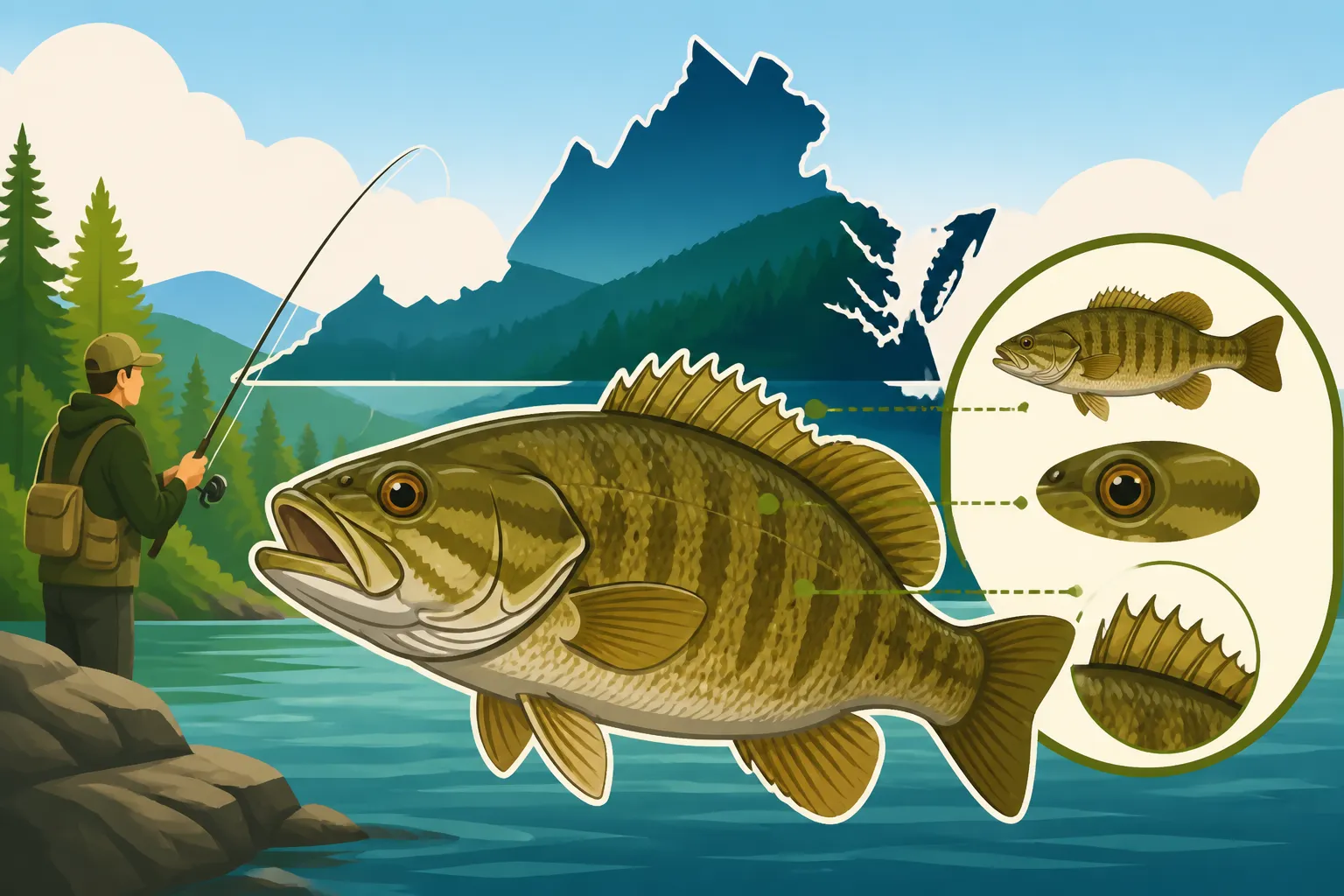
Smallmouth Bass Identification Guide for Anglers
It's happened to every angler, hasn't it? You've got a feisty bass on the line, fighting hard, and as you bring it closer, you start wondering: "Is that a largemouth? A smallmouth? Or something else entirely?" The truth is, identifying different bass species, especially the ever-popular smallmouth bass, can be trickier than it seems, particularly if you're new to fishing Virginia's diverse waters. This guide is here to walk you through the tell-tale signs, helping you confidently distinguish a smallmouth from its close cousins and ensure you're following all the right regulations.
The Distinctive Physical Traits of a Smallmouth Bass
When you first land a smallmouth, there are a few key visual cues that should immediately stand out. Unlike some other bass species that can look quite similar at a glance, the smallmouth has a unique elegance and ruggedness that sets it apart. These fish are built for power and agility in moving water, and their appearance reflects that lifestyle.
Body Shape and General Build
Think "football player" when you picture a smallmouth bass. They have a more compact, muscular, and generally deeper body compared to the largemouth, which tends to be more elongated. Their overall shape is often described as bronze-colored or yellowish-brown, which helps them blend into rocky riverbeds and lake bottoms. The fins are usually a dark, mottled pattern, and they tend to have a slightly more streamlined look that screams "current fighter." This robust build is one of the first clues you're dealing with a true smallmouth.
Mouth Size and Jawline
This is arguably the most defining feature and the easiest way to tell a smallmouth apart from a largemouth. When you close a smallmouth's mouth, the upper jaw (or maxillary) does not extend past the back of its eye. It typically stops right around the middle of the eye. Contrast this with a largemouth, whose jaw extends noticeably beyond the eye. This "small mouth" is where the fish gets its name, and it's a reliable indicator. You can gently feel the jawline; it's quite clear where it ends.
Dorsal Fin Separation
Take a good look at the dorsal fin – that's the one on its back. On a smallmouth bass, the spiny front portion of the dorsal fin and the softer, rayed rear portion are clearly connected, but there's a definite, shallow dip or indentation between them. It’s like two distinct sections joined by a lower membrane. This is different from a largemouth bass, which typically has a much deeper, almost complete separation, making it look like two entirely separate fins. It's a subtle but consistent detail that experienced anglers use to identify them quickly.
Coloration and Markings
While smallmouth bass are often called "bronze-backs" for their shimmering, coppery-bronze color, their exact hue can vary quite a bit depending on the water they live in. Fish from clear, rocky rivers might have a very light, almost golden color, while those from stained or darker waters can appear much darker brown or even greenish-brown.
What truly distinguishes their pattern are the vertical bars. Smallmouth bass typically have between 8 and 16 dark, vertical bars or blotches along their sides, which often look like camouflage stripes. These aren't solid, distinct bands like a tiger, but more like irregular, smudged patterns that run vertically down their flanks. Young smallmouth especially exhibit these strong vertical bars. They lack the prominent, solid horizontal dark stripe (lateral line) that is characteristic of a largemouth bass. Their eyes are also often reddish or orange-tinted, adding to their distinct appearance.
Habitat and Behavior as Identification Clues
Sometimes, the environment where you catch a fish and how it acts when hooked can give you just as many clues to its identity as its physical features. Smallmouth bass have specific preferences and a reputation for a certain kind of fight.
Preferred Habitats in Virginia
Smallmouth bass are cold-water enthusiasts, favoring clear, cool, and well-oxygenated environments. In Virginia, this often means rocky rivers with good current, gravelly bottoms, and plenty of submerged structure like boulders and logs. They absolutely thrive in places like the upper James River or the famous Shenandoah River. You'll find them holding in eddies, behind rocks, or near current breaks, waiting to ambush prey. While they can be found in some lakes, they typically prefer the cooler, deeper sections with rocky points and extensive bottom structure, steering clear of the weed-choked, warmer shallows favored by largemouth. If you're fishing a fast-moving, clear river, your chances of hooking a smallmouth are significantly higher than in a murky, slow-moving creek. Smallmouth Bass Fishing on Virginia's Shenandoah River is a great resource if you're looking for prime smallmouth habitat.
The Legendary Smallmouth Fight
Hook into a smallmouth, and you'll know it. These fish are renowned for their aggressive, acrobatic fighting style. They're often described as "bronze bombers" because of their tendency to jump, shake their heads violently, and make powerful, short runs. Unlike the deeper, bulldogging fight of a largemouth, a smallmouth will often breach the surface multiple times, thrashing and trying to throw the hook with impressive aerial displays. If you feel a fish hit hard, dart sideways, and then suddenly explode out of the water, there's a very good chance you've got a smallmouth on the line. This thrilling fight is one reason so many anglers specifically target them. They'll test your tackle and your skills, making every catch an exhilarating experience.
Dietary Habits and Lure Choices
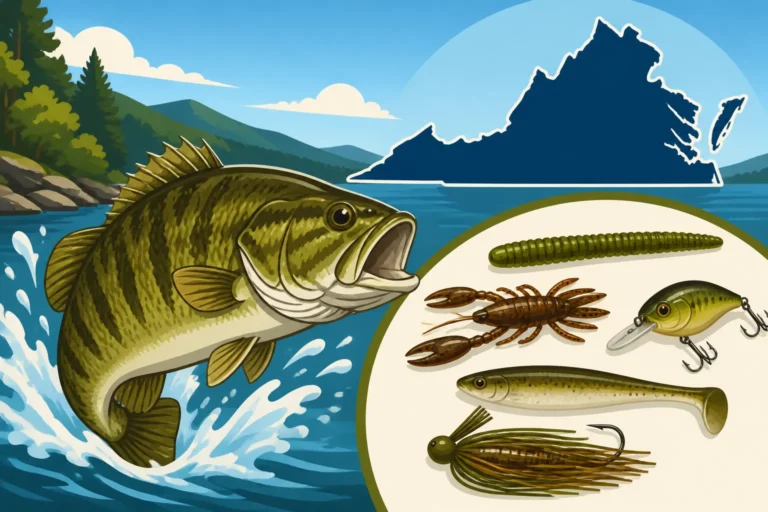
Smallmouth bass are opportunistic predators, but they have a particular fondness for crayfish, insect larvae, minnows, and smaller baitfish. Their diet often reflects their rocky, riverine habitats. This is why lures that mimic these food sources are so effective. Think crankbaits that bounce off rocks, soft plastic crayfish imitations, or small swimbaits. Fly anglers often have great success with streamers that imitate baitfish or hellgrammite patterns. Observing what they're biting on can sometimes be another subtle hint towards their identity, though it's not as foolproof as physical characteristics. You can find a fantastic array of smallmouth lures, from crankbaits to jigs, on sites like Amazon, ready to stock your tackle box for your next river adventure.
Smallmouth Bass vs. Its Common Look-Alikes
This is where things can get truly confusing, especially for newer anglers. Virginia is home to several types of bass, and while they all share the "bass" family name, their differences are crucial for proper identification and adherence to local fishing regulations. Let's break down the most common confusions.
Distinguishing from Largemouth Bass
The largemouth bass is probably the most commonly confused species with the smallmouth. Here’s a quick rundown of the main differences:
- Mouth Size: As mentioned, the largemouth's upper jaw extends beyond the back of its eye when closed. The smallmouth's does not.
- Dorsal Fin: The largemouth has a deep, almost complete separation between its two dorsal fins, often appearing as two distinct fins. The smallmouth has a connected but notched dorsal fin.
- Lateral Line: Largemouth bass typically have a prominent, dark, horizontal stripe (the lateral line) running from their gill plate to their tail. Smallmouth bass have vertical bars or blotches and no distinct horizontal stripe.
- Coloration: Largemouth are usually green or olive-green with the distinct dark lateral line. Smallmouth are more bronze, brown, or golden with vertical bars.
- Habitat: Largemouth prefer warm, weedy, still waters (lakes, ponds, sluggish rivers). Smallmouth prefer cool, clear, rocky, moving water (rivers, deep lake sections).
Understanding these differences is key. If you're pulling a fish from a lily pad field, it's almost certainly a largemouth. If it's from a swift current next to a boulder, you're likely holding a smallmouth. For a deeper dive into their appearance, check out How to Identify a Largemouth Bass in Virginia.
Differentiating from Spotted Bass
Spotted bass are a bit trickier to distinguish from smallmouth, as they share some characteristics. They are often found in similar habitats to smallmouth, though they can tolerate slightly warmer, more turbid water.
Here are the key things to look for:
- Tongue Patch: This is the most reliable way to tell a spotted bass apart from a smallmouth. Spotted bass have a small, rough patch of teeth on the middle of their tongue. You can gently run your finger across the tongue to feel for it. Smallmouth bass do not have this patch.
- Jawline: A spotted bass's jaw usually extends to under the eye, but generally not past it, similar to a smallmouth. However, it's usually slightly shorter than a largemouth's.
- Scales on Cheek: Spotted bass typically have visible scales on their cheeks below the lateral line, which are often absent or very small on smallmouth.
- Vertical Markings: While smallmouth have irregular vertical bars, spotted bass often have more distinct, diamond-shaped or dark blotches forming a broken lateral line, with rows of small dark spots below it. These spots are often why they are confused with smallmouth.
It's a subtle game, but checking for that tongue patch is usually the deciding factor. If you're still not sure, a good, waterproof fish identification card or a field guide (readily available on Amazon) can be a lifesaver. You might also find Spotted Bass vs Largemouth Bass: How Virginia Anglers Tell Them Apart helpful, as it touches on all three common black bass.
Summary of Key Identification Features
To make things even clearer, here's a quick comparison table to help you out on the water.
| Feature | Smallmouth Bass | Largemouth Bass | Spotted Bass |
|---|---|---|---|
| Upper Jaw | Does not extend past the back of the eye | Extends noticeably past the back of the eye | Extends to the middle or back of the eye (similar to smallmouth) |
| Dorsal Fin | Connected, but with a distinct, shallow notch/dip | Deeply separated, almost two distinct fins | Connected, with a shallow notch (similar to smallmouth) |
| Lateral Line | No distinct horizontal line; has vertical bars/blotches | Prominent, solid dark horizontal stripe | Broken lateral line with distinct dark, diamond-shaped spots below it |
| Body Color | Bronze, brown, golden with vertical bars | Green to olive-green | Green to olive-green, often with dark spots below the lateral line |
| Tongue Patch | Absent | Absent | Present (rough patch of teeth on tongue) |
| Preferred Habitat | Cool, clear, rocky rivers and deep lakes (current) | Warm, weedy, still waters (lakes, ponds, sluggish rivers) | Clear rivers and lakes, often overlapping with smallmouth and largemouth |
Hopefully, with this detailed guide, you'll feel much more confident the next time you reel in a beautiful bass from Virginia's incredible fishing spots. Each catch is an opportunity to learn and appreciate the unique species that call our waters home! Good luck out there, and tight lines! Don't forget, knowing your fish helps you keep within Virginia Fishing Regulations Explained and ensures a healthy fishery for everyone. For general tips on bass, check out Virginia Bass Fishing: Largemouth, Smallmouth, Spotted, and Alabama Bass. If you're looking for where to target these acrobats, Best Rivers for Fishing in Virginia will surely have some prime smallmouth locations.
Disclaimer
This article is for general informational purposes only and does not constitute professional advice. Laws, prices and regulations vary by location and change over time. Consult a qualified professional for guidance on your specific situation.