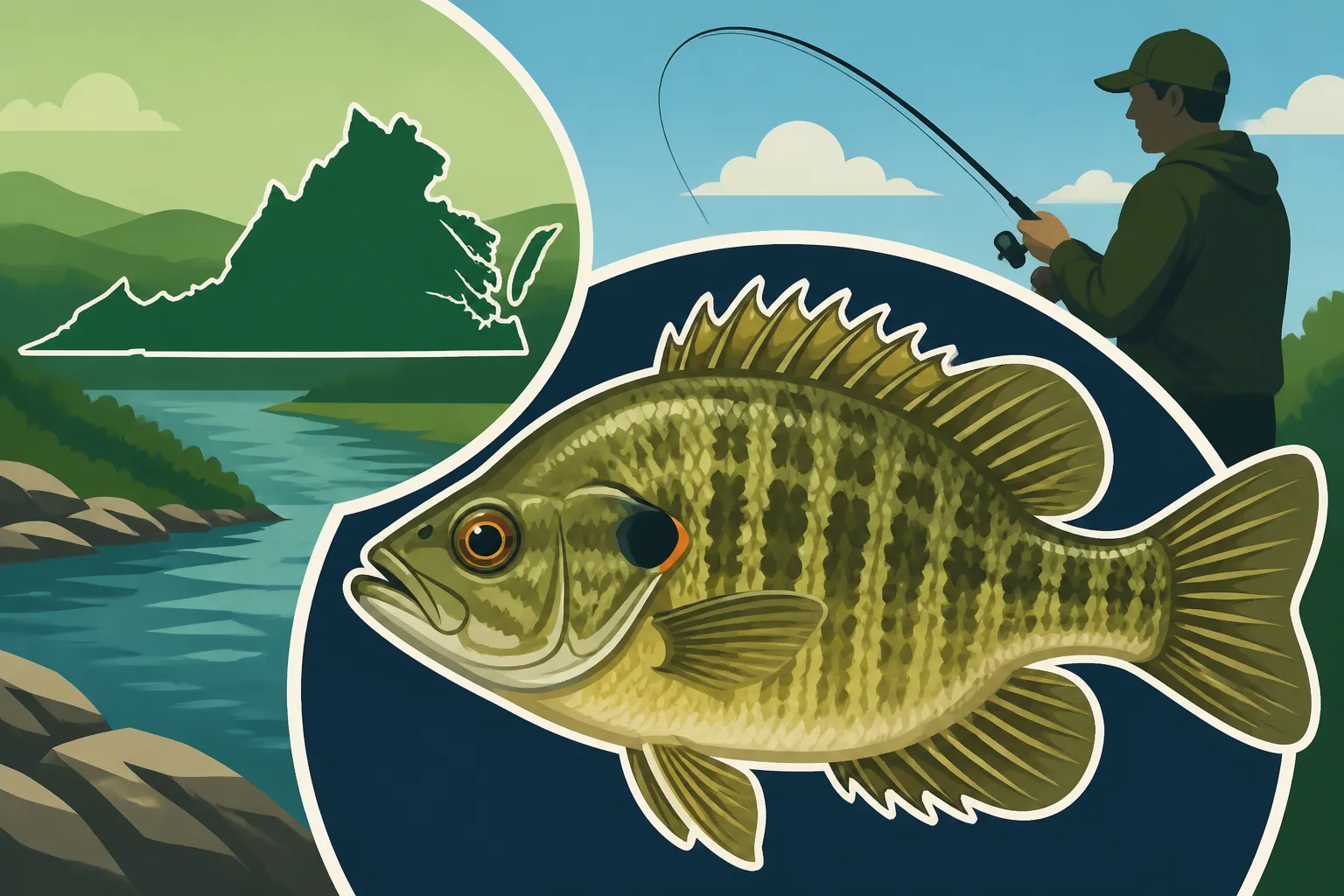
Rock Bass Identification for Virginia Anglers
It's happened to all of us: you're out on a beautiful Virginia waterway, reeling in a feisty fish, and as it gets closer, you start wondering, "Is that a smallmouth? A sunfish? Or something else entirely?" Smaller bass and panfish can be notoriously tricky to tell apart, and knowing what you've caught isn't just about bragging rights; it's crucial for understanding regulations and truly appreciating Virginia's diverse aquatic life. This guide will walk you through the distinct features of the rock bass, helping you confidently identify this often-misunderstood species.
What Exactly is a Rock Bass?
Before we dive into the nitty-gritty of identification, let's clear up some common misconceptions about the rock bass. Despite its name, which conjures images of the famous black bass family (largemouth, smallmouth), the rock bass is a bit of an outlier. It truly occupies a unique niche in Virginia's freshwater ecosystems, offering a spirited fight and a rewarding catch for those who take the time to learn its ways.
Beyond Just a "Bass" – Understanding Its Unique Place
Many anglers, especially those new to the sport, hear "bass" and immediately think of largemouth or smallmouth. However, the rock bass (scientifically known as Ambloplites rupestris) actually belongs to the sunfish family, Centrarchidae, just like bluegill and crappie. This might sound surprising, but once you know it, you starts to notice the subtle sunfish characteristics it shares. It's often called "redeye," "goggle-eye," or even "rock perch" by locals, all names that hint at its unique appearance and preference for rocky habitats. This classification is important because, while it shares some traits with true bass, its closer relatives are the panfish, influencing its size, behavior, and where you'll typically find it. Understanding this family tree helps in a big way when you're trying to figure out if you've got a rock bass or one of its lookalike cousins.
Think of it like this: while a smallmouth bass might be a distant relative in the broader fish family, a bluegill is more like its immediate kin. This sunfish heritage means rock bass generally don't grow to the massive sizes of largemouth or smallmouth, but they make up for it with their scrappy nature and eagerness to bite. They're built for navigating rocky crevices and ambushing prey, a true testament to their sunfish lineage and an important clue in their identification process. So, next time you hook into one, remember you've landed a special kind of sunfish that's perfectly adapted to its preferred environment.
Native Waters and Habitat Preferences in Virginia
Rock bass are not just any fish; they're fish with very specific tastes in real estate. In Virginia, you'll find them predominantly in the western and northern parts of the state, particularly in clear, cool-to-warm water streams and rivers. They absolutely thrive in environments that offer plenty of cover and structure. This means you'll often encounter them around submerged logs, rock piles, ledges, and areas with moderate current. They aren't typically found in large, open lakes with muddy bottoms; their name "rock bass" isn't just for show!
When you're exploring Virginia's waterways, keep an eye out for streams and rivers with noticeable rocky bottoms and clean water. The Shenandoah River system, for instance, is a classic rock bass stronghold, along with many smaller tributaries that feed into it. These fish love to hide in the shadows, waiting for an unsuspecting insect or small baitfish to swim by. Understanding their habitat preference is your first major clue in identifying them before you even get a good look. If you're fishing in murky, slow-moving water, your chances of catching a rock bass are significantly lower than if you're casting into a clear, rocky riffle. They're often found right alongside their smallmouth bass cousins, so knowing their shared, yet slightly different, preferences can help you target one over the other.
Key Physical Characteristics of the Rock Bass
Now, let's get down to the visual cues. When you're trying to identify a rock bass, there are several distinct features that, once you know them, make spotting this particular sunfish much easier. It's all about paying attention to the details, from its eyes to its fins and everything in between.
The Distinctive Eye and Body Shape
Perhaps the most striking and reliable identifying feature of the rock bass is its eye. It typically boasts a prominent, often reddish, pupil or an iris with a reddish tint. This "redeye" characteristic is so common that it's one of their popular nicknames. While other fish might have a hint of red, with the rock bass, it's usually quite pronounced and stands out against their generally camouflaged body. When you pull one out of the water, the first thing many experienced anglers notice is that eye!
Beyond the eye, take a moment to observe its overall body shape. The rock bass has a robust, somewhat deep, and compressed body, similar to many other sunfish. It's not as elongated or streamlined as a true smallmouth bass, nor is it as slab-sided as a bluegill. Think of it as a stocky, muscular fish, perfectly designed for maneuvering through tight, rocky spots and holding its own against the current. This deep-bodied profile gives it a formidable appearance for its size, which usually maxes out around 10-12 inches, though larger specimens are certainly caught in nutrient-rich Virginia waters. They have a distinctly "heavy" feel for their length, a reflection of that dense body structure.
Coloration, Markings, and Fins – What to Look For
The coloration of a rock bass can vary quite a bit depending on its habitat and diet, which can sometimes make identification a bit tricky at first glance. Generally, they exhibit shades of olive green, brassy brown, or even a yellowish-bronze on their backs and sides, fading to a lighter, often whitish, belly. What truly helps here are the subtle dark markings. Look closely, and you'll typically see rows of small, dark spots or a mottled pattern along their sides, often creating faint horizontal lines. These aren't as pronounced as the vertical bars on a smallmouth or the distinct lateral line of a largemouth, but rather a speckled or peppered appearance.
Now, let's talk about those fins. Like other members of the sunfish family, the rock bass has a single, continuous dorsal fin that is noticeably spiny in the front and soft-rayed in the back. Count those spines! Rock bass usually have 10-12 dorsal spines, which is a good indicator. Their pectoral fins are relatively rounded, not pointed like some other fish. The caudal (tail) fin is typically broad and slightly rounded or truncate, again, distinguishing it from the deeply forked tails of some faster-swimming species. The anal fin, located on the underside towards the tail, also has a prominent spiny section, usually with 5-7 spines, followed by soft rays. Observing these fin details in combination with the body and eye features will give you a very strong positive identification.
Mouth and Gill Plate Features
When examining a rock bass, the mouth is another feature that offers useful clues. The rock bass has a relatively large mouth for a sunfish, but it doesn't extend past the middle of the eye, which is a key difference from a largemouth bass whose jaw extends well beyond the eye. This moderate mouth size allows them to feed on a variety of prey, from insects and crustaceans to small fish. It's also lined with several rows of small, sharp teeth, perfect for gripping their meals.
Another important area to inspect is the gill plate, or operculum. Like many sunfish, the rock bass has spiny projections on the posterior edge of its gill cover. While these aren't as prominent or elongated as on some other sunfish (like the "ear flap" on a bluegill), you'll notice that the operculum isn't smooth. It has a slight point or angle at the top rear corner and often feels rough to the touch due to these embedded spines. Running a finger carefully along the edge can help confirm this. These small, spiny details, combined with the other features, paint a complete picture for accurate identification. Panfish Species Every Virginia Angler Should Know goes into more detail about these differences among sunfish.
Differentiating Rock Bass from Common Lookalikes in Virginia
This is where the rubber meets the road! Misidentification is incredibly common, and it's usually because rock bass share some superficial similarities with other popular game fish in Virginia. Let's break down how to tell them apart.
Rock Bass vs. Smallmouth Bass – Spotting the Key Differences
This is probably the most frequent point of confusion for anglers, and for good reason. Both rock bass and smallmouth bass share similar habitats, especially in rocky, clear rivers like the Shenandoah. Both are known for their bronze or olive coloration and powerful fights. However, there are crucial differences that, once you learn them, make identification much easier.
First, let's revisit that eye. The rock bass typically has a pronounced red eye. While a smallmouth might have a hint of red in its eye, it's rarely as vivid or distinctive as that of a rock bass. Second, consider the body shape. The rock bass is deeper-bodied and more compressed, almost like a chunky sunfish. The smallmouth bass, by contrast, is more streamlined and elongated, built for speed and power in current. Its body is more cylindrical. Third, look at the mouth. The smallmouth's mouth extends to or slightly past the back of the eye, while the rock bass's mouth generally stops short of the eye's center. Fourth, and very importantly, are the markings. Smallmouth bass often have distinct vertical bars or blotches along their sides, especially when stressed or in clear water. Rock bass, as we discussed, have more of a speckled or mottled pattern, not pronounced bars. Lastly, feel the gill plate. The rock bass has those spiny projections; the smallmouth bass has a smooth gill cover. If you're still unsure, remember that the rock bass will have 10-12 dorsal spines, whereas a smallmouth typically has 9-11. These subtle but significant details are your best friends for correct identification. You can learn more about this related species in Smallmouth Bass Fishing on Virginia's Shenandoah River.
Rock Bass vs. Largemouth Bass and Spotted Bass
While less common, some anglers might confuse a rock bass with a juvenile largemouth or spotted bass, especially if they are small. The main differentiator here comes down to the mouth and body shape.
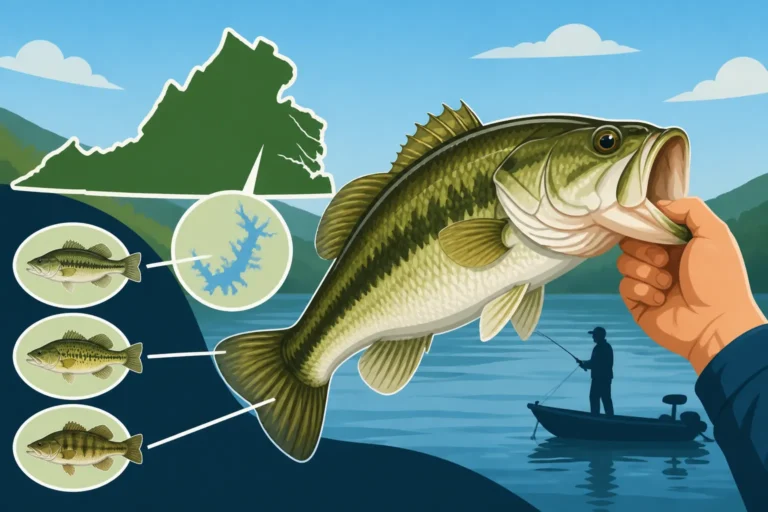
The largemouth bass is named for a reason: its mouth extends well past the back of its eye. A rock bass's mouth is much smaller in comparison. Largemouth also typically have a prominent, dark, continuous lateral line running down their side, which a rock bass lacks. Their body is also generally more elongated than the deep-bodied rock bass. Spotted bass, another species found in Virginia, also have a mouth that extends further back than a rock bass, and they are characterized by rows of dark spots below the lateral line, especially on their lower sides, which a rock bass doesn't have. Ultimately, the rock bass's red eye, deeper sunfish-like body, and speckled pattern stand in stark contrast to these larger-mouthed, more torpedo-shaped black bass. Check out Virginia Bass Fishing: Largemouth, Smallmouth, Spotted, and Alabama Bass for more on these species.
Distinguishing from Other Panfish (e.g., Bluegill, Green Sunfish)
Since rock bass are technically sunfish, it's natural to confuse them with other members of their family, such as bluegill or green sunfish. While they share the general "deep-bodied" sunfish shape, there are key distinctions.
Bluegill are typically much thinner, more circular, and have a smaller mouth. Their prominent black "ear flap" (the opercular tab) with no red is a dead giveaway, as are their distinct vertical bars, especially on males. Green sunfish can be a bit trickier, as they also have a relatively large mouth for a sunfish and a somewhat spiny gill plate. However, green sunfish usually have bright blue-green iridescent spots or streaks on their head and gill covers, often with a yellow or orange margin on their fins, features absent in the rock bass. The green sunfish's mouth also extends further back, often to the middle of the eye, which is still a bit more than the rock bass. The rock bass's red eye and speckled body pattern generally set it apart.
Here's a quick comparison table to help solidify these differences:
| Feature | Rock Bass (Ambloplites rupestris) | Smallmouth Bass (Micropterus dolomieu) | Green Sunfish (Lepomis cyanellus) |
|---|---|---|---|
| Eye Color | Often distinct reddish pupil/iris | Typically brown or golden, rarely reddish | Dark, sometimes with a faint ring |
| Body Shape | Deep, stout, compressed; sunfish-like | Streamlined, elongated, cylindrical; bass-like | Deep, stout, similar to rock bass but smaller |
| Mouth Size | Moderate, extends to middle of eye | Large, extends to back of eye or slightly beyond | Large for a sunfish, often to middle of eye |
| Gill Plate | Spiny projections, slightly pointed | Smooth, rounded | Spiny, with a black spot on opercular flap |
| Coloration | Olive green/brassy brown, speckled/mottled | Bronze/olive, vertical bars/blotches (variable) | Olive green, iridescent blue streaks on head |
| Dorsal Spines | 10-12 | 9-11 | 9-11 |
| Size | Typically 6-12 inches | 10-20+ inches | Typically 4-7 inches |
Where to Find Rock Bass in Virginia and Angling Tips
Knowing what a rock bass looks like is one thing, but knowing where to find them and how to catch them is another adventure entirely. These fish are true gems of Virginia's smaller waterways, providing excellent sport on light tackle.
Preferred Habitats and Hotspots in Virginia's Rivers and Streams
As their name suggests, rock bass love rocks! You'll find them in abundance in clear, cool-to-warm streams and rivers that have rocky bottoms, boulders, and plenty of submerged structure. They prefer moderate current, often lurking behind larger rocks or logs, waiting for prey to drift by. Think of any river or stream in Virginia known for its smallmouth bass population – chances are, rock bass are thriving there too. The Shenandoah River system (North and South Forks), the James River's upper stretches, and many tributaries in the Blue Ridge Mountains are prime rock bass territory.
When you're out scouting, look for riffles, runs, and the deeper pools that occur around rocky points or fallen trees. Undercut banks with exposed roots can also be hot spots. They often position themselves in ambush points, so casting your lure or bait into these structured areas is key. They're not usually found in open water or deep, featureless lakes. Their world is one of nooks, crannies, and hiding spots where they can dart out to grab a meal. Sometimes, a quick search on Amazon for local fishing maps or guidebooks can even help pinpoint some general areas known for good rock bass populations.
Best Lures and Techniques for Targeting Rock Bass
Rock bass aren't particularly picky eaters, which makes them a fantastic target for anglers of all skill levels, including beginners. The key is to use smaller baits and light tackle that matches their size and aggressive nature.
For artificial lures, small spinners (like Mepps or Rooster Tail), tiny crankbaits (shad or crawfish patterns work well), and small jigs (1/32 to 1/8 ounce) tipped with a small plastic grub or hair jig are incredibly effective. Their feisty strikes make these lightweight setups a blast to fish with. When fishing jigs, slowly bounce them along the bottom, mimicking a crawfish or injured baitfish. For spinners and crankbaits, a steady retrieve through suspected holding areas is often all it takes. These fish are aggressive and territorial, so they'll often hit a lure out of pure instinct or to defend their space. Many anglers keep a small tackle box dedicated to these types of lures. If you're looking to stock up, Amazon has a vast selection of these smaller baits perfect for rock bass fishing.
If you prefer live bait, you're in luck! Rock bass absolutely love small minnows, worms (especially red wigglers or nightcrawlers cut into pieces), and crickets. A simple bobber rig with a small hook and a piece of worm floated near rocky structure is often irresistible. For a more active approach, try a small minnow on a light jig head, slowly retrieved or drifted downstream. Best Bait for Rock Bass provides even more detailed suggestions. Remember to use light line, typically 4-6 pound test, as this will maximize your fun and allow for more natural presentations. Rock bass are tenacious fighters for their size, and you'll be surprised by the bending power they put on a light rod!
Why Accurate Identification Matters
Beyond the simple satisfaction of knowing what you've caught, being able to accurately identify a rock bass—and differentiate it from its various lookalikes—carries significant implications for both responsible angling and your overall fishing success. It's not just an academic exercise; it's a fundamental part of being a knowledgeable and ethical angler in Virginia.
Understanding Regulations and Conservation
The most crucial reason for accurate fish identification is adhering to fishing regulations. In Virginia, different species often have different creel limits (how many you can keep) and size limits (how long a fish must be to keep it). Imagine you're out on a river, and you catch what you think is a smallmouth bass, but it's actually a rock bass. If the smallmouth season is closed, or if you keep a fish that's under the legal size for a smallmouth but perfectly legal for a rock bass, you could unknowingly be breaking the law. Conversely, you might release a perfectly legal rock bass because you thought it was an undersized smallmouth.
These regulations are put in place for very important conservation reasons: to protect fish populations and ensure healthy fisheries for future generations. By correctly identifying your catch, you contribute directly to these conservation efforts. It helps you ensure you're only harvesting legal fish, and it prevents you from impacting protected or vulnerable species unintentionally. Virginia Fishing Regulations Explained and Virginia's Fishing License and Catch Limit Basics offer comprehensive details on these important rules, highlighting why knowing your fish is so vital. It's our collective responsibility as anglers to protect the natural resources we cherish.
Enhancing Your Fishing Experience and Knowledge
Beyond the legal aspect, accurate identification dramatically enhances your entire fishing experience. When you can reliably identify a rock bass, you start to understand its specific behaviors, preferred habitats, and feeding patterns. This knowledge allows you to become a more effective and successful angler. You'll know what lures to tie on, what areas to target, and even what times of day might be most productive for that particular species.
For example, if you consistently find rock bass in clear, rocky riffles, you'll naturally gravitate towards those spots on future trips, rather than wasting time in muddier, slower stretches. You'll learn that they're aggressive little fighters that love small spinners, leading you to pack those specific lures. This deeper understanding transforms fishing from a random activity into a more strategic and rewarding pursuit. It also fosters a greater appreciation for the intricacies of Virginia's ecosystems. Every fish becomes a lesson, and every identification makes you a more skilled and connected participant in the natural world. It's like unlocking a secret code to the underwater world, making every cast and every catch more meaningful.
Disclaimer
This article is for general informational purposes only and does not constitute professional advice. Laws, prices and regulations vary by location and change over time. Consult a qualified professional for guidance on your specific situation.