Best Lures for Early Spring Fishing
Early spring fishing in Virginia can be a real head-scratcher. One day it feels like winter, the next there's a hint of warmth, and the fish? They're just as confused as we are! You stand there, looking at your tackle box, wondering which lure has even a remote chance of enticing a bite in those unpredictable, chilly waters. This guide is here to cut through that confusion, helping you choose the best lures to consistently catch fish as Virginia’s waters slowly come alive.
Understanding Early Spring Conditions in Virginia
Before we even talk about specific lures, we have to talk about what's actually happening beneath the surface in early spring. This isn't summer, where fish are aggressively chasing anything that moves. It's a delicate dance with fluctuating temperatures and fish still shaking off winter's sluggishness. If you don't understand the environment, no lure in the world will save your day.
The Thaw and Water Temperature Swings
Picture this: ice might have just melted off some of our shallower ponds and lakes, or the rivers are still carrying snowmelt from higher elevations. This means the water is cold. We're talking about temperatures often hovering in the 40s to low 50s Fahrenheit, which is still quite a shock to a fish's system. But here's the kicker: those bright, sunny early spring days can warm up shallow coves and dark bottoms much faster than the main lake or river channel. This creates pockets of slightly warmer water that fish will absolutely seek out.
These temperature swings are critical. A rise of just a few degrees can make a world of difference in fish activity. One day they might be completely lethargic, glued to the bottom, and the next, a slight warm-up might see them suspend or even move into shallower areas to soak up the sun's meager warmth. As anglers, our job is to pay close attention to these subtle changes, because they directly dictate how and where we present our lures. For more on how fish react, check out Water Temperature and Fish Feeding Patterns.
Pre-Spawn Blues: Fish Are Staging and Sluggish
Early spring is all about the pre-spawn period for many popular species like largemouth and smallmouth bass. They aren't actively spawning yet, but they're starting to think about it. Their metabolism is still relatively slow due to the cold water, meaning they aren't expending a lot of energy chasing down fast-moving prey. Instead, they're often staging in deeper areas adjacent to future spawning flats, looking for easy meals.
This "pre-spawn blues" phase means you often have to slow down your presentation significantly. Think about it from the fish's perspective: if you're feeling sluggish and the water is chilly, you're not going to sprint after a marathon runner. You're going to eyeball that slowly wiggling, easy-to-catch snack. Understanding this behavior is paramount to selecting the right lures and, more importantly, fishing them correctly.
Weather Volatility: Addressing Unpredictable Early Spring Weather
Oh, Virginia weather in early spring, how you love to keep us guessing! One day it’s calm and sunny, the next it’s a blustery mess with spitting rain or even a late-season snow flurry. These dramatic shifts in weather conditions directly impact water clarity, temperature, and fish behavior. A sudden cold front can shut down a bite instantly, sending fish scurrying back to deeper, more stable water. Conversely, a few days of stable, warming weather can make them more active.
You'll need to be prepared for anything. This might mean having a variety of lure colors on hand – brighter colors for murky water after rain, and more natural, subtle hues for clearer, sunny days. It also means adjusting your retrieve speed based on the day's conditions. Don't be afraid to experiment, but always start with a slow, methodical approach, especially if the weather has been turbulent. For tips on dealing with changing conditions, look at Fishing Techniques After a Cold Front or How to Fish After Heavy Rain.
Top Lures for Cold and Warming Waters
Now that we've set the stage with the conditions, let's dive into the lures that truly shine when the water is cold and gradually starting to warm. These are your bread-and-butter baits for tempting those often reluctant early spring fish.
Jerkbaits: Mimicking Stressed Baitfish
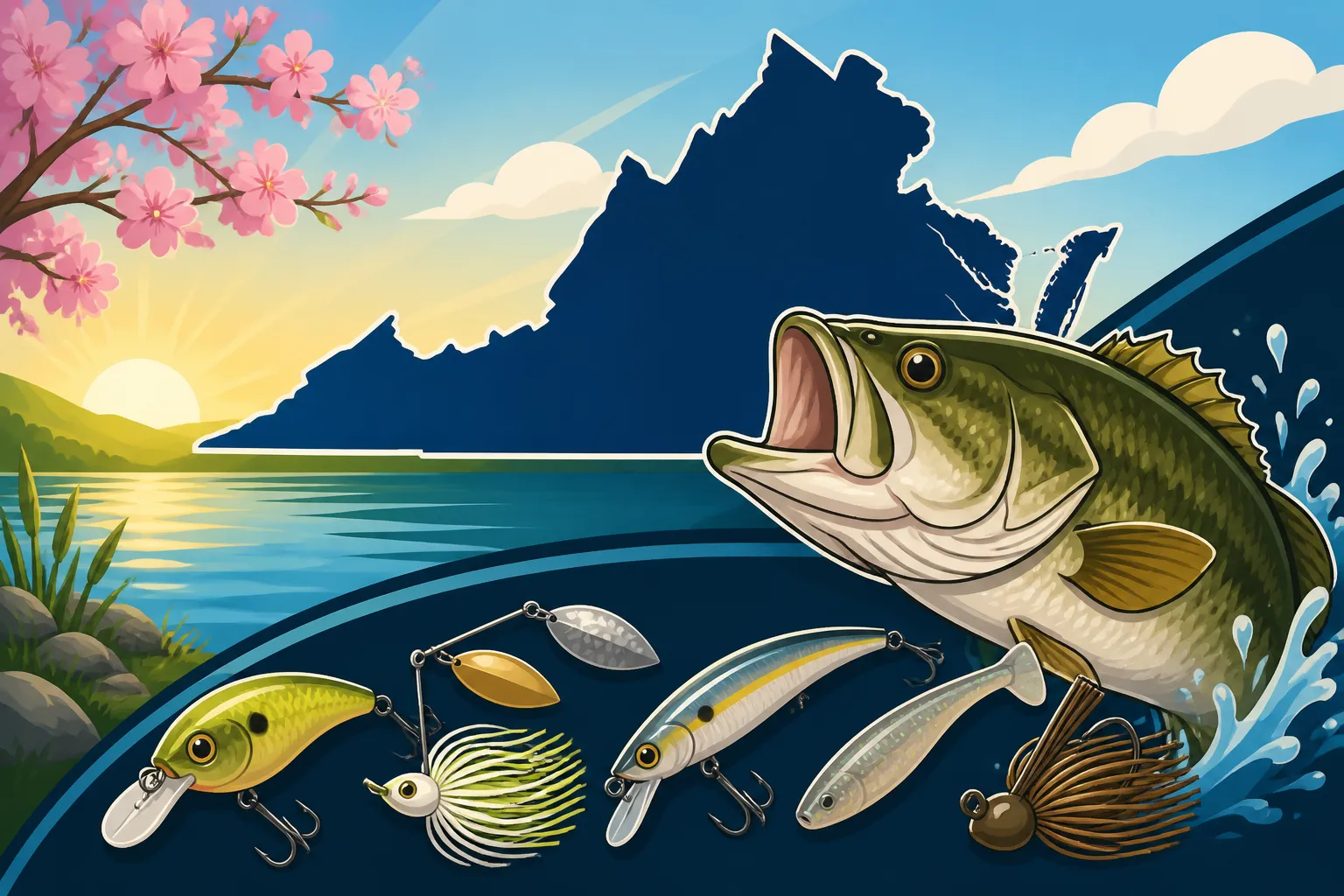
Jerkbaits are absolute assassins in early spring, especially when water temperatures are still in the 40s and low 50s. Why? Because they perfectly imitate a dying or stunned baitfish, which is an irresistible, easy meal for a sluggish predator. The key to a jerkbait's effectiveness lies in its "suspend" action – when you pause your retrieve, it hangs motionless in the water column, often right in a fish's face, daring it to strike.
Imagine a group of bass or stripers suspended near a drop-off or around submerged cover. You cast a jerkbait like a Rapala or a Lucky Craft, give it a few sharp jerks, and then… you pause. Sometimes for 5 seconds, sometimes for 20 seconds, maybe even longer on really cold days. That long pause is often when the fish will hit. The trick is to vary your cadence until you find what triggers a reaction. Many anglers stock up on a variety of jerkbaits, finding great deals and customer reviews on platforms like Amazon. They're particularly effective for species like largemouth, smallmouth, and even early season striped bass in places like Smith Mountain Lake.
Jigs: For Slow, Bottom-Hugging Presentations
When fish are glued to the bottom, refusing to move much, jigs are your best friend. This category includes everything from classic jig-and-pig combinations to finesse jigs. The beauty of a jig is its versatility and its ability to present a compact, natural-looking offering directly to a fish's strike zone. A jig can imitate a crawfish, a baitfish, or even just a general bottom-dwelling meal.
For truly cold water, a slow drag or hop of a jig along the bottom is incredibly effective. The small movements mimic a crawfish slowly moving or a baitfish rooting around. The "jig and pig" is a classic for a reason – the bulky profile and pulsating trailer make it a substantial meal. Finesse jigs, on the other hand, are smaller, more subtle, and perfect for when the bite is extremely tough or when fish are pressured. Pair them with a soft plastic trailer that adds subtle action. You'll find a massive selection of different jig types and trailer options if you browse fishing gear on Amazon.
Lipless Crankbaits: Covering Water and Triggering Reaction Strikes
While we've emphasized slow presentations, there are times in early spring when you need to cover water and generate a reaction strike. That's where lipless crankbaits come in. These vibrating baits, like a Rat-L-Trap or a Bill Lewis, are excellent for locating active fish, especially if there's been a slight warm-up or on cloudy, windy days. They cast like a bullet and can be retrieved at various depths by simply counting them down.
The strong vibration and rattle of a lipless crankbait can irritate a sluggish fish into striking, even if it's not actively feeding. You can rip them off the bottom, yo-yo them through the water column, or retrieve them steadily. They're particularly effective around sparse grass lines, channel swings, and flat areas where fish might be cruising. Don't underestimate their power to cover a lot of territory and trigger those impulsive bites when other lures fail to get attention.
Transition Period Lures: As Spring Progresses
As early spring advances, and those water temperatures nudge up into the mid-50s, fish often become a bit more active. They're still not in full summer mode, but they're willing to move a little further and chase a little harder. This is when you can start incorporating lures that offer more action and flash, but still maintain a relatively controlled presentation.
Spinnerbaits: Flash and Vibration for Active Fish
When the water starts to creep out of the 40s and into the mid-50s, especially with some cloud cover or wind, spinnerbaits really start to shine. The flash of the blades combined with the vibration they put out can be incredibly effective at attracting attention from fish that are starting to become more aggressive. They're also fantastic for covering a lot of water and fishing through various types of cover, like submerged timber or rocky banks.
A great spinnerbait retrieve for early spring is a slow-roll, where you just barely turn the reel handle enough to keep the blades spinning, allowing the bait to hug the bottom or tick off cover. Another effective technique is to "wake" it just below the surface in shallow areas where fish might be sunning themselves. The key is to match the blade size and color to the water clarity – larger, more thumping blades for stained water, and smaller, flashier ones for clearer conditions. Brands like Strike King offer a wide variety that anglers can explore on Amazon.
Bladed Jigs (Chatterbaits): A Hybrid Approach for Vibration and Erratic Movement
The bladed jig, often called a ChatterBait after the original brand, is a relatively newer addition to the early spring arsenal but it has quickly become a fan favorite. It combines the flash and vibration of a spinnerbait with the weedless profile and erratic action of a jig. The unique hexagonal blade at the front causes the lure to vibrate intensely and move with a mesmerizing, erratic swim that fish simply can't ignore.
These lures excel in water temperatures that are slightly warmer than jerkbait or traditional jig conditions, typically in the mid-to-high 50s. They’re excellent for fishing around grass lines, docks, and any type of shallow cover. The beauty of a bladed jig is that it fishes well on a steady retrieve, but you can also twitch it, pause it, or rip it through grass to create even more erratic action. Pair it with a subtle swimbait or grub trailer for added bulk and appeal. Many anglers recommend them for bass during the Spring Bass Fishing Patterns.
Shallow Crankbaits: When Fish Move Shallower
As early spring progresses and the water warms consistently into the high 50s, you'll start to see fish moving shallower, often into those areas they'll eventually spawn. This is when shallow crankbaits become highly effective. These baits dive only a few feet and are excellent for bumping off rocks, stumps, or hard bottoms in those warming, shallower zones.
The deflecting action off cover is what often triggers a strike. Think about targeting rocky points, shallow wood cover, or the transition areas between deep and shallow water. Look for square bill crankbaits for maximum deflection. Their wide wobble and ability to bounce off structure without snagging makes them ideal for exploring new shallow water territory. Remember, you're looking for those slightly warmer areas where fish are staging, and a shallow crankbait allows you to cover those zones efficiently.
Bait Color and Presentation Tips for Early Spring
Choosing the right lure is only half the battle. How you present it, and what color you choose, can make all the difference between a frustrating day and a successful outing. Early spring fishing demands attention to detail.
Matching the Hatch and Water Clarity: Color Considerations
Color selection in early spring can be crucial. In colder, often clearer water, natural colors tend to be more effective. Think about shades of brown, green pumpkin, grey, or subtle blues for your jigs and jerkbaits. These colors mimic the natural forage like crawfish or dying baitfish that are present. If the water has some stain or a bit of chop, adding a touch of chartreuse or orange to your jigs can sometimes provide that extra visual pop.
When the water is murky or stained, perhaps after some heavy spring rains, brighter colors become your friend. Chartreuse, white, or firetiger patterns for your spinnerbaits and lipless crankbaits can help fish locate your lure in low visibility conditions. However, always err on the side of subtlety first in early spring; you can always go brighter if you're not getting bites. It’s a good idea to have options, and keeping a variety of colors in your tackle box, maybe even ordered from Amazon, is always a smart move.
Slow and Steady Wins the Race: Retrieve Speeds
This cannot be stressed enough: slow down. In early spring, fish are rarely in an aggressive chasing mood. Their metabolism is slower, and they want an easy meal. A super-fast retrieve is likely to be ignored. Think slow, methodical, and deliberate. For jerkbaits, this means long pauses. For jigs, it means a subtle drag or a barely perceptible hop. Even with spinnerbaits and bladed jigs, a slow roll or a steady, moderate retrieve is often more effective than burning it back to the boat.
Experiment with your retrieve, but always start slow. If you're not getting bites, try slowing down even more. Pay attention to what feels "right" – you might feel the blade barely turning on a spinnerbait, or the light tick of a jig as it drags across the bottom. Fish typically want to expend as little energy as possible, so make your lure an inviting, effortless target. For more details on this, explore How to Catch Bass in Cold Water.
Target Areas: Where to Cast These Lures
Knowing where to cast your lure is just as important as knowing which lure to use. In early spring, fish are often concentrating in specific areas that offer warmth, cover, or access to deeper water.
Initially, focus on transition areas. These are places where deep water quickly gives way to shallower flats or points. Channel swings, creek channels that cut through flats, and the edges of sharp drop-offs are prime locations. Fish will stage in the deeper water, then move up to feed in the shallower, warmer zones for short periods.
Later in early spring, as temperatures rise, start exploring shallower, sun-drenched coves, dark-bottomed areas that absorb more heat, and any submerged cover like wood or rock piles near those flats. These spots warm up first, attracting both baitfish and the predators that feed on them. Don't forget about boat docks and piers; the pilings and undersides offer shade and cover, and the dark materials can absorb heat, creating a slightly warmer micro-environment where fish might congregate. Areas like Smith Mountain Lake Fishing Guide or Lake Anna Fishing Guide often have these exact features.
| Lure Type | Ideal Water Temperature (Fahrenheit) | Primary Action/Retrieve | Key Benefit |
|---|---|---|---|
| Jerkbait | 40-55 | Jerk, jerk, PAUSE (long pauses!) | Mimics dying baitfish, suspends in strike zone |
| Jig (Finesse/Jig-n-Pig) | 40-58 | Slow drag, hop, or subtle shake on bottom | Bottom contact, subtle, easy meal |
| Lipless Crankbait | 45-60 | Steady retrieve, rip, yo-yo | Covers water, strong vibration, reaction strikes |
| Spinnerbait | 50-65 | Slow roll, steady retrieve, wake | Flash & vibration, excellent for cover |
| Bladed Jig (Chatterbait) | 55-68 | Steady retrieve, rip, twitch, pause | Erratic action, strong vibration, weedless |
| Shallow Crankbait | 55-70 | Bumps off cover, steady retrieve | Deflection triggers strikes, shallow water |
Disclaimer
This article is for general informational purposes only and does not constitute professional advice. Laws, prices and regulations vary by location and change over time. Consult a qualified professional for guidance on your specific situation.