Splitting the Cost of a Six-Person Virginia Charter
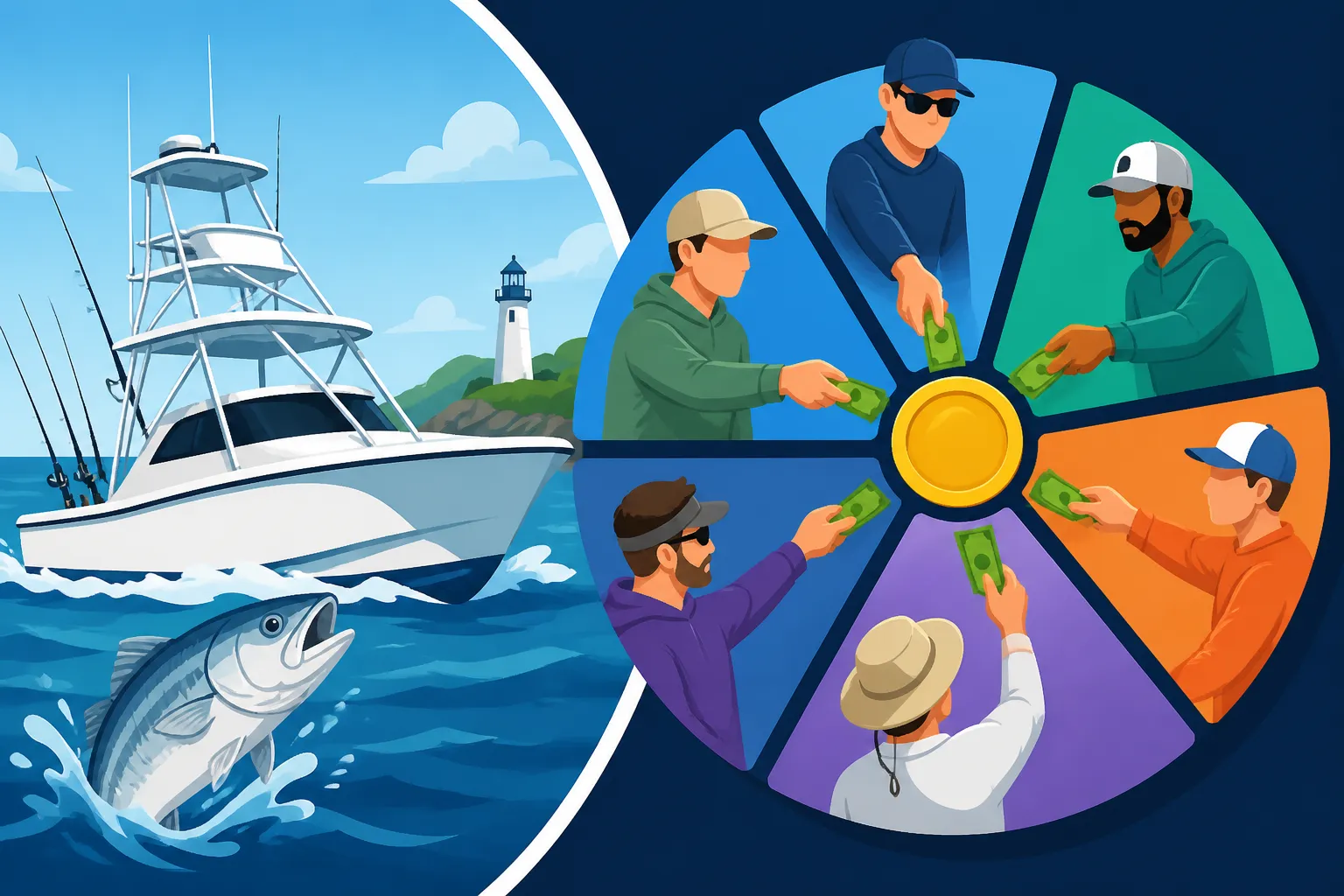
Planning a fishing trip with a group of friends or family to Virginia's amazing waters is truly exciting, but when it comes to booking that charter, the question of "who pays what?" can quickly turn a fun conversation into an awkward one. Figuring out how to split the cost fairly for a six-person Virginia fishing charter requires a bit of foresight and clear communication. This guide is all about breaking down the real costs involved and, more importantly, how to split that bill equitably so everyone enjoys the day without a financial hangover.
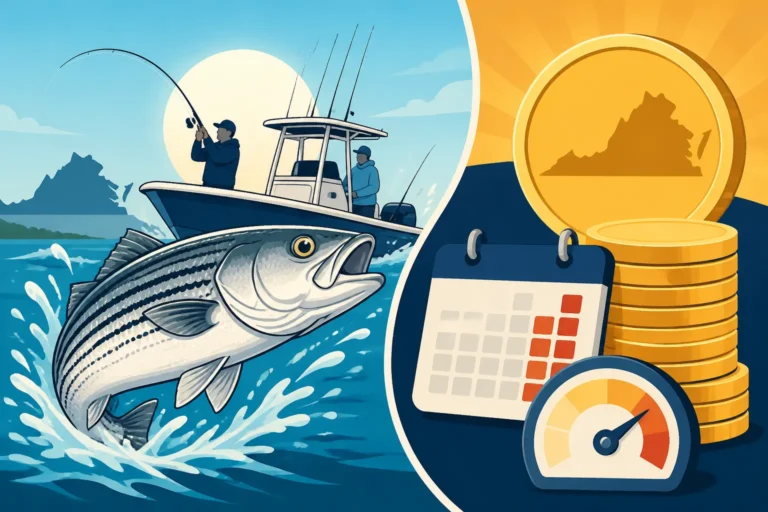
Understanding the Baseline Cost of a Six-Person Virginia Charter
Before you can even begin thinking about splitting costs, you need a solid understanding of what you're actually paying for. Charter prices in Virginia, whether you're targeting striped bass in the Chesapeake Bay or going after marlin offshore from Virginia Beach, can vary wildly. The sticker price for a six-person charter isn't just a random number; it's a reflection of many factors that are crucial to consider.
Factors Influencing the Base Charter Rate
The core price of your charter hinges on several key elements. First, the type of fishing you're doing plays a huge role. A nearshore trip for flounder or tautog will generally be less expensive than an offshore deep-sea adventure chasing tuna or mahi-mahi. Offshore trips require more fuel, specialized gear, and a vessel capable of handling rougher waters, all of which add to the cost.
Second, the duration of the trip is a major determinant. Are you looking for a half-day excursion, perhaps 4-5 hours, or do you want to commit to a full-day adventure, usually 8-10 hours? Longer trips mean more time on the water, more fuel burned, more bait used, and more of the captain and crew's time, naturally increasing the price. You might also find 3/4-day trips as a middle-ground option. When you're browsing for options, you'll often see these durations clearly listed.
Third, the size and amenities of the boat itself contribute to the price. A larger, more comfortable vessel with air conditioning, a private head (bathroom), and state-of-the-art electronics will command a higher price than a more basic center console. Similarly, a charter with top-tier fishing gear and tackle will also factor into the overall cost. Finally, the experience and reputation of the captain and crew are invaluable. Highly sought-after captains who consistently put clients on fish often charge a premium for their expertise and extensive knowledge of local waters.
Typical Ranges for Half-Day vs. Full-Day Trips
It's tough to give exact figures, as costs can fluctuate with fuel prices, demand, and season, but we can talk generally about what you might encounter. For a half-day trip on the Chesapeake Bay or near Virginia Beach, designed for six people, you might expect to see prices starting in the hundreds of dollars. This would typically cover the boat, captain, crew, basic tackle, and bait for a few hours of fishing. These shorter trips are fantastic for families or those new to charter fishing, offering a taste of the action without a full-day commitment. You can often find great deals on these if you search for "Virginia Beach Half-Day Charter Cost for Six Anglers."
For a full-day excursion, especially if you're venturing further offshore or targeting larger, more elusive species, the price point will naturally be significantly higher. These longer trips offer more time to travel to prime fishing grounds and maximize your chances of a substantial catch. It's not uncommon for full-day charters for six people to start in the higher hundreds and go well into the thousands, depending on all the factors we just discussed. Keep in mind that when you're looking at options on platforms like FishingBooker, you'll see a range of prices. A good idea is to compare different charter companies and what they include in their base rates. Remember that the ultimate goal is not just the cheapest option, but the best value for your group's desired experience. Virginia Beach Fishing Charters and Trip Costs will give you a general overview of what to expect.
Fair Shares: Practical Ways to Split Your Six-Person Charter Cost
Once you have that baseline charter price, the next hurdle is figuring out how everyone in your party will contribute. The goal is to keep things amicable and transparent so that money doesn't become a source of tension before, during, or after your fantastic day on the water.
Equal Split: The Easiest Approach
For most groups, the simplest and often fairest way to split the cost is an equal division. Take the total base charter price and divide it by the number of people in your group – in this case, six. This method works perfectly when everyone has similar expectations for the trip, will be participating equally, and has roughly the same budget for the outing.
For example, if your full-day charter costs $1,200, an equal split would be $200 per person. It’s straightforward, easy to communicate, and leaves little room for confusion. This approach is especially common among groups of friends who are all keen anglers and equally invested in the fishing experience. However, it's worth a quick discussion with your group to ensure everyone is comfortable with this number, as sometimes one person might be a more avid angler, or another might be bringing a child who isn't participating as actively.
Weighted Split: When Anglers Have Different Needs
Sometimes, an equal split just doesn't feel right, especially if your group includes a mix of experienced anglers, casual participants, or children. This is where a weighted split can be a fantastic, albeit slightly more complex, solution.
Consider a scenario where four adults are serious about fishing, and two others are perhaps a couple who just want to enjoy the boat ride and casually drop a line. You might decide the four serious anglers pay a larger share, and the two casual participants pay a reduced "observational" or "casual angler" fee. Another common scenario involves children. If you have adults and kids on board, you might decide that children pay half the adult fare or even a quarter, depending on their age and how much they're actively fishing.
For instance, if your $1,200 charter has four serious adults and two kids, you might decide the kids pay half. That would mean each adult pays a full share, and each child pays 0.5 shares. So, you'd have 4 (adult shares) + 2 * 0.5 (child shares) = 5 total "shares." In this case, each "share" would be $1,200 / 5 = $240. So, adults pay $240, and kids pay $120. This method requires a bit more upfront discussion, but it can make the trip more accessible for everyone and ensure no one feels like they're overpaying for an experience they didn't fully participate in.
The "Captain's Share" Contribution
This isn't a literal payment to the captain on top of the charter fee, but rather a concept some groups use to simplify the payment process or cover group expenses. In this model, one person, often the organizer, takes on the "captain's share" role. They might collect all the money from the group, pay the charter, and handle any additional group expenses like snacks, drinks, or bait that wasn't included.
The "captain's share" could be a slightly larger contribution from the organizer, or simply their equal share with the added responsibility of managing the funds. This approach is less about adjusting individual contributions and more about delegating financial management to one trusted individual. It simplifies things for the charter company, as they only deal with one payment, and it centralizes communication within your group regarding expenses. Just be sure the designated "captain" is okay with this responsibility and that everyone knows how and when to contribute their part.
Here's a quick comparison of splitting methods:
| Splitting Method | Description | Pros | Cons | Best For |
|---|---|---|---|---|
| Equal Split | Total charter cost divided by the exact number of people (e.g., 6). | Simplest, easiest to calculate and explain. | May feel unfair if participation/interest varies. | Groups of friends with similar fishing goals and budgets. |
| Weighted Split | Adjusts shares based on participation (e.g., adults pay full, kids half). | More equitable for diverse groups (kids, casual anglers). | Requires upfront discussion and more complex calculation. | Families, mixed groups of serious and casual anglers. |
| "Captain's Share" | One person manages all payments and collections, usually paying their share. | Centralizes payments, simplifies booking with charter. | Puts financial responsibility on one person, requires trust. | Organized groups where one person is happy to lead financial logistics. |
Beyond the Sticker Price: Essential Extra Costs to Consider
When budgeting for your Virginia fishing charter, it's a common mistake to only look at the base charter fee. There are almost always additional costs that, if not planned for, can lead to uncomfortable surprises at the end of the day. Being proactive about these "hidden" expenses is key to a smooth and enjoyable trip for everyone.
Tipping the Crew: An Essential Consideration
This is perhaps the most significant "extra" cost and one that many first-timers overlook. Tipping your captain and crew is standard practice in the charter fishing industry, much like tipping in a restaurant. These folks work incredibly hard to ensure you have a safe, successful, and fun day on the water. They manage the boat, rig lines, bait hooks, net fish, help with tangles, and often clean your catch afterward. A good crew makes all the difference!
The general guideline for tipping is typically 15-20% of the total charter cost. So, if your charter was $1,200, you'd be looking at an additional $180 to $240 for the tip. This tip is usually given to the captain at the end of the trip, and they will then distribute it among the crew. When splitting costs, it's wise to factor this into your per-person calculation from the beginning. If you had a $1,200 charter and were splitting it equally among six people, each person's $200 share would then become $230-240 with the tip factored in. Always budget for the tip; it's a direct reflection of your appreciation for their service. For more insights, check out Tipping Norms for Virginia Fishing Charter Crews.
Food, Drinks, and Incidentals
While some high-end charters might offer light refreshments, most Virginia fishing charters expect you to bring your own food and drinks for the day. This isn't usually a huge individual expense, but for a group of six, it can add up.
Think about packing a cooler with sandwiches, snacks, water, and sodas. If someone in your group prefers adult beverages, make sure to check with the charter company about their alcohol policy beforehand. These costs can be split separately, with one person volunteering to handle the shopping and then settling up with the others, or everyone can simply bring their own. A good strategy is to have one person take charge of a shared cooler with water, ice, and group snacks, and then individuals bring their specific meals or extra drinks.
Other incidentals might include sunscreen, hats, sunglasses, and appropriate clothing. While these are usually personal items, it's worth reminding everyone to come prepared. You can find more advice on what to bring by reading What to Bring on a Virginia Fishing Charter.
Fish Cleaning Services
So, you've had a fantastic day and caught a cooler full of fish – congratulations! Now, what to do with them? Many charter captains offer fish cleaning and filleting services right at the dock after the trip. This is a huge convenience, saving you the messy work.
This service usually comes with an additional fee, often charged per pound of cleaned fish or sometimes a flat rate per fish. The cost can vary, but it's another expense that your group will need to account for. Discussing this beforehand is smart. Will everyone contribute to the fish cleaning fee based on their share of the catch, or will it be an even split among the entire group? Typically, if the fish are being divided equally, the cleaning fee is also split equally. If only one or two people want their fish cleaned, they should bear that specific cost. Being clear about this prevents any last-minute awkwardness at the dock.
Streamlining Your Group Booking and Payment Process
Once you've nailed down the costs and how to split them, the final step is to make the actual booking and payment as smooth as possible. Nothing sours a trip faster than chasing down payments or having confusion about who's responsible for what.
Communicating Expectations Upfront
Transparency and clear communication are your best friends here. Before anyone commits to the trip, have an open conversation about the total cost, including the base charter fee, the estimated tip, and any other potential incidentals like fish cleaning or a shared cooler.
It's helpful to send out a group message or email clearly outlining:
- The total estimated cost per person.
- What this cost covers (charter, tip, etc.).
- What is not covered (personal food/drink, specific gear).
- The payment deadline.
- Who the money needs to be paid to.
- The cancellation policy of the charter.
This proactive approach prevents misunderstandings and ensures everyone is on the same page financially. It also gives people a chance to back out gracefully if the cost is more than they anticipated, rather than creating friction later on.
Using Booking Platforms and Payment Apps
In today's digital age, organizing group payments is easier than ever. When you're looking for a charter, many people find it incredibly convenient to use online platforms. Websites like FishingBooker are fantastic resources for finding and booking Virginia fishing charters. They allow you to compare different boats, check availability, read reviews, and often process deposits right through their platform. When you're browsing through charters on platforms like FishingBooker, pay close attention to the details of their pricing and what they include.
For collecting money from your group, payment apps are a lifesaver. Tools like Venmo, PayPal, Cash App, or Zelle make it incredibly simple for everyone to send their share to the designated trip organizer. The organizer can then make a single payment to the charter company. This avoids the hassle of cash collections and ensures there's a clear digital record of who has paid. Just remember to set a firm deadline for when payments are due to the organizer, giving them enough time to collect everything before the charter's deposit or final payment is due. Check out How to Book a Fishing Charter in Virginia for more tips on the booking process.
Payment Collection Strategies
Even with great communication and easy payment apps, sometimes you need a strategy for collection.
- Deposits First: Many charters require a deposit to secure your booking. Collect this smaller amount from each person upfront. This acts as a commitment and reduces the amount you'll need to collect for the final balance.
- Staggered Payments: If the total cost is substantial, you might agree to split it into two payments: the deposit and then the remaining balance closer to the trip date. This can be easier on everyone's budget.
- Organizer Pays Upfront, Collects Later: The most organized (and often most generous) person might offer to pay the entire charter cost upfront and then collect from everyone else. This can be a huge convenience for the group, but ensure the organizer is comfortable with this and has clear expectations about reimbursement dates. If you're using a platform like FishingBooker, the initial booking often involves paying a deposit, with the remainder due directly to the captain on the day of the trip. This means the group organizer might only need to collect the deposit from everyone ahead of time.
- Confirm Everyone Has Paid: Before the trip date, the organizer should confirm that all funds have been received. A quick, friendly reminder message to anyone who hasn't paid yet can prevent awkwardness on the morning of the trip.
By taking a little time to plan out the finances, communicate clearly, and leverage modern tools, you can ensure that splitting the cost of your six-person Virginia fishing charter is as smooth as calm water on a perfect fishing day. This way, your group can focus on what truly matters: making incredible memories on the beautiful waters of Virginia. Is a Virginia Fishing Charter Worth the Cost? is another great read if you're weighing your options.
Disclaimer
This article is for general informational purposes only and does not constitute professional advice. Laws, prices and regulations vary by location and change over time. Consult a qualified professional for guidance on your specific situation.