Virginia Rockfish Slot Limit 28 to 31 Inches Explained
Trying to keep up with fishing regulations can sometimes feel like you need a law degree and a fishing license, especially when it comes to specific rules for our beloved striped bass, often called "rockfish" here in Virginia. Anglers often find themselves scratching their heads over what's a keeper and what needs to go back. This comprehensive guide is dedicated to clearing up all the confusion surrounding Virginia's crucial 28 to 31-inch rockfish slot limit, helping you cast your line with total confidence and a clear understanding of the law.
What Exactly is a Slot Limit and Why Does it Exist for Rockfish?
Before we dive into the nitty-gritty of measuring your prized rockfish, it's essential to understand the fundamental concept of a "slot limit" and the crucial role it plays in conservation. It's not just some arbitrary number dreamed up by bureaucrats; there's real science and a deep commitment to sustainable fishing behind it.
The Core Concept of a Slot Limit
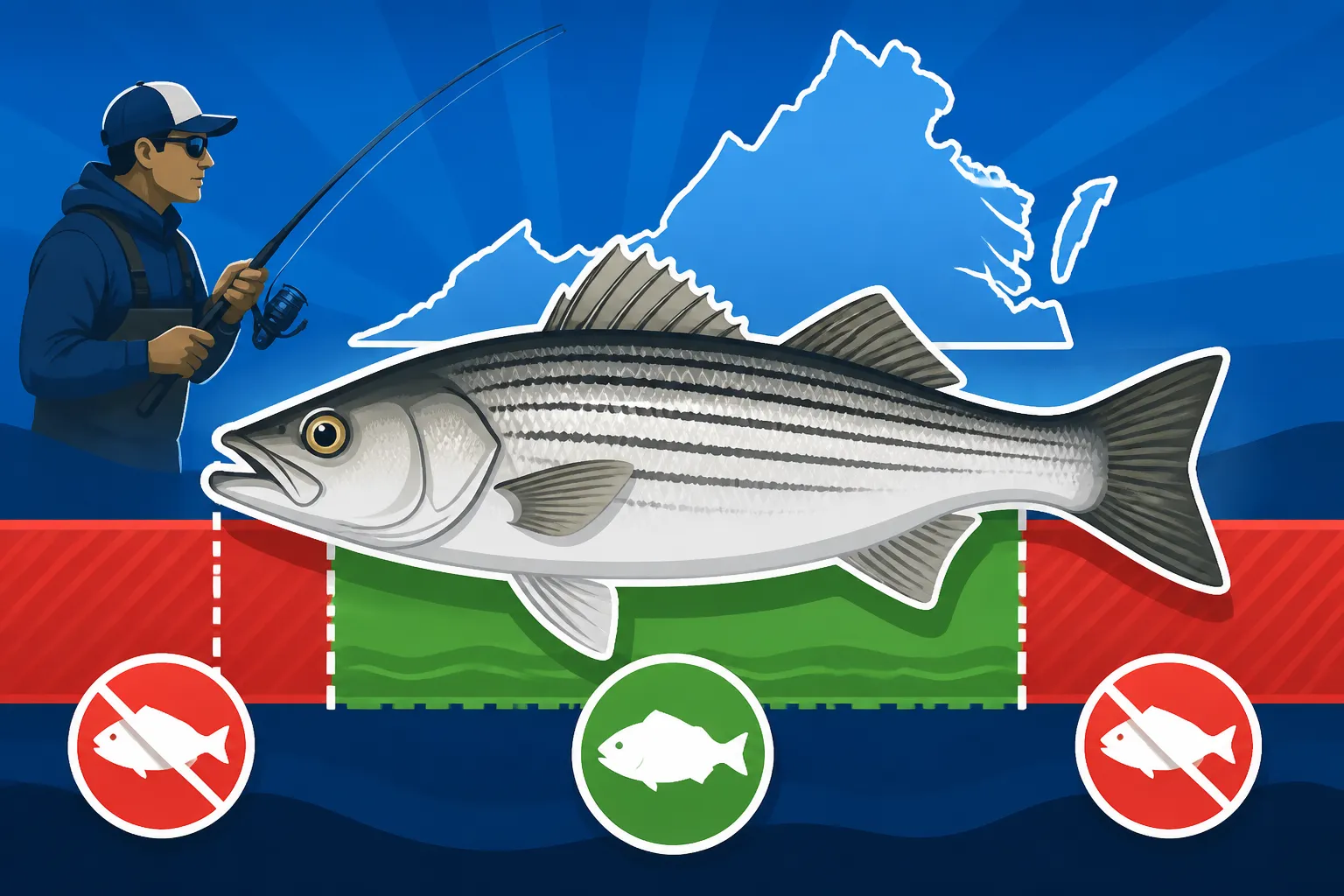
At its heart, a slot limit is a specific size range within which fish can be legally harvested, while those fish that are either too small or too large must be released. Think of it as a "Goldilocks zone" for fishing: you're allowed to keep the fish that are "just right." For Virginia rockfish, that means any striped bass you catch must measure at least 28 inches but no more than 31 inches, from the tip of its nose to the tip of its tail with the tail compressed, to be a legal keeper.
This approach is distinctly different from simply having a minimum size limit, where anglers can keep anything above a certain length. With just a minimum, there's often a tendency for everyone to target and keep the largest fish, which are often the most prolific breeders. Conversely, a maximum size limit would protect only the biggest fish, potentially allowing too many mid-sized fish to be harvested. The slot limit, on the other hand, aims for a balanced harvest by safeguarding both the smaller, juvenile fish so they can grow up, and the larger, mature breeding stock that are vital for future generations. It’s a sophisticated management tool designed to ensure a healthy fish population for years to come.
Conservation and Management: The "Why" Behind the Rule
The primary reason behind the 28 to 31-inch slot limit for Virginia's rockfish isn't to make your life harder; it's a critical conservation strategy. Striped bass populations, particularly along the Atlantic coast, have faced significant pressures over the decades from overfishing and environmental changes. The Atlantic States Marine Fisheries Commission (ASMFC), in conjunction with state agencies like the Virginia Department of Wildlife Resources (DWR), implements these regulations to protect the species.
By protecting the smaller fish (those under 28 inches), the slot limit allows them to reach sexual maturity and contribute to the spawning stock. This is crucial because a healthy population needs a steady supply of new recruits. Simultaneously, by requiring the release of larger fish (over 31 inches), the slot limit protects the most robust and experienced breeders – often referred to as "trophy" fish. These larger females produce significantly more eggs than younger, smaller females, and their genetic makeup is often considered superior, making them incredibly valuable for the species' long-term survival. This dual protection strategy helps maintain a diverse age structure within the population, promoting resilience against environmental fluctuations and fishing pressure, and ensuring that our grandchildren will also have the chance to experience incredible striped bass fishing.
Navigating the Specifics of Virginia's 28 to 31 Inch Rockfish Slot Limit
Understanding the why is a great first step, but the real challenge lies in the how. When you're out on the water, the rules need to be clear and executable. Let's break down the practical aspects of this particular slot limit so you're never left guessing.
The Exact Measurement: What Counts and What Doesn't
This is where many anglers get tripped up, and it's absolutely vital to get it right. For Virginia rockfish, the measurement must be taken from the tip of the nose to the tip of the tail, with the tail compressed. This means you should gently squeeze the two lobes of the tail together to get the maximum length. It's not a measurement to the fork of the tail, nor is it a casual estimate. Every fraction of an inch matters, as being just a hair under 28 inches or over 31 inches can turn a legal catch into an illegal one.
To perform this measurement correctly, lay the fish flat on a rigid, straight measuring board or tape. Push its nose firmly against a solid stop on the board. Then, with one hand, gently compress the tail lobes, and with the other, read the measurement at the very tip of the tail. Don't try to stretch the fish or force it; just let it lay naturally while ensuring the nose is at the zero mark. Having a reliable, easy-to-read measuring device readily available is non-negotiable. Many anglers find durable, stick-on rulers for their boat or cooler lid incredibly handy, or you can pick up a high-quality, rigid measuring board on Amazon that will give you accurate readings every time.
Daily Creel and Possession Limits
Beyond the size, Virginia also has strict rules about how many rockfish you can keep. During the open season, anglers are generally permitted to keep one fish per person per day that falls within the 28 to 31-inch slot. This "one-and-done" rule is incredibly important to remember, especially if you're fishing with a group. If you catch your one keeper, you must cease fishing for striped bass for the rest of that day, or switch to targeting other species.
It's also crucial to understand possession limits. The daily creel limit typically applies to the number of fish you can possess at any given time, whether on your boat, in your cooler, or in your vehicle. For instance, if you fish on Monday and keep one legal rockfish, you cannot go out on Tuesday, catch another legal rockfish, and have two in your cooler, even if you stopped fishing striped bass on Monday. The possession limit often mirrors the daily creel limit unless otherwise specified, meaning you can't accumulate more than one legal rockfish from multiple fishing trips. This rule is especially relevant for those booking guided trips; check out the specifics on Virginia's One-Fish Striped Bass Limit on Charter Trips.
Seasonal Considerations and Special Zones
The rockfish slot limit isn't a static rule that applies all year round in every body of water. Virginia's striped bass season is often split into different periods to align with migration patterns and spawning cycles, and these seasons dictate when you can even target and keep striped bass. For instance, you might find a spring season and a fall/winter season in the coastal and Chesapeake Bay waters, with closures in between. Understanding these seasonal windows is just as important as knowing the slot limit itself. More detailed information can be found in our comprehensive guide on the Striped Bass Season and Slot Limit in Virginia.
While the 28 to 31-inch slot limit is widely applicable to Virginia's coastal and Chesapeake Bay fisheries, it's always wise to double-check if you're fishing in specific inland freshwater impoundments. Some lakes, particularly those with landlocked populations of striped bass or hybrid striped bass, might have slightly different regulations tailored to their unique ecosystems. However, for the vast majority of anglers pursuing "rockfish" in Virginia, especially in the tidal rivers and the Bay itself, the 28 to 31-inch slot is the rule you need to live by. Staying informed about these nuances is part of being a responsible angler and respecting the resource.
Practical Tips for Adhering to the Rockfish Slot Limit
Knowing the rules is one thing, but actually putting them into practice on the water, especially when the bite is hot, is another. It takes preparation and a commitment to responsible angling.
Measuring Your Catch Accurately
When you boat a beautiful rockfish, the excitement can be overwhelming. But before you do anything else, grab your measuring device. A stiff, flat measuring board is generally the most reliable tool. Lay the fish down gently but quickly, ensuring its nose is snug against the measurement stop. Then, with minimal fuss, compress the tail. It’s crucial not to stretch the fish or bend it in an unnatural way to gain an extra inch. If you’re fishing alone, practice this maneuver beforehand to make it second nature.
Many seasoned anglers even mark their measuring boards at the 28 and 31-inch points with a distinct color or notch, making quick visual checks even easier. Remember, the fish's welfare is paramount. The faster and more accurately you measure, the less stress the fish experiences, whether it's a keeper or needs to be released. You can find excellent, durable measuring tapes and boards specifically designed for boat use on Amazon, some even with adhesive backs to stick right onto your cooler or gunwale for ultimate convenience.
Best Practices for Catch and Release
Let's face it, many of the rockfish you catch will fall outside that narrow 28-31 inch slot. That means practicing proper catch and release techniques is not just good sportsmanship, it's a legal requirement and essential for conservation. Minimize the time the fish is out of the water. Use wet hands when handling the fish to protect its protective slime coat. Avoid holding the fish by the jaw vertically, especially larger ones, as this can damage their internal organs and jaw structure. Instead, support the fish horizontally with one hand under its belly and the other gently gripping the lower jaw.
For deeply hooked fish, use a dehooking tool or cut the line as close to the hook as possible. Don't try to rip the hook out, as this often causes more harm. Once measured, if it's not a keeper, gently place the fish back into the water, head first, and allow it to swim away on its own power. Sometimes a slight push forward in the water helps revive it. Every fish released properly is another chance for it to grow, spawn, and be caught again. For more insights on handling your catch, refer to Rockfish Fishing: What Anglers Need to Know.
Avoiding Common Mistakes
The most common mistake is simply guessing the size. It's a quick way to find yourself in hot water with the DWR. Never assume a fish is "about 29 inches." Always measure. Another frequent error is not having a reliable measuring device on hand. Imagine landing a trophy-sized fish only to realize your ruler is back in the truck! Always double-check your gear before heading out.
Some anglers also confuse striped bass with hybrid striped bass, which can sometimes have different regulations depending on the specific water body. While often similar in appearance and habits, it’s worth knowing the subtle differences, which you can learn more about in How to Identify a Striped Bass in Virginia. Lastly, always, always refer to the most current Virginia fishing regulations before your trip. Regulations can change seasonally or even mid-season, and "I didn't know" is never a valid excuse when a game warden asks to inspect your catch.
Consequences of Not Following the Virginia Rockfish Slot Limit
Ignorance of the law is never a defense, especially when it comes to fishing regulations designed to protect our precious natural resources. The Virginia Department of Wildlife Resources (DWR) takes its enforcement duties very seriously, and for good reason. Violating fishing laws carries real and often stiff penalties.
Penalties and Fines
If you're caught with a rockfish outside the legal 28 to 31-inch slot, or if you exceed the one-fish daily limit, you're looking at more than just a slap on the wrist. Fines for such violations can be substantial, often starting in the hundreds of dollars, and can increase significantly depending on the severity of the offense and the number of illegal fish in your possession. It’s not uncommon for penalties to also include court costs, and in some cases, the confiscation of your fishing gear or even your vessel.
Repeated offenses can lead to the suspension or revocation of your fishing license, meaning you could be legally barred from fishing in Virginia for a period of time. This is a far more severe consequence than simply paying a fine, as it directly impacts your ability to enjoy a beloved pastime. Always remember, the DWR is dedicated to preserving the fishery for everyone, and those who flout the rules undermine these crucial efforts. For a broader understanding of legal repercussions, you can look into Penalties for Fishing Without a License in Virginia.
Enforcement on the Water
DWR game wardens are highly visible and active on Virginia's waterways, from the smallest trout streams to the vast expanses of the Chesapeake Bay. They patrol boat ramps, docks, piers, and open waters, conducting routine checks for valid licenses and adherence to creel and size limits. It's not a matter of if you'll be checked, but when.
When approached by a DWR officer, always be courteous and cooperative. Have your license readily available, and be prepared to present any fish you have in your possession for inspection. They are simply doing their job to protect the resource and ensure fair play for all anglers. Trying to conceal fish, arguing, or being uncooperative will only worsen the situation. The goal is to always be above board, know your limits, measure your fish accurately, and contribute positively to the conservation efforts that make Virginia such a fantastic place to fish. Adhering to the Virginia Fishing Regulations Explained is everyone's responsibility, and it makes for a better fishing experience for all.
Here’s a quick overview to keep you on the right side of the law when targeting Virginia rockfish:
| Fish Length (Nose to Tail) | Action Required | Explanation |
|---|---|---|
| Less than 28 inches | Release Immediately | These are juvenile fish, critical for future populations. Must be returned to water. |
| 28 to 31 inches (inclusive) | Keep (One per Angler) | This is the legal "slot" for harvesting one rockfish per person per day. |
| Over 31 inches | Release Immediately | These are prime breeding stock, essential for spawning. Must be returned to water. |
Disclaimer
Please note: Fishing regulations, including size and creel limits, can change. Always consult the most current Virginia Department of Wildlife Resources (DWR) regulations before heading out on the water. This guide is intended for informational purposes only and does not supersede official regulations.