Smith Mountain Lake Striper Trolling Techniques in Virginia
Trying to dial in those elusive Smith Mountain Lake stripers can sometimes feel like a high-stakes treasure hunt, right? You know they're there, lurking in the depths or chasing baitfish, but actually connecting with them consistently is a whole different ball game. This guide is all about demystifying one of the most effective and popular methods for consistently putting stripers in the boat: trolling. We'll dive deep into everything from the best gear to seasonal strategies, helping you become a master of the Smith Mountain Lake striper troll.
Understanding Smith Mountain Lake Stripers
Smith Mountain Lake (SML) is a phenomenal fishery, especially when it comes to striped bass. These powerful, hard-fighting fish are a top target for many anglers, but they can be incredibly mobile and their behavior changes constantly. Understanding their patterns is the first step to successful trolling.
SML Striper Habits and Habitat
Striped bass in Smith Mountain Lake are unique; they are entirely freshwater-bound, unlike their anadromous relatives that migrate between fresh and saltwater. This means their entire life cycle plays out within the lake's vast waters, influencing where they feed, spawn, and seek refuge. These stripers are typically found in the deeper, cooler sections of the lake, especially during the warmer months, as they require oxygen-rich, cooler water to thrive. They are often associated with the main lake channel, ledges, humps, and submerged timber, always on the hunt for baitfish. Knowing these key structural elements on a map or fishfinder can significantly narrow down your search.
Their movements are heavily dictated by two primary factors: water temperature and bait availability. As the water warms, stripers move deeper to find their preferred thermal refuge, often suspending over deep water. In cooler months, they might be found shallower, chasing bait into coves and across points. Learning about Smith Mountain Lake's Elite Virginia Striped Bass Fishery can give you a real edge in understanding these powerful fish.
Why Trolling Reigns Supreme on SML
Many anglers swear by trolling for SML stripers, and for good reason. Trolling allows you to cover vast amounts of water efficiently, systematically searching for active fish. Instead of waiting for the fish to come to you, you're actively taking your lures to where the fish are. This is especially crucial on a large impoundment like Smith Mountain Lake where stripers can be spread out or schooling in unpredictable locations.
Trolling also allows you to present multiple baits at varying depths simultaneously, increasing your chances of finding the striper's preferred feeding zone on any given day. You can run a diverse spread of lures – from deep-diving crankbaits to umbrella rigs – and adjust your speed and depth until you hit paydirt. It’s a proactive and highly effective method that, once mastered, can yield impressive results when other techniques might fall short. It's truly a cornerstone technique for Smith Mountain Lake Striped Bass Fishing in Virginia.
Key Forage and Their Impact on Striper Location
The diet of Smith Mountain Lake stripers primarily consists of baitfish, with alewives and gizzard shad being the dominant species. The presence and movement of these baitfish are perhaps the most critical factor in locating stripers. Where the bait goes, the stripers follow.
Alewives tend to prefer cooler, deeper water and will often suspend in open water. Gizzard shad, on the other hand, might be found in shallower, warmer water or closer to structure. Understanding these baitfish behaviors, which you can often discern using your electronics, is paramount. If you see large schools of baitfish on your fishfinder, especially if they are "balled up," you can bet stripers are likely nearby, either actively feeding or getting ready to strike. Your trolling strategy should always involve targeting areas where you mark significant baitfish activity.
Essential Gear for Trolling SML
Successful striper trolling on Smith Mountain Lake isn't just about throwing a lure in the water and hoping for the best. It requires a specific arsenal of gear designed to handle the powerful strikes of these fish and effectively present your baits at the right depths.
Rods, Reels, and Line Choices
When it comes to rods, you'll want something with a moderate to fast action that can handle the stress of pulling multiple lures or large umbrella rigs, yet still have enough sensitivity to detect subtle bites. Many anglers opt for medium-heavy to heavy conventional or spinning rods, typically in the 7 to 8-foot range. A longer rod provides better leverage and helps spread out your lines, reducing tangles.
For reels, baitcasting reels with a high line capacity are favored, especially if you plan on running downriggers or needing to let out a lot of line. Look for reels with smooth, powerful drags, as SML stripers can make blistering runs. Brands like Penn, Shimano, or Abu Garcia offer reliable options. As for line, 20 to 30-pound monofilament or fluorocarbon is common, but braided line in the 30 to 50-pound range is increasingly popular, especially for its strength, smaller diameter (which helps lures run deeper), and lack of stretch for better bite detection. If using braid, a fluorocarbon leader of 10-20 feet is often used for stealth and abrasion resistance. You can find a wide range of quality lines and reels on platforms like Amazon.
Must-Have Electronics for Striper Trolling
Modern marine electronics are your best friend on Smith Mountain Lake. A reliable fishfinder with good depth capabilities and side-scan or down-scan imaging is absolutely essential. This technology allows you to mark schools of baitfish, identify individual stripers, locate submerged structure, and even see your lures in the water, helping you adjust your depth and presentation. Brands like Humminbird and Garmin offer excellent units with features that can make a huge difference.
GPS functionality, either integrated into your fishfinder or as a separate unit, is also crucial. It allows you to mark waypoints where you've found fish, record successful trolling paths, and navigate back to productive areas. An accurate GPS helps you follow contour lines precisely, which is key to hitting those striper-holding ledges and humps. Keep an eye on your boat speed and track your past routes to replicate successful patterns. Knowing How to Find Fish From a Boat With a Fish Finder is a game-changer for any serious angler.
Outriggers, Planer Boards, and Downriggers
To effectively troll a spread of multiple lines and cover varying depths, specialized equipment comes into play:
- Outriggers: These long poles extend from the sides of your boat, allowing you to run lines far out to the sides. This significantly widens your trolling path, helping you cover more water and keep lines from tangling, especially when making turns. They are more common on larger offshore boats but some SML anglers adapt them.
- Planer Boards: Similar to outriggers in function, planer boards are small, buoyant devices that attach to your fishing line and pull your bait out to the side of the boat. This creates a wide spread without the need for large outriggers and is very popular on SML. They allow you to present lures in undisturbed water, away from the boat's wake, often enticing more wary fish.
- Downriggers: These mechanical devices are designed to carry your lure down to a specific, precise depth using a heavy cannonball weight. Once the desired depth is reached, the line is released from a clip, allowing the lure to swim freely at that depth until a fish strikes. Downriggers are indispensable for targeting suspended stripers in deeper water, which is a common scenario on SML, especially in summer. They offer unparalleled depth control, ensuring your bait is precisely in the striper's strike zone.
Incorporating these tools allows for a much more versatile and effective trolling setup, increasing your chances of finding and catching stripers across the water column and throughout the lake.
Trolling Setup and Lure Selection
Once you have your gear, understanding how to rig your lines and select the right lures is the next critical step to consistently catching stripers on Smith Mountain Lake. It's not just about what you use, but how you use it.
Rigging for Success: Spreads and Leaders
A successful trolling spread is all about presenting multiple baits at different depths and distances from the boat, mimicking a school of baitfish. A common SML spread might involve:
- Deep Lines: Often run on downriggers, these lines target suspended stripers in the thermocline or near deep structure. Lures here could be deep-diving crankbaits or bucktail jigs with a spoon.
- Mid-Depth Lines: These might be run with lead core line, weighted steel line, or simply long lines with deep-diving crankbaits that reach moderate depths.
- Surface/Shallow Lines: Lines run straight off the rod tips or deployed with planer boards to get them away from the boat, often with shallow-running crankbaits, swimbaits, or even topwater lures early or late in the day.
The goal is to stagger your lures so they don't tangle and to cover a wide range of depths and widths. Pay close attention to your leader material and length. Fluorocarbon leaders of 30-50 lb test are common, providing a nearly invisible connection to your lure while offering abrasion resistance against rocks or the striper's abrasive mouth. Using swivels and snaps strategically can prevent line twist and make lure changes quicker.
Top Lures for Smith Mountain Lake Stripers
SML stripers will hit a variety of lures, but some are consistently more effective when trolling:
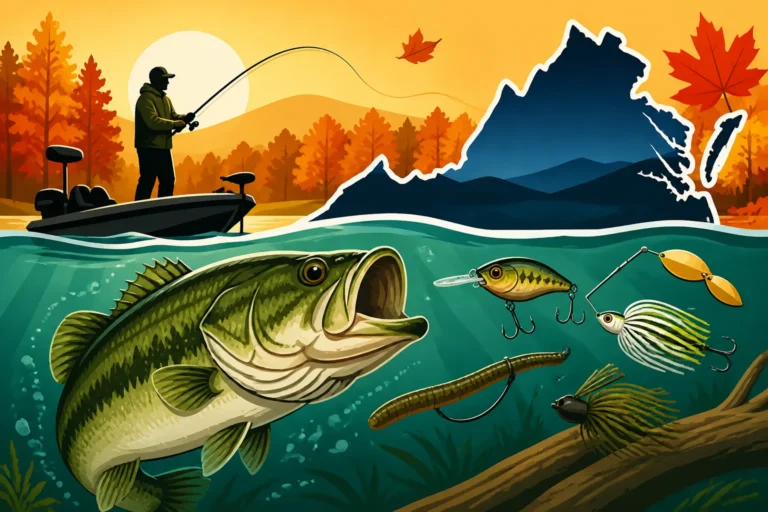
- Umbrella Rigs: These are absolute workhorses for SML stripers. An umbrella rig mimics a small school of baitfish, typically consisting of a main wire frame with multiple arms, each terminating in a small shad-style swimbait or bucktail jig. The "shad" bodies are usually 4-6 inches long. The Alabama Rig, a variation of the umbrella rig, also performs exceptionally well. These rigs are particularly effective when stripers are actively chasing large schools of baitfish. When choosing one, consider the number of wires and lures it supports; some states have limits on hooks, so always check Virginia Fishing Regulations Explained before you go.
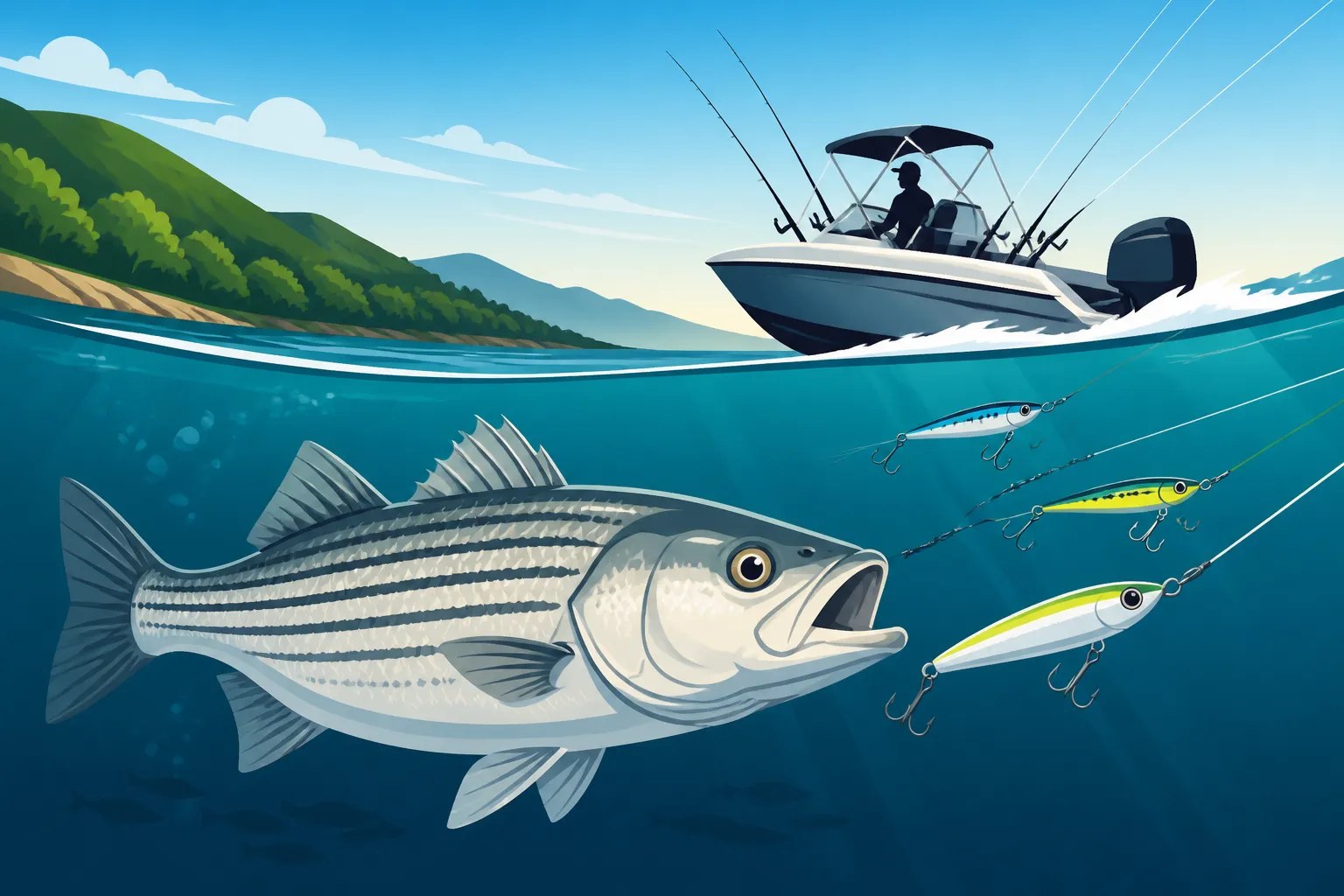
- Deep-Diving Crankbaits: Lures like the Rapala Down Deep Husky Jerk, Bomber Long A, or SPRO McRip 85 are excellent for targeting stripers at various depths. Match the lure's diving depth to where you're marking fish and bait. Colors that mimic alewives (silver/blue, chrome) or shad (white, chartreuse) are always good bets.
- Spoons: Casting spoons or jigging spoons, like the Crippled Herring or Hopkins Shorty, can be incredibly effective when trolled behind a downrigger or weighted with a snap-weight. Their erratic flash and wobble often trigger aggressive strikes, especially when stripers are feeding on baitfish that are diving and darting.
- Bucktail Jigs: While often associated with casting or jigging, bucktail jigs can also be very effective when trolled, especially in conjunction with umbrella rigs or on their own with a soft plastic trailer. Their natural pulsations often fool wary stripers.
Always keep a variety of these lures on hand, as striper preferences can change daily based on light, water clarity, and baitfish activity. You can often find great deals on these lures on Amazon.
Bait Presentation: Live Bait vs. Artificials
While artificial lures are incredibly effective for trolling, live bait should never be overlooked, especially when the bite is tough.
- Live Bait Trolling: Live alewives, shad, or even smaller blueback herring, if legal and available, can be trolled using a controlled depth method (like a downrigger) or free-lined with a weight. The natural movement and scent of live bait are often irresistible to stripers. Using a small circle hook through the nose or back will ensure a good hookset and minimize harm to the bait. This technique can be slower in terms of covering water, but it can be deadly when fish are finicky. Understanding Live Bait Versus Trolling for Smith Mountain Lake Stripers in Virginia can help you decide when to use this approach.
- Artificial Lures: As discussed, a wide range of artificials can be trolled successfully. The key is to match the hatch – choosing lures that imitate the size and color of the dominant baitfish. Artificials allow for faster trolling speeds and easier coverage of large areas. They are also less messy and require less effort to maintain than live bait. The best strategy often involves a mix, perhaps starting with artificials to locate active fish, then switching to live bait if the action slows or if you're marking fish that aren't committing to the artificials.
Both methods have their merits, and a versatile SML striper angler knows when to employ each.
Mastering Trolling Patterns and Speeds
Trolling isn't just about dragging lures; it's a dynamic dance between your boat, the water, and the fish. Mastering your patterns and speeds is what turns a casual boat ride into a productive fishing trip.
Finding the Fish: Depth, Structure, and Bait Balls
The phrase "find the bait, find the fish" holds especially true for Smith Mountain Lake stripers. Your fishfinder is your most valuable tool here. Spend time scanning the main lake channel, prominent points, submerged humps, and ledges. These are often highways and feeding grounds for stripers.
Look for schools of baitfish, which will appear as dense clouds or individual arches on your sonar. If you see baitfish balled up, often near structure or a sharp depth change, it’s a strong indicator that predators are nearby. Also, keep an eye out for larger, distinct arches either within or just below the bait schools – those are your stripers. The depth at which you mark these fish is crucial, as it dictates how deep you need to present your lures. Sometimes stripers will be suspended in open water, far from any visible structure, but always in proximity to bait. Mark these spots on your GPS, as stripers often return to the same areas. For a deeper dive, consider resources like Best Striped Bass Spots on Smith Mountain Lake, Virginia.
Optimal Trolling Speeds and Their Adjustments
There's no single "perfect" trolling speed, as it can vary based on the type of lure, the season, water temperature, and how active the fish are. However, a general starting point for SML striper trolling is usually between 2.5 to 4.5 miles per hour.
- Slower Speeds (2.5-3 mph): Often effective in colder water (winter/early spring) or when fish are less aggressive. Slower speeds give fish more time to react to the lure and can be better for live bait or larger, slower-moving artificials like umbrella rigs with heavier swimbaits.
- Moderate Speeds (3-4 mph): This is a good all-around speed for most conditions and artificial lures. It provides a natural swimming action for crankbaits and spoons and allows you to cover water effectively.
- Faster Speeds (4-4.5+ mph): Sometimes necessary to trigger a reaction strike from very active fish, or to cover large areas quickly to locate schooling stripers. Faster speeds might require lures designed to perform well at higher velocities.
It's vital to experiment. If you're not getting bites, try increasing or decreasing your speed in small increments (0.2-0.5 mph). Observe how the speed affects your lure's action and depth, and don't be afraid to make adjustments until you find what the fish are responding to. Remember that Water Temperature and Fish Feeding Patterns are inextricably linked, so colder water usually means slower presentations.
Zig-Zagging, Turns, and Contour Following
Straight-line trolling has its place, but incorporating variations in your boat's movement can dramatically increase your strike rate.
- Zig-Zagging: Instead of a perfectly straight path, periodically make slight turns (a gentle "S" pattern). This causes your lures on the inside of the turn to slow down and drop slightly, while those on the outside speed up and rise. This change in speed and depth can often trigger a hesitant striper to strike.
- Contour Following: If you're marking fish along a deep ledge or hump, use your GPS and sonar to follow that contour precisely. This keeps your lures in the strike zone longer. Modern GPS chartplotters often have auto-pilot functions that can follow a programmed contour, freeing you up to focus on the rods.
- Sharp Turns: When you get a bite, don't just continue in a straight line. Make a sharp, controlled turn back towards the area where the fish hit. This often puts other lures directly into the same school of active fish and can lead to multiple hook-ups. It also creates that same erratic lure action that can entice more strikes.
These tactical maneuvers turn your trolling into an active hunt, rather than a passive drag, helping you present your lures in the most enticing ways possible.
Seasonal Trolling Strategies
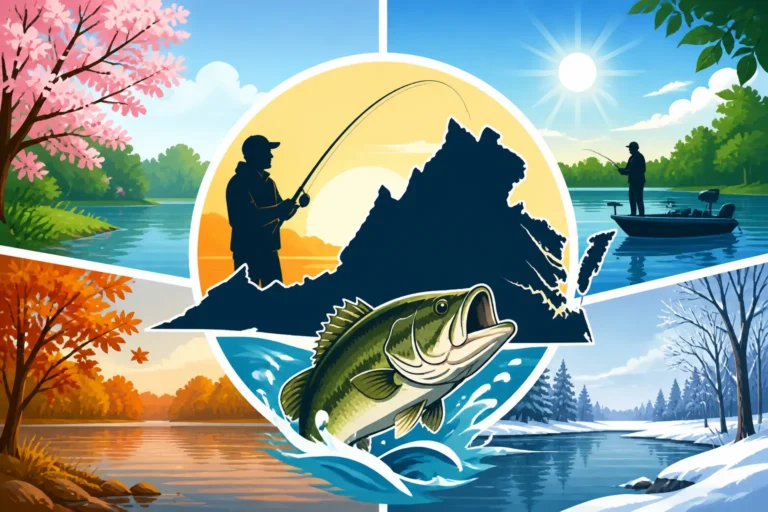
Smith Mountain Lake stripers behave differently throughout the year, primarily due to changing water temperatures and baitfish movements. Adapting your trolling techniques to the season is crucial for consistent success.
Spring Striper Trolling: Pre-Spawn to Post-Spawn
Spring is a season of transition on SML, bringing stripers from deeper winter haunts to shallower areas for feeding and spawning.
- Pre-Spawn (Early Spring): As water temperatures begin to rise (usually 45-55°F), stripers become very active and hungry, feeding heavily to build energy for the spawn. They'll often be found in the lower half of the lake, starting to stage near the main channel ledges, river channels, and creek mouths. Trolling medium to deep-diving crankbaits or umbrella rigs along these depth contours can be very effective. Look for baitfish congregating in these areas.
- Spawn (Mid-Spring): Stripers migrate up the rivers (primarily the Roanoke and Blackwater) to spawn. While direct targeting during the actual spawn is generally avoided to protect the fishery, some stripers may still be found in the lower lake feeding. However, fishing during this peak period (late April to early May) might be less productive in the main lake.
- Post-Spawn (Late Spring): After spawning, stripers return to the main lake, often tired and hungry, looking to recover. They'll continue to feed aggressively, often in the same areas they staged in pre-spawn, gradually moving deeper as surface temperatures climb. This can be an excellent time for trolling, as fish are often concentrated and willing to strike. Focus on depths from 15-30 feet, using a mix of crankbaits and umbrella rigs. The Smith Mountain Lake Striped Bass Fishing in Virginia article details optimal times to target these post-spawn fish.
Summer Striper Trolling: Deep and Cool
Summer on Smith Mountain Lake means stripers seek refuge in the cooler, oxygenated waters, often suspending in the deeper parts of the main lake.
- The Thermocline is Key: As surface temperatures soar (into the 80s), a distinct thermocline forms – a layer of rapidly changing water temperature. Stripers will typically be found just above, in, or directly below this thermocline, which usually sets up between 25-45 feet deep. Your fishfinder's temperature gauge and depth readings will be critical to finding this sweet spot.
- Downriggers are Essential: This is the season where downriggers truly shine. You'll need them to present your lures precisely at the depth of the thermocline where the stripers are holding. Troll deep-diving crankbaits, spoons, or bucktail jigs behind your downriggers.
- Early Morning and Late Evening: While summer trolling can be productive all day, the coolest parts of the day – dawn and dusk – often see stripers move slightly shallower or become more active. Surface boils, where stripers push bait to the surface, are more common during these times, but trolling deep is still your most consistent bet throughout the day. Consider that The Best Time of Year for Bass Fishing in Virginia might vary if you're targeting other species, but for stripers, summer demands depth.
Fall Striper Trolling: The Feeding Frenzy
Fall is arguably the most exciting time for striper fishing on Smith Mountain Lake. As water temperatures cool down, stripers go on a massive feeding spree.
- Cooling Water, Active Fish: As the lake water cools (from the 70s down to the 50s), stripers become incredibly active and aggressive. They will push baitfish into creeks and coves, often resulting in spectacular surface boils and feeding frenzies.
- Versatile Trolling Depths: Stripers can be found at a variety of depths, from just below the surface during feeding events to deeper ledges and points. Trolling a varied spread, including shallow-running crankbaits, swimbaits, and umbrella rigs, becomes highly effective.
- Following the Bait: Pay close attention to your fishfinder for massive schools of baitfish. Stripers will be hot on their heels. This is a prime time for running umbrella rigs, as they perfectly mimic a fleeing school of bait. The Best Bait for Smith Mountain Lake Striped Bass in Virginia can give you more ideas for this productive season. This is also a fantastic time for a guided trip, and you can investigate Smith Mountain Lake Striped Bass Guide Trip Cost if you're looking for expert assistance.
Winter Striper Trolling: Slow and Steady
Winter fishing on SML for stripers can be highly productive, but it demands patience and a slower approach.
- Deep and Lethargic: Stripers will move to their deepest wintering areas, often suspended over the main river channel or deep humps, where water temperatures are most stable. They become less active and more lethargic, requiring slower presentations.
- Slower Speeds, Subtle Lures: Reduce your trolling speed significantly (1.5-2.5 mph). Utilize single, subtle lures behind downriggers or weighted lines. Spoons, small bucktail jigs, or even slow-trolled live bait are excellent choices.
- Precision is Key: Because stripers are less willing to chase, precise lure placement is critical. Use your electronics to mark individual fish or small schools and present your bait directly to them. Look for them in areas with stable water temperatures, often near structure that holds heat or offers refuge.
Each season presents its own set of challenges and opportunities, but with the right trolling strategy, SML stripers can be caught year-round.
Troubleshooting Common Trolling Challenges
Even with the best gear and knowledge, trolling for stripers can present its own set of frustrations. Knowing how to adapt when things aren't going as planned can turn a slow day into a successful one.
Dealing with Finicky Biters and No Bites
There's nothing more disheartening than seeing fish on the sonar but not getting a single strike. When stripers are finicky or the bite is completely off, it's time to troubleshoot.
- Adjust Speed and Direction: As discussed, even a slight change in speed can trigger a strike. Experiment with increasing or decreasing your speed by 0.2-0.5 mph. Also, try making more pronounced turns or zig-zags to vary the lure's action. A lure that momentarily speeds up or slows down often gets attention.
- Change Lure Colors and Sizes: Stripers can be surprisingly picky. If your current colors aren't working, switch them up. If you're using chrome, try white or chartreuse. Also, adjust lure size. If they're feeding on small baitfish, a large umbrella rig might be ignored, and a single, smaller swimbait might be the ticket. Sometimes, a change from an umbrella rig to a single deep-diving crankbait can make all the difference.
- Vary Depths: Even if you're marking fish at a specific depth, try running some lures slightly above and below that zone. Stripers often look up to feed, but sometimes they might be hugging the bottom or a thermocline. Using a downrigger or weighted lines allows you to precisely target different depths until you find the sweet spot.
- Consider Live Bait: When artificials aren't cutting it, a slow-trolled live alewife or shad can often entice a strike from even the most finicky striper. The natural scent and movement are hard to resist.
Patience and a willingness to experiment are your greatest assets when the bite is slow.
Preventing Tangles and Snags
Tangles are the bane of any troller's existence, wasting valuable fishing time and causing frustration. Snags, while less frequent with open-water trolling, can still happen.
- Stagger Your Spread: The most crucial step to preventing tangles is to ensure your lines are spread out at different depths and distances from the boat. Use planer boards, downriggers, and varying line lengths to create a wide, multi-level presentation. A good rule of thumb is to have your shallowest lures furthest from the boat, and your deepest lures closer to the center, but carefully calibrated for each setup.
- Maintain Consistent Speed: Erratic changes in speed can cause lures to dive or rise unpredictably, leading to crossovers and tangles. Try to maintain a steady speed, especially when turning.
- Watch Your Turns: When making a turn, the lines on the inside of the turn will slow, and those on the outside will speed up. This is where tangles often occur. Make gradual, wide turns whenever possible. If you must make a sharper turn, be prepared to reel in a line or two, especially your longest lines, to prevent crisscrossing.
- Check Your Gear: Before deploying your lines, always check for any frayed line, bent hooks, or issues with swivels that could contribute to line twist or poor lure action, both of which can lead to tangles.
- Understanding Snags: Snags usually occur when trolling too close to structure. If you're constantly snagging, check your fishfinder to ensure you're not dragging lures through submerged timber, rock piles, or too close to the bottom. Adjust your lure depth or move to a slightly different path. If using weighted lures or downriggers, learn to "read" the bottom on your sonar and raise your lures just above it.
A proactive approach to line management and constant awareness of your surroundings will significantly reduce tangles and snags.
Adjusting to Weather and Water Conditions
Weather and water conditions on Smith Mountain Lake can change rapidly, and these changes directly impact striper behavior and your trolling success.
- Wind and Waves: Windy conditions can make boat control difficult, affecting your trolling speed and direction. Use your boat's motor and, if equipped, a bow-mounted trolling motor to maintain a steady course. Wind also creates currents and chop, which can affect lure action. Sometimes, a little chop can be good, breaking up the water surface and making your lures look more natural, but heavy winds can make fishing impractical.
- Water Clarity: After heavy rains, the lake can become murky. Stripers often rely heavily on their lateral line to detect vibrations in stained water, so lures with strong vibration or flash (like spoons or crankbaits with rattles) can be more effective. Brighter colors (chartreuse, orange) might also stand out better. In very clear water, more natural colors (silver, blueback) and stealthier presentations (longer fluorocarbon leaders) might be necessary.
- Cloud Cover and Sunlight: Bright, sunny days often push stripers deeper, making a downrigger setup crucial. Overcast days can see stripers move shallower and be more aggressive throughout the day. Adjust your trolling depth and lure choice accordingly. For instance, on a bright day, a reflective silver spoon trolled deep might be best, while on an overcast day, a subtle swimbait in shallower water could be effective.
- Barometric Pressure: While often debated, many anglers believe sudden drops in barometric pressure (before a storm) can make fish more aggressive, while stable high pressure can make them more lethargic. While you can't control the weather, being aware of these trends can help you manage your expectations and adjust your presentation.
Being flexible and observant of your environment is key. Don't be afraid to change your strategy when the conditions change; that's what separates a good angler from a truly great one. If you're planning a trip, always check the local forecast, and consider looking into Virginia's Fishing License and Catch Limit Basics to ensure you're prepared for all regulations.
Disclaimer
Fishing involves inherent risks, and conditions can change rapidly. Always prioritize safety, wear a personal flotation device, check local weather forecasts, and adhere to all Virginia Department of Wildlife Resources (DWR) regulations regarding fishing licenses, catch limits, and boating safety. The information provided in this guide is for educational and entertainment purposes only, and individuals should exercise their own judgment and caution.