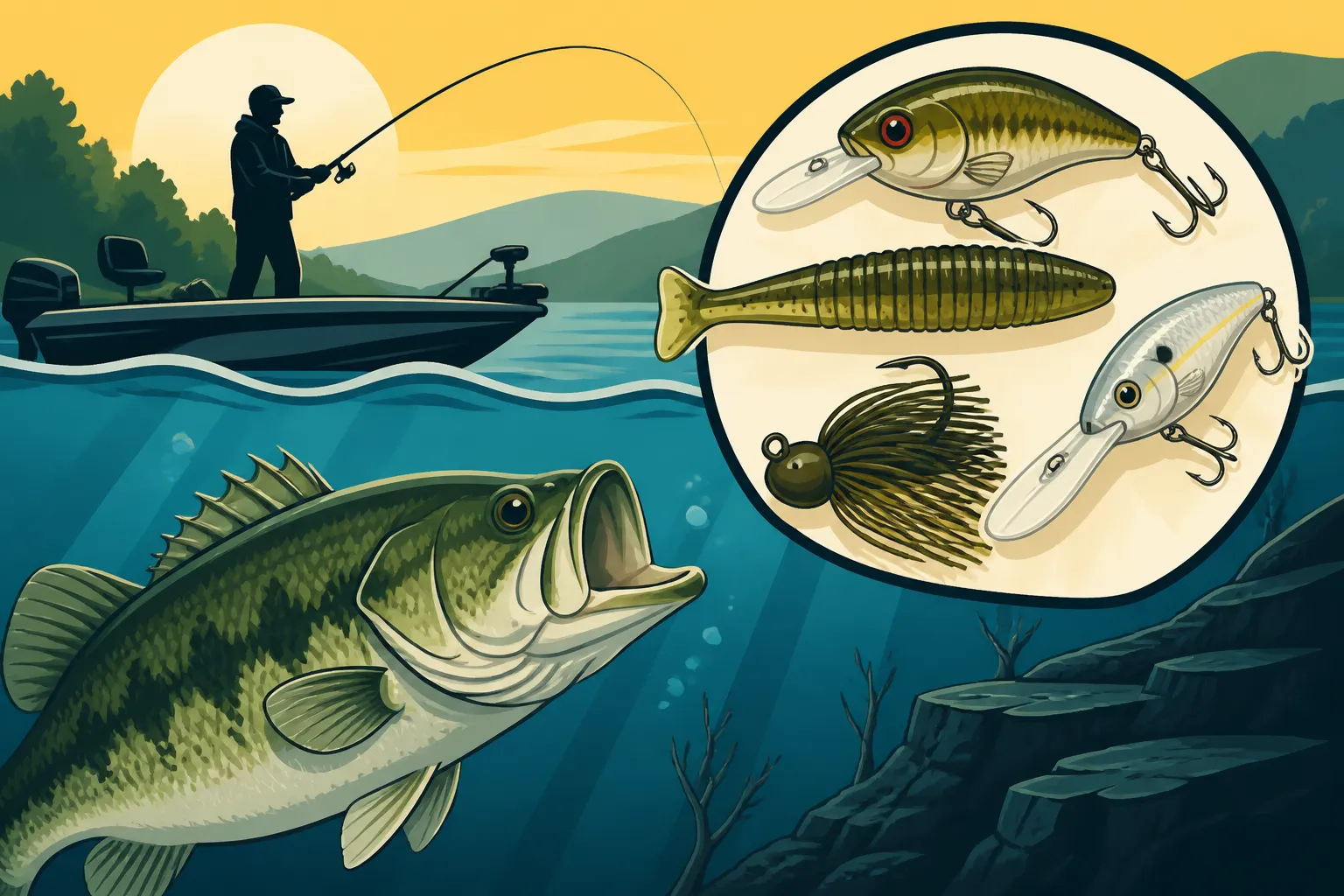
Largemouth Bass Bait That Works Best in Deep Lakes
There’s a unique challenge that deep lakes present to us bass anglers. Unlike shallow ponds or rivers where you can often spot your target or easily reach the bottom, those vast, clear, deep bodies of water like Smith Mountain Lake or Claytor Lake can feel intimidating. The largemouth bass are down there, alright, but finding them and presenting a bait effectively in 20, 30, or even 50 feet of water is a completely different ballgame. This guide is all about equipping you with the knowledge and the right bait arsenal to confidently target and catch largemouth bass lurking in the depths of Virginia's big lakes.
Why Deep Lakes Demand a Different Approach for Largemouth Bass
Fishing a deep lake isn't just about tying on a heavier weight; it's about understanding an entirely different underwater world. When you're dealing with significant depth, several factors come into play that fundamentally change how largemouth bass behave and how you need to approach them. It’s not like pitching a worm to a lily pad in a shallow cove.
Understanding the Thermocline and Oxygen Levels
One of the biggest differences in deep lakes, especially during the warmer months, is the formation of a thermocline. Imagine it as an invisible underwater wall where the warm surface water meets colder, denser deep water. Below this thermocline, oxygen levels often drop, meaning fish like largemouth bass won't typically hang out much deeper than this layer, even if the baitfish are there. So, your primary hunting ground for actively feeding bass is usually going to be at or just above this thermocline. Knowing your electronics and understanding how to read these layers is paramount. You might have found a promising drop-off, but if it extends below the oxygenated water, the bass aren't going to be there. This makes bait choice crucial – it needs to get to that specific depth and stay there effectively.
Pressure and Light Penetration
The sheer pressure of deep water affects fish behavior and your fishing gear. Bass might be more sluggish or less prone to chase baits aggressively in very deep water. Also, light penetration changes dramatically with depth. What looks bright and vibrant on the surface might appear muted or even disappear entirely at 30 feet. This impacts your lure color choices, often favoring more natural or darker, silhouetting colors. You're not relying on visual flash as much as you are on vibration, profile, and scent. Your baits need to be designed to be detected in low light and to hold up under the pressure without compromising their action.
Deep Water Forage and Structure
Deep lakes often have different forage bases than shallow ones. While they still have sunfish and shad, you might also find suspended baitfish schools, freshwater herring, or even crayfish hunkering down on deep rock piles. Bass will relate to deep structure just as they do shallow structure, but now that structure could be submerged timber, rock ledges, humps, or deep points that you can't see with the naked eye. Your bait needs to mimic this deep-water forage and be able to navigate complex, unseen cover without constant snagging. It’s all about putting your bait right where those bass are hiding, whether it’s a brush pile a good distance offshore or a submerged creek channel. For more on finding these underwater hangouts, check out How to Find Fish From a Boat With a Fish Finder.
Essential Baits for Targeting Deep Lake Largemouth Bass
When you're staring down into what looks like a bottomless pit, it's easy to feel overwhelmed. But don't worry, there's a tried-and-true arsenal of baits that consistently get the job done in deep water. These aren't just random lures; they're specifically designed to get down, stay down, and entice those deep-dwelling largemouth.
Heavy Football Jigs and Skirted Baits
When you talk about deep water, jigs are often the first thing that comes to mind for a good reason. A heavy football jig, typically from 3/4 ounce up to 1.5 ounces, is phenomenal for deep structure. Its unique head shape allows it to crawl over rocks and timber without getting snagged easily, and it stands up on the bottom, presenting its skirted profile enticingly. Pair it with a bulky soft plastic trailer like a craw or creature bait to add extra bulk and vibration.
- Why they work: They get to the bottom quickly, mimic crayfish or other bottom-dwelling prey, and offer a slow, controlled fall that entices hesitant bass. The thumping action as it bounces along deep contours can be irresistible.
- How to fish them: Cast to deep points, ledges, or humps. Let it sink to the bottom, then slowly drag or hop it along, feeling for any subtle changes in bottom composition or light bites. Pay close attention to your line as it falls; many strikes happen on the drop. For more specific techniques, refer to How to Fish a Jig for Largemouth Bass.
- Best conditions: Ideal for clear to moderately stained water when bass are relating directly to deep structure.
Deep Diving Crankbaits
Some crankbaits are built for depth, boasting massive lips that allow them to plunge to incredible depths – sometimes 20 feet or more. These aren't your typical shallow-running squarebills; we're talking about lures like the Norman DD22 or the Strike King 6XD. The key is to select a crankbait that's rated to run a few feet deeper than the average depth you're targeting. This ensures it's "digging" into the bottom or deflecting off structure, which is often when bass strike.
- Why they work: They cover water quickly, mimic fleeing baitfish, and create a lot of vibration and flash, triggering reaction strikes. The deflection off structure is a huge trigger.
- How to fish them: Long casts are essential to maximize their diving potential. Retrieve steadily, varying your speed to find what the bass prefer. When you feel it hit structure, pause for a split second to let it float up slightly, then continue the retrieve. This erratic action can often provoke a strike.
- Best conditions: Great for locating active bass over large areas of deep flats, humps, or submerged roadbeds. Works well in a variety of water clarities. You can find a fantastic selection of these deep diving crankbaits on Amazon, often with great color options for different water conditions.
Carolina Rigs
The Carolina rig is a classic for a reason when it comes to deep water. It's a versatile setup consisting of a heavy bullet weight (1/2 to 1 ounce or more), a bead, a swivel, and a leader (typically 2-4 feet) tied to a soft plastic bait. The weight keeps the rig on the bottom, but the long leader allows your bait to float or drift enticingly above the bottom, giving it a very natural, weightless presentation.
- Why they work: It keeps your bait in the strike zone for longer, allows the bait to move freely and naturally, and the weight kicking up sediment can attract curious bass. It's also excellent for covering large areas while maintaining bottom contact.
- How to fish them: Cast it out, let it sink, then slowly drag it along the bottom with long sweeps of your rod. Reel up the slack, then sweep again. The key is to maintain constant contact with the bottom and feel for the subtle "tick" of a bite.
- Best conditions: Effective year-round, especially when bass are scattered on deep flats, points, or humps, or when they are finicky and need a natural presentation. For more depth on soft plastics, consider reading How to Fish a Plastic Worm for Bass.
Drop Shot Rigs
When the bite is tough, and largemouth are pressured or sluggish in deep, clear water, the drop shot rig is your secret weapon. This finesse technique involves tying a hook directly into your main line, leaving a tag end where you attach a weight. Your soft plastic bait sits suspended horizontally above the weight, allowing it to quiver and twitch with minimal rod movement, right in the fish's face.
- Why they work: It offers an incredibly natural, suspended presentation, allowing you to keep your bait in the strike zone for extended periods without movement. It's fantastic for targeting individual fish you see on your electronics.
- How to fish them: Drop the rig straight down to the fish or cast it out and let it sink. Maintain a tight line and gently shake your rod tip, making the bait dance. The key is subtlety. Many strikes feel like added weight rather than a distinct "thump."
- Best conditions: Exceptional in very clear, deep lakes like South Holston Lake when bass are suspended, finicky, or relating tightly to vertical structure. It's also great for precise presentations to specific targets.
Weighted Swimbaits and Underspins
For those times when you need to "match the hatch" of larger baitfish in deep water, weighted swimbaits are a powerful choice. These can be soft plastic paddle tail swimbaits rigged on a heavy jig head or pre-weighted soft swimbaits designed to sink at a controlled rate. An underspin jig head, which has a small spinner blade attached beneath the head, adds extra flash and vibration, mimicking a baitfish's scales.
- Why they work: They offer a realistic baitfish profile and swimming action, appealing to larger, more aggressive bass that are feeding on schools of shad or herring. The flash from an underspin can be crucial in low light.
- How to fish them: Cast to suspended schools of baitfish or deep points and retrieve with a slow, steady roll. You can also yo-yo them along ledges or let them sink into brush piles. The goal is to imitate a natural, slow-swimming baitfish.
- Best conditions: Excellent for active bass that are feeding on schools of suspended bait, especially when you can see those bait balls on your electronics. They shine in lakes like Smith Mountain Lake where there's a strong baitfish presence. Amazon carries a diverse range of swimbaits and underspin heads, allowing you to experiment with different sizes and colors.
Deep Water Presentation and Techniques for Success
Having the right bait is only half the battle; knowing how to present it effectively in deep water is where true mastery comes in. It's about feel, patience, and using your tools wisely.
Slow and Deliberate Retrieves
Forget rapid-fire retrieves when you're fishing deep. Bass in deeper, cooler water tend to be less active and less willing to chase. Your presentations need to be slow, methodical, and deliberate. Whether you're dragging a jig, sweeping a Carolina rig, or slowly cranking a deep diver, focus on maintaining constant contact with your bait and the bottom. Let the bait do the work, and resist the urge to rush. The colder the water, the slower you generally want to go. This holds true especially in the colder months; if you want to know more about that, check out How to Catch Bass in Cold Water.
The Art of Feeling the Bottom
In deep water, your eyes are useless. You have to rely entirely on the feel transmitted through your rod and line. This means using sensitive gear (more on that later!) and paying close attention to every "tick," "scrape," or "mushy" feeling. You'll learn to differentiate between a rock, a log, grass, and that subtle weightless feeling of a bass inhaling your bait. It takes practice, but once you develop that "feel," it's incredibly rewarding. This is especially true when working football jigs or Carolina rigs over rocky bottom.
Utilizing Electronics for Deep Water Precision
Modern fish finders and depth sounders are invaluable tools for deep water fishing. They don't just show you depth; they can reveal bait schools, individual fish (often appearing as arches), and critical underwater structure like humps, ledges, and submerged timber. Don't just motor over a spot; spend time idling around, marking potential targets and understanding the contour of the bottom. Once you've identified a promising area, use your GPS to make precise casts. Knowing where to drop that bait before you even cast is a massive advantage. Technologies like side imaging can reveal structure far off to the sides of your boat, opening up new deep-water honey holes you might otherwise miss.
Vertical Jigging and Dropping
Sometimes, the most effective technique in deep water isn't casting at all – it's vertical jigging. If you've marked a school of bass or a significant piece of structure directly below your boat, dropping a heavy jig, spoon, or even a drop shot straight down can be incredibly productive. This technique allows for pinpoint accuracy and keeps your bait in the strike zone for as long as you want. Pay attention to how the fish are reacting on your sonar. Are they suspended? Are they hugging the bottom? Adjust your depth accordingly.
Gear Considerations for Deep Water Largemouth Fishing
When you're fishing deep, your gear choices become even more critical. You need equipment that can handle heavier weights, transmit subtle bites, and provide the power to haul big bass up from the depths.
Rods: Sensitivity Meets Power
For deep water, you'll generally want longer, more powerful rods. A 7-foot to 7-foot 6-inch medium-heavy to heavy power casting rod with a fast tip is a great all-around choice. The length aids in casting heavier baits and moving more line on a hookset, while the medium-heavy to heavy power provides the backbone needed to fight deep-water fish. The fast tip is crucial for transmitting those light, deep-water bites. Graphite rods are usually preferred for their sensitivity.
Reels: Fast Ratios and Strong Drags
High-speed baitcasting reels (7.1:1 ratio or higher) are incredibly helpful for deep water. This allows you to quickly pick up slack line, whether you're working a Carolina rig or reeling in to re-cast after a fish doesn't commit. A strong, smooth drag system is non-negotiable, as deep-water largemouth often make powerful, sustained runs before coming to the surface. Make sure your reel has sufficient line capacity for longer casts and fighting big fish.
Line: The Crucial Connection
Your line is the direct link to your bait and the fish. For deep water, fluorocarbon line is often the top choice.
- Fluorocarbon: It has minimal stretch, which dramatically increases sensitivity, allowing you to feel even the lightest bites. Its low visibility also makes it ideal for clear, deep water. Use 12-20 pound test, depending on the cover and bait size.
- Braided Line: While it has zero stretch and incredible sensitivity, its visibility can be an issue in clear water. Many anglers will use braided line (30-50 pound test) as their main line for casting distance and sensitivity, then tie a long fluorocarbon leader (10-20 feet) to the end. This gives you the best of both worlds.
Here's a quick comparison of popular deep water baits:
| Bait Type | Primary Action | Target Depth (Avg.) | Key Advantage | Ideal Use Case |
|---|---|---|---|---|
| Football Jig | Crawl/Hop | 15-40 feet | Bottom contact, natural profile | Deep rock piles, ledges, timber |
| Deep Diving Crankbait | Erratic wobble/Dig | 15-25+ feet | Covers water, reaction strikes | Deep flats, humps, submerged roadbeds |
| Carolina Rig | Drag/Float | 15-50+ feet | Natural presentation, versatile | Scattered bass on deep points, subtle structure |
| Drop Shot Rig | Suspend/Hover | 10-60+ feet | Finesse, pinpoint accuracy | Suspended fish, finicky bass, vertical structure |
| Weighted Swimbait | Realistic swim | 10-30+ feet | Large profile, realistic baitfish | Active bass on suspended bait schools, bigger fish |
Learning these techniques and understanding why these baits are effective will open up a whole new world of deep water bass fishing for you. Don't be afraid to experiment, and remember that patience and persistence are your best friends when those largemouth are hiding in the depths. Good luck out there!
Disclaimer
This article is for general informational purposes only and does not constitute professional advice. Laws, prices and regulations vary by location and change over time. Consult a qualified professional for guidance on your specific situation.