Best Boat Fishing Techniques for Lakes
There’s nothing quite like the freedom of fishing from a boat on a beautiful lake, but let's be honest, it can also feel overwhelming sometimes. You've got all that open water, and it's easy to wonder where the fish are hiding and how to best reach them. This guide is here to cut through the confusion, offering you proven boat fishing techniques for lakes that will help you locate fish, present your bait effectively, and ultimately, enjoy more successful and rewarding days on the water.
Understanding Lake Dynamics from a Boat
When you're out on a lake in a boat, you're not just a passive observer; you're an active participant with the ability to explore and adapt in ways bank anglers can only dream of. But with that freedom comes the challenge of deciphering a vast aquatic landscape. It can feel like trying to read a book in a foreign language if you don't know what to look for, leaving you frustrated and wondering why the fish aren't biting. Understanding what's happening beneath the surface and how fish relate to their environment is your first, most crucial step.
Reading the Water for Productive Spots
The sheer size of many lakes, like the expansive Smith Mountain Lake or Lake Anna, can be daunting. From the bank, you only see a small slice, but from a boat, you see it all – or at least, you have the potential to. Fish don't just swim aimlessly; they congregate around structure and cover for food, safety, and comfort. Your job, from the boat, is to become a detective, constantly looking for clues that betray their hiding spots.
Think about how fish use their environment. Drop-offs, for instance, are like underwater highways, allowing fish to quickly move between deep, cooler water and shallower feeding grounds. A hump, an elevated area on the lake bed that doesn't break the surface, can be a magnet for baitfish and, consequently, larger predators. Weed lines offer excellent cover and ambush points, while standing timber or submerged brush piles provide shelter and habitat. Even subtle changes in water color or surface ripples can indicate a submerged creek channel or a thermocline, a layer where water temperature changes rapidly, often where fish will hold. Being able to quickly move your boat to investigate these features gives you an incredible advantage. This ability to navigate and explore diverse habitats is precisely why understanding how to find fish from a boat with a fish finder is so vital for success.
The Role of Electronics and Navigational Tools
Trying to fish a large lake without modern electronics is like trying to drive across Virginia without a map or GPS – you might get there eventually, but you'll waste a lot of time and gas, and miss all the best sights along the way. Many anglers feel intimidated by the tech, but fish finders, GPS units, and mapping applications are invaluable tools that literally show you what's beneath your boat. They take the guesswork out of locating those productive spots we just talked about.
A good fish finder can display bottom contours, reveal submerged structure like brush piles or rock formations, and, most importantly, show you actual fish or schools of baitfish. Learning to interpret those arches and lines on your screen takes a little practice, but it's well worth the effort. GPS allows you to mark waypoints – specific spots where you caught fish, saw activity, or located promising structure. This is incredibly useful for returning to productive areas or navigating confidently in unfamiliar waters. Pre-trip planning with detailed lake maps, either on your electronics or a separate app, lets you identify potential hot spots before you even launch the boat, saving you precious fishing time. You can spend hours studying satellite imagery and contour maps, marking areas you want to explore, giving you a serious edge once you're on the water.
Essential Boat Fishing Techniques for Various Species
Once you’ve got a handle on reading the water and using your electronics, it’s time to put those insights into action with effective fishing techniques. From a boat, you have the flexibility to employ a wide array of strategies that can specifically target different species and adapt to changing conditions. This versatility is one of the biggest benefits of boat fishing, but knowing which technique to use when can feel like a guessing game if you're not familiar with the options.
Trolling for Covering Water
When you're faced with a massive body of water, whether it's the vast expanse of Kerr Lake or the seemingly endless stretches of Lake Gaston, covering ground efficiently is paramount. Trolling is a technique that excels at this. Instead of casting to a single spot, you're essentially dragging your lures through a large area, allowing you to intercept fish that might be scattered or actively cruising. It’s a fantastic search tool, especially when you're trying to locate schools of fish like striped bass or walleye that often move around quite a bit.
There are many ways to troll, from simply letting out a long line behind the boat to using more advanced setups like downriggers, which allow you to present lures at precise depths, or planer boards that spread your lines out to the sides, covering a wider path. The key is to match your trolling speed and lure choice to the species you're targeting and the depth they're holding. For instance, many anglers targeting striped bass on Smith Mountain Lake might troll large plugs or bucktails, while those after crappie might slow-troll small jigs or minnows. Trolling also allows you to enjoy the scenery and socialize with your fishing partners, making for a relaxed yet productive day on the water. Remember, what works when learning how to troll for striped bass in deep water might be completely different for shallow-water crappie.
Casting and Presenting Baits Effectively
While trolling is about covering water, casting from a boat allows for precision and finesse. It’s your go-to technique when you’ve located a specific piece of structure – a submerged tree, a rocky point, a dock, or a weed bed – and you want to deliver your bait exactly where you think the fish are holding. This is where your boat positioning becomes critical; you can use your trolling motor to hold your position against the wind or quietly approach a hotspot without spooking fish.
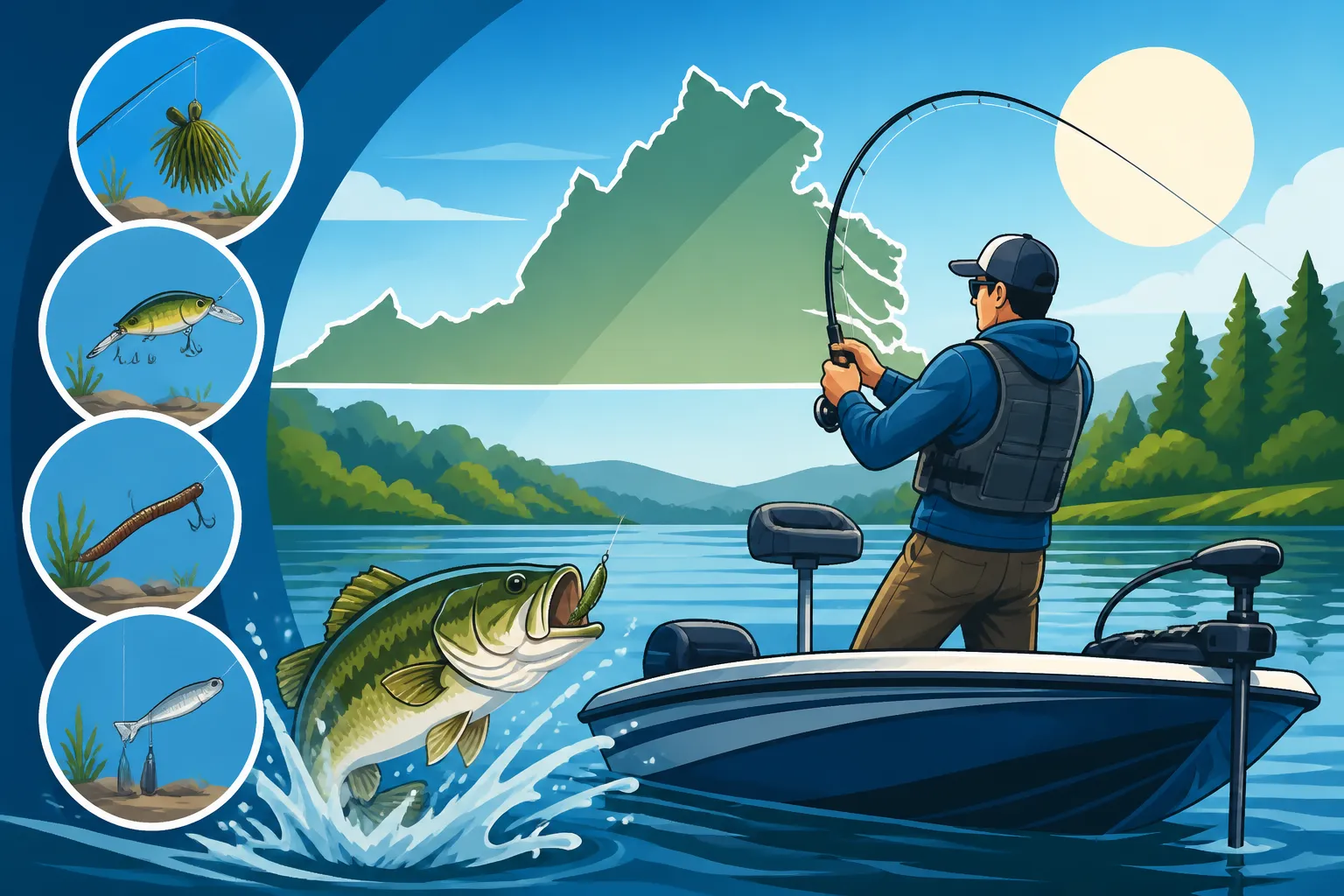
For bass anglers, pitching and flipping into heavy cover are essential boat techniques. These allow you to drop a jig or a Texas-rigged soft plastic into tight spots where big bass often hide, spots that are simply unreachable from the bank. For open water, fan casting with crankbaits, spinnerbaits, or swimbaits lets you methodically work an area, covering different depths and angles. And when the fish are finicky, finesse presentations like using weightless worms or small jigs with light line can be incredibly effective. A quality casting rod and reel combo, which you can often find readily available on Amazon, makes these precise presentations much easier and more enjoyable. Knowing the Best Bait for Largemouth Bass in Virginia can greatly improve your success with these casting techniques.
Vertical Jigging and Drop-Shotting
Sometimes, fish aren't cruising or hiding in easily accessible cover; they're suspended in open water or glued tightly to the bottom directly beneath your boat. This is where vertical jigging and drop-shotting shine. These are highly precise techniques that capitalize on the information your fish finder provides, allowing you to present your bait exactly where the fish are holding, often in deeper water or when they're less active.
Vertical jigging involves dropping a heavy jigging spoon, blade bait, or even a soft plastic straight down to the depth where you see fish on your sonar, then working it with short, sharp lifts and drops. This technique is deadly for species like walleye, crappie, or even striped bass that are schooling in open water. Drop-shotting, on the other hand, involves tying a weight at the very end of your line, and then a hook a foot or two above it. This allows your bait to suspend naturally in the water column, often just above the bottom, where hesitant fish can inspect it without feeling the weight of your line. It's a fantastic technique for targeting smallmouth bass on rocky humps or finicky largemouth. Both techniques require careful boat positioning to keep your bait directly beneath you, often relying on a reliable trolling motor with GPS capabilities.
Optimizing Your Boat Fishing Experience
Having the right techniques down is one thing, but making the most of your boat fishing experience goes beyond just the cast. It's about setting yourself up for success, ensuring safety, and knowing what to bring so you can focus on the fun. Many anglers overlook these aspects, only to find themselves unprepared or wishing they had thought ahead. Let's make sure that's not you.
Choosing the Right Boat and Gear
The boat itself is your platform, your mobile fishing base, and choosing the right one can significantly impact your fishing success and enjoyment. There's no one-size-fits-all answer, as the "best" boat depends heavily on the type of fishing you do and the lakes you frequent. A sleek bass boat, for instance, is built for speed and targeting largemouth bass with features like powerful engines, large casting decks, and aerated livewells. It's perfect for quickly moving between hot spots on a lake like Lake Anna.
On the other hand, a stable jon boat or a center console might be more versatile, suitable for everything from catfishing on the James River to chasing crappie in shallower coves. Consider features like a reliable trolling motor for silent maneuvering, ample storage for all your tackle, and a comfortable setup for the number of people you typically fish with. Beyond the boat, selecting the right rods, reels, and tackle specific to your target species is crucial. For example, you wouldn't use a heavy-duty saltwater setup for delicate trout fishing. You can easily stock up on everything from specific lures to extra fishing line and terminal tackle from retailers like Amazon, ensuring you're always prepared for whatever the lake throws at you. For more insights, explore our guide on Best Fishing Spots in Virginia to match your gear to the location.
| Technique | Primary Target Species | Ideal Conditions / Scenarios | Advantages | Considerations |
|---|---|---|---|---|
| Trolling | Striped Bass, Walleye, Trout, Crappie | Large lakes, searching for scattered fish, deep water | Covers vast areas, finds active fish, relaxed | Requires open water, specific gear (downriggers/planers) |
| Casting & Retrieving | Largemouth Bass, Smallmouth Bass, Panfish | Targeting visible cover, points, weed lines, shallow water | Precision, versatile with many lure types, active fishing | Can be tiring, requires good boat positioning |
| Pitching & Flipping | Largemouth Bass, Heavy Cover Species | Dense cover (brush piles, docks, reeds) | Delivers bait stealthily to tight spots, targets big fish | Requires accuracy and practice, close-quarters fishing |
| Vertical Jigging | Crappie, Walleye, Striped Bass, Perch | Suspended fish, deep water, schooled fish under boat | High precision to target specific depths, good for inactive fish | Relies heavily on electronics, careful boat control is key |
| Drop-Shotting | Smallmouth Bass, Largemouth Bass | Finicky fish, deep clear water, subtle bites | Natural bait presentation, excellent for tough bites | Finesse technique, requires sensitive tackle, slower retrieve |
Safety and Preparation on the Water
The excitement of fishing can sometimes make us forget the practicalities, but safety on the water is non-negotiable. Being unprepared is not only dangerous but can also ruin a perfectly good fishing trip, turning a day of relaxation into a stressful ordeal. Before every outing, even if it's just a short trip to your local lake, a little preparation goes a long way.
Always ensure you have enough life jackets for everyone on board, and make sure they are easily accessible. A first-aid kit, a fully charged cell phone, and a marine radio (if venturing further out) are crucial for communication in an emergency. Check the weather forecast before you leave and pay attention to changing conditions throughout the day. Lakes can get choppy quickly, and a sudden storm can turn a calm morning into a dangerous afternoon. It's also a good practice to tell someone on shore your float plan – where you're going and when you expect to return. This simple step provides peace of mind and a safety net. Finally, always carry enough water, snacks, and sun protection. Dehydration and sunburn can quickly detract from your enjoyment. By taking these precautions, you ensure that your focus can remain where it belongs: on the thrill of the catch and the beauty of Virginia's waters. For specific requirements, be sure to check the Virginia Fishing Regulations Explained.
Disclaimer
This article is for general informational purposes only and does not constitute professional advice. Laws, prices and regulations vary by location and change over time. Consult a qualified professional for guidance on your specific situation.