Best Techniques for Dusk Fishing
Ever feel like the fish just vanish the moment the sun dips below the horizon, leaving you wondering if you missed your chance? It's a common frustration for many anglers, but dusk isn't a dead zone; it's often a prime window of opportunity when fish become incredibly active. This guide will dive deep into the best techniques for dusk fishing in Virginia, helping you unlock those magical twilight bites and turn frustrating evenings into productive, memorable ones.
The Magic Hour: Why Dusk Ignites Fish Activity in Virginia
Dusk is more than just a transition from day to night; it's a dynamic period when environmental conditions shift, triggering a surge in fish activity. Understanding these changes is key to mastering your twilight angling strategy in Virginia's diverse waters.
Shifting Light Conditions and Predator Advantage
As the sun dips low, the intensity of light rapidly decreases. This change has a profound effect on the underwater world. For many predatory fish like largemouth bass, smallmouth bass, and striped bass, the diminishing light offers a distinct advantage. Their eyes are often better adapted for low-light conditions than those of their prey, making them feel more confident to emerge from cover and hunt.
Imagine a shadowy shoreline as the last rays fade. Baitfish that were cautious in the bright midday sun might start to school more loosely or venture into shallower water, thinking they're safer. But the predators are watching. This is when a stealthy cast with a dark-colored lure or a topwater bait can be incredibly effective. The silhouetted presentation against the lighter sky above can make your lure look like an easy meal to an opportunistic fish. This principle holds true whether you're fishing a quiet cove on Lake Anna or the tidal flats of the James River. It’s a classic example of how fish use the low light to their advantage, and smart anglers can too.
Falling Water Temperatures and Oxygen Levels
Another crucial factor during dusk, especially after a hot Virginia summer day, is the change in water temperature. Throughout the day, surface waters absorb sunlight, warming up considerably. As evening approaches and the sun's direct heat diminishes, the surface water begins to cool. This cooling effect, even if subtle, can invigorate fish that might have been sluggish during the heat of the day.
Warmer water holds less dissolved oxygen, which can make fish lethargic. As the water cools, oxygen levels often stabilize or even increase slightly, making fish more comfortable and active. This is particularly true in shallower areas or smaller ponds that heat up quickly. You'll often find fish moving into these areas from deeper, cooler sanctuaries as dusk sets in, looking for feeding opportunities. Understanding how Water Temperature and Fish Feeding Patterns correlate can significantly improve your success during this cooling period. This temperature shift can be a major trigger for species like crappie and catfish to start actively foraging, moving from their daytime haunts to more accessible feeding grounds.
Increased Baitfish Activity
Just as predators become more active, so too do many baitfish species. As the light fades, the sense of urgency for survival often overrides some of their daytime caution. Schools of minnows, shad, and other small forage fish might move into shallower water to feed on insects or plankton that have risen to the surface. This increased baitfish movement creates a buffet line that predators are quick to exploit.
You might observe ripples on the water, subtle splashes, or even full-blown baitfish busts as larger fish charge through schools near the surface. These visual cues are invaluable indicators of active fish. Whether you're targeting panfish or larger game species, keying into these baitfish movements can lead to an explosive bite. Look for signs of activity around submerged structure, weed lines, or current breaks where baitfish are likely to congregate.
Targeting Key Virginia Species as Daylight Fades
Different fish species react to the twilight hours in their own unique ways. Knowing which techniques work best for Virginia's most popular game fish during dusk will make your efforts much more fruitful.
Largemouth and Smallmouth Bass: The Aggressive Hunters
Bass fishing at dusk can be absolutely phenomenal. As the shadows lengthen, both largemouth and smallmouth bass often shed their daytime caution and become aggressive hunters, especially during the warmer months.
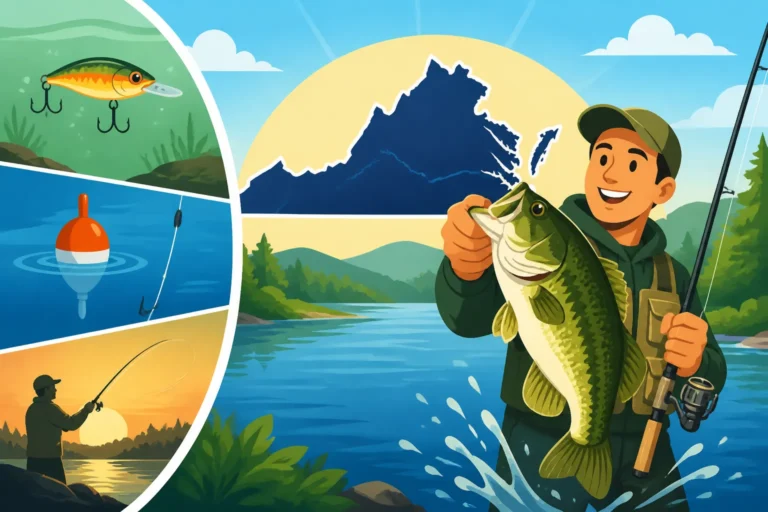
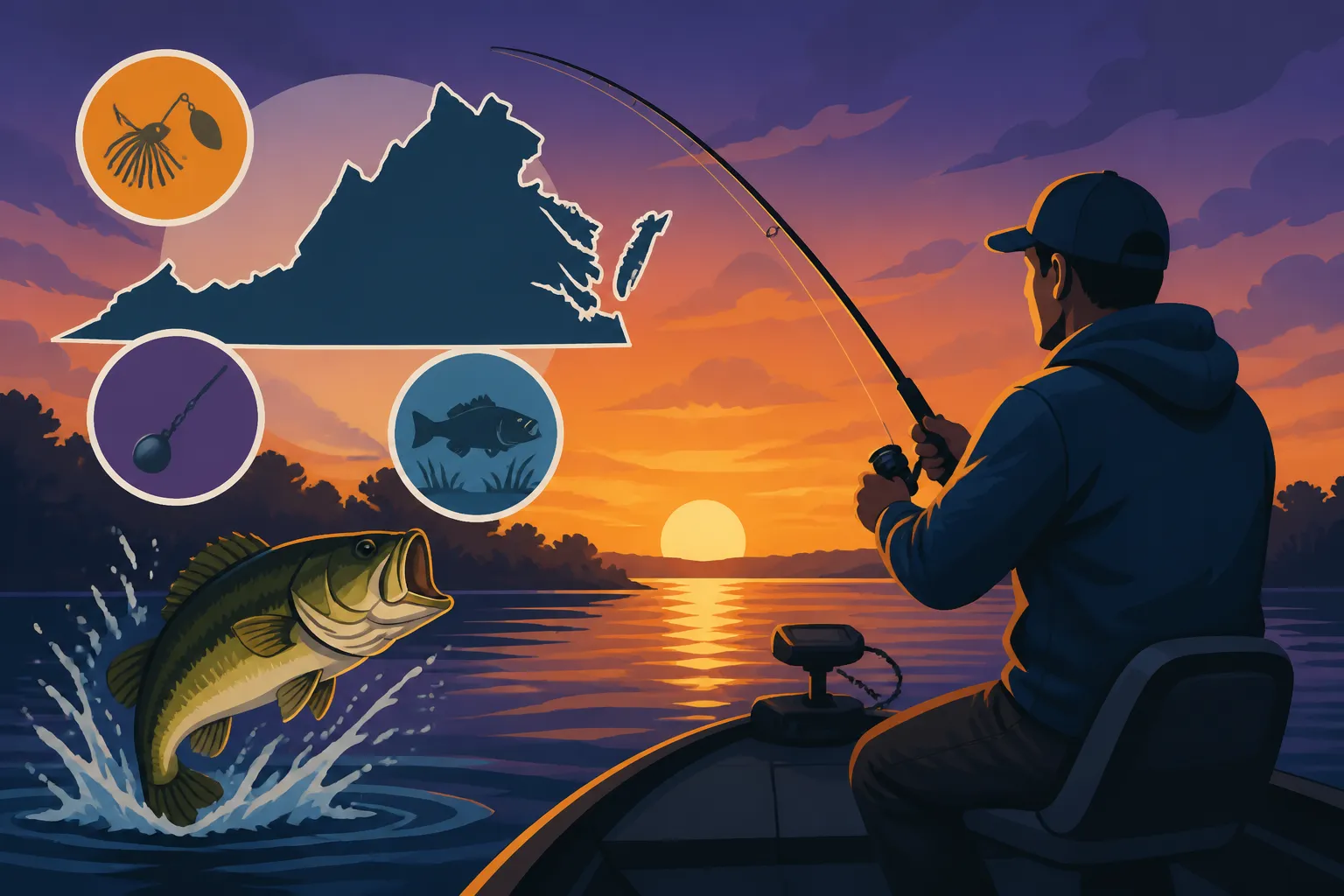
For largemouth bass, focus on shallow cover. Think lily pads, fallen trees, dock pilings, and weed edges. They'll cruise these areas, ambushing unsuspecting baitfish or frogs. Topwater lures are incredibly effective as the light fades. Buzzbaits, poppers, and walking baits (like a Zara Spook) create irresistible commotion on the surface. Cast them near cover and retrieve them erratically to mimic a struggling meal. As it gets darker, switch to darker-colored spinnerbaits or soft plastics like worms and jigs, retrieved slowly along the bottom or through vegetation. You can find a vast array of these lures and baits on Amazon to experiment with. Knowing how to Catch Bass at Night in Summer also gives you an edge as you transition from dusk into full darkness.
Smallmouth bass, often found in clearer, rocky rivers like the Shenandoah River or deeper lakes, also become more active. They'll move onto shallower rock piles, ledges, and current breaks to feed. Small crankbaits, jerkbaits, and tube jigs worked along rocky bottoms can be deadly. If you're on a river, focus on eddies and current seams where baitfish are swept past. A simple grub or creature bait on a light jig head can also be highly effective, allowing you to feel subtle bites as the visibility diminishes. For deeper insights, check out our guide on Virginia Bass Fishing: Largemouth, Smallmouth, Spotted, and Alabama Bass.
Crappie: The Schooling Nibblers
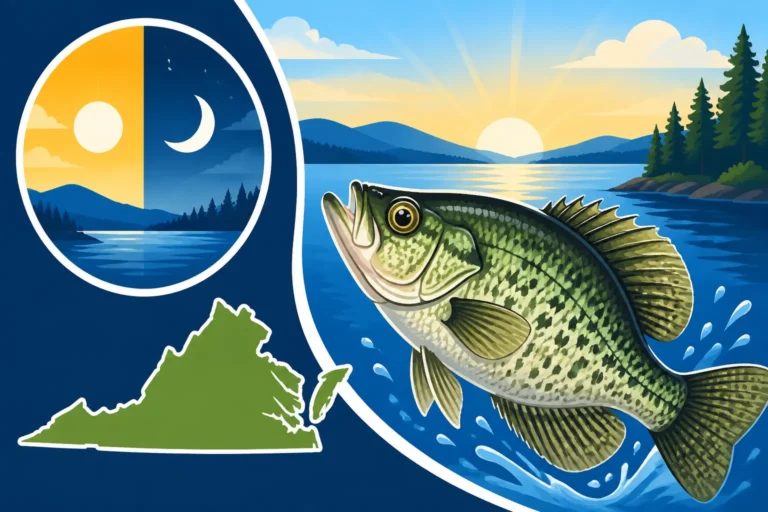
Crappie, both black and white, are fantastic fish to target at dusk. They tend to move from deeper water cover during the day into shallower feeding grounds as evening approaches, often congregating in large schools around submerged brush piles, docks, and bridge pilings.
The key to dusk crappie fishing is often finesse and patience. Small jigs, typically 1/16 to 1/32 ounce, tipped with tiny soft plastics (like tubes or curly-tail grubs) or live minnows are highly effective. Focus on vertical presentations around structure. Whether you're fishing from a boat or a dock, drop your bait to different depths until you find the active school. The bites can be very subtle in low light, so a sensitive rod is crucial. Many anglers find that darker colored jigs or those with reflective flash work well to silhouette against the fading light. Our guide to Crappie Fishing in Virginia provides even more tactics for these schooling fish.
Catfish: The Bottom Feeders of Twilight
Catfish are perhaps the most quintessential dusk and night fishing species. Channel catfish, blue catfish, and flathead catfish are all highly active as the sun sets, using their keen sense of smell and barbels to locate food in low visibility.
For channel and blue catfish, which are opportunistic scavengers, bait is king. Cut bait (like shad, herring, or any oily fish), chicken livers, and various stink baits are incredibly effective. Fish these baits on the bottom using a slip-sinker rig or a Carolina rig. Focus your efforts in deeper holes, channel edges, and areas with current in rivers like the James River, or along main lake channels and creek mouths in reservoirs. Even if you're Bank Fishing Techniques, a simple bottom rig with a robust bait can yield impressive results.
Flathead catfish are different; they prefer live bait. A live bluegill or shad presented on a stout bottom rig near submerged timber, rock piles, or deep structure is your best bet. Flatheads are ambush predators, so position your bait strategically near their likely hiding spots. Dusk is when they start to move out of their daytime cover to hunt. For a deeper dive into these nocturnal feeders, consult our guide to Catfish Species Found in Virginia Waters.
Striped Bass: The Aggressive Ambushers
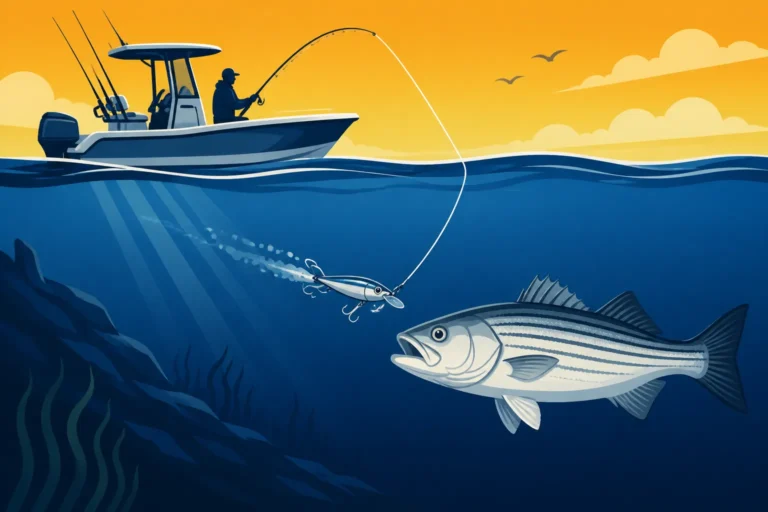
Striped bass, often called "rockfish" in saltwater, are another species that thrives during the low light of dusk. Both freshwater populations in lakes like Smith Mountain Lake and saltwater populations in the Chesapeake Bay or tidal rivers become more active.
For freshwater stripers, dusk means they'll often move shallower to chase baitfish. Trolling with large swimbaits or bucktail jigs can be effective, but casting topwater plugs, large poppers, or lipless crankbaits around points, humps, and current breaks can lead to explosive strikes. Look for schools of baitfish being pushed to the surface.
In saltwater, like the Chesapeake Bay, Striped Bass Season and Slot Limit Guide rules apply. Dusk can be prime time for casting swimbaits, poppers, or even live eels near bridge pilings, jetties, and channel edges. Trolling umbrella rigs or large bucktails can also be productive. The fading light gives stripers a camouflage advantage, allowing them to ambush prey more easily.
Here's a quick reference for common dusk fishing strategies in Virginia:
| Species | Primary Location at Dusk | Recommended Bait/Lure | Retrieve/Presentation | Key Tip |
|---|---|---|---|---|
| Largemouth Bass | Shallow cover, weed lines, docks | Topwater (buzzbaits, poppers), dark jigs, plastic worms | Erratic, slow | Target visible cover aggressively. |
| Smallmouth Bass | Rocky banks, current breaks, ledges | Small crankbaits, tubes, grubs, jerkbaits | Bottom bouncing, erratic stop-go | Focus on structure & current seams. |
| Black/White Crappie | Brush piles, docks, bridge pilings | Small jigs (plastics), live minnows | Vertical jigging, slow retrieve | Find the school at specific depths. |
| Channel/Blue Catfish | Deeper holes, river bends, lake channels | Cut bait, chicken liver, stink baits | Bottom fishing (slip sinker) | Use strong-smelling bait on the bottom. |
| Flathead Catfish | Submerged timber, rock piles, deep structure | Live bluegill or shad | Bottom fishing (stout rig) | Present live bait near heavy cover. |
| Striped Bass | Points, humps, current breaks, bridge pilings | Topwater, large swimbaits, bucktails, live eels | Fast retrieve, trolling | Look for active baitfish. |
Gearing Up for Twilight: Essential Equipment and Safety
Fishing at dusk, and potentially into the night, requires more than just your usual daytime setup. Proper gear ensures not only your success but also your safety. Don't let the fading light catch you unprepared!
Lighting: Illuminating Your Way
This might seem obvious, but reliable lighting is paramount. A good headlamp is your best friend. It keeps your hands free for tying knots, unhooking fish, and navigating. Look for models with adjustable brightness and, ideally, a red light option. Red light preserves your night vision and is less likely to spook fish than a bright white beam. It's also less obnoxious to other anglers if you're sharing a pier or boat. You can find excellent, durable headlamps on Amazon, often with waterproof ratings, which is a big plus around water.
In addition to a headlamp, a small, powerful handheld flashlight can be useful for spotting distant markers, checking boat ramps, or in case your headlamp battery dies. If you're on a boat, ensure your navigation lights are fully functional and ready to be switched on the moment the sun sets, as per Virginia Fishing Regulations Explained. Without proper lighting, you're not just at a disadvantage; you're risking safety.
Tackle Adjustments for Low Light
While the types of lures might change (darker colors, louder topwater), other tackle considerations also come into play.
- Line: In low light, fish rely less on sight, so you might be able to get away with slightly heavier or more visible line than you would in bright conditions. However, sensitivity is still key for detecting subtle bites. Consider using a brighter-colored braided line for your main line, which is easier to see when tying knots, and then attach a fluorocarbon leader for stealth at the business end.
- Knots: Practice tying your essential knots (like the Palomar knot or improved clinch) by feel or under low light conditions at home. Fumbling with complicated knots in the dark is a recipe for frustration.
- Lure Selection: As mentioned earlier, darker lures (black, purple, junebug) often create a better silhouette against the evening sky. For topwater baits, those with rattles or propeller blades can draw attention through sound and vibration when visual cues are limited. For finesse presentations, anything glowing or phosphorescent can also be a game-changer.
- Tackle Organization: Before dusk truly settles in, make sure your tackle box is organized. Have your preferred lures, hooks, and weights easily accessible. Searching for a specific jig in a disorganized box in the dark is a nightmare.
Personal Safety and Comfort
Your well-being should always be the top priority. Dusk fishing can be magical, but it also introduces unique hazards.
- Life Jacket: If you're on a boat, always wear a properly fitted life jacket, especially as visibility decreases. Even strong swimmers can get disoriented in the dark if they fall overboard.
- Bug Spray: Mosquitoes and other biting insects become much more active at dusk and after dark. A good insect repellent is non-negotiable, especially in Virginia's humid environments near water.
- Warm Clothing: Even on a warm day, temperatures can drop significantly after sunset, particularly by the water. Bring layers – a long-sleeved shirt or light jacket can make a huge difference in your comfort.
- Communication: Always let someone know where you're going and when you expect to return. Carry a fully charged cell phone.
- First-Aid Kit: A basic first-aid kit with bandages, antiseptic wipes, and pain relievers is a smart addition to any fishing trip, especially when visibility is reduced.
- Footwear: Wear sturdy, closed-toe shoes with good grip. Uneven terrain, wet docks, and slippery boat decks are harder to navigate in the dark.
- Navigation: If boating, know your waterways. Use GPS and charts, and be extra cautious of submerged hazards that are invisible in the dark.
Strategic Approaches for Maximizing Your Dusk Fishing Haul
Beyond specific techniques for each species and essential gear, a thoughtful strategic approach can dramatically improve your dusk fishing success. It's about combining environmental understanding with tactical execution.
Scouting and Planning Your Dusk Spot
You wouldn't head out on a long road trip without a map, right? The same goes for dusk fishing. While some of the best fishing spots in Virginia are productive all day, specific features truly shine during twilight.
Before the sun begins its descent, take some time to scout. Look for areas that offer a transition zone: where deep water meets shallow flats, where heavy cover like lily pads or fallen trees meets open water, or where current breaks create eddies. These are prime ambush points for predators. Pay attention to signs of baitfish activity during the late afternoon. If you see minnows jumping or schools of shad dimpling the surface, you've found a potential hotspot. Consider how the light will fade and where shadows will fall, as these can be key for bass.
For bank anglers, identify safe and accessible spots. Think about your casting lanes and any potential obstacles you won't see clearly in the dark. If you're planning to fish a pier, like some popular spots near Virginia Beach, understand the layout and any lighting conditions beforehand. Our guide on Dawn and Dusk Fishing Patterns emphasizes the importance of these observations.
Adapting Your Retrieve and Presentation
The fading light doesn't just change fish behavior; it should change yours too. Your retrieve speed and lure presentation need to be adjusted for the conditions.
- Slow Down (Sometimes): For many species, especially bass and crappie, a slower retrieve can be more effective as visibility drops. Fish may need more time to locate and commit to a lure. Jigs, worms, and slow-rolled spinnerbaits often outproduce faster presentations.
- Work Your Lure with Purpose: While slowing down, ensure your lure still has plenty of action. If you're using a soft plastic, impart twitches and pauses. For crankbaits, vary your retrieve with stop-and-go motions. This erratic movement can trigger reactive strikes from fish that are actively hunting.
- Topwater Explosion: Dusk is a legendary time for topwater lures. The silhouette created by a surface lure against the lighter sky above can be incredibly enticing. Don't be afraid to make a little noise with buzzbaits or poppers to draw fish out of cover. The visual of a surface strike in low light is one of fishing's greatest thrills.
- Vertical Jigging: For species like crappie or even deeper-holding bass or stripers, vertical jigging around structure can be very effective. This allows you to keep your bait in the strike zone longer and present it directly to fish holding tight to cover.
Understanding Seasonal Nuances
Dusk fishing strategies aren't static; they evolve with the seasons. A technique that's deadly in summer might be less effective in fall.
- Spring: As waters warm up, fish become more active. Dusk in spring can be excellent for bass moving into shallower areas for the pre-spawn bite. Topwater might be a bit early, but spinnerbaits and crankbaits can be very productive. Crappie will be moving into shallow cover.
- Summer: This is arguably the peak season for dusk fishing. After the heat of the day, fish often become most active as temperatures drop slightly and light fades. Topwater for bass, live bait for catfish, and jigs for crappie are all excellent choices. Look for species to move from deep, cool sanctuaries into shallower feeding flats. The Best Times to Fish in Virginia Throughout the Year article has more details on seasonal patterns.
- Fall: As water temperatures begin to cool significantly, fish enter a "feeding frenzy" to bulk up for winter. Dusk can be incredibly productive for aggressive strikes, especially for bass and stripers. Fish will be chasing baitfish schools, so locate the bait, and you'll find the predators. Crankbaits, jerkbaits, and swimbaits are good bets.
- Winter: Dusk fishing in winter can still be productive, but it's often a much slower bite. Fish will be less active due to cold water. Focus on deep holes and slow presentations. Catfish are still viable targets, but you might need to scale down your bait and fish even slower. This is often the time when you'd rather be employing Winter Bass Fishing Techniques during the day, but dusk can still yield a few bites if you're patient.
Remember, fishing is as much about reading the water and adapting as it is about specific techniques. By combining a solid understanding of why fish bite at dusk, tailored species-specific tactics, appropriate gear, and seasonal awareness, you're well on your way to maximizing your twilight fishing success in Virginia.
Disclaimer
This article is for general informational purposes only and does not constitute professional advice. Laws, prices and regulations vary by location and change over time. Consult a qualified professional for guidance on your specific situation.