How to Read Water When Fly Fishing a River
Ever stood by a beautiful Virginia river, fly rod in hand, staring at the water and wondering, "Where in the world are the fish?" It's a common frustration, especially when you're just starting out or exploring new waters. That feeling of uncertainty, of not knowing where to cast your perfectly tied fly, can be truly disheartening. This guide is here to help you move past that guesswork. We're going to dive deep into the art and science of "reading the water," teaching you how to decipher the subtle clues rivers offer, so you can confidently find those elusive trout and smallmouth bass, and make every cast count.
Why Reading Water is Your Most Crucial Skill
Fly fishing is more than just casting a line; it's a conversation with the river. And to have a meaningful conversation, you need to understand what the river is telling you. Failing to read the water is like trying to navigate a new city without a map – you might stumble upon something good, but it's largely by chance. For consistent success and true enjoyment, understanding where fish live, feed, and feel safe is paramount.
The Invisible World Beneath the Surface
Think about it: fish don't just hang out randomly in the middle of a wide, open river. They're driven by instincts for survival, which means they're constantly seeking food, safety from predators, and comfort from strong currents. This means certain spots in a river are fish magnets, while others are essentially barren. For trout, like the beautiful Rainbow, Brown, and Brook trout found in many of Virginia's coldwater streams, or the feisty Smallmouth Bass that inhabit rivers like the Shenandoah, understanding these preferences is key. They're looking for places where food is abundant but the effort to get it is minimal, or spots that offer cover from eagles, ospreys, or even you.
By learning to read the nuances of the water's flow, structure, and depth, you begin to visualize this invisible world. You start seeing the subtle current breaks that indicate an eddy where a fish might be resting, or the slight discoloration that suggests a deep, dark pool providing cover. This foresight not only makes you a more effective angler but also ensures your safety. You're less likely to wade into unexpectedly deep or fast water if you've already "read" it from the bank. It transforms a guessing game into an informed strategy, allowing you to anticipate rather than merely react.
Saving Time and Frustration
There's nothing quite as frustrating as spending hours on the river, casting your heart out, only to come up empty-handed. Many anglers experience this, and often, the culprit isn't their casting technique or fly selection, but simply fishing in the wrong places. When you know How to Read Water When Fly Fishing a River, you drastically cut down on unproductive casting. Instead of blind luck, you're making educated guesses about where fish are holding.
Imagine arriving at a new stretch of the Jackson River or a pristine wild trout stream in the George Washington National Forest. Without reading the water, you might just pick a random spot and start casting. With water-reading skills, you'd first observe the currents, identify potential feeding lanes, pinpoint submerged structure, and then choose your starting point with purpose. This strategic approach saves immense time and replaces frustration with focused intent. It allows you to move efficiently from one promising spot to the next, maximizing your chances of hooking up. It shifts your mindset from "I hope there's a fish here" to "I bet there's a fish hiding right there," making the entire experience far more engaging and rewarding.
Decoding the River's Language: Key Elements to Observe
Rivers, particularly those in Virginia, are dynamic environments, constantly shifting and presenting new challenges and opportunities. To truly read them, you need to understand their fundamental components: how the water flows, what lies beneath, and the subtle cues both on and below the surface. Each element tells a part of the story about where fish are, what they’re doing, and how best to approach them.
Current, Structure, and Depth: The Big Three
These three elements form the bedrock of water reading. Master them, and you'll be well on your way to understanding any river.
- Current: The movement of water is perhaps the most critical factor. Fish are energy conservers; they don't want to fight a strong current all day unless there's a significant payoff.
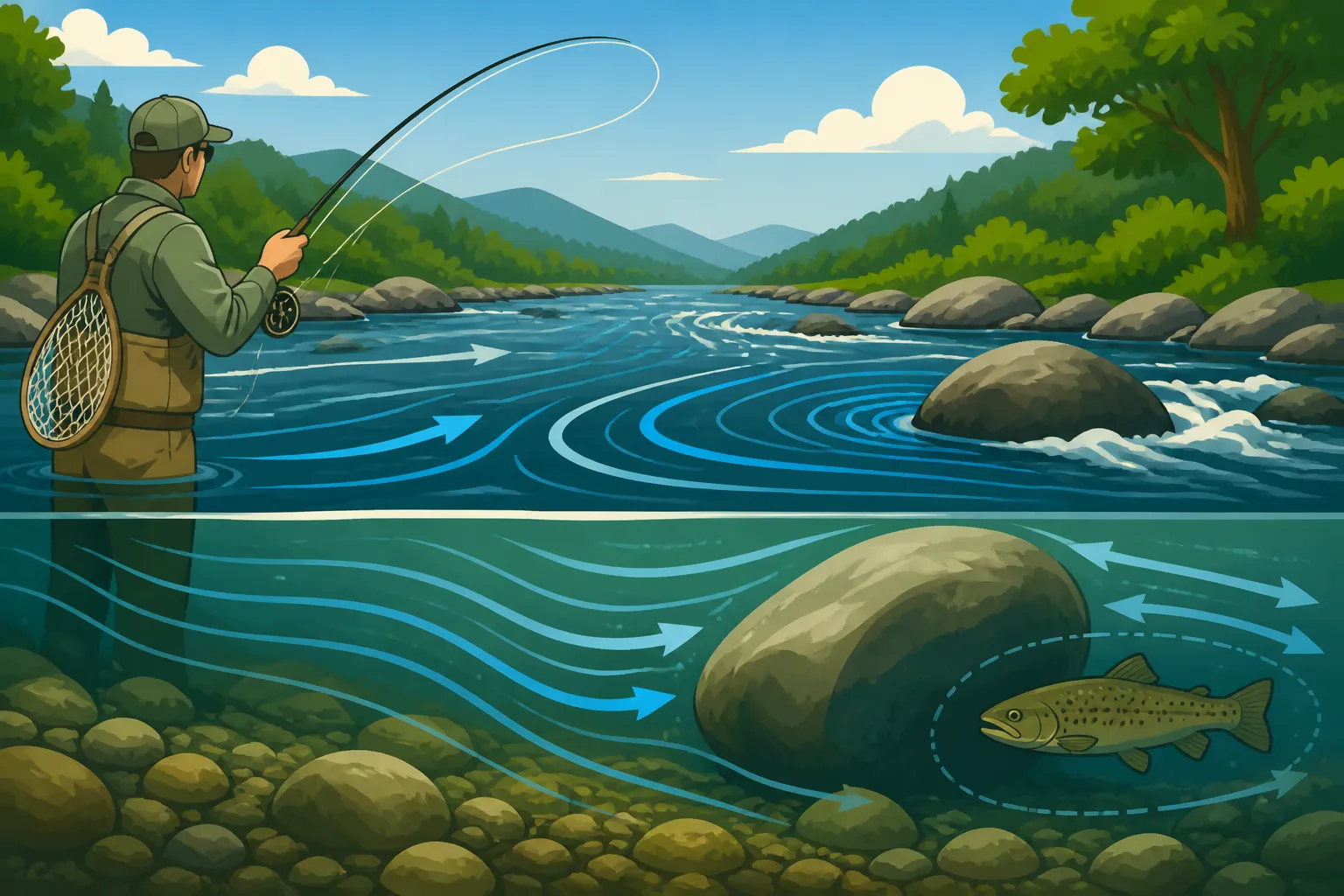
- Seams: These are areas where fast water meets slow water. Fish love to sit in the slower water, expending minimal energy, while waiting for food to be swept by in the faster current. Look for these subtle lines where the surface texture changes. A classic example is behind a large boulder, where an eddy forms.
- Eddy Lines: An eddy is a circular current, often found downstream of obstructions or in slower pockets along the bank. The "line" of the eddy is where the main current interacts with this slower, often recirculating water. These are prime feeding zones as food gets caught and spins around.
- Riffles: These are shallow, fast-moving sections of the river, often characterized by turbulent, broken water. Riffles are highly oxygenated and dislodge a lot of insects, making them excellent feeding grounds, especially for trout. When Fly Fishing for Trout on Rivers, these are key areas to target.
- Runs: Deeper, smoother stretches of flowing water, often found downstream of riffles or pools. Fish can hold comfortably in runs, and they often contain a good mix of depth and current speed.
- Pools: Deeper, slower areas of the river, often found below rapids or bends. Pools offer fish a place to rest, escape predators, and find consistent food, especially during hot weather or low light.
- Structure: Anything in the riverbed that breaks the current or provides cover is structure.
- Rocks and Boulders: These are classic fish magnets. Fish sit behind them, out of the main current, waiting for food. The larger the rock, the larger the calm water pocket it creates.
- Logs and Fallen Trees (Snags/Laydowns): These provide excellent cover from predators and current, as well as a habitat for insects. Fish will often hold tight to these structures.
- Undercut Banks: Where the river current has eroded the bank, creating a literal "cave" or overhang. These are prime hiding spots for larger fish, offering shade and protection.
- Vegetation: Submerged weeds, grass, or overhanging branches provide cover and host a variety of insects, drawing fish in. For smallmouth bass, especially, these areas can be golden. When learning How to Fly Fish for Smallmouth Bass, remember that they often relate closely to woody debris and rocky outcrops.
- Depth: The vertical dimension of the river is equally important.
- Gradual Slopes vs. Sudden Drop-Offs: Fish use depth for safety and temperature regulation. A gradual slope might hold cruising fish, while a sudden drop-off into a deeper channel often holds larger, more sedentary fish.
- Channels and Depressions: The deepest parts of the river, often following the strongest current. These provide sanctuary and a highway for fish moving upstream or downstream. Observing how the light penetrates the water can give you clues about depth; darker areas often indicate deeper water.
Surface Clues and Subsurface Insights
Beyond the major structural elements, rivers constantly offer subtle hints about fish activity and their immediate environment. Learning to spot these can give you a significant edge.
- Surface Activity: Don't just stare at the water, watch it.
- Rising Fish: This is the most obvious and exciting clue! A rising fish means it's actively feeding on insects near or on the surface. Look for subtle dimples, splashes, or even full jumps. The type of rise can even tell you what kind of insect they're eating – a gentle dimple for tiny midges, a splashier rise for larger mayflies or caddis. If you see rises, it's time to consider your dry fly box, perhaps looking for the Best Fly Patterns for Trout in Spring that match the hatch.
- Insects Hatching: Observe the air above and around the water. Are there swarms of mayflies, caddis, or midges? Are shucks (empty insect casings) floating on the surface? This tells you exactly what the fish might be keying in on. Even seeing ants or grasshoppers on streamside vegetation can suggest terrestrial patterns might be effective, especially during summer.
- Diving Birds/Animals: Herons, ospreys, or even ducks can indicate the presence of baitfish, which, in turn, suggests larger predatory fish like trout or smallmouth bass might be nearby.
- Subsurface Indicators: Many clues lie just beneath the surface, revealing depth and current.
- Darker vs. Lighter Water: Darker patches on the river usually indicate deeper water or shadows from overhead cover. Lighter patches are typically shallower areas or sunlit sections of the bottom.
- Bubbles and Foam Lines: Foam often collects in slower currents or eddy lines, indicating a place where food (and fish) might congregate. Consistent bubble trails can show you deeper channels or structure that's breaking the current. Oxygen bubbles rising from the bottom might suggest active aquatic insect life or even a spring.
- Discolored Water: A slight change in water clarity or color can indicate different depths, bottom compositions, or even the presence of a spring. Turbidity can also signify recent rainfall, which affects fish behavior.
- Bottom Composition: Can you see the bottom? Is it rocky, gravelly, or silty? Trout often prefer rocky or gravel bottoms where insects thrive, while bass might favor rock, sand, or areas with woody debris. Using good quality polarized sunglasses, which you can easily find on sites like Amazon, is absolutely crucial for cutting glare and seeing these subsurface details.
Common Lies: Where Fish Hold and Feed
Anglers often talk about "fish lies" – these are the specific spots in the river where fish typically position themselves. Understanding these common lies is like having a cheat sheet for the river. Once you recognize these features, you'll know where to focus your efforts. These aren't just random spots; they're chosen for strategic reasons: access to food, shelter from predators, and energy conservation.
Riffles and Runs: Fast Water Feeding Zones
Riffles are those bubbly, churning sections of a river where the water tumbles over rocks and gravel. Runs are typically deeper, smoother, yet still fast-moving sections that carry a consistent flow of food. These fast-water areas are absolutely vital for trout and smallmouth bass, especially during warmer months or when insect hatches are active.
- Why Fish are Here: The turbulent water in riffles serves a few critical purposes for fish. Firstly, it highly oxygenates the water, which is particularly important for coldwater species like trout, especially when the Water Temperature and Fish Feeding Patterns are affected by warmer air temperatures. Secondly, and perhaps most importantly, the fast current dislodges a constant buffet of aquatic insects and their larvae from the riverbed. It's like a conveyor belt of food! Fish can sit just out of the strongest current, using minimal energy, while waiting for tasty morsels to drift right to them.
- How to Approach These Areas: When approaching riffles and runs, think about stealth and presentation. Fish in these areas are often actively feeding, but the broken water can make them less spooky. Cast your fly upstream and allow it to drift naturally downstream, mimicking the insects being carried by the current. Look for subtle seams, pockets, and current breaks within the riffle. Fish often hold directly behind larger rocks, in depressions, or along the edges where the fast water meets a slower current. For trout in particular, a well-presented nymph or a tight-line nymphing technique can be incredibly effective in these fast-water feeding zones. Remember to consider the Best Time of Day to Catch Trout in Virginia?, as early mornings or late evenings often see fish more actively feeding in these areas.
Pools and Eddies: Rest and Dining Areas
While riffles and runs are about active feeding, pools and eddies offer a more nuanced experience for fish, providing essential resting spots and strategic feeding opportunities.
- Deep Pools for Safety and Resting: Pools are the deeper, slower sections of a river. They are the sanctuaries where fish can escape strong currents, find cooler water during summer, or seek refuge from predators. Larger, more cautious fish often reside in the deepest parts of pools. These areas are especially important in streams with Wild Trout Stream Rules in Virginia, where native populations value undisturbed holding areas. While fish might not be constantly feeding in the middle of a deep pool, they will often move to the edges or the head (where water flows in) and tail (where water flows out) to intercept food. Fishing the "seams" at the entrance and exit of a pool, or slowly prospecting the deeper pockets with weighted nymphs or streamers, can be very productive.
- Eddy Lines for Easy Access to Food: An eddy is a circular current that forms downstream of an obstruction or along the inside bend of a river. The "eddy line" is the visible seam where this circular current meets the main, faster current. This is a crucial area to read. Food, whether it's terrestrial insects, dislodged nymphs, or emergers, often gets swept into and concentrated along these eddy lines. Fish can sit comfortably in the slower-moving eddy water, facing upstream into the main current, and simply dart out to grab passing food items without expending much energy. They get the benefit of the food conveyor belt without having to fight the current. When you identify an eddy line, position yourself to cast your fly to drift along this seam. It's an ideal setup for a dry fly or a dry-dropper rig, presenting your offering right into the fish's strike zone.
Undercut Banks and Submerged Structure: Prime Hiding Spots
Beyond the current, the physical features of the riverbed and banks are critical in providing shelter and ambush points for fish. These are often overlooked by beginner anglers but are consistently productive.
- Cover from Predators and Strong Currents: Undercut banks are exactly what they sound like: sections of the riverbank where the water has eroded beneath the surface, creating an overhang or a small cave. These are goldmines. Fish, especially larger, more wary trout and bass, love to hide in these dark, protected areas. They offer shade, shelter from aerial predators like eagles and ospreys, and a break from the main current. A fish sitting under an undercut bank is perfectly positioned to dart out and grab any food that drifts by. The same goes for large submerged logs, root wads, or rock shelves. These structures act as prime real estate, giving fish a safe harbor.
- Ambush Points for Prey: In addition to safety, these structures serve as excellent ambush points. A large smallmouth bass might sit camouflaged next to a fallen tree, waiting for baitfish or crayfish to swim past before it strikes. A brown trout could be lurking deep under an undercut bank, ready to snap up a nymph. When fishing these areas, precise casting is key. You need to get your fly as close to or even under the structure as possible, presenting it as naturally as an insect or baitfish that has lost its way. Consider using a slightly heavier tippet to prevent break-offs if you do snag on the structure. A good pair of wading boots, durable and with excellent grip, which you can browse on Amazon, can make a huge difference in safely navigating to these potentially tricky but highly rewarding spots. Exploring spots like these along the Shenandoah River Trout Fishing Season in Virginia can yield some excellent catches.
Practical Steps for Effective Water Reading on Your Next Virginia Trip
Reading water isn't just about knowing what features mean; it's also about developing a methodical approach to observation and leveraging the right tools. With practice, these steps will become second nature, transforming your fishing experience.
Start High, Observe, and Plan Your Approach
One of the biggest mistakes new fly anglers make is wading directly into the water and immediately casting. This often spooks fish before you even have a chance to assess the situation.
- Walk the Bank First: Before you even consider stepping into the water, take a moment. Walk upstream or downstream along the bank, as high as you can get for a good vantage point. From this elevated position, you can see much more of the river's character. Look for those seams, eddies, changes in depth, and submerged structures we discussed. Take your time. Don't rush. Observe the current speed, identify likely holding water, and note any surface activity. Are there rises? Are insects hatching? This initial reconnaissance is critical for formulating a plan. Many of the Best Fishing Spots You Can Reach Without a Boat in Virginia allow for excellent bank observation.
- Look for Clues Before Entering the Water: While you're on the bank, pay attention to subtle indicators. Are there birds fishing? What's the water clarity like? Are there any visible insect shucks on the surface, indicating a recent hatch? The more information you gather from outside the water, the better your initial strategy will be. You might spot a large log jam, a deep channel, or a particularly inviting eddy line that you would have missed if you'd waded in immediately.
- Consider Sun Position and Shadows: The sun's position plays a huge role in visibility – both yours and the fish's. Fishing with the sun directly overhead or behind you can make it harder to see into the water due to glare. Try to fish with the sun at an angle, ideally in front of you, which can illuminate the water more effectively. Also, consider the shadows. Fish often seek refuge in shaded areas along banks or under trees, especially on bright, sunny days. Your own shadow falling across the water can also spook fish, so be mindful of your approach.
Gear Up for Better Observation
While skill is paramount, a few pieces of gear can significantly enhance your ability to read water effectively. Think of them as extensions of your senses.
- Importance of Polarized Sunglasses: This isn't just a recommendation; it's a necessity for any serious angler, especially fly fishers. Polarized sunglasses cut through the glare on the water's surface, allowing you to see into the water, rather than just reflections off of it. With polarized lenses, you can discern submerged rocks, logs, subtle depth changes, and even the fish themselves. It's like having X-ray vision for the river. Without them, you're fishing blind to a large extent. You can find a wide range of effective polarized sunglasses on Amazon, many at very reasonable prices. Invest in a good pair, and your water-reading abilities will instantly improve.
- Good Quality Wading Boots: While not directly related to seeing the water, good wading boots indirectly aid in water reading by allowing you to safely and confidently navigate the river. A confident wader can explore more angles and positions, getting better vantage points and reaching otherwise inaccessible parts of the river. Boots with proper ankle support and excellent sole grip are crucial, especially on slippery, rock-strewn Virginia rivers. Being able to move stealthily and surely through the water means you can get into the right position to observe and cast without disturbing the fish.
Don't Be Afraid to Experiment
Water reading is an ongoing process. Even the most seasoned anglers don't get it right every time. The river is dynamic, and fish behavior changes with conditions, so flexibility and a willingness to adjust are key.
- If Your Initial Read is Wrong, Adjust: You've walked the bank, observed, and picked what you thought was the perfect spot. You've made a few casts, and… nothing. Don't despair! This is where the "art" comes in. Your initial read might have been off, or the fish might have moved, or they're just not interested in your current fly. Instead of stubbornly repeating the same ineffective casts, re-evaluate. Step back, re-observe. Did you miss a subtle current seam? Is there more depth than you realized? Perhaps the fish are holding tighter to structure than you anticipated. Use your initial attempts as feedback, not failure.
- Try Different Flies, Depths, and Drifts: Experimentation extends beyond just location. If you're confident you're fishing a prime lie but getting no action, consider changing your fly. Maybe they're not keying in on nymphs; perhaps a small streamer or a dry fly would be better. Adjust your depth – are you fishing too high or too low in the water column? Sometimes adding a split shot or shortening your leader can make all the difference. Also, pay attention to your drift. Is your fly presenting naturally, without drag? A slight change in casting angle or mending technique can turn a "no thank you" into a strike. Understanding How to Choose Lure Color for Clear Water might also play a role, as natural colors are often favored in transparent streams. The beauty of fly fishing is the endless possibilities for adjustment, and a good water reader is always adapting.
Conclusion
Mastering the art of reading water is truly transformative for any fly angler. It’s the difference between guessing where the fish are and knowing, with a confident sense of purpose, where your next cast should land. By understanding the language of currents, structures, and depths, and by paying close attention to both surface and subsurface clues, you unlock a deeper connection with the river. Remember to approach each new section of water with patience, observe before you cast, equip yourself with essential tools like polarized sunglasses, and always be willing to adapt your strategy. The rivers of Virginia are teeming with opportunities, and with these skills, you’re ready to discover them. Tight lines!
Disclaimer
This article is for general informational purposes only and does not constitute professional advice. Laws, prices and regulations vary by location and change over time. Consult a qualified professional for guidance on your specific situation.