Where to Catch Striped Bass on the Rappahannock River
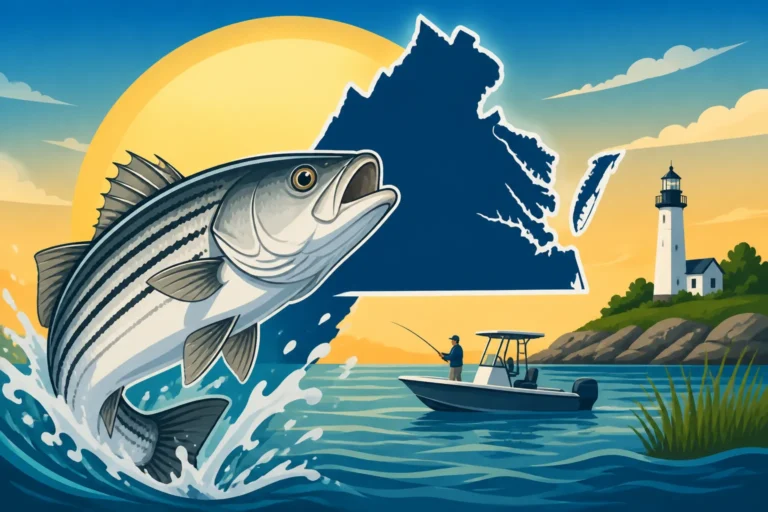
Trying to pinpoint the best spots to catch striped bass on the Rappahannock River can feel like a real puzzle, especially with its diverse waters stretching from the fall line to the Chesapeake Bay. This guide will break down the prime locations, seasonal tactics, and essential tips to help you successfully target these powerful "rockfish" along the Rappahannock, making your next fishing adventure a rewarding one and hopefully leading you to that trophy catch.
Understanding the Rappahannock River's Striped Bass Habitat
The Rappahannock River is a truly incredible fishery, but to consistently find striped bass, you need to understand how its unique characteristics influence where these fish live and move. It’s not just one homogenous body of water; it’s a dynamic ecosystem that changes dramatically as you move downstream.
The Tidal Influence and Salinity Gradient
One of the most defining features of the Rappahannock is its tidal nature, which extends all the way up to the city of Fredericksburg, a remarkable 100 miles from the Chesapeake Bay. This constant ebb and flow of the tide plays a huge role in the river's ecosystem. The water levels rise and fall, currents switch directions, and baitfish are pushed around, creating feeding opportunities for predators like striped bass. Understanding the tide charts for your specific fishing location on the Rappahannock is absolutely paramount – what might be a hot spot on an incoming tide could be dead during an outgoing one.
As you head downstream from Fredericksburg, the river gradually transitions from freshwater to increasingly brackish, and eventually, full saltwater as it nears the Chesapeake Bay. This salinity gradient is a critical factor for striped bass. While they are incredibly adaptable and can tolerate a wide range of salinities, they generally prefer brackish water, which offers a balance between the river's rich food sources and the marine environment's characteristics. During certain times of the year, they'll push far upriver into fresher areas, especially for spawning, but their comfort zone often lies in that in-between brackish zone.
This constant shift in salinity dictates where stripers will congregate. They’ll follow schools of baitfish, which in turn are often influenced by the salinity. For example, during periods of heavy rain, the freshwater pushing downriver might drive bait and stripers further downstream to maintain their preferred salinity. Conversely, during dry spells, the saltwater wedge can push further upriver, bringing more marine species with it. Keeping an eye on rainfall and general weather patterns can offer valuable clues about fish movement. It truly is a delicate balance that these fish constantly navigate.
Key Structures and Forage
Striped bass are ambush predators, and they love to hide and wait for an unsuspecting meal to swim by. This means that structure, any deviation from a flat bottom, is their friend. Along the Rappahannock, you’ll find a wealth of fish-holding structures. This includes obvious features like bridge pilings (especially the I-95 bridge near Fredericksburg and the US-360 bridge at Tappahannock), docks, and rock jetties. But don't overlook less obvious structures such as submerged timber, old pilings from forgotten piers, and especially the incredibly important oyster reefs that dot the mid and lower river sections. These reefs aren't just great habitat; they're also vibrant ecosystems that attract countless smaller creatures, which in turn become food for larger fish.
The health of the striped bass population is directly tied to the availability of forage. The Rappahannock River is teeming with various baitfish that make up the striped bass diet. Key species include menhaden, which are often found in large, dense schools, especially in the more brackish and saltwater sections. Alewives and shad make their way upriver in the spring, providing a critical food source during the spawning run. Bay anchovies and silversides are also prevalent, particularly in the lower estuary. Stripers will key in on whatever bait is most abundant at the time, and "matching the hatch" with your lures can be incredibly effective.
These predatory fish use current breaks and deeper holes around these structures to their advantage. A bridge piling, for instance, creates an eddy where a striper can rest out of the main current, waiting for bait to be swept past. Deeper channels and drop-offs also provide essential ambush points and thermal refuges, particularly during the warmer summer months. Understanding these dynamics – how current, structure, and bait interact – is crucial for predicting where the stripers will be holding.
Prime Fishing Zones for Striped Bass on the Rappahannock
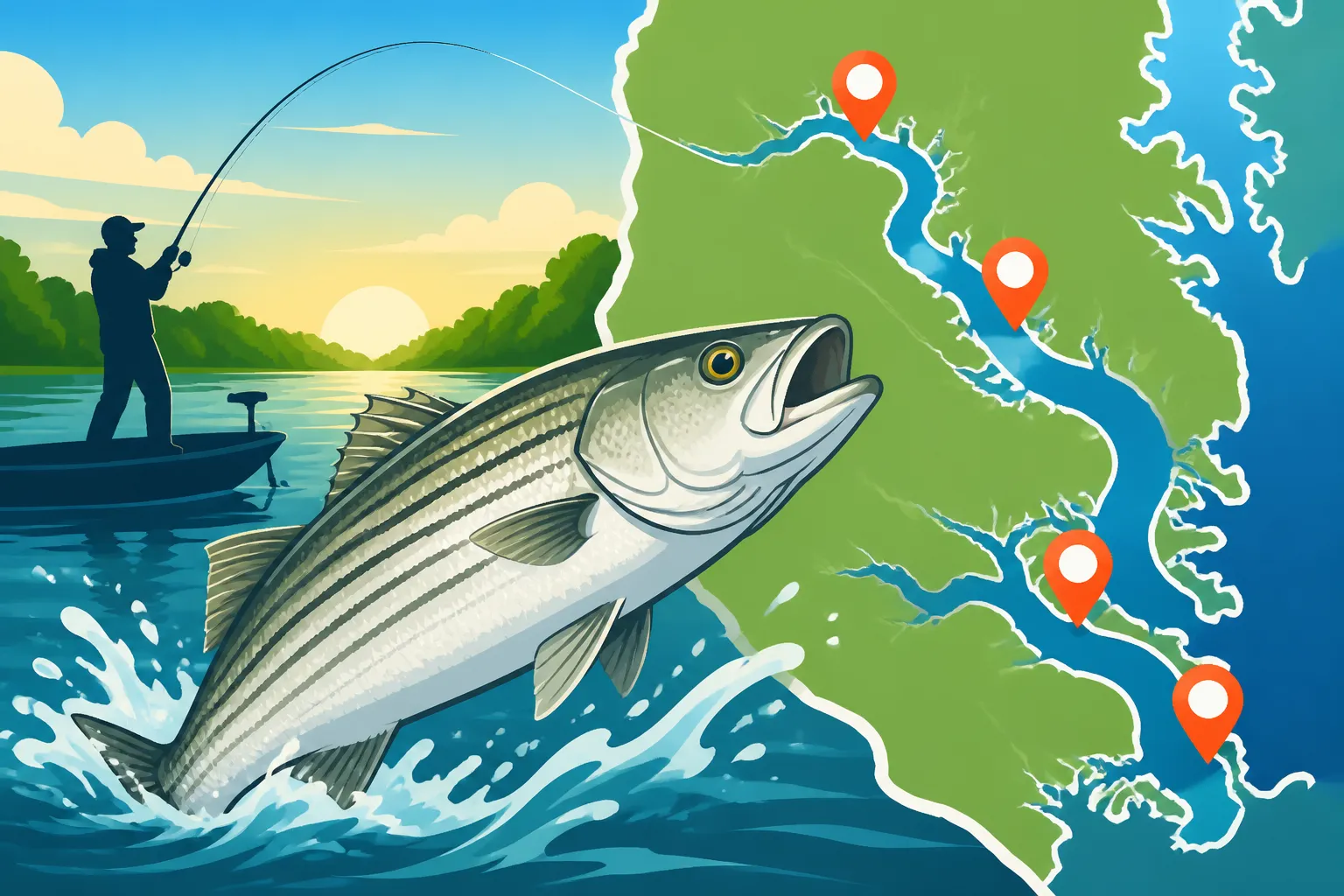
The Rappahannock River offers diverse environments for striped bass, from its narrow upper reaches to its wide, bay-like mouth. Each section presents unique challenges and opportunities for anglers.
Upper Tidal Rappahannock (Fredericksburg to Port Royal)
This stretch of the Rappahannock, from Fredericksburg downstream to roughly Port Royal, is characterized by its narrower channels and a stronger freshwater influence, although it remains distinctly tidal. It's an exciting area, especially during the spring and fall migrations when striped bass push far upriver. Many anglers often overlook this section, focusing on the wider lower river, but it can hold some truly fantastic fishing, particularly for those targeting the spawning run. The "fall line" in Fredericksburg marks the furthest upstream point of tidal influence and is a natural bottleneck for migrating fish.
Key spots in this upper section include the various bridges around Fredericksburg, where current breaks and pilings create excellent ambush points. The I-95 bridge, in particular, is a well-known area. Further downstream, look for submerged timber, rock outcroppings, and sharp bends in the river that create deeper holes. These areas provide cover and cooler water, especially after warmer days. The Rappahannock River is known for its beauty and the fight that fish put up in these strong currents.
Tactics for this area often involve casting bucktail jigs or soft plastic swimbaits to structure. Live bait, such as gizzard shad or large shiners, fished on a Carolina rig or under a bobber, can also be incredibly effective, especially when the fish are less active. The currents here can be robust, so using heavier weights to keep your bait or lure in the strike zone is often necessary. Access points like the Fredericksburg City Docks offer good starting points, and exploring the river from a boat allows you to get to those harder-to-reach areas where the biggest stripers might be holding.
Mid-River Estuary (Port Royal to Tappahannock)
As you move downstream from Port Royal towards Tappahannock, the Rappahannock widens considerably, and the salinity becomes more pronounced, creating a true estuarine environment. This mid-river section is arguably the most consistent and popular area for striped bass fishing, offering a blend of productive brackish water and ample structure. It’s here that you often find a wider variety of baitfish, attracting stripers throughout much of the year, not just during migrations.
The US-360 bridge at Tappahannock is a major landmark and a well-known striper magnet. Its extensive pilings and associated structure provide countless hiding spots. Additionally, the mouths of the numerous creeks that feed into the Rappahannock in this area—like Occupacia Creek, Cat Point Creek, and Piscataway Creek—are prime locations. These creeks act as highways for baitfish and offer sheltered waters where stripers can feed or seek refuge from strong currents. The deeper channels and ledges along the main river also hold significant numbers of fish.
Anglers targeting this area often employ a range of techniques. Trolling with large lipped plugs or umbrella rigs is effective for covering water and finding schools of fish, especially around the main channel. Casting bucktail jigs, soft plastic paddle tails (like those from Z-Man or Gulp!), or topwater plugs (during dawn/dusk) around structure and creek mouths can yield exciting results. Live-lining menhaden or eels is also a very popular and often deadly technique, especially when stripers are focused on larger baits. Many anglers utilize FishingBooker to find experienced guides who specialize in these mid-river estuary techniques, giving them a distinct advantage.
Lower River and Bay Mouth (Tappahannock to Windmill Point)
The lower Rappahannock River, from Tappahannock downstream to its confluence with the Chesapeake Bay near Windmill Point, transforms into a vast, wide body of water. Here, the currents are strong, the water is decidedly more saline, and the environment feels much more like the open bay. This is where you’ll find larger, more mature striped bass, especially during the colder months and the height of the migratory runs.
Iconic spots in this section include the waters around Stingray Point and Windmill Point, where the river truly opens up into the Bay. The main river channel edges, with their sharp drop-offs and strong currents, are critical fishing zones. Extensive oyster reefs and shoals are also prevalent, providing complex habitat that attracts both bait and predators. This area is heavily influenced by the dynamics of the main stem of the Chesapeake Bay, meaning fish can move in and out of the river mouth with ease, following bait or seeking thermal refuge.
Fishing here often involves chasing schools of breaking fish, which indicate a feeding frenzy. Trolling a variety of lures, from deep-diving plugs to parachutes and Mojos, is a very common and effective method for covering ground and targeting fish in deeper water. Jigging with heavy metal jigs or large soft plastics is also popular, especially when marking fish on your sonar. Live-lining large menhaden or eels near structure or bait schools can be incredibly productive for trophy-sized stripers. This area can be challenging due to its size and exposure to weather, so having reliable equipment and a good understanding of Virginia fishing regulations is essential. For those looking to maximize their chances, checking out Chesapeake Bay Striped Bass Fishing Guide or Virginia Striped Bass Season and Slot Limit Guide is a great starting point.
Seasonal Strategies for Rappahannock Striped Bass
Striped bass movements and feeding patterns on the Rappahannock River are heavily dictated by the seasons. Understanding these shifts is key to being in the right place at the right time.
Spring Run Excitement
The spring run on the Rappahannock is truly a spectacular event, as thousands of striped bass migrate from the Chesapeake Bay upriver to spawn. This typically occurs from late March through May, though the exact timing depends on water temperatures. As the water warms, these powerful fish, often including many large breeding females, move into the brackish and freshwater sections of the river. It's an incredible time to be on the water, filled with anticipation and the potential for a memorable catch.
During the pre-spawn phase, stripers are aggressively feeding, trying to pack on calories before the energy-intensive spawning process. They'll stage in deeper holes and along channel edges in the mid- to upper river, gorging on anadromous baitfish like alewives and herring that are also migrating upstream. As spawning approaches, they move into shallower, faster-moving sections of the river, particularly after heavy rains that increase flow and oxygen levels. The thrill of hooking into a powerful striper in these upper river sections is unmatched.
For tactics, live bait is incredibly effective during the spring. Freshly caught or cut menhaden, gizzard shad, or eels presented on a circle hook are often irresistible. Artificial lures such as large soft plastic swimbaits (e.g., paddle tails, jerk shads), bucktail jigs, and even large lipped plugs can also entice strikes, especially when fished around current breaks and structures. Remember that Virginia's Striped Bass Season and Slot Limit Guide often has specific rules for this time of year, especially regarding retention of larger fish, so be sure to check those before heading out. Many anglers embrace catch-and-release to protect these vital breeding fish.
Summer Challenges and Deepwater Retreats
As the Virginia summer really heats up, typically from late June through September, striped bass fishing on the Rappahannock undergoes a significant shift. The rising water temperatures, particularly in the shallower and upper sections of the river, become stressful for stripers. These fish, being cold-blooded, will seek out cooler, more oxygenated waters. This usually means they retreat to deeper channels, drop-offs, and sometimes move further downstream into the lower river or even out into the main stem of the Chesapeake Bay.
Finding stripers in the summer can be challenging, but it's certainly not impossible. The key is to adapt your timing and location. Night fishing or hitting the water during the cooler hours of dawn and dusk becomes much more productive. During these times, stripers might venture into shallower feeding grounds, but as the sun climbs, they'll drop back into deeper water. Trolling deep-diving plugs or umbrella rigs along channel edges, particularly where there's a strong current, can be an effective way to locate these fish. Areas with cooler water inputs, such as the mouths of deeper creeks, can also hold summer stripers.
For those dedicated to summer striper fishing, patience is a virtue. Often, you're targeting fewer, but potentially larger, fish that are holding tight to structure in deeper water. Jigging with heavy metal jigs or large soft plastics on heavy lead heads can be productive when you mark fish on your sonar. Live bait, like spot or eels, fished on the bottom in deep holes, can also tempt sluggish stripers. Remember to handle fish quickly and carefully during warm water periods to ensure their survival, practicing catch-and-release where appropriate. You can also explore options like Fishing the Rappahannock River in Virginia for more specific summer tips.
Fall Migration and Feeding Frenzy
The fall run on the Rappahannock River is, for many anglers, the absolute pinnacle of striped bass fishing. As water temperatures begin to drop in October and through December, the stripers become incredibly active and aggressive, feeding heavily as they prepare for their winter migration out of the river and into the Chesapeake Bay. This is often characterized by massive schools of baitfish, like menhaden, being herded by hungry stripers, creating spectacular "breaking fish" events on the surface.
This time of year is all about the "bite." Stripers will chase baitfish relentlessly, often pushing them against shorelines or into shallow coves. The entire lower and mid-river estuary can come alive with activity. Anglers often spend their days scanning the horizon for bird activity (gulls diving on bait) or watching their sonar for large schools of fish. When you find them, the action can be fast and furious, with multiple hookups not uncommon. This period is renowned for its thrilling topwater action, which is something every striper angler dreams of.
Techniques during the fall are diverse and exciting. Casting large topwater plugs, like poppers or walk-the-dog lures, to breaking fish is exhilarating. When fish are deeper, bucktail jigs, large soft plastic paddle tails, and lipped diving plugs are all excellent choices. Trolling also remains highly effective, especially for covering large areas and finding those elusive schools. Live-lining menhaden or eels, especially around river channel edges or oyster reefs, can also yield fantastic results. It’s a season where the Best Bait for Striped Bass Fishing is often whatever baitfish are currently present. For more on how other fish react to these seasonal shifts, check out Fall Bass Fishing Patterns.
Essential Gear and Techniques for Rappahannock Stripers
Having the right equipment and knowing how to use it can make all the difference when targeting striped bass on the Rappahannock. These powerful fish demand tackle that can stand up to a serious fight.
Rods, Reels, and Line Choices
When it comes to rods, you'll want something robust enough to handle powerful fish in strong currents, but sensitive enough to feel subtle bites. A medium-heavy to heavy action rod, typically between 7 and 8 feet in length, is a great all-around choice. This length provides good casting distance for shore-based anglers or when casting from a boat, and offers the leverage needed to battle larger stripers. For those who prefer baitcasting, a conventional rod of similar specs will also serve you well, especially when trolling or bottom fishing with heavy weights.
For reels, durability and a smooth, powerful drag system are paramount. Spinning reels in the 4000 to 6000 size range, or even larger for the lower river and bay mouth sections, are popular due to their versatility and ease of use. Brands like Penn, Shimano, and Daiwa offer excellent options that can withstand the rigors of saltwater fishing. If you prefer conventional tackle, a reliable baitcasting reel with a high retrieve ratio for quick line pickup can be advantageous. The key is a reel that won't give out when a 30-pound striper decides to make a run.
Line choice is critical. Braided main line, typically in the 30 to 50 lb test range, is highly recommended. Braid offers superior sensitivity, minimal stretch, and incredible strength for its diameter, allowing for longer casts and better hook sets. Because braid is visible to fish and lacks abrasion resistance, you'll need to tie on a fluorocarbon leader. A leader of 20 to 40 lb test, about 3 to 6 feet long, provides stealth and durability against rough structures like oyster reefs or bridge pilings. Using a strong knot like the FG knot or a double uni knot to connect your braid to your leader is crucial.
Top Baits and Lures for Success
Striped bass are opportunistic feeders, but certain baits and lures consistently outperform others on the Rappahannock. When it comes to natural bait, live offerings are often irresistible. Fresh menhaden, whether live-lined or fished as cut bait, is a perennial favorite, especially during the fall run. Eels, though messy, are absolute striper magnets, particularly when fished slowly along the bottom or near structure. In the upper river during the spring, live gizzard shad can also be deadly. These baits mimic what stripers are naturally feeding on and can often tempt even the most finicky fish.
For artificial lures, versatility is key. Bucktail jigs, ranging from 1/2 oz to several ounces depending on depth and current, are classic striper killers. Tipped with a soft plastic trailer or pork rind, they mimic various baitfish and can be bounced along the bottom or jigged vertically. Soft plastic paddle tails and jerk shads, from 4 to 8 inches or even larger, rigged on appropriate jig heads, are also incredibly effective. Popular brands like Z-Man, Berkley Gulp!, and Storm offer a wide array of options.
Topwater plugs, like poppers and walk-the-dog lures, provide thrilling surface strikes during low light conditions or when stripers are actively busting bait. Lipped diving plugs, especially those designed for trolling or casting to specific depths, can also be very productive. Color selection for lures often depends on water clarity and light conditions: natural baitfish patterns (silver, white, olive) for clear water, and brighter colors (chartreuse, pink) for murky conditions or overcast days. Remember, the goal is often to match the hatch, presenting a lure that closely resembles the prevalent baitfish in the area. For more detailed insights, you might want to read our guide on Best Bait for Striped Bass in Chesapeake Bay.
Navigating the Regulations and Booking Guides
Fishing for striped bass in Virginia waters, including the Rappahannock River, comes with a specific set of regulations designed to protect the population. It is absolutely crucial to be aware of the current Virginia Fishing Regulations Explained, especially for striped bass, which are a highly managed species. These regulations often include specific seasons, minimum and maximum length limits (slot limits), and daily possession limits. Failing to adhere to these rules can result in significant fines and penalties. The Virginia Department of Wildlife Resources (DWR) website is your best resource for the most up-to-date information. Always check it before your trip, as rules can change seasonally or annually.
For many anglers, especially those new to the Rappahannock or those targeting a specific migratory run, hiring a local fishing guide can be an invaluable investment. A seasoned guide not only provides all the necessary gear and a boat but also possesses an intimate knowledge of the river, including its ever-changing currents, hidden structures, and the current movements of baitfish and stripers. They can put you on fish much more quickly than you might manage on your own, saving you hours of searching and frustration.
Platforms like FishingBooker make it incredibly easy to find and book experienced Rappahannock River fishing guides. You can browse various captains, compare their specialties, read reviews from other anglers, and book directly. A guide can teach you local techniques, help you understand the river's nuances, and ensure you're fishing legally and ethically. Whether you're interested in a full-day adventure or a shorter trip, you'll find plenty of options. Many guides also strongly advocate for catch-and-release, particularly for larger, older breeding females, ensuring the future health of the striped bass fishery. If you're considering this option, exploring a guide on Virginia Fishing Charters and Guides: The Complete Guide can be very beneficial.
| Rappahannock River Zone | Primary Target Season | Recommended Techniques | Key Features |
|---|---|---|---|
| Upper Tidal (Fredericksburg) | Spring Run | Live bait, Jigging, Casting Soft Plastics | Narrow channels, strong currents, bridges |
| Mid-River Estuary (Tappahannock) | Spring, Fall, Year-Round | Trolling, Live bait, Casting Jigs/Swimbaits | Wider river, creek mouths, US-360 bridge |
| Lower River / Bay Mouth (Windmill Point) | Fall Run, Winter | Trolling, Live bait, Jigging, Topwater (Fall) | Wide, strong currents, oyster reefs, Bay influence |
Disclaimer
Please be aware that fishing conditions, regulations, and fish behavior can change rapidly. Always consult the Virginia Department of Wildlife Resources (DWR) for the most current fishing regulations before heading out. This guide is for informational purposes only and does not guarantee fishing success.