Why Virginia’s Striped Bass Season Splits Into Two Windows
It can be incredibly confusing and sometimes downright frustrating to keep up with Virginia's striped bass regulations, especially when you see the season split into seemingly arbitrary windows. Many anglers wonder why it can't just be one continuous period, making planning trips a real headache. This guide is here to demystify the reasons behind Virginia's split striped bass season, explaining the crucial biological and management factors that shape these rules, and ultimately, helping you navigate these windows like a seasoned pro.
Understanding the Biology Behind the Split: A Tale of Two Migrations
The life cycle and migratory patterns of striped bass are complex, dictating much of how fisheries are managed. In Virginia, we're at a unique crossroads for these incredible fish, which means understanding their movements is key to appreciating why their season is broken into different parts. It's not just random; it's a careful dance with nature.
The Critical Spawning Period and Protection Needs
One of the primary drivers for the split season revolves around the striped bass's spawning cycle. The Chesapeake Bay and its tributaries, including the James, York, Rappahannock, and Potomac Rivers, are vital spawning grounds for a significant portion of the Atlantic coast's striped bass population. This isn't just a local event; it's critical for the entire fishery.
During the spring, typically from April into May, adult striped bass migrate from coastal ocean waters into these brackish and freshwater rivers to reproduce. They need calm, undisturbed conditions to lay and fertilize their eggs. Fishing pressure during this period can stress the fish, disrupt spawning behavior, and reduce reproductive success. Imagine trying to raise your family while someone constantly interrupts you – it's just not going to work well. Therefore, closing the season during this critical window is a fundamental conservation measure, ensuring that these fish have the best chance to successfully reproduce, safeguarding future generations of stripers. Without these protected spawning periods, the entire population would suffer, leading to fewer fish for all of us down the line.
Migratory Patterns and Coastal Movements
Beyond spawning, striped bass are highly migratory, moving up and down the Atlantic coast throughout the year. Virginia's waters see different groups of fish at different times. We experience what anglers often refer to as "runs."
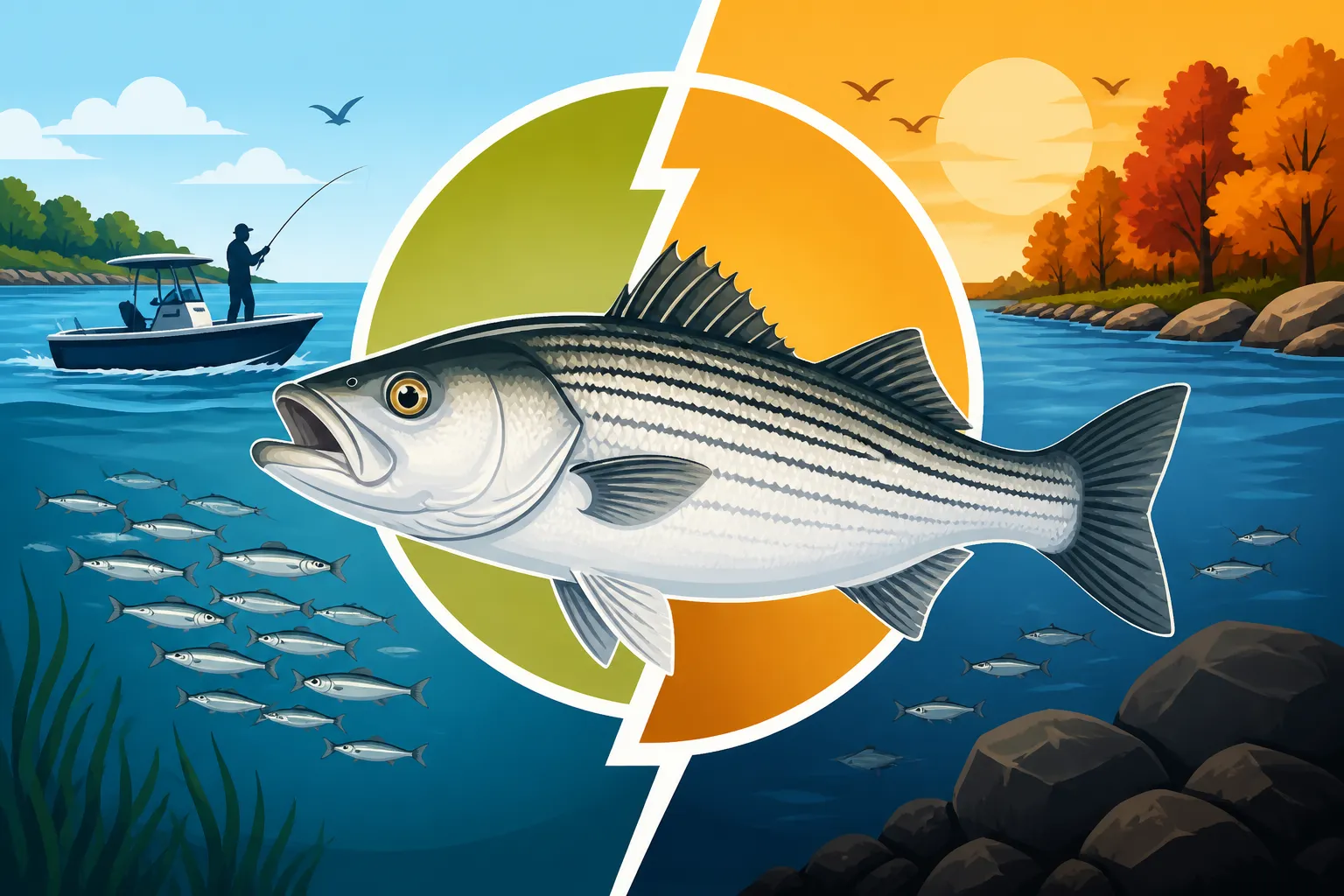
- The Fall Run: In the late fall and early winter, large schools of striped bass migrate south along the coast, often following baitfish like menhaden. Many of these fish are post-spawn adults returning from their summer feeding grounds further north. They pass through Virginia's coastal waters and the mouth of the Chesapeake Bay, offering fantastic fishing opportunities as they stage and feed before continuing their journey south. This is often when the first "window" of the season opens in Virginia, targeting these transient, actively feeding fish.
- The Spring Migration: While some resident striped bass remain in the Chesapeake Bay year-round, many of the larger ocean-migratory fish return north in the spring. Some will enter the Bay to spawn, while others will continue their journey along the coast towards northern feeding grounds. The second "window" of Virginia's season often aims to capitalize on these fish as they move through, either pre-spawn or post-spawn, before they disperse or head further north. This complex interplay of fish moving in and out of our waters means that different management strategies are needed for different times of the year to account for these distinct populations and their behaviors.
Fisheries Management Goals: Balancing Conservation with Angler Opportunity
The split season isn't simply a biological necessity; it's also a product of intensive fisheries management efforts aimed at striking a delicate balance. Managers want to ensure that striped bass populations are healthy and sustainable, while also providing reasonable opportunities for anglers to enjoy this beloved sport fish. It’s a tough tightrope walk that requires constant adjustment.
Rebuilding the Stock: A Long-Term Commitment
Striped bass populations have faced significant challenges in the past, leading to coast-wide conservation efforts. The split season is a direct outcome of these efforts, reflecting a long-term commitment to rebuilding and maintaining a robust striped bass stock. Fisheries managers, guided by scientific assessments, determine catch limits, size restrictions, and season dates based on the health of the overall population.
When stock assessments indicate that the population needs further protection, seasons might be shortened, slot limits adjusted, or complete closures enacted. The split season allows managers to target specific groups of fish at certain times while providing maximum protection during vulnerable periods, like the spawning season. It's a strategic way to distribute fishing pressure over time, rather than concentrating it and potentially depleting stocks. This is why you often hear about things like Virginia's Striped Bass Season and Slot Limit Guide – these rules are all interconnected parts of the same conservation puzzle.
Adapting to Environmental Factors and Scientific Data
Fisheries management isn't a static science. It's an ongoing process that adapts to new scientific data, environmental changes, and the dynamic nature of fish populations. Factors like ocean temperatures, the abundance of baitfish, and even climate patterns can influence striped bass migration and spawning success.
Managers regularly review data from various sources, including angler reports, scientific surveys, and coastal environmental monitoring. This information helps them make informed decisions about season structures. For instance, if a particular year shows signs of a weaker spawn due to environmental conditions, they might adjust future seasons to provide even greater protection. The split season offers flexibility, allowing managers to open or close specific windows based on what the science tells them is best for the fish and the long-term health of the fishery. It’s a testament to adaptive management, trying to stay nimble in the face of nature's unpredictability.
Navigating Virginia's Split Striped Bass Season as an Angler
For us anglers, the split season means we need to be a little more strategic and informed in our planning. It's not about being frustrated, but about understanding the rhythm of the fish and the rules designed to protect them. Plus, it gives us something exciting to look forward to in different parts of the year!
The Early Winter (Fall/Winter) Window: What to Expect
This first window typically opens in the cooler months, often beginning around October and sometimes extending into December or even early January. This is prime time for what many consider the "fall run" as migratory striped bass move south along the Virginia coast and into the lower Chesapeake Bay. The fish are often actively feeding, bulking up for their winter migration or for the upcoming spawning season.
Fishing during this window often involves trolling with large lures or live bait in the Chesapeake Bay and near its mouth, or casting from shore or piers along the coast. It’s a thrilling time to be on the water, with the potential for catching some truly large "rockfish," as they're often called here. Many charter captains, found easily on platforms like FishingBooker, specialize in this period, knowing exactly where to find the migrating schools. Keep an eye out for updated dates and slot limits; for instance, the Virginia Striped Bass Season Dates January Through March might apply to specific areas within this broader window.
The Late Spring/Early Summer Window: Planning Your Trip
After the closure for the primary spawning period, a second, often shorter, window typically opens in late spring, usually in May and potentially extending into early June. This season often targets post-spawn fish that are recuperating and beginning to feed actively again as they move out of the spawning rivers and back towards the ocean, or northbound migrants.
The fishing during this window can be just as exciting, though the locations and tactics might shift. Anglers might find success in the main stem of the Chesapeake Bay, near its mouth, and in coastal ocean waters. The fish are generally focused on recovering and feeding after their strenuous spawning journey. This window is highly anticipated by many, especially those who prefer warmer weather fishing. If you're planning a trip, be sure to note that the Virginia Striped Bass Season Reopens May 16 for specific areas, and always double-check the exact dates and regulations for the waters you intend to fish. If you're looking for an experienced captain for this period, a resource like FishingBooker can connect you with local guides.
Importance of Checking Current Regulations
This is probably the most crucial piece of advice for any angler in Virginia: always check the latest regulations before you head out. The Virginia Department of Wildlife Resources (DWR) is the definitive source for current fishing laws, including season dates, slot limits, and possession limits. These rules can and do change based on stock assessments and conservation needs. What was valid last year might be different this year.
Don't rely on word-of-mouth or old articles. Visit the DWR website or pick up a current regulation pamphlet. Ignorance of the law is never an excuse, and getting caught with an illegal fish or fishing out of season can lead to hefty penalties. This is especially true for a highly managed species like striped bass. Reputable charter captains, many of whom list their services on sites like FishingBooker, will always be up-to-date on the latest rules, but it’s still your responsibility as an angler to be aware. Understanding things like the Virginia Fishing Rules Every Angler Should Know is paramount to a successful and legal fishing trip.
Here's a quick comparison of the general characteristics of Virginia's split striped bass seasons:
| Feature | Early Winter (Fall/Winter) Window | Late Spring/Early Summer Window |
|---|---|---|
| Typical Timing | Often October – December/January (specific dates vary) | Usually May – early June (specific dates vary) |
| Fish Behavior | Southbound migratory fish, actively feeding (fall run) | Post-spawn fish recovering, some northbound migrants |
| Primary Goal | Target migrating, actively feeding fish | Target post-spawn recovering fish |
| Water Temperature | Cooling to cold | Warming to warm |
| Typical Locations | Lower Chesapeake Bay, Bay Mouth, Coastal Ocean | Mid-to-Lower Chesapeake Bay, Coastal Ocean |
| Common Techniques | Trolling, Live Lining, Casting Jigs/Plugs | Trolling, Live Bait, Artificials, sometimes topwater |
| Conservation Focus | Managing harvest of migratory stock | Managing harvest during post-spawn recovery |
Disclaimer
This article is for general informational purposes only and does not constitute professional advice. Laws, prices and regulations vary by location and change over time. Consult a qualified professional for guidance on your specific situation.