Best Bait for Largemouth Bass in Virginia
Oh, the age-old question that keeps us anglers up at night: "What's the best bait for largemouth bass?" If you've ever stood at the tackle shop, completely overwhelmed by the sheer number of options, or fished your heart out without a single bite, wondering if your bait choice was the problem, you are absolutely not alone. Picking the right bait for largemouth bass in Virginia can feel like cracking a secret code, but don't you worry, because this guide is here to break down the mystery and help you fill your livewell (or at least get some exhilarating strikes!).
Understanding Largemouth Bass Behavior in Virginia Waters
Before we even talk about hooks and lures, it’s crucial to understand the creature we're trying to outsmart. Largemouth bass aren't just hungry; they're strategic, temperamental, and highly influenced by their environment. Knowing their habits in Virginia's diverse waters—from expansive reservoirs to winding rivers and quiet farm ponds—is the first step to choosing bait that truly works.
Seasonal Feeding Patterns
Just like us, largemouth bass have different "moods" and activity levels throughout the year. Their feeding patterns shift dramatically with the changing seasons, largely dictated by water temperature, available forage, and their own biological clock, especially the spawn.
In the early spring, when the water starts to warm up after a long, cold winter, bass are in their pre-spawn phase. They're often sluggish but are starting to feed aggressively to build up energy for spawning. This is a fantastic time to use slower presentations and larger baits that offer a substantial meal. Think about those big, hungry fish looking for an easy score. As the water warms further and they move into the actual spawn, their focus shifts from eating to procreating. During this time, they become very territorial and protective of their nests. Baits that mimic intruders or provoke a strike out of aggression often work best. Once the spawn is over, they enter the post-spawn phase, which can be tricky. They're often recuperating, sometimes spread out and a bit finicky.
Summer brings warmer water temperatures, which means bass become highly active but also seek shade and deeper, cooler water during the brightest parts of the day. They're usually in high metabolism mode, chasing down quick meals. Fall is often a favorite season for many anglers, as bass go on a feeding frenzy, bulking up for winter. They'll chase baitfish aggressively, making fast-moving lures incredibly effective. Finally, in winter, bass slow down considerably, often moving to deeper water, and their feeding windows become much shorter and less frequent. Slow, subtle presentations are key here. Understanding these shifts is paramount; a bait that crushes it in spring might not get a sniff in summer. For a deeper dive, check out Best Time of Year for Bass Fishing in Virginia.
Habitat Preferences
Where do largemouth bass like to hang out in Virginia? Pretty much anywhere they can find a good ambush point or a comfortable spot to rest. They are masters of cover and structure. "Cover" refers to anything that provides shelter or concealment, like lily pads, submerged timber, docks, brush piles, or even thick grass beds. They'll hide in these spots, waiting for an unsuspecting baitfish or crayfish to swim by.
"Structure," on the other hand, refers to changes in the lake or river bottom itself – drop-offs, humps, creek channels, points, and ledges. Bass will often relate to these structural elements, moving up and down them depending on the time of day, sunlight, and feeding opportunities. In a big reservoir like Smith Mountain Lake Fishing Guide or Lake Anna Fishing Guide, understanding these underwater contours is critical. They love transitions—where a weed line meets open water, where shallow flats drop into a creek channel, or where a dock extends over a deep ledge. The more complex the habitat, the more likely you are to find bass lurking.
Forage Base in Virginia
What are largemouth bass naturally eating in Virginia? This is perhaps the most important question to ask when choosing your bait. If you can "match the hatch," as fly anglers say, you're halfway to success. Virginia's freshwater systems are teeming with a variety of prey.
Common forage includes various species of baitfish like shad (gizzard and threadfin), shiners, and small bluegill or sunfish. Crayfish are another huge part of a largemouth's diet, especially in rocky areas or on gravel bottoms. Frogs, snakes, and even small rodents or ducklings can sometimes end up on the menu, particularly for larger bass. When bass are actively feeding on a specific type of prey, using a bait that mimics that prey in size, color, and action can be incredibly effective. For example, if you see shad schooling on the surface, a silver lipless crankbait or a topwater lure could be deadly. Conversely, if you're fishing rocky banks where crayfish thrive, a brown or green jig with a craw-imitating trailer would be a smart choice.
The Best Live Baits for Virginia Largemouth Bass
There’s something undeniably satisfying about catching a bass on live bait. It’s natural, it’s effective, and it often appeals to a bass's most basic instincts. For many anglers, especially those just starting out or fishing with kids, live bait is the simplest and often most successful way to get a bite.
Shiners and Minnows
These are classic bass baits for a reason: they work! Shiners and minnows are a primary food source for largemouth bass in many Virginia waters. Their natural swimming action is hard for any hungry bass to resist.
You can fish shiners or minnows in a few different ways. One common method is to hook them lightly through the lips or just behind the dorsal fin, allowing them to swim freely under a bobber. This is fantastic when bass are cruising weed lines or around submerged cover. Another effective technique is to use them on a Carolina rig, letting them drift naturally near the bottom, especially over points or channel edges. The weight keeps them down, but the long leader allows the minnow to swim enticingly. You can often buy these at local bait shops, and some anglers even catch their own. They're especially effective in cooler water when bass might be less willing to chase a fast-moving artificial lure. The subtle struggle of a live shiner can be the exact trigger a lethargic bass needs.
Crayfish
Ah, the humble crayfish – often overlooked by casual anglers, but a true bass magnet, particularly for those larger, more wary fish. Bass absolutely gorge themselves on crayfish, especially in lakes and rivers with rocky bottoms or plenty of wood cover where these crustaceans thrive.
When fishing with live crayfish, you'll want to hook them carefully through the tail from the underside, making sure the hook point is exposed to ensure a good hookset. You can fish them on a simple bottom rig with a small weight, allowing them to crawl around naturally. They’re fantastic for targeting bass that are relating to rocky structure, like rip-rap along bridge pilings or natural rock formations. The key is to present them slowly and naturally, mimicking how a real crayfish would move along the bottom. The clicking and scurrying they make can draw in bass from surprisingly far away. You can find robust crayfish traps on Amazon if you're keen on catching your own, or sometimes local bait shops will carry them.
Worms and Nightcrawlers
You can't talk about fishing bait without mentioning worms! For generations, earthworms and their larger cousins, nightcrawlers, have been the go-to bait for just about everything that swims, and largemouth bass are no exception. They might not be a bass's primary diet, but their wiggling action and scent are irresistible, especially in stained or murky water.
Worms are incredibly versatile. You can simply hook a nightcrawler once or twice through the middle to allow maximum action, and fish it under a bobber, letting it drift near cover. This is a perfect setup for kids or beginner anglers, as it requires minimal technique and is often highly effective in farm ponds or smaller lakes. For more active presentations, you can use a Texas rig with a single worm, allowing it to penetrate heavy cover without snagging. The natural scent and constant movement of a live worm can tempt even a cautious bass. Plus, they're readily available at almost any gas station, bait shop, or even your own backyard! It's a fantastic, reliable option when you're just looking to get a bite.
Top Artificial Lures for Largemouth Bass in Virginia
For many dedicated bass anglers, the art of lure fishing is where the real fun lies. Artificial baits offer incredible versatility, allowing you to mimic almost any forage and adapt to changing conditions with a simple change of tackle. Plus, the strike on an artificial lure is often explosive and thrilling!
Soft Plastics (Worms, Creatures, Senkos)
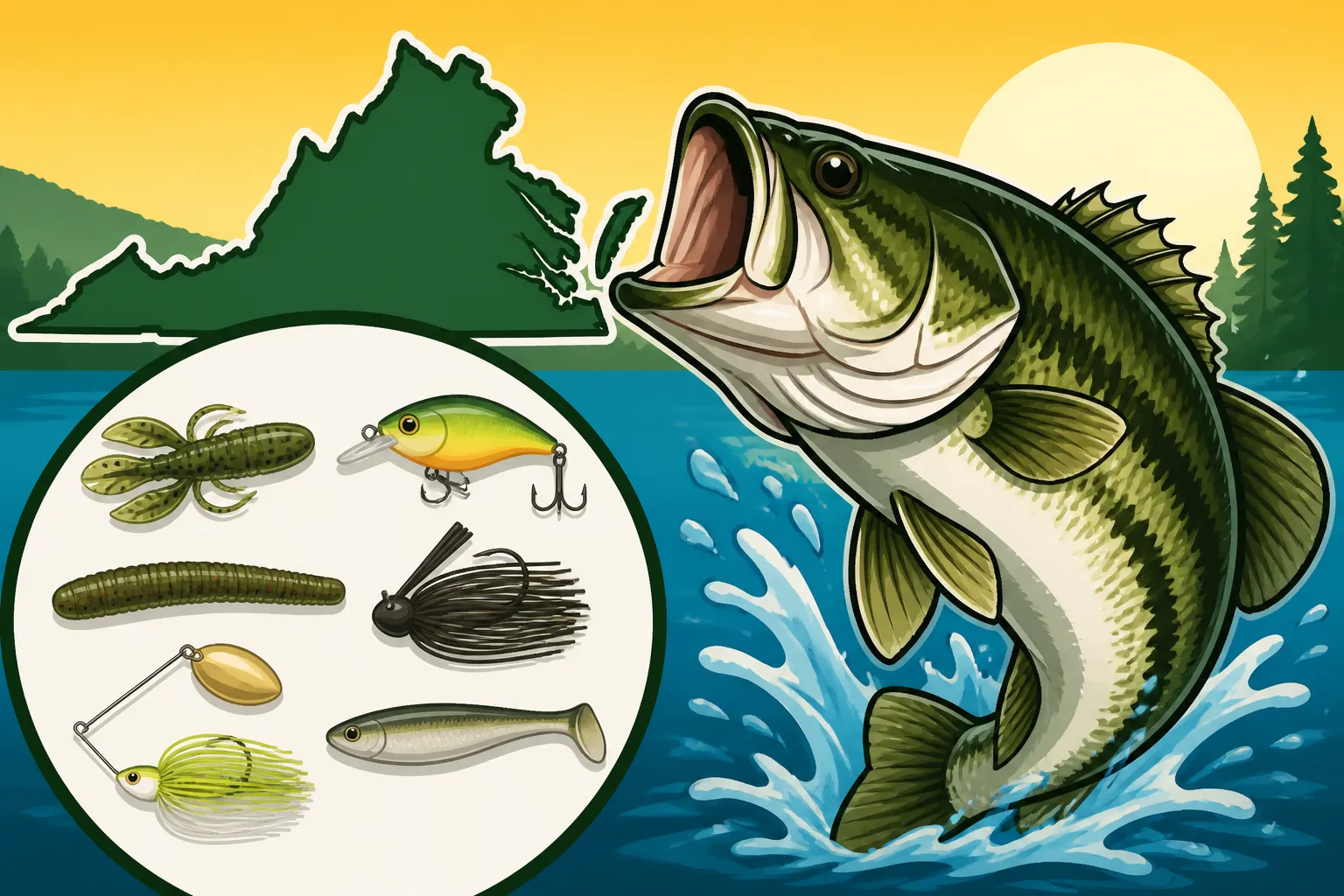
Soft plastics are, without a doubt, one of the most effective and versatile categories of lures for largemouth bass, especially in Virginia's diverse waters. They mimic everything from worms and crayfish to baitfish and leeches, and their soft, lifelike texture makes bass hold on longer.
- Plastic Worms: The classic. From straight-tail worms to ribbon-tail worms, these can be fished in countless ways. The How to Fish a Plastic Worm for Bass article goes into detail, but popular methods include Texas rigging (weedless, perfect for thick cover), Carolina rigging (for covering deeper water), and Wacky rigging (great for a slow, seductive fall in open water). Colors like green pumpkin, junebug, and black/blue are perennial favorites.
- Creature Baits: These lures have unique shapes with appendages that flap and move, mimicking crayfish, insects, or other aquatic critters. They're fantastic when punched through matted vegetation or when pitched into heavy brush piles. Their bulk and action displace a lot of water, which can trigger strikes from curious bass.
- Senkos (Stick Baits): The Yamamoto Senko revolutionized bass fishing with its simple, cylindrical shape and incredible shimmy on the fall. Often fished weightless or wacky rigged, they sink slowly and horizontally, creating an irresistible motion. Many anglers keep a good stock of green pumpkin and watermelon red flake Senkos because they are universally effective, particularly when fish are pressured or lethargic. You can find a huge variety of these and other soft plastics on Amazon, often in multi-packs, making it easy to experiment.
Crankbaits and Jerkbaits
When bass are active and willing to chase, crankbaits and jerkbaits are absolutely deadly. They allow you to cover a lot of water quickly and are fantastic for finding aggressive fish.
- Crankbaits: These lures have a bill that makes them dive to a specific depth when retrieved. Shallow divers work great over grass beds or shallow flats, while deep divers are essential for reaching bass holding on creek channels, ledges, or deep points in lakes like Kerr Lake Fishing Guide for Beginners. Different shapes mimic different baitfish – fat, wide-wobbling baits are often good for colder water, while tighter-wobbling baits excel in warmer conditions. Color choices can vary, but shad patterns, crawfish patterns, and bright chartreuse are always good to have on hand. The erratic action and vibration can really provoke a reaction strike.
- Jerkbaits: Unlike crankbaits that dive and maintain depth, jerkbaits are designed to be "jerking" or "twitching" and then paused. During the pause, many jerkbaits suspend motionless in the water, looking like a stunned or dying baitfish – an irresistible target. They are incredibly effective in clear water, especially during cooler months when bass are a bit slower. Their realistic profile and stop-and-go action can be absolutely mesmerizing to a bass. Try jerkbaits in natural baitfish colors for maximum effect.
Spinnerbaits and Chatterbaits
For vibration, flash, and attracting attention in less-than-ideal conditions, spinnerbaits and chatterbaits are hard to beat. They excel in stained water, windy conditions, or when bass are hiding in dense cover.
- Spinnerbaits: With their flashing blades and pulsating skirt, spinnerbaits are designed to imitate a fleeing baitfish. The vibration they create can be felt by bass through their lateral lines, making them excellent search baits. Single Colorado blades are great for slow rolling in murky water, while willow leaf blades are better for faster retrieves and clearer water. Tandem blade configurations offer a balance of flash and vibration. They’re surprisingly weedless and can be retrieved through brush or grass where other lures would snag. White, chartreuse, and perch patterns are popular. For some tips on getting the most out of these, refer to How to Fish a Spinnerbait for Bass.
- Chatterbaits (Bladed Jigs): These relatively newer lures have quickly become a staple for bass anglers. A bladed jig features a hexagonal blade attached to the jig head, which vibrates violently when retrieved, giving the lure a unique, erratic swimming action. This intense vibration, combined with a skirt and often a soft plastic trailer, creates an incredible amount of commotion and flash, driving bass wild. They are incredibly versatile, working from shallow to medium depths, and are excellent for fishing around grass, wood, or even open water. Green pumpkin and black/blue are great starting points for color.
Topwater Lures (Frogs, Poppers, Walkers)
Few things in bass fishing are as exhilarating as a topwater strike. When a largemouth explodes on a lure on the surface, it's pure adrenaline! Topwater lures are generally best used in warmer water when bass are active and willing to look up for their meal.
- Topwater Frogs: These weedless wonders are specifically designed to be fished over dense mats of lily pads, duckweed, or thick grass, places where bass love to hide. Their hollow body and upturned hooks allow them to glide over vegetation without snagging. Bass see the silhouette and action of a frog struggling on the surface and can't resist blowing up on it. Green, brown, and black patterns are common.
- Poppers: With their cupped faces, poppers create a "chugging" or "splashing" noise when twitched, mimicking a struggling baitfish or insect. They're great for enticing strikes in open pockets of water around cover, or when fish are feeding on small baitfish near the surface. The noise and splash draw attention, and the pause often seals the deal.
- Walking Baits (Walk-the-Dog lures): Lures like a Heddon Zara Spook are famous for their "walk-the-dog" retrieve, where the lure glides from side to side across the surface. This serpentine action is incredibly realistic, imitating a dying baitfish, and often drives aggressive bass into a frenzy. These take a little practice to master the retrieve, but once you do, they are incredibly effective, especially in calm conditions around dawn and dusk. For more on early morning fishing, check out How to Fish Topwater Lures for Bass at Dawn.
Matching Bait to Virginia's Diverse Fishing Environments
Virginia offers an incredible variety of fishing environments, each with its own characteristics that influence the best bait choices. What works wonders on a vast reservoir might not be ideal for a tight river bend. Understanding these nuances is key to consistent success.
Lake Fishing (Smith Mountain, Anna, Gaston)
Virginia's large reservoirs like Smith Mountain Lake, Lake Anna, and Lake Gaston are big water, and they demand baits that can cover ground or penetrate deep. These lakes often have a mix of clear and stained water, abundant timber, deep ledges, and extensive shallow flats.
On these big lakes, you'll want to employ a diverse tackle box. Deep-diving crankbaits are essential for probing those 15-25 foot depths on main lake points or creek channels, especially during warmer months. Carolina rigs with soft plastic lizards or straight-tail worms are also fantastic for working deeper structure. Don't forget the power of a jig, particularly in football head styles, for dragging along rocky bottoms or flipping into submerged brush piles. For shallow water, especially around docks or laydowns, Texas-rigged worms and creature baits are kings. And when the topwater bite is on, especially in the mornings or evenings, a walking bait or popper can be absolutely deadly. Consider what the dominant forage is – if it's threadfin shad, then silver and white baitfish imitations will be stellar. If it's bluegill, then green pumpkin and natural patterns come into play. A quick search on Amazon for "Smith Mountain Lake bass lures" can sometimes give you ideas based on local trends, but always prioritize understanding the fish's behavior first.
River Fishing (James, Shenandoah, Rappahannock)
River systems like the James River, Shenandoah River, and Rappahannock River present a different challenge: current. Bass in rivers are often more streamlined and built for holding in current breaks and ambush points. They tend to be more aggressive, needing to feed more actively due to the energy expended fighting the flow.
In rivers, focus on baits that can be worked efficiently with or against the current, or that can be placed precisely in slack water. Spinnerbaits and chatterbaits are excellent for covering water and generating strikes in the current or around submerged cover. Jigs and creature baits fished on heavier weights are perfect for getting down quickly in deeper holes or current breaks. Smallmouth bass are particularly prevalent in sections of the Shenandoah, so don't be afraid to downsize your baits a bit and use tubes or grubs on light jig heads. Topwater lures like poppers or buzzbaits can be fantastic in quieter eddies or around shoreline structure. Look for anything that breaks the current—rocks, fallen trees, bridge pilings—as these are prime ambush points.
Pond and Farm Pond Fishing
For many Virginians, their first fishing experiences come from a local pond or a friend's farm pond. These smaller, often shallower bodies of water can hold surprisingly large bass, but they also tend to be highly pressured and sometimes have different forage bases.
In ponds, simplicity often reigns supreme. Live worms or nightcrawlers fished under a bobber are incredibly effective, especially for younger anglers or beginners. For artificial lures, stick to the basics that are proven fish catchers. Weightless Texas-rigged plastic worms (especially Senkos) are hard to beat in ponds with lots of aquatic vegetation. Small crankbaits or spinnerbaits in natural colors can also be very productive, especially when retrieved slowly around the edges. Topwater frogs are a blast if the pond has lily pads or matted grass. The key here is to keep it simple, avoid spooking the fish in the often-clear, shallow water, and present your bait naturally. Sometimes, less is truly more when it comes to pond fishing.
Essential Tips for Bait Presentation and Selection
Even with the "best" bait, a poor presentation can lead to a fishless day. How you present your bait – from its color to its retrieval – makes a monumental difference in whether a bass commits to a strike.
Color and Water Clarity
Choosing the right color is more than just personal preference; it's about what the bass can see and what looks natural or irritating to them. This is heavily influenced by water clarity.
- Clear Water: In crystal clear lakes and rivers, bass rely heavily on their eyesight. Opt for natural colors that mimic real baitfish or crayfish: greens, browns, blues, and shad patterns (silver, white). Translucent colors with subtle flakes can also be very effective, as they catch the light just right. Avoid overly bright or unnatural colors unless you're trying to provoke a reaction strike.
- Stained or Murky Water: When the water is cloudy, muddy, or heavily stained, bass rely more on their lateral line (to feel vibrations) and their sense of smell. This is when brighter, more contrasting colors come into their own. Chartreuse, orange, bright reds, and black/blue combinations create a strong silhouette and are easier for bass to spot. Lures that produce a lot of vibration, like spinnerbaits and chatterbaits, also shine in these conditions. Consider adding scent to your lures in murky water to give bass an extra cue. You can find many popular scent applications and dyes on Amazon to give your lures an edge. For more specific guidance on tough conditions, check out How to Choose Lure Color for Murky Water.
Size Matters
Matching the size of your bait to the size of the forage base and the general size of the bass in the water you're fishing is crucial. A huge crankbait might intimidate a smaller bass, while a tiny grub might not even be noticed by a hungry lunker.
If bass are primarily feeding on small shad or bluegill, a three to four-inch swimbait or a medium-sized crankbait will be more effective than a giant eight-inch paddle tail. Conversely, if you're targeting trophy bass in a lake known for big fish, don't be afraid to throw larger baits like big jigs, swimbaits, or oversized plastic worms. Larger baits often deter smaller, more aggressive bass, but they can be just the ticket for a true hog. Observe the size of any baitfish you see jumping or any crayfish you find under rocks; this can give you a clue. Also, consider the time of year: bass in pre-spawn or fall feeding frenzies are often willing to tackle a larger meal.
Retrieval Techniques
The best bait in the world is useless if you don't retrieve it in a way that entices a bass to strike. Different baits require different approaches, and mastering retrieval techniques is where anglers truly distinguish themselves.
For soft plastics like worms, a slow, subtle drag or hop along the bottom is usually best, mimicking a foraging creature. For crankbaits, a steady retrieve might work, but often varying your speed, adding a few twitches, or hitting underwater cover can trigger reaction strikes. Jerkbaits, as the name suggests, thrive on a series of jerks followed by pauses. Topwater lures like walking baits need a rhythmic side-to-side motion, while frogs should be twitched and paused over vegetation. Experiment with different speeds and actions until you find what the bass are responding to on any given day. Remember, you're trying to make your bait look like an easy meal or an irritating intruder, so make it behave naturally or erratically enough to pique a bass's interest. Sometimes, the subtle change in retrieve speed is all it takes to turn a follow into a strike.
Here’s a quick overview of some common baits and their ideal uses:
| Bait Type | Best Use Cases | Pros | Cons | Ideal Seasons |
|---|---|---|---|---|
| Live Shiners | Enticing lethargic or wary bass, natural presentation | Extremely natural, high success rate | Requires live bait care, can be costly | Spring, Fall, Winter |
| Live Crayfish | Rocky bottoms, targeting larger bass | Highly effective for big bass, natural scent and action | Can be hard to find or catch, delicate to hook | All seasons |
| Plastic Worms | Versatile, weedless, all conditions | Extremely versatile, cost-effective, great for all skill levels | Can require patience for bite detection | All seasons |
| Creature Baits | Heavy cover, flipping and pitching | Mimics crayfish/other prey, good for reaction strikes, excellent vibration | Can snag in open water if not fished weedless | All seasons |
| Senkos | Finesse fishing, pressured fish, slow fall | Incredible shimmy on the fall, simple to fish, highly effective | Can be less effective for covering large areas quickly | All seasons |
| Crankbaits | Covering water, reaching specific depths | Excellent for active fish, wide range of depths, strong vibration/flash | Can get snagged easily in heavy cover, not ideal for very shallow water | Spring, Summer, Fall |
| Jerkbaits | Clear water, cooler temperatures, suspended fish | Realistic baitfish imitation, suspending action is irresistible | Requires specific retrieve, less effective in murky water | Spring, Fall, Winter |
| Spinnerbaits | Stained water, wind, active fish | High vibration/flash, weedless, covers water efficiently | Can be less subtle, not ideal for super clear, calm conditions | All seasons |
| Chatterbaits | Grass, wood, aggressive vibration | Intense vibration, unique erratic action, great for reaction bites | Can foul in heavy vegetation, may not appeal to finicky fish | All seasons |
| Topwater Frogs | Heavy matted vegetation, lily pads | Weedless, exciting strikes, draws bass from cover | Limited to specific cover, less effective in open water or deep water | Summer, early Fall |
| Poppers | Calm water, feeding bass, ambush points | Creates splash/noise, draws attention, exciting strikes | Can be less effective in windy conditions, limited range | Summer, early Fall |
| Walking Baits | Calm open water, baitfish imitations | Realistic wounded baitfish action, highly effective for active fish | Requires practice to master retrieve, best in calm water | Summer, early Fall |
Choosing the "best" bait isn't a one-size-fits-all answer. It's an ongoing experiment, a dance between understanding bass behavior, reading the environment, and knowing your tackle. So grab your rods, head out to your favorite Virginia spot—be it Virginia's Best Lakes for Fishing or a quiet river bend—and have a blast figuring out what those largemouth bass are craving today!
Disclaimer
This article is for general informational purposes only and does not constitute professional advice. Laws, prices and regulations vary by location and change over time. Consult a qualified professional for guidance on your specific situation.