How to Choose Lure Color for Clear Water
Isn't it frustrating when you're standing by a beautiful, crystal-clear lake or river, peering down into the water, and you can practically see the bottom, but the fish just aren't biting? It feels like they can see you just as clearly as you can see them, and every lure you throw seems to flash "fake!" in bold letters. Choosing the right lure color in clear water can feel like trying to solve a cryptic puzzle, but it doesn't have to be. This guide will help you understand the dynamics of lure color in highly visible conditions, giving you the confidence to pick baits that actually entice fish instead of scaring them away in Virginia's transparent waters.
Understanding Clear Water Conditions and Fish Behavior
Fishing in clear water is a double-edged sword. On one hand, you often get to see more of the underwater world, sometimes even watching a fish track your lure. On the other hand, the fish can also see you and your lure with incredible clarity, making them much warier and pickier about what they'll strike. It's a game of subtlety and deception, and it starts with understanding the environment itself.
What "Clear Water" Really Means in Virginia
When we talk about "clear water," we're generally referring to conditions where visibility extends several feet or more. This isn't just about how transparent the water looks from the surface; it's about how well light penetrates and how easily fish can discern objects. In Virginia, you'll find exceptionally clear waters in various settings, from the pristine mountain streams where brook trout thrive to the deeper, less turbid areas of our larger reservoirs. Lakes like Claytor Lake, for instance, are known for their clarity, as are many of the smaller, higher-elevation impoundments and spring-fed rivers.
Factors like recent rainfall, sediment runoff, and even algae blooms can drastically alter water clarity. A lake might be crystal clear one week and slightly stained the next after a heavy storm. Knowing the specific conditions you're fishing in is crucial. For example, a river like the Shenandoah can vary greatly in clarity depending on recent weather events. Even in the Chesapeake Bay, areas closer to the ocean or away from major river outflows can have remarkably clear conditions, especially on calm days. The challenge is that fish in these conditions have a much longer time to inspect your offering, requiring a more nuanced approach than just tossing out the brightest thing in your tackle box.
How Fish See and React in Clear Water
Fish eyes are remarkably adapted to their underwater world. While their vision differs from ours, they are very adept at detecting movement, contrast, and color, especially in conditions where light penetrates deeply. In clear water, fish have a distinct advantage: they can spot potential food – or threats – from a greater distance. This means they get a longer look at your lure, giving them more time to decide if it's natural or something to avoid. This extended inspection period makes them particularly wary of anything that looks unnatural, too flashy, or too aggressively colored.
Think about it from a fish's perspective: if the water is gin clear, they can see every detail of your lure, every knot in your line, and even the shadow of your boat. They're constantly assessing what's a legitimate food source versus something that screams "danger" or "fake." This heightened sense of scrutiny means that natural-looking prey that blends in, moves subtly, and doesn't stand out like a sore thumb is often the most effective. Bright, unnatural colors that might be fantastic in murky water become glaring warnings in clear conditions. This is why sometimes, the best color is the one that's barely there, mimicking exactly what the fish are already accustomed to eating.
Top Lure Colors for Clear Water and When to Use Them
When the water is clear, your primary goal is to present something that looks as natural and unassuming as possible. The aim is to fool the fish, not to shock them into biting. This often means reaching for colors that mimic native baitfish, insects, or crustaceans in their most muted forms.
The Power of Natural and Transparent Hues
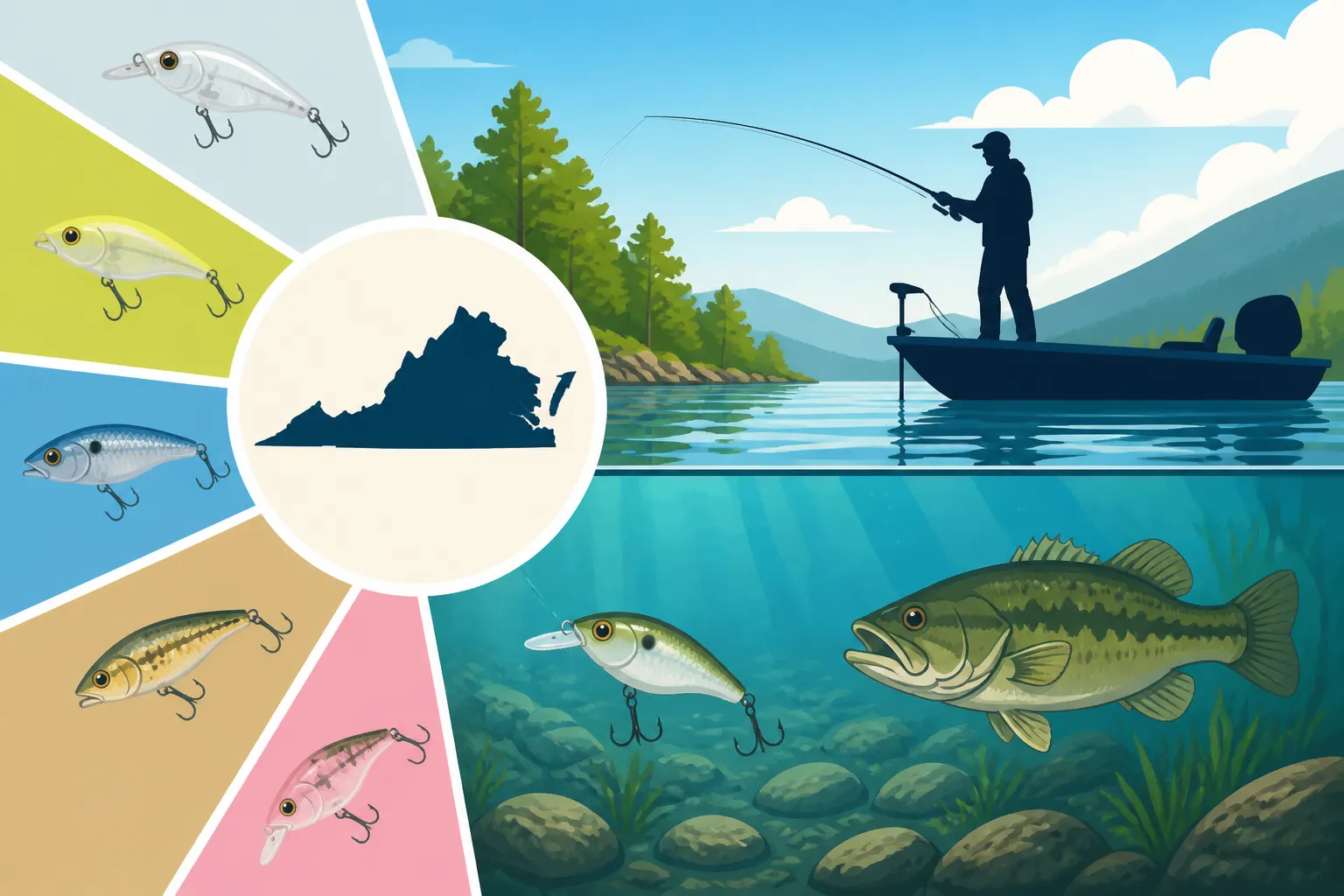
In clear water, natural and transparent hues are your absolute best friends. Colors like "Green Pumpkin" and "Watermelon Red" are legendary for bass fishing, especially when using soft plastic worms, creature baits, or jigs. The subtle flecks of red in a watermelon lure can mimic a crawfish or a wounded baitfish, while the dominant green/brown blends seamlessly into submerged vegetation or rocky bottoms, which is exactly where bass might be looking for a meal in places like Lake Anna or Smith Mountain Lake. These colors provide just enough contrast to be seen but not so much that they scream "artificial." If you're using a plastic worm, for example, a natural color like green pumpkin often outperforms louder shades because it looks like a real meal. How to Fish a Plastic Worm for Bass can offer more insights into techniques that pair well with these colors.
Beyond these classic bass colors, "Smoke" and "Clear with Flake" are fantastic for finesse techniques across various species. A clear or smoky colored swimbait with a silver or gold flake can perfectly imitate a small baitfish darting through the water, especially on bright, sunny days when light penetration is at its highest. This transparency allows the lure to take on the ambient color of the water, making it incredibly versatile. For crappie or panfish in clear water, tiny jigs in similar smoky or clear patterns, perhaps with a touch of chartreuse in the tail, can be deadly. The key here is imitation; you want the lure to blend into the natural environment while still having that subtle flash or movement to attract attention without raising suspicion.
When to Introduce a Hint of Flash or Contrast
While subtlety is paramount, there are specific situations in clear water where a hint of flash or contrast can be beneficial. It's not about making the lure loud, but giving it a little extra appeal. For instance, a natural-colored bait, like a clear plastic worm, with fine silver or gold flakes can be incredibly effective. The flakes catch the light just enough to mimic the scales of a baitfish, creating a subtle shimmer that draws attention without being overtly aggressive. This works well for predatory fish that are actively hunting, like striped bass in clear areas of the Chesapeake Bay. Best Bait for Striped Bass in Chesapeake Bay explores other effective bait choices for these powerful fish.
Sometimes, even in clear water, you might need a small pop of color, especially in slightly stained clear water or during low-light conditions like dawn or dusk. Instead of a solid, vibrant "Chartreuse" or "Orange," consider a natural-colored lure with just an accent of these brighter shades. For example, a "Green Pumpkin" jig with a few strands of "Chartreuse" in the skirt, or a natural-colored crankbait with a "Chartreuse" belly. These accents can trigger a strike, particularly when targeting aggressive species like trout in stocked waters or crappie around cover. Best Jig Colors for Crappie Fishing discusses how color can play a role in enticing these panfish. The idea is to make the lure subtly visible, not overtly flashy. It's a fine line, but one that can make all the difference when fish are actively looking for a meal but remain cautious.
Factors Beyond Color: Lure Profile, Size, and Action in Clear Water
While lure color is a significant piece of the puzzle in clear water, it's really only one part of a larger strategy. Fish aren't just looking at the color; they're assessing the entire package. The shape, size, and how your lure moves through the water are equally, if not more, critical when visibility is high and fish are wary.
The Importance of Lure Profile and Size
In clear water, the adage "less is more" often rings true, especially concerning lure profile and size. A large, bulky lure that might trigger a reaction strike in murky water can simply spook fish in transparent conditions. They get a good, long look at it and if it doesn't match their natural prey, they're gone. Instead, opt for smaller, more slender profiles that closely mimic the size and shape of the baitfish or insects present in the water. This is often referred to as "matching the hatch." If the fish are feeding on small minnows or shiners, a slender, 3-inch swimbait or jerkbait will be far more effective than a 6-inch magnum crankbait.
Consider areas like Claytor Lake, where the bass are pressured and the water is clear. Anglers often find success downsizing their baits, using smaller finesse worms, compact jigs, or micro-spoons. A more compact profile appears less threatening and more natural. This is particularly true for shy or heavily pressured fish that have seen it all. A bulky lure creates a larger presence in the water, which in clear conditions, simply gives the fish more time and information to reject your offering. By scaling down, you're making your bait look like an easier, more natural meal that doesn't require as much commitment from the fish.
Subtle Action and Presentation are Key
Even the perfect lure color and size won't work if your presentation is too aggressive or unnatural in clear water. Fish are observing every twitch, every wobble, and every pause. Therefore, subtle action and a lifelike presentation are absolutely paramount. Forget violent jerks or super-fast retrieves. Instead, focus on finesse techniques that mimic the natural movement of prey. Drop shots, Ned rigs, shaky heads, and weightless wacky worms are prime examples of presentations that shine in clear water because they offer minimal, natural movement.
Imagine a small baitfish slowly swimming, pausing, and then darting. Your retrieve should emulate that. For instance, a slow, gentle retrieve with a natural-colored swim bait, or a delicate "walk-the-dog" action with a topwater lure. If you're fishing with a spinnerbait, slow rolling it just above submerged structure can be incredibly effective, as opposed to burning it back to the boat. The less "noise" your lure makes, both visually and audibly, the better. Fish in clear water are often looking for an easy meal, and a bait that looks injured or disoriented without being overtly aggressive is often irresistible. Don't be afraid to let your bait sit still for a few seconds; sometimes, that pause is what triggers the strike from a hesitant fish.
Considering the Impact of Light Conditions (Sunrise, Midday, Overcast)
The amount of available light significantly impacts how fish see your lure, even in clear water. This means your "perfect" lure color might change throughout the day. At dawn or dusk, or on heavily overcast days, when light penetration is reduced, you can often get away with—or even benefit from—slightly brighter or more opaque natural colors. Think about a white or pearl-colored fluke that closely resembles a baitfish. The brighter, solid color offers better visibility in low light without being obnoxious. Why Fish Bite Better at Dawn offers some great insights into early morning fishing.
However, once the sun is high and bright, especially around midday, you'll want to revert to the most transparent and natural hues possible. Think smoke, clear with silver flake, or truly muted greens and browns. The intense light can make even subtle colors pop, so ultra-natural is key. On very bright days, metallic finishes that create a lot of flash can be overpowering, potentially scaring fish. Instead, opt for duller, matte finishes or clear lures with minimal reflective properties. Conversely, a subtle holographic flash on an otherwise natural lure can imitate the gleam of baitfish scales, making it effective on a slightly overcast day when a little extra visibility is needed. Understanding how light plays on your lure at different times, as explored in articles like Best Time of Day to Catch Bass in Summer, is crucial for maximizing your clear-water success.
Practical Tips for Anglers in Virginia's Clear Waters
Navigating clear water conditions in Virginia requires a bit of finesse and a willingness to adapt. It's not always about having the most expensive gear, but rather knowing how to use what you have strategically.
Experimentation is Your Best Friend
No single lure color is going to be the magic bullet every single time you hit the water. Fish behavior, ambient light, water temperature, and even the forage base can change daily, if not hourly. This is why experimentation is absolutely your best friend in clear water. Start with the most natural colors, like "Green Pumpkin" or "Watermelon Red," but don't be afraid to try different shades within that color family. Sometimes a slight variation, like adding blue flake or a different hue of green, can make all the difference. Keep a mental (or even written) log of what works, when, and where. Did that "Smoke with Silver Flake" swimbait perform better in the morning or afternoon? Did the "Green Pumpkin" jig work wonders on a sunny day near hydrilla?
This trial-and-error approach will build your confidence and your tackle box wisdom. Don't be afraid to put a new color on, even if it feels counterintuitive. If you're struggling, try switching to something completely different. It's helpful to have a variety of colors in your tackle box, so you have options. Many anglers find platforms like Amazon to be a great resource for exploring and acquiring a wide range of lure colors and styles to experiment with. The more options you have, the better equipped you'll be to crack the code on any given day.
Terminal Tackle and Line Choices
In clear water, fish have a perfect view of everything, including your line and terminal tackle. This means you need to scale down and choose wisely to avoid spooking them. Fluorocarbon fishing line is almost a non-negotiable for clear water conditions. Its refractive index is very close to that of water, making it nearly invisible beneath the surface. Using a lighter test fluorocarbon leader, even with braided mainline, can significantly increase your bites. Avoid heavy, opaque monofilament line if possible.
Beyond line, pay attention to your terminal tackle. Use the smallest, lightest, and sharpest hooks possible for your lure. Overly large or dull hooks stand out like a beacon. Minimize hardware like swivels and snaps; if you can get away with a direct knot or a very small, dark snap, do it. Every piece of metal or plastic that isn't part of the lure itself creates a visual distraction or warning signal in clear water. The goal is to make your presentation as seamless and invisible as possible, so the fish focuses solely on the lure itself, not the mechanics of how it's attached.
Specific Virginia Clear Water Scenarios
Virginia offers a diverse range of fishing environments, and clear water tactics will vary slightly depending on where you are.
- Mountain Trout Streams: In the pristine, often gin-clear mountain streams of the Shenandoah Valley or Southwest Virginia, wild trout are incredibly wary. Here, tiny natural-colored spinners (silver, gold, black), small natural-colored nymphs or dry flies, and ultra-light line are essential. Colors should mimic the local insect life or small baitfish. Check out Best Trout Streams in Virginia for specific locations.
- Deep, Clear Lakes: Lakes like South Holston Lake or parts of Claytor Lake can have incredible clarity, especially in deeper sections. Here, finesse tactics shine for bass, walleye, and even striped bass. Transparent swimbaits, natural-colored drop shots, and subtle jigging spoons are effective. Downsizing your baits and using fluorocarbon leaders are crucial. A comprehensive guide like Claytor Lake's Diverse Virginia Fish Species Guide emphasizes the need for versatile approaches in such environments.
- Tidal Rivers and Bay Edges: While much of the Chesapeake Bay can be stained, specific areas, especially during calm periods or near clearer ocean inlets, can offer high visibility. For species like striped bass or flounder, natural baitfish patterns (silver, white, clear with flake) are excellent. Consider suspending jerkbaits or soft plastics that imitate distressed baitfish.
Understanding these specific scenarios will help you apply the general clear water principles more effectively.
| Lure Color Category | Best Conditions | Target Species (Examples in VA) | Why It Works |
|---|---|---|---|
| Natural/Transparent | Bright sun, calm water, pressured fish | Bass, Trout, Crappie, Walleye | Mimics natural prey, low profile, less intrusive. |
| Examples: Green Pumpkin, Watermelon Red, Smoke, Clear w/ Flake, Junebug | Largemouth Bass, Smallmouth Bass, Rainbow Trout, Crappie, Walleye, Perch | ||
| Subtle Flash/White | Low light, overcast, slightly stained clear water, open water | Striped Bass, Bass, White Perch, Flounder | Mimics baitfish scales, offers better visibility without being loud. |
| Examples: White, Pearl, Silver/Gold Flake (in natural base) | Striped Bass, Largemouth Bass, Smallmouth Bass, White Perch | ||
| Accent Colors | As a secondary color on natural baits, specific forage | Trout, Crappie, Catfish | Small pop of color to trigger a bite, especially in cooler water or low light. |
| Examples: Chartreuse tip, Orange belly, Red accent | Stocked Trout, Crappie, Channel Catfish |
Disclaimer
This article is for general informational purposes only and does not constitute professional advice. Laws, prices and regulations vary by location and change over time. Consult a qualified professional for guidance on your specific situation.