How Group Size Changes the Per-Person Charter Cost
Oh, the age-old question that pops into every angler's head when they start dreaming of a guided trip: "How much is this really going to cost me?" It's not just about the sticker shock of the total charter price; it's about breaking it down, understanding the value, and figuring out if it's feasible for your crew. The truth is, that seemingly daunting number on a charter website looks a whole lot different when you start dividing it by the number of folks you're bringing along. This guide is all about peeling back the layers of charter pricing to show you exactly how your group size impacts that crucial per-person cost for fishing adventures across Virginia, from the vast Chesapeake Bay to the shimmering waters of Smith Mountain Lake.
Understanding the Baseline: Why Charter Prices Aren't Always "Per Person"
When you first glance at a fishing charter's pricing, it's easy to get sticker shock. You see a large figure, perhaps for a half-day trip, and immediately think, "Wow, that's a lot for just me!" But here's the thing: most charter operations don't initially price things on a true per-person basis. They price for the boat and the experience, up to a certain capacity. It's a fundamental difference that, once understood, makes the whole concept of group pricing much clearer and, frankly, more manageable.
The Boat's Fixed Costs Fuel, Crew, and Maintenance
Imagine running a small business where your main asset is a powerful boat. Every single time that boat leaves the dock, there's a cascade of expenses that kick in, regardless of whether you have two anglers or six on board. Think about it: the fuel tanks need filling, and that's a significant cost. The captain is paid for their expertise, their time, and their license, and often there's a first mate whose help is invaluable, especially when the fish are biting fast and furious. Then there are the hidden costs – the bait, the ice to keep your catch fresh, the tackle that gets used (and sometimes lost!), the cleaning of the boat after a long day, insurance, dock fees, and regular maintenance to keep everything running safely.
These are all fixed costs for the charter operator. They have to cover these expenses whether they take out a single person or a full complement of anglers. It’s why you rarely see a charter advertised at a super low "per-person" rate right off the bat. They need to meet that baseline operating cost before they even start to turn a profit. It’s a reality of the business, and understanding it helps you appreciate why splitting the cost with more people becomes so advantageous. It's like ordering a pizza – the cost of the pie is fixed, and the more people you split it with, the less each person pays for their slice! You can learn more about this by reading How Virginia Charter Trip Packages Are Priced.
The "Minimum Charge" Mentality
Because of these inherent fixed costs, many Virginia fishing charters operate with a "minimum charge" mentality. This means they set a base price for the entire boat, often for a group of 1 to 4 anglers, and then might add a smaller additional fee for each person beyond that initial count, up to their maximum legal capacity. So, if a charter advertises a price for a "half-day trip for up to 4 people," that's their minimum charge to get the boat out.
This structure protects the captain's investment and ensures they can cover their operational expenses. It also means that if you're a solo angler or just two of you, you're essentially paying the same rate that a group of four would pay, making your individual cost much higher. It's not about gouging; it's about economic necessity for the charter business. They can't afford to run a half-empty boat at a significantly reduced rate if they want to stay in business and keep providing those amazing fishing experiences on the Chesapeake Bay or in Virginia's freshwater lakes. This is why connecting with friends or family to fill those spots can make a huge difference in your personal investment.
The Sweet Spot: How More Anglers Drive Down Individual Costs
This is where the magic happens for your wallet! Once you understand that the initial charter price largely covers the boat's operating costs, you can see how strategically adding more anglers to your group significantly reduces what each person has to pay. It’s all about spreading that fixed expense across more shoulders.
Dividing the Pie: Group Economics in Action
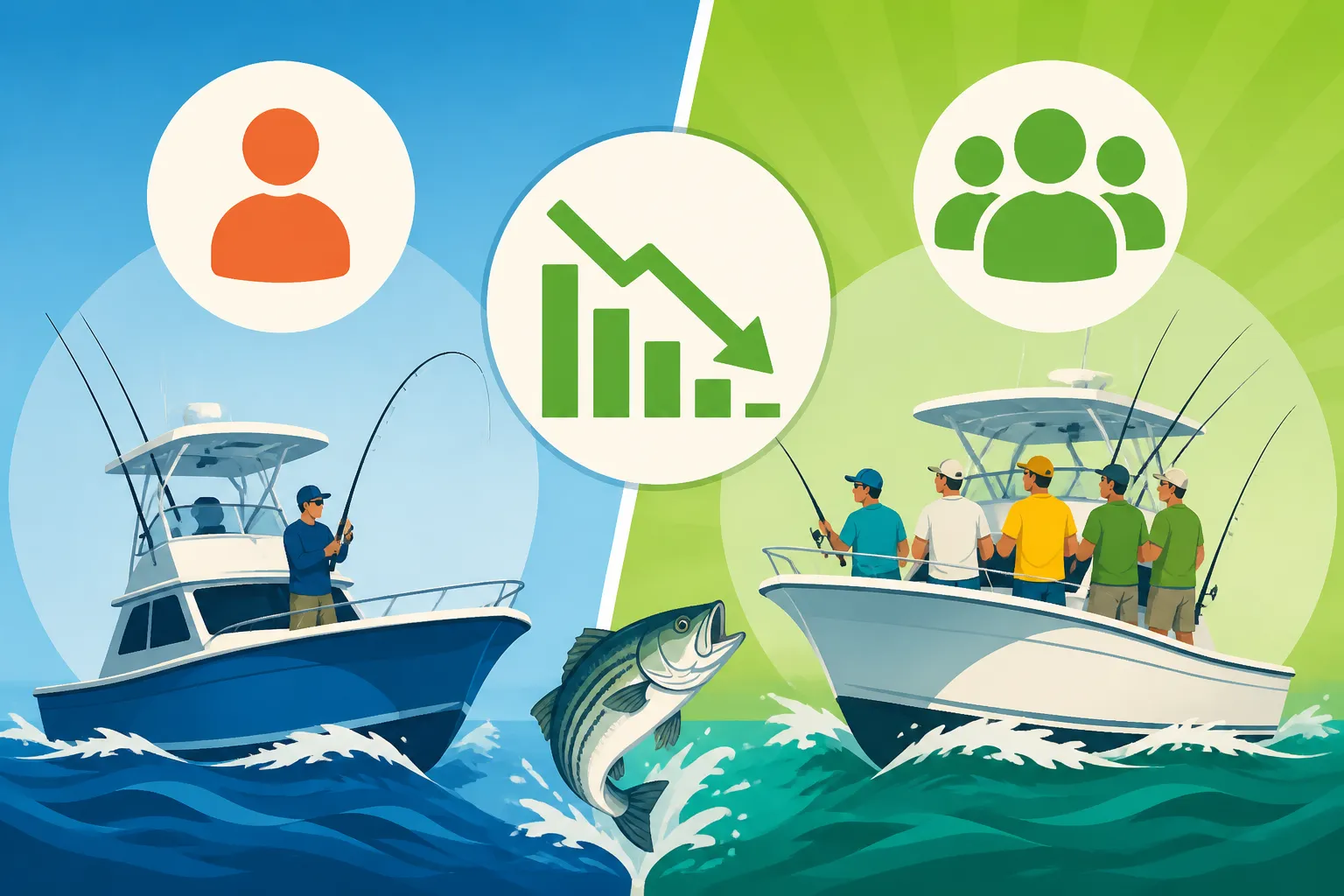
Let's imagine a hypothetical scenario to illustrate this. Say a full-day fishing charter out of Virginia Beach has a set price for the boat and crew, up to its maximum capacity. If you booked that trip for just two people, each of you would be responsible for half of that total boat cost. Now, what if you managed to get a group of six together? Suddenly, that same total boat cost is divided by six. Each person's share shrinks considerably. The cost of the boat and the captain's time doesn't change, but the amount each individual contributes drops significantly.
This is the core principle behind group bookings for fishing charters. The larger your group (up to the boat's legal and comfortable capacity), the smaller the "slice of the pie" each individual pays. It transforms what might look like an expensive outing into a much more affordable adventure for everyone involved. For example, if a boat is priced to comfortably carry four anglers, and you only bring two, you're splitting the cost only two ways. But if you fill those two additional spots, you've just knocked a significant percentage off everyone's individual contribution. It really pays to round up a crew! Diving deeper into Comparing Virginia Charter Prices by Group Size can give you even more insights into these dynamics.
Finding Your Ideal Group Size
Most charter boats, particularly those targeting popular species like striped bass or flounder in the Chesapeake Bay, are designed to comfortably accommodate anywhere from 4 to 6 anglers. Some larger offshore boats or head boats (party boats) can take many more, but for a private charter experience, that 4-6 person range is quite common.
The "ideal" group size from a cost perspective is often the boat's maximum comfortable capacity for your specific trip type. For instance, if a captain typically takes 4 people for a nearshore trip but can legally and safely accommodate 6, bringing those extra two people will be the most cost-effective solution per individual. Beyond the maximum capacity, you'd need to book a second boat, which would, of course, double your total cost. It's about maximizing the efficiency of that single boat booking. So, before you book, always confirm the boat's capacity and consider how many people you can realistically gather. Knowing How Many Anglers a Virginia Charter Boat Typically Holds can help you plan your group effectively.
Here's a simplified look at how this works:
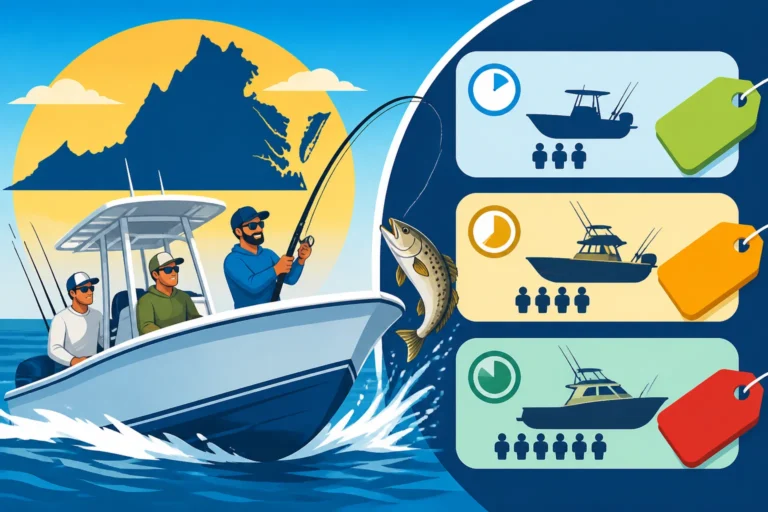
| Number of Anglers | "Total Boat Cost" Factor | "Per Person Cost" Factor |
|---|---|---|
| 1-2 | High | Very High |
| 3-4 | Medium | Medium |
| 5-6 (typical max) | Standard | Lowest |
| 7+ | Requires another boat | Varies |
Note: This table uses "factors" instead of specific numbers to illustrate the general cost relationship, as actual prices vary widely by charter, location, and trip type.
Practical Considerations for Group Bookings
Now that you understand the economics, let's talk about the practical side of making those group bookings happen. It’s not just about crunching numbers; it’s about choosing the right type of trip and knowing how to communicate effectively with the charter service.
Private Charters vs. Shared Charters
When you're thinking about group size and cost, it's crucial to distinguish between private and shared charters.
- Private Charters: This is when your group books the entire boat exclusively for yourselves. You decide who comes, you dictate the fishing targets (within reason and captain's recommendations), and you have the undivided attention of the captain and crew. The entire base price of the boat is your group's responsibility, and then you divide it among yourselves. This is where getting more people onboard directly lowers your individual cost.
- Shared (or "Open Boat") Charters: With a shared charter, the captain or booking agent puts together a group of individual anglers or small parties to fill the boat's capacity. Each person pays a set per-person rate, and you'll be fishing alongside other people you might not know. These trips are inherently more affordable on a per-person basis because the operator takes on the task of filling the boat. You don't have to worry about recruiting friends; you just sign up and show up.
If you have a small group and are looking for the absolute lowest per-person cost, and don't mind fishing with strangers, a shared charter can be an excellent option. However, if you want the intimacy, flexibility, and personalized experience of having the boat to yourselves, a private charter is the way to go, and that's where rounding up a larger group truly shines for individual savings. For a more in-depth look at these options, check out Private Charter vs Shared Charter in Virginia.
Communicating with the Charter Company
This might sound obvious, but clear communication with the charter company is paramount. Don't just assume anything about pricing or capacity. When you're making inquiries, be upfront about your potential group size. If you have a fluctuating number (e.g., "we might have 4, but could potentially get to 6"), ask for quotes for those different scenarios.
A good charter operator will be happy to break down the pricing for you, explaining their base rate and any additional fees per person beyond a certain number. They can also advise on the most comfortable and effective group size for the specific type of fishing you're interested in. For instance, a small boat might feel crowded with six people trying to cast simultaneously for big game, but perfectly fine for six bottom fishing. Many anglers find great options and clear pricing details on platforms like FishingBooker, which allows you to compare different boats, their capacities, and their pricing structures easily. They also often provide contact information for direct questions. Being proactive with your questions can save you headaches and surprises down the road. Remember to ask Questions to Ask Before Booking a Charter in Virginia.
Beyond the Base Price: Other Factors Affecting Cost
While group size is a huge determinant of your individual cost, it's not the only factor. A responsible budget-planner knows to look beyond the advertised charter price to understand the full financial commitment.
Trip Length and Type of Fishing
The total cost of a charter, which then gets divided by your group size, is heavily influenced by how long you plan to be on the water and what kind of fishing you'll be doing.
- Trip Length: Generally, charters offer half-day, 3/4-day, and full-day options. A half-day trip will naturally have a lower total boat cost than a full-day trip, simply because it involves less fuel, less crew time, and less wear and tear on the vessel. So, while a full-day trip might seem like a bigger upfront investment, if you're splitting it among a good-sized group, the per-person cost might still be very reasonable for the extended time on the water. It’s a balance between how much time you want and how much you're willing to pay per hour of fishing. You can compare some specific costs by looking into Half-Day vs Full-Day Striper Charter Cost in Virginia.
- Type of Fishing: Specialized trips, like offshore tuna or marlin fishing, or certain technical fly-fishing excursions, often command higher prices due to the specialized gear, higher fuel consumption, and deeper expertise required. Nearshore trips for species like flounder, tautog, or some forms of striped bass fishing can be more budget-friendly. Always discuss your target species with the captain and factor that into your overall cost considerations.
Even with these variations, the principle holds true: a larger group dividing the total cost will always result in a lower per-person outlay for any given trip length or type.
Gratuity and Incidentals
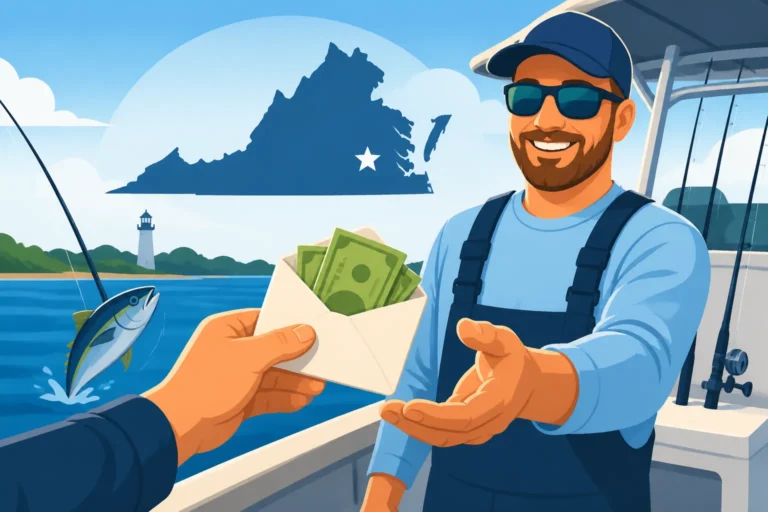
Here's an important one that often gets overlooked in the initial "per-person" calculations: the tip for the crew. Just like in a restaurant, it is customary and highly appreciated to tip your captain and especially your first mate. These folks work incredibly hard to ensure you have a safe, fun, and productive day on the water, from baiting hooks and netting fish to cleaning your catch afterward. A general guideline is to tip around 15-20% of the total charter price. So, when you're calculating your individual cost, remember to factor in your share of the gratuity after you've divided the base charter fee. For a deeper dive, read Tipping Norms for Virginia Fishing Charter Crews.
Beyond the tip, consider any incidentals. While most Virginia fishing charters include bait, tackle, and ice, some specialty items or extreme requests might incur an extra charge. If you lose a lot of expensive lures, for example, there might be a small fee to replace them. Also, think about what you'll bring for yourselves – snacks, drinks, sunscreen, and appropriate clothing. While these aren't part of the charter fee, they are part of your overall trip cost. Knowing What to Bring on a Virginia Fishing Charter can help you prepare.
By considering all these elements—the base boat cost, group size, trip length, type of fishing, and gratuity—you can arrive at a much more realistic and transparent understanding of your true per-person expense for an incredible Virginia fishing charter adventure. It's an investment, for sure, but one that often creates memories that last a lifetime, especially when shared with good company.
Disclaimer
This article is for general informational purposes only and does not constitute professional advice. Laws, prices and regulations vary by location and change over time. Consult a qualified professional for guidance on your specific situation.