Best Techniques for Smallmouth Bass in Current
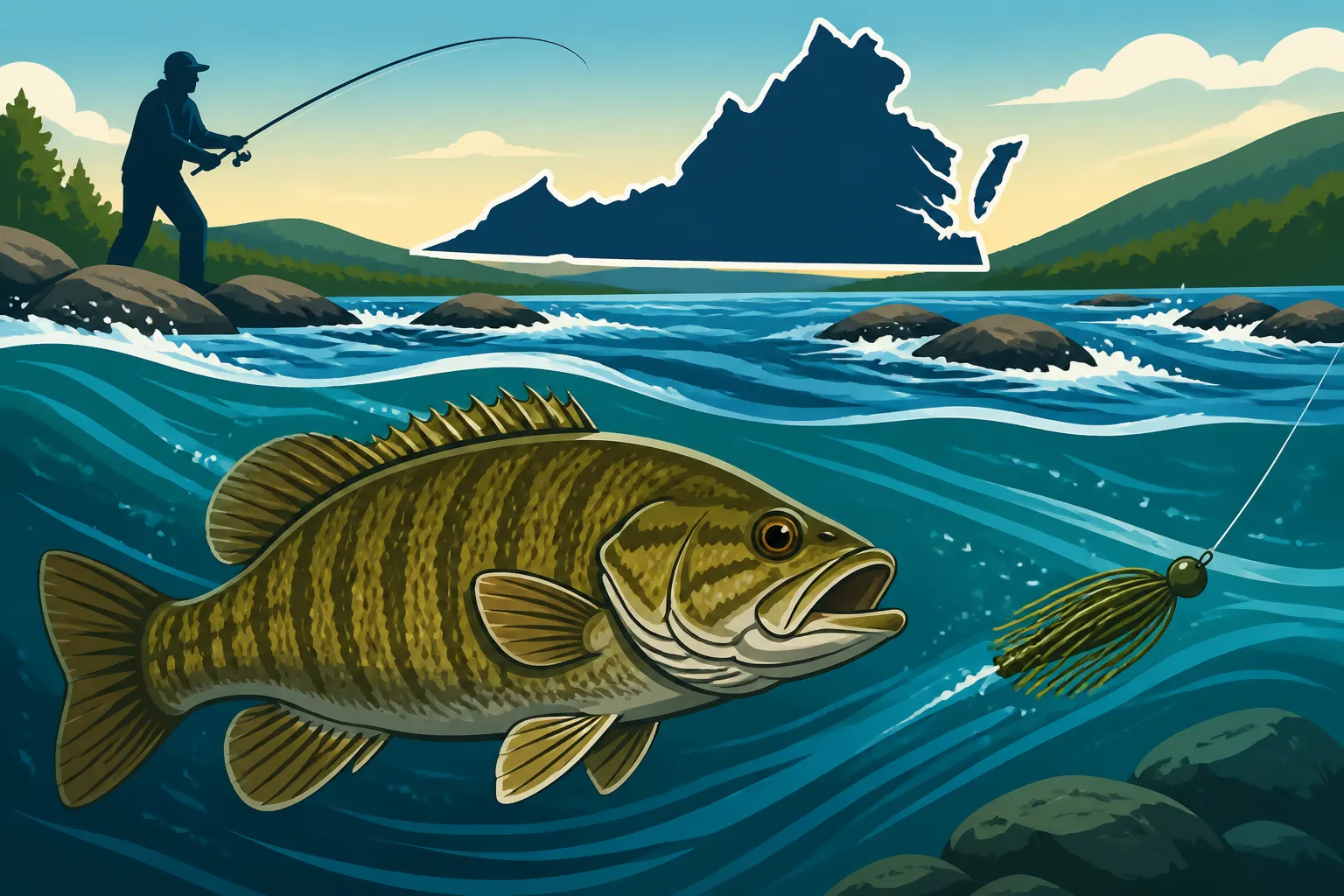
There's nothing quite like the thrill of feeling that distinct thump on your line when a feisty smallmouth bass slams your lure in a swift Virginia river. But let's be honest, trying to fish moving water can feel incredibly intimidating if you're not sure where to start. The current pulls your line, your lure doesn't act right, and it seems like the fish are just somewhere else. This guide is here to untangle those frustrations, breaking down the best techniques to effectively target and catch smallmouth bass in the challenging yet rewarding environment of river currents.
Decoding Smallmouth Bass in River Currents
Smallmouth bass are incredible athletes, perfectly adapted to life in flowing water. To catch them consistently, we first need to understand why they choose to live in current and how they use it to their advantage. It's not just about throwing a lure; it's about thinking like a smallmouth.
Why Smallmouth Bass Love Current
Imagine a constant conveyor belt of food, oxygen, and comfortable temperatures – that's what river current represents to a smallmouth bass. Unlike their largemouth cousins who prefer stiller, often warmer, weedy waters, smallmouth thrive where the water moves.
Firstly, current brings food right to them. Everything from aquatic insects, crayfish, and smaller baitfish gets swept downstream. Instead of expending energy chasing prey in open water, a smallmouth can simply position itself in a strategic spot and wait for its next meal to come by. It's like having a drive-thru for dinner!
Secondly, moving water is typically richer in dissolved oxygen. This is crucial for fish health, especially during warmer months when still water can become stagnant and oxygen-depleted. Rivers like the Shenandoah River Fly Fishing for Trout and Smallmouth Bass in Virginia or the Fishing the James River in Virginia offer consistently well-oxygenated environments, making them prime smallmouth habitat.
Lastly, the current provides a degree of camouflage and cover. The constant movement of water can obscure a bass from its prey and from predators, giving it a tactical advantage. Their sleek, torpedo-shaped bodies are built for navigating and holding in current, allowing them to remain stable without expending excessive energy.
Key Holding Lies and Ambush Points
Smallmouth bass don't just sit randomly in the middle of a fast current. They're incredibly efficient predators, always looking for places where they can expend minimal energy while maximizing their feeding opportunities. These spots are what we call "holding lies" or "ambush points." Learning to "read the water" is paramount, because identifying these spots is half the battle.
- Eddies: These are areas of slack or slower water directly downstream of an obstruction, like a large boulder, a downed tree, or a point of land. The current swirls around the obstruction, creating a calmer "pocket" where bass can rest, out of the main flow, while still watching the conveyor belt of food drift past the seam.
- Current Seams: This is where fast water meets slow water. It's a visible line on the surface, often marked by foam or debris. Smallmouth will typically sit in the slower water of the seam, facing upstream, darting into the faster current to grab passing food. These are high-percentage areas and one of the most important things to look for when fishing Best Smallmouth Bass Rivers in Virginia.
- Riffles and Rapids: These are shallow, fast-moving sections of a river where the water tumbles over rocks and gravel. While they might look too turbulent, the broken water provides excellent oxygenation and disorients prey, making it easy pickings for smallmouth. Bass will often hold behind larger rocks or in the deeper pockets within the riffle, out of the direct current.
- Rock Gardens and Boulders: Any large rock or cluster of rocks in the current creates micro-eddies and current breaks. Smallmouth love to tuck behind or right next to these structures, using them as ambush points. The bigger the rock, the more significant the current break, and often, the bigger the fish.
- Undercut Banks and Root Wads: Where the river carves out the bank, creating an overhang, or where the roots of a tree extend into the water, these spots offer shade, cover, and a break from the current. Bass can hide here, waiting for prey, especially during bright, sunny days.
- Deep Holes and Pools: While smallmouth prefer current, they also need deeper water for refuge, especially during colder months or periods of high water. Deep holes, often found downstream of rapids or bends in the river, will hold schools of bass, particularly during the pre-spawn and fall periods. They will often relate to the current edge within these deeper pools.
Reading the Water
Honestly, this is where experience really pays off, but everyone has to start somewhere. Reading the water means observing the river and understanding what's happening beneath the surface. Look for:
- Surface Disturbances: Anything that breaks the smooth flow of the water indicates an obstruction below. V-wakes, boils, or foam lines can all point to submerged rocks, logs, or ledges where fish might be holding.
- Color and Clarity Changes: Sometimes, where a tributary stream enters the main river, you'll see a distinct line where the water color changes. This can create a prime current seam.
- Depth Changes: While harder to see from the bank, subtle changes in current speed can indicate drop-offs or deeper pockets. Learning to read your electronics from a boat or kayak, or simply exploring while wading, will help you identify these.
- Baitfish Activity: If you see minnows jumping or schooling near current breaks, you can bet that smallmouth are nearby.
- Bird Activity: Herons and kingfishers are also looking for fish. If they're actively feeding in a certain area, it's a good sign that fish are present.
Essential Tackle for Conquering the Current
Fishing in current puts different demands on your gear than fishing a still lake. You need equipment that can handle the force of the water, provide sensitivity to detect subtle bites, and offer the power to land a hard-fighting smallmouth. Choosing the right setup can make all the difference, and a quick browse on Amazon for these types of rods and reels will give you a good idea of what's available.
Rods, Reels, and Line Choices
Let's break down the workhorses of your smallmouth arsenal.
Rods:
For most river smallmouth fishing, you'll want a rod that offers a good balance of sensitivity and backbone.
- Length: 6'6" to 7'6" is a sweet spot. Shorter rods (6'6"-7') are great for accuracy in tight spaces, especially when wading or casting around overhanging trees. Longer rods (7'-7'6") offer better casting distance and leverage when fighting fish in strong current or setting the hook on longer casts.
- Action: A "fast" or "extra-fast" action is generally preferred. This means the rod bends mostly in the tip section, allowing for sensitive bite detection and quick hook sets. However, a "moderate-fast" action can be great for treble hook baits like crankbaits and jerkbaits, as it allows the fish to fully engulf the lure before the hook set, preventing them from tearing off.
- Power: Medium-Light (ML) to Medium (M) power is ideal.
- Medium-Light: Excellent for lighter finesse presentations (like Ned Rigs or smaller tubes) and targeting smaller to average-sized smallmouth. It provides maximum feel.
- Medium: A versatile choice that can handle a wider range of lures, from jigs to spinnerbaits to medium crankbaits. It offers more power to control larger fish in current.
Reels:
- Spinning Reels: These are highly popular for river smallmouth, especially when using lighter lures and lines. A 2000 or 2500 series spinning reel (like a Shimano Sedona or Daiwa Fuego) is usually perfect. Look for smooth drag systems, as smallmouth are powerful fighters.
- Baitcasting Reels: If you're throwing heavier lures like larger spinnerbaits, heavier jigs, or bigger crankbaits, a baitcasting setup (e.g., a Lew's Speed Spool or a KastKing reel) offers more power and accuracy. A 6.x:1 to 7.x:1 gear ratio is versatile enough for most applications.
Line:
Your line choice is critical for both detecting bites and fighting fish in current.
- Braided Line with Fluorocarbon Leader: This is my go-to setup for most situations.
- Braided Line: 8-15 lb test braid (like PowerPro or Sufix 832) offers incredible sensitivity, zero stretch, and high strength-to-diameter ratio. This is vital for feeling those subtle taps in noisy current. The brighter colors also make it easy to see subtle line movement, indicating a bite.
- Fluorocarbon Leader: A 6-10 lb test fluorocarbon leader (e.g., Seaguar InvizX) about 3-6 feet long provides invisibility in clear river water and offers abrasion resistance against rocks and logs. Connect it to your braid with a strong knot like an FG knot or an Alberto knot.
- Monofilament Line: While not as sensitive as braid, 8-12 lb test monofilament (like Berkley Trilene XL) has inherent stretch, which can be beneficial for topwater lures as it allows for a bit of give when a fish strikes, preventing hooks from pulling out. Its buoyancy also helps topwaters perform better.
- Fluorocarbon Mainline: Some anglers prefer to fish straight fluorocarbon (8-12 lb test). It's more sensitive than mono and nearly invisible, but it can be stiffer and more prone to memory, especially in lighter sizes on spinning reels. It's a good option for certain applications, but the braid-to-fluoro setup offers more versatility.
Lure Selection for Current
The current dictates not only where the fish are but also how your lures behave. You need lures that can get down to the fish, maintain their action, and be easily controlled in the flow.
- Crankbaits: These are absolute smallmouth magnets in current.
- Diving Crankbaits: Choose models that can reach the depth where the fish are holding (e.g., Rapala Shad Rap or Strike King KVD 1.5). The bill helps them dive and deflect off rocks without snagging, which is key in rocky rivers. Cast them upstream or slightly quartering upstream and retrieve just fast enough to get them digging and deflecting.
- Squarebill Crankbaits: Ideal for shallower, rockier areas. Their unique bill allows them to bounce off cover with a wide, erratic wobble without hanging up. Cast these around submerged boulders and parallel to current seams.
- Jerkbaits: While often associated with lakes, suspending jerkbaits (like a Lucky Craft Pointer or a Megabass Vision 110) can be deadly in current, especially in clear water. Cast them upstream or across current, twitch them, and let them suspend momentarily. The current will impart a natural wobble even on the pause, which can trigger hesitant fish. This is a great choice during cooler water periods, often found on Amazon.
- Soft Plastics: The versatility of soft plastics makes them a must-have.
- Tube Jigs: Tubes (e.g., Strike King Coffee Tube, Venom Lures) are legendary for smallmouth. Rigged on an internal jig head (1/8 oz to 1/4 oz for rivers), they mimic crayfish incredibly well. Cast upstream, let them sink, and then drag or hop them along the bottom with the current. This is a primary technique for How to Catch Smallmouth Bass in Rivers.
- Swimbaits and Grubs: Small paddle-tail swimbaits (e.g., Keitech Swing Impact, Rage Swimmer) or simple curly-tail grubs on jig heads (1/8 oz to 1/4 oz) are fantastic for covering water. They can be retrieved steadily through current seams or bumped along the bottom.
- Ned Rigs: A small, mushroom-head jig with a short, buoyant plastic (like a Z-Man Finesse TRD). The Ned Rig excels in current because of its minimalist design. It drifts naturally, stands up on the bottom, and can entice bites from even sluggish bass. It's a superb finesse choice.
- Spinnerbaits: Single or double Colorado blade spinnerbaits (e.g., Strike King Finesse Kicker) in 1/4 oz to 3/8 oz are excellent for casting into current breaks or around larger rocks. Their flash and vibration can draw strikes from aggressive smallmouth, especially in stained water or during faster retrieves.
- Topwater Lures: When conditions are right (low light, warmer water, active fish), topwater action can be explosive.
- Poppers and Chuggers: (e.g., Rebel Pop-R, Heddon Super Spook Jr.) These create splash and noise, calling fish up from below. Cast them into eddies or near current seams and work them with short, sharp pops.
- Walking Baits: (e.g., Heddon Super Spook, Rapala Skitter Walk) These create a "walk-the-dog" action that mimics an injured baitfish. Great for covering open water in slower current.
- Jigs: Stand-up jigs or football jigs with creature baits or craw trailers (1/4 oz to 1/2 oz) are excellent for fishing deeper holes and slower current sections, particularly when targeting crayfish-eating smallmouth. The heavier weight helps them get down and stay down. For some of the more technical jig presentations, you might consider how Best Lures for Smallmouth Bass on the Shenandoah River can apply.
| Lure Type | Best Current Speed | Best Depth | Primary Action | Target Fish Behavior | Notes |
|---|---|---|---|---|---|
| Tube Jig | Moderate to Fast | Bottom | Drift, Hop, Drag | Feeding on Crayfish/Bottom Prey | Mimics crayfish, great feel, subtle strikes |
| Crankbait (Diving) | Moderate to Fast | Mid to Bottom | Erratic Dive/Wobble | Aggressive Feeding, Reaction | Deflects off rocks, covers water quickly |
| Crankbait (Squarebill) | Moderate to Fast | Shallow (0-6ft) | Wide Wobble, Deflect | Ambush from Cover, Reaction | Excellent for rocky, shallow current |
| Ned Rig | Slow to Moderate | Bottom | Stand-up, Drag, Subtle | Finicky, Slow Bite, Finesse | Natural drift, high hook-up ratio, great for cold fronts |
| Spinnerbait | Moderate to Fast | Mid to Shallow | Flash, Vibration | Aggressive, Reaction | Good in stained water, covers water fast |
| Jerkbait | Slow to Moderate | Mid-water | Suspend, Slash | Ambush, Neutral to Active | Great in clear water, excellent pause action |
| Topwater (Popper) | Slow to Moderate | Surface | Splash, Chug | Active, Low Light, Reaction | Exciting bites, best in calm pockets of current |
Mastering Lure Presentations in Moving Water
Once you have the right gear, it's all about how you present your lure. The current is a powerful force, and you need to work with it, not against it, to make your bait look natural and enticing to a smallmouth bass.
Finesse Presentations in Faster Water
Sometimes, smallmouth in current can be incredibly picky. This is where finesse shines. You're not trying to overpower them; you're trying to fool them into thinking your lure is an easy, natural meal.
- Drifting Tube Jigs and Ned Rigs: This is a cornerstone technique.
- The Setup: Use a tube jig (1/8 to 1/4 oz is common for rivers) or a Ned Rig with an appropriate weight jig head. The key is to use just enough weight to maintain bottom contact without constantly snagging.
- The Cast: Cast upstream and slightly across the current. This allows your lure time to sink to the bottom before it reaches the target area.
- The Drift: Let the current carry your lure downstream naturally. Maintain a semi-slack line, just tight enough to feel the weight on the bottom but loose enough for the lure to tumble and bounce freely. Your rod tip should follow the lure's path downriver.
- The Feel: Pay close attention to your line and rod tip. Smallmouth bites in current are often subtle: a slight tick, a feeling of mushiness, or just a sudden stop in the drift. When you feel something, sweep set the hook firmly. This is where your braided line with a fluorocarbon leader really makes a difference, offering incredible sensitivity. For more on this, check out Best Bait for Smallmouth Bass in Virginia.
- Light Jigging and Small Swimbait Retrieval:
- Targeting Current Seams: Cast a small grub or swimbait (2-3 inches on a 1/8 to 1/4 oz jig head) directly into the seam where the fast and slow water meet.
- The Retrieve: Allow the jig to sink, then impart a slow, steady retrieve, letting the current enhance the tail action. You can add subtle twitches or hops, but often, just letting the lure swim naturally with the current is enough. Smallmouth will often be positioned right on that seam, waiting to ambush anything that passes.
- Working Eddies: Cast into the calmer water of an eddy, letting your swimbait sink. Then, retrieve it back towards the main current, allowing the lure to transition from slow to faster water. This change in speed can trigger a strike as the fish thinks its prey is trying to escape.
Aggressive Tactics for Active Fish
When smallmouth are feeding actively, they're not afraid to chase. This is when you can power fish, covering water efficiently and provoking reaction strikes.
- Crankbaiting the Current:
- Upstream Casts: Cast squarebills into shallow, rocky riffles or diving crankbaits into deeper runs, always aiming upstream or quartering upstream. This allows the lure to dive and work its way downstream, deflecting off rocks and creating a natural erratic action.
- Deflection is Key: The most crucial aspect of crankbaiting in current is making contact with cover. Let your crankbait smash into rocks, logs, or ledges. This deflection often triggers an immediate reaction strike from nearby bass.
- Retrieval Speed: Experiment with retrieval speed. Sometimes a faster retrieve is needed to keep the lure digging, other times a slower, more deliberate retrieve that allows more deflections is better.
- Spinnerbaiting Around Current Breaks:
- Casting Accuracy: Fire a spinnerbait into the heart of a current break, behind a large boulder, or into the calm side of an eddy.
- Controlled Retrieve: Start your retrieve as soon as the lure hits the water, keeping your rod tip high to keep the blades spinning just below the surface in shallower water, or lower it to get deeper. The flash and vibration of the spinnerbait will get noticed even in turbulent water. This is especially effective when Fishing the James River in Virginia.
- "Killing" the Bait: Sometimes, allowing the spinnerbait to fall or "helicopter" on a semi-slack line for a second after it hits a piece of cover can be incredibly effective, mimicking an injured baitfish.
Targeting Specific River Features
Each river feature demands a slightly different approach. Knowing how to adapt your presentation to the specific structure you're fishing will significantly increase your success rate.
- Eddies: These calm zones are where smallmouth rest. Cast your lure (jig, tube, swimbait, or even topwater) into the center of the eddy and work it slowly. Also, target the seam where the eddy meets the main current, as fish will often sit on this invisible line.
- Rock Gardens: These areas are smallmouth heaven. Use squarebill crankbaits that can bounce off rocks or Texas-rigged soft plastics (worms, creature baits) that are weedless and can be dragged over and through the rocks. You want to feel every rock and pebble.
- Riffles and Runs: These faster, shallower sections are oxygen-rich and hold active, feeding fish. Crankbaits (especially squarebills), spinnerbaits, and lighter jig-n-grub combos are excellent here. Cast upstream and work your lure downstream, letting the current help carry it. Look for deeper pockets or larger rocks within the riffle.
- Deep Holes and Pools: While not as current-intensive, these spots often have current along one side or a subtle eddy. Here, heavier jigs (1/2 oz), dropshots, or even shaky heads can be effective. Fish slowly, systematically covering the bottom, paying close attention to any current transitions or submerged structure within the hole. For understanding how to utilize the current, you might find some crossover with principles from How to Read Water When Fly Fishing a River.
Advanced Strategies for Consistent River Smallmouth Success
Moving beyond the basics, a few refined strategies and an understanding of seasonal shifts can really elevate your smallmouth game in Virginia's rivers.
Seasonal Impact on Current Fishing
Smallmouth bass behavior in current isn't static; it changes with the seasons, largely driven by water temperature and spawn cycles.
- Spring (Pre-Spawn/Spawn): As water temperatures rise into the 50s Fahrenheit, smallmouth begin to move from deeper wintering holes into shallower, current-protected areas to feed aggressively before the spawn. They'll stage in eddies, behind large rocks, and in the slower sections adjacent to fast current. Tubes, jerkbaits, and small crankbaits are excellent. During the spawn (mid-60s), they'll be on beds in shallower, gravely areas with moderate current, and while tempting, it's best to leave them undisturbed to ensure future generations.
- Summer (Active Feeding): This is prime time for smallmouth in current. With warmer water and high oxygen levels, they are incredibly active. They'll spread out and use almost every type of current break and ambush point. Topwater action can be explosive in low light, and spinnerbaits, crankbaits, and swimbaits will all produce throughout the day. Look for them in faster runs and riffles where oxygen is highest.
- Fall (Stacking Up): As water temperatures drop, smallmouth begin their autumn feast, putting on weight for winter. They'll often school up in deeper holes adjacent to current or stack up on significant current breaks. Crankbaits, jigs, and tubes are very effective. They can be found in large numbers once you locate a productive spot. This is one of the Best Time of Year for Bass Fishing in Virginia.
- Winter (Deep & Slow): Smallmouth become sluggish in cold water. They retreat to the deepest, slowest parts of the river, often in large pools or main river bends where current is minimal. Finesse techniques like dropshotting, slow-dragging tubes, or even blade baits worked very slowly will be your best bet. Bites will be extremely subtle. The general principles of Water Temperature and Fish Feeding Patterns are critical here.
Stealth and Presentation
You might think that in fast, noisy current, stealth doesn't matter much. Think again. While smallmouth are somewhat less skittish than their largemouth cousins, they are still wild animals.
- Approach from Downstream: Whenever possible, approach your fishing spot from downstream. This minimizes your profile against the horizon and prevents you from sending ripples or disturbing the water ahead of you.
- Low Profile: If wading, move slowly and deliberately. If fishing from a kayak or boat, use your anchor orMinn Kota trolling motor to hold your position subtly. Avoid loud noises or sudden movements.
- Casting Accuracy: Precision casting is paramount in current. You need to land your lure in very specific zones – behind a certain rock, right on a current seam, or into a small eddy. Practice casting to targets. An errant cast can spook fish or simply be ineffective.
- Current-Aware Retrieves: Always consider how the current is affecting your lure. If you're drifting a jig, let the current do the work. If you're cranking, use the current to help your lure dig and deflect. Fight the urge to over-retrieve against a strong current, as this can make your lure look unnatural.
- Line Control: Managing your line is crucial. Too much slack, and you won't feel bites. Too much tension, and your lure won't drift naturally. Use your rod tip to manage the belly in your line created by the current, allowing for a natural presentation while maintaining contact. This is particularly important when targeting Fly Fishing for Smallmouth Bass, where line control is everything.
Mastering these techniques and understanding the nuances of smallmouth bass in current takes time and practice, but the rewards are well worth the effort. The powerful runs, aerial acrobatics, and sheer beauty of a river smallmouth make it one of Virginia's most prized game fish. Get out there, embrace the challenge, and you'll soon be experiencing the thrill yourself.
Disclaimer
Fishing regulations can change frequently. Always consult the latest Virginia Department of Wildlife Resources (DWR) guidelines before heading out on the water. This guide is for informational purposes only and does not constitute legal advice regarding fishing regulations or safety. Be safe, wear a life vest, and respect the environment.