Wild Trout Stream Season and Size Limit in Virginia
There's nothing quite like the thrill of chasing wild trout in Virginia's pristine mountain streams, but let's be honest, trying to decipher the specific rules for these special waters can feel like a labyrinth. It’s not just about remembering a season start and end date; it’s about understanding precise size limits, catch restrictions, and why these precious fish are managed so carefully. This guide is dedicated to untangling all that confusion, giving you the clear, actionable information you need to enjoy Virginia's wild trout streams with confidence and respect for these delicate ecosystems.
Understanding Virginia's Wild Trout Streams
When we talk about "wild trout streams" in Virginia, we're really talking about a unique and vital part of our natural heritage. These aren't your typical stocked ponds or rivers; they are living, breathing ecosystems where trout are born, grow, and reproduce entirely on their own, without any help from hatcheries. It's a special kind of fishing that connects you deeply to the natural world, but it also comes with a higher responsibility to protect what makes these places so extraordinary.
What Makes a Stream "Wild Trout" Water?
Imagine a clear, cold mountain stream, shaded by rhododendrons and hemlocks, tumbling over mossy rocks. The water is often a bit acidic, low in nutrients, and perfectly oxygenated. This is the kind of habitat where wild trout, primarily native brook trout, but sometimes wild brown or rainbow trout in specific areas, thrive. These fish have adapted over generations to their specific environment. They are more colorful, feistier, and often smaller than their hatchery-raised cousins, a testament to their resilience and natural origins.
Unlike streams that are regularly replenished by the Virginia Department of Wildlife Resources (DWR) with hatchery-raised fish, wild trout waters boast self-sustaining populations. This means the trout you catch here are the result of successful spawning, natural food sources, and a healthy stream environment. Protecting these areas is crucial because they represent a genetic blueprint for robust, naturally reproducing fish, and they serve as indicators of the overall health of our mountain ecosystems. When you cast a line into a wild trout stream, you're not just fishing; you're participating in a tradition that relies entirely on the stream's ability to support life on its own terms.
Why Regulations Differ for Wild Trout
You might wonder why the rules for wild trout are so much stricter or more specific than for, say, a lake full of largemouth bass or a heavily stocked creek. The answer lies in conservation. Wild trout populations, especially native brook trout, are incredibly sensitive to environmental changes like habitat degradation, pollution, and increased fishing pressure. Because they aren't supplemented by stocking, every fish lost to overfishing or improper handling directly impacts the stream's ability to maintain its population.
The regulations are carefully crafted to ensure these fragile fisheries can continue to flourish. This includes limiting the number of fish you can keep (the creel limit) and setting a minimum size. These measures are designed to protect adult fish, particularly those old enough to reproduce, thereby safeguarding future generations. It’s a collective effort to manage a finite resource, ensuring that these pristine fishing opportunities are available for years to come. By adhering to these rules, anglers play a direct role in preserving Virginia's unique wild trout legacy.
Navigating the Wild Trout Season in Virginia
One of the biggest differences between fishing for wild trout and stocked trout is often the season itself. While stocked waters frequently have defined "stocked trout season" dates that include closures and specific open periods, wild trout streams often operate under different rules. It's a common misconception that all trout fishing follows the same calendar, but for these special wild fisheries, the approach is designed to protect natural breeding cycles and ensure year-round viability.
General Season Dates for Wild Trout Streams
For the vast majority of designated wild trout streams in Virginia, you'll be pleased to hear that they are open for fishing year-round. That's right, you can often find solace and sport in these pristine waters throughout all four seasons, assuming weather and access permit. This continuous open season is a testament to the robust, self-sustaining nature of these populations and the DWR's confidence in the current management strategies. However, it's always wise to double-check the latest regulations, as unforeseen circumstances or specific conservation needs can sometimes lead to temporary closures or adjustments.
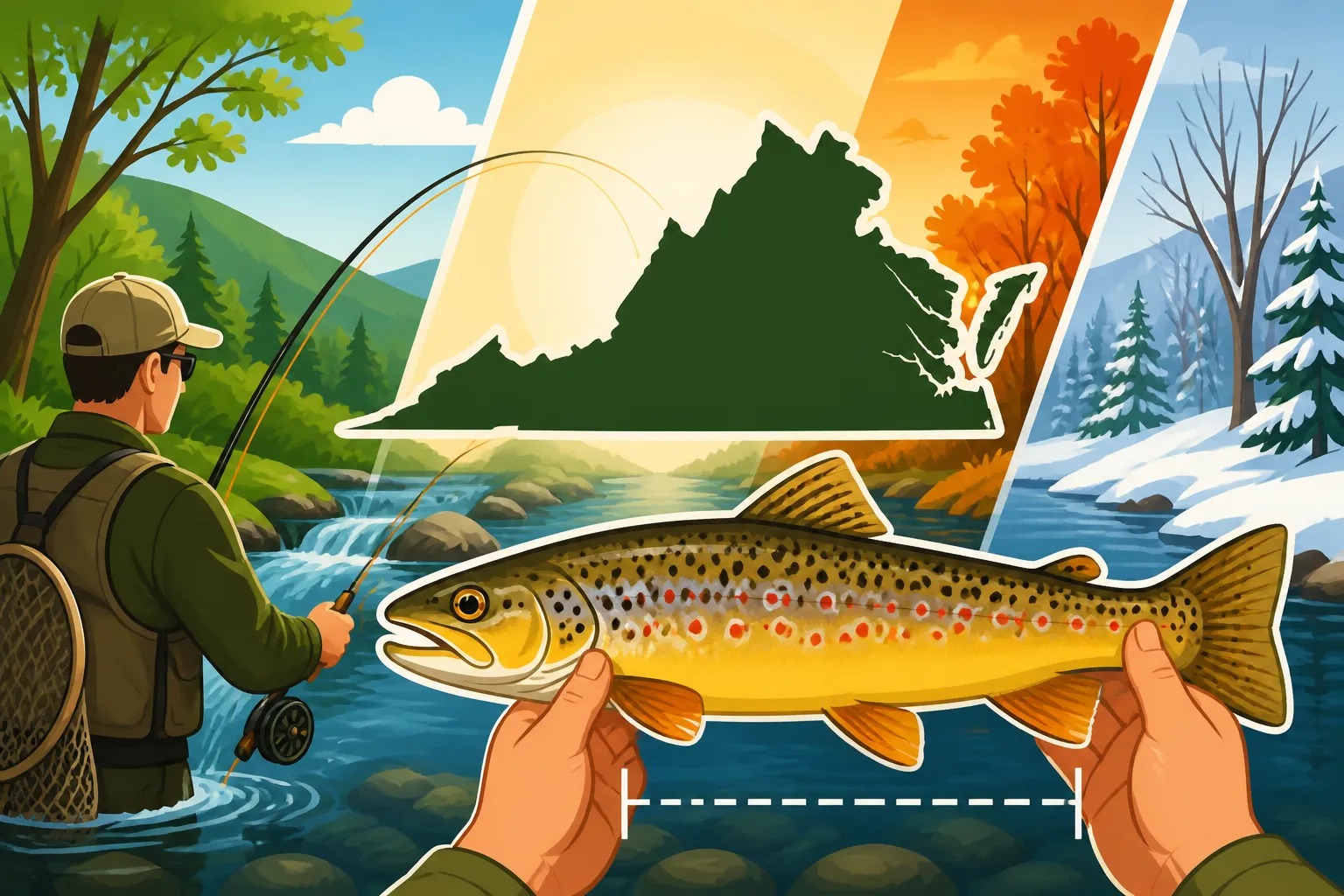
While the general rule is year-round access, remember that fishing conditions vary drastically with the seasons. Spring often brings higher water flows from snowmelt and rain, requiring different tactics, while summer can mean low, clear, and warmer water, making fish more spooky and requiring a delicate approach. Fall offers breathtaking scenery and active fish, and winter can provide solitude for those brave enough to face the cold. This flexibility contrasts sharply with the often strict and shorter seasons for actively stocked waters, where the primary goal is to distribute hatchery fish to anglers within a specific window. To learn more about other trout fishing options, you might find our guide on the "Virginia Stocked Trout Season Guide" helpful in understanding the differences.
Specific Regional or Stream-Specific Openings/Closures
While many wild trout waters are open year-round, there are always exceptions and nuances to be aware of. Some streams, particularly those within protected areas like Shenandoah National Park, might have slightly different rules or specific access limitations that aren't tied directly to the DWR's statewide regulations. For instance, sections of streams that traverse private land might have seasonal access agreements or be entirely off-limits. It’s always your responsibility as an angler to know who owns the land you're fishing on and to respect any boundaries or rules.
Additionally, certain streams or sections might be managed under special regulations for specific periods to allow for scientific studies, habitat restoration, or to protect particularly vulnerable spawning populations. These special regulations might involve catch-and-release only periods, or even temporary closures. Before heading out, especially to a new-to-you stream, always consult the current Virginia DWR fishing regulations manual or their online resources. These resources are updated annually and are the most reliable source of information for any stream-specific rules or "Wild Trout Stream Rules in Virginia" that could impact your trip. A little research upfront can save you a lot of disappointment and ensure you're fishing legally and responsibly.
Virginia's Wild Trout Size Limit and Creel Restrictions
When you're out on a wild trout stream, one of the most critical aspects of responsible angling is understanding and adhering to the specific size and creel limits. These aren't arbitrary rules; they are carefully considered measures designed to protect the integrity of the wild trout populations and ensure future generations can enjoy these incredible fisheries.
The Standard 7-Inch Minimum Length Rule
For the vast majority of wild trout streams in Virginia, there is a strict minimum length limit of 7 inches for any trout you intend to keep. This means that if you catch a wild trout shorter than 7 inches from the tip of its nose to the tip of its tail, it must be immediately and carefully released back into the water. The purpose of this 7-inch minimum length rule is multifaceted. Primarily, it protects juvenile fish, allowing them to grow larger and reach sexual maturity. A trout that reaches 7 inches has likely had at least one, if not several, opportunities to spawn, contributing to the stream's natural population. By allowing these fish to reproduce before being harvested, we help ensure the continuity of the wild population.
Imagine the stream as a delicate balancing act. If too many smaller, immature fish are removed, the population's ability to replenish itself diminishes. This rule encourages selective harvesting, focusing on larger, more mature fish (within the creel limit, of course) that have already contributed to the breeding cycle. It also means you’ll need a reliable measuring tape or ruler. Many anglers attach one to their net, their vest, or even keep a small, soft tape measure from a sewing kit handy. Remember, it's better to be conservative if you're unsure about a fish's length; when in doubt, let it swim. For more detailed information on this specific regulation, you might want to look into "Virginia wild trout streams have a 7-inch minimum length."
Daily Creel Limit for Wild Trout
Beyond the size limit, there's also a daily creel limit for wild trout. Typically, for Virginia's wild trout streams, the daily creel limit is 2 fish per day. This means that even if you catch several trout over 7 inches, you can only keep two of them within a 24-hour period. This low creel limit is another vital component of the conservation strategy for these sensitive fisheries. It drastically reduces the overall harvest pressure on wild populations, allowing more fish to remain in the stream and continue their life cycle.
Think about it: if every angler kept a dozen fish, these self-sustaining populations would quickly be depleted. The 2-fish limit encourages anglers to appreciate the experience of catching wild trout, rather than focusing solely on filling a creel. It promotes a "quality over quantity" mindset. It's a gentle reminder that wild trout fishing is about the challenge, the beauty of the surroundings, and the connection to nature, with the occasional wild trout for the pan being a bonus rather than the primary objective. Always count your kept fish carefully, and once you hit that two-fish limit, switch to catch-and-release, or simply enjoy the scenery.
Catch-and-Release Considerations
Even if you plan to keep a couple of legal-sized wild trout for a meal, the reality is that you'll likely catch and release many more throughout your day. Proper catch-and-release techniques are paramount in wild trout waters to minimize stress and ensure the survival of released fish. Wild trout are delicate creatures, and rough handling can easily injure them, even fatally, after they swim away.
Here are a few key practices to adopt:
- Minimize Fight Time: Bring the fish in quickly to reduce exhaustion.
- Wet Hands Only: Always wet your hands before touching a fish. Dry hands can remove the fish's protective slime coat, making it vulnerable to disease.
- Keep Fish in Water: If possible, unhook the fish while it's still in the water. If you must remove it for a quick photo, keep it submerged as much as possible and return it swiftly.
- Barbless Hooks: Consider using barbless hooks. They make removal much easier and cause less damage to the fish's mouth. You can even crimp down the barbs on your existing hooks with a pair of pliers.
- Proper Unhooking: Use hemostats or needle-nose pliers to remove hooks quickly and gently. If a fish is deeply hooked, it's often best to cut the line as close to the hook as possible rather than tearing at its gills or throat.
- Revive Gently: If a fish seems sluggish, hold it gently in the water, facing upstream, allowing water to flow over its gills until it swims away under its own power. Don't pump it back and forth; this doesn't help.
By practicing careful catch-and-release, you contribute directly to the health and abundance of Virginia's wild trout populations, ensuring that these remarkable fisheries remain vibrant for years to come.
Essential Gear and Practices for Wild Trout Angling
Approaching Virginia's wild trout streams requires a thoughtful selection of gear and a mindful approach to angling. These fish are often wary, the streams are typically intimate, and heavy-handed tactics simply won't cut it. It’s about finesse, stealth, and using tackle that matches the scale of these smaller, wilder environments.
Recommended Tackle and Lures for Wild Trout
When you're heading to a wild trout stream, think light. Very light. For fly anglers, a 2-weight to 4-weight fly rod, between 6.5 and 8 feet in length, is ideal. This setup allows for delicate presentations of small flies, which is crucial as wild trout are often easily spooked. Your leader and tippet should also be light, typically 5x, 6x, or even 7x, to avoid alarming the fish and to get a natural drift. Popular fly patterns include small dry flies like Adams, Parachute Adams, Elk Hair Caddis, and various stimulators, especially in sizes 14-20. Nymphs such as Prince Nymphs, Hare's Ear, Pheasant Tail, and Squirmy Wormies in similar sizes are also incredibly effective, fished under a strike indicator or by high-sticking. Streamers, while less common for very small wild trout, can sometimes entice a larger, more aggressive fish in deeper pockets.
For spin anglers, a ultralight spinning rod (4.5 to 6 feet long) paired with a small reel spooled with 2 to 4-pound test monofilament or fluorocarbon line is perfect. Small inline spinners, such as classic Panther Martins, Mepps, or Rooster Tails, in sizes 00 to 1, are often incredibly effective. Tiny spoons or very small soft plastic grubs and worms on equally tiny jig heads can also produce strikes. Remember, wild trout are primarily insectivores, so anything that mimics small aquatic life will be your best bet. You can find a fantastic selection of these specialized small lures and fly-tying materials on sites like Amazon, making it easy to stock up on the essentials before your trip. Having the right, lightweight gear helps you navigate the often-dense stream banks and make precise casts into tight spots. If you're looking to refine your fly fishing skills, consider checking out "How to Fly Fish for Trout in a River" or finding the "Best Fly Patterns for Trout in Spring."
Licenses and Permits You'll Need
This is one area where confusion often arises. To fish for wild trout in Virginia, you do need a valid Virginia fishing license. This is your standard freshwater fishing license, which can be purchased annually or for shorter durations depending on your needs. The good news is that for wild trout streams, you typically do not need a separate or special trout license. That additional trout stamp is generally only required if you plan to fish in designated stocked trout waters during their specific season. This is an important distinction to remember.
So, while you might hear about needing a "trout license," for dedicated wild trout fishing, your general freshwater license is usually sufficient. However, if you plan to fish in waters that also receive stockings, even if they hold wild trout, or if you're targeting stocked trout, then yes, that additional trout license will be necessary. Always check the DWR regulations for the specific body of water you intend to fish. Our comprehensive "Virginia Fishing License Guide" can help clarify all the different types and what they cover. Also, if you plan to fish areas like the Shenandoah National Park, you'll need the appropriate park entrance pass in addition to your state fishing license. It's always a good idea to ensure you're compliant with all local and state requirements before you cast your first line.
Ethical Angling and Conservation
Beyond the technical skills, ethical angling and a strong conservation mindset are crucial when fishing for wild trout. These environments are fragile, and every angler has a role in protecting them. The principle of "leave no trace" is paramount here. Pack out everything you pack in, including monofilament scraps, old lures, and food wrappers. Consider picking up any trash you might find, even if it's not yours.
Respecting the stream environment also means being mindful of stream bank erosion. Try to enter and exit the water at designated access points or on durable surfaces. Avoid trampling sensitive vegetation along the banks. Furthermore, if you encounter private property along a wild trout stream, always respect "No Trespassing" signs. Access to many wild trout waters relies on the goodwill of landowners, and maintaining positive relationships is key to preserving these opportunities. Finally, remember that your fishing license fees directly support the DWR's efforts in conservation, habitat restoration, and managing these incredible resources. Understanding "How Fishing License Fees Support Wildlife Conservation in Virginia" can really bring home the importance of buying that license. By practicing responsible angling, you ensure that the wild trout streams of Virginia remain healthy and vibrant for future generations to enjoy.
Finding and Accessing Virginia's Wild Trout Sanctuaries
The allure of wild trout fishing isn't just about the fish; it's about the journey, the exploration, and discovering those hidden gems where nature truly shines. Virginia is blessed with a surprising number of these pristine waters, often tucked away in our mountain regions, waiting for the dedicated angler to find them.
Popular Wild Trout Regions and Streams
Virginia offers fantastic opportunities for wild trout fishing, primarily concentrated in the western mountainous parts of the state. The Shenandoah National Park is a prime example, offering dozens of freestone streams that tumble down the Blue Ridge Mountains. Here, you'll find healthy populations of native brook trout in incredibly scenic settings. Streams like the Rapidan River, Big Run, and Paine Run within the park are famous for their wild brook trout. You'll need a park entrance pass, but the reward is unparalleled solitude and beauty.
Beyond the park, the expansive George Washington and Jefferson National Forests also hold a wealth of wild trout streams. Areas like the Laurel Fork and Little River in Highland County, or the many headwater streams in Bath and Augusta counties, are renowned for their wild trout populations. These often require a bit more effort to reach, involving hikes on sometimes rugged trails, but that only adds to the sense of adventure and discovery. Other notable regions include the upper reaches of the Jackson River drainage and various small tributaries flowing into larger rivers like the James and the Roanoke. If you're looking for a starting point, our guide to the "Best Trout Streams in Virginia" offers a great overview, and for specific regions, "Fly Fishing for Trout on the Shenandoah River" can provide more localized insight. These areas are not only incredible for fishing but also offer stunning natural beauty, making the trip worthwhile even if the fish are finicky.
Resources for Identifying Wild Trout Waters
Pinpointing the exact locations of wild trout streams can sometimes feel like searching for hidden treasure, and in a way, it is! The Virginia Department of Wildlife Resources (DWR) is your absolute best friend in this endeavor. They publish an annual fishing regulations booklet, available online and at license agents, that includes maps and lists of designated wild trout waters. This document is the definitive source for official classifications and regulations. The DWR's interactive maps on their website are also incredibly useful, often allowing you to zoom in and see specific stream sections categorized by their management type (e.g., wild trout, stocked trout, special regulation).
Beyond the official channels, local fly shops are invaluable resources. Shop owners and staff are often passionate anglers themselves and can provide up-to-the-minute information on stream conditions, recent hatches, and even point you towards less-pressured areas. Shops like Mossy Creek Fly Fishing in Harrisonburg or Murray's Fly Shop in Edinburg are legendary for their knowledge of Virginia's wild trout scene. Online fishing forums and communities (such as those on Amazon for local fishing groups or specialized fly fishing forums) can also be a goldmine of information, though always cross-reference advice with official DWR sources. Finally, investing in good topographical maps or a reliable GPS app for your phone (or a dedicated GPS device, also available on Amazon) is a smart move, as wild trout streams often flow through remote, unmarked territory.
Virginia Wild Trout Stream Regulations Summary
To help keep all these details straight, here's a quick summary of the key regulations for most wild trout streams in Virginia. Always remember to consult the most current DWR regulations before heading out, as rules can change.
| Regulation Category | Standard Rule for Virginia Wild Trout Streams | Notes/Details |
|---|---|---|
| Season | Open Year-Round | Subject to specific seasonal closures or restrictions on individual streams; check DWR regulations annually. |
| Minimum Size Limit | 7 Inches (Total Length) | Any trout shorter than 7 inches must be immediately and carefully released. |
| Daily Creel Limit | 2 Fish Per Day | This limit applies to all species of trout combined (brook, brown, rainbow) caught in designated wild trout waters. |
| License Required | Virginia Freshwater Fishing License | A separate "trout license" (trout stamp) is generally not required for designated wild trout waters, but always verify. |
| Gear Restrictions | No statewide specific gear restrictions | However, some individual wild trout streams may have special tackle regulations (e.g., artificial lures only, single hook only); always check specific stream rules. |
| Catch-and-Release | Highly encouraged and often necessary for smaller fish | Anglers should practice proper handling techniques to ensure survival of released fish. Barbless hooks are recommended. |
Disclaimer
The information provided in this guide is for general informational purposes only and is subject to change. While we strive to provide accurate and up-to-date details, fishing regulations in Virginia are established and enforced by the Virginia Department of Wildlife Resources (DWR) and other governing bodies. It is the sole responsibility of the angler to consult the most current official Virginia DWR fishing regulations manual or website before engaging in any fishing activities to ensure compliance with all applicable laws and regulations. Failure to do so may result in fines or penalties.