Where to Fish for Smallmouth Bass in Virginia
Finding those elusive, hard-fighting smallmouth bass in Virginia can feel like searching for a needle in a haystack if you don't know where to start. Many anglers, especially those new to the Old Dominion, struggle to pinpoint the prime locations that consistently hold these bronze beauties. This comprehensive guide will cut through the guesswork, revealing the absolute best rivers and streams across Virginia where you can target smallmouth bass, along with essential tips to make your trip a success.
The Allure of Virginia Smallmouth Bass Fishing
There's something uniquely captivating about smallmouth bass that draws anglers back to the riverbanks and rocky currents time and time again. Unlike their largemouth cousins, smallmouth thrive in moving water, offering a challenge and a reward that many find irresistible.
Why Smallmouth Bass are So Popular in Virginia
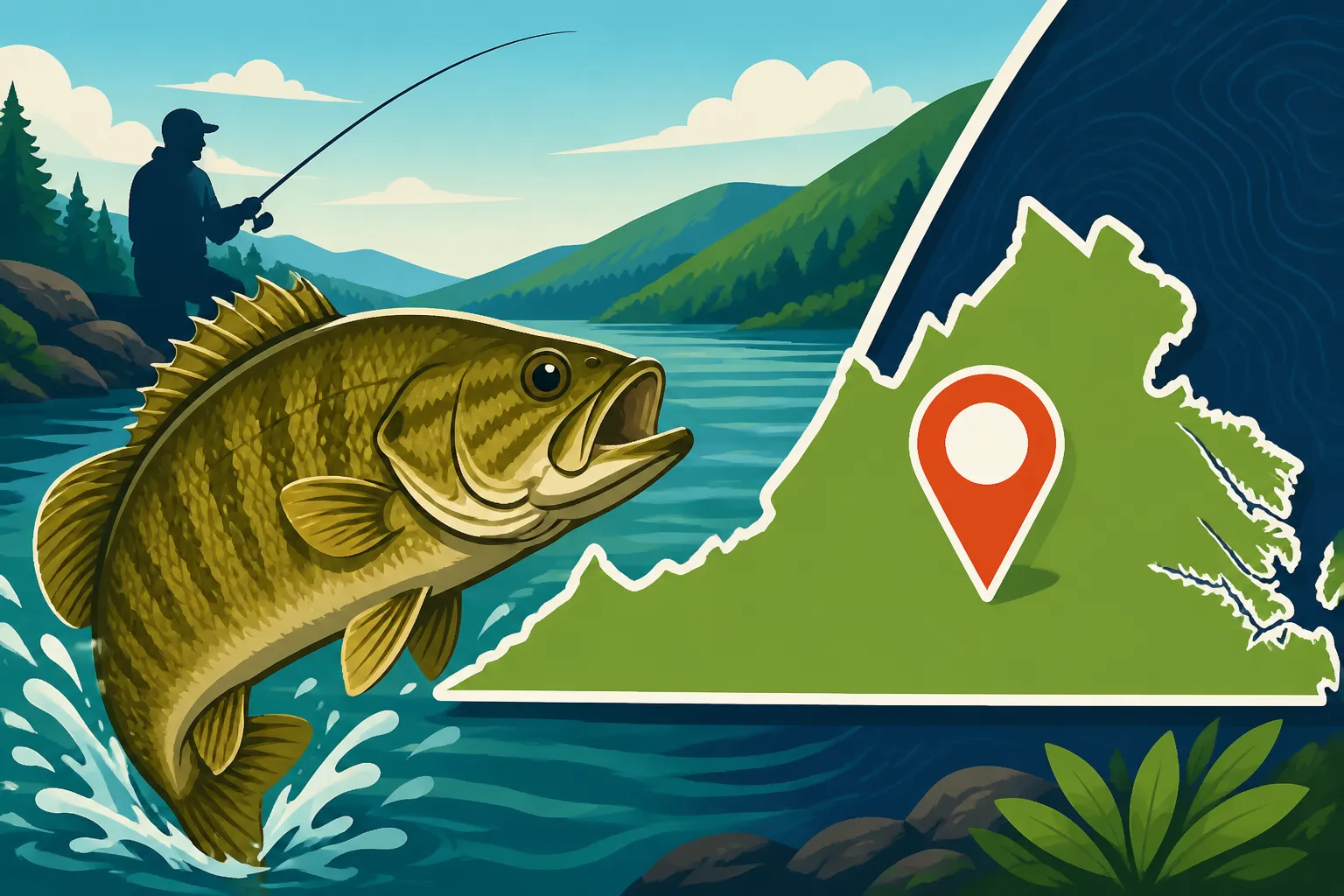
Smallmouth bass, often affectionately called "bronze backs," are renowned for their incredible fighting spirit. Hook into one, and you're in for a treat: powerful runs, acrobatic leaps, and a relentless tug-of-war that makes every catch feel like a trophy. It's not uncommon for a two-pound smallmouth to fight harder than a four-pound largemouth, and that sheer athleticism is a huge part of their appeal. Beyond their fighting prowess, smallmouth bass are also stunningly beautiful fish, with their mottled brown and bronze coloration, dark vertical bars, and piercing red eyes. They're a true prize for any freshwater angler. Virginia's diverse waterways provide the perfect conditions for these fish to thrive, from pristine mountain streams to wide, winding rivers, making it a premier destination for smallmouth enthusiasts on the East Coast.
Understanding Smallmouth Habitat
To consistently find smallmouth bass, you need to think like one. These fish are masters of their environment, preferring clear, cool, oxygen-rich waters with plenty of current and structure. You'll typically find them congregating around rocky bottoms, boulders, ledges, submerged logs, and gravel beds. They love eddies, current seams, and the calm pockets behind large rocks where they can ambush prey without expending too much energy fighting the main current. Unlike largemouth that prefer dense weeds and stagnant water, smallmouth are creatures of the flow. Look for areas with a mix of riffles, runs, and deeper pools, especially where these features transition. Understanding these habitat preferences is key to unlocking successful smallmouth fishing in Virginia.
Top Rivers for Smallmouth Bass in Virginia
Virginia is blessed with an incredible network of rivers that are tailor-made for smallmouth bass. Each offers its own unique charm and challenges, promising unforgettable angling experiences.
The Mighty James River
The James River is arguably one of Virginia's most iconic waterways, and for smallmouth bass anglers, it's nothing short of a paradise. From its headwaters in the Appalachian Mountains down to the fall line near Richmond, the James offers varied fishing environments, all teeming with feisty smallmouth.
Upstream sections, particularly around Buchanan, Glen Wilton, and Scottsville, are characterized by classic river smallmouth habitat: endless rock gardens, swift runs, and deep pools. These areas are fantastic for wading or floating in a canoe or kayak, allowing you to quietly drift through prime holding spots. Further downstream, closer to Columbia and Cartersville, the river widens and deepens, offering a mix of smallmouth and an increasing number of largemouth bass. Here, small jon boats or jet boats can be effective for covering more water. Popular lures include spinnerbaits, tube jigs, crankbaits that mimic crawfish, and topwater baits during low-light conditions. The spring and fall offer some of the best fishing, with actively feeding fish preparing for or recovering from the spawn. Many anglers seek out local expertise to navigate its expansive waters, and platforms like FishingBooker can connect you with experienced James River guides.
For more in-depth information, you might want to check out our guide on Fishing the James River in Virginia.
The Legendary Shenandoah River
The Shenandoah River, with its North and South Forks converging near Front Royal, is legendary among smallmouth bass anglers. It offers consistently excellent fishing, beautiful scenery, and a unique charm that keeps people coming back.
The North Fork of the Shenandoah is known for its incredible rock formations, ledges, and deep green pools. It's often a bit clearer and cooler than the South Fork, making it prime smallmouth territory. Access points around Edinburg, Strasburg, and Front Royal are popular. The South Fork, while also excellent, tends to be wider and can be a bit more turbid after rains, but it still holds a fantastic population of smallmouth, especially in areas with significant rock structure. Sections near Bentonville, Luray, and again, Front Royal, are highly productive. Fly fishing is incredibly popular on the Shenandoah for smallmouth, with poppers, streamers, and crawfish patterns being go-to choices. Spin anglers will find success with inline spinners, small crankbaits, and soft plastic grubs rigged on jig heads. Like the James, the Shenandoah is best fished by wading or floating, and the optimal seasons are spring and fall, though summer evenings can be spectacular for topwater action. Looking for specific spots? Dive into Where to Catch Smallmouth Bass on the Shenandoah River.
The Rappahannock River's Hidden Gems
While perhaps not as widely known for smallmouth as the James or Shenandoah, the Rappahannock River offers some truly fantastic opportunities, especially in its upper reaches. Anglers often overlook this river, making it a great choice for those seeking less crowded waters.
Above Fredericksburg, the Rappahannock transforms from a tidal river into a clear, rocky, free-flowing stream, perfect for smallmouth. Sections around Kelly's Ford, Motts Run, and upstream of the city offer excellent wading and kayaking access. You'll find plenty of riffles, runs, and rock gardens where smallmouth lie in wait. The river can be quite shallow in places during dry spells, so check water levels before you go. Target current breaks, deep pockets behind boulders, and submerged wood. Small crankbaits, grubs, and finesse jigs are highly effective here. The Rappahannock also offers the chance for some nice panfish and even occasional spotted bass in its upper stretches, adding to the variety. For specifics on access, consider exploring resources detailing Bank Fishing Access on the Rappahannock River Near Fredericksburg.
Lesser-Known Rivers and Mountain Streams
While the major rivers get all the glory, Virginia harbors other fantastic smallmouth fisheries that are well worth exploring, especially if you're looking for a slightly different experience or fewer crowds.
The New River's Unique Fishery
Flowing through Southwest Virginia, the New River is a truly ancient waterway – one of the oldest rivers in North America, actually. It flows north, carving its way through rugged mountains, and offers a smallmouth bass fishery that's absolutely world-class, renowned for its trophy potential.
Unlike the more rock-and-gravel dominated rivers further east, the New River often has deeper, wider sections with larger boulders and sometimes even bedrock ledges. It can be a very powerful river, requiring careful navigation, especially in motorized boats. Popular access points include areas around Fries, Radford, and Claytor Lake (which is actually part of the New River system). Anglers targeting the New River often use heavier gear than on other smallmouth rivers, due to the sheer size of the fish and the strong currents. Large crankbaits, swimbaits, and heavy jigs are favorites, as are topwater lures in the summer. If you're looking for a true "big fish" smallmouth experience, the New River should be high on your list. Many anglers hire specialized guides for the New River to ensure safety and success, making it another excellent opportunity to utilize services like FishingBooker to find a local expert.
Other Productive Smallmouth Waters
Beyond the big names, Virginia has a multitude of smaller rivers and larger creeks that consistently produce quality smallmouth bass. These waters often require a bit more exploration but can yield fantastic results for the adventurous angler.
- Maury River: Located in the western part of the state, the Maury is a beautiful, clear river known for its excellent smallmouth fishing. It offers a mix of rapids and calmer pools and is fantastic for wading and kayak fishing.
- Jackson River: Another gem in the western mountains, the Jackson River provides excellent smallmouth habitat, particularly in its upper reaches. It's also known for its trout fishing, so you might find a mixed bag here.
- South Fork Holston River: In far Southwest Virginia, this river offers another great smallmouth option, with beautiful scenery and good fish populations.
- Staunton River (Roanoke River): Upstream of Kerr Lake, this river transforms into a productive smallmouth fishery, particularly suitable for kayaks and canoes.
These smaller rivers often have less pressure, offering a more serene fishing experience. They generally respond well to the same techniques and baits as the larger rivers, just scaled down slightly if the water is shallower.
Techniques and Tips for Virginia Smallmouth
Catching smallmouth bass consistently requires a thoughtful approach. They're intelligent, strong, and highly attuned to their environment. Understanding the right gear and adjusting your tactics to the season will dramatically increase your success.
Essential Gear and Lures
For river smallmouth, a medium-light to medium-action spinning rod (6'6" to 7' long) paired with a 2500-3000 series reel spooled with 6-10 lb test fluorocarbon or monofilament line is a versatile setup. For heavier current or larger fish on the New River, you might bump up to a medium-heavy rod and 12-15 lb line.
When it comes to lures, smallmouth are opportunistic feeders, but they have their favorites:
- Crankbaits: Shallow-diving crankbaits in crawfish or baitfish patterns (like Rapala Shad Raps or Strike King KVD 1.0) are deadly for covering water and triggering reaction strikes.
- Jigs: Tube jigs (1/8 to 1/4 oz) in green pumpkin or dark colors, paired with a stout hook, are incredibly effective, mimicking crawfish or gobies. Hair jigs and Ned rigs also excel.
- Spinnerbaits: Small inline spinners (like Mepps or Rooster Tails) are fantastic in clear water and for actively feeding fish.
- Topwater Lures: Poppers (e.g., Rebel Pop-R) and walking baits (e.g., Heddon Super Spook Jr.) are exhilarating in low light or on overcast days, especially in summer.
- Soft Plastics: Grubs, paddle tails, and creature baits rigged on jig heads are versatile and can be fished in various depths and currents.
Choosing the right lures will depend heavily on water conditions and time of year. For example, learning How to Choose Lure Color for Clear Water versus murky conditions can make a huge difference.
Seasonal Strategies for Success
Smallmouth bass behavior changes significantly with the seasons, largely influenced by water temperature.
- Spring: This is prime time! As water temperatures rise into the 50s and 60s Fahrenheit, smallmouth move into shallower areas to spawn. They're aggressive and territorial. Target rocky banks, gravel flats, and the mouths of tributaries. Crankbaits, tube jigs, and spinnerbaits are excellent. This is also when you'll find them actively feeding to regain energy post-spawn.
- Summer: When the water warms up, smallmouth often retreat to deeper, cooler pools during the day, becoming most active during dawn, dusk, or on overcast days. Night fishing can also be productive. Topwater lures shine in low light, while jigs and crankbaits worked through deeper runs and eddies are effective during the brighter hours. Pay close attention to shaded areas and current seams.
- Fall: As water temperatures drop, smallmouth go on a feeding frenzy, bulking up for winter. They can be found in a variety of depths, often moving between deeper pools and shallower feeding flats. Crankbaits, jerkbaits, and swimbaits are great for aggressive fish. This can be one of the best times of year for consistent action and larger fish.
- Winter: Fishing can be tough, but not impossible. Smallmouth will typically school up in the deepest, slowest pools of the river. Finesse techniques like Ned rigs, small jigs, or slowly dragged tubes are your best bet. Bites will be subtle, and patience is key.
Understanding Virginia Fishing Seasons Explained will give you an even broader perspective on angling opportunities throughout the year.
Accessing Virginia's Smallmouth Rivers
Getting to the fish is half the battle, and Virginia offers a range of options for anglers looking to hit its smallmouth rivers.
Public Access Points and Boat Ramps
Virginia's Department of Wildlife Resources (DWR) maintains numerous public access points and boat ramps along its major rivers. These can range from primitive canoe/kayak launches to paved ramps suitable for small motorized boats. Many state parks also offer river access. Always check the DWR website or a local map for the specific river you plan to fish. For example, along the James River, you'll find numerous DWR ramps like those at Maiden's Adventure or Scottsville. The Shenandoah has public launches at places like Front Royal, Bentonville, and Millville.
Wading is also a fantastic option for smallmouth rivers, especially in shallower sections. Always prioritize safety, wearing a wading belt and using a wading staff, particularly in swift current or on slippery bottoms. Be mindful of private property when seeking wading access, and always ask permission if you're unsure. You can find detailed information on specific Boat Ramps for Fishing in Virginia to help plan your trip.
Hiring a Local Guide
While self-guided trips are rewarding, there's immense value in hiring a local guide, especially if you're new to a river or targeting trophy smallmouth. Virginia boasts many excellent smallmouth guides who have spent years learning the intricacies of their home waters.
A good guide knows the river like the back of their hand – where the fish are holding, what they're biting on, and how to safely navigate the currents and rapids. They'll provide all the necessary gear, often including high-quality rods, reels, and a vast assortment of proven lures. More importantly, they offer invaluable instruction on techniques, reading the water, and presenting your bait effectively. This can significantly shorten your learning curve and dramatically increase your chances of a successful and enjoyable trip. For a hassle-free experience, consider browsing options on platforms like FishingBooker to find reputable Virginia smallmouth bass guides who can tailor a trip to your skill level and preferences. It's an investment that often pays off with both fish in the net and a wealth of knowledge gained.
| River | Key Characteristics | Best Access Method | Primary Lure Types | Notable Sections |
|---|---|---|---|---|
| James River | Varied, rocky runs, deep pools, wider downstream | Canoe, Kayak, Wading, Jon Boat | Crankbaits, Tube Jigs, Spinnerbaits | Buchanan, Scottsville, Columbia |
| Shenandoah River | Clear, rocky ledges, riffles, diverse structure | Canoe, Kayak, Wading | Jigs, Spinnerbaits, Topwater, Flies | Front Royal, Bentonville, Luray |
| Rappahannock River | Upper sections rocky, clear, less pressured | Wading, Kayak | Small Crankbaits, Grubs, Finesse Jigs | Kelly's Ford, Motts Run |
| New River | Ancient, powerful, trophy potential, large boulders | Motorized Boat (jet), Kayak | Large Crankbaits, Swimbaits, Heavy Jigs | Fries, Radford, Claytor Lake |
Disclaimer
The information provided in this guide is for general informational purposes only. Fishing regulations, seasons, and access points can change. Always consult the official Virginia Department of Wildlife Resources (DWR) website for the most current regulations, license requirements, and any advisories before planning your fishing trip. Remember to practice responsible angling, respect private property, and help preserve Virginia's natural resources for future generations.