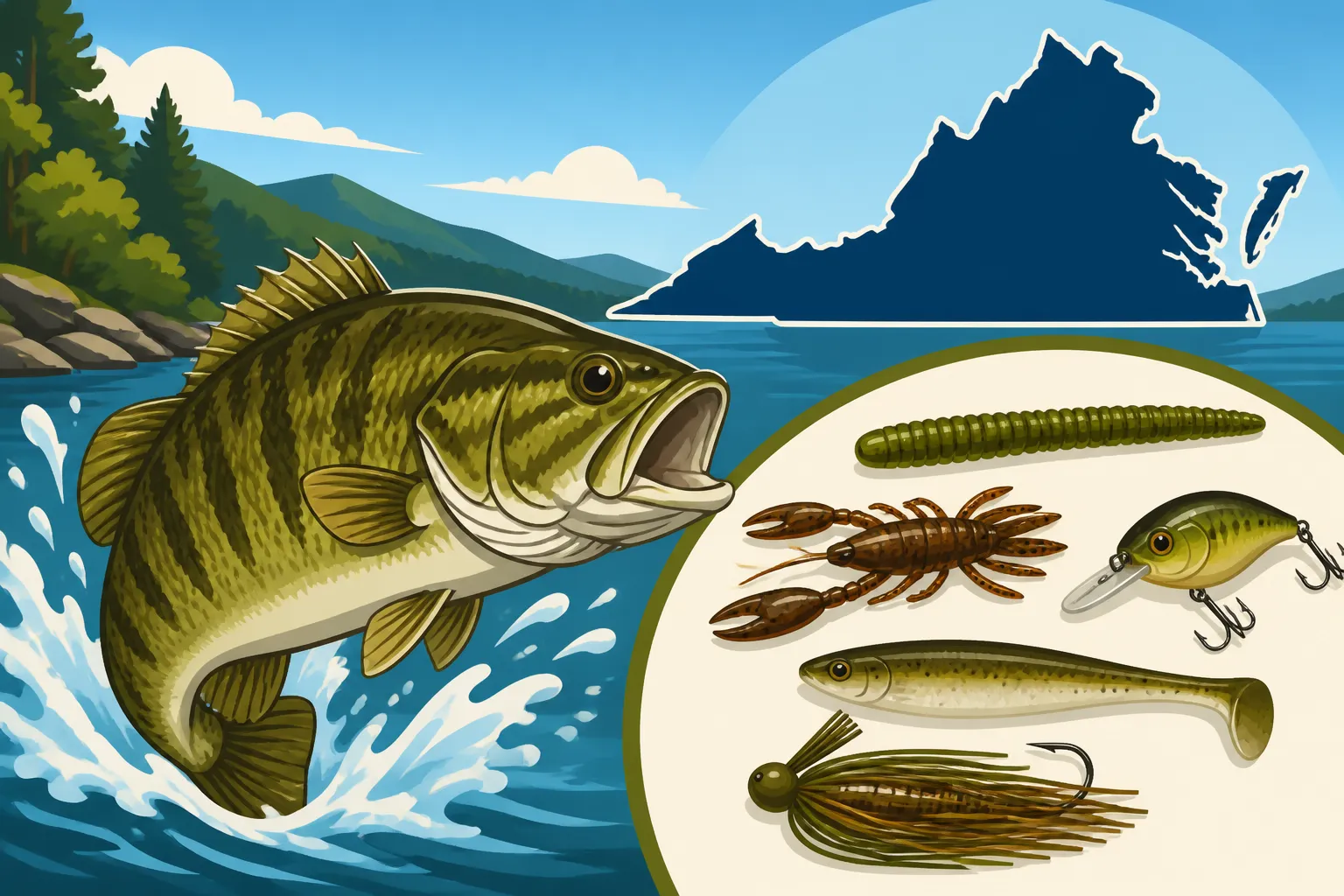
Best Bait for Smallmouth Bass in Virginia
Oh, the elusive smallmouth bass! If you've spent any time on Virginia's beautiful rivers and lakes, you know the frustration of trying to consistently hook these feisty fighters. They're not like their largemouth cousins, often requiring a bit more finesse and the right presentation. This guide is all about helping you crack the code, diving deep into the very best baits and lures to entice those hard-hitting smallmouth bass across our incredible Commonwealth.
Understanding Smallmouth Bass Habits and Preferences
Before we even talk about specific baits, it's crucial to understand what makes a smallmouth bass tick. These aren't lazy fish; they're opportunistic predators that rely on their keen eyesight and aggressive nature. Knowing their typical hangouts and preferred meals can drastically improve your bait selection and presentation.
What Smallmouth Bass Eat Naturally in Virginia Waters
Smallmouth bass are truly diverse eaters, adapting their diet to whatever is abundant in their particular habitat. In our Virginia rivers, like the Shenandoah River Trout Fishing Season in Virginia or the James, crayfish are king. Seriously, if there's one thing smallmouth can't resist, it's a juicy crayfish scuttling across the bottom. They'll also gorge themselves on minnows, darters, and other small forage fish. You'll find them hitting aquatic insects, especially during hatches, and they aren't shy about snatching up a frog or even a salamander if the opportunity arises. On the flip side, in deeper, clearer lake environments, like parts of Claytor Lake or Lake Anna, their diet might shift more towards schooling baitfish like alewives or shad, alongside the ever-present crayfish.
Key Habitats for Smallmouth Bass in Virginia
When you're chasing smallmouth, think structure and current. They absolutely love rocky bottoms, ledges, submerged timber, and swift current breaks. In rivers, you'll find them lurking behind boulders, at the tail end of rapids, in eddy lines, and around log jams – anywhere they can ambush prey without fighting the main force of the current. They're masters of using cover to their advantage. In lakes, they'll congregate around rocky points, humps, deep rock piles, and submerged brush, especially where there's a good drop-off or access to deeper, cooler water. Understanding these preferences helps you present your bait right in their strike zone.
Top Live Baits for Virginia Smallmouth Bass
Sometimes, nothing beats the real thing. Live bait offers natural movement, scent, and texture that artificial lures simply can't replicate, making it an incredibly effective choice for finicky smallmouth.
Crayfish: The Undisputed King
If there's one bait you absolutely must have when targeting smallmouth in Virginia, it's crayfish. These crusty critters are naturally abundant in most smallmouth habitats, and smallmouth simply can't resist them. They mimic the smallmouth's natural prey so perfectly that it's almost unfair.
- Catching and Keeping: You can often catch your own crayfish in rocky shallows using a small net or even by hand under rocks. Keep them alive in a cooler with some damp grass or newspaper, but never submerged in water. Make sure to check local regulations on bait collection!
- Rigging Techniques: A simple way to rig a crayfish is to hook it lightly through the tail, allowing it to swim naturally. You can use a small, sharp hook (like a Kahle hook) with a split shot or small bullet weight a foot or so up the line to get it down to the bottom without impeding its movement too much. Another effective method is to hook it through the horn on its head, but be careful not to hit its brain. Drifting them through current seams or slowly crawling them along rocky bottoms is deadly.
Minnows and Other Forage Fish
Minnows, shiners, and other small baitfish are another fantastic live bait choice, especially when smallmouth are actively feeding on schools of bait. The flashing, darting action of a live minnow can trigger aggressive strikes.
- Popular Types and Availability: Local bait shops usually carry various types of minnows, such as fatheads, shiners, or creek chubs. Golden shiners are a common choice and are fairly hardy. You might also be able to net your own in smaller creeks.
- Effective Rigging and Presentation: For minnows, a classic setup is a bait hook (size 4 or 6) through the back, just behind the dorsal fin, allowing it to swim freely. Use a small split shot weight if you need to get it deeper, or fish it under a bobber in shallower water or over submerged structure. Drifting minnows through current or along rocky banks is incredibly effective. Let them do the work; their natural movement is often all it takes.
Worms: A Reliable Go-To
While often associated with largemouth or panfish, good old nightcrawlers and red worms can be surprisingly effective for smallmouth, especially in stained water or when the fish are less aggressive. Their scent and wriggling action are hard for any fish to ignore.
- Best Worm Types: Nightcrawlers are great because of their size and robust nature. Red worms or even garden worms can work too.
- Simple Rigging for Smallmouth: Hook a nightcrawler once or twice through the body, allowing a good portion to dangle and wriggle. Fish it on a plain hook with a split shot, or on a simple Carolina rig with a small bullet weight and a short leader. The key is to let the worm's natural movement entice the bite. This can be particularly good for bank anglers who might not have access to a variety of live bait.
Best Artificial Lures for Virginia Smallmouth Bass
For many anglers, the thrill of enticing a smallmouth with a perfectly presented artificial lure is unmatched. Modern lures offer incredible versatility, allowing you to mimic various prey and adapt to different conditions.
Jerkbaits: The Mimics
Jerkbaits are absolute smallmouth magnets, especially in clearer water. They perfectly imitate injured baitfish with their erratic darting and pausing action. Brands like Rapala and Lucky Craft make some incredibly effective jerkbaits.
- When and How to Use Them: Jerkbaits shine in cooler water conditions, often in spring and fall, but can be effective year-round. Cast them out, give a few sharp jerks of the rod tip to make them dive and dart, then pause. That pause is critical – it's often when a smallmouth will strike. Experiment with the length of your pauses; sometimes a longer pause is what it takes.
- Color and Size Selection: Natural baitfish patterns (silver, perch, shad) are always a safe bet. In clearer water, translucent colors can be very effective. For sizing, match the hatch – use jerkbaits that are similar in size to the baitfish present in the water you're fishing. Best Lures for Smallmouth Bass on the Shenandoah River often includes a discussion of natural baitfish colors.
Spinnerbaits and Buzzbaits: Flash and Fury
When smallmouth are aggressive or the water is a bit stained, spinnerbaits and buzzbaits can be incredibly effective. They create a lot of vibration and flash, calling fish in from a distance.
- Effective Conditions: Spinnerbaits are versatile; they work well in sunny conditions due to their flash, and in stained water where their vibration helps fish locate them. Buzzbaits are topwater lures, ideal for low-light conditions (dawn, dusk) or overcast days when smallmouth are willing to strike at the surface.
- Retrieval Techniques: For spinnerbaits, a steady retrieve is often all you need. Vary the speed, and sometimes adding a quick twitch or pause can trigger a strike. For buzzbaits, cast it out and retrieve it just fast enough to keep the blade sputtering on the surface. Don't be afraid to experiment with speeds!
Jigs: Versatility on the Bottom
Jigs are perhaps the most versatile artificial lure for smallmouth bass. From hair jigs to swim jigs and finesse jigs, there's a jig for almost any situation, often mimicking crayfish or baitfish.
- Different Types and Their Uses:
- Hair Jigs: These are classic for smallmouth, especially in cold water. Their subtle action is incredibly lifelike.
- Football Jigs: Great for crawling over rocky bottoms, mimicking a crayfish.
- Swim Jigs: Rigged with a paddle-tail trailer, these are fantastic for covering water and imitating baitfish.
- Finesse Jigs: Smaller jigs designed for pressured fish or clearer water, often paired with small soft plastic trailers.
- Presentation and Retrieval: For hair and football jigs, drag them slowly along the bottom, occasionally hopping or shaking them. For swim jigs, a steady retrieve with occasional twitches works well. The key with jigs is to maintain bottom contact and pay attention to subtle bites. If you need to replenish your jig heads, Amazon usually has a wide array of sizes and colors to choose from.
Soft Plastics: The Ultimate Imitators
Soft plastic lures offer an incredible range of shapes, sizes, and actions, making them indispensable for smallmouth anglers. They can imitate everything from worms and crayfish to minnows and leeches.
- Popular Styles for Smallmouth:
- Tubes: These are classic smallmouth baits, imitating crayfish or gobies. Rig them internally with a tube jig head.
- Grubs/Swimbaits: Excellent for imitating baitfish, especially on a jig head.
- Creature Baits/Finesse Worms: Great for mimicking crayfish or other bottom-dwelling creatures, often fished on a Carolina rig, Texas rig, or drop shot.
- Ned Rigs: A super finesse technique, very effective for reluctant smallmouth, using a short, buoyant worm on a mushroom-shaped jig head.
- Rigging and Fishing Techniques: The beauty of soft plastics is their adaptability. Tubes are deadly dragged or hopped along rocky bottoms. Swimbaits can be retrieved steadily or bounced. Creature baits are excellent when Texas-rigged and fished in heavy cover. The Ned Rig is fantastic for subtly working small areas. Learning to use a Carolina Rig can be really effective for presenting soft plastics along the bottom. If you're stocking up on soft plastics, checking Amazon for bulk deals can save you a few bucks.
Topwater Lures: Explosive Strikes
There's nothing quite like a smallmouth blowing up on a topwater lure. These baits sit on the surface, creating commotion that triggers aggressive, visual strikes.
- Best Topwater Lure Types:
- Poppers: Create a "bloop" sound and splash, good for targeting specific spots.
- Walking Baits (Walk-the-dog): Erratic, side-to-side gliding action that drives smallmouth wild. Heddon Super Spooks are a classic.
- Prop Baits: Have small propellers that churn water, creating a disturbance.
- Buzzbaits: (already mentioned but worth reiterating for topwater action).
- Ideal Conditions and Presentations: Topwater excels in calm conditions, especially during low light (early morning, late evening), or on overcast days. Cast them near cover – fallen trees, rocky points, grass lines – and work them back with pauses. The key is to be patient and let the lure sit for a moment after landing, then start your retrieve. You'll want to experiment with retrieval speeds and pause durations.
Here's a quick comparison of some popular artificial lure types:
| Lure Type | Primary Mimic | Ideal Conditions | Retrieval Style | Pros | Cons |
|---|---|---|---|---|---|
| Jerkbait | Injured Baitfish | Clear water, cooler temps | Jerk, pause, jerk | Realistic, triggers reaction strikes | Can be slower fishing, specific conditions |
| Spinnerbait | Baitfish, Crayfish | Stained water, windy, sun | Steady retrieve, varied speed | High vibration/flash, covers water fast | Less subtle, can be intimidating in clear water |
| Jig (Tube/Finesse) | Crayfish, Goby, Worm | All conditions, subtle bites | Hop, drag, shake, swim | Extremely versatile, great for bottom fish | Requires feel, can snag easily |
| Soft Plastic (Worm/Creature) | Worms, Crayfish, Leeches | All conditions, finesse | Drag, twitch, drop shot, Texas rig | Natural feel/scent, highly adaptable | Can be easily ripped, less flash/vibration |
| Topwater (Popper/Walker) | Injured Baitfish, Frog | Calm water, low light, aggressive fish | Pop, walk-the-dog, pause, twitch | Explosive strikes, exciting | Limited to surface, specific conditions |
Seasonal Bait Strategies for Virginia Smallmouth
Smallmouth bass change their behavior with the seasons, and so should your bait choices. What works in the spring might be ignored in the heat of summer or the chill of winter.
Spring: Pre-Spawn and Spawn Aggression
Spring is a fantastic time for smallmouth fishing, as they move into shallower waters to feed aggressively before and during the spawn.
- Pre-Spawn: As water temperatures rise into the 40s and 50s, smallmouth will be gorging themselves. This is prime time for jerkbaits, spinnerbaits, and swim jigs fished around rocky points and channel swings. They're looking for bigger meals to build energy.
- Spawn: Once water temps hit the low 60s, smallmouth will be on their beds. While you shouldn't target bedding fish directly, those guarding nests will strike at anything perceived as a threat. Tube jigs, small finesse jigs, and soft plastic creature baits hopped near potential bedding areas can be very effective for fish not directly on beds. Remember, Bass Spawn Timing on Virginia Lakes can vary slightly by region.
Summer: Deep Water and Low Light Tactics
Summer can be challenging as smallmouth often move deeper to find cooler water and stable oxygen levels.
- Deep Water Lures: Look for them on deep rocky humps, ledges, and drop-offs. Carolina rigs with soft plastic worms or creature baits, football jigs, and deep-diving crankbaits are excellent choices. Trolling deep-diving crankbaits can also be productive in larger lakes.
- Low Light Success: During dawn, dusk, or on cloudy days, smallmouth will move shallower to feed. This is your best chance for topwater action with poppers and walking baits, or shallow-running crankbaits and spinnerbaits near cover. Don't overlook night fishing in summer, as smallmouth can become very active under the cover of darkness.
Fall: The Feeding Frenzy
Autumn is another incredible time for smallmouth, as they again feed heavily to prepare for winter. They often become very active and aggressive.
- Aggressive Presentation: Smallmouth will chase down bait, so faster retrieves and reaction baits often shine. Jerkbaits are particularly deadly as baitfish begin to school up. Spinnerbaits, bladed jigs, and swimbaits are also excellent for covering water and finding active fish. Look for them concentrated in river bends, around deep points, and near baitfish schools.
- Seasonal Movements: As water temperatures drop, smallmouth might move from shallower feeding areas back to deeper wintering holes, often along river channels or deep lake structure. Adjust your retrieve speed accordingly – sometimes a slower, more deliberate presentation is needed as the water cools further.
Winter: Slow and Subtle
Winter smallmouth fishing can be tough, but rewarding. The key is to slow down and use subtle presentations.
- Finesse is Key: Smallmouth will be lethargic and hunkered down in deep, slow-moving water, often in large schools. Finesse techniques like the Ned Rig, drop shot with small soft plastics, and small hair jigs are your best bet.
- Patience and Location: Focus on the deepest holes in rivers or the main lake basins in lakes, especially areas with vertical structure or access to deeper channels. Keep your bait in the strike zone for extended periods and pay close attention to light bites. A lot of anglers find that How to Catch Bass in Cold Water emphasizes patience above all else.
Matching Bait to Virginia Waterways
Virginia offers diverse smallmouth habitats, from rocky mountain rivers to expansive reservoirs. Your bait choice should reflect these differences.
Smallmouth Bass in Virginia Rivers
Rivers like the James River Fishing in Virginia and the Shenandoah are legendary for their smallmouth fishing. Current, clear water, and rocky bottom are typical characteristics.
- Current and Structure: In rivers, smallmouth use current breaks and structure to ambush prey. Tubes, soft plastic creature baits, and football jigs crawled or hopped along the bottom are deadly, mimicking crayfish. Spinnerbaits and crankbaits can also be effective when retrieved across current seams. Topwater can be explosive in calm pools or eddies. Fly fishing for smallmouth on rivers is also incredibly popular, using streamers that imitate baitfish or crayfish. Smallmouth Bass Fishing on Virginia's Shenandoah River highlights the importance of matching the bait to the river environment.
Smallmouth Bass in Virginia Lakes
Lakes like Claytor, Anna, and Philpott offer different challenges and opportunities for smallmouth anglers. They often have deeper, clearer water and less current.
- Deep Water and Open Areas: In lakes, smallmouth might suspend over deeper water or relate to offshore structure. Deep-diving crankbaits, spoons, and swimbaits are great for covering open water and reaching deeper fish. Drop shots and Carolina rigs excel for targeting fish on deep humps or rock piles.
- Rocky Points and Humps: Pay close attention to rocky points, main lake humps, and submerged timber. These are prime areas for jerkbaits, jigs, and soft plastics. During low light, topwater can draw aggressive strikes near shallow points. Claytor Lake's Mixed Bass Fishery: Largemouth, Smallmouth, Spotted, and Alabama shows how versatile smallmouth can be in lake environments.
Essential Gear for Smallmouth Bait Fishing
Having the right tackle can make a huge difference in your success, especially when you're trying to feel those subtle smallmouth bites or handle a powerful river fight.
Rod and Reel Combinations
Matching your rod and reel to your preferred bait and fishing style is crucial.
- Spinning Gear for Finesse: For lighter lines and finesse techniques (like Ned Rigs, drop shots, light jigs, or small jerkbaits), a medium-light to medium power spinning rod (6'6" to 7'2") with a fast action tip is ideal. Pair it with a 2000 or 2500 series spinning reel. This setup allows for long casts with light baits and sensitivity to detect subtle bites.
- Baitcasting Gear for Power: For heavier lures (spinnerbaits, larger jerkbaits, heavier jigs, crankbaits) and situations requiring more power to pull fish from cover, a medium to medium-heavy power baitcasting rod (6'8" to 7'6") with a fast action tip is suitable. A baitcasting reel with a medium gear ratio (around 6.x:1) is a good all-around choice. Virginia Bass Fishing Largemouth Smallmouth Spotted and Alabama Bass often suggests baitcasting gear for larger lures and fish.
Line Selection
Line choice significantly impacts your presentation, sensitivity, and fighting power.
- Fluorocarbon: This is often considered the best all-around line for smallmouth. It's nearly invisible underwater, has excellent sensitivity, and moderate stretch. Use 6-10 lb test for most applications. Its sinking nature also helps get lures down quicker.
- Monofilament: A good choice for topwater lures or crankbaits where some stretch is desirable to prevent ripping hooks out. It's also more buoyant, helping topwater lures stay on the surface. Use 8-12 lb test.
- Braided Line: Excellent for strength, casting distance, and ultimate sensitivity, especially in heavy cover or deep water. However, it's very visible, so typically a fluorocarbon leader (6-10 lb) is used. Braided line in 10-20 lb test is common, with a leader length of 2-5 feet.
Terminal Tackle and Accessories
Don't forget the little things that make a big difference!
- Hooks: Always have a variety of sharp hooks on hand. Offset worm hooks (sizes 1/0 to 3/0) for Texas rigging, drop shot hooks (sizes 1 to 2/0), and jig heads (1/8 oz to 1/2 oz) are essential.
- Weights: Split shots, bullet weights, and dropshot weights in various sizes will help you get your baits to the right depth.
- Pliers/Forceps: Essential for removing hooks safely and quickly, especially for feisty smallmouth.
- Landing Net: A good, rubberized landing net helps protect the fish and makes landing them easier, particularly in current.
- Tackle Organization: Keeping your baits and terminal tackle organized is key to spending more time fishing and less time fumbling. Tackle boxes and trays are readily available on Amazon, making it easy to sort by bait type or size.
Remember, fishing for smallmouth bass is an adventure, and part of the fun is experimenting. Don't be afraid to try different baits and techniques until you find what works best on any given day. The more you understand their habits and the nuances of your local Virginia waterways, the more success you'll find!
Disclaimer
This article is for general informational purposes only and does not constitute professional advice. Laws, prices and regulations vary by location and change over time. Consult a qualified professional for guidance on your specific situation.